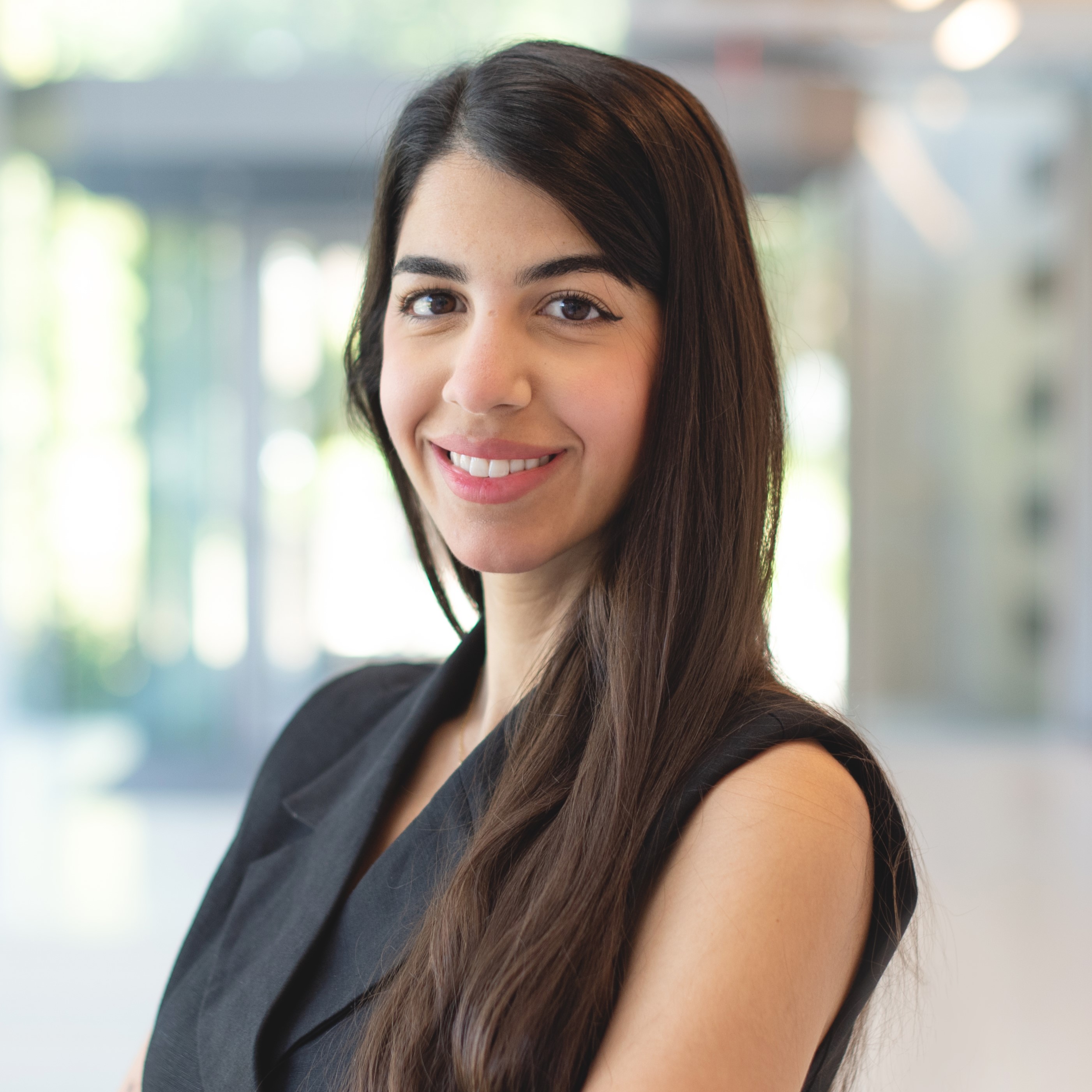
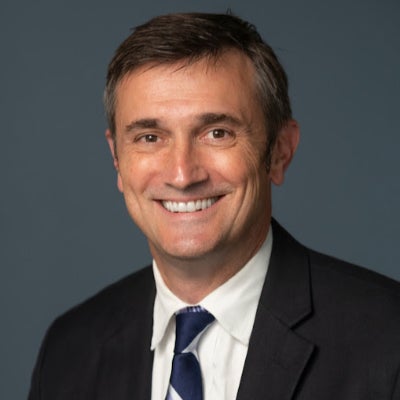
Aline Eid is an Assistant Professor in the Department of Electrical and Computer Engineering at the University of Michigan Ann Arbor, directing the Beam Dynamics research group. Her work bridges electromagnetics, wireless systems, and autonomous technologies, with a focus on mmWave/sub-THz sensing, backscatter communications, and wireless power transfer. PhD in Electrical and Computer Engineering (Georgia Tech, 2021) MS in Electrical and Computer Engineering (American University of Beirut, 2017) Postdoctoral Associate at MIT Media Lab (Signal Kinetics group) Research Interests: She pioneers systems that use electromagnetic waves to address societal challenges in Sustainable energy networks Smart cities/infrastructures Autonomous vehicles/robots Her group develops mmID tags for radar vision, batteryless sensors, and 5G-based wireless power grids. Scientific Impact: Recognized with awards including IEEE RFID Best Paper (2023) Proceedings of the IEEE Best Paper (2023) IEEE MTT-S Graduate Fellowship (2020) She leads commercialization efforts for warehouse robotics via MTRAC grant and startup Atheraxon. Advising: Mentors 8 students across PhD (Skanda Harisha, Sepideh Ghasemi, Yunfei Liu), Master's (Longyu Guo), and undergraduates (Mohamed Safawi, Katherine Shih, Andy Wang, Adrian Velazquez) in projects spanning robotics, IoT, and electromagnetic engineering. Labs: Beam Dynamics group at U-M Radiation Laboratory, collaborating with Atheraxon and MTRAC for technology translation.
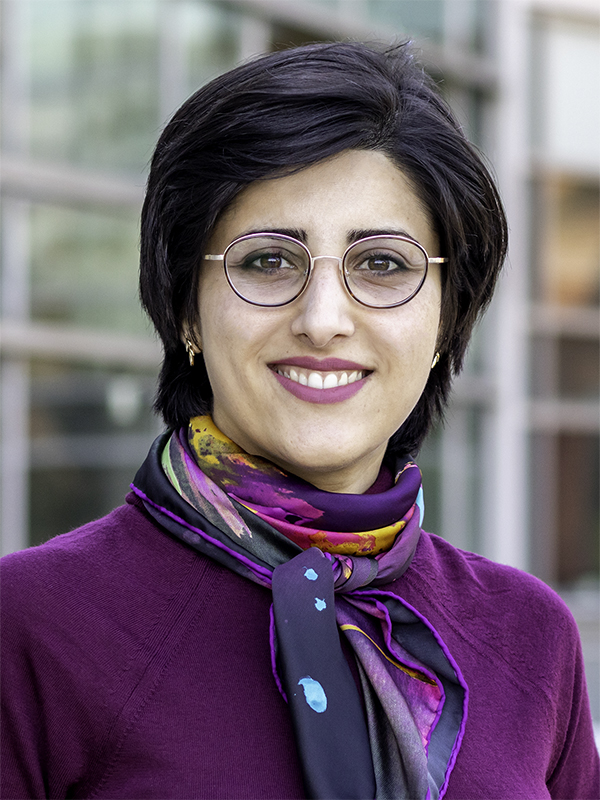
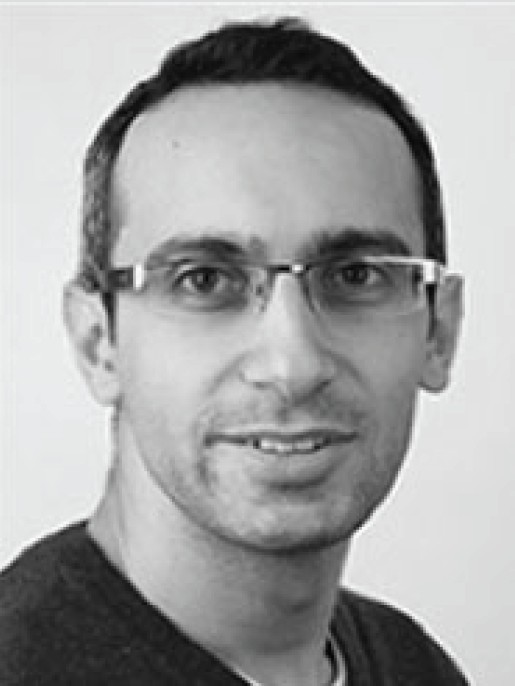
Elahe Soltanaghai is an Assistant Professor in the Department of Computer Science and a Faculty Affiliate in Electrical and Computer Engineering at the University of Illinois Urbana-Champaign. She is also a 2022 NCSA Fellow and received her PhD in Computer Science from the University of Virginia (2019), MS in Computer Engineering from Sharif University of Technology (2014), and dual BS degrees in Computer and Information Technology Engineering from Amirkabir University of Technology (2011, 2013). PhD: University of Virginia, Computer Science, 2019 MS: Sharif University of Technology, Computer Engineering, 2014 BS (Computer Engineering): Amirkabir University of Technology, 2011 BS (Information Technology Engineering): Amirkabir University of Technology, 2013 Her research spans wireless sensing and communication, focusing on Millimeter-wave Radar Sensing (for automotive, mixed reality, structural monitoring), Machine Learning for Wireless Systems (adaptive sensing/communication), Forest IoT (through-canopy biomass and soil sensing), Metaverse Technologies (gaze-based VR/AR), and Low-Power Backscatter Communication (WiFi/power-line tags). She directs the Wireless, Sensing & Embedded Networked Systems (iSENS) Lab and co-directs the Illinois Center for IoT. Her work bridges wireless networking with cyber-physical sensing , emphasizing environmental monitoring (e.g., wildfire fuel detection via radar tags) and human-computer interaction (e.g., gaze-tracking in VR). Recent articles include innovations in passive radar profiling , through-canopy biomass characterization , and integrated communication-sensing protocols . Scientific Awards: Google Research Scholar Award (2022) N2Women Rising Star (2021) ACM SIGMOBILE Dissertation Award (2020) EECS Rising Stars (2019) NCSA Faculty Fellowship (2023) Best Demo Runner-up, IPSN (2023) Teaching Excellence Award (2023) Grants: NASA FireTech Program Grant (2025) NSF Grant for Radar-based Perception (2024) Insper-Illinois Grant for VR Research (2024) Keysight Research Gifts (2022, 2023) T-Mobile Research Gift (2022)
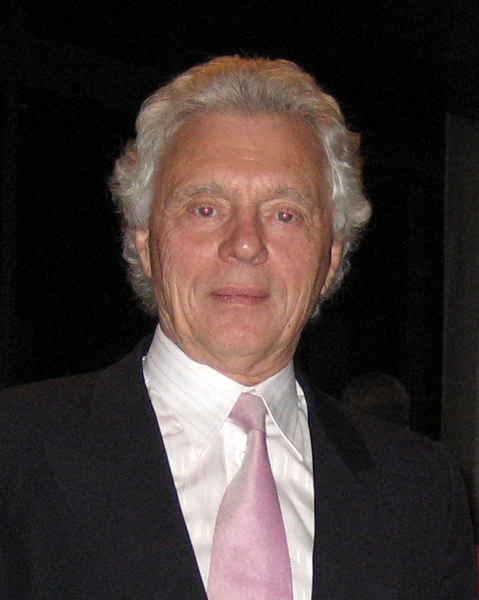
Allen J. Scott is a Distinguished Research Professor at the University of California, Los Angeles, with a joint appointment in the Department of Public Policy (School of Public Affairs) and Department of Geography. He has held prestigious positions at UCLA since 1994 and previously at the University of Toronto (1969–1994). His career spans over five decades, focusing on urban geography, regional development, and cultural economy. Education : BA (1961) from Oxford University; MA and PhD (1962, 1965) from Northwestern University. Research Interests include: Creative cities and cognitive-cultural capitalism Political economy of urbanization and globalization Industrial clusters and labor-intensive economies Human capital distribution in metropolitan areas Cultural landscapes and peripheral development Publication Trends (2005–2014) emphasize: Globalization's impact on low-technology industries Cognitive-cultural capitalism in urban contexts Human capital dynamics in metropolitan hierarchies Celebrity culture and urban glamour Creative field theories and urban policy implications Scientific Awards : 1986 Guggenheim Fellow 2003 Vautrin Lud Prize 2005 Meridian Book Prize 1999–2013: Chaires d’Excellence, Fellowships, and Doctor Honoris Causa 2008 Carol and Bruce Mallen Lifetime Achievement Award 2003 ISI Highly Cited Author
Professor Jasper van Wezel is a distinguished academic in the field of Condensed Matter Theory at the University of Amsterdam's Faculty of Science, where he serves as Professor in the Institute for Theoretical Physics (ITFA) within the Institute of Physics. With a career spanning over two decades, he has progressed from Assistant Professor (2014-2016) to Associate Professor (2016-2024) and currently holds the position of Professor since 2024. His academic journey began with a PhD in theoretical condensed matter physics from Leiden University in 2007, followed by prestigious fellowships at Argonne National Laboratory and Homerton College, Cambridge. PhD in theoretical condensed matter physics (cum laude), Leiden University, 2007 Master's diploma in theoretical condensed matter physics (cum laude), Leiden University, 2003 Dutch VWO Diploma (cum laude), Dalton Scholengemeenschap, Den Haag, 1997 US High School Diploma (cum laude), Sanford High School, Maine, USA, 1998 Professor van Wezel's research focuses on several interconnected areas within Condensed Matter Theory. His work explores competing instabilities in Charge Density Wave materials, including Superconductivity and Charge Order, Combined Charge and Orbital Order, and Transition-metal dichalcogenides. He has made significant contributions to Topology in Condensed Matter, particularly examining the Role of crystal symmetries and Topology in non-Hermitian systems. A major theme in his research involves investigating the Connections between Quantum and Classical behaviour, with special emphasis on Spontaneous Symmetry Breaking both in equilibrium (The role of the Thin Spectrum) and dynamically (Spontaneous loss of Unitarity). Analysis of Professor van Wezel's recent publications reveals a strong focus on quantum phenomena in condensed matter systems, with particular attention to topological aspects, symmetry breaking, and connections to fundamental physics concepts like black hole thermodynamics. His work often bridges theoretical concepts with potential experimental realizations, as evidenced by studies on electron patterns in materials like TaS2 and theoretical frameworks for understanding quantum phase transitions. Bristol Physics Teaching Award (2014) Students' Award for Outstanding Teaching (2014) Fellow of the Higher Education Academy (2014) Aneesur Rahman Fellowship at Argonne National Laboratory (2010-2012) Junior Research Fellowship at Homerton College, Cambridge (2007-2010) Physics 'Discovery of the year' by Leiden University Physics department (2005) 'Onderwijsprijs Natuurkunde' teaching award (2004/2005) Professor van Wezel has secured numerous research grants including an ENW-M grant (2023), an ENW-Groot project with Leiden University (2021), and a prestigious VIDI personal grant from NWO (2014). He has supervised over 50 students at various levels, including PhD candidates, MSc students, and BSc students, fostering the next generation of physicists. His leadership extends to organizing conferences, serving on PhD committees, and holding administrative roles such as chair of the educational committee for the Dutch Research School in Theoretical Physics. His research group at the University of Amsterdam's Institute for Theoretical Physics maintains active collaborations with institutions worldwide, including Leiden University, University of Cambridge, University of Bristol, and research centers in France, Germany, and Poland. The group's work combines analytical theoretical approaches with computational methods to tackle fundamental questions in quantum condensed matter physics.
Professor Stefan Maier holds the position of Head of School in Physics and Astronomy at Monash University. Previously, he served as the Lee Lucas Chair in Experimental Physics at Imperial College London (2007–2018) and built a new chair at Ludwig-Maximilians-Universität München (2019–2022). His research focuses on nanophotonics, plasmonics, and metasurface engineering, with emphasis on optical trapping, nonlinear optics, and novel photonic devices. Education: Bachelor’s degree in Physics, Technical University of Munich M.Sc. and Ph.D. in Applied Physics, California Institute of Technology (Caltech) Research Interests: Development of metamaterials and metasurfaces for light manipulation Applications of nanophotonics in sensing, imaging, and quantum technologies Optical trapping and plasmonic catalysis Nonlinear optical phenomena in nanostructured materials Articles Trends: Recent work emphasizes bound states in the continuum (BICs), 3D nanoprinted optical platforms, and active metasurfaces with tunable properties. Key themes include hybrid nanophotonics, ultra-high-Q resonators, and plasmonic nanomaterials for energy applications. Awards: ISI Highly Cited Researcher (2017–present) Grants/Projects: Chief Investigator in the All-on-chip twisted light modulator project (2022–2025) Leadership in Monash’s nanophotonics research team Labs/Teams: Directs a multidisciplinary lab at Monash focused on integrating 3D nanofabrication with optical physics, including collaborations in metafiber development and plasmonic biosensing.
Prof. Dr. Steffen Marburg is a Full Professor at the Chair of Acoustics of Mobile Systems within the TUM School of Engineering and Design at the Technical University of Munich. His research focuses on numerical methods in vibroacoustics, structural optimization, and acoustic modeling for applications in automotive, maritime, and musical instrument domains. Education: PhD from Technical University of Dresden (1998). Academic Career: Junior Professor at TU Dresden (2004), Chair of Technical Dynamics at University of the Federal Armed Forces Munich (2010), Full Professor at TUM (2015–present). Editorial Roles: Co-Editor-in-Chief of Journal of Theoretical and Computational Acoustics, Associate Editor of Journal of the Acoustical Society of America, Editor of Acoustics Australia and Mechanical Systems and Signal Processing. His research integrates computational acoustics, boundary element methods, and machine learning to address noise control and structural optimization challenges. Recent work explores acoustic metamaterials, viscothermal losses, and data-driven modeling. He has co-authored over 150 publications and led advancements in multifrequency solution methods and noise-insulating structures. Scientific awards include the Innovation Award of the Industrieclub Sachsen e.V. (1999). His editorial contributions and leadership in journals highlight his influence in computational acoustics and structural dynamics.
Dr. John Francis Clinton is the Director of Seismic Networks and Head of the Earthquake Monitoring Section at the Swiss Seismological Service (SED), ETH Zurich. He leads the Marsquake Service for NASA's InSight mission and oversees Switzerland's broadband and strong-motion seismic networks. His expertise spans earthquake early warning systems, seismic instrumentation, and glacial seismology. Clinton is also a Co-Investigator on the Mars InSight mission and involved in international projects like EPOS and RAMSIS. Education PhD in Civil Engineering (Minor in Geophysics), California Institute of Technology (2004) MSc in Civil Engineering, California Institute of Technology (1998) BEng in Civil Engineering, University College Dublin (1997) Research Interests Dr. Clinton focuses on real-time seismology, seismic instrument design, structural health monitoring, and glacial seismology. His work bridges engineering applications with geophysical data analysis, particularly in earthquake early warning systems and induced seismicity studies. He collaborates internationally on projects such as the Valais Near Fault Observatory and Nicaragua’s Earthquake Early Warning development. Publications Overview His 15 most recent papers (2011–2015) highlight advancements in seismic network optimization, Marsquake detection algorithms, and glacial icequake mechanisms. Key themes include improving early warning accuracy, understanding subglacial dynamics, and validating high-rate GPS for structural monitoring. Awards & Memberships Member, Swiss Academy of Sciences (since 2008) Member, IRIS Quality Assurance Advisory Committee (since 2013) Chair, European Integrated Data Archives (EIDA) (2013–2015) Labs & Teams Clinton directs the SED’s Earthquake Monitoring team and collaborates with ETH Zurich’s Geophysics Masters Program. His group manages Switzerland’s seismic networks and leads the Marsquake Service, which analyzes InSight lander data for Martian seismic events.
Yehuda Ben-Zion is a Professor of Earth Sciences at the University of Southern California (USC), affiliated with the Dornsife College of Letters, Arts and Sciences. He serves as Director of the Statewide California Earthquake Center (SCEC). His expertise lies in geophysics and seismology, with a focus on earthquake mechanics, fault dynamics, and seismic hazard assessment. He holds a Ph.D. in Geophysics and Seismology from USC (1990) and a B.S. in Geology and Physics from The Hebrew University of Jerusalem (1982). Research interests include physics of earthquakes and faults, high-resolution fault zone imaging, earthquake source properties, and dynamic rupture processes. Recent work emphasizes multi-scale modeling of rupture zones, seismic velocity monitoring using anthropogenic signals (e.g., train tremors), and probabilistic seismic hazard analysis frameworks like CyberShake. He leads projects such as Quakeworx, an open-source earthquake simulation platform, and investigates fault zone architecture in regions like the San Andreas, San Jacinto, and Marmara faults. His studies address critical questions about large earthquake mechanisms, ground motion prediction, and the interplay between tectonic stress and seismicity patterns. He has pioneered the use of dense seismic arrays and machine learning to analyze seismic data, advancing understanding of fault zone processes and their implications for hazard mitigation.
Adrian Lew is a Professor of Mechanical Engineering at Stanford University, specializing in computational solid mechanics and numerical algorithms. His research focuses on hydraulic fracturing simulation, embedded boundary methods, and material model design. He holds a PhD in Mechanical Engineering from Caltech (2003). His work bridges advanced numerical techniques with real-world applications in geophysics, material science, and structural engineering. Education: PhD, Mechanical Engineering, California Institute of Technology, 2003 Research Interests: Lew's group develops algorithms for time-integration embedded boundary methods and hydraulic fracturing simulations. Key areas include curvilinear crack propagation, universal meshing for complex geometries, and high-fidelity fracture mechanics. His work on variational integrators and discontinuous Galerkin methods has advanced computational efficiency in nonlinear elasticity and thermodynamics. Publications: Recent articles emphasize mesh optimization (DVRlib), fracture path instabilities, and magma chamber dynamics. His methodologies address challenges in 3D crack modeling, fluid-structure interaction, and high-order approximations in domains with singularities. Advising & Grants: Lew's research is supported by projects in computational geophysics and material science. Though no advisees are listed, his work involves collaborative teams focused on algorithmic innovation and high-performance computing.
Christopher D.P. Baxter is a Professor and Department Chair of Civil and Environmental Engineering at the College of Engineering, University of Rhode Island , with expertise in geotechnical engineering, offshore wind energy, and coastal resilience. He holds a Ph.D. in Civil Engineering from Virginia Tech (1999), an M.S. from Purdue University (1994), and a B.S. from Tufts University (1990). Research Focus: Geotechnical characterization of marine sediments, liquefaction resistance analysis, fiber-optic sensing for infrastructure monitoring, and coastal protection systems. Recent Publications: 15+ articles (2011–2025) covering topics like shear wave velocity, offshore wind foundation dynamics, and tsunami hazard modeling. Grants: Led projects on offshore wind monitoring (2019–2024) and fiber-optic seismic sensing (2021–2023). Key Collaborations: Work with teams on submarine landslide analysis, coastal dune reinforcement, and Rhode Island infrastructure resilience. His work bridges experimental geomechanics with practical coastal engineering solutions.
Evangelos Katsanos is an Associate Professor in the Department of Civil and Mechanical Engineering at the Technical University of Denmark (DTU), where he contributes to research and education in structural engineering and safety. He is affiliated with the Structures and Safety research group and actively supervises PhD students. His work spans advanced computational methods for structural monitoring and risk assessment. Research Interests: His expertise lies in structural dynamics, modal analysis, state estimation, and structural health monitoring of civil and offshore infrastructure. He applies physics-informed models and data-driven techniques to assess structural response under extreme loading conditions such as earthquakes, storms, and wave impacts. His research integrates finite element modeling with Kalman filtering methods for enhanced system identification and damage detection. The recent publications highlight a strong trend toward physics-informed and data-driven structural health assessment, particularly for offshore and wind energy infrastructure. Topics include joint input-state estimation, slamming loads on offshore jackets, and damage identification using Kalman filters. These works emphasize robust modeling under uncertainty and real-world applicability in extreme environments. Scientific Awards: No specific awards are mentioned in the provided text. Advising and Grants: Evangelos Katsanos is the main supervisor of PhD student Al-Hagri, A., and co-supervisor or collaborator on several research projects. He is Principal Investigator (PI) or co-PI on multiple funded research initiatives, including projects on physics-informed structural health assessment of offshore infrastructures, residual bearing capacity of damaged concrete beams, and quality assurance for construction 3D printers. These projects reflect his leadership in interdisciplinary and applied research with societal impact. Labs and Teams: He is part of the research environment at DTU Construct, specifically within the Structures and Safety group, which focuses on resilience, risk assessment, and advanced monitoring of civil and mechanical systems. His collaborations extend to national and international partners in offshore and wind energy engineering.
Paul D. Asimow is the Eleanor and John R. McMillan Professor of Geology and Geochemistry at the California Institute of Technology (Caltech), part of the Division of Geological and Planetary Sciences. He holds a B.A. from Harvard University (1991), an M.S. (1993), and a Ph.D. (1997) from Caltech. His career progression includes roles as Assistant Professor (1999–2005), Associate Professor (2005–2010), and Professor (2010–present), with the McMillan Professorship since 2016. Education: A.B. in Geology, Harvard University, 1991 M.S. in Geology, Caltech, 1993 Ph.D. in Geology, Caltech, 1997 Research Interests: Focuses on computational, experimental, and observational approaches to igneous petrology and mineral physics. Key areas include adiabatic mantle melting, water's role in mantle dynamics, high-pressure mineral physics, and processes at mid-ocean ridges. His research utilizes advanced facilities like the Lindhurst Laboratory of Experimental Geophysics and the alphaMELTS software package for thermodynamic modeling. Articles Overview: Recent work spans planetary crust formation, Martian petrogenesis, and high-pressure mineral behavior. Themes include experimental techniques, computational modeling, and cosmochemical studies of meteorites. Awards and Honors: James B. Macelwane Medal (AGU) Frank Wigglesworth Clarke Medal (Geochemical Society) Richard P. Feynman Prize for Teaching Excellence (Caltech) Fellow of the American Geophysical Union Fellow of the Mineralogical Society of America Grants and Labs: Received NSF funding for developing an interactive phase equilibria curriculum. Leads the Lindhurst Laboratory, focusing on shock-wave experiments and high-pressure mineral physics. Collaborates on software tools like alphaMELTS and MAGMASOURCE. Labs and Teams: Active in the Caltech Shock Wave Laboratory, advancing experimental methods for planetary material studies. Engages in interdisciplinary projects on Mars geology and terrestrial planet formation.
James F. Drake is a Distinguished University Professor in the Department of Physics at the University of Maryland, College Park, with affiliations at the Institute for Physical Science and Technology (IPST) and the Institute for Research in Electronics and Applied Physics (IREAP). He holds a B.S., M.S., and Ph.D. in Physics from UCLA (1975). His research focuses on theoretical plasma physics, particularly magnetic reconnection and plasma turbulence, with applications to space physics, solar flares, and magnetic fusion. Key contributions include elucidating the role of whistler waves in reconnection dynamics and advancing understanding of energy release mechanisms in plasmas. Dr. Drake’s awards include the American Physical Society Fellowship and the Humboldt Senior Scientist Research Award. He teaches advanced physics courses (e.g., Physics 604, 611, 761-762) and has pioneered computational models to study reconnection, turbulence, and particle acceleration. Recent work leverages Parker Solar Probe data to explore solar wind dynamics and reconnection in near-Sun environments. Education: UCLA (B.S., M.S., Ph.D. in Physics, 1975) Research Themes: Magnetic Reconnection, Plasma Turbulence, Space Plasma Dynamics Notable Achievements: Leader in reconnection theory; developer of kinetic simulation frameworks; contributor to NASA missions
Houman Savoji is an Associate Professor in the Department of Pharmacology and Physiology at the Faculty of Medicine, University of Montreal. He is also a full-time researcher at the CHU Sainte-Justine Research Center and principal investigator in regenerative medicine, organs-on-chip, and bioprinting at TransMedTech Institute. Dr. Savoji received his PhD in Biomedical Engineering from the Institute of Biomedical Engineering at Polytechnique Montréal in 2016. He then completed a postdoctoral fellowship at the Institute of Biomaterials and Biomedical Engineering at the University of Toronto. His research expertise combines advanced manufacturing technologies (micro- and nano-fabrication, 3D bioprinting, microfluidics, cell electrospinning) with functional and composite materials for applications in tissue engineering, regenerative medicine, and organs-on-chip. His work focuses on the design, development, optimization, implementation, and characterization of innovative functional biomaterials using emerging engineering technologies, with particular emphasis on cardiac tissue engineering and biomimetic pulmonary heart valves for pediatric patients. Dr. Savoji has published extensively on biomaterials, tissue engineering, 3D bioprinting, and organ-on-chip technologies. His recent publications demonstrate expertise in viscoelastic characterization of soft tissues, engineering immune responses to biomaterials, ceramic engineering for biomedical applications, and advanced 3D bioprinting techniques for cardiac and vascular tissue engineering. 2017-2020, Postdoctoral Research Grant, CIHR 2017-2019, Postdoctoral Research Grant, FRQNT 2017-2018, Human Society of International Grant, Human Toxicity Assessment Project 2016, CR-CHUM Research Center Award 2015, Star Student-Researcher Award, FRQNT 2014-2015, Jane and Frank Warchol Fellowship, Society of Vacuum Coaters Foundation 2013, Institute of Textile Science Award 2012-2015, Excellence Doctoral Scholarship for Foreign Students, FRQNT Dr. Savoji has supervised Master's students including Ines Barrakad (2024) working on 'Advanced manufacturing technologies versus molding of corneal implants: 3D printing vs molding of a Keratoprosthesis' and Zineb Ajji (2023) researching 'Development of perfusable patches by 3D bioprinting for potential application in cardiac tissue regeneration.' He has secured numerous research grants from organizations including CIHR, NSERC, FRQNT, FRQS, MITACS, and others for projects related to 3D bioprinting of cardiac tissues, biomimetic heart valves, and other tissue engineering applications. The Savoji Laboratory, located within the Department of Pharmacology and Physiology and Institute of Biomedical Engineering of the Faculty of Medicine of the University of Montreal, the Research Center of the CHU Sainte-Justine (CHUSJ), and the TransMedTech Institute, focuses on multidisciplinary research involving 3D bioprinting using stem-cell derived human cardiac cells to fabricate functional cardiac tissues for transplantation and drug discovery applications.
Dr. Aytaç Kubilay is a Senior Researcher at the Chair of Building Physics, Department of Mechanical and Process Engineering, ETH Zurich. His research focuses on urban microclimate modeling, particularly wind-flow analysis, thermal comfort optimization, and vegetation-based climate mitigation strategies. Institution: ETH Zurich Department: Mechanical and Process Engineering Research Scope: Urban climate, CFD modeling, heat island mitigation Research interests include computational fluid dynamics (CFD) applications for urban environments, with emphasis on heat island effects, wind-driven rain analysis, and porous media heat transfer. His work combines numerical simulations and experimental validations to assess thermal comfort and climate adaptation strategies in cities. Recent publications analyze vegetation impacts on urban microclimates, including tree cooling potential, street-level thermal comfort dynamics, and high-rise building wind mitigation. Studies employ custom solvers like urbanMicroclimateFoam and OpenFOAM for integrated flow-heat-moisture modeling. Key collaborations include researchers from ETH Zurich (Jan Carmeliet, Dominique Derome) and international institutions, focusing on sustainable urban planning and climate resilience frameworks.