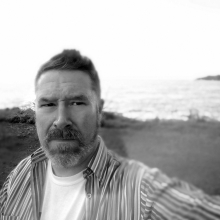
David Stradling is the Zane L. Miller Professor of Urban History and Interim Director of the School of Environment and Sustainability at the University of Cincinnati. He has held academic positions since 1999, progressing from Assistant Professor to his current full professorship. His research focuses on urban and environmental history, with notable works including Where the River Burned and The Nature of New York . Stradling earned his PhD from the University of Wisconsin-Madison (1996) following degrees from Colgate University. His research interests span urban development, environmental policy, and Cincinnati's historical narrative. He co-authored a global history of dredging and has explored topics like climate justice, sustainability frameworks, and the interplay between cities and natural systems. Stradling actively participates in interdisciplinary projects, including a 2024 NSF-funded conference connecting Earth and health scientists. His scholarship emphasizes historical analysis of environmental challenges, from air quality regulation to modern sustainability strategies. Recent work addresses urban resilience, equitable development, and the moral dimensions of environmental decision-making. Stradling’s academic leadership includes roles in faculty governance and institutional reform initiatives.
Raphaël Fischler is a Full Professor and former Dean of the Faculty of Urban Planning and Landscape Architecture at the University of Montreal. He holds dual expertise in urban planning theory, history, and practice, with a focus on North American urban development, land-use regulation, and governance. His academic roles include teaching at McGill University and serving as Dean from 2018–2023, during which he led strategic initiatives like the Quartier de l’Innovation and addressed urban challenges such as housing affordability and metropolitan governance. **Education:** PhD in Urban Planning, UC Berkeley (1993) Master of City Planning, MIT (1987) Master of Science in Architecture, MIT (1987) Bachelor of Engineering, Eindhoven University of Technology (1984) **Research Interests:** Fischler’s work explores urban planning’s historical foundations, particularly zoning’s evolution, and integrates reflective practice into pedagogy. He advises on municipal projects and contributes to policy debates on density, public participation, and sustainable urbanism. His research bridges academia and practice, emphasizing ethical planning and community engagement. **Articles Trends:** His recent publications analyze zoning’s historical role, social justice in urban redevelopment, and governance challenges in Montréal. He critiques systemic issues like housing affordability and advocates for equitable urban policies. **Awards & Recognition:** Fellow of the Canadian Institute of Planners (2020) Émérite Member, Order of Quebec Urban Planners (2014) McGill Principal’s Excellence in Teaching Award (2013) **Grants & Teams:** He collaborates with institutions like the Centre de recherche interdisciplinaire en études montréalaises (CRIEM) and advises public agencies on metropolitan development. His work spans academic leadership, professional practice, and public advocacy, addressing urban challenges through interdisciplinary approaches. **Labs/Teams:** Affiliated with the CRIEM , focusing on Montréal’s urban history and contemporary planning issues. He mentors students in urban policy and design through studio courses and thesis supervision.
Prof. Antje Stokman is a Professor of Landscape Architecture and Landscape Planning at HafenCity University Hamburg. Her department researches and designs landscape-, nature-, and water-related transformation processes, with teaching and research focused on the design and collaborative creation of urban landscapes in their dynamic interactions between natural and human habitats. Her research interests include: Landscape Architecture and Urban Design Climate-Adapted Urban Landscapes Blue-Green Infrastructure Water-sensitive Urban Design Linear Infrastructure Landscapes Urban Transformation Processes Prof. Stokman has led several significant research projects including the LILAS research network (Linear Infrastructure Landscapes as Open Spaces for the City in Climate Change), the City on the Blue Belt project, and the Blue-Green Infrastructure Dialogue Process. Her recent publications focus on transforming urban linear infrastructure landscapes and developing water development corridors along federal waterways as open space potential for urban green-blue infrastructure. Scientific awards: City of Hamburg's Teaching Prize (Hamburg Teaching Award) Prof. Stokman supervises doctoral projects including Katarina Bajc's work on "Perception and Design of Ecological Processes in Landscape Architecture" and Anne Kittel's research on "The Transformation of Metropolitan Landscapes." She has received research funding from various sources including the Federal Environment Agency, BMUV, BMBF, and EU Horizon 2020. She co-leads the Blue-Green Infrastructure Lab (BGI-Lab) with Prof. Wolfgang Dickhaut, which focuses on interdisciplinary research at the intersection of environmentally sound urban planning and landscape architecture.
Professor Scott Kirsch (University of North Carolina at Chapel Hill) is a historical geographer examining spatial dimensions of American colonialism in the Philippines (1900-1913). His recent open-access book American Colonial Spaces in the Philippines: Insular Empire (Routledge, 2023) analyzes territorialization, cartography, landscape planning, and infrastructure development under figures like William Howard Taft and Cameron Forbes. Focuses on material and ideological production of colonial spaces Examines intersections of aesthetics, coercion, and governance Highlights American empire-building through Manila waterfront projects and Baguio's 'City Beautiful' planning Research explores spatial policies as tools for extending state control over diverse populations and environments, employing Henri Lefebvre's spatial theories. Scientific Awards: Luce Foundation Award for Open Access publication Collaborations include working with UNC's Carolina Asia Center for open-access dissemination.
Fulong Wu holds the prestigious Bartlett Chair of Planning at University College London's Bartlett School of Planning since 2011. This distinguished position has previously been held by notable figures including Sir Patrick Abercrombie, Sir William Holford, Lord Richard Llewelyn-Davies, Sir Peter Hall, and Mike Batty FRS. Professor Wu's appointment represents a significant moment for the school to redefine planning discipline in global terms for a new generation. Wu received his BSc and MSc degrees from Nanjing University and completed his PhD at the University of Hong Kong. Prior to joining UCL, he taught at the Universities of Southampton and Cardiff. His academic journey reflects a deep commitment to urban planning scholarship with a specific focus on Chinese urban contexts. BSc, Nanjing University MSc, Nanjing University PhD, University of Hong Kong Professor Wu's research centers on urban development in China and its social and sustainable challenges. His work critically examines the Chinese model of urban governance, state entrepreneurialism, and the financialization of Chinese cities. He has made significant contributions to understanding migration patterns, spatial inequalities, suburbanization, neighborhood governance, and urban poverty in Chinese cities. His research provides valuable insights that challenge Western-centric planning theories while enriching global urban studies with Chinese perspectives. His recent publications reveal a clear trend toward analyzing the evolving relationship between statecraft and urban governance in China, particularly in the context of post-pandemic recovery and financialization processes. A significant portion of his recent work examines how Chinese cities manage crises, with several studies focusing on the Shanghai lockdown experience. His ERC-funded project on rethinking China's model of governance serves as an intellectual anchor for much of this research, demonstrating how Chinese urban governance represents both a distinctive model and a critical lens for understanding global urban transformations. Professor Wu's scholarly recognition includes: Fellow of the Academy of Social Sciences (2016) ESRC 2013 Outstanding International Impact Award Fellow of the Higher Education Academy (2002) British Academy Fellow As Principal Investigator of a European Research Council (ERC) Advanced Grant project titled 'Rethinking China's Model of Governance,' Professor Wu leads significant research funding that supports his team's work. He co-founded and coordinates the China Planning Research Group (CPRG) at UCL with Professor Fangzhu Zhang, which has become an influential research cluster generating substantial impact within and beyond the university. His mentorship extends to supervising PhD students and collaborating with early-career researchers on China-focused urban studies. The China Planning Research Group (CPRG), jointly coordinated by Professor Wu and Professor Zhang, serves as a vital hub for research on Chinese urban development. This group has produced influential work on topics including rural migrants in urban China, Chinese land and housing development, urban neighborhoods, and regional governance systems. The CPRG's research output has significant policy implications and contributes to global debates about alternative urban development models beyond neoliberal paradigms.
Prof. Fatih Terzi is a faculty member in the Department of Urban and Regional Planning at Istanbul Technical University's Faculty of Architecture. His research focuses on sustainable urban development, resilience, ecology, GIS applications, and smart cities. He has held visiting researcher positions at Clemson University (USA), University College London, and Technical University Berlin. He has led projects supported by EU, TÜBİTAK, and others, addressing ecological planning, risk reduction, and urban regeneration. His work bridges academic research with practical urban planning, including projects with municipalities and the Ministry of Environment. He has received multiple awards for research and design, including the Best Paper Award (2025) and TÜBİTAK recognitions. Education: PhD in Urban and Regional Planning from Istanbul Technical University (2010), MSc in Urban Planning (2004), BSc in Urban and Regional Planning from Yıldız Technical University (2000). Research interests include spatial strategic planning, ecological cities, and climate-sensitive urban design. He uses urban modeling and GIS to address sustainability challenges. His recent projects include Istanbul's flood risk analysis, green space strategies, and sustainable city planning in Kayseri and Malatya. Notable awards include the 2024 TÜBİTAK award for urban resilience projects and the 2023 Istanbul Technical University Academic Performance Award. He has also been recognized for design competitions, including the İzmir Ecological Living Area Project (2021) and the 2017 Balkan Architectural Biennale Urbanism Grand Prix. Prof. Terzi holds administrative roles at Istanbul Technical University, including Merkez Danışma Kurulu Üyeliği (2023–present). He oversees academic projects on urban resilience, smart cities, and ecological planning, contributing to both national and international initiatives.
Associate Professor Paola Leardini holds dual roles as Director (Research) and Associate Professor at the University of Queensland's School of Architecture, Design and Planning, within the Faculty of Engineering, Architecture and Information Technology. Her work bridges design and performance in built environments, focusing on net-zero targets, urban resilience, and circular economy strategies in construction. She is a key researcher in the Centre for Future Building Structures and advises on Queensland’s social/affordable housing through the Design Excellence Panel. Leardini earned a PhD in building energy efficiency and environmental quality from Politecnico di Milano, supervised by Prof. P. Ole Fanger. Her educational journey includes studies in Milan, Berlin, Leicester, and Copenhagen. Research highlights include eco-retrofitting of historical districts (e.g., Milan’s Quartiere Mazzini), Passive House adaptations for subtropical climates, and timber construction innovations with the ARC Advance Timber Hub. She co-founded Passive House Institute New Zealand (PHINZ) and collaborates globally on projects like water-sensitive cities and flood-resilient urban design. Her recent publications emphasize timber’s role in sustainable construction, circular economy frameworks, and climate-responsive building systems. Advising includes leading an ARC Linkage project on adaptable housing while fostering industry partnerships through projects like Norman Creek Catchment flood resilience studies. She actively contributes to labs/teams advancing timber use and urban resilience, aligning with UQ's mission for future-ready built environments.
Professor Yo Sasaki is a distinguished academic at Waseda University's Faculty of Science and Engineering, School of Creative Science and Engineering, specializing in urban design, landscape architecture, and civil engineering. With a Master of Engineering from Tokyo Institute of Technology and a Doctor of Engineering from the University of Tokyo, he has established himself as a leading authority in infrastructure design and regional planning. Member of Science Council of Japan (SCJ) since 2020 Active member of Japanese Institute of Landscape Architecture Member of City Planning Institute of Japan Member of Architectural Institute of Japan Long-standing member of Japan Society of Civil Engineers Professor Sasaki's research focuses on the intersection of urban planning, landscape architecture, and civil engineering design, with particular emphasis on regional water systems, historical infrastructure, and community-based urban development. His work bridges theoretical frameworks with practical applications, exploring how traditional water utilization systems can inform contemporary sustainable design practices. He investigates how intermediate spaces in residential areas foster urban publicness and examines resident-led approaches to revitalizing depopulated urban centers. His extensive publication record reveals consistent focus on regional water infrastructure, with recent work analyzing traditional water facilities like Kawado in Niigata Prefecture, tsunami memorial parks, and community-based water management systems. His research demonstrates a clear trajectory toward integrating historical wisdom with contemporary design challenges, particularly in the context of disaster recovery and sustainable regional development. Japan Society of Civil Engineers Publication Culture Award (2024) Landscape and Design Committee Design Award, Grand Prize (2024) Waseda University Teaching Awards President's Award (2022) Landscape and Design Committee Design Award, Excellence Award (2022) Multiple historical design awards dating back to 2005 Professor Sasaki actively mentors junior researchers and collaborates on numerous research projects, including regenerative design of intermediate spaces between homes and scalable water infrastructure design programs. His work with the Japan Society of Civil Engineers' D&I Committee demonstrates commitment to diversity and inclusion in engineering practice. His laboratory (Yoh Lab) serves as a hub for innovative research connecting people, towns, and natural systems through thoughtful design.
Professor David Nichols is a faculty member in the Melbourne School of Design at The University of Melbourne, holding the position of Professor in Urban Planning. His research focuses on urban planning history, theory, and socio-cultural planning with particular attention to 20th century Australian contexts. He has authored/co-authored significant works including Urban Australia and Post-Punk: Exploring Dogs in Space and The Alert Grey Twinkling Eyes of C. J. DeGaris . His research interests span urban and cultural heritage, architectural history, and the socio-cultural dimensions of urban development. Notable projects include the 'PastPort' mobile app for citizen heritage engagement and studies on community activism in public space conservation. Nichols teaches courses on urban planning history and has contributed to debates on postwar planning education and regional development strategies. His academic output reflects interdisciplinary engagement with topics ranging from suburban morphology to audiovisual technology in education. Current work includes exploring the legacy of Walter Burley Griffin’s urban designs and reinterpreting Australian country town dynamics. He maintains active collaborations in cultural heritage preservation and community-driven urban initiatives.
Mohd Ahmad Syed is a Senior Lecturer in Geotechnical Engineering at the University of Manchester's Department of Civil Engineering and Management. His research focuses on climate change impacts on geotechnical infrastructure, resilient and sustainable infrastructure design, and earthquake engineering. He holds a PhD from the Indian Institute of Technology Bombay and has industry experience with firms like Consulting Engineering Services (I) Pvt. Ltd and Dar Al-Handasah Consultants. Education: BTech (Hons) in Civil Engineering, Indian Institute of Technology Kanpur (2001) MTech in Geotechnical Engineering, Indian Institute of Technology Kanpur (2003) PhD in Seismic Analyses of Waterfront Structures, Indian Institute of Technology Bombay (2009) Research Interests: Climate change modelling for geotechnical infrastructure resilience Development of sustainable construction materials (e.g., bagasse ash) Seismic risk analysis for dams and tunnels in West Africa Artificial soil weathering techniques for laboratory testing Coupled numerical methods for embankment stability under climate scenarios Editorial Activities: Assistant Editor, International Journal of Geomechanics (ASCE) Assistant Editor, Indian Geotechnical Journal (Springer) Key Achievements: Developed first-of-its-kind displacement-based S-curve for seismic earth pressure analysis Co-developed methodologies for post-liquefaction pile behavior and blast-loaded tunnels Guided 10 PhD/MSc students in geotechnical resilience and sustainability topics
Zoran Đukanović is a Professor at the Faculty of Architecture, University of Belgrade. His work focuses on urban design, cultural heritage, and sustainable development, with a particular emphasis on participatory methods and community engagement in urban planning. His research explores the intersection of architecture, public spaces, and social dynamics, addressing challenges such as climate change adaptation, heritage conservation, and urban regeneration. Notable projects include studies on Belgrade’s urban policies, waterfront revitalization, and the role of cultural sites in tourism and placemaking. He has contributed to interdisciplinary initiatives linking education, urban planning, and place branding, advocating for inclusive and equitable urban development.
Sanda Lenzholzer is a Full Professor at Wageningen University's Department of Landscape Architecture and Spatial Planning. Her research focuses on urban climate adaptation, sustainable design, and the integration of ecological principles into urban planning. She leads projects addressing climate-responsive design strategies, green infrastructure, and the mitigation of urban heat islands. Lenzholzer is actively involved in academic leadership roles, including editorial work for journals like Landscape and Urban Planning , and has collaborated internationally on climate-related initiatives. Notable contributions include developing design guidelines for urban open spaces in hot arid climates and exploring the spatial impacts of cultivating biobased materials. She received the Biking Betuwe award in 2011 for her contributions to sustainable urban design. Her academic engagements include supervising multiple PhD and EngD students in areas like climate-responsive design and biobased construction. Lenzholzer has delivered keynote lectures and workshops on future urban landscapes and climate adaptation, emphasizing interdisciplinary approaches. She has also served as a visiting professor at institutions like Politecnico di Milano, Italy, and contributed to public media discussions on urban climate challenges. Her work bridges research and practice, fostering innovation in sustainable urban development through design-driven methodologies. Lenzholzer’s research portfolio includes over 160 publications and 278 professional activities, showcasing her commitment to advancing knowledge in urban environmental management. She leads projects funded by diverse stakeholders, addressing topics such as multifunctional urban waterfronts and the integration of climate adaptation into policy frameworks. Her efforts highlight the importance of community engagement and spatial quality in creating resilient cities.
Kristina Hill serves as Associate Professor of Landscape Architecture & Environmental Planning and Urban Design at the University of California, Berkeley, focusing on the intersection of urban ecology, hydrology, and climate-resilient design with social justice imperatives. Her academic credentials include a Ph.D. and Master of Landscape Architecture from Harvard University, and a Bachelor of Science in Geology from Tufts University. Professor Hill's research investigates adaptation strategies for urban districts and shorezones facing climate change impacts, with emphasis on redesigning urban water systems to support ecological health (including salmon habitats in the Pacific Northwest) and protecting coastal communities from sea-level rise. Her work spans the San Francisco Bay Area, US Mid-Atlantic, Europe, and Hawaii, consistently integrating physical design solutions with social equity considerations while examining international case studies of urban waterfront transformation. Her professional recognition includes: Fellow of the Urban Design Institute (New York) Fulbright Scholar research appointment in Stockholm, Sweden Professor Hill has held faculty positions at MIT, University of Washington (where she co-founded and chaired a transit agency), and University of Virginia (as Landscape Architecture Department Chair) before Berkeley. She authored 'Ecology and Design: Frameworks for Learning' (Island Press, 2002) and is developing a new book on climate-adaptive urban waterfronts. Her practical experience includes serving on the Dutch-American engineering team that developed New Orleans' post-Katrina water management strategy and ongoing international collaborations on coastal resilience design.
Nik Luka is an Associate Professor at the School of Architecture, McGill University, with a joint appointment in Urban Planning. He holds a Ph.D. from the University of Toronto, an M.Arch. from Laval University, and a B.A.A. from Toronto Metropolitan University. His roles include Associate Director of the Centre for Interdisciplinary Research on Montréal and associate memberships in the Department of Equity, Ethics, and Policy and the Bieler School of Environment. Ph.D. (Toronto) M.Arch. (Laval) B.A.A. (Toronto Met.) Luka specializes in ethnography, landscape studies, and critical design/planning research, focusing on REURBANISM—the transformation of (sub)urban landscapes through collaborative design and participatory governance. His work bridges natural processes and human culture, emphasizing narrative, discourse, and policy-led urbanism. His recent publications highlight trends in recreational mobilities, densification, transit-oriented development, and periurban landscape dynamics. Themes span urban walkability, public space design, and transdisciplinary approaches to sustainability. SSHRC Partnership Grant with Canada Mortgage and Housing Corporation Collaborative projects in Sweden and continental Europe Champ des Possibles partnership in Montreal Luka engages with community organizations such as the Montreal Urban Ecology Centre, Convercité, and Suspicious Fish, blending academic research with civic practice. His affiliations include the Trottier Institute for Sustainability in Engineering and Design and international collaborations on landscape connectivity.
Dr. Joanna Macalik is a Lecturer in the Department of Marketing Management at Wrocław University of Economics. Her academic work focuses on the intersection of marketing theory and practical applications across multiple domains including personal branding, museum marketing, and regional branding. Dr. Macalik's research interests span several interconnected domains of modern marketing. She has made significant contributions to understanding personal branding, particularly among startup leaders and young professionals. Her work examines how individuals construct and leverage their personal brands to enhance business performance and career advancement. Additionally, she has conducted extensive research on museum marketing, investigating how cultural institutions communicate with their audiences and contribute to regional branding efforts. Her studies on influencer marketing, particularly during the COVID-19 pandemic, demonstrate her ability to address timely and relevant marketing challenges. Analysis of Dr. Macalik's publication record reveals a clear trajectory of research focused on branding across different contexts. Her work consistently bridges theoretical marketing concepts with practical applications, often using empirical research methods. The publications show a progression from traditional marketing communication topics toward more contemporary digital and social media applications. Notably, her research frequently employs case study methodologies, with a particular focus on the Wroclaw region in Poland, suggesting strong local engagement alongside broader theoretical contributions. Dr. Macalik has advised numerous students and contributed to various research projects, though specific details about her mentoring activities are not widely publicized. Her work has likely contributed to curriculum development in marketing communication, personal branding, and digital marketing within her department.