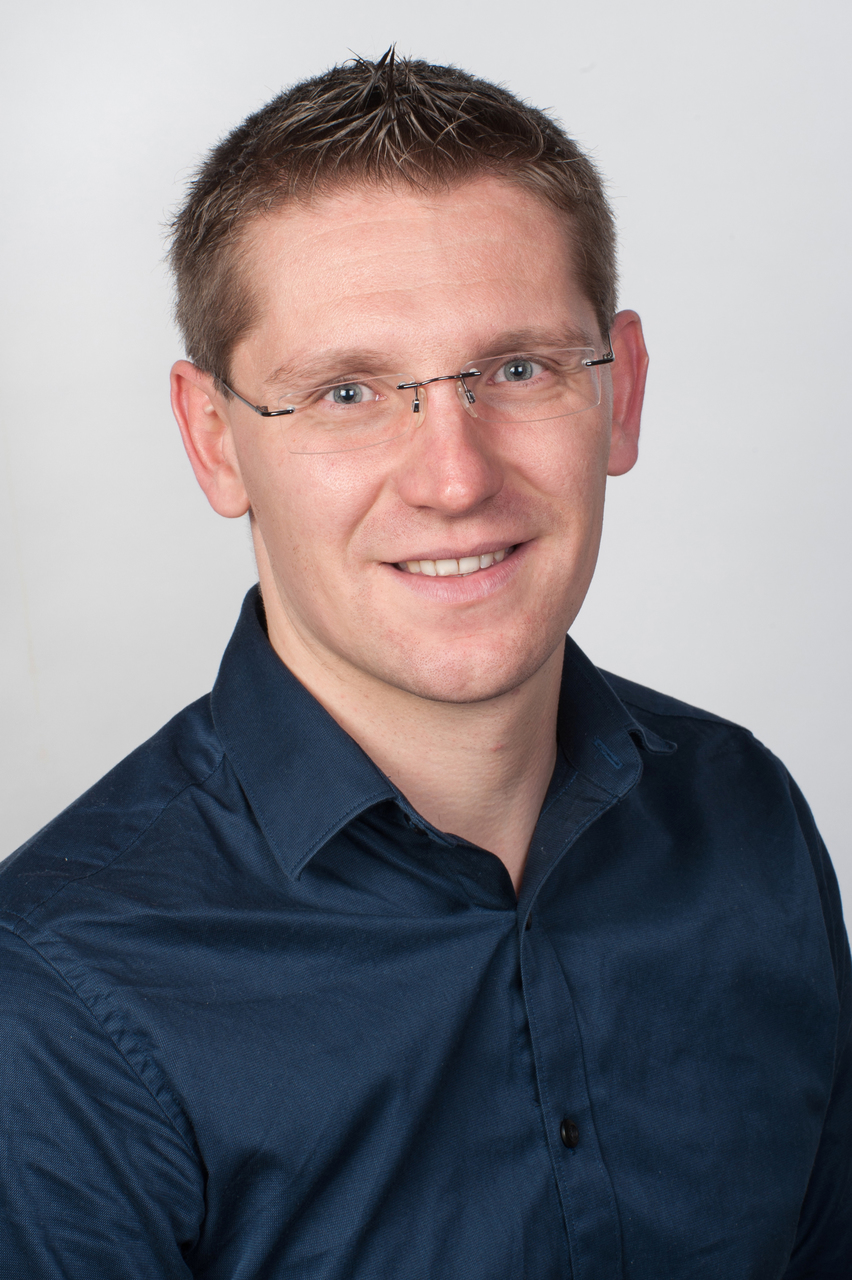
Prof. Dr. Jörg E. Drewes is a Full Professor and Chair at the Research Institute for Urban Water Management, Technical University of Munich (TUM), Germany. He also serves as Academic Program Director for Environmental Engineering at TUM and is a co-founder of Waterloop Solutions GmbH. His work spans advanced water treatment technologies, wastewater reuse, and environmental health surveillance. Affiliations : TUM, Colorado School of Mines, King Abdullah University of Science and Technology, UNSW Water Research Centre Research focuses on advanced oxidation processes , membrane fouling mitigation , micropollutant removal , and wastewater epidemiology for public health. His team develops integrated systems for water-energy-food nexus applications and graphene oxide-based treatment solutions. Recent publications address PFAS remediation , UVC-LED pre-treatment for biofouling control, and GIS-based wastewater surveillance models . Awards include the Bayerische Staatsmedaille (2023) and William Dunbar Medal (2022). 2023 : Bayerische Staatsmedaille 2022 : William Dunbar Medal 2018 : IWA Fellow He leads the Nexus@TUM initiative and contributes to EU water resilience strategies. Collaborations include projects in Germany, China, India, and Spain, focusing on climate-resilient water systems and resource recovery .
Leibniz Institute of Freshwater Ecology and Inland FisheriesGermany
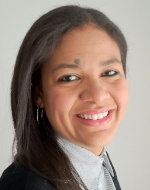
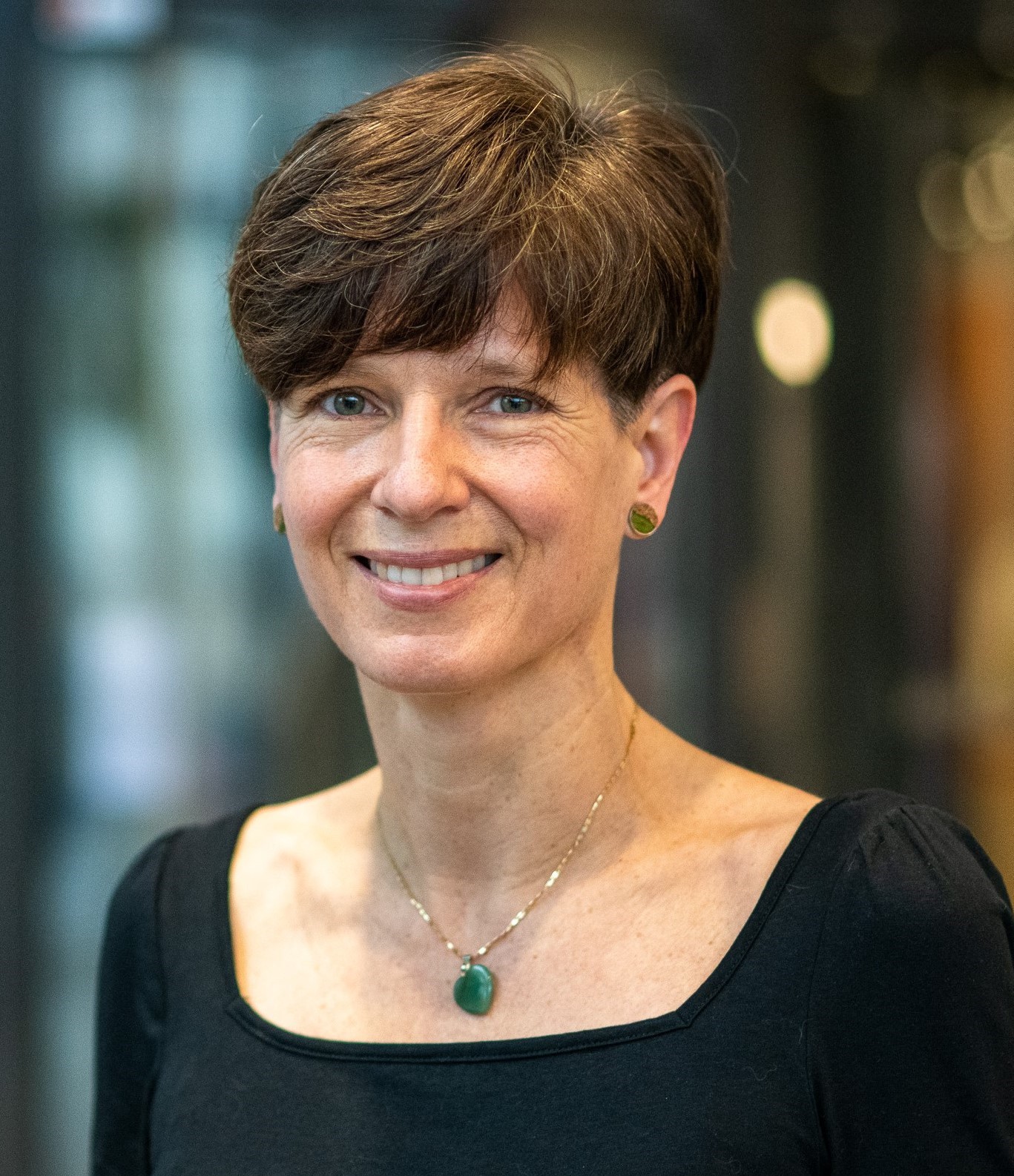
Dr. Stephanie Spahr is a Research Group Leader at the Leibniz Institute of Freshwater Ecology and Inland Fisheries (IGB) in Berlin, Germany, where she leads the Organic Contaminants research group within the Department of Ecohydrology and Biogeochemistry. Previously, she served as a Junior Research Group Leader at the University of Tübingen's Center for Applied Geoscience (2019-2021) and as a Postdoctoral Researcher at Stanford University's Department of Civil and Environmental Engineering (2016-2019). Dr. Spahr earned her PhD in Environmental Chemistry from the Swiss Federal Institute of Technology Lausanne (EPFL) and the Swiss Federal Institute of Aquatic Science and Technology (Eawag) in 2016. Her doctoral research focused on the formation of N-nitrosodimethylamine during water disinfection with chloramine. She completed her MSc in Geoecology at the University of Tübingen in 2012, with thesis work on carbon and nitrogen isotope analysis of benzotriazoles conducted at Eawag, and her BSc in Geoecology/Ecosystem Management at the same institution in 2010. Dr. Spahr's research focuses on trace organic contaminants in aquatic systems, with particular expertise in transformation processes of contaminants in natural and engineered systems, advanced oxidation processes for water treatment, urban blue-green infrastructure, and compound-specific isotope analysis. Her work bridges environmental chemistry, engineering, and ecology to address water quality challenges in urban and natural water systems. She employs advanced analytical techniques to track contaminant sources and transformation pathways, with a strong emphasis on practical applications for water treatment and environmental protection. Her recent publications demonstrate a strong focus on biochar-based water treatment technologies, particularly for stormwater management. She investigates how biochar amendments can remove trace organic contaminants from urban runoff, with recent work examining persulfate activation mechanisms, the role of chloride in reactive species formation, and the performance of engineered media filters under dynamic conditions. Her research also extends to understanding contaminant transport in rivers, the ecological impacts of pollutants, and developing analytical methods for environmental monitoring. The interdisciplinary nature of her work connects chemical processes with ecological outcomes. Outstanding Review Paper Award 2023 in Environmental Science: Water Research & Technology Selected for the Falling Walls Female Science Talents Intensive Track 2023 Selected mentee in the Leibniz Mentoring Programme 2022-2023 Best poster award (1st prize) at the Wasser 2022 of the Water Chemistry Society Selected fellow in the Postdoc Academy for Transformational Leadership 2020-2022 (Robert Bosch Stiftung) Selected fellow in the Athene Program for early female career researchers at the University of Tübingen, 2020-2021 As a Research Group Leader, Dr. Spahr supervises multiple research projects including 'POllution in UrbaN ponds, eco-evolutionary Dynamics, and Ecosystem Resilience (POUNDER)', 'Dynamic hyporheic zone', 'NYMPHE', and the 'Incident-related special investigation programme for the environmental disaster in the Oder River'. She serves on the Executive Board of the German Water Chemistry Society and heads its Expert Committee on 'Oxidative Processes'. Her collaborative work spans numerous institutions across Germany and internationally, addressing critical water quality challenges through interdisciplinary approaches. Dr. Spahr leads the Organic Contaminants research group at IGB Berlin, which focuses on understanding the fate and treatment of organic pollutants in water systems. Her team employs advanced analytical techniques including compound-specific isotope analysis to track contaminant sources and transformation pathways. The group collaborates extensively with other departments at IGB and with international partners on projects addressing urban water challenges and ecological impacts of pollution. Current research emphasizes innovative water treatment technologies, particularly biochar-based systems for stormwater management, and investigating the complex interactions between contaminants, aquatic ecosystems, and human activities.
Prof. Dr. Andreas Hirsch is a Professor in the Department of Chemistry and Pharmacy at Friedrich-Alexander University Erlangen-Nürnberg (FAU) . His research focuses on organic chemistry , graphene functionalization , carbon nanomaterials , and molecular solar thermal systems , with significant contributions to 2D material engineering and supramolecular chemistry . Chair of Organic Chemistry II (FAU Erlangen-Nürnberg) ResearchGate: Profile Google Scholar: Profile His work spans graphene patterning via laser writing , black phosphorus stabilization using perylenediimides , and covalent functionalization of 2D materials like MoS 2 and carbon nanotubes . Recent studies include non-covalent passivation of BP nanosheets and electroswitchable catalysis for solar thermal energy storage . His scientific awards include the Second Place Poster Award (2023) and Robert C. Haddon Research Award (2021) . Collaborative projects highlight smart nanoparticle systems for radiation therapy and environmental remediation applications.
Nils Ole Tippenhauer is a faculty member at the CISPA Helmholtz Center for Information Security , leading the SCy-Phy research group . His academic journey includes an Assistant Professorship at the Singapore University of Technology and Design (SUTD) (2014–2018), a PhD in Computer Science from ETH Zurich (2012), and a Diploma in Computer Engineering from Hamburg University of Technology (2007). He also holds an exchange study year at the University of Waterloo (2004–2005) supported by a DAAD scholarship. Research Interests focus on practical systems security , particularly Security of Cyber-Physical Systems Industrial Control Systems (ICS) and Industrial IoT (IIoT) Physical-Layer Security and Wireless Security Privacy-Preserving Technologies (e.g., DP3T project) Embedded Systems Security Threat Detection & Defenses His work integrates both theoretical and applied approaches, addressing vulnerabilities in critical infrastructures like water systems and power grids. Recent Publications highlight trends in Anomaly detection evasion in industrial networks Microarchitectural side-channel defenses Localization techniques in cellular networks Security analysis of ICS protocols Data-driven vulnerability assessments for robotics Cyber-physical simulation for infrastructure security Scientific Awards include Best paper at DIMVA'23 Distinguished Paper at ACSAC 2022 Best paper at CPSIOTSEC 2022 Best paper at CPSS 2017 K-H Ditze Award for diploma thesis (2007) SG Mark Institution award (2016) Runner-Up at smart energy hackathon (2013) Advising and Grants feature PhD defenses of Daniele Antonioli and Hamid Reza Ghaeini (2022), co-organizing conferences like WiSec and CPSS , and leading projects such as the National Science Experiment (NSE) with 50,000 mobile sensors in Singapore. He also contributed to the DP3T project for privacy-preserving contact tracing. Labs and Teams include the SCy-Phy research group at CISPA and the development of testbeds like SWaT (Secure Water Treatment), WADI (Water Distribution), and EPIC (Electric Power and Industrial Control) at SUTD. These platforms enable hands-on security research in realistic industrial environments.
Prof. Roland A. Fischer is a Full Professor at the Chair of Inorganic and Metal-Organic Chemistry at Technical University of Munich (TUM). Previously, he held a Full Professorship at Ruhr University Bochum (1997–2015). His research focuses on multifunctional metal-organic frameworks (MOFs), clusters, and composites for energy conversion, catalysis, gas storage, and environmental applications. He leads the Catalysis Research Center and has pioneered advancements in MOF-based catalytic systems and stimuli-responsive materials. Education: 1981–1986: Diplom in Chemistry (TUM) 1989: PhD, Dr. rer. nat. (TUM) 1995: Habilitation (TUM) Research Interests: His work integrates molecular and extended catalytic systems, including: - Design of MOFs for photocatalytic fuel production - Nanoparticle encapsulation in robust frameworks - Redox-switchable materials and photochromic systems - Cluster chemistry and superatom complexes - Applications in energy storage, environmental remediation, and biomedical technologies. Major Achievements: Over 680+ publications, h-index 101 (Scopus 2025) Coordinator of EU projects (SURMOF, ENHANCE, DEFNET) Recipient of Heinz-Maier-Leibnitz Award (1993) and Alfried Krupp Award (1996) Editorial roles: Angewandte Chemie , Chemical Vapour Deposition Grants & Teams: He has secured major grants including DFG Priority Programs (CVD-Materials, COORNETs) and led interdisciplinary teams in EU initiatives. His lab collaborates globally, including visiting professorships at Kyoto University and IIT Bombay. Labs & Facilities: His research uses advanced facilities like the Catalysis Research Center and contributes to platforms such as the Munich Catalysis Alliance. Key tools include atomic layer deposition, in situ characterization, and MOF-based device fabrication.
Thomas Rüde is Universitätsprofessor for Hydrogeology at RWTH Aachen University , Germany, where he leads the Hydrogeology group within the Faculty of Georesources and Materials Engineering. Holding the chair since 2005, he also serves as Managing Director of the Vereinigung Aachener Geowissenschaftler e.V. and has previously been Vice-President (2008-2014) and Executive Council member (2000-2008) of the International Mine Water Association (IMWA). Education 2004 – Privatdozent (Dr. rer. nat. habil.), University of Munich 1995 – Dr. rer. nat., University of Karlsruhe 1991 – Diplom-Geologe, University of Karlsruhe Research focus Professor Rüde’s work centres on understanding and modelling flow and reactive transport in complex aquifer systems . Key themes include: Contaminant hydrogeology – behaviour of geogenic arsenic and uranium in groundwater Groundwater protection and remediation – risk assessment and mitigation strategies Mine-water management – acid mine drainage, dewatering-well clogging, post-mining landscapes Tracer and hydraulic testing – field experiments to quantify subsurface heterogeneity Numerical modelling – high-performance simulation of multi-aquifer systems and karst His research spans Europe (Germany, Austria, Netherlands), Latin America (Mexico, Indonesia) and South-East Asia, frequently in close collaboration with local universities and industry partners. Publication trends Since 2010, Rüde has published extensively on geogenic contamination (As, U, F) in sedimentary and volcanic aquifers, mine-water impacts , and karst hydraulics . Recent work (2022-24) highlights advanced environmental tracers (gadolinium), transboundary groundwater issues, and the sustainable management of post-mining landscapes under climate change. Numerical models range from site-scale dewatering optimisation to catchment-scale coupled flow-transport simulations. Scientific awards & recognition Best Teaching Award 2010 – RWTH Aachen University Best Teaching Award 2012 – RWTH Aachen University Best Teaching Award 2014 – RWTH Aachen University Supervision & academic service Since 1998 he has taught hydrogeology through lectures, seminars, laboratory and field courses, and computer-based modelling labs. To date he has supervised: 13 PhD candidates 34 Diploma students 57 MSc students 63 BSc students He is Chairman of the Study Commission for the BSc programme in Georesources Management at RWTH Aachen, ensuring curriculum development and quality assurance. Laboratory & field infrastructure His group operates modern hydrochemical laboratories for trace-element analyses and maintains field stations for tracer experiments in Germany, Mexico and Indonesia. High-performance computing resources (in collaboration with the Jülich Supercomputing Centre) enable large-scale groundwater modelling and Monte-Carlo uncertainty assessments.
Professor Emiliano Cortés is a faculty member at the Ludwig Maximilian University of Munich (LMU), where he leads research in Plasmonic and Photonic Chemistry at the Nano-Institute Munich. His work bridges the fields of nanotechnology, physical chemistry, and materials science, focusing on light-matter interactions for energy conversion applications. Dr. Cortés' research focuses on plasmonics , photocatalysis , and electrocatalysis at the nanoscale. His group investigates how the dynamics of photons, plasmon-polaritons, carriers, phonons, and molecular states influence chemical reactivity. A key aspect of his work involves developing techniques to study plasmonic systems at the single particle level and designing rational synthesis approaches for plasmonic colloidal photo and electrocatalysts. His research has significant implications for sustainable energy technologies, environmental remediation, and advanced sensing applications. Analysis of Professor Cortés' recent publications reveals a strong focus on energy conversion processes, with particular emphasis on CO2 reduction, ammonia synthesis, and hydrogen production. His work integrates plasmonic effects with catalytic processes to enhance reaction efficiencies, often through innovative interface engineering and nanostructure design. The research spans fundamental studies of charge carrier dynamics to practical applications in energy storage and environmental technologies. Professor Cortés actively mentors doctoral candidates and postdoctoral researchers, currently advertising open positions for projects on Single particle photo and electrocatalysis and Synthesis of hybrid colloids . His research group, the Hybrid Plasmonics Lab (www.hybridplasmonics.org), receives funding from various sources to support their work on plasmon-mediated chemistry for sustainable applications. The Cortés research group operates within the Nano-Institute Munich, utilizing state-of-the-art facilities for nanomaterial synthesis, characterization, and testing. Their work combines experimental approaches with theoretical modeling to understand and harness light-matter interactions at the nanoscale for practical applications in energy conversion and environmental technologies.
Dr. Maryegli Fuss is a Scientific Associate at the Institute for Technology Assessment and Systems Analysis (ITAS), Karlsruhe Institute of Technology (KIT) in Germany. She heads the 'Energy-X Nexus' working group within the 'Sociotechnical Energy Futures' research group and serves as academic mentor for the doctoral program Climate, Resources and Circular Economy (KLIREC) . She also contributes to ITAS's 'New Work' initiative and provides scientific advice for German-Indian university collaborations (TU9 network). Education: PhD in Philosophy (Sustainability), KIT (2022) MSc in Material Flow Management, Trier University of Applied Sciences (2012) BSc in Agro-industrial Chemistry, Federal Institution of Goiás, Brazil (2010) Research Focus: Her transdisciplinary work integrates sustainability science, systems analysis, and industrial ecology. Primary domains include: (1) Circular economy implementation in waste management systems, (2) Energy-resource nexus (Water-Waste-Energy-Food), (3) Supply chain risks for critical materials in renewable energy, and (4) Life cycle assessment of low-carbon transitions. Methodologies feature material flow analysis, stakeholder interviews, and socio-technical system modeling. Publications: Her research output emphasizes sustainable waste management in Global South contexts (especially Brazil), critical material supply chains for energy transitions, and environmental assessment frameworks. Recurring themes include circular economy implementation challenges, transdisciplinary approaches, and policy design for resource security. Leadership: Coordinates international research partnerships (e.g., Chile/Indonesia water-energy nexus projects) and leads doctoral mentoring initiatives focused on climate-resource systems.
Prof. Dirk Ziegenbalg is a Professor of Chemical Engineering and Deputy Director at the Institute of Chemical Engineering at Ulm University. He holds a doctorate from Friedrich-Schiller-University Jena (2013) and previously served as Group Leader at the Institute of Chemical Technology, University Stuttgart (2012-2018). His research focuses on photochemical engineering, reactor design, and photocatalytic processes for applications in energy and environmental technology. Key contributions include advancements in photoreactor engineering, light-driven catalysis, and scalable water purification systems. He has been recognized with the Hanns Hofmann Award (2017) for innovations in microstructured reactor design. Teaching responsibilities include courses such as Strömungsmechanik , Chemische Prozesstechnik , and Industrial Catalysis . His research group, Photochemical Engineering, develops modular and industrially scalable photoreactor systems, emphasizing process intensification and dynamic irradiation control. Recent work addresses challenges in CO₂ conversion, selective Grignard reagent formation, and real-time process analytics using spectroscopy. Publications highlight interdisciplinary approaches, integrating chemical engineering with materials science and environmental applications. Ongoing projects involve 3D-printed catalytic materials, radiation field tomography for photoreactor characterization, and cross-disciplinary collaborations for sustainable water treatment technologies.
Dr. Benedikt Aumeier is a Research Fellow and head of the working group "Advanced Water Treatment" at the Chair of Urban Water Management, Department of Civil, Geo and Environmental Engineering, TUM School of Engineering and Design at the Technical University of Munich since 2023. Previously, he served as a Post-Doc and Working Group Leader at the Institute of Urban Water Management, RWTH Aachen University from 2020-2023. Dr. Aumeier holds a Dr.-Ing. from the Chair of Chemical Process Engineering at RWTH Aachen University (2020), an M.Sc. in Management and Technology of Water and Wastewater from the University of Duisburg-Essen (2011-2013), and a B.Sc. in Chemical Engineering from the Technical University of Munich (2007-2011). His research focuses on advanced water treatment processes for direct and indirect water reuse, drinking water treatment, and wastewater treatment. Key areas include adsorption/sorption, membrane filtration, advanced oxidation processes, and disinfection. He investigates competitive adsorption in aqueous media, novel sorbent regeneration methods, membrane fouling countermeasures, and process modeling. His work addresses removal of persistent and mobile organic contaminants including PFAS, as well as microorganism elimination. Dr. Aumeier's publications demonstrate a strong trend toward addressing emerging water quality challenges, particularly concerning persistent organic pollutants and advanced treatment technologies. His research spans fundamental studies on adsorption mechanisms to practical applications for water reuse and decentralized treatment systems, with increasing focus on PFAS removal and compliance with regulatory frameworks. Mitglied im Fachausschuss "Persistente-Mobile-Toxische (PMT) Stoffe" der Wasserchemischen Gesellschaft, Gesellschaft Deutscher Chemiker (GDCh) Mitarbeit an DWA M1200 Teil 2 "Wasserwiederverwendung für landwirtschaftliche und urbane Zwecke in Deutschland" At TUM, Dr. Aumeier teaches courses including "Natural processing methods," "Advanced Water Treatment Engineering and Reuse," and "Industrial wastewater treatment and reuse," demonstrating his commitment to educating the next generation of water professionals. He leads the "Advanced Water Treatment" working group, which focuses on developing and applying innovative water treatment technologies to address contemporary water quality challenges under changing climate conditions.
Yang Fan is an Associate Professor at the Shenzhen University of Technology, currently serving as Deputy Director of the Shenzhen Key Laboratory of Marine Energy and Environmental Safety and Deputy Director of the Center for Frontier Science and Engineering Applications of Surfaces and Interfaces. He is a recipient of the Shenzhen 'Peacock Plan' Overseas High-Level Talent Program and Pingshan District Second Prize in the 2020 Shenzhen Innovation and Entrepreneurship Competition. Educational Background: Bachelor in Materials Science (2006), Huazhong University of Science and Technology Master in Materials Science (2009), University of Alberta PhD in Chemical Engineering (2015), University of Alberta Research Interests: Focuses on magnetic functional materials, silicon-carbon anode materials for lithium-ion batteries, and superhydrophobic coatings. His work on oil-water emulsion stability mechanisms and nanosilver composite applications has been recognized by major energy companies. Prominent Research Trends: Publications highlight advancements in energy storage materials (e.g., potassium-ion battery anodes), functional coatings for water treatment, and innovative carbon encapsulation strategies for silicon nanoparticles in batteries. Scientific Awards: Shenzhen 'Peacock Plan' Overseas High-Level Talent Program Nanshan District Pilot Talent Guangdong Province Yuyue Card 2019 Guangdong Provincial University Achievement Transformation Competition - First Place in Environmental Protection and New Materials 2020 Shenzhen Innovation and Entrepreneurship Competition - Third Place in Finals Grants & Projects: Currently leads the Shenzhen Key Laboratory of Marine Energy and Environmental Safety (5000k RMB, 2021-2023) and co-leads the Shenzhen University of Technology's Center for Surface and Interface Science (10,000k RMB, 2021-2023). Previously contributed to NSERC-funded projects in Canada and Guangdong's leading talent program. Labs & Teams: Associated with the Shenzhen Key Laboratory of Marine Energy and Environmental Safety and the Center for Surface and Interface Science and Applied Engineering at Shenzhen University of Technology.
Volker Linnemann is an Adjunct Professor at RWTH Aachen University, affiliated with the Chair of Urban Water Management and Water Quality Management. His work focuses on advancing sustainable urban water systems and ensuring high standards of water quality management. Research Interests: Urban Water Management Water Quality Monitoring and Treatment Environmental Engineering Applications Contact: linnemann@isa.rwth-aachen.de
Max Planck Institute for Marine MicrobiologyGermany
Shengjie Li is a Researcher in the Department of Biogeochemistry at the Max Planck Institute for Marine Microbiology (MPI-Bremen), Germany. Their postdoctoral research focuses on microbial ecology and biogeochemical processes in marine oxygen minimum zones, particularly linking particle properties, microbial communities, and nitrogen-loss dynamics. Li holds a PhD from Peking University (2017-2022) and conducted a guest PhD at the University of Calgary (2020-2021). Research interests include microbial responses to environmental change, nitrogen cycling in aquatic systems, and the interplay between organic carbon, sulfur, and iron in driving nitrate reduction. Key projects explore isotopic signatures of N₂O production, methane dynamics in groundwater, and the role of biochar in stress resistance. Publications highlight contributions to understanding N₂O emissions, cold seep nitrogen-loss mechanisms, and microbial adaptations in fluctuating environments. Ongoing work bridges microbial community analysis with biogeochemical modeling to address global climate impacts.
Alfred Wegener Institute for Polar and Marine ResearchGermany
Dr. Matthew James Slater is the Head of the Aquaculture Research Group at the Alfred Wegener Institute, focusing on sustainable marine bioeconomy. His work emphasizes integrated multitrophic aquaculture (IMTA), holothurian ecology, and economic development through aquaculture. He leads applied research with industry partners to develop sustainable feed solutions and improve aquaculture practices. Research interests include optimizing feed ingredients from by-products (e.g., black soldier fly larvae, shrimp processing remains) and exploring the ecological roles of sea cucumbers. He investigates the effects of environmental factors (soundscapes, light, temperature) on aquatic species and promotes circular economy principles in aquaculture. Key contributions span over 60 peer-reviewed publications, with recent work on microplastic contamination in fish and the economic value of small-scale fisheries. His research integrates interdisciplinary approaches to address global challenges in aquaculture sustainability and food security. Contact: matthew.james.slater@awi.de | +49(471)4831-2727 | Alfred Wegener Institute, Bussestraße 27, 27570 Bremerhaven
Helmholtz Centre for Environmental ResearchGermany
Katja Bühler is a Professor at the Technical University of Dresden and Co-Head of the Department of Microbial Biotechnology at the Helmholtz Centre for Environmental Research (UFZ) in Leipzig, Germany. She leads the Working Group on Catalytic Biofilms and holds a joint professorship focused on the 'Technology of Productive Biofilms'. Her research spans microbial biotechnology, cyanobacterial systems, and sustainable bioprocess engineering. She is actively involved in national scientific councils, including the Saxon Academy of Sciences and the German National Hydrogen Council (2021–2023), and chaired the UFZ Scientific and Technical Council from 2019 to 2025. Her research interests center on developing alternative biotechnological reactor concepts using in vitro and in vivo approaches, particularly involving cyanobacteria and catalytic biofilms. She investigates biofilm physiology, photobioreactor design, and metabolic engineering for sustainable chemical and hydrogen production. Her work integrates systems biology, biocatalysis, and environmental biotechnology to advance green industrial processes. The recent publications highlight a strong focus on cyanobacterial biofilms, capillary photobioreactors, and net-zero biotechnologies. Key themes include hydrogen production, biofilm scaling, metabolic engineering of Synechocystis , and sustainable feedstock utilization. These works reflect a trajectory toward environmentally sustainable bioprocesses and carbon-neutral technologies. Katja Bühler has no listed scientific awards in the provided text, but her editorial roles and leadership positions indicate significant recognition in her field. She mentors students through PhD programs such as FATE and CLEANER and collaborates extensively with researchers like Bruno Bühler, Andreas Schmid, and Falk Harnisch. Her projects often involve interdisciplinary teams and joint publications across institutions. She leads the Working Group Catalytic Biofilms at UFZ, which focuses on developing high-performance biofilm-based biocatalytic systems for industrial applications. The group explores reactor design, microbial physiology, and metabolic engineering to optimize productivity and sustainability.