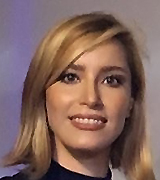
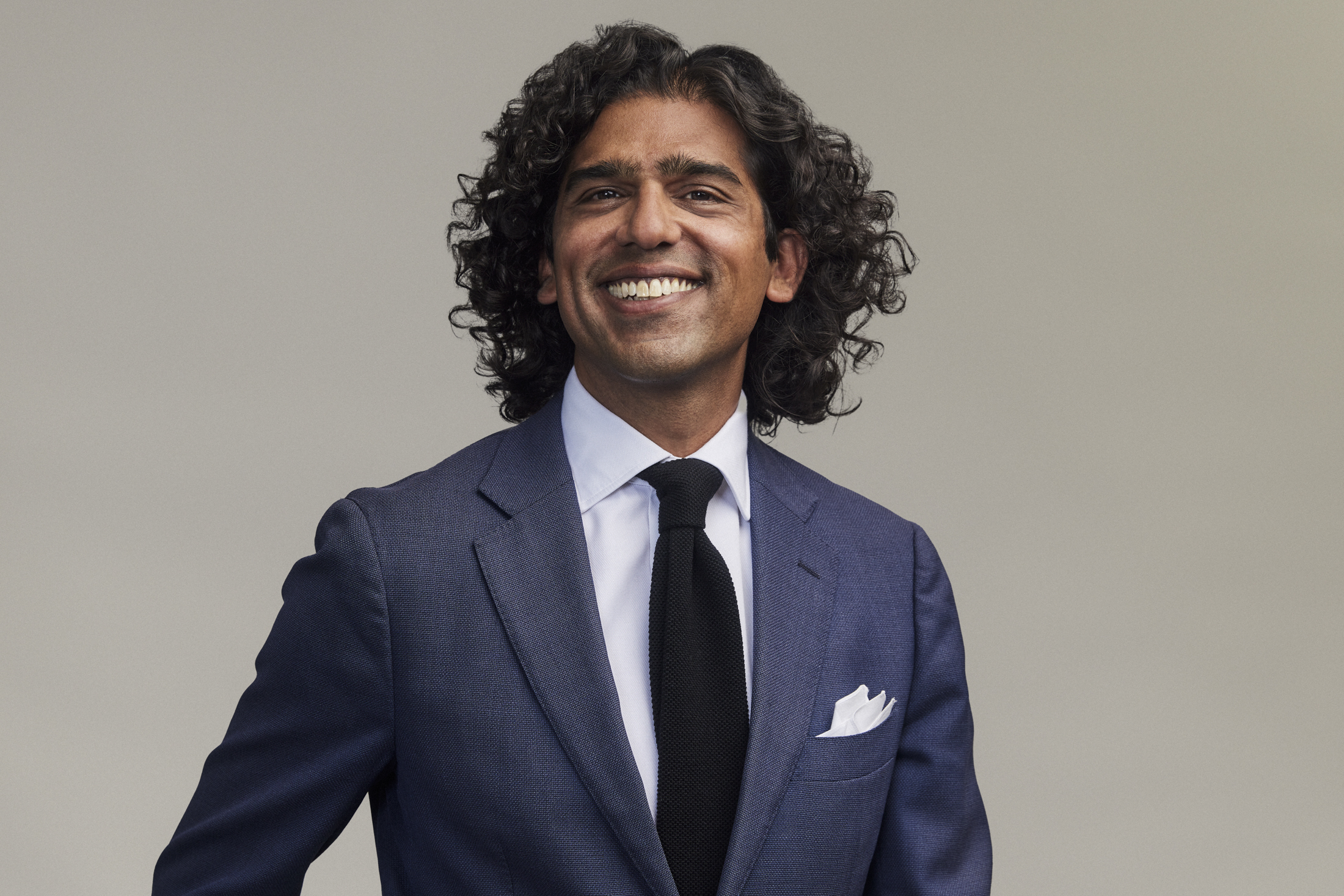
Elmira Hassanzadeh is an Associate Professor at the Department of Civil, Geological and Mining Engineering , Polytechnique Montréal, with a focus on integrated water resource modeling and management under climate and anthropogenic changes. She is affiliated with the Global Institute for Water Security (University of Saskatchewan) and the Experimental and Digital Water Flow Engineering Group (GENIE EAU) . Education: PhD in Civil Engineering, University of Saskatchewan Postdoctoral Fellow, McGill University Research interests include climate change impact assessment, socio-hydrological modeling, stakeholder engagement in water management, and sustainable development of water systems in cold regions. Her work emphasizes decision-making under uncertainty and adaptive strategies for ungauged basins. Recent publications (2024–2020) span coastal flood hazard modeling, climate-driven hydrological changes in tropical and Canadian watersheds, evaluation of agricultural practices under warming climates, and integrated approaches to water quality and system dynamics. Keywords include Hydrology , Climate Change , Water Security , and Socio-Hydrology . Supervision: She has mentored 15+ graduate students in projects related to Lake Urmia, Saskatchewan River Basin, and climate adaptation in Africa and the Pacific.
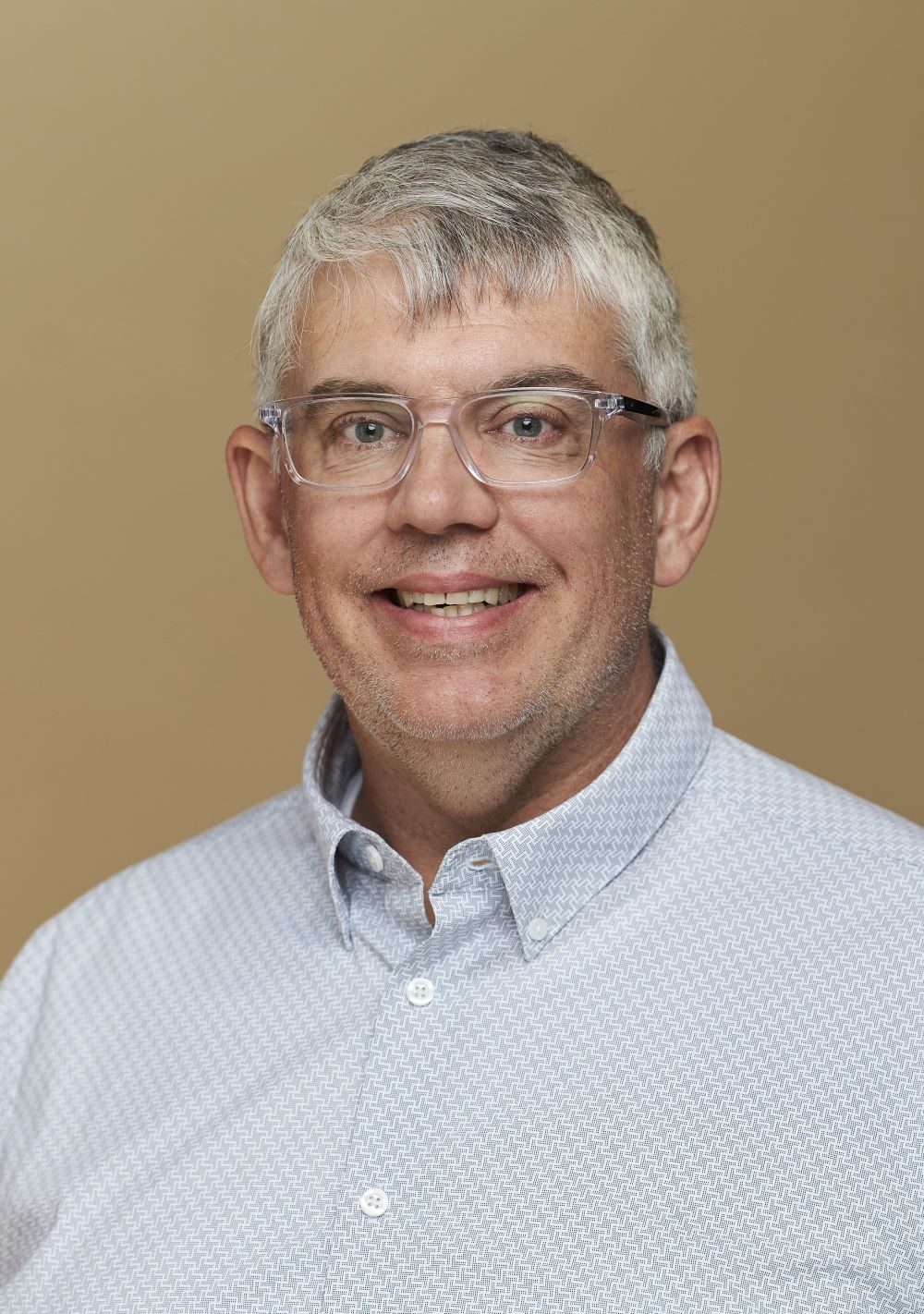
Maher Elshakankiri is an Assistant Professor, Teaching Stream at the University of Toronto's Faculty of Information. He holds a Ph.D. in Computer Engineering from Ain Shams University (Egypt), followed by a postdoctoral fellowship at the University of Regina. His research focuses on IoT, Wireless Sensor Networks (WSN), and pedagogical integration of technology and gaming. He has supervised over 100 student projects and authored a book on WSNs. Education: Ph.D. in Computer Engineering, Ain Shams University, Egypt M.Eng., B.Eng. in Engineering, Ain Shams University, Egypt Postdoctoral Fellowship, University of Regina, Canada Research Interests: IoT in healthcare, agriculture, and sports Active learning classrooms and technology in education Wireless communication protocols (V2V, UAV, RFID) Leadership & Grants: Director, Bachelor of Information (BI) Program (2024–present) Coordinator, Information Systems and Design (ISD) Concentration (2023) SSHRC Grant: 'Gaming in teaching towards a more inclusive class' (2022–2023) Professional Activities: Member, SCC IoT & Digital Twins Standards Committee Reviewer for journals including Wireless Networks , Telematics and Informatics , and Computational Intelligence Technical Program Committee member at multiple conferences Teaching: Courses include INF1340 (Programming for Data Science), INF1005/1006 (IoT Workshops), and INF452 (Information Design Coding).
Andrew Rowe is a Professor in Mechanical Engineering at the University of Victoria (UVic), with affiliations to the Institute for Integrated Energy Systems (IESVic) and the Advanced Mechanical Research Laboratory (AMRLab). He holds a BEng from the Royal Military College of Canada, MASc and PhD from UVic, and is a licensed Professional Engineer (P.Eng). His research focuses on thermodynamics, energy systems, cryogenics, and heat transfer, with particular expertise in caloric cycles, hydrogen systems, and energy systems analysis. His research emphasizes decarbonization strategies, including hydrogen integration into natural gas networks, grid flexibility under electrification scenarios, and the optimization of magnetocaloric materials for energy-efficient cooling. AMRLab, led by Rowe, develops technologies for energy conversion, storage, and system optimization, addressing challenges in low-temperature thermal systems and integrated energy networks. Recent work explores the systemic impacts of electrification in transportation and buildings, leveraging open-source tools like the NExus Solutions Tool (NEST) for multi-scale energy-water-land system modeling. His projects often address regional energy challenges, such as British Columbia’s transition to renewable energy and grid infrastructure resilience. Key contributions include studies on gas system decarbonization via hydrogen blending, thermal-hydraulic modeling of energy systems, and experimental validation of magnetocaloric materials. Rowe’s publications highlight interdisciplinary approaches to climate mitigation, emphasizing the interplay between technological innovation and systemic policy frameworks.
Christopher Storie is a Professor of Geography at the University of Winnipeg, specializing in GIS, Remote Sensing, and Urban Geography. He holds an office in Lockhart Hall (5L03) and teaches courses such as Introduction to GIS, Remote Sensing, and Urbanization in the Developing World. His research focuses on Deep Learning applications for automated land use/land cover mapping, informal settlement mapping, and urban-rural fringe detection. Key research interests include leveraging neural networks for geospatial analysis, urban dynamics in regions like Mexico City, and collaborative international fieldwork. He has contributed to over 20 peer-reviewed articles since 2000, emphasizing satellite imagery analysis and environmental monitoring. His work bridges technical geospatial methods with socio-environmental challenges in urban and developing regions.
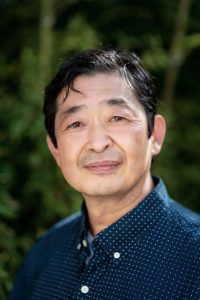
Dr. Noboru Yonemitsu is an Associate Professor of Teaching in the Department of Civil Engineering at the University of British Columbia (UBC), affiliated with the Faculty of Applied Science. He specializes in Hydrotechnical Engineering and has been with UBC since 1992, contributing to both teaching and research. His research focuses on IR-NDT technologies, turbulent fluid mechanics, and environmental fluid mechanics, with applications in wastewater treatment and ecological systems. Education: M.A.Sc. in Engineering Physics from Hokkaido University (Japan), specializing in Turbulent Fluid Dynamics and Non-destructive Testing (NDT). Ph.D. in Water Resources Engineering from the University of Alberta, Canada. Research Interests: Non-destructive testing (NDT) for infrastructure assessment Fluid dynamics in environmental and ecological contexts Wastewater treatment technologies Awards: 2019 3rd Year Student Appreciation Award 2002 Civil Engineering Teaching Award (UBC) Alberta Ministry of Advanced Education Scholarship (1987-1989) Teaching: Instructs courses including CIVL 303 (Computational Tools), CIVL 315 (Fluid Mechanics II), and Civil Engineering Design Projects. His pedagogical approach integrates practical engineering challenges with theoretical foundations. Professional Experience: Extensive consulting and research work with organizations like Northwest Hydraulics Consultants, NASA, BCIT, and major industries, spanning hydraulics, NDT, and environmental engineering.
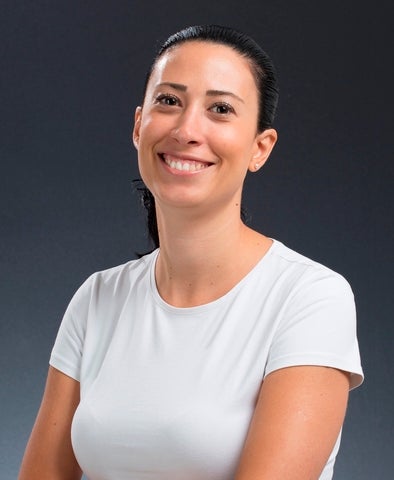
Sibel Alumur Alev is an Associate Professor and Associate Chair of Graduate Studies at the University of Waterloo. Her research focuses on logistics network design, hub location optimization, and sustainable transportation systems. She actively contributes to the fields of operations research and supply chain management, with a strong emphasis on addressing uncertainty in network design and strategic infrastructure planning. Her work spans applications in autonomous mobility systems, electric vehicle charging infrastructure, healthcare logistics, and pandemic response. She has published extensively on hub-and-spoke network models, reverse logistics for environmental sustainability, and multi-period resource allocation strategies. Notable areas of interest include the integration of stochastic and robust optimization methodologies into real-world logistics challenges. Dr. Alev’s research also bridges academic and industrial needs, addressing practical problems such as optimal testing center locations during pandemics and strategic freight hub expansions. Her contributions have been featured in peer-reviewed journals and conference proceedings, reflecting her commitment to advancing both theoretical and applied aspects of logistics and operations research.
Dr. Usman T Khan serves as Associate Professor and Department Chair in Civil Engineering at the Lassonde School of Engineering, York University. A licensed Professional Engineer (P.Eng), he specializes in Water Resources Engineering with a focus on urban water systems and sustainable infrastructure solutions. His academic credentials include: PhD in Environmental Engineering from University of Victoria (2011-2015) with thesis on 'Environmental prediction and risk analysis using fuzzy numbers and data-driven models' MSc in Civil Engineering from University of Calgary (2008-2010) researching 'Bioretention cell efficacy in cold climates' BSc in Civil Engineering from University of Calgary (2003-2008) focusing on 'Water to wastewater: Closing the loop' Dr. Khan's research program addresses critical challenges in urban hydrology , particularly flood risk assessment and uncertainty analysis under changing climate conditions. His work integrates big-data methodologies with traditional hydrological modeling to improve water quality and quantity predictions in urban environments. He has developed innovative approaches for sustainable stormwater management and has tested technologies like bioretention cells in challenging climatic conditions. His research specialties encompass: Urban flood risk modeling and mitigation Climate change adaptation for water infrastructure Advanced hydroinformatics applications Sustainable stormwater management systems Data-driven water quality assessment Dr. Khan's research excellence has been recognized with multiple awards: NSERC Master's Award for graduate studies NSERC Doctoral Award for PhD research NSERC Postdoctoral Fellowship Andy Farquharson Teaching Excellence Award He has collaborated extensively with municipal governments on stormwater management projects and watershed planning initiatives. Dr. Khan's teaching philosophy is reflected in his completion of multiple pedagogical certifications including Instructional Skills Certificate (2016), Design Engineering & Instruction Certificate (2014), and Teaching Fundamentals Certificate (2012). His professional engagement includes membership in key organizations: Professional Engineers Ontario, International Association of Hydrological Sciences, International Water Association, Canadian Society of Civil Engineering, Canadian Water Resources Association, Canadian Association on Water Quality, and Canadian Geophysical Union.
Dr. Amina Stoddart is a Professor at Dalhousie University specializing in water quality and treatment technologies. She leads the NSERC Industrial Research Chair in Water Quality and Treatment and co-leads the Nova Scotia Pilot Monitoring Program for Lead in Drinking Water. Her research focuses on UV LED disinfection systems, biofiltration for manganese control, and pandemic-related wastewater monitoring. She has received the NSERC Discovery Grant (2019) and AWWA ACE Conference Poster Competition awards. Key Projects: NSERC Industrial Research Chair in Water Quality and Treatment, Lead Monitoring Program. Awards: NSERC Discovery Grant, AWWA Poster Competition. Her work bridges environmental engineering and public health, addressing challenges like nanoplasic mitigation, viral detection in wastewater, and sustainable water treatment. She supervises multiple PhD and MASc students in these areas.
Clare Robinson is an Associate Professor in the Department of Civil and Environmental Engineering at the University of Western Ontario. Her research focuses on environmental engineering, water resources, and sustainable infrastructure development. Fields of Interest: Environmental Engineering, Water Resources, Sustainable Infrastructure Contact: crobinson@eng.uwo.ca
Evan Davies is a Professor in the Civil and Environmental Engineering Department at the University of Alberta's Faculty of Engineering. He has been a Full Professor since July 2021, following his promotion from Associate Professor (2015-2021) and Assistant Professor (2009-2015) positions at the same institution. Education: Ph.D. (Civil and Environmental Engineering), The University of Western Ontario, London, Ontario (2003-2007) M.E.S. (Environment and Resource Studies), The University of Waterloo, Waterloo, Ontario with field research in China and India (2001-2003) B.A.Sc. (Systems Design Engineering), The University of Waterloo, Waterloo, Ontario, including a year-long exchange at Technical University of Hamburg-Harburg, Germany (1995-2001) Evan Davies' primary research focuses on water resources planning and management, systems thinking and modeling, and sustainable development. His work develops and applies hydrological, water use, and water quality models to understand complex feedbacks among water availability, use, and quality within their social, economic, and environmental contexts. His research spans municipal to global spatial scales and daily to decadal time scales, aiming to provide decision-makers with tools to compare structural, management, and policy alternatives for sustainable water planning. His recent projects include global and regional-scale modeling of water security and the water-energy-food nexus, irrigation reservoir management, municipal water demand projections, flood risk management, and chloramine dissipation in stormwater pipes. Recent research trends show a strong focus on: Integrated assessment modeling of water-energy-food systems Climate change impacts on water resources Machine learning applications in hydrology Water security under decarbonization scenarios Flood risk assessment and management Sustainable urban water systems Scientific Awards: Faculty of Engineering Graduate Teaching Award, University of Alberta (2020-2021) Faculty of Engineering Undergraduate Teaching Award, University of Alberta (2018-2019) Doctoral Fellowship (CGS), Natural Sciences and Engineering Research Council (2005-2007) University of Western Ontario Graduate Tuition Scholarship (2005-2007) Ontario Graduate Scholarship in Science and Technology (2004-2005) Masters/Doctoral Fellowship (PGS A/B), Natural Sciences and Engineering Research Council (2002-2004) Davies has supervised numerous graduate students working on projects related to water resources planning and management. His research has been supported by various grants, including funding from the Natural Sciences and Engineering Research Council. He collaborates extensively with researchers at the Joint Global Change Research Institute (JGCRI) in College Park, MD, and with government agencies and industry partners on water management projects across Canada, particularly in Alberta's Bow River basin. Davies leads a research group focused on water resources systems modeling, which employs system dynamics, optimization techniques, and machine learning approaches to address complex water management challenges. His team collaborates with decision-makers and stakeholders to ensure research outcomes are directly applicable to real-world water management problems.
Caterina Valeo is a Professor in the Department of Mechanical Engineering at the University of Victoria's Faculty of Engineering and Computer Science, holding a PhD from McMaster University. Her research focuses on environmental systems modeling with applications in forest management, urban water infrastructure, and climate resilience. Her work spans disturbance modeling in forested regions (including pine beetle infestations and forest fire impacts on watershed hydrology), sustainable urban water development through low-impact design tools like bioretention cells and permeable pavement, and climate change analysis using artificial neural networks for flood frequency prediction. She integrates hydrological, hydraulic, and water quality models to study pollutant dispersion in rivers and nearshore ecosystems, with emphasis on macrophyte-periphyton dynamics and dissolved oxygen impacts on aquatic habitats. Her research provides practical solutions for forest regeneration planning, stormwater management in Canadian climates, and climate-adaptive water infrastructure design through advanced computational approaches including fuzzy logic and neural network quantile estimation.
Dr. Zoe Li is an Associate Professor in the Department of Civil Engineering at McMaster University, with an additional role as an Associate Member in the Department of Computing and Software. She specializes in developing modeling and decision-support tools to address challenges in water resources management, environmental systems analysis, and climate change impacts. Her research focuses on hydrological modeling, probabilistic forecasting, risk analysis, and environmental systems optimization. She holds a B.Eng. from China and M.A.Sc./Ph.D. degrees from the University of Regina. Her work spans interdisciplinary collaborations, including studies on dam safety under climate change, wastewater treatment plant optimization, and AI-driven environmental monitoring. She has been actively involved in projects such as CityDNA, a digital tool to model urban environments for decision-making during crises like the pandemic. Dr. Li teaches courses in environmental systems engineering and principles of environmental engineering, emphasizing uncertainty quantification and sustainable practices. Her research publications (15+ recent articles) address topics like machine learning applications in environmental systems, climate change impacts on water resources, and infrastructure resilience. She advises graduate students in environmental engineering and systems optimization. Notable grants include funding from Roche Canada for pandemic-related urban modeling. Her work is frequently published in high-impact journals like Journal of Environmental Management and Water Resources Research .
Dr. Wael El-Dakhakhni is a Professor of Civil Engineering at McMaster University, holding the Martini, Mascarin and George Endowed Chair in Masonry Design. He serves as Director of the INTERFACE Institute and NSERC CaNRisk-CREATE program, focusing on systemic risk and resilience in complex systems. His research spans interdependent networks, data-driven modeling, and infrastructure resilience under climate and disaster scenarios. He leads the INViSiONLab, advancing AI-driven solutions for urban resilience through digital twins. El-Dakhakhni is a Fellow of the American Society of Civil Engineers and a Member of the Royal Society of Canada, with notable awards including the NSERC Discovery Accelerator Supplement (twice), Ontario Early Researcher Award, and John B. Scalzi Research Award. His work bridges academia and industry, contributing to codes, standards, and real-world applications in structural engineering and disaster response. Education: BSc (Ain Shams University, Egypt), MSc and PhD (Drexel University, USA). Research Interests: Complex systems simulation, systemic risk quantification, resilient infrastructure design, AI applications in urban planning, and climate resilience frameworks. His work integrates advanced machine learning, network theory, and physics-informed models to address multi-hazard challenges in energy, transportation, and urban systems. Key Projects: CITYDNA, McMasterDNA, and infrastructure digital twins for pandemic and climate crisis decision-support systems. He collaborates with governments and organizations to enhance infrastructure resilience through predictive analytics and adaptive strategies. Labs/Teams: INViSiONLab, McMaster INTERFACE Institute, NSERC-CaNRisk-CREATE program, and the Centre for Effective Design of Structures. His research has informed policy and standards in North America, emphasizing interdisciplinary solutions for systemic risk mitigation.
Mike Hulley is an Associate Professor in the Department of Civil Engineering at Queen's University, cross-appointed to the Royal Military College of Canada (RMC). He holds roles as Department Chair at RMC's Civil Engineering Department and is a Research Director at Queen's GeoEngineering Centre. His expertise spans water resources, environmental engineering, and geotechnical systems. Education: PhD in Civil Engineering (Environmental Engineering), Queen's University (1991) M.Sc (Eng) in Civil Engineering (Water Resources), Queen's University (1986) B.Sc, University of Waterloo (1983) C.E.T in Water Resources, St. Lawrence College (1978) Research Focus: Climate change impacts on hydrology, extreme rainfall modeling, groundwater management, saltwater intrusion, and stormwater management via low-impact development. He develops custom computer models for water quantity/quality investigations and advises on contaminant migration and river hydrodynamics. Affiliations: Partner at Profound Engineering (since 2013) Partner at MODRET (since 2009) Cross-appointed to RMC's Chemistry and Chemical Engineering Department Labs/Teams: Leads research at Queen's GeoEngineering Centre and Beaty Water Research Centre, focusing on interdisciplinary environmental systems analysis.
Taco Niet is an Associate Professor in the School of Sustainable Energy Engineering at Simon Fraser University. His research focuses on energy systems modelling, energy storage technologies, and climate change mitigation strategies. He holds a Ph.D. (2018), M.A.Sc. (2002), and B.Eng. (1998) in Mechanical Engineering from the University of Victoria. His work bridges technical innovation with societal implications, particularly in renewable energy integration and policy design. Teaching specialties include instrumentation systems, control systems, and the intersection of technology and society. Courses taught span undergraduate and graduate levels, including energy policy frameworks and engineering laboratory practices. He actively contributes to open-source energy modelling tools like OSeMOSYS and CLEWs Global, emphasizing transparency and interdisciplinary collaboration. Recent research emphasizes grid flexibility, decarbonization pathways, and equity in energy transitions. Notable projects include analyzing Canadian consumer preferences for zero-emission vehicles and evaluating hydrogen's role in energy storage. His work often involves international collaboration, addressing challenges in both developed and developing regions. Professional affiliations include leadership roles in sustainable energy education and engagement with industry partners. The Delta-E Research Group under his direction focuses on applied energy solutions. Current initiatives explore multiphysics energy systems and policy impacts on land-use patterns.