Yanchong (Karen) Zheng is the George M. Bunker Professor and Associate Professor of Operations Management at the MIT Sloan School of Management. She holds a PhD from Stanford University and undergraduate/master’s degrees from Tsinghua University. Her research focuses on behavioral operations, supply chain transparency, and socially responsible practices in agriculture and global supply chains. Collaborations include projects with the Karnataka state government (India) to design profitable online agricultural platforms and the World Bank’s UP Accelerator Program for sustainable agriculture. Her work bridges theory and practice, addressing challenges such as improving farmer incomes via digital platforms and enhancing supply chain transparency for environmental and social responsibility. She directs the Leaders for Global Operations Program at MIT Sloan and teaches courses in operations strategy and behavioral decision theories. Education : PhD, Stanford University; BS/MS, Tsinghua University Key Research Themes : Smallholder supply chains, information transparency, behavioral interventions, sustainable practices Projects : Two-stage auction design in Indian agricultural markets, Fair Trade USA collaboration, and 2030 Water Resources Group initiatives Labs/Teams : Leaders for Global Operations Program (Director)
Professor Ken Genskow is a faculty member at the University of Wisconsin-Madison's Department of Planning and Landscape Architecture, within the College of Letters & Science. He holds affiliations with UW-Extension as a Specialist and the Nelson Institute for Environmental Studies. His expertise spans environmental planning, watershed governance, and collaborative resource management, with a focus on integrating social science into environmental initiatives. Genskow earned his BS in General Engineering, Master’s in Urban Planning, and PhD in Urban and Regional Planning from the University of Illinois and UW-Madison. His research emphasizes evaluating collaborative watershed management, nutrient reduction strategies, and the effectiveness of outreach programs targeting water quality and agricultural practices. Notable projects include directing UW-Extension’s Environmental Resources Center, supporting programs like Farmer-led Watershed Councils and Volunteer Stream Monitoring. Genskow’s work often bridges academic research with practical applications, such as developing social indicators for watershed evaluation and analyzing climate change impacts on dairy farming. His recent publications address agricultural diversification, rural water resource perceptions, and policy frameworks for nutrient reduction. Genskow’s outreach efforts involve partnerships across Wisconsin and regionally, focusing on sustainable agriculture, invasive species management, and woodland owner education.
Aaron Deslatte is an Associate Professor at the O'Neill School of Public and Environmental Affairs at Indiana University Bloomington, where he joined as an assistant professor in 2019 and was promoted to Associate Professor in July 2023. He directs the Metropolitan Governance and Management Transitions (MGMT) Laboratory and serves as Faculty Steering Committee member for the IU Environmental Resilience Institute. Deslatte is also a faculty affiliate with the Vincent and Elinor Ostrom Workshop and previously taught at Northern Illinois University. Dr. Deslatte's educational background includes: Ph.D. in Public Administration, Florida State University, 2015 MPA, Florida State University, 2013 M.S. in Political Science, Florida State University, 2009 B.G.S. in General Studies, Missouri Southern State University, 2007 Deslatte's research focuses on the roles that public managers play in enhancing economic, environmental and social sustainability at the local and metropolitan level. His work examines how organizational capabilities, governance structures, and institutional arrangements affect sustainability outcomes in local governments. He has particular expertise in metropolitan governance, climate adaptation, urban water management, and the implementation of sustainable policies in fragmented political landscapes. His research employs institutional analysis, collective action frameworks, and both qualitative and quantitative methods to understand how local governments can advance sustainable economic and community development. His recent publications reveal a strong focus on climate change adaptation, particularly examining how local governments are responding to climate challenges through institutional innovations and collaborative governance approaches. There's a clear progression in his work from studying general sustainability practices to more specific climate adaptation strategies, with increasing attention to equity considerations in sustainability planning. His research spans multiple domains including water management, housing policy, transportation, and comprehensive planning, demonstrating an interdisciplinary approach to urban sustainability challenges. Dr. Deslatte has received numerous prestigious awards recognizing his contributions to the field: National Science Foundation CAREER grant to study Integrated Local Sustainability Strategies ($485,385, 2020-25) National Science Foundation CNH2-L grant recipient to study Transition Dynamics in Integrated Urban Water Systems ($1,499,157, 2019-24) Clarence Stone Young Scholar Award, American Political Science Association (2018) Indiana University Trustees Teaching Award (2021) Theodore Lowi Award for best article published in Policy Studies Journal (2022) Climate Catalyst Director's Award from Indiana University Office of Sustainability (2023) As a researcher and educator, Deslatte has secured significant grant funding for his work on local sustainability, climate adaptation, and urban water management. His NSF-funded projects represent major contributions to understanding how local governments can effectively implement sustainability strategies. He teaches courses on sustainable communities, climate change planning, urban development, and environmental policy, bridging theory and practice for students pursuing careers in public service. His background as a journalist covering politics and government provides a unique perspective on the practical challenges of public administration. Deslatte co-directs the Metropolitan Governance and Management Transitions Laboratory, which focuses on collective-action challenges surrounding community resilience, technological innovation, and sustainability. The lab brings together interdisciplinary researchers to address complex urban governance challenges through innovative methodological approaches and theoretical frameworks. His book "Organizing and Institutionalizing Local Sustainability: A Design Approach" (Cambridge University Press, 2022) represents a significant contribution to the field, offering practical insights for public managers seeking to implement sustainability initiatives.
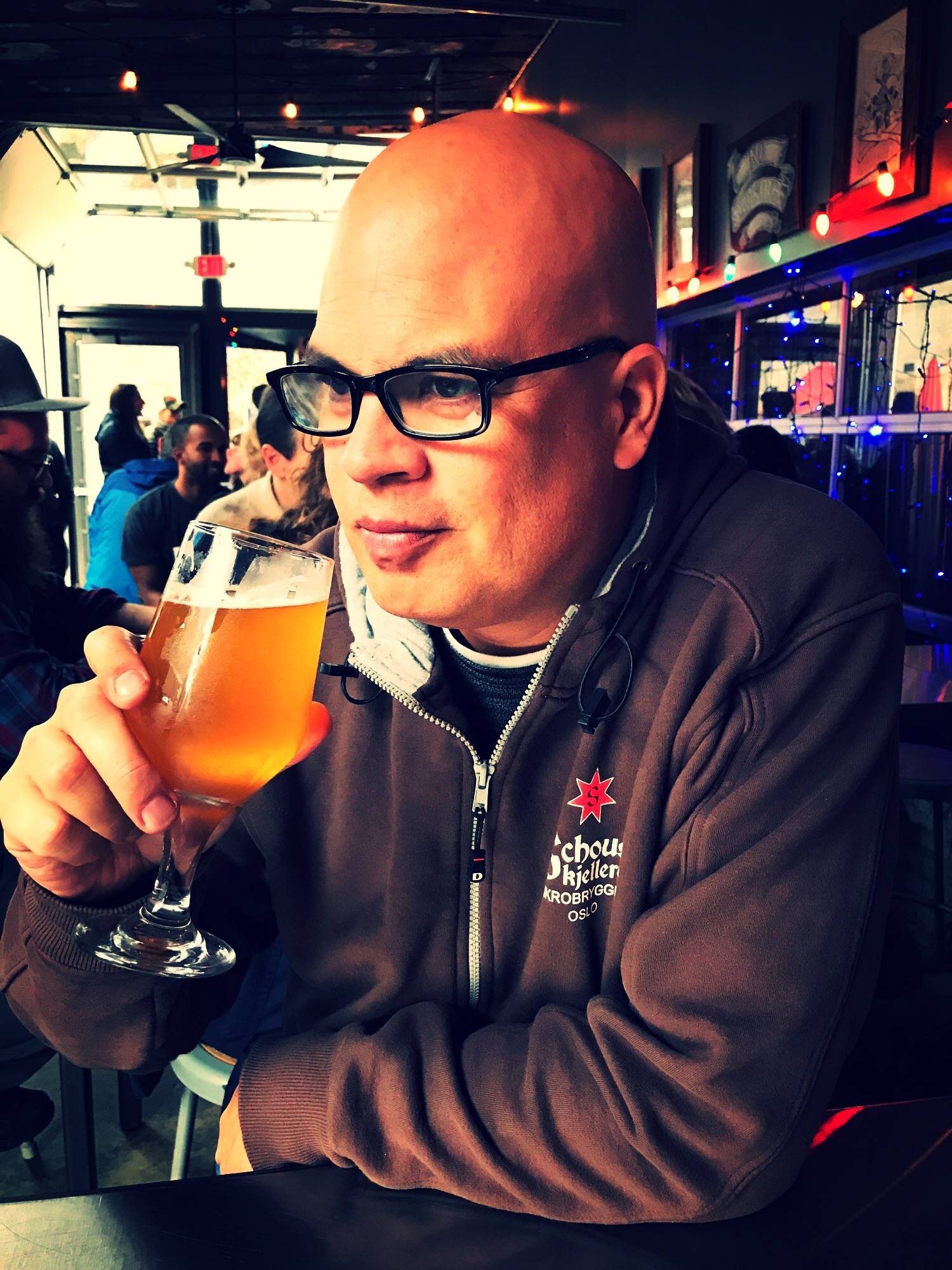
Mark Patterson is a Professor of Geography and Geospatial Sciences at Kennesaw State University (KSU), specializing in the geography of beer and geospatial technologies. He holds a PhD from the University of Arizona (1998), MA from the University of Guelph (1994), and BS from the University of Victoria (1990). His research integrates environmental geography with cultural studies through the lens of beer production and consumption, resulting in groundbreaking works like The Geography of Beer series and the National Geographic Atlas of Beer . Dr. Patterson teaches courses in GIS (GEOG 3315, 4405), environmental geography (GEOG 1113), and directed research (GEOG 4100). He co-created GEOG 3000: The Geography of Beer and leads a study abroad program exploring European beer cultures. With Dr. Nancy Hoalst-Pullen, he forms 'The Beer Doctors,' conducting global research across 70+ countries. His research encompasses GIS applications, sustainable brewing practices, and the socio-economic dimensions of beer production. Notable achievements include selling over 82,000 copies of his first book and logging 300,000+ miles for fieldwork. His work bridges academic rigor with public engagement through books, courses, and media collaborations. Though no formal grants or awards are listed, his prolific publications and impactful educational initiatives reflect his significant contributions to his field. He is based in the Southern Polytechnic College at KSU's SO 4042 office.
Dr. Regina Rabinovich directs the Malaria Elimination Initiative at ISGlobal (Barcelona Institute for Global Health) and serves as ExxonMobil Malaria Scholar in Residence at Harvard University. With over 25 years in global health, her work spans malaria eradication strategies, vaccine development, and implementation science. She previously led the Infectious Diseases division at the Bill & Melinda Gates Foundation (2003-2012) and directed the PATH Malaria Vaccine Initiative. Her research focuses on optimizing tools for disease control, including ivermectin repurposing for malaria prevention and COVID-19 therapeutic applications. Recent work examines border malaria dynamics and community engagement in elimination programs. Awards include recognition as ExxonMobil Malaria Scholar. Publications demonstrate consistent focus on translational research, with recent articles analyzing elimination programs in Mozambique and China. Collaborative initiatives include leadership in the Malaria Eradication Scientific Alliance (MESA) and board memberships at AERAS and Catholic Medical Mission Board.
Fenny van Egmond is a researcher at Wageningen University & Research , affiliated with ISRIC - World Soil Information . Her work focuses on soil science, particularly in soil health, carbon mapping, and sensor technology integration for agricultural soils across Europe. Current role: Researcher in Soil, Water, and Land Use Key collaborations: EJP Soil, European institutions Active in EU soil monitoring law implementation Her research combines soil property analysis with remote sensing and sensor data to develop downscaling frameworks for soil carbon and clay maps. She contributes to policy development through interdisciplinary projects linking soil science with environmental law. Recent publications highlight her expertise in digital soil mapping , proximal sensing , and monitoring system design . She has led multiple projects (2016–2026) involving spectral libraries, UAV-based soil analysis, and field sensor testing. Notable contributions include creating metadata catalogues for European soil datasets and organizing workshops on soil health monitoring challenges. Her work supports the European Soil Monitoring Directive through technical and policy-oriented solutions.
Vincent Debusschere is an Associate Professor at the Grenoble Institute of Technology, working within the National School of Energy, Water and Environment (ENSE 3 ) and the Grenoble Electrical Engineering Laboratory (G2Elab). He has been with the institution since 2010 and is a member of the SYREL research team. His current responsibilities include serving as co-coordinator of the international master's degree in Electrical Engineering for Smart Grid and Buildings, head of international relations for the Energy Systems and Markets department, and member of the scientific committee of the national JCGE conference since 2013. Dr. Debusschere's research focuses on integrating renewable energies into power systems, with particular emphasis on maximizing grid capacity for variable renewables while ensuring operational stability. His work spans multiple dimensions: residential and tertiary flexibility estimation and control, renewable production management through storage systems, operational planning of distribution grids under uncertainty, microgrid stability in isolated environments, and long-term energy system prospective modeling. His research combines technical, economic, environmental, and societal criteria to address the challenges of sustainable energy transition. His publication record shows a clear evolution toward energy communities, storage market participation, and advanced control strategies for grid-forming converters. Recent work increasingly focuses on the intersection of machine learning techniques with power system operation, particularly for voltage control under uncertainty and distributed resource management. His research maintains strong connections between theoretical developments and practical applications through numerous industrial collaborations. Dr. Debusschere has directed or co-directed more than 10 PhD theses (5 completed, 6 ongoing) and maintains active research collaborations with institutions worldwide including NTU Singapore, University of Oulu (Finland), Institute Teknologi Bandung (Indonesia), and Danang University (Vietnam), as well as French institutions like LIG, GIPSA, CEA, and GAEL. He manages three industrial research contracts with partners including ENEDIS, Schneider Electric, and ITE Supergrid. Based at the G2Elab in the GreEn-ER Building in Grenoble, Dr. Debusschere leads research activities within the SYREL team, focusing on experimental validation of regulation methods for smart grids and the application of artificial intelligence to grid operation. His laboratory work particularly emphasizes the stability of microgrids with low inertia and the development of virtual synchronous generator solutions.
David Sanchez Fernandez is a Research Fellow (Ramón y Cajal program) at Universidad de Murcia's Faculty of Biology, specializing in aquatic and subterranean ecology within the Department of Ecology and Hydrology. He leads the Aquatic Ecology research group, focusing on biodiversity conservation under climate change pressures. He completed his PhD in 2008 on the use of Iberian aquatic beetles in biodiversity conservation, supervised by Dr. Andrés Millán Sánchez and Dr. Ignacio Ribera Galán. His research spans groundwater ecosystem conservation, climate adaptation in subterranean species, and invasive species management in Mediterranean freshwater systems. Recent publication trends (2018-2024) emphasize: Global assessments of subterranean ecosystem vulnerability to climate change Conservation policy development for groundwater habitats Thermal adaptation limits in aquatic insects Priority area identification for freshwater biodiversity protection Impacts of environmental change on Iberian endemic species Awards: Ramón y Cajal Fellowship
Maria Rosario Vidal-Abarca Gutierrez is a Professor in the Department of Ecology and Hydrology at the University of Murcia, affiliated with the Faculty of Biology. She leads the Inland Water Ecology research group, focusing on fluvial ecosystems in Mediterranean and arid environments. Her doctoral thesis (1986) explored the physical-chemical characterization of waters in the Segura River Basin, Spain, under the supervision of Dr. Agustín Soler Andrés. Her research emphasizes dry river ecosystems, ecosystem services, and human-environment interactions. Key areas include biodiversity conservation, climate change adaptation, and sustainable management practices. She has pioneered studies on Mediterranean ephemeral streams, emphasizing their resilience and socio-ecological value. Publications highlight her work on dry river functionality, urban stream assessment tools (UsAs), and the interplay between water resources and social indicators. She contributes to policy frameworks for ecological restoration and has collaborated on international projects in Chile, Mexico, and Spain. No formal awards are listed, though her extensive peer-reviewed output reflects significant academic impact. Her lab/fieldwork focuses on the Segura Basin and other Mediterranean regions, with interdisciplinary approaches linking ecology, hydrology, and social sciences. She advocates for integrated ecological-economic analyses to address environmental challenges in water-scarce regions.
Dr. Henning Döscher serves as Project Manager and Senior Researcher at the Fraunhofer Institute for Systems and Innovation Research ISI in Karlsruhe, Germany, specializing in innovation systems for advanced materials and industrial technologies. His research spans semiconductor physics, solar energy conversion, and 2D material applications, with particular focus on graphene industrialization pathways. Through the Graphene Flagship Project, he coordinates global technology roadmap development using the 3I (innovation interface investigation) framework to analyze value chains for water purification and other applications. Key contributions include peer-reviewed publications on heteroepitaxy, photoelectrochemistry, and diffusion dynamics of emerging technologies. His work bridges academic research with industrial implementation through national and international collaborative projects. Marie Curie International Outgoing Fellowship Dr. Döscher actively contributes to the European innovation ecosystem through research coordination and strategic technology assessment, with significant involvement in EU flagship initiatives. His current work focuses on accelerating commercialization of graphene-based solutions while analyzing systemic barriers in technology adoption. As leader of the Fraunhofer Graphene Roadmap Team, he directs methodological development for technology assessment and maintains strategic partnerships with academic institutions and industry stakeholders across the global innovation landscape.
Dr. Barry Croom is a Professor in the Department of Agricultural Leadership, Education & Communication at the University of Georgia's Tifton Campus. He holds a Doctor of Education from North Carolina State University (1999) with emphases in leadership and program evaluation, complemented by prior degrees in agricultural education and agribusiness. With over 30 years in agricultural education and extension, Croom has served as a high school teacher, extension associate, department head, and distinguished professor at North Carolina State University and Oregon State University. His research focuses on effective teaching methodologies, CTE policy, and diversity in agricultural education. Education: Doctor of Education in Occupational Education, North Carolina State University (1999) Master of Education in Agricultural Education, North Carolina State University (1992) Bachelor of Science in Agricultural Education, North Carolina State University (1986) Associate of Arts in Pre-Education, Lenoir Community College (1984) Research Interests: Dr. Croom’s work addresses innovative teaching strategies, career pathways in agriculture, and systemic barriers affecting underrepresented groups. He emphasizes experiential learning and policy reforms to enhance educational accessibility. Recent studies explore farmer stress, gender equity in farming, and extension service efficacy in rural communities. Awards: Alumni Distinguished Undergraduate Professor (NC State, n.d.) Honorary American FFA Degree (National FFA Organization) Outreach & Leadership: Croom directed the North Carolina Farm Bureau Institute for Future Agricultural Leaders and coordinated the Western Oregon Summer Agricultural Institute. He currently advises on curriculum development and teacher training programs, emphasizing practical skills for agricultural educators. Labs/Teams: Collaborates with state extension networks and 4-H programs to design inclusive educational initiatives. Active in professional organizations like the National FFA and the National Council for Agricultural Education.
Alicia Troncoso is a Full Professor in the Computer Science Division at Universidad Pablo de Olavide's School of Engineering, where she directs the Master's Degree in Computer Science and co-leads the Data Science & Big Data Research Lab. She received her PhD from the University of Seville, recognized with the best research award from Andalusian Universities. Her research focuses on: Time series forecasting Machine learning algorithms Big data streaming analytics Explainable AI methods Recent publications demonstrate applications in energy forecasting, environmental monitoring, and sustainable computing. Her work integrates deep learning with optimization techniques for high-dimensional data analysis. She has supervised 13 PhD theses to completion and serves as President of the Spanish Association of Artificial Intelligence. Her research has been funded by numerous European and national projects focused on big data infrastructure and sustainable AI.
Jeff Camkin is an Adjunct Professor at the University of Western Australia's Centre of Excellence for Ecohydrology and a visiting professor at Portugal's Laboratório Nacional de Engenharia Civil. He specializes in water governance, policy, and integrated water resource management. His roles include fostering collaboration between science, policy, and stakeholders, with a focus on global initiatives. Education: B.App.Sc. (Fisheries) from the University of Tasmania (1992), Grad.Dip. (Natural Resources Law) from the University of Wollongong (1997). Research interests center on water governance, climate adaptation, and transdisciplinary approaches to water management. He has contributed to UNESCO programs, the HELP initiative, and policy frameworks in Australia, Europe, and beyond. Current projects include developing UNESCO water management courses and PROWATERMAN initiatives in Portugal. His recent articles emphasize climate resilience, transboundary water governance, and regional policy analysis. Awards include the 2021 International Eminent Scientist Award and the 2013 Best Paper Award. Grants and leadership roles span decades, including directorships at the Australian Water Association and CSIRO. He has advised governments on water law reforms and participated in over 20 parliamentary inquiries and working groups. Labs/Teams: Collaborates with the UNESCO International Centre for Coastal Ecohydrology, PROWATERMAN, and global research networks focused on water security and SDGs.
Lucy Pickering is a Senior Lecturer in Sociological & Cultural Studies and Associate Lecturer in the School of Health & Wellbeing at the University of Glasgow. She holds a BA in Archaeology and Anthropology from Cambridge University (2001), MA in Anthropological Research from Manchester University (2003), and a PhD from Manchester University on embodiment and American counterculture (2007). Her research focuses on bodies and embodiment, exploring intersections with dirt, ethics, and substance use. Key areas include sanitation infrastructure in Scotland and Uganda, research ethics in drug studies, and aging bodies in recovery. She has co-edited Down the Pan: New Directions in the Sociology of Dirt and contributed to projects like ALIVEAfrica as an ethics advisor. Her work bridges global health and sociology, addressing topics such as schistosomiasis control in Uganda, menstrual equity, and the sociocultural impacts of substance use. Recent grants include leading a University of Glasgow project on reducing substance use harms. She teaches undergraduate courses on 'Ways of Living' and postgraduate modules on medical anthropology and global health. Current PhD supervision includes studies on water access in Uganda and Pakistani mothers of disabled children. Lucy’s research emphasizes ethical engagement and marginalized communities, with publications spanning journals like Frontiers in Psychiatry , Sociological Review , and Parasites and Vectors . Her interdisciplinary approach integrates anthropology, public health, and policy analysis to address societal inequities.
Leo Nagelkerke is an Assistant Professor at Wageningen University & Research's Aquaculture and Fisheries Department, part of the WIAS faculty. He specializes in freshwater and estuarine fish ecology, focusing on river restoration, invasive species management, and biodiversity conservation. His work addresses challenges such as sturgeon reintroduction, habitat connectivity, and fish passage design in European rivers. Research Interests : His research emphasizes the ecological requirements of rheophilic fish species, the impact of anthropogenic barriers on fish migration, and strategies for habitat restoration. Key topics include floodplain dynamics, invasive species risk assessment, and the application of ecological engineering to enhance aquatic connectivity. Recent projects explore the reintroduction of sea sturgeons in Europe and the optimization of fish passage systems in lowland rivers. Recent Research Trends : His articles highlight advancements in understanding juvenile fish habitat needs, the effectiveness of fishways across multiple species, and the integration of climate change into conservation strategies. He collaborates internationally on projects like the Nature Restoration Law implementation and invasive species management in the Rhine-Meuse delta. Grants & Supervision : Co-promotor of six ongoing PhD projects, including studies on Meuse river fish restoration, estuarine fish behavior, and river commons governance. Active in securing grants for projects like the Haringvlietdam sluice gate management and connectivity between environmental gradients. Labs & Teams : Leads research teams focusing on fish ecology and restoration at WIAS, collaborating with institutions like the Dutch Institute for Rivers and Lakes (RIZA) and international conservation networks.