Ralitsa Hiteva is a Research Fellow at the Science Policy Research Unit (SPRU) within the University of Sussex Business School. Her work focuses on infrastructure governance and regulation, particularly examining business model innovations driven by low-carbon transitions and cross-sector integrations. She contributes to major research initiatives including the International Centre for Infrastructure Futures (ICIF), the UK Infrastructure Transitions Research Consortium (ITRC), and the ESRC-funded ResNexus project. Her research spans infrastructure governance, low-carbon transitions, energy justice, and gender-inclusive approaches to energy systems. Key themes include smart grid development, energy intermediation, social innovation for vulnerable communities, and nexus solutions addressing interconnected food-water-energy challenges. Her work emphasizes multi-scale governance analysis and stakeholder engagement in infrastructure decision-making. Hiteva convenes the postgraduate module 'Innovation and Infrastructure' and contributes to courses on sustainable development and STI studies. Her publications demonstrate consistent focus on governance challenges in energy transitions, with recent work expanding into gender-responsive design for hydrogen solutions and net-zero skills development. Research leadership includes directing SPRU's work on the ResNexus project in Sofia, Bulgaria, examining heat/water provision in multifamily buildings and food systems. She actively engages with policy through evidence submissions to parliamentary committees and contributions to national infrastructure assessments.
Nikola Gospodarski serves as Assistant Professor and Head of the Rowing, Canoe-Kayak and Water Ski department at the National Sports Academy Vasil Levski's Faculty of Public Health, Health Care and Tourism since 2020, with lecturing duties since 2004 specializing in aquatic sports training and sports science. His academic credentials include: PhD in Optimization of methods and means for control of special preparation in rowing (2016) Master's in Sport for high achievements – rowing (2004) Bachelor's in Rowing Coach, Physical Education Teacher (2002) Sports-profile high school diploma from SOU Vasil Levski, Plovdiv (1998) Dr. Gospodarski's research focuses on biomechanical analysis of rowing technique, speed-strength development in athletes, vestibular function in paddlers, and balance assessment across sports disciplines. His work bridges sports physiology with practical coaching methodologies to optimize athletic performance in aquatic sports. Analysis of his publications reveals a cohesive research trajectory examining physiological and biomechanical determinants of success in rowing and paddling sports, with increasing emphasis on youth development and comparative sport science approaches since 2015. His scientific recognition includes: Gold medal from International Rowing Federation for World Cup organization (2019) As Chairman of the Bulgarian Rowing Federation's Coaching Council since 2013, he mentors coaches and develops training frameworks while securing research funding from the Ministry of Youth and Sports, IOC, and NSA. His leadership extends to major international competitions where he implements evidence-based athlete preparation protocols. He directs the Rowing, Canoe-Kayak and Water Ski department while serving as Race Director for World Rowing events and coordinating High Sports Mastery Centers for the Bulgarian Rowing Federation.
Donald McGillivray is a Professor of Environmental Law at the University of Sussex's School of Law, Politics and Sociology, where he has served as Head of Sussex Law School (2019-2022) and Deputy Head (2015-2019). He holds an LLB from the University of Aberdeen and an MA in Socio-Legal Studies from the University of Sheffield. With nearly 30 years of experience in environmental law, he co-authored the seminal textbook Environmental Law (10th ed., OUP 2024) and focuses on land use regulation, biodiversity conservation, climate change, and socio-legal perspectives. His research explores under-valuation of public interests in decision-making, including ecological mitigation, renewable energy projects, and stewardship in property law. He supervises PhD students in environmental law topics and teaches modules on environmental law and land law. He also serves as a Consulting Editor for Halsbury's Laws of England on open spaces and chairs the Academic Panel at Francis Taylor Buildings. Non-academically, he is a Non-Executive Director of Air and Space Evidence. His advisory roles include external examining at Queen Mary University of London (2023–2027) and participation in the Sussex Sustainability Research Programme. McGillivray’s work bridges legal theory and practice, addressing contemporary challenges in environmental governance, climate justice, and international environmental law.
Marie Claire Brisbois serves as Associate Professor in Energy Policy at the Science Policy Research Unit (SPRU) within the University of Sussex Business School, where she co-directs the Sussex Energy Group. Her research examines power dynamics in energy, water, and climate governance, with emphasis on social transformation and public participation in low-carbon transitions. Current leadership roles include Co-Investigator for the UK Energy Demand Research Centre (2023-2028) and Sussex lead for the H2020 CINTRAN project on coal phase-outs. Her educational background includes: PhD in Environment, Resources and Sustainability from University of Waterloo (2010-2015) Master of Applied Science in Biological Engineering from Dalhousie University (2005-2007) Dr. Brisbois investigates how political power structures evolve during resource system transformations, focusing on collaborative governance and social mobilization across local to global scales. Her work integrates relational sociology to analyze energy retrofit, demand flexibility, and just transition frameworks, consistently highlighting intersectional justice implications and the role of elite power in decarbonization pathways. Recent projects examine local Green New Deals, military-security dimensions of energy transitions, and participatory governance in smart energy systems. Analysis of her 2024-2025 publications reveals three dominant trends: (1) Relational approaches to energy policy emphasizing social dynamics in retrofit implementation, (2) Critical examinations of power concentration in carbon-intensive region transitions, and (3) Trust-building mechanisms for automated demand flexibility systems. Her scholarship consistently bridges theoretical political ecology with practical policy design, with growing emphasis on Global South contexts and co-benefit frameworks linking energy demand reduction to wellbeing outcomes. Scientific recognition includes: Mitacs Canadian Science Policy Fellowship examining scientific knowledge optimization in environmental assessments Dr. Brisbois currently leads or co-leads seven major research initiatives including the £5.2M UK Energy Demand Research Centre and the H2020 CINTRAN project. Her teaching portfolio includes convening the Perspectives, Methods and Skills module for the online MSc in Energy Policy and co-convening the same module for on-campus MSc programs in Energy Policy, Science and Technology Policy, and Sustainable Development. She also supervises doctoral research on energy governance and transition politics. As Co-Director of the Sussex Energy Group, she shapes one of the UK's premier research hubs on energy policy, fostering interdisciplinary collaboration across political science, sociology, and engineering disciplines. The group maintains active partnerships with government bodies including the UK Department for Energy Security and Net Zero, European Commission, and international NGOs focused on just transition frameworks.
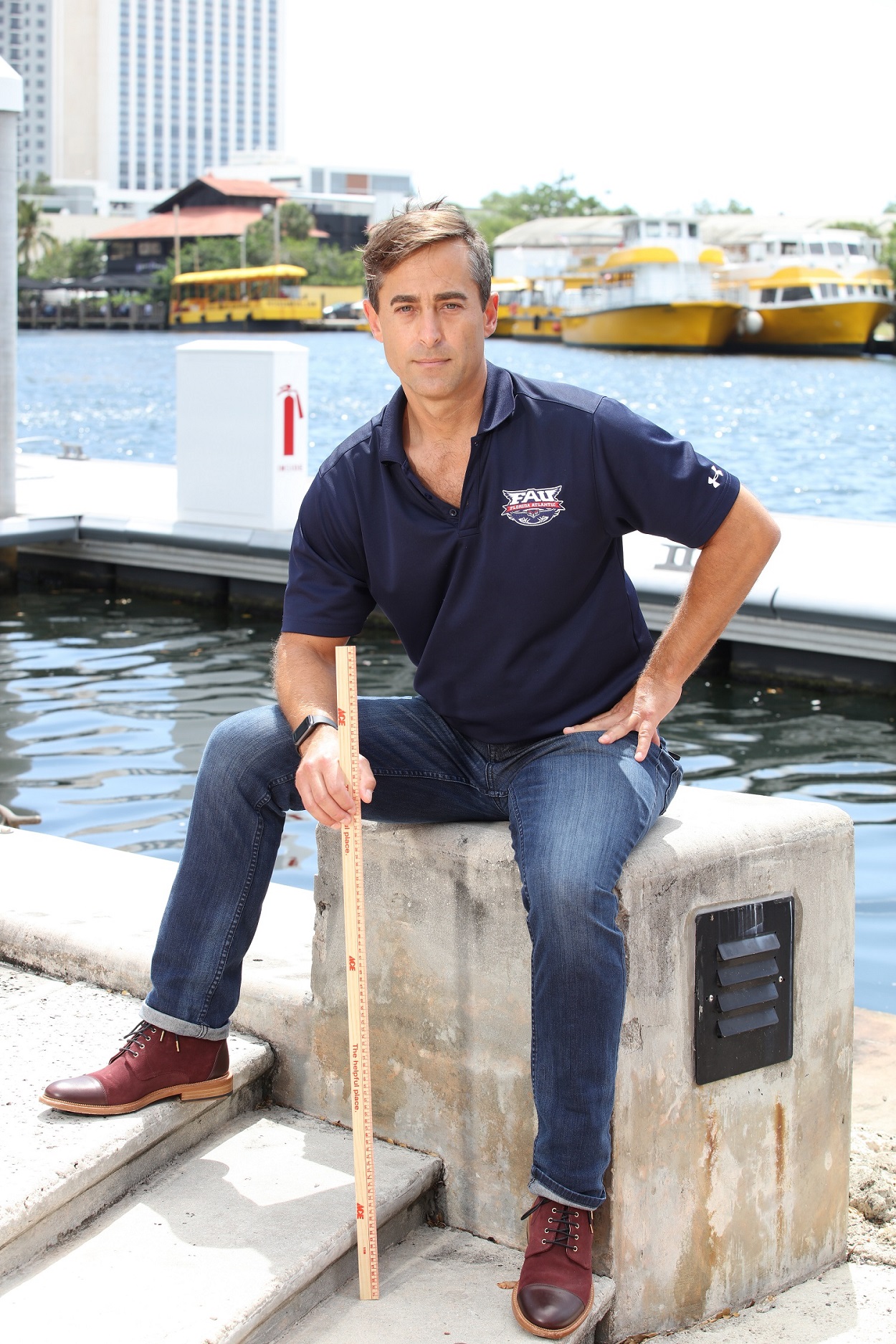
Dr. Colin Polsky is a Professor of Geosciences and Founding Director of the Florida Atlantic University School of Environmental, Coastal, and Ocean Sustainability (FAU ECOS). He leads the Center for Environmental Studies (CES), focusing on sustainability through research, education, and community engagement in coastal resilience, wetlands ecology, and energy innovations. His academic training spans mathematics, humanities, French, geography, and science & international affairs from the University of Texas, Penn State, and Harvard. He has directed CES since 2014, expanding its mission to address climate challenges through interdisciplinary collaboration. Research interests center on climate vulnerability, human dimensions of environmental change, and socio-ecological systems. Key themes include urban/suburban land management, flood risk modeling, and policy impacts on residential practices. He has secured $18M in NSF funding, with $1.7M directly managed, and authored 26 peer-reviewed articles, two books, and numerous reports. Leadership roles include 10 years as a Center Director, 8 years leading undergraduate research programs, and 1.5 years as an associate dean. Notable contributions include frameworks for flood risk screening tools, analysis of neighborhood peer effects on environmental behavior, and interdisciplinary studies of residential ecosystems. He has served on NRC, NSF, and IPCC committees, emphasizing stakeholder-driven climate communication. The ECOS School, launched in 2023, aims to unify FAU’s environmental efforts across disciplines.
Elizabeth Shapiro-Garza serves as Associate Professor of the Practice of Environmental Policy and Management at Duke University's Nicholas School of the Environment. She directs Duke's Engaged Scholarship initiative, Community Engagement for the Superfund Research Center, and the Certificate in Community-Based Environmental Management. Ph.D., University of California, Berkeley (2010) University of North Carolina, Chapel Hill (2019) Her research examines human-environment interactions in conservation programs, focusing on how economic, political, and power dynamics shape outcomes of market-based environmental initiatives. Specializing in qualitative methods, she investigates Payments for Ecosystem Services in Mexico, climate change mitigation through forest carbon in Peru/Mexico, coffee farmer adaptation in Latin America, and environmental health justice in North Carolina. Her interdisciplinary approach integrates geography, economics, ecology, and public health to address conservation challenges through community partnerships. Recent publications reveal growing emphasis on critiquing biodiversity finance mechanisms while exploring community-led alternatives to market-based conservation. Her work increasingly connects environmental initiatives to structural economic justice issues, particularly debt and tax systems, while maintaining focus on local implementation challenges in Global South contexts. Shapiro-Garza advises graduate students including Elizabeth Houghton (2020) and secures major funding from the National Science Foundation, National Institute of Environmental Health Sciences, Social Sciences and Humanities Council of Canada, Tinker Foundation, and International Institute for Impact Evaluation. Her community-engaged research partners with agricultural cooperatives, indigenous communities, and NGOs across Latin America and the southeastern U.S. She leads community engagement for Duke's Superfund Research Center and collaborates with institutions including the Kenan Institute for Ethics, UNC Geography Department, and Center for Latin American & Caribbean Studies.
Jan Biemans is a Professor of Law at Utrecht University's School of Law, specializing in Private Law with a focus on Property Law, Succession Law, Insolvency Law, Banking, and Finance . He is affiliated with the Molengraaff Institute for Private Law and the Water Law and Governance cluster. Biemans studied Law and Philosophy at the University of Groningen and earned his LL.M. from Harvard Law School before obtaining his Ph.D. from Radboud University Nijmegen in 2011. He practiced as a lawyer at Houthoff Buruma and De Brauw Blackstone Westbroek, specializing in Supreme Court litigation . Research Interests : Biemans' work bridges Civil Law, Economics, and Social Psychology , focusing on interdisciplinary legal analysis. His scholarship addresses property rights, inheritance, financial regulation , and notarial law , including crowdfunding, blockchain , and EU consumer directives . He actively participates in legal boards and journals, advocating for procedural justice and innovative legal frameworks . Publications Trends : His recent work emphasizes digital testament , cross-border estates , and modern financial instruments . Key themes include legal harmonization in the EU , notarial liability , and adaptation of traditional law to technological challenges .
Prof. Herman Kasper Gilissen is a Professor of Climate Change, Regulation, and Deltas at Utrecht University, affiliated with the Department of Constitutional Law, Administrative Law, and Legal Theory. He holds an LLM (2008) and PhD (2013) in Environmental Law from Utrecht University. His research focuses on environmental/water law, governance of deltas, and interdisciplinary education. He works at the Delta Climate Center (Vlissingen) and the Utrecht University Center for Water, Oceans, and Sustainability Law (UCWOSL). Key roles include UCWOSL Board member (2023–present) and member of the Water Climate and Future Deltas Community Troika (2024–present). Education: LLM (Environmental Law, Utrecht, 2008); PhD (Environmental Law, Utrecht, 2013). Teaching: Program leader for the Master’s in Constitutional & Administrative Law/Environmental Law (2018–2024); involved in interdisciplinary education initiatives like the Interdisciplinary Education Platform (IEP). Research: Focuses on legal dimensions of climate adaptation, delta sustainability, and water governance. Active in projects like AquaConnect (drought risk management) and Future Deltas Pathways to Sustainability. Awards: Societal Impact Award 2017 (shared with Paulien de Morree). Grants: Multiple NWO-funded projects. Other Activities: Serves in the Royal Netherlands Army Reserve; participates in long-distance walking events. Labs/Teams: Delta Climate Center, UCWOSL, Water, Climate & Future Deltas Network. Key Projects: Climate-resilient neighborhoods in Utrecht region; governance simulations and serious games for legal education.
Heather Wipfli is Professor of Clinical Population & Public Health Sciences and International Relations at USC, holding joint appointments in the Keck School of Medicine and Dornsife College. She directs undergraduate programs in Health Promotion and Global Health and leads the Global Research, Implementation, and Training (GRIT) Lab. Her research addresses global tobacco control, air pollution health effects, and adolescent-focused interventions, with extensive fieldwork in East Africa. She earned her PhD from the University of Geneva's Graduate Institute of International Studies, receiving the Alumni Laurent Prize for her dissertation. Previously, she directed research at Johns Hopkins' Institute for Global Tobacco Control and contributed to the WHO Framework Convention on Tobacco Control. Her publications focus on tobacco policy, environmental health risks, and digital marketing surveillance. Courses taught include Public Health Leadership, Global Health Governance, and Culture-Lifestyle-Health interfaces. Awards recognize her contributions to global tobacco policy analysis and international health governance scholarship.
Steffen Lehmann is a tenured Professor of Architecture and Urbanism at the University of Nevada, Las Vegas (UNLV), where he directs the Urban Futures Lab. He holds a Dr.-Ing. in Architecture and Urbanism from TU Berlin and has served as an executive leader at architecture schools across the US, UK, and Australia. With over three decades of academic and professional experience, his research focuses on sustainable urbanism, climate resilience, and low-carbon technologies. He has authored 24 books, including the influential *The Principles of Green Urbanism*, and has been awarded the UNESCO Chair for Sustainable Urban Development (2008–2010), the Global Top 100 Leader in Education (2020), and the 2023 Fielden Medal for Educational Excellence. Education: AA Diploma, Architectural Association School, London (1991) Ph.D. in Architecture and Urbanism, TU Berlin (2003) Masters in Mainz, Germany (1988) Research Interests: Sustainable Urban Design Climate Resilience Zero Waste Cities Resource-Efficient Urban Systems Green Architecture His work integrates design thinking with transdisciplinary approaches to address urban challenges like climate change and economic recovery. Awards & Leadership: UNESCO Chair (2008–2010) Founder of the Cluster for Sustainable Cities (UK) Member, UK Academy of Urbanism Recipient of the 2023 Fielden Medal Teaching and Mentorship: Advised 12 Ph.D. students across three continents Coordinates Global Studios in Mexico City, Barcelona, and Dubai Recipient of the 2010 Teaching Excellence Award Practice: Founder of Steffen Lehmann Architekten & Stadtbau GmbH (1993), with projects valued over $1.5 billion. Notable works include the French Embassy in Berlin and urban masterplans for Potsdamer Platz. He currently co-leads steffen + igor architecture + urban design in Dubai.
Prof. PH Pattberg is a Full Professor at the Faculty of Science, Vrije Universiteit Amsterdam, affiliated with the Institute for Environmental Studies (IVM), Amsterdam Sustainability Institute, and the Multi-layered governance in Europe and beyond (MLG) initiative. His research focuses on global environmental governance, climate policy, sustainability partnerships, and institutional complexity. He explores topics such as non-state actor roles, multi-stakeholder partnerships, and the Anthropocene's implications for governance. Key research interests include climate change governance, sustainable development goals, biodiversity conservation, and the interplay between international and domestic policies. His work addresses challenges like institutional fragmentation, accountability mechanisms in transnational initiatives, and the evolution of global climate governance frameworks. Prof. Pattberg has supervised 14 PhD theses, contributing to training the next generation of environmental policy researchers. His articles analyze topics ranging from China’s climate policy evolution to the financialization of hydropower projects. He emphasizes partnerships for achieving the SDGs and the need for adaptive governance systems in an increasingly complex global landscape. His affiliations include leadership roles at IVM, which focuses on interdisciplinary environmental research, and MLG, which examines governance structures across regional and global scales. He actively engages with policy design, evaluating the effectiveness of transnational institutions and private-sector engagement in environmental protection.
Amelie Desvars-Larrive serves as Associate Professor in Infection Epidemiology at the University of Veterinary Medicine Vienna, where she leads research in the Unit of Veterinary Public Health and Epidemiology. She simultaneously holds a Faculty Member position at the Complexity Science Hub Vienna, contributing to interdisciplinary research on complex health systems. Her academic appointments reflect her bridging of veterinary medicine, public health, and data science through the One Health framework that integrates human, animal, and environmental health perspectives. Dr. Desvars-Larrive earned her Doctor of Veterinary Medicine and later completed a PhD in Epidemiology from the University of Saint-Denis, La Réunion, France, with research conducted at the Centre for Research and Monitoring of Emerging Diseases in the Indian Ocean (CRVOI). Her professional journey includes field epidemiology work in the Indian Ocean region, postdoctoral research at Umeå University in Sweden focusing on tularemia epidemiology, and subsequent research on urban brown rats and zoonotic diseases at the University of Veterinary Medicine Vienna. Her research program centers on infectious disease epidemiology with particular emphasis on zoonotic and emerging diseases that cross species barriers. She specializes in mathematical modeling of disease transmission, investigation of rat-borne pathogens in urban environments, and application of FAIR (Findable, Accessible, Interoperable, Reusable) data principles to animal health datasets. Her work examines how human activities and environmental changes influence disease emergence and spread, with direct applications to public health policy and animal management strategies. This approach integrates field epidemiology with computational methods to unravel complex disease systems across multiple scales. Analysis of her recent publications reveals a strong trajectory toward integrated One Health applications, with research spanning European contexts, African countries (particularly Rwanda), and urban environments worldwide. Her work demonstrates consistent focus on antimicrobial resistance in animal populations, zoonotic pathogens including Leptospira and SARS-CoV-2, and development of frameworks for understanding complex disease interactions across species boundaries. Increasingly, her research incorporates advanced network analysis and data science methodologies to address epidemiological questions, reflecting her dual appointments at both veterinary and complexity science institutions. Principal Investigator for One Health modelling approach to SARS-CoV-2 (Vetmeduni internal funding, 2023-2027) Principal Investigator for LeptOspirose bei Rindern in Niederösterreich LORN (Land Niederösterreich funding, 2021-2024) Principal Investigator for An original structured open-source dataset of non-pharmaceutical interventions in response to COVID-19 (European Open Science Cloud funding) Management Committee Member for Cost Action 18208 HARMONY on test evaluation and disease prevalence estimation Member of the Austrian One Health Network leadership team As an educator, Dr. Desvars-Larrive mentors multiple PhD students in veterinary public health and contributes to the PhD One Health Doctoral Program at Vetmeduni. Her research group operates at the intersection of veterinary epidemiology and complexity science, collaborating with international partners across Europe, Africa, and beyond. The team maintains strong connections with the Complexity Science Hub's Health Across Species research group, where they develop innovative approaches to understanding zoonotic disease transmission through network analysis, data visualization, and interdisciplinary modeling frameworks that connect human, animal, and environmental health data.
Elizabeth Bondi-Kelly is an Assistant Professor of Electrical Engineering and Computer Science at the University of Michigan's College of Engineering. She directs research at the intersection of artificial intelligence and social impact, with dual focus on conservation technology and public health applications. Her research program develops novel machine learning methods for multi-agent systems, including computer vision approaches for wildlife protection and human-AI collaboration frameworks for healthcare. Core technical innovations include evolutionary game theory for security applications, geospatial deep learning for environmental monitoring, and interpretable AI for medical decision support. Dr. Bondi-Kelly's publications demonstrate consistent focus on creating deployable AI systems that address societal challenges. Recent methodological advances span active learning in conservation contexts, human-AI interaction paradigms, and noise-aware geospatial modeling. Google Academic Research Award (2024) MIT EECS Rising Stars (2021) Best Paper Runner Up at AAAI 2021 Best Application Demo Award at AAMAS 2019 Best Paper Award at SPIE DCS 2016 NSF Graduate Research Fellowship Honorable Mention (2017)
Julian Dierkes is an Associate Professor at the School of Public Policy and Global Affairs (SPPGA) at the University of British Columbia, holding the Keidanren Chair in Japanese Research. He also serves as Senior Associate Dean in the Faculty of Graduate and Postdoctoral Studies and has been elected to the UBC-V Senate until 2023. His research focuses on democracy, citizenship, development, international trade, and diplomacy, with regional expertise in East Asia, particularly Japan and Mongolia. Education: Ph.D. in Sociology from Princeton University (2003), M.A. in Sociology (1996), and B.A. in Sociology from UC Berkeley (1992). His work bridges neo-institutionalist sociology with policy engagement, emphasizing the role of communication tools in diplomacy and policy-making. Key Research Interests: National identity through history education, supplementary education systems, Mongolia’s political development, mining policy, and digital diplomacy. He actively contributes to blogs like Mongolia Focus and Direct Diplomacy , analyzing contemporary issues in Mongolia and global policy trends. Awards: 2019 Public Outreach Award (Central Eurasian Studies Society), 2013 Governor General’s Medallion, and 2012 Peter Larkin Award (UBC). His professional service includes roles at the American Center for Mongolian Studies, Institute of Asian Research, and editorial positions in academic journals. Policy Engagement: Advises on Mongolia’s development, political risk analysis, and global indices. His work integrates research with direct policy dialogue, particularly in digital diplomacy and supplementary education reform.
Patricia Fitzpatrick serves as Professor in the Department of Geography at the University of Winnipeg, teaching core courses including GEOG-2419 (Sustainability: Resources, Policy and Activism in Canada), GEOG-3512 (Human Geography in Northern Canada), and GEOG-4450 (Geographical Perspectives on Environment and Sustainability) from her office in Lockhart Hall. Her research program centers on Environmental Impact Assessment with specialized expertise in public participation frameworks, multijurisdictional assessment coordination, and adaptive management systems. She actively investigates Community Appropriate Sustainable Energy solutions and Mineral Resource Governance, particularly within Northern Canadian contexts where Indigenous community engagement proves critical. Her work consistently bridges academic theory with policy implementation through direct engagement with regulatory bodies. Analysis of her 2019-2025 publication trajectory reveals deepening focus on cross-jurisdictional public participation mechanisms and sustainable energy transitions in Indigenous communities. Recent work demonstrates increasing international collaboration, notably contributing to global impact assessment follow-up standards while maintaining strong regional focus on Manitoba and Canadian Arctic energy systems. Professor Fitzpatrick maintains an active graduate supervision role with documented co-authorship alongside students including R. Leonhardt, M. Kvern, K. Robb, S. Broomfield, M. Boerchers, and M. Wheeler on publications addressing community renewable energy governance and regulatory tribunal engagement.