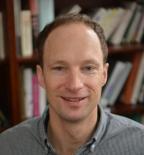
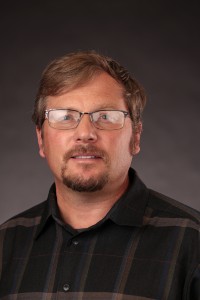
Walter Jetz is a Professor of Ecology and Evolutionary Biology and the School of the Environment at Yale University, where he directs the Center for Biodiversity and Global Change. He chairs the E.O. Wilson Biodiversity Foundation and co-chairs the GEO BON Species Population Working Group. His work focuses on biodiversity science, conservation, and global change ecology. Education: D.Phil. in Zoology (University of Oxford, 2002), M.Sc. in Integrative Bioscience (Oxford, 1997) Research interests include macroecology, species distribution modeling, and conservation science across spatial scales. His group develops tools like Map of Life , Wildlife Insights , and Half-Earth Project to address biodiversity monitoring and area-based conservation. Current projects explore climate change impacts on tropical ecosystems, movement ecology, and machine learning applications in biodiversity science. Recent publications focus on niche scaling, climate change vulnerability, deep learning for species distribution, and mountain biodiversity monitoring. Awards include being an ISI Highly Cited Researcher since 2014. Over 30 former students hold faculty positions globally. The lab promotes diversity, equity, and inclusion in science and collaborates with NASA, Microsoft, and the Gordon and Betty Moore Foundation.
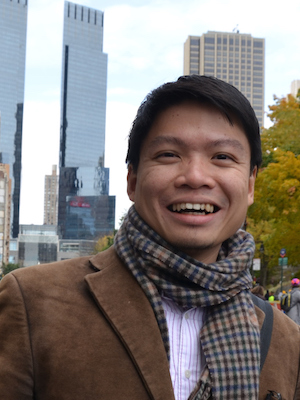
Novi Quadrianto is a Professor of Machine Learning at the School of Engineering and Informatics, University of Sussex, where he joined as a Lecturer in February 2014. He is currently a Principal Investigator on three active EU grants: BayesianGDPR (ERC), TANGO (EU Horizon RIA), and Act.AI (ERC Proof of Concept). He also holds an Adjunct Professor position in Data Science at Monash University, Indonesia, and serves as Strategic Lab co-Leader of the BCAM Severo Ochoa Strategic Lab on Trustworthy Machine Learning in Bilbao, Spain. His educational background includes a PhD in Machine Learning from the Australian National University (2012) and a BEng in Electrical and Electronics Engineering from Nanyang Technological University, Singapore. During his PhD, he conducted research at multiple international institutions including HIIT-Finland, Yahoo! Research-US, University of Alberta-Canada, Fraunhofer IAIS-Germany, and IST Austria. From 2012-2014, he was a Newton International Fellow of the Royal Society at the University of Cambridge. Professor Quadrianto directs the Predictive Analytics Lab (PAL) since 2017, which focuses on "Responsible AI" research developing AI models that embed fairness, accountability, transparency, and trustworthiness. His research spans algorithmic fairness, federated learning, and computer vision, with applications in sustainable development, healthcare, and finance. His work has been funded by prestigious organizations including the European Research Council, EPSRC, and HM Treasury. His publications reveal a strong focus on addressing challenges in AI fairness, robustness, and privacy, particularly in dynamic environments and heterogeneous data settings. Recent work explores performative prediction, diversity-driven learning, and efficient vision transformer inference, demonstrating his leadership in cutting-edge machine learning research. European Research Council ERC Proof of Concept Grant (2023) Guarantor Researcher for BCAM Severo Ochoa Excellence Accreditation (2023) European Lab for Learning and Intelligent Systems (ELLIS) Scholar/Fellow (2020) European Research Council ERC Starting Grant (2019) Newton International Fellowship (2012) Microsoft Research Asia Fellowship (2009) Professor Quadrianto currently supervises six PhD students and five postdoctoral researchers. He has served as Action Editor for Transactions on Machine Learning Research since 2022 and as Associate Editor for IEEE Transactions on Pattern Analysis and Machine Intelligence since 2016. He has also been an Area Chair for major conferences including NeurIPS, ICML, and AAAI. His PAL laboratory hosts a team of 15 members focused on inter-disciplinary AI research with domain experts across various sectors. The PAL Lab operates three innovation strands: AI for Sustainable Development (supporting UN SDGs), AI for Healthcare (transforming health outcomes), and AI for Finance (personalized loan decision-making). The lab also leads initiatives in Diversity & Inclusion in AI and offers Pro-Bono Office Hours to organizations seeking guidance on machine learning aspects.
Dr. W.S. Winston Ho is a Distinguished Professor of Engineering at The Ohio State University, holding joint appointments in the William G. Lowrie Department of Chemical and Biomolecular Engineering and the Department of Materials Science and Engineering. With over 50 years of combined industrial and academic experience, he leads pioneering research in molecular separation technologies. His industrial tenure includes R&D leadership at Exxon, Xerox, and Commodore Separation Technologies, where he commercialized gas treating processes and membrane systems. Education: Ph.D. in Chemical Engineering, University of Illinois at Urbana-Champaign (1971) M.S. in Chemical Engineering, University of Illinois at Urbana-Champaign (1969) B.S. in Chemical Engineering, National Taiwan University (1966) His research focuses on advanced membrane systems for critical environmental and energy challenges, including: CO 2 -selective membranes for hydrogen purification and carbon capture High-flux desalination membranes with fouling resistance Proton-exchange membranes for fuel cells operating under low humidity Supported liquid membranes for pharmaceutical recovery and heavy metal removal Recent publications demonstrate a strong emphasis on scaling membrane technologies for industrial applications, particularly carbon capture from flue gas and hydrogen purification. Over 75% of his last 15 articles address CO 2 separation, membrane scalability, or material enhancements for energy systems. Major Scientific Awards: Elected to National Academy of Engineering (2002) and Academia Sinica (2014) AIChE Institute Award (2006), Gerhold Award (2007), Evans Award (2012) New Jersey Inventor of the Year (1991) with 60+ U.S. patents Global recognition including Chemcon Distinguished Speaker Awards He directs the Winston Ho Research Group, focusing on membrane process scale-up and holds advisory roles in national research panels. Current projects include field testing spiral-wound membrane modules for carbon capture and developing fluoride-containing membranes to enhance solid oxide fuel cell efficiency. His work has been funded by DOE, NSF, and industrial partners, resulting in commercial implementations of membrane technologies.
Dr. Boyin Ding is an Associate Professor at the University of Adelaide , serving as Academic Director at Haide College and researcher in the Mechanical Engineering department within the Faculty of Sciences, Engineering and Technology. He leads the Wave Energy Research initiative established in 2014, while also contributing to Robotics and Biomechanics through his work with the Flinders Medical Device Research Institute. Research Areas: Ocean Wave Energy Harvesting Control Systems for Renewable Energy 6DOF Robotic Testing Spine Biomechanics Transnational Education Programs Key Collaborations: Australia-China Joint Research Centre for Offshore Wind & Wave Energy Acoustics, Vibration and Control Research Group Scientific Awards: Australian Endeavour Fellowship Malcolm Kinnaird Engineering Excellence Award (2012) His recent publications focus on hybrid offshore energy systems, nonlinear hydrodynamics in wave energy converters, and biomechanical testing technologies. He has developed control algorithms for floating offshore wind-wave systems and pioneered 6DOF robotic platforms for medical applications. As an eligible PhD supervisor, he actively collaborates with global industries and academic institutions.
Taco Niet is an Associate Professor in the School of Sustainable Energy Engineering at Simon Fraser University. His research focuses on energy systems modelling, energy storage technologies, and climate change mitigation strategies. He holds a Ph.D. (2018), M.A.Sc. (2002), and B.Eng. (1998) in Mechanical Engineering from the University of Victoria. His work bridges technical innovation with societal implications, particularly in renewable energy integration and policy design. Teaching specialties include instrumentation systems, control systems, and the intersection of technology and society. Courses taught span undergraduate and graduate levels, including energy policy frameworks and engineering laboratory practices. He actively contributes to open-source energy modelling tools like OSeMOSYS and CLEWs Global, emphasizing transparency and interdisciplinary collaboration. Recent research emphasizes grid flexibility, decarbonization pathways, and equity in energy transitions. Notable projects include analyzing Canadian consumer preferences for zero-emission vehicles and evaluating hydrogen's role in energy storage. His work often involves international collaboration, addressing challenges in both developed and developing regions. Professional affiliations include leadership roles in sustainable energy education and engagement with industry partners. The Delta-E Research Group under his direction focuses on applied energy solutions. Current initiatives explore multiphysics energy systems and policy impacts on land-use patterns.
Dr. Kathryn L. Braun is Professor of Public Health and Social Work at the University of Hawaii at Manoa's Thompson School of Social Work & Public Health, serving as Graduate Chair for the PhD in Community-Based and Translational Research. She leads the federally funded Hā Kūpuna National Resource Center for Native Hawaiian Elders and co-investigates two NIH programs: Ola HAWAII and PIKO, targeting Pacific health disparities. Her educational background includes: DrPH in Health Services Evaluation (University of Hawaii at Manoa) MPH (University of Hawaii at Manoa) BS (University of Michigan) Dr. Braun's research centers on community-based participatory methodologies in gerontology and cancer, with deep focus on Native Hawaiian and indigenous populations. Her work pioneers culturally relevant frameworks for reducing health disparities through qualitative approaches, emphasizing elder care, language reclamation, and traditional knowledge systems. With over 200 publications, she bridges academic research with community action to address systemic inequities. Recent publications (2022-2024) reveal consistent themes: culturally adapted geriatric care models for Native Hawaiian elders, indigenous food sovereignty as healing practice, and language reclamation for intergenerational health. These works demonstrate translational research that integrates traditional knowledge with Western health systems, prioritizing community ownership and cultural safety in public health interventions across Pacific contexts. Her honors include: Regents’ Medal for Excellence in Teaching (1998) Peter V. Garrod Distinguished Graduate Mentoring Award (2023) Fellowship in the Gerontological Society of America Fellowship in the Association for Gerontology in Higher Education As Graduate Chair, she mentors doctoral candidates in public health methodology while directing significant federal grants. Her NIH-funded centers (Ola HAWAII and PIKO) support community-engaged research capacity building across Pacific Islander communities, with Hā Kūpuna specifically advancing Native Hawaiian elder care through policy advocacy and resource development. Dr. Braun leads the Hā Kūpuna National Resource Center and serves as President of the Active Aging Consortium Asia Pacific, fostering international gerontology networks. Her Peace Corps service in the Philippines and Fulbright in Korea inform her globally engaged approach to indigenous health equity.
Dr. Gordon O'Brien serves as a Senior Fellow in Water at the Gulbali Institute, Charles Sturt University (Australia), bringing over 20 years of expertise in African freshwater systems since 2004. A South African Council for Natural Scientific Professionals registered scientist and NRF (C2) rated researcher, he bridges academic research with practical water management solutions across continental scales. Education: Doctor of Philosophy (Ph.D.) from University of Johannesburg (2012) His research integrates sustainable water resource management, freshwater ecology, and fish/ fisheries sciences through probabilistic modeling of multiple stressors at regional scales. Specializing in environmental flows, ecosystem services, and ecotoxicology, he develops holistic frameworks for vulnerable socio-ecological systems facing climate change and anthropogenic pressures. Current work emphasizes digital innovation in water security through real-time monitoring and risk assessment. Recent publications reveal a strategic shift toward digital water management, featuring tools like FISHTRAC for fish monitoring and PROBFLO for environmental flow implementation. His research increasingly focuses on African river basins (particularly Limpopo and Incomati), addressing invasive species impacts, fish community dynamics, and AI-driven decision support systems while maintaining strong policy relevance for water-scarce regions. Scientific Recognition: South African National Research Foundation (C2) rating Dr. O'Brien has supervised over 12 PhD and 20 MSc students to completion while securing more than US$2.5 million in research funding from governmental, NGO, and international sources. His projects directly inform water policy development across Africa, with documented contributions to legislation and management frameworks. Current grant portfolios emphasize digital water security tools and transboundary river basin management. As leader of the Rivers of Life applied research program in South Africa and member of CSU's Inland Freshwater Fisheries Research Group, he directs field teams across Kruger National Park and the Limpopo Basin. His collaborative network spans 12 African nations and includes partnerships with the International Water Management Institute for basin-scale digital twin development.
Thomas Ertl is a Professor at the University of Natural Resources and Life Sciences, Vienna (BOKU), leading the Institute of Sanitary Engineering and Water Pollution Control. His research focuses on urban water systems, emphasizing sustainable drainage, climate change adaptation, and nature-based solutions. He has coordinated 55 projects, including international initiatives in Albania and Austria, addressing stormwater management, wastewater heat recovery, and sewer infrastructure resilience. Key Projects : Analysing re-activated watercourses for urban resilience (2024–2028) Resilient rainwater management in Austria (2024–2028) Assessing pollutant emissions in Albania (2024–2027) Research Themes : Building Information Modeling (BIM) in wastewater systems Uncertainty analysis under climate change Stormwater pollution and heat island mitigation Awards : 2018: Goldene Ehrennadel des ÖWAV 1993: Best student award at AGIT 93 His recent publications highlight multidisciplinary approaches to wastewater energy recovery, spatial compatibility of nature-based solutions, and prioritization of stormwater management sites. He has supervised numerous theses and contributed to media discussions on urban climate resilience, including articles in Austrian outlets like futurezone.at and Der Kurier.
Ajay Pillarisetti is an Assistant Professor at the University of California, Berkeley's School of Public Health, Department of Environmental Health Sciences. His research focuses on the interplay between household energy use, air pollution exposure, health outcomes, and climate change in low- and middle-income countries. A graduate of UC Berkeley (PhD) and Emory University (MPH, BS), he has led global projects in India, Mongolia, Nepal, Guatemala, Peru, and Rwanda. PhD – Environmental Health Sciences, UC Berkeley MPH – Global Environmental Health, Emory University BS – Biology, Emory College His work employs low-cost air quality sensors, longitudinal surveys, and randomized controlled trials like the HAPIN study to assess health impacts of clean fuel interventions. Key subfields include exposure assessment, implementation science, pollution's metabolic effects, and policy-driven energy transitions. He collaborates with teams across four continents and has published extensively on household air pollution's multi-scale health burdens. Recent articles (2023–2025) highlight trends in quantifying PM2.5's health effects, optimizing sensor networks, and evaluating LPG interventions for maternal/child health. His studies span Guatemala's RESPIRE cohort, Rwanda's HAPIN trial, and India's community monitoring systems, addressing gaps in exposure-response modeling, biomarker analysis, and policy advocacy.
**Jianguo Wu** is the Dean’s Distinguished Professor of Landscape Ecology and Sustainability Science at Arizona State University (ASU), holding joint appointments in the School of Life Sciences and School of Sustainability. His affiliations include the Center for Biodiversity Outcomes, Water Institute, Global Drylands Center, and roles as Senior Global Futures Scientist. He earned his B.S. from Inner Mongolia University and M.S./Ph.D. from Miami University, followed by NSF postdoctoral fellowships at Cornell and Princeton Universities. **Education**: B.S. in Biology, Inner Mongolia University (1982) M.S. in Ecology, Miami University (1987) Ph.D. in Ecology, Miami University (1991) **Research Interests**: Landscape ecology, urban ecology, biodiversity-ecosystem functioning, and landscape sustainability science. His work emphasizes ecosystem services, human wellbeing linkages, and interdisciplinary solutions to global environmental challenges. **Awards**: Includes AAAS Fellow (2007), Leopold Leadership Fellow (2009), Distinguished Landscape Ecologist Award (2010), and recognition as a Web of Science Highly Cited Researcher (2019–2020). **Service & Leadership**: Editor-in-Chief of Landscape Ecology since 2005, Founding Director of the Sino-US Center for Conservation, Energy, and Sustainability Science (2007–present), and leader in multiple international editorial and advisory roles. **Labs/Teams**: Directs the Center for Human-Environment System Sustainability (CHESS) at Beijing Normal University and contributes to interdisciplinary initiatives like the Global Futures Scientists and Scholars program.
Eric Jessup is a Research Professor and Director of the Freight Policy Transportation Institute at Washington State University's School of Economic Sciences. He holds a Ph.D. in Agricultural Economics from WSU (1998), an M.S. and B.S. in Agricultural Economics from the University of Kentucky (1992, 1988). His career includes roles at Informa Economics, Albert-Ludwig-University (Germany), and American Express. His research focuses on transportation modeling, freight systems, applied econometrics, and geo-spatial analysis. Notable awards include the 2008 Transportation Research Forum Best Paper Award and recognition as an Eno Fellow (1994). Research interests emphasize optimizing freight logistics, transportation policy, and infrastructure investment. Recent work addresses pandemic impacts on global trade, truck parking safety, and rail rate dynamics. He has directed major freight policy initiatives, including the Freight Policy Transportation Institute and the PacTrans Workforce Development Institute. Over 80 publications span journals like Transportation Research Forum and Journal of the Transportation Research Forum , with a focus on GIS applications, supply chain resilience, and safety critical events. Education: Ph.D. Agricultural Economics, WSU, 1998 M.S. Agricultural Economics, University of Kentucky, 1992 B.S. Agricultural Economics, University of Kentucky, 1988 Awards: 2008 TRF Best Paper Award 2006 Best Paper Award (Italy) 1996 Northwest UTC Student of the Year 1994 Eno Transportation Fellowship Labs/Teams: Leads the Freight Policy Transportation Institute and collaborates with the Transportation Research Group at WSU. Engaged with national initiatives like PacTrans and the Idaho Statewide Freight Data Project. Grants and advising are central to his work, though specific student advisees are not listed. His research bridges academia and industry, addressing real-world challenges in freight logistics, environmental policy, and transportation safety.
Richard Margerum serves as Professor of Planning, Public Policy, and Management and Associate Dean for Faculty and Academic Affairs in the College of Design at the University of Oregon. His scholarly work focuses on collaborative governance frameworks for resolving complex environmental and planning challenges, with particular expertise in watershed management systems and metropolitan governance structures. His educational foundation includes: PhD in Urban and Regional Planning (with Law minor) from the University of Wisconsin, Madison (1995) MS in Water Resources Management from the University of Wisconsin, Madison (1992) MCRP in Environmental Planning from the University of Cincinnati (1989) BA in Geology from Wittenberg University (1987) Margerum's research examines collaborative decision-making processes through multiple theoretical lenses, developing practical frameworks for implementing collaborative governance in environmental contexts. His seminal MIT Press book Beyond Consensus: Improving Collaboration to Solve Complex Public Problems establishes foundational principles for moving beyond theoretical consensus to actionable solutions. Current investigations explore the professionalization of watershed councils, stakeholder motivations in restoration efforts, and network-based approaches to collaborative planning. Analysis of his publication trajectory (2022-2008) reveals three dominant thematic strands: (1) collaborative hazard mitigation planning informed by enhanced information utilization, (2) professionalization dynamics within watershed management organizations, and (3) metropolitan governance challenges in regional planning contexts. His work consistently bridges academic theory and practical application, often employing comparative international methodologies and mixed-methods evaluation frameworks. Margerum actively mentors graduate students through co-authored research, with recent advisees including Curtis Thomas, Sam Ault, Stephen Dobrinich, Ray McPadden, and Andrew Dutterer. He directs the Oregon Experiential Learning Model and has secured sponsored research funding for collaborative governance initiatives. His Collaboration Curriculum instructional resource demonstrates commitment to pedagogical innovation, providing free teaching materials adopted by institutions worldwide. He leads interdisciplinary research teams working with watershed councils, government agencies, and nonprofit organizations to develop implementable collaborative frameworks. Current projects focus on improving information flows in collaborative hazard mitigation and evaluating network effectiveness in metropolitan governance systems.
Kelly Baker, PhD, is an Associate Professor and Director of the Center for Climate Change and Health Equity at the University at Buffalo’s Department of Epidemiology and Environmental Health (School of Public Health and Health Professions). Her research focuses on transdisciplinary interventions addressing global health challenges, including maternal and child health, One Health frameworks, infectious disease transmission prevention, water insecurity, antimicrobial resistance, and climate change impacts in low-resource settings. She has held prior roles at institutions such as the University of Iowa and Emory University. Education: PhD in Molecular Microbiology and Immunology, University of Maryland Baltimore BS in Biology and Ecology, Oral Roberts University Research Interests: Dr. Baker explores the intersection of climate change, urbanization, and health equity. Her work examines how environmental factors like flooding and water contamination contribute to disease burdens in vulnerable populations, particularly in informal settlements. She also investigates interventions to reduce enteric infections in children through improved sanitation and diagnostics. Recent Article Trends: Her recent publications emphasize occupational safety in small businesses, spatial patterns of pathogen contamination, and policy analyses for diarrheal disease prevention in Kenya. These studies often blend quantitative methods with community-based approaches to address systemic health inequities. Awards and Honors: ASM Student Travel Grant Award Global Health Institute Scholar (Emory University) U.S.-Africa Frontiers of Science Fellow Advising and Grants: While specific grant details are not listed, her leadership in the Center for Climate Change and Health Equity underscores her role in securing funding for transdisciplinary projects. She mentors students in global health research, though no named advisees are documented here. Labs/Teams: Directs the Center for Climate Change and Health Equity, which integrates environmental and public health research to address climate-driven health disparities.
Colden V. Baxter is a Professor of Biological Sciences at Idaho State University, where he leads the ISU Stream Ecology Center and the Center for Ecological Research and Education (CERE). He directs ISU's graduate biology programs and previously served as president of the Society for Freshwater Science. His work bridges fundamental stream ecology with social dimensions of river management, focusing on ecological linkages between water and land. His educational background includes a Ph.D. in Fisheries Science from Oregon State University (2002), an M.S. in Organismal Biology and Ecology from the University of Montana (1997), and a B.A. in Biology and Geology from the University of Oregon (1993), followed by postdoctoral training at Colorado State University and Hokkaido University, Japan. Dr. Baxter's research centers on freshwater ecosystem dynamics, particularly stream-riparian interactions, nutrient cycling (especially nitrogen fixation/denitrification), and rivers as social-ecological systems. He investigates how human activities disrupt ecological linkages and examines bidirectional influences between human behaviors and river ecosystems, with strong emphasis on climate change impacts and conservation applications. Analysis of his recent publications reveals consistent focus on spatial heterogeneity in stream processes, food web dynamics in river-floodplain mosaics, and integration of social science into freshwater research. His work spans nutrient cycling, salmonid conservation, floodplain restoration, and extreme event impacts, demonstrating interdisciplinary approaches to river management challenges. His leadership roles, including presidency of the Society for Freshwater Science, reflect professional recognition. Current research is supported by grants like the NSF RAPID project on climate change-induced flooding, addressing urgent conservation questions through collaborative science. Through the ISU Stream Ecology Center, Dr. Baxter mentors graduate students and fosters interdisciplinary collaborations, advancing river science while training the next generation of freshwater ecologists. His lab serves as a hub for integrating field studies with social-ecological modeling to address complex watershed challenges.
Knut Bjørn Stokke is an Associate Professor in the Department of Urban and Regional Planning at the Norwegian University of Life Sciences (NMBU). His work bridges research, teaching, and supervision with a focus on landscape, environmental, and regional planning. His research interests include municipal and regional landscape planning, coastal and waterway planning, climate adaptation, protected areas, and local community development. He emphasizes the integration of environmental considerations, cultural heritage, and outdoor life into planning processes, particularly in peripheral and coastal regions. The recent publications highlight a consistent focus on climate change adaptation, European environmental policy implementation, landscape resource management, and the socio-political dimensions of planning. His work often involves multi-institutional collaboration and addresses real-world governance challenges in Norway. He is actively involved in several major research projects funded by the Research Council of Norway, including RUVIVAL (cultural heritage in urban development), WINDGOV (wind power and cabin planning), MAREA (nature accounting in the Oslofjord), and LANDTIME (time perspectives in planning and visitor management). Stokke teaches courses such as LAA360/361 Regional Landscape Planning and Local Community Development and APL240/241 Environment and Planning. He supervises multiple master's students and is committed to fostering synergies between research and education. No scientific awards or email addresses were mentioned in the provided text.