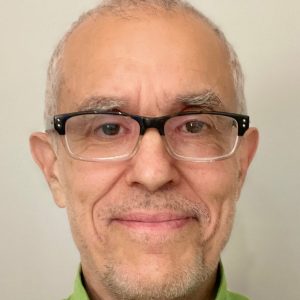
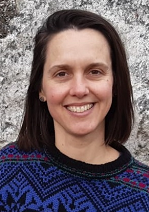
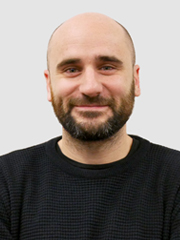
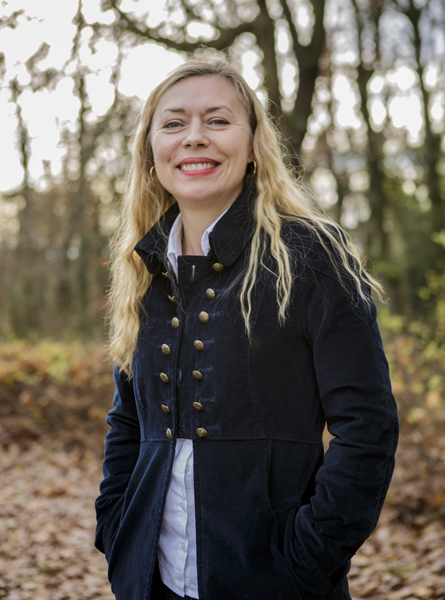
Dr. Vladimir Cvetkovic is a Professor at KTH Royal Institute of Technology’s Resources, Energy and Infrastructure department, affiliated with the Digital Futures research center. He serves as Co-Principal Investigator (Co-PI) for the Humanizing the Sustainable Smart City eXtended (HiSSx) project and previously led the HiSS initiative. His research bridges geotechnical engineering, environmental systems, and urban sustainability, focusing on rock fracture mechanics, contaminant transport, and socio-environmental resilience. Key areas of expertise include: Fracture network analysis and grouting technologies Sustainable smart city development Socio-behavioral modeling for energy consumption Hydrogeology and subsurface processes Recent work emphasizes interdisciplinary approaches to urban challenges, combining digital technologies with environmental science. His projects address radioactive waste disposal, smart city infrastructure, and socio-environmental system dynamics. Research outputs span over 100 peer-reviewed articles, with a focus on fluid dynamics in fractures, contaminant transport modeling, and urban policy design. He collaborates internationally on initiatives such as Baltic Sea nutrient management and climate-resilient urban planning in cities like Nanjing and Chicago. Contact: vdc@kth.se | Address: Osquars Backe 5, 100 44 Stockholm, Sweden
Kevin Rosso is a Laboratory Fellow and the associate director of the Physical Sciences Division for Geochemistry at Pacific Northwest National Laboratory (PNNL). He received his BS degree in geological sciences from Cal Poly at Pomona, California, in 1992, and his MS and PhD degrees in geochemistry from Virginia Tech in 1994 and 1998. With over 340 publications and an H-index of 63, Dr. Rosso is a leading figure in molecular geochemistry and surface science. Dr. Rosso's educational background includes: Ph.D., Geochemistry, Virginia Polytechnic Institute and State University M.S., Geochemistry, Virginia Polytechnic Institute and State University B.S. Geological Sciences, California State Polytechnic University, Pomona Dr. Rosso is best known for his pioneering research on electron transfer reactions between aqueous ions, mineral surfaces, and bacterial enzymes. His research spans from fundamental topics such as metal sulfide oxidation, bacterial reduction of metal oxides, contaminant interactions with clay minerals, and mechanisms of crystal growth and dissolution, to applied areas including geologic carbon sequestration, stress corrosion cracking in alloys, performance optimization of lithium battery materials, and the design of semiconductor materials for solar photocatalysis. His work has been instrumental in establishing the field of molecular geochemistry through the application of advanced tools like scanning probe microscopy, quantum mechanical molecular simulations, and massively parallel supercomputers. Analysis of Dr. Rosso's recent publications (2022-2023) reveals a continued focus on mineral-water interfaces, electron transfer processes, and materials for energy applications. His research spans multiple disciplines including geochemistry, materials science, surface chemistry, and computational chemistry. Key themes include aluminum speciation in alkaline solutions, mineral dissolution and precipitation mechanisms, electron transport in metal oxides, and the development of advanced characterization methods for understanding complex geochemical systems. Dr. Rosso has received numerous prestigious awards recognizing his contributions to geochemistry: Science Innovation Award (Stumm Medal), European Association of Geochemistry, 2020 Geochemistry Fellow, 2020 Member, Washington State Academy of Sciences, 2019 Visiting Distinguished Scholar, Durham University, 2019-2020 Life Fellow of the Mineralogical Society of America Life Fellow of The Geochemical Society Life Fellow of The European Association of Geochemistry Mineralogical Society's Hallimond Lectureship, 2016 Mineralogical Society of America Award, 2004 Dr. Rosso leads the U.S. Department of Energy's major fundamental geochemistry program at PNNL and is the founding director of the Center for Understanding Subsurface Signals and Permeability (CUSSP), a multi-institutional DOE Energy Earthshot Research Center launched in 2023. He has mentored a research group of approximately 35 PhD students, postdoctoral fellows, and staff scientists. His laboratory work is supported by significant DOE funding for research on geochemical processes relevant to energy production, environmental remediation, and nuclear waste management. Dr. Rosso directs the Center for Understanding Subsurface Signals and Permeability (CUSSP), which focuses on understanding subsurface processes critical for carbon sequestration, nuclear waste disposal, and geothermal energy. His team combines experimental and computational approaches to study mineral-fluid interactions at multiple scales, from molecular to field levels. The laboratory maintains state-of-the-art facilities for surface characterization, spectroscopy, and high-performance computing simulations.
Dr. Mahdi Haddad is a Research Assistant Professor at the Bureau of Economic Geology (BEG) within the Jackson School of Geosciences at The University of Texas at Austin. His expertise spans reservoir geomechanics, subsurface electromagnetic monitoring, hydraulic fracture modeling, and induced seismicity. He leads the revitalized BEG Rock Mechanics Lab and oversees projects at the Advanced Energy Consortium (AEC) lab and Devine Field Test Site (DFTS). His work focuses on developing diagnostic technologies to mitigate risks in subsurface energy operations, including CO2 storage, hydraulic fracturing, and fault reactivation analysis. Education: B.S. in Mechanical and Petroleum Engineering from Sharif University of Technology, Iran; M.S. in Mechanical Engineering (Energy Conversion) from Sharif University; Ph.D. in Petroleum Engineering from UT-Austin. Research Interests: Dr. Haddad specializes in hydraulic fracture dynamics , induced seismicity , poroelastic modeling , and subsurface electromagnetic monitoring . His projects integrate field experiments, numerical simulations, and advanced geophysical techniques to improve subsurface operation safety and efficiency. Awards: Recipient of the 2020 SPE Reservoir Evaluation & Engineering Journal Technical Reviewer Award and 2019 ARMA Future Leader designation. He co-founded the ARMA Induced Seismicity Webinar Series. Advising & Grants: Served as Principal Investigator (PI) on an STTR project for fracturing-induced seismicity diagnostics. Mentored PhD students in petroleum engineering and a lab technician. Active in technical committees for SPE and ARMA. Labs & Teams: Directs the BEG Rock Mechanics Lab and collaborates on initiatives at the AEC Lab and DFTS, advancing technologies for subsurface monitoring and energy resource management.
Dr. George Korfiatis is the McLean Chair Professor of Environmental Engineering at Stevens Institute of Technology, holding appointments since 1990. He served as Stevens' Provost (2006-2016) and Dean of the Charles V. Schaefer School of Engineering (2002-2006). He earned his PhD in Water Resources/Environmental Engineering from Rutgers University (1984) after completing BS (1978) and MS (1980) degrees in Civil Engineering there. His research focuses on water resources engineering, geohydrology, and environmental remediation, with contributions to nanotechnology-based water treatment systems. He pioneered technologies like titanium dioxide-based filtration and plasma decontamination, resulting in 8 US patents. His work emphasizes industrial resilience, having led $50M+ research programs at Stevens' Center for Environmental Engineering, which he founded in 1987. Dr. Korfiatis is a Fellow of the National Academy of Inventors and has been honored with three honorary doctorates, including from Stevens (2011) and Aristotle University (2011). He co-founded PlasmaSol Corp and HydroGlobe LLC, which were acquired by Fortune 500 companies. His leadership roles include chairing Defense Department panels on environmental strategies and international conferences on environmental protection. Key contributions include developing SCWO safety protocols for chemical agent disposal and advancing phosphate-mediated lead immobilization techniques. His 200+ publications span water treatment innovations, geotechnical systems optimization, and sustainable infrastructure projects. Current work addresses net-zero technologies for military facilities and AI-driven sustainable project evaluation.
Clara Sena is a Researcher in Hydrogeology at the University of Oslo (UiO) since 2019, affiliated with the Section for Environmental Geosciences. Previously, she held post-doctoral positions at UiO (2016-2019) and the University of Aveiro (2013-2016). Her work spans hydrogeology, environmental geology, and numerical modelling of contaminant transport, with a focus on groundwater-surface water interactions and geochemical redox processes. Sena has participated in major initiatives like IODP Expedition 351 (2014) and coordinated the Norway-Brazil GeoSource network addressing geological resource sustainability. Education : PhD in Geosciences (2009) from University of Aveiro & AMPHOS 21, MSc in Geochemistry (2007), and degrees in Applied Geology and Hydrology. Key Projects : COLOSSAL (Flow across Scales), GeoSource (Norway-Brazil collaboration), and the LOT A2 experiment on radioactive waste repository modelling. Her research integrates numerical tools to study water-rock interactions, contaminant fate, and landslide dynamics. She actively engages in science outreach and policy support, including roles in the EUROFLEETS infrastructure project (2012-2013) and the UNOC-III conference (2025).
Lin Ma is a Senior Lecturer at the University of Manchester, specializing in multi-scale imaging and characterization of rocks for geoenergy applications. She holds leadership roles including Head of International Student Recruitment in the Faculty of Science and Engineering (FSE) and Academic Lead for the Women@Manchester staff network (~800 members). Her research focuses on digital rock physics, subsurface energy storage, and machine learning-assisted analysis. She leads major grants totaling over £2M as Principal Investigator (PI) and £8M as Co-Investigator (Co-I) in UKRI/industrial projects. Notable roles include Deputy Editor-in-Chief of Marine and Petroleum Geology and Vice Chair of the Energy Group at The Geological Society. Education: PhD (Petroleum Geosciences, University of Manchester, 2012–2016), MSc (Petroleum Geology, Jilin University, 2009–2012), BSc (Petroleum Geology, Jilin University, 2005–2009). Research interests span shale gas, carbon storage, geothermal energy, and synchrotron-based imaging. She has secured >80 synchrotron beamtime days at facilities like Diamond Light Source and Stanford Synchrotron Radiation Lightsource. Research highlights include 4D imaging of porous material evolution under subsurface conditions (temperature/pressure/chemistry) and machine learning for upscaling microstructure analysis. Collaborations span global institutions, including the Brazilian Synchrotron Light Laboratory (LNLS) and European Synchrotron Radiation Facility (ESRF). Awards include NERC Independent Fellowship (2018) and STFC Rutherford Fellowship (2018). Teaching includes courses on subsurface modeling and engineering design. Current projects include the University of Manchester at Harwell campus and hydrogen storage feasibility studies. Supervised 10+ PhD students and postdoctoral researchers, with active labs focused on energy decarbonization and subsurface engineering.
Tomonaga Yama is a Part-Time Lecturer and Technical Specialist at the Department of Environmental Sciences, Faculty of Science, University of Basel. His work combines geochemical tracer techniques with environmental reconstruction studies, focusing on fluid dynamics in geological systems. Current affiliations: University of Basel (2022–present), Entracers GmbH (Founder & CEO since 2020) Past positions: Swiss Federal Institute of Aquatic Science and Technology (Eawag), University of Bern, ETH Zurich Research Focus: Utilizes noble gases and stable isotopes to study fluid transport mechanisms in porous media, environmental reconstruction through porewater analysis, and transient gas tracer applications for understanding Earth's physical processes. Scientific Contributions: Notable works include mantle-fluid emissions analysis in Japan's Kumano Basin, paleoenvironmental reconstruction in Lake Van, and groundwater flow regime characterization in alpine tunnels. His research spans environmental geochemistry, isotope hydrology, and fluid dynamics.
Elco Luijendijk is an Associate Professor in Hydrogeology at the Department of Earth Science, University of Bergen (UiB). His research focuses on the interplay between groundwater systems, geological processes, and climate change impacts. He is affiliated with the Geodynamics and Basin Studies research group and the Bjerknes Centre for Climate Research. His work emphasizes understanding drainage density dynamics, subsurface flow processes, and the role of groundwater in landscape evolution. Key contributions include developing coupled models of groundwater flow and surface processes, particularly highlighted in his 2022 study on transmissivity's influence on drainage density. His research spans hydrogeological modeling, thermochronology, and environmental applications like coastal groundwater nutrient dynamics and nuclear waste repository safety assessments. Elco has authored over 50 peer-reviewed articles, with recent work addressing global groundwater recharge patterns, climate sensitivity, and subterranean estuary biogeochemistry. His interdisciplinary approach bridges geology, hydrology, and computational modeling, contributing to both theoretical advancements and practical challenges in water resource management and environmental safety.
Juan Alcalde Martín is a Permanent Researcher at the Institute of Earth Sciences Jaume Almera (GEO3BCN-CSIC), a leading research institution under the Spanish National Research Council. He holds a PhD in Earth Sciences from the University of Barcelona and has held research positions at prestigious institutions including the University of Aberdeen and the University of Edinburgh. His work focuses on geophysical characterization of the subsurface for energy and environmental applications. PhD in Earth Sciences, University of Barcelona (2014) Master’s in Geophysics, University of Barcelona (2011) Bachelor’s in Geology, University of Salamanca (2008) Dr. Alcalde Martín's research spans geophysics, carbon capture and storage, geothermal energy, seismic imaging, and reservoir characterization . He investigates subsurface structures using seismic reflection data, with a focus on uncertainty, fracture networks, and the application of geoscience to climate change mitigation. His recent work emphasizes negative emissions technologies and the repurposing of geological formations for hydrogen and CO2 storage. His 15 most recent publications (2024–2025) reveal a strong trend toward climate-relevant geoscience , particularly in carbon storage, geothermal potential in the Iberian Peninsula, and subsurface energy storage. He integrates AI and advanced seismic methods to enhance subsurface analysis, contributing to energy transition strategies and sustainable resource management. His scientific achievements have been recognized with several honors: PhD awarded Cum Laude with International Mention 2017 Best Recent Paper Award, AAPG Petroleum Structure and Geomechanics Division Finalist for Image of the Year, British Geophysical Association Dr. Alcalde has been involved in numerous research projects funded by international and national agencies, collaborating with institutions across Europe. He has mentored students and early-career researchers through fellowships and collaborative projects, though specific advisees are not listed. He is actively engaged in knowledge dissemination through conferences and high-impact publications. He is a key contributor to major research initiatives such as the UnriDDLE Project and maintains leadership in developing databases like the Iberian Evaporite Structure Database (IESDB), supporting interdisciplinary teams focused on energy, carbon, and nuclear waste storage solutions.
Dr Lee Hosking is a Senior Lecturer in Energy Geomechanics at Brunel University's Department of Civil and Environmental Engineering within the College of Engineering, Design and Physical Sciences. He holds a PhD and MEng in Civil Engineering from Cardiff University and has been recognized with a Fellowship of the Higher Education Academy (FHEA) in 2022. Senior Tutor (Civil and Environmental Engineering) Chair of Student Experience Committee NSS Champion Digital Education Champion Lee's research focuses on numerical modelling of deep subsurface environments, particularly coupled thermal-hydraulic-mechanical (THM) phenomena, fracture network representation, and damage evolution. His work has been applied to geological CO₂ storage, unconventional geothermal energy systems, and radioactive waste disposal. Current projects funded by The Royal Society and EPSRC explore CO₂ storage injection well integrity and fluid injection-induced seismicity prediction. He teaches modules such as Energy Infrastructure Engineering, Climate Change and the Environment, and supervises PhD students in areas like coupled THM behavior of unconventional geothermal reservoirs and CO₂ injection well integrity. Lee collaborates nationally and internationally with academic and industry partners and is affiliated with the Centre for Energy Efficient and Sustainable Technologies, Two-Phase Flow and Heat Transfer, and Geotechnical and Environmental Engineering groups at Brunel. Fellowship of the Higher Education Academy (FHEA), 2022 Editorial Board Member - Deep Underground Science and Engineering Member - UK Carbon Capture and Storage Research Centre Member - British Geotechnical Association Member - International Society for Rock Mechanics and Rock Engineering
Dr. Michal Kruszewski serves as a Senior Researcher at the Department of Engineering Geology and Hydrogeology at RWTH Aachen University, where he leads investigations in reservoir geomechanics, rock mechanics, and fault mechanics with applications in deep geothermal energy systems. His expertise spans numerical modeling, hydraulic testing, and stress state analysis, contributing significantly to sustainable geothermal resource development. His academic credentials include: Ph.D. in Geosciences from Ruhr University Bochum (2023) M. Eng. in Geology and Mining from AGH University of Science and Technology, Cracow, Poland (2017) Dr. Kruszewski's research focuses on the critical relationship between crustal stress states and fault behavior in geothermal reservoirs. His work examines how stress conditions affect fault stability and permeability, with direct implications for induced seismicity risk during geothermal operations. He employs advanced numerical modeling techniques combined with field data analysis to address challenges in geothermal energy development, particularly in the Ruhr region of Germany and Los Humeros in Mexico. His investigations into fault reactivation potential during fluid injection operations have provided valuable insights for safer geothermal system design. His publication record demonstrates consistent research productivity with numerous high-impact articles focusing on geomechanical characterization of geothermal systems. A significant portion of his work addresses the practical challenges of deep geothermal energy development, particularly the relationship between stress states, fault reactivation, and fluid flow in the subsurface. His recent publications (2023-2025) show continued innovation in modeling techniques and field applications. Dr. Kruszewski maintains active membership in key professional organizations: European Geosciences Union (EGU) American Geophysical Union (AGU) International Geothermal Association (IGA) Polish Geothermal Society (PSG) Society of Petroleum Engineers (SPE) As project lead for SIEGFRIED (BMWK) and contributor to PRECODE (BGE), he oversees research initiatives addressing critical challenges in underground engineering and geothermal development. His work on the PRECODE project investigates excavation-induced damage in tunnel environments, with implications for deep geological repositories. Dr. Kruszewski maintains strong international collaborations, particularly with Mexican research institutions through the GEMex project, advancing understanding of superhot geothermal systems in volcanic environments.
Adriana Paluszny Rodriguez is a Professor in Computational Geomechanics and Royal Society University Research Fellow at Imperial College London’s Department of Earth Science & Engineering (Faculty of Engineering). Her work focuses on numerical methods for subsurface systems, including fracture mechanics, fluid flow in fractured rocks, and green energy technologies. She leads high-impact projects like the SeisGreen initiative to mitigate induced seismicity risks in renewable energy projects and the GeoSafe project for safe radioactive waste disposal. Adriana is also Director of Research in her department and chairs the GeoSafe EDI committee. Her research interests span computational mechanics, geothermal energy, carbon storage (CCS), and compressed air energy storage. She developed the Imperial College Geomechanics Toolkit, a numerical modeling tool for subsurface processes. As an Associate Editor of the Journal of Geophysical Research: Solid Earth and the International Journal of Rock Mechanics and Mining Sciences, she actively contributes to academic rigor and peer review. Adriana’s outreach efforts include the Watson Forum project to inspire women in STEM and the Curio charity for primary school science education. She has received prestigious awards, including the Chin-Fu Tsang Award for young scientists and recognition for excellence in refereeing. Her technical leadership includes roles as PI for SeisGreen, leading the GeoSafe field-scale modeling work package, and coordinating interdisciplinary teams across multiple institutions. Her research bridges fundamental science with practical applications in energy sustainability and geological engineering.
Magdalena Scheck-Wenderoth is a Professor of Sedimentary Basin Analysis at RWTH Aachen University and serves as Director of Department 4 Geosystems at GFZ Potsdam since 2018. She previously directed GFZ's Department 6 Geotechnologies (2016-2018) and has held leadership roles in multiple international programs including the International Lithosphere Program and EGU Division Tectonics and Structural Geology. Education: Geology studies at Eberhard Karls Universität Tübingen and Technische Universität Berlin (1986-1993) Key Roles: 3D basin modeling, geothermal research, DFG priority program coordination Her research integrates geoenergy applications with sedimentary basin geodynamics , focusing on 3D structural modeling of crust/lithosphere, coupled heat-fluid transport, and salt tectonics. Current work addresses geothermal boundary conditions in Central Europe and Atlantic margin evolution. Recent publications demonstrate methodological advances in thermal modeling ( Solid Earth 2020), gravity gradient analysis ( G3 2019), and CO2 storage limitations ( Energy Procedia 2017). Research spans scales from micro-basin analysis to cross-Atlantic margin comparisons. Major Awards: Member of DFG Review Board 314-01 Secretary General of International Lithosphere Program Editorial Board of Basin Research and Tectonophysics She leads multidisciplinary teams at GFZ Potsdam while maintaining academic leadership through publications and editorial responsibilities. Her work combines fundamental geoscience research with societal applications including nuclear waste disposal site selection and geothermal energy development.
Kyung Jae Lee is an Associate Professor in the Department of Petroleum Engineering at the University of Houston's Cullen College of Engineering. His research focuses on reactive transport modeling in subsurface systems, with particular emphasis on lithium extraction from shale brines and nuclear waste disposal barriers. He holds a Ph.D. from Texas A&M University (2014) and has led projects funded by NSF, ACS PRF, and industry partnerships. Key research interests include multiscale modeling of subsurface processes, clay mineral behavior under thermal conditions, and data-driven reservoir simulation techniques. His work bridges computational models with experimental validations, addressing critical challenges in energy resources and environmental sustainability. Award-winning educator, Lee teaches graduate courses like Advanced Reservoir Simulation and Reservoir Characterization. Over 20 scientific awards highlight his contributions to petroleum engineering and environmental geoscience. His lab collaborates with national labs like Lawrence Berkeley National Laboratory and industry partners for translational research.
Professor Rizlan Bernier-Latmani is a Full Professor at École Polytechnique Fédérale de Lausanne (EPFL) within the School of Architecture, Civil and Environmental Engineering, Department of Environmental Sciences and Engineering. She leads the Environmental Microbiology Laboratory (EML), focusing on geomicrobiology, bioremediation, and isotope geochemistry. Her research explores microbial processes in extreme environments, including radioactive waste repositories and contaminated aquifers. She holds academic roles in teaching and curriculum design, and serves on committees such as the Diversity Office at ENAC and the EPFL Academic Evaluation Committee. Her work integrates molecular biology, geochemistry, and field studies to address environmental challenges. Research interests emphasize microbial redox cycling, uranium transformation mechanisms, and environmental microbiology applications. She has supervised numerous doctoral theses, advancing understanding of microbial biogeochemistry and its impact on ecosystems. Her lab develops novel methods for microbial isolation and bioremediation strategies, with recent contributions to studies on clay barriers, radioactive waste management, and microbial interactions in subsurface environments. Publications highlight advancements in uranium oxide dynamics, microbial adaptation in confined spaces, and the role of microbial communities in geochemical cycling. Her interdisciplinary approach bridges fundamental science with practical solutions for environmental sustainability.