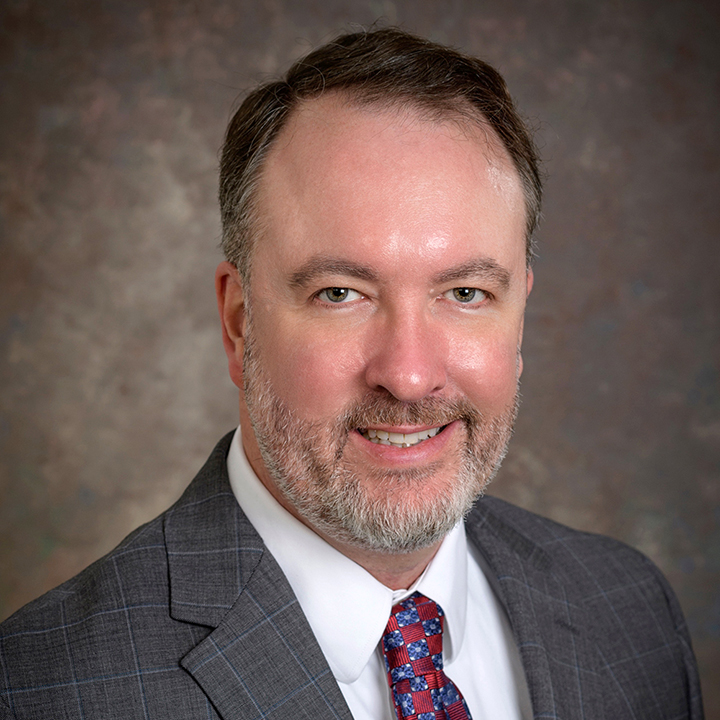
Joshua M. Duke is Professor of Agricultural Economics & Rural Sociology at Auburn University's College of Agriculture. His office is located in Comer Hall on the Auburn campus. Research Focus: Duke's work spans land economics, environmental policy, property rights frameworks, and conservation program design. He employs experimental economics methods to analyze land value taxation, agri-environmental program participation, and behavioral aspects of resource management decisions. Publication Trends: Recent research examines institutional designs for land value taxation, behavioral economics of food choices, barriers to conservation practice adoption, and economic instruments for soil health improvement. His work consistently integrates economic theory with empirical evidence from field experiments and surveys. Policy Engagement: Duke's research informs farmland preservation programs, water quality trading markets, and sustainable agricultural policies. His investigations into landowner satisfaction with conservation easements and farmer participation in cover crop programs provide practical insights for policy refinement.
Prof. Rüdiger Deike is the Chair holder of the Chair of Metallurgy and Forming Technology at the University of Duisburg-Essen. His research focuses on metallurgical processes, raw material markets, recycling technologies, and sustainability in the foundry and steel industries. He leads the Institute for Metal Technologies (ITM), emphasizing innovation in material flow analysis, energy efficiency, and circular economy applications. Key research areas include analyzing global raw material market dynamics, optimizing waste-to-resource systems for foundries, and advancing metallurgical processes for non-ferrous and ferrous alloys. His work integrates numerical modeling of solidification behaviors and process optimization for industrial applications. Publications highlight trends in commodity markets, recycling strategies for valuable materials, and material recovery from industrial byproducts. His interdisciplinary approach bridges technical challenges with economic and environmental sustainability, influencing policy and industry practices. Laboratory and team activities center around the ITM, where research spans experimental and computational methods to address global metallurgical challenges. No specific grants or awards are listed, but his contributions are evident through extensive publication output and institutional leadership.
Dr. Marcelo Andrade Lima is a Lecturer in Biomedical Sciences at the School of Life Sciences, Keele University , where he serves as PGR Co-ordinator. He holds a PhD (2012) and post-doctoral experience (2014) in Molecular Biology from the Federal University of São Paulo, with prior degrees in Biology (2008) and Molecular Biology (2010) from the Federal University of Rio Grande do Norte. His research focuses on the structural and functional relationships of biological macromolecules , particularly glycosaminoglycans and heparin , with groundbreaking work on their roles in anticoagulant drug quality control, SARS-CoV-2 interaction mechanisms, and Alzheimer's disease pathogenesis . He also explores super-resolution microscopy and CARS (Coherent Anti-Stokes Raman Scattering) for cellular structure analysis. The most recent articles highlight his expertise in heparin's pharmacological applications (e.g., SARS-CoV-2 inhibition, anti-inflammatory strategies), biocatalytic systems for nucleotide sugar production, and marine-derived glycosaminoglycans with unique antithrombotic properties. His work bridges structural biology, biomedical chemistry, and translational research , often challenging established models of glycosaminoglycan biosynthesis. Dr. Lima's collaborations span institutions in the UK, Brazil, and beyond, with contributions to peer-reviewed journals in biochemistry, pharmacology, and virology . His lab employs advanced techniques like NMR spectroscopy, SPR analysis, and molecular dynamics simulations to dissect carbohydrate-protein interactions.
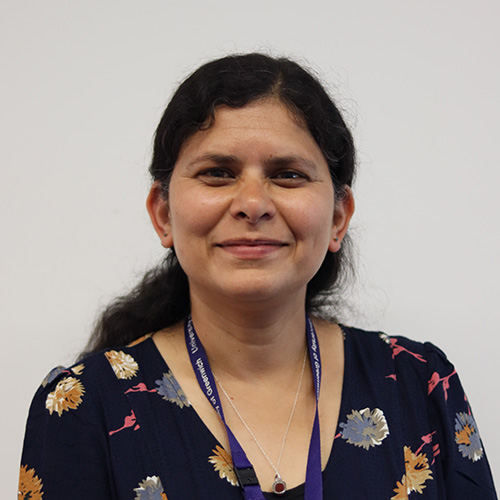
Dr. Nimisha Tripathi serves as a Senior Lecturer in Environmental Engineering at the School of Engineering, Faculty of Engineering and Science, University of Greenwich. She co-founded and directs the Indo:UK Centre for Environment Research and Innovation (IU:CERI) and acts as the University of Greenwich Champion for Sustainability and Ecological Remediation. Her research spans environmental impact assessment, contaminated land restoration, soil carbon sequestration, and bio-remediation, with current leadership in biomass utilization coupled with CO 2 mineralisation. This work addresses critical environmental challenges through sustainable engineering solutions for contaminated sites and carbon management. Publications reveal a strong focus on soil/water remediation using biopolymers like chitosan for heavy metal removal, sustainable mining waste utilization, and pan-European environmental assessments. Her multidisciplinary approach integrates materials science with ecological restoration. Dr. Tripathi actively leads the Centre for Contamination and Land Remediation at Greenwich while driving international collaboration through IU:CERI, emphasizing practical applications for mine spoil rehabilitation and carbon sequestration.
Chennat Gopalakrishnan is a Professor of Natural Resource Economics at the University of Hawaii at Manoa , affiliated with the College of Tropical Agriculture and Human Resources and the Department of Natural Resources and Environmental Management. With over four decades of academic and research experience, he has held visiting positions at the University of Southern California and the University of Wyoming. Ph.D. in Agricultural Economics (Natural Resource Economics specialization) from Montana State University M.A. and B.A. in Economics from Kerala University, India Research Interests focus on natural resource economics and policy , particularly in water resources , marine economics , and energy systems . His work explores institutional constraints, economic impacts of pollution, and technology transfer dynamics in both developed and developing contexts. Key research areas: Water conservation in agriculture, Groundwater pollution economics, Ocean resource governance, Energy price impacts Scientific Awards include: Ka Pouhana (Mentor) Award (2003) Outstanding Researcher Award, Gamma Sigma Delta (1980) International Award for Distinguished Service, Gamma Sigma Delta, Hawaii Chapter (1989) Fellowships for Ethics Institute (1990) and Law Institute (1986) Advising & Grants span mentoring 10+ Ph.D. candidates and securing $200,000+ in research grants from USDA, NOAA, and Sea Grant. Notable funded projects: 'Water Conservation in Western Irrigated Agriculture' and 'Economic Impacts of Groundwater Pollution in Hawaii'. Labs & Teams include leadership roles in the Law of the Sea Institute and collaborative research with institutions like Argonne National Laboratory and the Gas Research Institute.
Mark Shiflett is a Foundation Distinguished Professor at the University of Kansas , leading research in sustainable chemical processes and material science. His work focuses on refrigerant separation technologies, PFAS remediation, and valorization of agricultural waste. He is affiliated with the NSF Engineering Research Center for Environmentally Applied Refrigerant Technology Hub (EARTH) , addressing global challenges in energy efficiency and environmental sustainability. Research interests include: Development of ionic liquids for separations and energy-efficient processes Adsorption-based technologies using zeolites and fluoropolymers Environmental applications of pistachio shell waste Thermodynamic modeling of nonideal systems Recent work emphasizes: Innovative methods to separate hydrofluorocarbon refrigerants (e.g., R-410A) PFAS removal from water using engineered zeolites Industrial-scale trials of pistachio shell additives in molded pulp products His contributions include over 50 publications on topics ranging from membrane technologies to catalytic processes, with a focus on bridging laboratory research and industrial applications. Current projects involve pilot-scale extractive distillation systems and eco-friendly polymer synthesis.
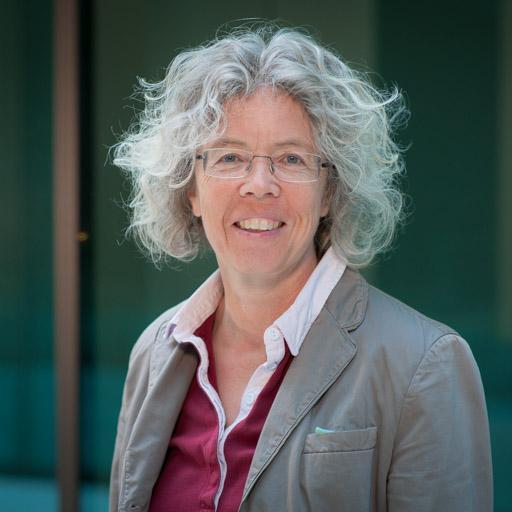
Prof. Ursula Eicker is the Canada Excellence Research Chair in Smart, Sustainable and Resilient Cities and Communities at Concordia University , leading cutting-edge research in urban energy systems. Her work integrates 3D city modeling, renewable energy systems, and sustainable transport to develop zero-carbon city strategies. PhD in Solid State Physics (Heriot-Watt University) Habilitation in Renewable Energy Systems (Technische Universitat Berlin) Research Interests focus on urban simulation platforms, district energy networks, and climate-resilient infrastructure. The INSEL4Cities platform enables holistic urban modeling for building demands, transportation, and greenery. Her Residential Densification studies demonstrate 65% energy reduction through retrofits and solar integration. Recent publications explore urban solar shading , transactive energy systems , green infrastructure equity , and decentralized hydrogen production . Awards include the German-African Innovation Incentive and recognition for photovoltaic research in Egypt. Over 50 graduate students in her lab examine zero-carbon pathways. Teaches ENCS 691 on urban energy systems. Secured 10M CAD for the CERC chair and multiple grants. Co-Director of Concordia's Next Generation Cities Institute .
Harjinder Sembhi is a Lecturer in Earth Observation Science at the School of Physics & Astronomy, University of Leicester. His research focuses on remote sensing applications in environmental monitoring, including crop water stress assessment, urban heat island dynamics, and atmospheric greenhouse gas emissions. He utilizes satellite data (e.g., Sentinel-5P, MODIS, MIPAS) and UAV-based imagery to study agricultural sustainability, air quality policy impacts, and climate-related phenomena. Key research interests include: Remote sensing of crop water conditions and irrigation management Urban climate analysis and heat stress mitigation strategies Quantification of methane and aerosol emissions using satellite observations Policy implications of agricultural practices on air quality His work bridges geospatial technologies with interdisciplinary challenges, such as integrating climate forecasts with water resource management and evaluating pandemic-related environmental impacts. Collaborations include ESA missions and international researcher exchanges.
Chang Geun Yoo is an Associate Professor in the Department of Chemical Engineering at the State University of New York College of Environmental Science and Forestry (SUNY ESF) since April 2024, having previously served as an Assistant Professor from July 2018 to March 2024. His research focuses on developing sustainable technologies for biomass conversion, with particular emphasis on biological and thermochemical pathways to transform lignocellulosic biomass into valuable fuels, chemicals, and bio-based materials. He leads the ESF Biomass Engineering Laboratory (BEL), which investigates innovative approaches to lignocellulosic biorefinery processes and sustainable material applications. Ph.D. in Agricultural and Biosystems Engineering (Major), Biorenewable Resources and Technology (Minor), Iowa State University (2008-2012) M.S. in Chemical Engineering, Hanyang University, Seoul, Korea (2006-2008) B.S. in Chemical Engineering, Hanyang University, Seoul, Korea (1998-2006) Dr. Yoo's research centers on elucidating biomass and bio-product properties while developing advanced lignocellulosic biorefinery processes. His work spans thermochemical and biological conversion pathways, with particular focus on deep eutectic solvents for biomass processing, lignin valorization strategies, and innovative approaches for enhancing biomass digestibility. His laboratory investigates the fundamental mechanisms behind biomass recalcitrance and develops novel pretreatment methods to improve conversion efficiency. The research integrates experimental work with computational modeling to optimize biomass fractionation processes and maximize product yields from renewable resources. Dr. Yoo's recent publications reveal a strong focus on lignin valorization and biomass conversion technologies, with increasing integration of computational approaches to optimize processes. His work spans multiple dimensions including lignin-based polyurethane foams, deep eutectic solvent applications, catalytic processes for biomass conversion, and novel biorefinery approaches. There's growing emphasis on sustainability metrics, economic considerations, and practical implementation challenges in bio-based material development, reflecting the maturation of the field toward commercial applications. Dr. Yoo has received numerous prestigious awards recognizing his research excellence and teaching: SUNY Chancellor's Award for Excellence in Scholarship and Creative Activities (2025) ACS Energy & Fuels Rising Stars (2024) NSF CAREER Award (2023) ESF Exemplary Researcher (2023) ACS ENFL Early Career Investigator Spotlight (2023) ACS CNY Section Award (2021) Dr. Yoo actively mentors PhD students in Paper & Bioprocess Engineering and related fields, with current advisees including Nara Han, Seongsu Park, Jiae Ryu, and Chaehwi Yoon. His NSF CAREER Award (2023) supports innovative work in biomass conversion technologies, while his research group maintains strong collaborations with Oak Ridge National Laboratory, University of Wisconsin-Madison, and various industry partners to advance biorefinery concepts from laboratory to practical applications. His editorial roles with Advances in Industrial Engineering Chemistry, Frontiers in Chemical Engineering, and Applied Sciences demonstrate his leadership in the field. Dr. Yoo leads the ESF Biomass Engineering Laboratory (BEL), which maintains strong industry and national laboratory collaborations. His research group actively participates in outreach programs including the Water Research Spring Workshop and Sustainable Material Summer Workshop, engaging students and community members in sustainability research. The laboratory's work bridges fundamental science with practical applications, focusing on technologies that can transition from laboratory to commercial scale while maintaining environmental sustainability.
Dr. Son Minhee is a Research Fellow at the Energy Studies Institute, National University of Singapore (NUS). She holds a PhD in Energy and Environmental Policy and Technology from Korea University, specializing in environmental profiles and cost-benefit analysis of photovoltaic (PV) waste management. Her work focuses on low-carbon strategies, renewable energy adoption, and carbon neutrality policies, with expertise in life cycle assessment (LCA) and carbon accounting across sectors. Education: PhD in Energy and Environmental Policy and Technology, Korea University Master’s Degree, Graduate School of Energy and Environment (Green School), Korea University Her research interests span renewable energy technologies, LCA methodologies, and policy analysis for sustainable transitions. She explores carbon reduction pathways through renewable integration and emerging technologies, while evaluating policy frameworks for carbon neutrality. Recent work includes dynamic material flow analysis of plastics and hydrogen-based energy systems. Minhee’s articles highlight trends in waste management innovation, CCUS technology perception, and regional energy policy effectiveness. She collaborates on multi-sector carbon accounting projects using LCA, contributing to Singapore’s low-carbon agenda.
Professor Jason Hallett is a Professor of Sustainable Chemical Technology at Imperial College London's Department of Chemical Engineering, part of the Faculty of Engineering. He leads research on ionic liquids for biofuel production, vaccine manufacturing, and waste recycling. His affiliations include the Supergen Bioenergy Hub, Grantham Institute, and multiple spin-off companies like Lixea and DyeRecycle. He earned his PhD from Georgia Tech and joined Imperial in 2014 as a Senior Lecturer, advancing to Professor by 2018. His work spans ionic liquid-based biorefineries, circular economy solutions, and sustainable chemical processes. Over 200 articles and 10+ patents highlight his contributions to green chemistry. Education: PhD in Chemical Engineering, Georgia Institute of Technology Postdoctoral: Marshall-Sherfield Fellowship in Sustainable Chemistry Research focuses on ionic liquids for biomass fractionation, vaccine formulations, and metal recovery. Key subfields include enzymatic biocatalysis, bioprocess scale-up, and textile recycling. His group develops technologies like the ionoSolv process and collaborates on large-scale CO2 removal (CO2Co). He advises over 20 current PhD students and has spun out 7 companies, including Oorja for renewable energy in India. Recent articles emphasize ionic liquid applications in spectroscopy, reactor design, and hydrogen production from bioenergy crops. His work addresses biomass pretreatment, lignin valorization, and hydrogel-based water treatment solutions. Awards & Grants: Co-Director of Supergen Bioenergy Hub; multiple industry collaborations and UKRI funding. Future Work: Scaling ionoSolv technology, advancing CO2 capture, and expanding circular economy initiatives. Labs/Teams: Active in Imperial’s Chemical Engineering department, with ties to the Institute of Chemical Biology and Future Vaccine Manufacturing Hub.
Christopher Görsch is a Visiting Professor at Aalto University’s Department of Civil Engineering, focusing on construction workflows, productivity, and situational awareness. He holds a PhD in Construction Engineering (2024) and a Master’s in Engineering from Bauhaus-Universität Weimar (2016). His research emphasizes reducing waste in construction, improving worker efficiency, and integrating digital tools like digital twins and AI into workflows. Key projects include the ACTOR initiative for automated coordination of construction actors and studies on self-managed teams. Görsch has received the Greg Howell Best Paper Award (2022) and a Research Visit Grant to Swinburne University (2020). His work spans academic qualifications, including a doctoral thesis on task planning in construction. Research interests highlight interdisciplinary approaches combining technology (e.g., IoT, AI) with human factors, such as worker demands and situational awareness. Collaborations include teams analyzing workflow interruptions and sustainability in BIM systems. Press coverage highlights his findings on productivity losses in construction work. Education: PhD in Construction Engineering (Aalto U., 2024), M.Sc. Engineering (Bauhaus U., 2016) Key Projects: ACTOR Project, Building 2030 Digital Twin Initiative Grants/Awards: Greg Howell Award, Australia Research Visit Grant Press Highlights: Revealed up to 80% of construction work as non-productive (2024) Recent articles emphasize automation (e.g., Choosing by Advantages algorithms) and digital tools to enhance decision-making. His datasets, such as Time-Motion Data of Construction Work, support quantitative analyses of workflow interruptions. Görsch’s lab activities include cross-disciplinary teams addressing managerial adoption of digital systems and worker empowerment strategies.
Maria Johansson is an Adjunct Assistant Lecturer in the Department of Health, Medicine and Caring Sciences at Linköping University. Her research focuses on improving everyday life for elderly individuals with multiple illnesses and those with mild cognitive impairment or dementia. She investigates methods to measure and assess function and activity while developing rehabilitation strategies to support patients. Her educational background includes: PhD in Occupational Therapy (2015) Master's in Occupational Therapy (2009) Bachelor's in Occupational Therapy (1995) She contributes to teaching in the Medical Programme (geriatrics/geriatric rehabilitation) and supervises bachelor's projects in the Occupational Therapy Programme. Johansson is also part of the REAGERA project investigating elder abuse prevention. Her scientific awards include recognition for research on rehabilitation methods for cognitive impairments. Through her work, she aims to enhance quality of life and functional independence in vulnerable populations.
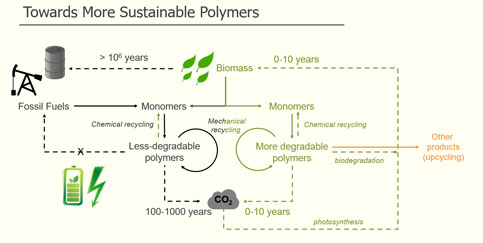
Professor Antoine Buchard is a Royal Society University Research Fellow and Professor of Sustainable Polymer Chemistry at the University of York's Department of Chemistry. His research focuses on developing polymers from renewable resources such as carbohydrates, CO2, vegetable oils, and terpenes to address challenges in non-degradable fossil fuel-derived plastics. His interdisciplinary team combines experimental and computational methods, exploring monomer synthesis, catalytic polymerization, and material applications in packaging, coatings, and energy storage. Antoine holds a PhD from École Polytechnique (France) and has held academic positions at Imperial College London and the University of Bath. He leads the Buchard Group, emphasizing sustainable chemical technologies and has contributed to initiatives like the University of Bath's Institute for Sustainability. His work bridges academia and industry, with a focus on circular economy solutions and renewable material innovation. Key research areas include bio-based solid polymer electrolytes, depolymerization strategies for chemical recycling, and catalyst design for controlled polymerization. His Royal Society Fellowship and interdisciplinary approach highlight his contributions to advancing sustainable materials science. Education: PhD in Chemistry, École Polytechnique, France (2009) Postdoctoral Research, Imperial College London (2009–2011) Awards: Royal Society University Research Fellowship (2017–present) Grants/Advising: Leadership in sustainable polymer research grants PhD supervision in catalysis and materials science Labs/Teams: Buchard Group at University of York Prior affiliation with Bath Institute for Sustainability
James Hart serves as an Associate Professor Emeritus in the Department of Forestry at Michigan State University (MSU), within the College of Agriculture & Natural Resources. His research focuses on forest soils, hydrology, and landscape ecology, with expertise in ecological classification systems, wetland hydrology, and the impacts of sludge application on forest ecosystems. He has held joint appointments in MSU's Department of Crop and Soil Science and previously worked with the Army Corps of Engineers and Weyerhaeuser Company. Education: Ph.D. in Soil Science from North Carolina State University (1970), M.S. in Forestry from SUNY College of Environmental Science and Forestry (1966). Research Interests Forest soil fertility and moisture dynamics Hydrological processes in wetlands and upland forests Ecological effects of municipal sludge fertilization Acid rain impacts on forest ecosystems Development of ecological classification systems for forest management Grants & Programs Michigan Department of Agriculture Grant: Atrazine, simazine, hexazinone, and nitrate in groundwater under Christmas Tree plantations USFS-funded development of the Huron-Manistee National Forest Ecological Classification System Long-term studies on sludge fertilization effects on forest productivity Labs/Teams: Collaborated with the USDA Forest Service and led interdisciplinary teams in ecological inventory systems and forest hydrology studies.