Rafael Santos is an Associate Professor in Environmental Engineering at the University of Guelph's School of Engineering since 2017. He holds a PhD from KU Leuven (Belgium) and is a registered Professional Engineer of Ontario. Research focuses on CO 2 capture/utilization, solid waste valorization, environmental remediation, and process intensification Professional affiliations include PEO, ACS, AWMA, CSChE, RSC, and AIChE Particle Technology Forum Research Themes: Transforming industrial/agricultural wastes into carbon sinks and valuable products Developing energy-efficient reactor technologies (ultrasound, tubular reactors, hot-stage processing) Commercialization through GeoRewind™ with Twitter/Instagram presence Applying enhanced rock weathering to Southern Ontario agriculture and mining Scientific Recognition : NSERC Discovery Grant & Launch Supplement (2019-2024) Scialog Fellow (2020-present) Editorial roles in 4 journals He supervises 23 graduate students/visitors via projects spanning carbon capture, waste valorization, reactor design, and environmental monitoring. Teaching includes core courses like Fluid Mechanics and specialized graduate programs in Geochemical Modeling.
Prof. Dr. Nuray Işık Kabdaşlı is a Professor at the Department of Environmental Engineering, Faculty of Civil Engineering, Istanbul Technical University (ITU). She holds a PhD in Environmental Engineering from ITU (1990-1995) and has been a faculty member since 1988. Her research focuses on Environmental Chemistry, Water Pollution Control, and Water Resources Management. She has held administrative roles such as Vice President of the Department (1998-1999) and was a Visiting Professor at Cranfield University (2003). Her work emphasizes advanced oxidation processes, electrochemical water treatment, and nutrient recovery from wastewater. Notable awards include the TUBITAK Science Incentive Award (2001). She is a member of organizations like the Turkish National Committee for Water Pollution Research and Control and the International Association on Water Quality. Her recent publications address AI-driven electrochemical remediation, sustainable wastewater strategies, and viral wastewater surveillance. Research spans electrocoagulation, struvite precipitation, and AOPs for organic pollutant degradation. Her contributions bridge cutting-edge technologies with environmental sustainability.
Mustafa Özer is an Associate Professor in Mineral Processing Engineering at Istanbul Technical University. His research focuses on coal technologies, mineral processing, and recovery of critical materials from ores and industrial residues. Education includes: Ph.D. in Mining Engineering (Istanbul Technical University, 2012) M.A. in Ore Coal Preparation and Evaluation (Istanbul Technical University, 2002) B.S. in Mining Engineering (Istanbul Technical University, 1998) Research interests encompass coal conversion technologies, hydrometallurgical processes, and sustainable resource recovery methods. He has contributed to over 100 publications and received the Best Master's Degree Award in 2002. Awards: Best Master's Degree Award (2002)
Dr. Cameron Shearer is an ARC Externally-Funded Research Fellow in the School of Physics, Chemistry and Earth Sciences at the University of Adelaide. He holds a PhD from Flinders University (2012) and has held postdoctoral and research roles at institutions including the University of Münster (Germany) and industry collaborations with Membrane Systems Australia. His research focuses on photocatalytic materials for environmental remediation and renewable energy, particularly addressing persistent organic pollutants and hydrogen production via photocatalytic water splitting. He has developed novel perovskite-based photocatalysts and co-catalyst strategies to enhance efficiency while reducing costs. Key areas of expertise include: Design of perovskite materials (e.g., SrTiO₃, NaTa₂O₃) for light-driven pollutant degradation Hydrogen production through optimized metal oxide photocatalysts Industry partnerships for scalable PFAS remediation solutions Nanomaterial synthesis (graphene, MXene, carbon nanotubes) His work emphasizes translating lab-scale innovations into real-world applications, with a strong focus on sustainability and environmental impact mitigation. While no specific awards are listed, his research has been supported by ARC grants and industry collaborations.
Dr. Shahrooz Rahmati is a Senior Research Assistant in the School of Biology & Environmental Science at Queensland University of Technology (QUT) . His research focuses on nanomaterials synthesis, biosensor development, biomass conversion, and environmental sustainability. He holds a PhD in Chemistry from QUT and has contributed to over 20 publications, earning an H-index of 13. Education: BSc in Agricultural Engineering - Food Science and Technology MSc in Food Science PhD in Chemistry (QUT) Research Interests: Development of nanomaterial-based biosensors for disease diagnosis and environmental monitoring Conversion of agricultural waste into valuable products like xylooligosaccharides and biofuels Advanced analytical techniques including XRD, SEM, TEM, and spectroscopic methods Articles Trends: His work emphasizes sustainable solutions, with recent studies on catalytic biomass conversion, CO₂ capture materials, and SARS-CoV-2 detection biosensors. Key contributions include cover articles in Green Chemistry and impactful reviews in Biomass and Bioenergy . Lab/Teams: Affiliated with QUT's Centre for Materials Science and Centre for Agriculture and the Bioeconomy .
Yang Hui Ying is a Professor at Singapore University of Technology and Design (SUTD), specializing in Energy & Sustainability. She has held roles since 2010, progressing from Assistant Professor (2010–2016), Associate Professor (2016–2022), and her current position since 2022. Her research focuses on nanomaterials for energy storage and water purification, with pioneering work in chemical doping, work function engineering, and defect analysis in low-dimensional nanomaterials. She leads the Energy and Environmental Sustainability (EES) Laboratory, advancing materials for electrochemical energy storage and water treatment. Key research areas include sodium-ion batteries, zinc-ion batteries, and ion-selective desalination technologies. She has secured grants totaling over S$1.5 million, including MOE Tier 2 grants and NRF-funded projects. Awards include the SNIC-AsCA2019 Distinguished Woman Chemist Award and Fellowships from the Royal Society of Chemistry and ASEAN Academy of Engineering and Technology. Her work emphasizes sustainability, with projects addressing low-energy water treatment and decarbonization. The EES Lab explores novel materials like MXenes, graphene, and composites for high-performance batteries and environmental applications. She collaborates internationally, including visits to MIT and partnerships with industry leaders like ST Dynamics.
Professor Kate Spencer is a leading environmental geochemist at Queen Mary University of London, serving as Professor of Environmental Geochemistry and Deputy Dean for Research Impact in the School of Geography. Her research bridges geomorphology, hydrology, and ecology to address critical issues in estuarine and coastal sediment management. She is actively involved in teaching across undergraduate and postgraduate programs, emphasizing experiential and consultancy-style learning. Her research focuses on sediment-bound contaminants, cohesive sediment dynamics, flocculation, saltmarsh restoration, and the environmental impacts of historical coastal landfills and dredging. She employs advanced techniques such as X-ray computed tomography and 3D imaging to study floc structure and microplastic transport. Her work is supported by major funders including NERC, Defra, and the Environment Agency, and she collaborates with institutions like the Environment Canada and the Natural History Museum. Kate Spencer’s recent publications highlight a trend toward interdisciplinary environmental science, combining traditional geochemistry with cutting-edge imaging and modeling. Key themes include climate change impacts on coastal landfills, microplastic sedimentation, and 3D quantification of floc porosity. Her work has significant policy relevance, particularly in pollution risk assessment and coastal management. President elect of the Estuarine and Coastal Science Association (2012–present) Invited keynote speaker at international conferences in Venice and Germany International visiting fellowships at National Water Research Institute (Canada) and University of Xiamen (China) She has successfully supervised over ten PhD students and is actively recruiting new researchers through programs like the EU Erasmus Mundus SMART and the London NERC DTP. Her supervision focuses on hydrology, sediment structure, biogeochemistry in saltmarshes, and environmental impacts of flooding and landfills. She has led major projects on mine water pollution, coastal waste, and hydrodynamic dredging. Her research group utilizes advanced laboratories and field methods, including in-situ XRF and 3D imaging, to support both fundamental science and applied environmental solutions.
Anna Jarosz-Wilkołazka , Professor of Biological Sciences at the Maria Curie-Skłodowska University (UMCS) in Lublin, is affiliated with the Faculty of Biology and Biotechnology and leads research at the Department of Biochemistry and Biotechnology . With expertise spanning fungal enzymes, microbial polymers, and biomaterial modification, her work bridges biochemistry, biotechnology, and environmental science. Current research focuses on biocatalysis in aqueous/non-aqueous systems , fungal enzyme applications (particularly laccases), and the characterization of extracellular polymeric substances (EPS) from bacteria and algae for biosorption and bioflocculation. She has coordinated major research projects including "Modification of biopolymer materials with protease inhibitors" (NCN OPUS 13, 2017-2022) and "Oxalate oxidase in Abortiporus biennis" (NCN Opus 5, 2015-2019). Her recent publications (2016-2023) highlight advancements in fungal laccase immobilization for pollutant removal, EPS applications for heavy metal biosorption, and novel bioactive dyes. A 2023 study investigated oxalate oxidase sources in wood-rotting fungi, while 2020 work explored EPS from endophytic Fusarium culmorum strains affecting cereal crops. Earlier studies focused on lignin degradation mechanisms (2017) and EPS-driven biomineralization (2016). As a scientific supervisor, she has guided NCN projects on Rhodococcus opacus EPS properties (2016-2021) and fungal enzyme immobilization techniques (2015-2018). She actively participates in science outreach through initiatives like the Mobile Science Festival and Design Thinking Week under Erasmus+.
Jo Van Caneghem is an Associate Professor at the Department of Materials Engineering within the Faculty of Engineering Technology at KU Leuven. He serves as contact person for the Sustainable Materials Processing and Recycling (SeMPeR) research group at Group T Leuven Campus, focusing on waste valorization through material flow analysis, life cycle assessment, and thermal treatment processes. His research spans chemical characterization of waste streams for critical raw material recovery, partitioning behavior of elements in thermal processes, and fate of micro-pollutants in waste treatment systems. He develops methodologies for environmental impact assessment of industrial processes with emphasis on end-of-life treatment technologies and resource recovery pathways. Recent publications demonstrate strong integration of experimental waste processing studies with sustainability metrics, particularly in recycling complex waste streams like wind turbine blades, poultry manure ash, and coffee residues. His work consistently bridges chemical engineering fundamentals with circular economy applications through life cycle thinking. Dr. Van Caneghem actively secures research funding and mentors students: Project Leadership: Promotor for 'Thermochemical processing of complex waste streams' and 'Process data models for Waste-to-Energy'; Co-promotor for 'UPscaling biogenic waste conversion' and 'Mechanochemical-Hydrometallurgical Recycling of Spent DeNox Catalysts' Academic Supervision: Co-supervisor for PhD candidate Y. Zhang on fiberglass composite waste recycling He leads the SeMPeR research group which operates advanced facilities for waste characterization and thermal treatment testing at KU Leuven's Group T Leuven Campus, driving innovation in sustainable materials processing for the circular economy.
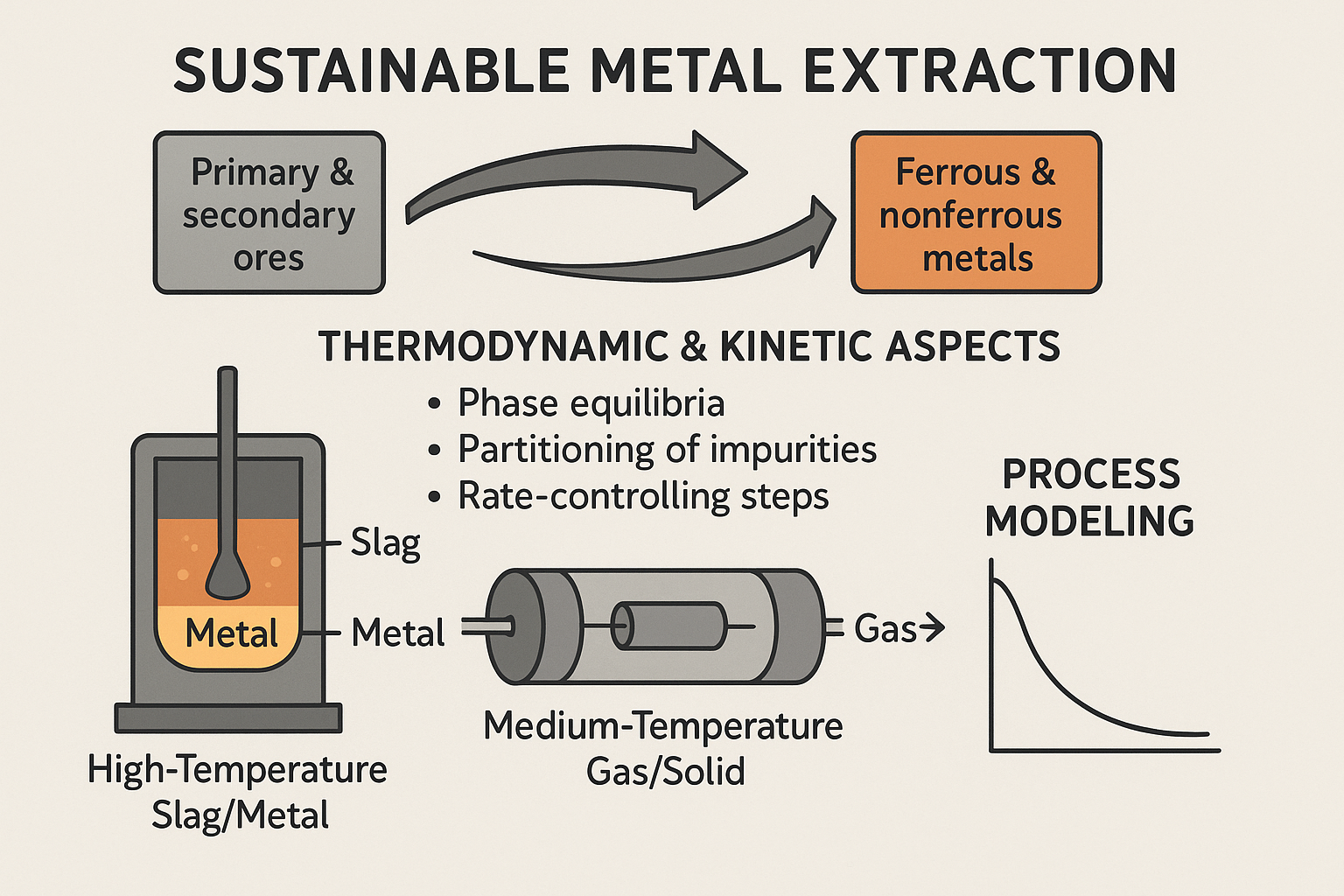
Dr. Jayasree Biswas is an Assistant Professor in the Department of Metallurgical Engineering and Materials Science at the Indian Institute of Technology Bombay, where she has been serving since February 2024. Her research is centered on sustainable metal extraction and green metallurgical processes. Education: Ph.D. in Process Metallurgy, Department of Materials Science and Engineering, McMaster University, Canada (2021) M.Tech. in Process Engineering, Department of Metallurgical Engineering and Materials Science, IIT Bombay, India (2015) B.E. in Metallurgical and Materials Engineering, Jadavpur University, India (2013) Her research interests include sustainable metal extraction, metal recycling from e-waste and batteries, green steelmaking, high-temperature kinetics, metal refining thermodynamics, and process modeling. She employs experimental studies involving slag/metal and gas/solid reactions, along with computational modeling, to understand phase equilibria, impurity partitioning, and rate-controlling steps in metallurgical processes. The recent publications reflect a strong focus on decarburization, dephosphorization, sulfation roasting for battery recycling, and the innovative integration of reinforcement learning for process control in pellet induration. These works span high-temperature reaction kinetics and digital optimization in metallurgical systems. Scientific Awards: No specific awards listed in the provided text. Dr. Biswas advises research through her Laboratory of Sustainable Metal Extraction at IIT Bombay. She is currently leading a post-doctoral project funded by the Ministry of Steel in collaboration with Tata Steel on green steelmaking. While no formal students are listed, she is actively recruiting post-doctoral fellows, indicating the development of her research group. Her prior experience includes a post-doc at Aalto University, Finland, and industry research at TCS TRDDC, Pune.
Dr Madeline Taylor is a Lecturer in Fashion at the School of Design, Faculty of Creative Industries, Education & Social Justice, Queensland University of Technology (QUT). She holds a PhD from the University of Melbourne and has over a decade of teaching experience across QUT, the University of Melbourne, and the University of the Arts London. She is a co-director of The Stitchery Collective and is currently undertaking a prestigious Marie Curie-Sklodowska Postdoctoral Fellowship at Aalto University, Finland. Her research is affiliated with QUT’s Design Lab and TextileR: Future Textile Industries. Doctor of Philosophy (University of Melbourne) Bachelors Honours (Queensland University of Technology) Dr Taylor’s research focuses on uncovering hidden potentials in creative practices, particularly in contemporary costume and fashion. Her work explores emotional intelligence in collaborative design, the social and sustainability benefits of digital gift economies, linguistic ethnography as a research methodology, and critical fashion practices. She is deeply engaged in issues of circularity, sustainability, and community wellbeing within the fashion and performance industries. Her recent publications span topics such as costume production, emotional labour, secondhand clothing, digital gift economies, and costume pedagogy. These works reflect a strong trend toward interdisciplinary research that bridges design, sociology, performance, and environmental sustainability, often emphasizing grassroots initiatives and human-centered approaches. Marie Curie-Sklodowska Postdoctoral Fellowship (2024) QS Reimagine Education Global Education Award (2021) Vice Chancellor's Award for Excellence - Student Learning (2021) Creative to Go grant ($20,000) (2021) Veronica Kelly Prize - Honourable Mention (2018) Vice-Chancellors Award for Excellence - Partnerships and Engagement (2013) Dr Taylor is actively involved in research supervision, currently accepting Honours, Masters, and PhD students, particularly in projects related to hyperlocal gift economies and secondhand clothing. She has been instrumental in developing innovative transdisciplinary units like the Impact Labs, which connect students with real-world community and industry challenges. Her grants include a $20,000 Creative to Go grant for a remote artist residency project. She is a key member of the Design Lab and contributes to the TextileR: Future Textile Industries research network, fostering interdisciplinary collaboration and innovation in textile and fashion research.
Tijana Đuričić is a Senior Lecturer at the Faculty of Technology, University of Banja Luka, specializing in chemical engineering and environmental technologies. Her work focuses on electrochemical processes for wastewater treatment, corrosion inhibition, and sustainable materials. She contributes to academic programs at both bachelor’s and master’s levels, teaching courses related to chemical engineering and environmental science. Her research interests revolve around advanced oxidation processes, electrocoagulation, and the application of green chemistry principles in industrial contexts. Notable projects include treating cyanide-free zinc plating wastewater, optimizing phenol degradation via electrooxidation, and developing corrosion-resistant materials using novel inhibitors. She has collaborated on interdisciplinary initiatives addressing landfill leachate treatment and solar-driven water purification systems. Đuričić has authored or co-authored over 30 peer-reviewed articles in journals like Journal of the Electrochemical Society and Hemijska Industrija , with a focus on environmental engineering and electrochemistry. She actively participates in international conferences, presenting breakthroughs in electrochemical sensor development and eco-friendly wastewater solutions. Her work often intersects with industry partners, emphasizing practical applications of research in real-world scenarios. Current projects include Napredne (zelene) tehnologije za tretman otpadnih voda (Advanced Green Technologies for Wastewater Treatment) and Elektrohemijski tretman otpadnih voda primjenom energije iz obnovljivih izvora (Electrochemical Treatment of Wastewater Using Renewable Energy), funded by national and international grants. These initiatives aim to reduce environmental impact through innovative, sustainable methods. Her professional network spans academic and industrial collaborators across the Balkans, fostering knowledge exchange on emerging pollutants and eco-technologies. Đuričić’s contributions highlight her dedication to advancing both theoretical and applied aspects of environmental and chemical engineering.
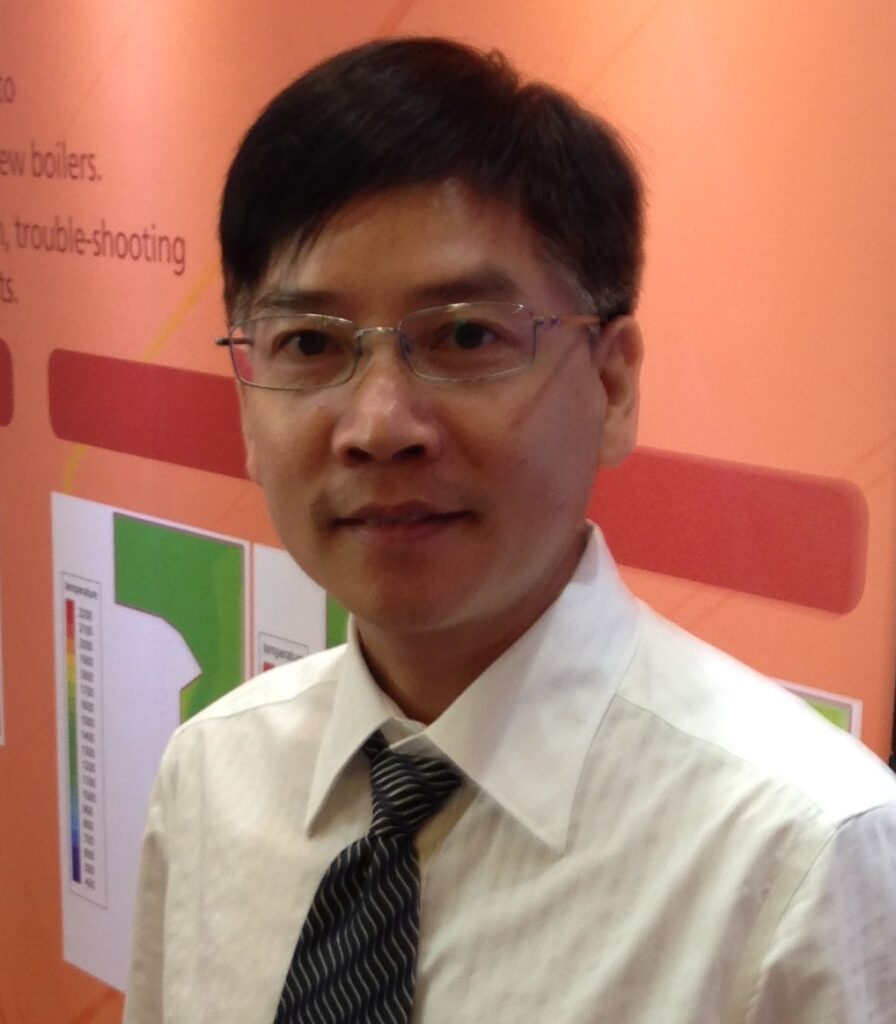
Dr. Wenming Yang is an Associate Professor at the Department of Mechanical Engineering, National University of Singapore (NUS). He has been with NUS since 2000, progressing from Research Fellow to Assistant Professor in 2011 and Associate Professor since 2017. His research focuses on combustion technologies across multiple scales and applications. Current research areas include internal combustion engines using biofuels, emulsion fuels, and natural gas Development of high-efficiency, low-emission boilers (grate biomass, pulverized coal, CFB, incinerators) Design of micro thermophotovoltaic power generators Active collaboration in computational modeling and experimental validation Dr. Yang's recent publications (2003-2015) primarily address combustion optimization, emissions control, and microscale energy systems. His work spans fundamental chemical kinetics to applied engine modeling, with a strong emphasis on sustainability and alternative fuels. Scientific Recognition Dean’s Chair Professor (2020) – NUS College of Engineering Academic Contributions Teaches Energy Conversion Process (ME3221), Internal Combustion Engine (ME4227), and Air-Conditioning and Building Automation (ME5204) Leads the GSTPG Lab, focusing on combustion innovation and energy systems Actively seeks Ph.D. candidates for research in IC engines, WTE plants, and biomass boiler technologies
Professor Alexander Grigorenko, affiliated with the University of Manchester's Condensed Matter Physics Group, is a leading researcher in graphene, plasmonics, and metamaterials. His work spans 2D materials, optical modulation, and biosensing technologies. Key institutions: National Graphene Institute, University of Manchester Research focus: Metamaterials, Plasmonics, 2D Materials, Hydrogen Bonding His research explores advanced materials for nanophotonics applications, including hybrid graphene-waveguide modulators and topological shear polaritons. He has contributed to the development of graphene-based systems for electrochemical gold extraction from electronic waste, gold recovery, and plasmonic biosensors with ultra-high sensitivity. Recent publications highlight his expertise in: 2D/1D periodic structures for sensing and spectroscopy Quantum plasmonic resonances Topological darkness in metamaterials Electrochemically tunable optical properties Self-assembled silicon particles for infrared applications Grigorenko participated in the H2020 Graphene Flagship Core1 project (2016–2018) and delivered an invited talk on graphene plasmonics in 2016. His work has received significant media attention, including coverage in 11 outlets for miniature computer circuits research (2016).
Almudena Filgueira Vizoso is a Contracted Professor PhD at the Polytechnic School of the University of A Coruña (UDC), specializing in Chemical Engineering and Renewable Energy research. She holds a PhD in Industrial Engineering from UDC and has been actively involved in academic and research activities since 2013. Her educational background includes a Doctorate in Industrial Engineering from the University of A Coruña. Her research focuses on marine renewable energies, technical-economic analysis of offshore systems, tribological behavior of materials, and teaching innovation in engineering education. She has developed expertise in hybrid marine energy systems, wave energy conversion, and sustainable engineering solutions. Her publication trends demonstrate consistent contributions to renewable energy research, particularly in offshore wind systems and marine energy technologies. The articles reflect interdisciplinary work spanning engineering, environmental science, and economic analysis, with significant focus on Galician and Atlantic coastal energy potential. Professor Filgueira Vizoso actively supervises undergraduate and graduate theses, with numerous completed projects on offshore wind farm feasibility, electric vehicle infrastructure, and sustainable building systems. She participates in multiple research projects including the European ARCWIND initiative, the national SEARENEW project, and laser material deposition methodology development. Her teaching portfolio includes Environmental Engineering, Chemical Technology, and Occupational Risk Prevention across various engineering programs at UDC. She maintains regular tutorial hours at the Batallones Building in Ferrol and contributes to curriculum development in industrial engineering disciplines.