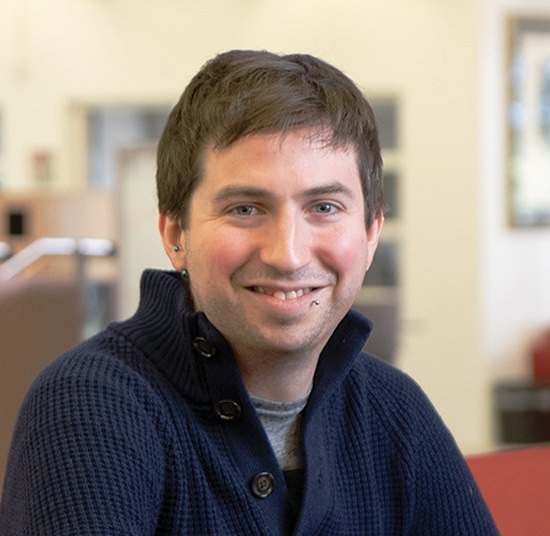
Dr. George Cantwell is an Assistant Professor in the Department of Engineering at the University of Cambridge, affiliated with Cambridge Infectious Diseases. He specializes in computational methods for inference problems, particularly in disease spreading across networks. Education: PhD in Physics from the University of Michigan; postdoctoral fellowship at the Santa Fe Institute His research focuses on network science , complex systems , and statistical inference , with an emphasis on computational approaches. His work spans theoretical and applied domains, including: Message passing algorithms for heterogeneous networks Bias correction in social network analysis (friendship paradox) Statistical inference of network structure from noisy data Modeling judicial voting behavior through network interactions Computational cognitive neuroscience of category learning Recent publications highlight interdisciplinary applications in epidemiology, physics, and cognitive science. He actively mentors students in networks, complex systems, and statistical inference.
Elsa Arcaute is a Professor of Complexity Science at the Centre for Advanced Spatial Analysis (CASA) at University College London. She is a physicist with expertise spanning mathematical physics, urban systems, and complexity science. Her work bridges theoretical physics with practical applications in urban planning and policy. Her educational background includes a PhD in Theoretical Physics from the University of Cambridge (2006) and a Masters in Mathematics (part III of the Mathematical Tripos). She began her career in theoretical physics with research on Clifford algebras applied to Penrose's twistors before transitioning to complex systems during a visit to Prof. Henrik Jensen at Imperial College London. Arcaute's research focuses on modeling urban systems through the lens of complexity science, with particular emphasis on urban scaling laws, hierarchical structures in cities, and the definition of city boundaries. She applies network theory, percolation theory, and multifractal methodologies to analyze urban infrastructure, socio-economic patterns, and spatial inequality. Her work often involves interdisciplinary collaboration with economists, geographers, and data scientists. Analysis of her recent publications reveals a strong focus on urban complexity, with significant contributions to understanding city hierarchies, commuting networks, knowledge spillovers, and the impact of digital platforms on urban systems. Her research demonstrates how complex systems theory can provide novel insights into urban dynamics, scaling phenomena, and spatial organization. Arcaute has been involved in several major research projects, including an EPSRC grant on Digital Economies, an ERC-funded project MECHANICITY (led by Prof. Michael Batty) focusing on morphology, energy, and climate change in cities, and a MacArthur-funded project on smart cities and policy. She serves as a Review Editor for Frontiers in Energy Systems and Policy and has contributed to numerous publications that have garnered significant attention across academic and policy circles. Her work has been referenced in policy sources, news outlets, and social media, demonstrating the real-world impact of her research.
Professor Tim Jones is a Professor of Sustainable Urban Mobility at the School of the Built Environment, Oxford Brookes University. His research focuses on how urban environments can be configured to support sustainable and healthy mobility, particularly walking, cycling, and electrically assisted mobility. His work aligns with UN Sustainable Development Goals 3 (Good health and wellbeing), 10 (Reduced inequalities), and 11 (Sustainable cities and communities). Dr. Jones' research interests center on sustainable urban mobility, with particular emphasis on walking, cycling, and electric micromobility. He investigates how urban environments can be designed to promote healthy, sustainable travel that minimizes environmental impact while improving health and wellbeing and providing equal access to opportunities. His work employs novel mixed-method approaches to understand the physical, social, and cultural factors that influence everyday travel decisions. His research spans contexts from the UK to Brazil, examining issues like mobility justice, 15-minute cities, and low traffic neighborhoods. His recent publications reveal a strong focus on the health impacts of active travel, particularly examining how walking and cycling affect mental health, wellbeing, and quality of life. His work increasingly addresses electric micromobility, including e-bikes and e-scooters, with several 2024-2025 publications on the HELMET project. He frequently collaborates with international researchers, particularly in Brazil, on comparative urban mobility studies. Royal Town Planning Institute (RTPI) Award for Research Excellence 2017 (Academic Award) for the project cycle BOOM Professor Jones has supervised numerous PhD students including Catherine Ross (current), Oscar Natividad Puig (current), Aline Moreira Fernandes Barata (completed 2023), and Daniela Wollrab (completed 2023), among others. He has secured significant research funding including the NIHR-funded HELMET project (2025-2026), the EU-funded ENACT 15mC project (2023-2026), and the Rees Jeffreys Road Fund's UMALTraN project (2023-2024). His current research portfolio demonstrates strong engagement with contemporary urban mobility challenges, particularly post-pandemic transport issues and the integration of new mobility technologies. Professor Jones is actively involved in multiple research networks including the Planning Policy and Government Group, the Sustainable and Resilient Futures Network, the Healthy Ageing and Care Network, and the Children and Young People Network at Oxford Brookes University. He serves as a Research Ethics Officer and contributes to professional organizations including the European Partnerships Driving Urban Transitions Programme.
Dr Paul Kelly is a Lecturer in Physical Activity for Health at the University of Edinburgh's Moray House School of Education and Sport, based at the Physical Activity for Health Research Centre (PAHRC). He holds a PhD from the University of Oxford, focusing on travel behavior measurement validity. His research evaluates initiatives to increase physical activity, with a focus on walking and cycling interventions, including the impact of 20mph speed limits in Edinburgh and Belfast. He also specializes in improving physical activity assessment methods through valid and reliable measures. Current research includes evaluating urban transport policies, systematic reviews of large cohort studies, and exploring mental health benefits of physical activity. Collaborations involve institutions like the University of Bristol and Cambridge, with a focus on interdisciplinary public health approaches. His publications highlight the cardiovascular and mental health benefits of active travel, while addressing potential risks like air pollution exposure. Teaching spans physical activity epidemiology, measurement methodologies, and health promotion strategies. Key projects include the Edinburgh-Belfast 20mph speed limit evaluation and the IOC Olympian Health Cohort study. His work emphasizes pragmatic evaluation and translating research into policy, such as the Health Economic Assessment Tool (HEAT) for walking/cycling.
Angela Beggan is a Senior Lecturer at the School of Health and Life Sciences, Liverpool John Moores University. Her academic work centers on Physical Activity and Health, Narrative Inquiry, and Behaviour Change, with a focus on Postqualitative Inquiry and Human-centred Design. University: Liverpool John Moores University School: School of Health and Life Sciences Academic Rank: Senior Lecturer Her research interests span Qualitative Research Methods , Co-Production , and Ageing and Physical Activity . She actively contributes to the United Nations Sustainable Development Goals (SDGs) through her work. Recent publications (2025) include explorations of Compostable Interventions , Posthuman Walking Rhythms , and Stress in Professional Cycling . Her 2024 article on Birdsong in Physical Activity Interventions highlights innovative methodological approaches. Angela’s academic activities include invited talks , peer-review , and examination roles in postgraduate research. She has served on the Board of Directors for South Lanarkshire Leisure and Culture since 2005, demonstrating long-term community engagement.
Professor Helen Woolley is Head of the School of Architecture and Landscape at the University of Sheffield, where she is a leading academic in children's outdoor environments and landscape architecture. Her research spans inclusive play spaces, post-disaster landscapes, urban green space equity, and children's spatial agency. Research Interests: Her work focuses on the relationship between people and green spaces, especially children's access to and use of outdoor environments. She investigates policy, design, and societal influences on play, with a strong emphasis on inclusion, disaster recovery, and urban planning. Her research has been funded by ESRC, AHRC, JRF, JSPS, and the Big Lottery. Recent Publications Trends: Her recent articles (2020–2025) show a global reach, with studies in China, Brazil, and Jordan, using advanced spatial analysis (SOPARC, KDE), co-design methods, and comparative disaster research. Themes include water play, mobility safety, generational change in play, and multifunctional urban green spaces. Scientific Awards: Japanese Society for the Promotion of Science (JSPS) Visiting Fellowship (2014) Invited to Queen’s Garden Party at Buckingham Palace (2003) Landscape Institute Research Award (1997) Winner, Sunday Telegraph Town Garden Design Competition (1982) Advising and Grants: She actively supervises PhD students such as Melih Bozhurt, Junfang Xie, and Maryam Mani. Her grant portfolio includes major projects like Living with Nature (Big Lottery funded), Children’s Lost Landscapes in post-disaster Japan (Daiwa Foundation), and Knowledge Transfer Partnerships with Timberplay and Fairplay. She has led research for CABE Space, Natural England, and the National Audit Office. Labs and Teams: She is a member of the Centre for the Study of Childhood and Youth and the Sheffield Urban Institute. She co-led the Living with Nature partnership with Sheffield City Council and Wildlife Trusts, and contributed to interdisciplinary initiatives like the Green Space Forum and Sheffield Botanical Gardens regeneration.
Professor Wafaa Saleh is affiliated with Edinburgh Napier University , where she contributes to the School of Computing Engineering and the Built Environment . Her research spans Transport Policy , Pedestrian Safety , and Travel Demand Management , with a focus on sustainable mobility and behavioral impacts of technology on road safety. Research Interests : Transportation sustainability, pedestrian behavior at junctions, motorcycle emissions, congestion pricing, and AI applications in transportation. Advisees : Supervised students in studies involving road safety in Qatar, bus passenger discomfort analysis, and mode choice modeling using behavioral theories. Grants & Projects include funding from the European Commission for gender inclusion in transport systems, the Qatar National Research Fund , and Tabuk University for Saudi Arabian transport behavior studies. Key publications address helmet compliance , pedestrian red-light violations , and congestion charging impacts . Collaborations span institutions in Taiwan, Saudi Arabia, and the UK, with work featured in journals like Transportation Research Part A and Accident Analysis and Prevention . Her Transport Research Innovation Centre involvement highlights interdisciplinary approaches to road safety and emissions reduction.
Dr. Ioannis Kaparias is an Associate Professor at the University of Southampton and Honorary Lecturer at Imperial College London. His expertise spans transport engineering, Intelligent Transport Systems (ITS), and sustainable mobility solutions. He holds a MEng from Imperial College London (2004) and a PhD in reliable dynamic in-vehicle navigation (2008). His research focuses on traffic management, active travel, public transport optimization, and the integration of new technologies like CAVs and MaaS. He leads the Transportation Research Group (TRG) at Southampton and has contributed to projects funded by the EU, UK authorities, and industry partners like BMW. Key areas include network reliability, cyclist safety, and land use-transport interaction. He is Deputy Editor-in-Chief of the IET Intelligent Transport Systems journal and serves on TRB committees. Teaching includes Highway & Traffic Engineering modules at Southampton and他曾指导过多个研究生项目。他精通希腊语、英语、德语、法语和意大利语。
Professor Michael Lee is a Deputy Vice-Chancellor at Harper Adams University and holds a Professorial appointment in the Senior Management department. He specializes in sustainable livestock systems, focusing on balancing food security with environmental health. His professional roles include leadership in the European Federation of Animal Science, UK Universities Climate Network, and global advisory bodies like the Food and Agriculture Organization (FAO). Research Interests: Sustainable livestock management practices Climate-resilient grassland systems Nutritional strategies for smallholder livestock production Carbon footprint reduction in agri-food systems Global food security through integrated farming systems Recent work emphasizes innovative solutions for African smallholder goat farming, nitrogen use efficiency in crop-livestock rotations, and the role of livestock in soil health. His articles highlight interdisciplinary approaches addressing both ecological and socio-economic dimensions of sustainable agriculture. Awards & Fellowships: Fellow of the Royal Society of Arts (FRSA) Fellow of the Royal Society of Biology (FRSB) Fellow of the Royal Agricultural Societies (FRASE) Member of the Agricultural Research Association of Great Britain (ARAgS) Key Contributions: Leading the Global Farm Platform initiative Co-chair of the UK Universities Climate Network Net Zero Group Advocacy for evidence-based livestock policy through FAO advisory roles
Dr. John Haslegrave is a Lecturer in Probability at Lancaster University's School of Mathematical Sciences, where he is an active member of both the Probability and Combinatorics research groups. Previously, he held positions at the University of Oxford (working with Peter Keevash), University of Warwick (with Agelos Georgakopoulos), and University of Sheffield (with Hong Liu and Chris Cannings). He completed his PhD at Trinity College, Cambridge under Béla Bollobás. His research focuses on: Random graphs and evolving network models (especially preferential attachment) Interacting particle systems and random walks on graphs Extremal problems in graph/hypergraph theory Percolation theory and geometric probability Combinatorial optimization and graph invariants Analysis of recent publications reveals strong emphasis on probabilistic combinatorics, with frequent exploration of: structural graph properties, asymptotic behavior of stochastic processes, geometric embeddings, and optimization problems. His work consistently bridges discrete mathematics with statistical physics concepts. Dr. Haslegrave welcomes PhD students interested in discrete probability and graph theory, with current supervision interests including preferential attachment models, interacting particle systems, planar percolation, and extremal problems. He teaches undergraduate courses in Graph Theory (MATH326) and Probability (MATH103), and organizes Lancaster's Pure Mathematics Seminar series.
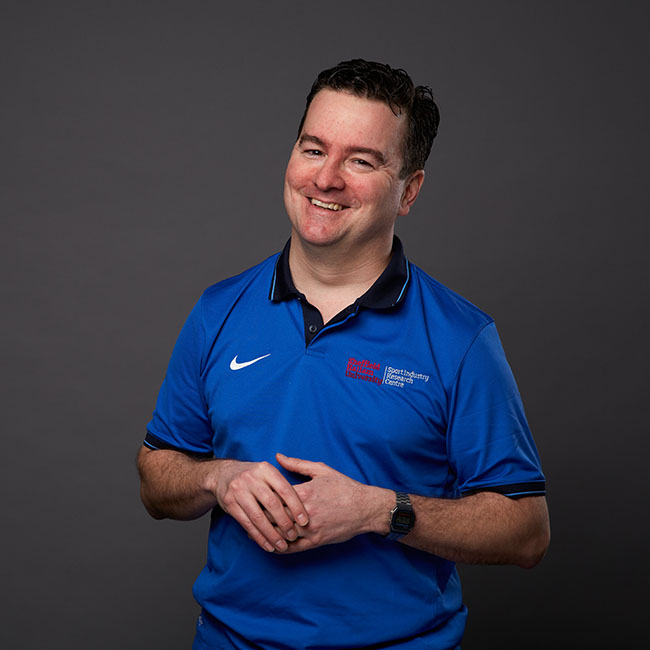
David Barrett serves as a Research Fellow at Sheffield Hallam University's School of Sport and Physical Activity within the College of Health, Wellbeing and Life Sciences, where he has contributed to the Sport Industry Research Centre (SIRC) for over 16 years. Specializing in GIS and spatial data analysis, he partners with national sport organizations across the UK and Ireland—including the Gaelic Athletic Association, Sport England, and UK rugby governing bodies—to enhance research capacity on participation trends, volunteering dynamics, talent pathways, and economic impact assessments. Barrett's research centers on the critical relationship between volunteer workforces and sport participation, particularly examining how voluntary sports clubs sustain participation opportunities amid socioeconomic pressures. His expertise in transforming organizational 'business as usual' data into strategic insights informs studies on cost-of-living impacts, pandemic recovery in grassroots sport, and the socioeconomic value of Gaelic Games. Methodologically, he integrates spatial database management, large-scale surveys, and qualitative stakeholder analysis to address complex sector challenges. Recent publication trends reveal Barrett's focus on external shock resilience (Covid-19, cost-of-living crises), talent pathway inclusion across UK/Irish nations, and the economic-social valuation of sport. His work consistently bridges academic rigor with practical application for sport governing bodies, emphasizing spatial analytics and longitudinal data to track participation shifts and organizational adaptation. Scientific recognition includes: Fellow of the Royal Geographical Society (FRGS) Barrett has led major commissioned research for Sport England, UK Sport, and the GAA—including facility audits across four UK/Irish football associations and the landmark Gaelic Games economic valuation study. His advisory role extends to local authorities and professional clubs like Celtic FC, where he translates data into strategic frameworks for sport development. As an active hockey volunteer and contributor to The Hockey Paper, he maintains direct engagement with community sport dynamics. Based at SIRC, Barrett collaborates within Sheffield Hallam's sport research ecosystem, leveraging partnerships with national governing bodies to advance evidence-based policy. His current projects examine outdoor learning infrastructure and Camogie participation baselines, continuing SIRC's tradition of impactful sport sector consultancy.
Dr. Neil Ferguson is a Senior Lecturer in the Department of Civil and Environmental Engineering at the University of Strathclyde. He holds a PhD and BEng (Hons) in Civil Engineering and a LLB in Law, with over 15 years of experience in research, education, and consultancy. His work focuses on transport systems, travel behavior, accessibility, and environmental impacts of transport. Education: LLB (University of Strathclyde, 2002), PhD (University of Strathclyde, 1998), BEng (University of Strathclyde, 1989) Dr. Ferguson’s research examines the interplay between urban form and mobility patterns, statistical/econometric modeling of travel behavior, and the role of transport accessibility in health and sustainability. His innovative work includes quasi-longitudinal studies of travel behavior change and computational methods linking public transport timetables to GIS data. Recent publications highlight his contributions to understanding transport-related social inequalities, climate change adaptation, and active travel. Funded by agencies like EPSRC, MRC, and Scottish Government, his research spans Europe and Malawi, addressing global challenges in transport equity and network resilience. Scientific Awards: Cross-institution Graduate and Degree Apprenticeship Team (2017) Dr. Ferguson teaches transport engineering, planning, and sustainability courses. He collaborates with institutions like MRC Social and Public Health Research Unit (Glasgow) and MRC Epidemiology Unit (Cambridge), advising Transport Scotland and contributing to policy through organizations like the Royal Society and POST.
Dr Neal Smith is a Reader in Biomechanics at the University of Chichester, teaching undergraduate and postgraduate modules including Sports Injury and Prevention, Biomechanical Techniques, and MSc Ergonomics in Sport and Exercise while providing sports science support to elite divers and cricket bowlers. His academic credentials include: BSc (Hons) Sport and Exercise Science, Liverpool John Moores University (1993) MSc Ergonomics, Loughborough University (1994) PhD Sport Biomechanics, University of Southampton (1999) Smith's research centers on sports biomechanics with pioneering work in non-linear motion analysis for soccer and racket sports, kicking biomechanics across multiple sports, and ergonomic footwear design . His methodology integrates ground reaction force measurement, kinematic analysis, and practical sports applications to enhance athletic performance and prevent injuries. Analysis of his 15 most recent publications reveals dominant research themes in soccer biomechanics (particularly instep kicking dynamics across approach angles and velocities), ACL injury risk assessment through advanced signal processing, and expanding investigations into women's rugby breast health and concussion biomarkers in youth football. His work consistently bridges laboratory findings with real-world athletic contexts. Smith currently supervises 2 PhD candidates and serves as external examiner for BSc/MSc programs at Teesside and Portsmouth Universities. His collaborative research spans orthopaedics, sports medicine, and performance science teams across multiple institutions. His research operations involve interdisciplinary collaboration with sports scientists, orthopaedic specialists, and performance coaches, focusing on translating biomechanical insights into practical training modifications and injury prevention protocols across soccer, cricket, rugby, and cycling disciplines.
Llinos Brown is a Research Fellow at the Institute for Transport Studies , part of the Faculty of Environment at the University of Leeds. Her work focuses on sustainable and future low-carbon mobility systems, active travel, and the societal impacts of transport policies, particularly during the post-COVID-19 transition. PhD, University of Central Lancashire BSc (Hons), Geography, The University of Manchester Research interests include: Future mobility systems and low-carbon transitions Active travel (walking, cycling) and multi-modal transport Reducing car dependency and pandemic-related transport shifts Interdisciplinary links between transport, energy, and health Her current work involves the TRANSAS project , a longitudinal study on pandemic impacts on transport, and a ClimateXChange-funded study on public perceptions of Scotland’s 20% car-kilometre reduction target by 2030. Collaborations include Transport for Scotland and the Department for Transport. Key scientific awards: EPSRC CASE award PhD ClimateXChange/Scottish Government fellowship She supervises Masters dissertations and has taught modules like Social Analysis and Social Psychology for Transport, alongside prior teaching in sustainability and geography.
Dr Jonathan Flower is a Senior Research Fellow at the University of the West of England (UWE Bristol) within the College of Arts, Technology and Environment and the School of Architecture and Environment. He is affiliated with the Centre for Transport and Society and coordinates the Transport and Society research staff. His primary roles include managing large-scale evaluation contracts for the Department for Transport and Active Travel England, alongside board membership in the Transport Planning Society to bridge academic and practical transport planning. Current focus on street design, road safety, and human-scale mobility Expertise in automated vehicles, public transport ticketing, and active mobility Experience in International Development with global monitoring frameworks His research spans safer transport systems, e-scooters, disability access, and infrastructure impacts on walking/cycling. Key projects include coordination of the Human Factors VENTURER trials, CAPRI autonomous pods, and Innovate UK-funded MultiCAV. He holds a PhD from the South West Doctoral Training Partnership, MRes in Sustainable Futures (distinction), and MSc qualifications from UWE Bristol and University College London.