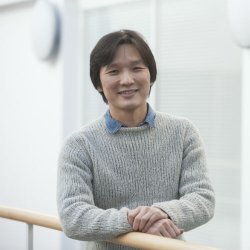
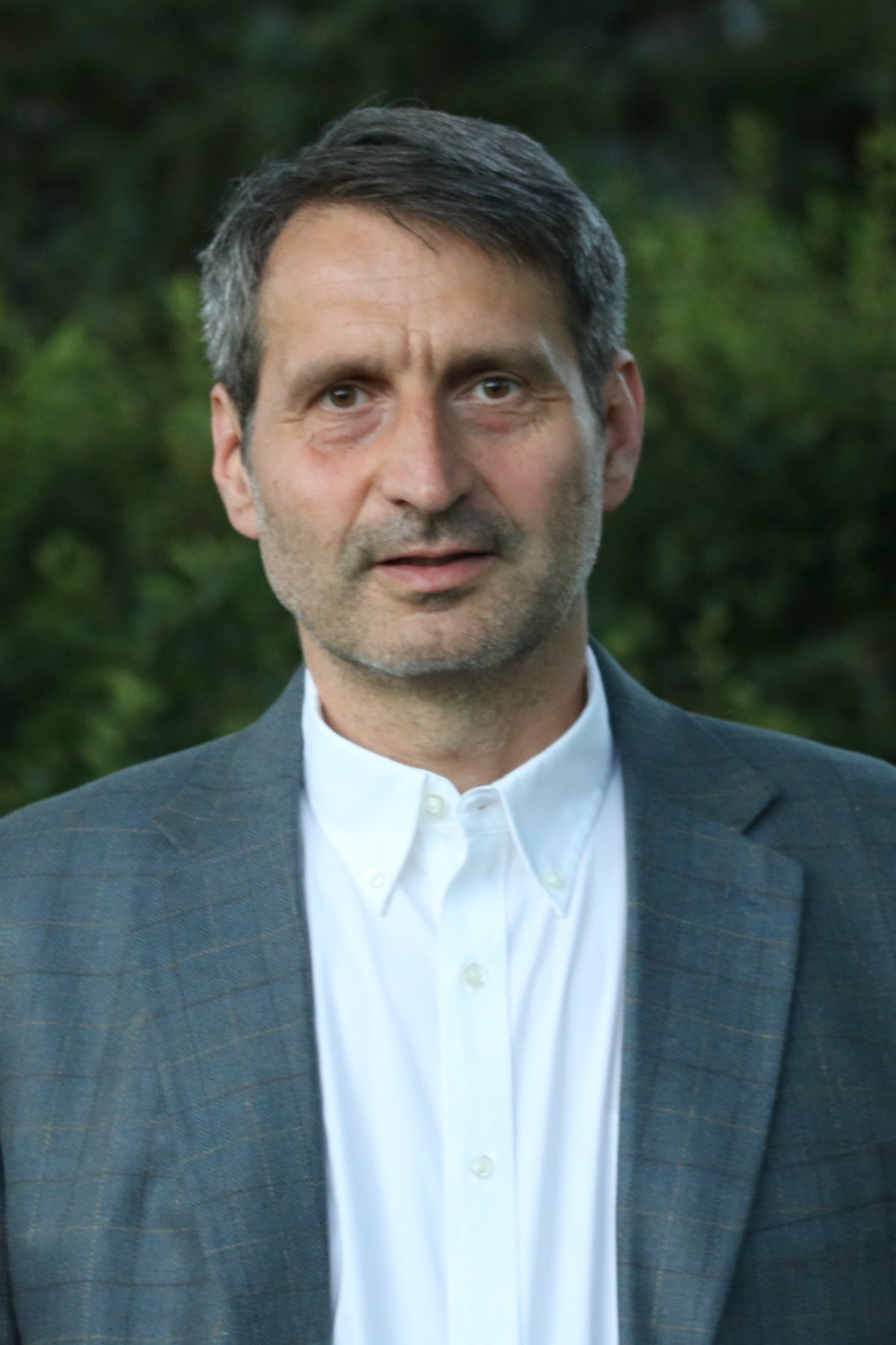
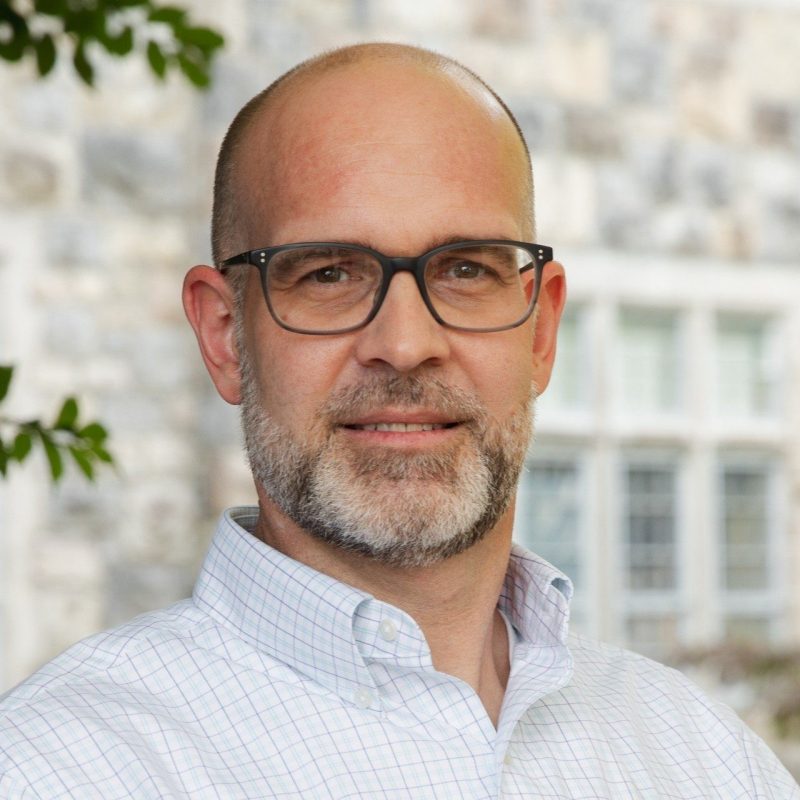
Manuel Del Pino is Professor at the University of Bath's Department of Mathematical Sciences and Royal Society Professor specializing in nonlinear partial differential equations. His research focuses on singularity formation, geometric evolution equations, and asymptotic analysis in fluid dynamics and mathematical physics. His investigations encompass blow-up phenomena in heat equations, vortex dynamics in Euler flows, and minimal surface theory. Current projects examine infinite-time singularity formation in parabolic equations and asymptotic properties of vortex configurations. Del Pino has received the Royal Society Professorship and leads multiple grants including 'Asymptotic patterns in nonlinear evolution problems' (EPSRC). He maintains collaborations with researchers globally through projects on singularity formation in PDEs.
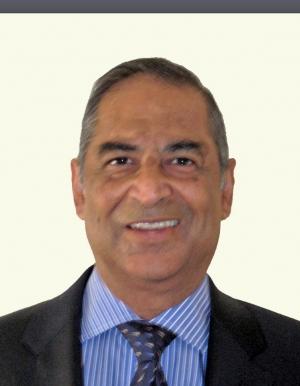
Lakshmi N Sankar serves as Regents Professor and Sikorsky Professor in the Guggenheim School of Aerospace Engineering at Georgia Institute of Technology, where he directs the Computational Fluid Dynamics Laboratory and teaches aerodynamics, helicopter theory, and wind energy courses. His research program spans unsteady viscous flow modeling for aircraft, helicopters, and wind turbines since joining the faculty in 1982 after industry experience at Lockheed Martin. Education: Ph.D., Aerospace Engineering, Georgia Institute of Technology, 1977 MSAE, Aerospace Engineering, Georgia Institute of Technology, 1975 B. Tech., Aeronautical Engineering, Indian Institute of Technology, Madras, India, 1973 Research Focus: Professor Sankar's work centers on Computational Fluid Dynamics for rotorcraft aerodynamics and wind energy systems , with significant contributions to icing phenomena and unsteady flow modeling . His recent publications reveal intensifying focus on adverse weather effects (rain/icing), eVTOL conversion challenges, and high-fidelity hybrid modeling techniques for rotorcraft performance prediction. Publication Trends: Analysis of his 2022-2025 publications shows dominant themes in rotorcraft icing (35%), weather impact studies (25%), and advanced CFD methodologies (20%), with growing interest in drone applications and mathematical aspects of fluid dynamics. His work consistently bridges theoretical mathematics with practical aerospace engineering challenges. Scientific Recognition: AIAA Fellow and AHS Technical Fellow NASA Group Achievement Award (2007) and Space Act Software Release Award (2003) Multiple Sigma Gamma Tau Teaching Awards (2005-2015) Dean George C. Griffin Faculty of the Year (2014-2015) Sikorsky Professorship (2018-Present) Mentorship and Collaboration: As recipient of Georgia Tech's Graduate Research Assistant Development Award, he has cultivated extensive student mentorship. His research integrates with the Vertical Lift Research Center of Excellence and Center for 21st Century Universities, securing major industry and NASA funding for rotorcraft innovation. Current projects include physics-based modeling of ice accretion and eVTOL retrofit feasibility studies. Research Infrastructure: The Computational Fluid Dynamics Laboratory serves as his primary research hub, complemented by collaborations through the Vertical Lift Research Center of Excellence where his team develops next-generation modeling tools for military and civilian rotorcraft applications under federal funding programs.
François Peeters is a Full Professor of Physics at the University of Antwerp, Belgium, holding the position since 2000 (with Dutch title 'gewoon hoogleraar' since 2003). He previously served as Research Director (FWO-VI) at the University of Antwerp (1996-1999), Research Leader (NFWO) (1992-1996), and Senior Research Assistant (NFWO) (1988-1992), establishing a distinguished academic career spanning over three decades. His educational background includes a Ph.D. in Physics from the University of Antwerp (1982), followed by a Habilitation (Hoger aggregaat) from the same institution (1987), and a postdoctoral fellowship at Bell Laboratories in Murray Hill, New Jersey (1982-1983). His academic journey also featured research periods at prestigious institutions including the High Magnetic Field Laboratory in Grenoble, University of California Berkeley, Oxford University, and several Brazilian and Australian universities. Peeters' research focuses on theoretical condensed matter physics , specializing in the electronic, optical, and magnetic properties of nanostructured systems. His work encompasses semiconductors , superconductors , graphene , and hybrid quantum systems , with particular emphasis on strong correlations in both classical (colloids, dusty plasma) and quantum (quantum dots) environments. His theoretical frameworks bridge fundamental quantum mechanics with practical nanotechnology applications, driving innovations in spintronics and quantum device design. Analysis of his publication record reveals a clear evolution from foundational work on polaron physics and quantum Hall systems in the 1980s-1990s toward contemporary research on graphene, topological materials, and programmable quantum nanodevices. His most cited works demonstrate consistent leadership in mesoscopic physics, with recent publications showing increased focus on spin-dependent transport phenomena and two-dimensional material systems. His scientific recognition includes: Fellowship in the American Physical Society (2005) APS Outstanding Referee award (2008) Doctor Honoris Causa from University of Szeged, Hungary (2009) Peeters has supervised 26 completed PhD theses and currently leads the Condensed Matter Theory research group comprising 3 ZAP researchers, 16 PhD students, and 8 postdocs. His grant portfolio includes coordination of an EU Marie Curie Training site on 'Electrons on helium', participation in multiple EU projects, COST actions, and ESF networks, demonstrating sustained success in securing competitive international funding. The Condensed Matter Theory group maintains extensive international collaborations, evidenced by Peeters' research visits to over 10 institutions worldwide and regular hosting of 3-4 international visitors at postdoc or professorial levels. The group's output of over 770 refereed publications with 12,000+ citations reflects its position at the forefront of theoretical condensed matter physics research.
Tim Colonius is the Frank and Ora Lee Marble Professor of Mechanical Engineering and Medical Engineering and holds the Cecil and Sally Drinkward Leadership Chair at the California Institute of Technology. He has been affiliated with Caltech since 1994 and currently serves as Executive Officer for Mechanical and Civil Engineering . Colonius earned his B.S. from the University of Michigan (Ann Arbor), and both his M.S. and Ph.D. from Stanford University. Research Interests: His work focuses on fluid dynamics (global instabilities, cavitation, aerodynamic sound), flow control (closed-loop control, reduced-order modeling), and biomedical applications (shock waves, lithotripsy, ultrasound). He also develops advanced numerical methods for interface capturing, immersed-boundary techniques, and high-order accuracy. Scientific Contributions: Recent publications highlight his research in multiphase flows, vortex ring collisions, turbulent jet analysis, GPU-accelerated simulations, and biomedical applications. His group uses computational and data-driven approaches to study turbulence, instabilities, and flow optimization. Scientific Awards: AIAA Aeroacoustics Award Fellow of the Acoustical Society of America Fellow of the American Physical Society (APS) NSF and DoD research grants
Silas Alben is a Professor in the Department of Mathematics at the University of Michigan, affiliated with the College of Literature, Science, and the Arts. His research focuses on applied mathematics and mathematical biology, particularly fluid-structure interactions in biological systems. He employs computational simulations and laboratory experiments to study fundamental physics of flexible bodies in fluids. Research interests include biomechanics of swimming organisms, vortex dynamics in fluid-structure interactions, and thermal transport optimization. His work bridges mathematical modeling with experimental validation to understand complex physical phenomena. Publications demonstrate strong focus on fluid dynamics applications, including vortex-enhanced heat transfer, membrane flutter dynamics, and bio-inspired locomotion. Recurring themes include optimization of fluid-structure systems, vortex wake interactions, and computational methods for aeroelastic problems.
Assoc Prof Daniel T.H. New is an Associate Professor at the Division of Aerospace Engineering, School of Mechanical & Aerospace Engineering, Nanyang Technological University (NTU), Singapore. His academic journey includes a B.Eng. (Honors) and PhD from the National University of Singapore (NUS), followed by postdoctoral research at the University of Texas, Arlington, and a Lecturer role at the University of Liverpool. His research focuses on fluid dynamics, jet-in-crossflow phenomena, vortex dynamics, and flow control strategies, supported by agencies like MINDEF, DSO, and industry partners. Education: B.Eng. Mechanical Engineering, NUS (1998) PhD in Fluid Dynamics, NUS (2004) His research interests span jet mixing enhancement , bio-inspired flow control , and high-speed aerodynamics . Current projects include vortex-ring collision dynamics, jet-cylinder impingement, and tandem jets-in-crossflow analysis. He has contributed to defense-related research and holds grants from multiple national and industrial sponsors. Teaching responsibilities include courses like Aerodynamics I and Engineering Fluid Mechanics . His lab focuses on experimental fluid dynamics using facilities like low-speed water tunnels.
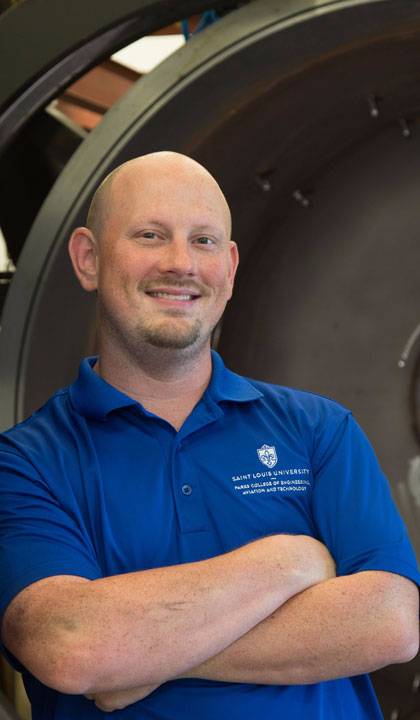
Mark McQuilling is an Associate Professor of Aerospace and Mechanical Engineering at Saint Louis University's School of Science and Engineering. He holds a Ph.D. in Engineering from Wright State University, alongside M.S. and B.S. degrees in Mechanical Engineering from the University of Kentucky. His research focuses on experimental fluid mechanics, low Reynolds number flows, laminar-to-turbulent transition, airfoil design, unsteady aerodynamics (turbomachinery and airdrop systems), bio-fluid flows, and flow control. His work integrates advanced fluid dynamics techniques with practical applications in aerospace and biomedical engineering. Dr. McQuilling oversees the Fluid Systems Laboratory, which includes subsonic and supersonic wind tunnels, a water tunnel, and thermal system facilities. These labs support undergraduate and graduate research, with capabilities such as Laser Doppler Velocimetry, DPIV systems, and strain gauge balances. His thermal research spans micro-scale fluid phenomena to planetary atmospheric modeling, including studies on Uranus/Neptune vortex dynamics and airdrop parachute aerodynamics. Highlighted research areas include low-pressure turbine blade aerodynamics, parachute drag prediction, and bio-fluid studies like pharyngeal airflow analysis in sleep apnea patients. His peer-reviewed publications (over 20 entries) address topics ranging from micro-air vehicle wing design to thermal management in turbine blades. McQuilling is active in professional organizations like AIAA, ASME, and ASEE, and previously worked at the Air Force Research Laboratory. His email is mark.mcquilling@slu.edu.
Dr. Yinghe Qi is a Professor in the Department of Experimental Fluid Dynamics at ETH Zürich, Switzerland. His research focuses on multiphase flows, turbulence, and free-surface dynamics, with applications in aerospace, marine engineering, and computational fluid dynamics. He has contributed extensively to understanding bubble dynamics, flow instabilities, and turbulence modulation through experimental and phenomenological studies. Research Interests: Dr. Qi’s work addresses complex phenomena in multiphase flow instabilities free-surface turbulence deformable bubble dynamics supersonic jet interactions vortex-induced fragmentation machine learning in fluid dynamics Recent Publications: His recent studies (2023–2025) explore multiscale bubble deformation, free-surface turbulence structure, and supersonic jet-plume interactions. Key themes include turbulent fragmentation, vortex-bubble coupling, and novel computational methodologies. Laboratory Affiliations: He collaborates with the Coletti Group, Jenny Group, and Supponen Group at ETH Zürich, advancing experimental and computational techniques in fluid dynamics.
Dr. Arnab Samanta is an Associate Professor at the Department of Aerospace Engineering , Indian Institute of Technology Kanpur. His research focuses on fundamental and applied aspects of fluid mechanics and aeroacoustics. PhD in Theoretical & Applied Mechanics (2009), University of Illinois at Urbana-Champaign ME in Aerospace Engineering (2004), Indian Institute of Science BE in Mechanical Engineering (2001), Jadavpur University His research interests include: Fluid mechanics of complex flows Aeroacoustics and noise prediction Hydrodynamic stability analysis Wave mechanics in compressible flows Active flow control strategies Recent publications highlight work on vortex ring stability, swirling jet dynamics, supersonic flow acoustics, and jet instability modeling. His laboratory (Low Speed Aerodynamics Lab - A02) serves as a hub for aerospace research and student training.
Dr. Nathan Speirs is a Lecturer in Mechanical Engineering at Brigham Young University. His research focuses on experimental fluid mechanics, including cavitation, water entry phenomena, and high-speed imaging techniques. Education: Ph.D. from Utah State University; B.S. in Chemical Engineering from BYU. Research explores fluid breakup, impact dynamics, and cavitation in extreme conditions, with applications in marine engineering. Teaching includes fluid mechanics and measurements courses, emphasizing hands-on experimentation. Prior industry experience includes work with the Naval Undersea Warfare Center.
Naratip Santitissadeekorn is a Senior Lecturer in Data Assimilation at the School of Mathematics and Physics, University of Surrey, where he is affiliated with the Mathematics at the Interface Group. His work bridges mathematics, data science, and real-world applications in urban planning, crime analysis, and geophysical fluid dynamics. Dr. Santitissadeekorn received his PhD from Clarkson University in 2008, with a dissertation titled "Transport Analysis and Motion Estimation of Dynamical Systems of Time-Series data." His doctoral research was supervised by Professor Erik Bollt. Following his PhD, he completed two significant postdoctoral positions: from 2008-2011 at the University of New South Wales, Sydney, Australia, working with Professor Gary Froyland on numerical techniques for finite-time Lagrangian coherent set identification, with applications to delimiting the polar vortex and Agulhas rings; and from 2011-2014 at the University of North Carolina-Chapel Hill, working with Professor Chris Jones on data assimilation projects. Dr. Santitissadeekorn's research focuses on inverse problems and data assimilation in geophysical fluid dynamics, the applications of Lagrangian Coherent Structures (LCS), and computational ergodic theory. His work combines theoretical mathematics with practical applications, particularly in urban growth modeling and crime analysis. He has developed innovative methods for identifying coherent structures in fluid flows, estimating transition probabilities from spatiotemporal data, and creating data-driven frameworks for urban expansion scenarios. His research demonstrates how mathematical techniques can be applied to solve real-world problems in environmental science, urban planning, and public safety. An analysis of Dr. Santitissadeekorn's recent publications (2020-2023) reveals a strong focus on urban expansion modeling and network analysis. His work on urban growth has evolved from basic cellular automata models to sophisticated frameworks that manage uncertainty through parameter clustering and growth mode identification. His research on Hawkes processes has advanced ensemble-based filtering techniques for analyzing count data in large networks. These publications demonstrate a consistent pattern of applying mathematical rigor to complex spatiotemporal phenomena, with increasing emphasis on data-driven approaches and practical applications. Dr. Santitissadeekorn has made significant contributions to data assimilation methods, particularly through the development of the extended Poisson-Kalman filter (ExPKF) for urban crime modeling. His teaching includes courses in Algebra and Bayesian Statistics, reflecting his expertise in both theoretical and applied mathematics. While specific awards are not mentioned in the available information, his extensive publication record in high-impact journals demonstrates recognition within his field. Dr. Santitissadeekorn's research has practical implications for urban planning and law enforcement. His work on urban expansion models helps planners understand different growth trajectories, while his crime modeling research contributes to improved police patrolling strategies. His interdisciplinary approach, combining mathematics, computer science, and domain-specific knowledge, positions him at the forefront of applying data science to societal challenges.
Christopher Woodward is a Professor of Mathematics and Acting Department Chair at Rutgers University . His research focuses on symplectic and algebraic geometry , moduli spaces , Lie groups , and mathematical physics . He actively contributes to Floer theory , quantum cohomology , and symplectic topology , with recent work on Lagrangian surgery and tropical Lagrangians . Woodward has mentored numerous PhD students and postdocs , including Yuka Taylor , Sikimeti Mau , Reza Rezazadegan , and Yuhan Sun . He serves as an associate editor for Selecta Mathematica and organizes academic events like the Rutgers symplectic seminar and workshops on Lagrangian Floer theory at institutions such as the Simons Center and Harvard's CMSA .
Prof. Dr.-Ing. David E. Rival is a full Professor at the Institute of Fluid Mechanics within the Faculty of Mechanical Engineering at Technische Universität Braunschweig. His research spans interdisciplinary domains at the intersection of experimental fluid dynamics, data assimilation, network science, and bio-inspiration, with applications in renewable energy systems and bio-mimetic engineering. Former Associate Professor at Queen’s University, Canada Doctoral work on dragonfly flight aerodynamics at TU Darmstadt Alexander von Humboldt research fellowship recipient (2020) Postdoctoral associate at MIT studying shape morphing in nature Research chair at University of Calgary on atmospheric sensing His work focuses on unsteady flow phenomena, bio-inspired design, and advanced measurement techniques. Key projects include: Co-chairing NATO AVT task group on flow separation International collaborations with AFOSR, NATO, and ONR Development of cost-effective flow-tracking sensors for natural environments Investigations into shear-thinning suspension dynamics and vortex ring behavior Recent publications demonstrate a strong emphasis on: Large-scale particle tracking with natural light and UAVs Machine learning for sparse data reconstruction in fluid flows Soft coastal protection methods and ecohydraulics Advanced sensing techniques for atmospheric and industrial applications Scientific Awards: 2020: Alexander von Humboldt Research Fellowship Notable research achievements include textbook authorship on Biological and Bio-Inspired Fluid Dynamics (Springer) and media features in The Nature of Things (David Suzuki) and Discovery Channel’s Daily Planet .
Vladimir Sverak serves as a Distinguished McKnight University Professor in the School of Mathematics at the University of Minnesota, where he maintains an active research program and teaches graduate courses in partial differential equations. His office is located in Vincent Hall 236 (206 Church Street SE, Minneapolis, MN 55455) with contact details including email sverak@umn.edu and phone (612) 625-1899. As of 2020, he continues to instruct courses such as Complex Analysis (Math 5583) and Topics in PDE (Math 8590), demonstrating ongoing academic engagement. Professor Sverak's research centers on fundamental questions in partial differential equations, particularly concerning existence, uniqueness, and singularity formation in fluid dynamics systems. His work focuses extensively on Navier-Stokes and Euler equations, examining behavior in critical function spaces where standard analytical methods often fail. He employs both rigorous mathematical techniques and numerical investigations to explore phenomena like non-uniqueness, blowup scenarios, and scale-invariant solutions, contributing significantly to the theoretical understanding of fluid mechanics. Analysis of his 15 most recent publications (2012-2017) reveals consistent thematic focus on Navier-Stokes equations, with particular attention to borderline spaces, axisymmetric flows, and singularity analysis. His collaborative approach is evident through frequent co-authorships with leading researchers including G. Seregin, H. Jia, and T. Gallay, reflecting the interdisciplinary nature of modern mathematical fluid dynamics research. His scientific recognition includes: Distinguished McKnight University Professor Research support comes from the National Science Foundation (grant DMS 1956092), while his teaching contributions span both foundational and advanced topics. Course materials for offerings like Elementary Partial Differential Equations (Math 5587/5588) and Introduction to Ordinary Differential Equations (Math 5525) remain accessible through university platforms, demonstrating commitment to pedagogical resources. Though student advising details aren't specified, his graduate-level course instruction indicates active mentorship within the mathematics community. Professor Sverak's work continues to advance mathematical fluid dynamics through rigorous analysis of nonlinear PDEs, maintaining strong connections between theoretical developments and physical fluid behavior while contributing to both research and education in mathematical sciences.
Mark Stremler is a Professor in the Department of Mechanical Engineering at Virginia Tech's College of Engineering, serving as the Engineering Mechanics Graduate Chair. His research focuses on fluid mechanics, with emphases on vortex dynamics, fluid-structure interaction, and biological fluid mechanics. He holds the Otto Moensted Visiting Professorship and has been recognized with awards including the Liviu Librescu Faculty Prize and Army Research Office Young Investigator award. His academic leadership roles include directing the Multi-Scale Transport in Environmental and Physiological Systems (MultiSTEPS) IGERT Program (2010-2017), serving as Graduate Chair of Engineering Mechanics (2019-present), and directing undergraduate studies in Engineering Science and Mechanics. He earned his Ph.D. from the University of Illinois at Urbana-Champaign and dual B.S. degrees in Mechanical Engineering and Mathematics from Rose-Hulman Institute of Technology. Research interests include reduced-order modeling of fluid flows, coherent vortical structures, and applications in biological systems such as mosquito drinking mechanics and coronary hemodynamics. His work bridges theoretical, computational, and experimental approaches to fluid dynamics challenges.