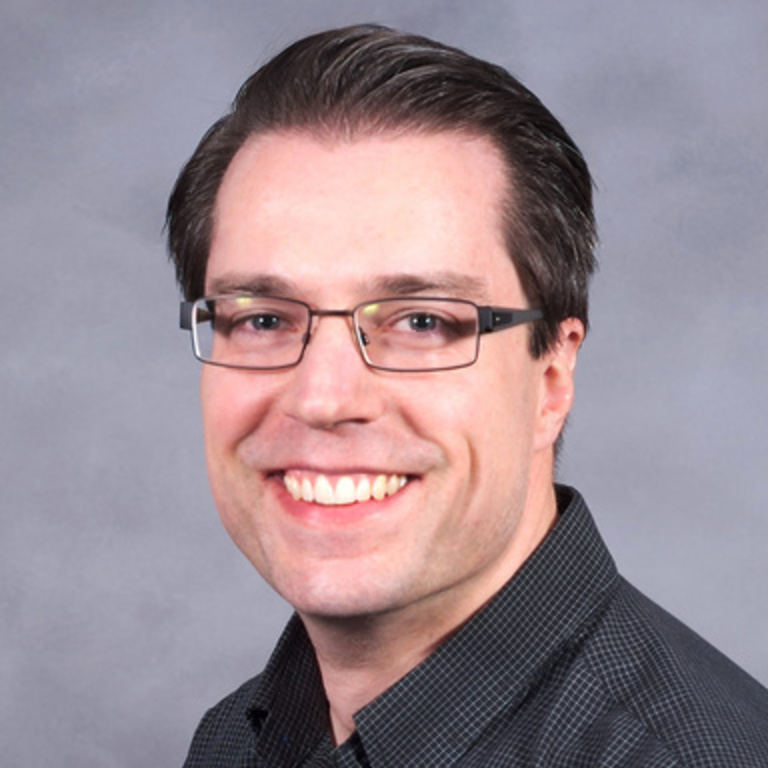
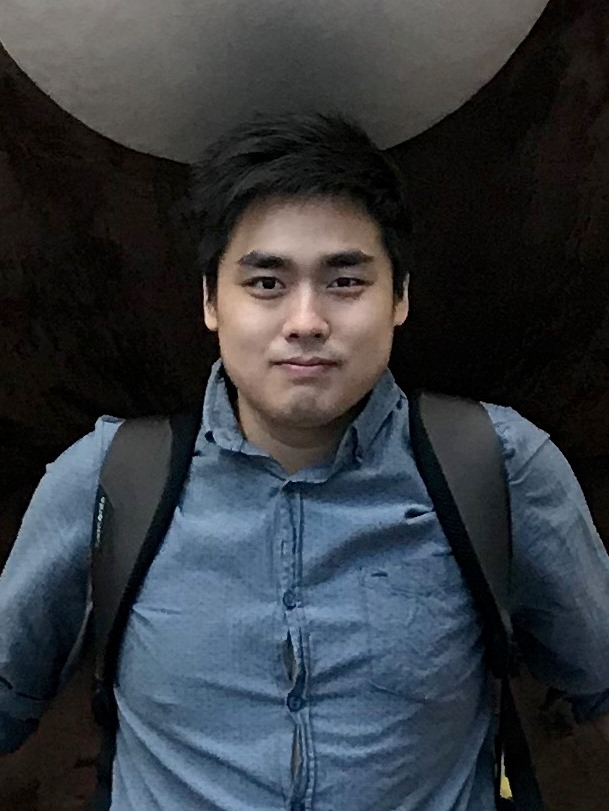
Jacopo Serpieri is a Fixed-term Tenure-Track Assistant Professor at the Department of Mechanical and Aerospace Engineering (DIMEAS) of Politecnico di Torino, Italy. He holds a Ph.D. in Aerodynamics from Delft University of Technology (2018) and worked at ASML Netherlands (2018-2020) and Karlsruhe Institute of Technology (2020-2022) before joining Polito. His research focuses on active flow control and turbulent flow dynamics , with applications to drag reduction and climate action initiatives.
James Buchholz serves as an Associate Professor in the Department of Mechanical Engineering at the University of Iowa's College of Engineering, with a concurrent appointment as Associate Faculty Research Engineer at IIHR—Hydroscience and Engineering since joining the institution in 2008. His academic credentials include: PhD in Mechanical and Aerospace Engineering, Princeton University (2006) MSc in Mechanical Engineering, University of Alberta (1997) BSc in Mechanical Engineering, University of Alberta (1995) Dr. Buchholz specializes in experimental approaches to fluid dynamics, with particular expertise in image-based flow velocimetry and visualization techniques for analyzing complex flow phenomena. His research spans unsteady aerodynamics of biologically-inspired aerial and aquatic vehicles, vortex-dominated flows in bluff-body configurations, wind turbine performance optimization, and specialized applications in cardiovascular systems and fluvial environmental transport processes. This interdisciplinary work bridges fundamental fluid mechanics with practical engineering challenges across biological, renewable energy, and environmental domains. He maintains active affiliations with key professional organizations: American Physical Society (Division of Fluid Dynamics) American Institute of Aeronautics and Astronautics American Society of Engineering Education Association of Professional Engineers and Geoscientists of Alberta As a core researcher at IIHR—Hydroscience and Engineering, Dr. Buchholz leverages the institute's advanced experimental facilities for fluid dynamics research, contributing to both fundamental discoveries and applied engineering solutions through collaborative projects within this internationally recognized hydroscience research center.
Krzysztof Wojtas is an Assistant Professor at the Department of Separation Processes , Faculty of Chemical and Process Engineering, Warsaw University of Technology. His work bridges computational modeling and experimental validation in chemical engineering systems. Research Interests: Process intensification, turbulent mixing, precipitation dynamics, and LES/CFD applications Collaborations: Engaged in multidisciplinary projects with biologists, physicists, and industry partners Scientific Contributions: Focused on jet reactor dynamics and microwave catalytic reactors for hydrogen production. His publications demonstrate expertise in: Mathematical modeling of dispersed systems Population balance equation applications Experimental validation techniques Industrial process optimization Infrastructure: Utilizes advanced equipment like ANSYS Fluent for CFD simulations, high-shear homogenizers, and sol-gel synthesis facilities.
Darko Sarvan is an Associate Professor in the Department of General Education Subjects at the University of Belgrade . His research spans atmospheric physics, environmental radioactivity, climate science, and econophysics, with a focus on interdisciplinary applications of statistical mechanics and time series analysis. Current affiliation: University of Belgrade, Department of General Education Subjects Email: darko.sarvan@vet.bg.ac.rs Research Interests Atmospheric Physics: Studying beryllium-7, lead-210, and cesium-137 dynamics in surface air Climate Science: Analyzing temperature trends, long-term persistence, and teleconnection indices Econophysics: Applying fractal and statistical techniques to stock market data from transitional economies Radioecology: Investigating radiological impacts in urban environments and biological specimens like mosses Article Trends reflect collaborations with institutions across Europe, focusing on climatic modeling, radioactivity monitoring, and cross-disciplinary applications of physics principles to biological and financial systems.
Dr. Yendrew Yauwenas is a Researcher in the College of Engineering at the University of New South Wales (UNSW), specifically within the Department of Aerospace Engineering . Based in the Ainsworth Building (J17), Level 4, Room 408, Kensington Campus, his work focuses on aerospace engineering, aerodynamics, acoustics, and noise control. Research Interests : Yendrew’s research spans aeroacoustics, drone propeller noise, turbulent boundary-layer dynamics, and blade-tower interaction noise. He investigates noise generation mechanisms in aerospace systems, including wingtip vortices, ducted propellers, and rotor turbulence. Publications : His work includes experimental and numerical studies on noise directivity in small rotors, unsteady thrust in strut wakes, and innovative noise control using 3D-printed porous materials. Recent articles (2024) explore wall-pressure anisotropy and cross-correlation of turbulent flows. Contact : yendrew@unsw.edu.au
Jacek Szumbarski serves as an Associate Professor at the Institute of Aeronautics and Applied Mechanics within the Faculty of Power and Aeronautical Engineering at Warsaw University of Technology. Holding the scientific degree dr hab. inż. , he maintains an active research profile while fulfilling significant educational responsibilities including chairing the Faculty Education Committee and serving as educational specialist in major institutional development projects. His research centers on theoretical and computational fluid mechanics with particular emphasis on viscous incompressible flows and numerical methods . Key investigation areas include flow instabilities in corrugated channels, development of robust numerical schemes for open boundary conditions, and applications to porous media systems. His methodological expertise spans vortex methods, immersed boundary techniques, and spectral element approaches for complex flow geometries. Analysis of his publication record (2004-2016) reveals consistent focus on computational fluid dynamics challenges, with increasing interdisciplinary applications in biomedical contexts (cardiovascular flows) and materials science (ceramic foams). His work demonstrates strong theoretical foundations coupled with practical numerical implementations for engineering problems involving complex boundaries and unsteady phenomena. No scientific awards or major fellowships were documented in the source material. Professor Szumbarski has played pivotal roles in educational development at WUT, notably as educational specialist for the POKL project "Program Rozwoju Dydaktycznego Wydziału Mechanicznego Energetyki i Lotnictwa" and as faculty representative in the "Podniesienie jakości zarządzania PW" project funded by the European Financial System. His committee leadership includes chairing the Education Committee of the MEiL Faculty Council. His collaborative research network includes prominent fluid dynamics researchers such as J.M. Floryan and A. Styczek, with joint publications spanning numerical method development, flow stability analysis, and industrial applications. Current work appears focused on advancing computational techniques for complex boundary flow problems and porous media transport phenomena.
Mathias Géry is a Lecturer in Computer Science at Jean Monnet University, affiliated with the Computer Science Department within the Faculty of Science and Technology. He conducts research as a member of the Data Intelligence Group at the H. Curien Laboratory (UMR CNRS 5516) in Saint-Étienne, France. Research Focus: His work centers on advanced Information Retrieval systems, with four core pillars: Structured IR (specializing in textual IR, XML, hypertexts, and structured documents), Social IR (analyzing social networks and relationships), Multimedia IR (developing text-image fusion models and representation frameworks), and Web Mining (including usage analysis, corpus collection, and web analytics). His methodologies consistently integrate user profiles and social context to enhance personalized information access. Publication Trends: Recent publications (2015-2024) reveal a strong trajectory in personalized and social IR, with significant contributions to query expansion, language modeling, and social bookmarking systems. His interdisciplinary reach extends to health informatics (2024 RCT on sedentary adults), sports science (2023 gender-based endurance analysis), quantum physics (2021 turbulence study), and literary analysis (2019 Russian literature), demonstrating exceptional versatility across computational and humanities domains. Collaborative Environment: As an active researcher within the CNRS-affiliated H. Curien Laboratory, he contributes to the Data Intelligence Group's mission of advancing data-driven methodologies through structured, social, and multimodal approaches.
Prof. Dr. Evgeni Ilichev is a Scientist in the Quantum Systems Research Department at the Leibniz Institute of Photonic Technology (Leibniz-IPHT), where he leads the Quantum Circuits work group. His research focuses on quantum computing, superconducting qubits, and quantum metrology, with particular emphasis on developing devices for axion detection and quantum standards. Dr. Ilichev's research interests span multiple areas of quantum physics and superconductivity: Quantum computing and quantum information processing Superconducting qubits and quantum circuits Josephson junctions and SQUIDs Quantum metrology and standards Axion detection and dark matter research Microwave photonics and quantum sensing His recent publications demonstrate a strong focus on developing quantum devices for fundamental physics research and practical applications. Dr. Ilichev's work bridges theoretical concepts with experimental implementations, particularly in the areas of quantum computing hardware and quantum-limited detection. His research has produced significant results in quantum phase slips, axion detection technologies, and quantum metrology standards, with publications in top journals including Nature, Physical Review Letters, and IEEE Transactions on Applied Superconductivity. Notable achievements include: Observation of quantized current steps due to AC coherent quantum phase slips published in Nature (2022) Development of superconducting qubit networks for single microwave photon detection for galactic axion search Research on Josephson voltage and current standards on a single chip Dr. Ilichev collaborates extensively with researchers across multiple institutions, contributing to advancements in quantum technology and fundamental physics. His work on NbN-Al hybrid technology has opened new pathways for quantum device fabrication, while his investigations into noise mechanisms in superconducting devices have provided critical insights for improving quantum computing hardware.
Dr. Irshaad Mahomed serves as a Lecturer in the School of Mechanical, Industrial & Aeronautical Engineering at the University of the Witwatersrand. He holds a BSc, MSc, and PhD in Mechanical Engineering, with his academic career centered on advanced aerodynamic phenomena. His research expertise spans: Acceleration and deceleration aerodynamics Computational Fluid Dynamics (CFD) modeling Unsteady shock wave dynamics Transonic and supersonic flow regimes Experimental flow simulation methods Gas dynamic phenomena in flight maneuvers Analysis of his 14 publications (2014-2024) reveals consistent focus on unsteady aerodynamic effects during acceleration/deceleration phases, particularly examining shock wave propagation, stand-off distances, and expansion wave diffraction around axisymmetric bodies and corners. His methodological approach combines high-fidelity CFD simulations with experimental validation, frequently employing moving reference frame techniques for accelerating bodies. Key contributions include characterizing near-body shock motion for slender geometries and quantifying bow shock behavior during subsonic deceleration. Dr. Mahomed actively disseminates findings through premier venues including the International Shock Interaction Symposium, International Symposium on Shock Waves, and journals such as the Aeronautical Journal, Shock Waves, and Journal of Fluid Mechanics, demonstrating sustained scholarly impact in high-speed aerodynamics research.
Luis Cifuentes is a Senior Researcher at the Jülich Supercomputing Center (JSC), Research Center Jülich GmbH, and affiliated with the Chair of Fluid Dynamics at the University of Duisburg-Essen. His work focuses on high-resolution numerical modeling of turbulent and reactive flows using Large Eddy Simulations (LES) and Direct Numerical Simulations (DNS). Academic Affiliation: University of Duisburg-Essen Research Institution: Research Center Jülich GmbH Research Interests Computational Fluid Dynamics (CFD) Turbulent Reacting Flows Direct Numerical Simulation (DNS) and LES Turbulent Combustion Modeling (including MILD combustion) Nano-Particle and Soot Formation High-Performance Computing (HPC) AI-Based Engineering Solutions Publication Trends His research emphasizes DNS/LES of turbulent premixed/non-premixed flames, flame-vortex interactions, and particle formation dynamics. Key topics include scalar gradients, strain rates, flame curvature evolution, and Lewis number effects in combustion systems.
Dr. Cécile Münch-Alligné is an Ordinary Professor at the School of Engineering, HES-SO Valais-Wallis. She leads the Hydroelectricity research group and Renewable Energies orientation, focusing on sustainable energy systems and advanced turbine technologies. BSc in Industrial Systems from HES-SO Valais-Wallis MSc in Engineering from HES-SO Master Her research spans hydropower innovation, computational fluid dynamics (CFD) simulations, and flexible energy systems. Key projects include: Swiss Competence Center for Electricity (SCCER) phases I & II Xflex Hydro for hydraulic short-circuit technology TUNE micro-turbine deployment in urban networks Scientific contributions emphasize Pelton/Francis turbine dynamics, vortex rope behavior, and pumped storage optimization. She pioneered counter-rotating microturbine applications in water networks and advanced diagnostic methods for turbine fatigue analysis. Collaborations include industry partners like Stahleinbau GmbH, The Ark, and FMHL/FMHL+ hydropower plants. Her work bridges numerical simulations with field validation, targeting energy efficiency improvements and operational longevity.
Doç. Dr. Özgür Erol is an Associate Professor at the Department of Mechanical Engineering at Baskent University. With a career spanning over two decades, his expertise lies in energy systems, computational fluid dynamics, and renewable energy technologies. Doktora (2012): Gazi Üniversitesi, Makine Eğitimi Yüksek Lisans (2002): Orta Doğu Teknik Üniversitesi, Makine Mühendisliği Lisans (1999): Orta Doğu Teknik Üniversitesi, Makine Mühendisliği Research Interests Özgür Erol's work focuses on optimizing energy systems through computational fluid dynamics, with key contributions in solar air heaters, wind/hydro turbine aerodynamics, nuclear reactor design, and energy policy modeling. His research integrates numerical simulations and experimental validations to enhance energy efficiency and sustainability. Publication Trends His publications (2008-2023) emphasize renewable energy systems (solar, wind, hydro), nuclear reactor design (thorium, plutonium cycles), and energy policy using decision-making frameworks like Analytical Hierarchy Process. Recent works explore hybrid solar collectors and machine learning applications in aerodynamics.
Arthur J. Mariano is a Professor in the Ocean Sciences Department at the Rosenstiel School of Marine, Atmospheric, and Earth Science, University of Miami. His research focuses on ocean-atmosphere interactions, mesoscale dynamics, and data assimilation techniques. Academic Rank: Professor Affiliation: Ocean Sciences Department, Rosenstiel School Institution: University of Miami Research interests include: Ocean-climate interactions Submesoscale turbulence Velocity field statistics Environmental dispersion modeling Geolocation techniques for marine species Data assimilation methods Publication trends (2014–2019) emphasize Gulf of Mexico dynamics, satellite-drifter data integration, and oceanographic responses to extreme events like Hurricane Isaac. Key methodologies involve EOF analysis, Kalman filtering, and Principal Component Analysis. Current contact: amariano@miami.edu | (305) 421-4193
Dr. Franz Krusius is a distinguished Visiting Professor in the Department of Applied Physics at Aalto University, actively contributing to the Quantum Circuits and Correlations research group and Rota group. His career spans foundational work in quantum fluids, with recent publications (2024) confirming ongoing research activity despite his contingent worker status. His research focuses on quantum matter and superfluid systems, particularly superfluid helium-3 under extreme ultralow-temperature conditions. Krusius investigates vortex dynamics, quantum turbulence, phase transitions, and hydrodynamic instabilities through both theoretical and experimental approaches, revealing fundamental behaviors of quantum fluids near absolute zero. Analysis of his 2010-2024 publications shows consistent exploration of Kelvin-Helmholtz instabilities, magnon condensates, and vortex lattice dynamics in helium-3, with increasing emphasis on non-equilibrium phenomena and topological defects in recent years. His exceptional contributions have been recognized through: International Fritz London Prize (1999) for low-temperature physics research Knight, First Class of the Order of the White Rose of Finland (2003) Doctor of Science honoris causa from University of Lancaster (2007) No information is available regarding student advisement or grant funding. Krusius remains integral to Aalto University's low-temperature physics ecosystem through his work in the Rota group and Quantum Circuits and Correlations team, where he continues advancing nanoscale quantum phenomena research.
Gwenael Gabard is a Professor at the Institute of Acoustics, Le Mans University, France. His work focuses on computational aeroacoustics, theoretical modeling, and acoustic liner optimization, particularly for aircraft noise reduction. He leads an Industrial Chair funded by ANR and Safran Group. Education : PhD in Acoustics (2003, University of Technology of Compiègne) MSc in Acoustics (2000, University of Technology of Compiègne) Degree in Mechanical Engineering (2000, University of Technology of Compiègne) Research Interests : Aeroacoustics (computational methods, theoretical modeling) Acoustic liners with flow (boundary layer effects, impedance conditions) Wave propagation in lined ducts and heterogeneous media Numerical techniques (high-order finite-element methods, DG-pseudo-spectral coupling) Article Trends : Recent works emphasize shear flow impacts on acoustic propagation, meta-liner design, and advanced numerical methods (DG, pseudo-spectral) for time-harmonic and time-dependent problems. Key areas include impedance eduction, turbulence effects, and subwavelength absorption. Scientific Awards : Industrial Chair (ANR & Safran Group) for acoustic treatments in aircraft engines Teaching & Supervision : He supervises Erasmus exchanges, co-organizes the CMI Acoustics program, and teaches numerical methods, aeroacoustics, and mathematics for acoustics at the Masters level. Organized workshops on acoustic materials (Mat&Flow 2019, 2024) and contributed to ERCOFTAC lectures.