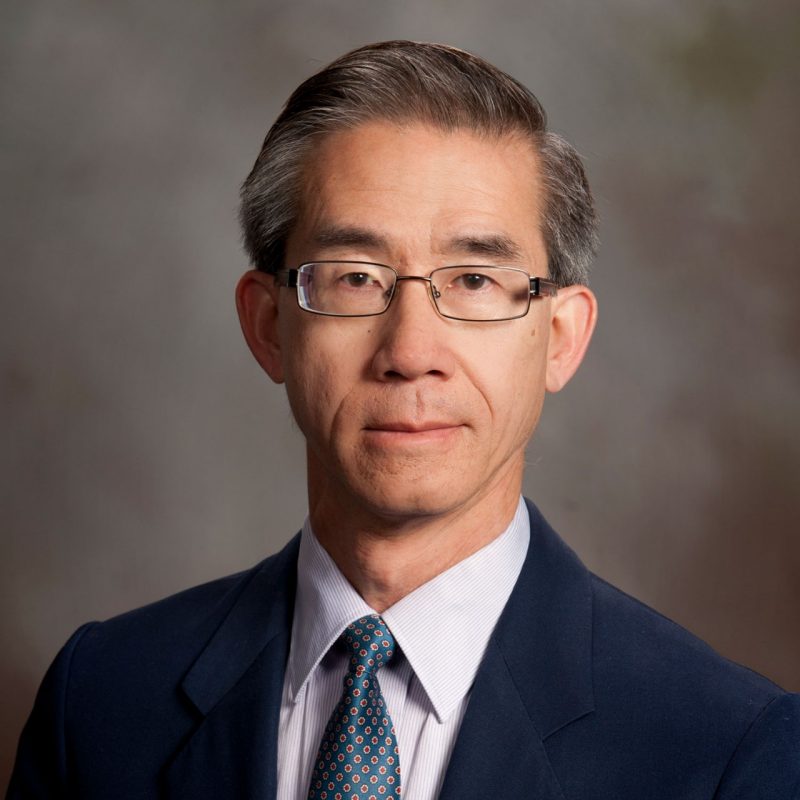
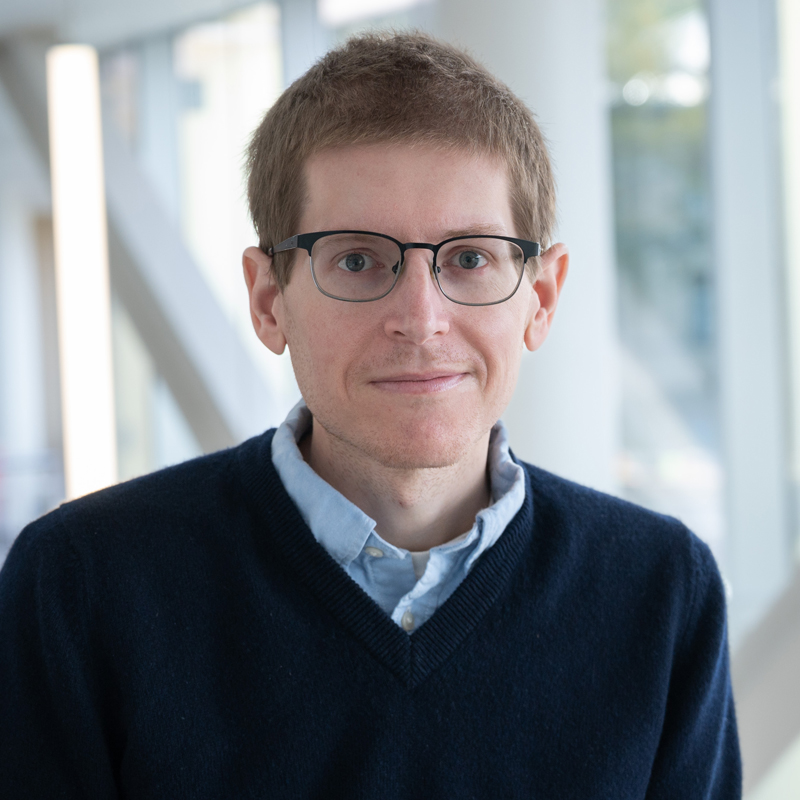
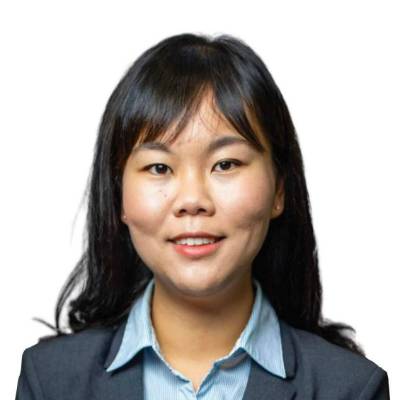
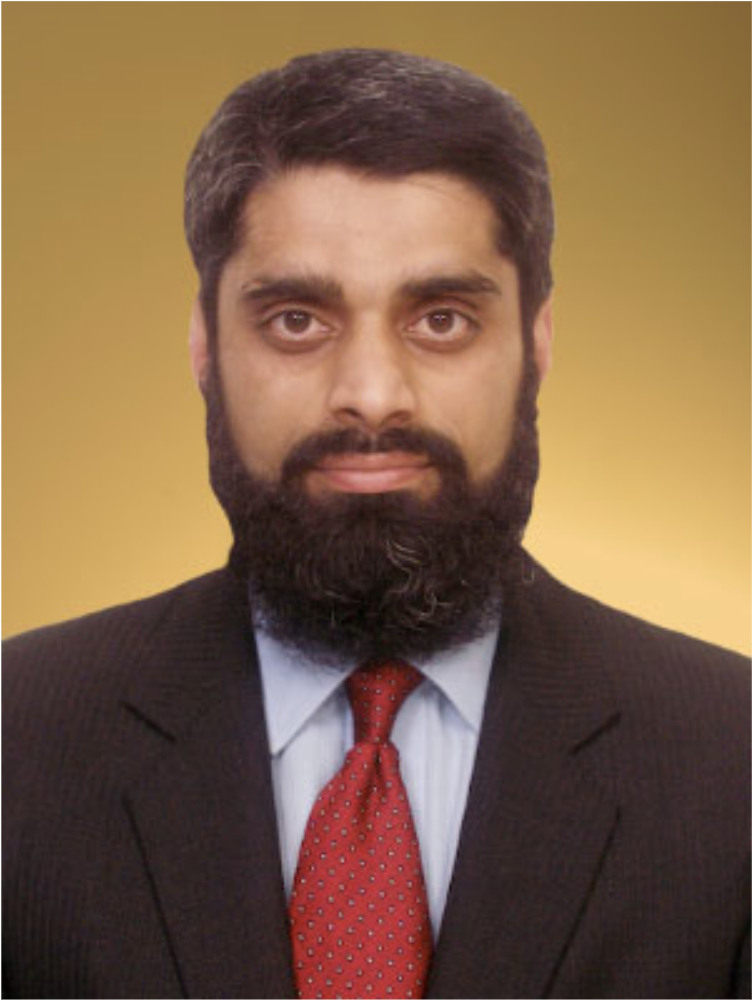
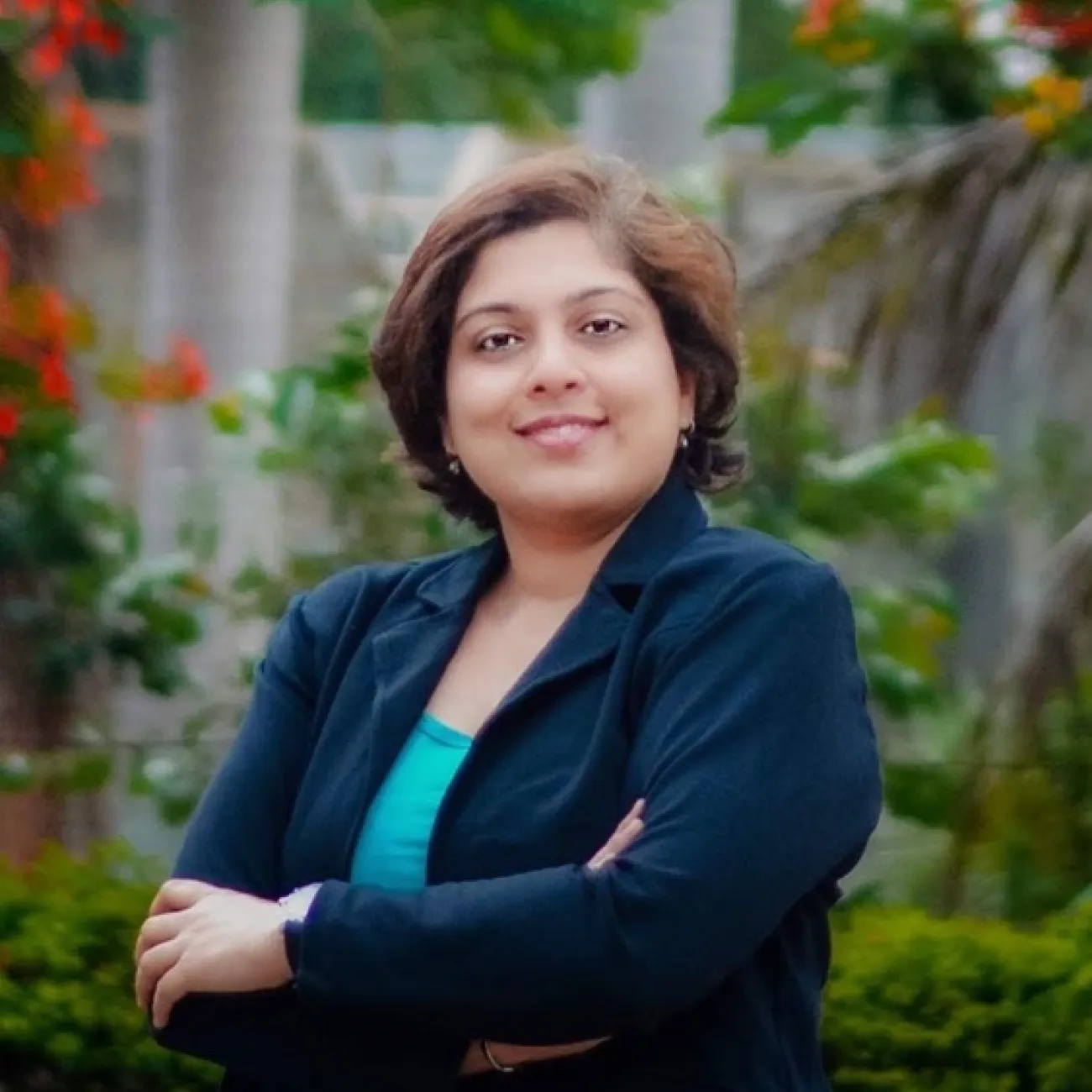
Prof. Dr. Christian Breitsamter is a Professor at the Technische Universität München (TUM), leading the Chair of Aerodynamics and Fluid Mechanics within the TUM School of Engineering and Design. He has held this position since 2007 and has been a member of key committees such as the ICAS Programme Committee and STAB-Programmleitung. His research focuses on aerodynamics of aircraft and rotorcraft configurations, including vortex dynamics, aeroelasticity, and fluid-structure interaction. Education: PhD in Aerodynamics (1997) Master’s in Aerospace Engineering (1989) Research Interests: Prof. Breitsamter’s work spans experimental and numerical studies of high-agility aircraft, helicopter aerodynamics, and advanced wing designs. Key areas include leading-edge vortices, gust load mitigation using flexible wings, and flow control techniques. His group investigates cutting-edge topics like deep learning for buffet prediction and hybrid neural networks for aerodynamic modeling. Awards: Willy Messerschmitt Preis (1999) AIAA Associate Fellow (2007) Advising & Grants: While specific student names are not listed, his research involves collaborative projects with industry partners (e.g., RACER Compound Helicopter) and EU initiatives like the FURADO program. His team contributes to the NFDI4ING infrastructure for engineering data. Labs/Teams: Active in the Aerodynamics Wind Tunnel facilities (Windkanäle A/B/C) and leads the SAGITTA flying wing demonstrator project. His group also explores membrane wings and elasto-flexible morphing technologies.
Abhijit Sarkar is a Professor in the Department of Civil and Environmental Engineering at Carleton University, Ottawa. His work centers on computational dynamics and probabilistic modeling, with office MC 3076 in the Minto Centre for Advanced Studies in Engineering and contact details including phone (613) 520-2600 x6320 and email abhijit_sarkar@carleton.ca . Education: D.Phil. from University of Oxford M.Sc. from Indian Institute of Science (IISc) B.E. from Calcutta University Professional Engineer (P.Eng.) designation His research drives innovation in uncertainty quantification for complex engineering systems. Core interests include dynamics of nonlinear structures, probabilistic mechanics for stochastic finite element methods, and Bayesian inference frameworks for parameter estimation. He pioneers scalable high-performance computing solvers for large-scale systems and sparse learning algorithms to address overfitting in statistical modeling. Recent publications (2022-2024) reveal three dominant trends: (1) Bayesian model calibration for stochastic compartmental systems applied to epidemiology and aerospace, (2) domain decomposition techniques for scalable uncertainty quantification in stochastic PDEs, and (3) sparse learning methods for nonlinear aerodynamic encoding. Key applications span wind turbine vibration analysis, flutter margin prediction, MEMS resonator optimization, and geospatial pandemic modeling. Scientific awards: No awards, fellowships, or medals listed in the source material Graduate supervision includes 6 current students (Ajay Kumar, John Clarabut, Nastaran Dabiran, Sakhi Mittal, Michael Pantano, Brandon Robinson) and 18 graduated students across 17 years (2006-2023). His research leverages high-performance computing for projects in structural dynamics, aeroelasticity, and computational epidemiology, frequently co-supervised with Dominique Poirel and Chris Pettit. Notable grants focus on wind tunnel validation for nonlinear systems and pandemic spread modeling. Based in the Minto Centre for Advanced Studies in Engineering, his computational mechanics group develops algorithms for stochastic dynamics using Carleton University's high-performance computing infrastructure. Collaborations span aerospace engineering (flutter analysis), civil infrastructure (seismic wave propagation), and public health (Covid-19 modeling).
Lakshmi N Sankar serves as Regents Professor and Sikorsky Professor in the Guggenheim School of Aerospace Engineering at Georgia Institute of Technology, where he directs the Computational Fluid Dynamics Laboratory and teaches aerodynamics, helicopter theory, and wind energy courses. His research program spans unsteady viscous flow modeling for aircraft, helicopters, and wind turbines since joining the faculty in 1982 after industry experience at Lockheed Martin. Education: Ph.D., Aerospace Engineering, Georgia Institute of Technology, 1977 MSAE, Aerospace Engineering, Georgia Institute of Technology, 1975 B. Tech., Aeronautical Engineering, Indian Institute of Technology, Madras, India, 1973 Research Focus: Professor Sankar's work centers on Computational Fluid Dynamics for rotorcraft aerodynamics and wind energy systems , with significant contributions to icing phenomena and unsteady flow modeling . His recent publications reveal intensifying focus on adverse weather effects (rain/icing), eVTOL conversion challenges, and high-fidelity hybrid modeling techniques for rotorcraft performance prediction. Publication Trends: Analysis of his 2022-2025 publications shows dominant themes in rotorcraft icing (35%), weather impact studies (25%), and advanced CFD methodologies (20%), with growing interest in drone applications and mathematical aspects of fluid dynamics. His work consistently bridges theoretical mathematics with practical aerospace engineering challenges. Scientific Recognition: AIAA Fellow and AHS Technical Fellow NASA Group Achievement Award (2007) and Space Act Software Release Award (2003) Multiple Sigma Gamma Tau Teaching Awards (2005-2015) Dean George C. Griffin Faculty of the Year (2014-2015) Sikorsky Professorship (2018-Present) Mentorship and Collaboration: As recipient of Georgia Tech's Graduate Research Assistant Development Award, he has cultivated extensive student mentorship. His research integrates with the Vertical Lift Research Center of Excellence and Center for 21st Century Universities, securing major industry and NASA funding for rotorcraft innovation. Current projects include physics-based modeling of ice accretion and eVTOL retrofit feasibility studies. Research Infrastructure: The Computational Fluid Dynamics Laboratory serves as his primary research hub, complemented by collaborations through the Vertical Lift Research Center of Excellence where his team develops next-generation modeling tools for military and civilian rotorcraft applications under federal funding programs.
Karthik Menon serves as an Assistant Professor with a joint appointment in the Woodruff School at Georgia Institute of Technology and the Coulter Department of Biomedical Engineering. His research integrates fluid mechanics, computational modeling, and data-driven methodologies to address critical challenges in healthcare, renewable energy, and bio-inspired engineering systems. His academic credentials include: Ph.D. in Mechanical Engineering, Johns Hopkins University (2021) M.S. in Mechanical Engineering, Johns Hopkins University (2019) B.E. in Mechanical Engineering, Birla Institute of Technology and Science, Pilani, India (2015) Menon's research program centers on three interconnected domains: cardiovascular flows for personalized treatment of heart disease, fluid-structure interactions in biological systems like heart valves and bio-mimetic robots, and vortex-dominated flows for renewable energy applications. His approach combines high-fidelity computational modeling with machine learning to uncover fundamental physics and develop clinical solutions, such as cardiovascular digital twins for non-invasive risk assessment. Current projects focus on patient-specific hemodynamics using CT imaging and uncertainty quantification to improve surgical planning. Analysis of his 15 most recent publications (2023-2025) reveals a dominant focus on advancing multi-fidelity computational frameworks for cardiovascular applications. Key trends include Bayesian uncertainty quantification, zero-dimensional solver development, and integration of clinical imaging data to create predictive digital twins. His work bridges fluid dynamics with clinical cardiology, targeting improved outcomes in coronary artery disease and Kawasaki-related complications through physics-informed machine learning. Menon's scholarly contributions have been recognized through competitive awards: WCCM-PANACM 2024 Travel Award, U.S. Association for Computational Mechanics (2024) Future Faculty Symposium Travel Award, Society of Engineering Science Conference (2023) Mark O. Robbins Prize in High-performance Computing, Johns Hopkins University (2021) Corrsin-Kovasznay Outstanding Paper Award, Johns Hopkins University (2020) Prosperetti Travel Award, Johns Hopkins University (2017) Mechanical Engineering Departmental Fellowship, Johns Hopkins University (2016) As principal investigator of the ComBiNE Fluid Dynamics Lab, Menon mentors graduate students in developing computational tools for fluid-structure interaction problems. His collaborative projects with cardiologists at Stanford and Emory hospitals translate engineering principles into clinical applications for cardiovascular disease management. Current grant activities focus on NSF and NIH-funded initiatives for uncertainty-aware cardiovascular modeling and bio-inspired flow energy harvesting. The ComBiNE Fluid Dynamics Lab operates as an interdisciplinary hub where engineers, clinicians, and data scientists collaborate on fluid mechanics challenges. Current lab initiatives include developing real-time hemodynamic simulators for surgical planning, creating reduced-order models for cardiac device optimization, and investigating vortex dynamics in fish schooling for underwater vehicle design. The lab maintains strong partnerships with Children's Healthcare of Atlanta and the Parker H. Petit Institute for Bioengineering and Bioscience.
M. Laura Beninati is an Associate Professor of Mechanical Engineering at Bucknell University. She holds dual B.S. degrees in Architectural and Civil Engineering from Drexel University (1994), M.S. in Civil and Mechanical Engineering from Drexel (1997), and a Ph.D. in Mechanical Engineering from the University of Iowa (2004). Her research focuses on environmental fluid mechanics, sediment transport, turbulence dynamics, and experimental fluid mechanics instrumentation. She teaches courses in fluid mechanics, thermodynamics, and engineering experimentation. Awards: Lindback Grant (2007), Swanson Research Fellow (2005-2007), Amelia Earhart Scholarship (2002-2003) Her experimental studies emphasize vortex dynamics and turbulence interactions in fluid flows, with applications to environmental and aerospace engineering. Research methodologies include advanced fluid dynamics instrumentation and computational modeling.
Wing Ng serves as Alumni Distinguished Professor and Chris C. Kraft Endowed Professor in Virginia Tech's Department of Mechanical Engineering within the College of Engineering. His career spans over four decades with continuous contributions to aerospace thermal systems and fluid dynamics research since joining Virginia Tech in 1984. Dr. Ng's academic foundation includes: Ph.D. in Mechanical Engineering from Massachusetts Institute of Technology (1984) M.S. in Mechanical Engineering from Massachusetts Institute of Technology (1980) B.S. in Mechanical Engineering from Northeastern University (1979) His pioneering research focuses on aeroacoustics of drones and jet engines, where he develops advanced diagnostics for turbine flow measurements and investigates transonic turbine blade aerodynamics. Current work explores aerothermal particle interactions in gas turbines and clean energy applications for wind turbines. His experimental approach bridges fundamental fluid dynamics with practical aerospace engineering solutions, particularly in cooling systems for high-temperature components. Analysis of recent publications (2024-2025) reveals three dominant research thrusts: turbine cooling optimization (film/phantom cooling configurations), particle dynamics in gas paths (impact/rebound mechanics), and novel measurement techniques (strain sensors, multiphase flow diagnostics). These studies consistently target performance enhancement and durability improvement in turbomachinery through experimental validation. Dr. Ng's exceptional contributions are recognized through: Virginia Tech Faculty Entrepreneur Hall of Fame (2017) William E. Wine Award for teaching excellence (2014) Multiple Certificates of Teaching Excellence (1985,1988,2011,2014) Dean's Award for Research Excellence (2013) Consecutive Best Paper Awards from ASME/AIAA (2001-2013) Fellow of ASME (1996) and Associate Fellow of AIAA (1992) As director of the Ng Lab, he maintains active collaborations with industry partners through Techsburg, Inc. (where he serves as Chairman) to translate research into commercial applications. His work on drone aeroacoustics and turbine diagnostics directly informs next-generation propulsion systems while addressing critical challenges in particle ingestion and thermal management.
Karen Mulleners is an Associate Professor at the École polytechnique fédérale de Lausanne (EPFL), affiliated with the School of Engineering (STI), the Institute of Mechanical Engineering (IGM), and the UNFOLD Laboratory (Laboratoire de diagnostic des écoulements instationnaires). She also serves in the SGM-ENS teaching department and is a member of the EDEY-GE doctoral program commission. Her research focuses on experimental fluid dynamics, particularly unsteady flow phenomena and vortex dynamics. Professor Mulleners specializes in the intersection of fluid dynamics and bio-inspired engineering, with research interests including: Unsteady vortex-dominated flow phenomena Fluid-structure interaction in flexible systems Experimental methods for flow visualization and measurement Application of fluid dynamics principles to bio-inspired robotics Aerodynamic performance optimization of wind turbine systems Vortex dynamics in flapping and rotating wing systems Her recent publications (2022-2025) demonstrate a strong experimental focus on understanding complex fluid phenomena, particularly in bio-inspired robotics and renewable energy applications. Mulleners' work consistently addresses fundamental questions about vortex formation, flow control, and fluid-structure interactions, with significant contributions to understanding dynamic stall in wind turbines and undulatory swimming mechanics. Her research group employs advanced diagnostic techniques to study unsteady flows, often bridging engineering and biological principles. Professor Mulleners actively supervises PhD students and has directed multiple EPFL theses. Her teaching responsibilities include courses on Measurement Techniques and Aerodynamics, where she imparts knowledge on experimental methods for observing and measuring physical variables such as force, resistance, temperature, flow velocity, and structural deformation. The UNFOLD Laboratory, which Professor Mulleners leads, focuses on diagnostic techniques for unsteady flow phenomena, employing advanced experimental methods including flow visualization, particle image velocimetry, and force measurement systems to study complex fluid dynamics problems with applications in renewable energy and bio-inspired engineering.
Prof. Dr.-Ing. David E. Rival is a full Professor at the Institute of Fluid Mechanics within the Faculty of Mechanical Engineering at Technische Universität Braunschweig. His research spans interdisciplinary domains at the intersection of experimental fluid dynamics, data assimilation, network science, and bio-inspiration, with applications in renewable energy systems and bio-mimetic engineering. Former Associate Professor at Queen’s University, Canada Doctoral work on dragonfly flight aerodynamics at TU Darmstadt Alexander von Humboldt research fellowship recipient (2020) Postdoctoral associate at MIT studying shape morphing in nature Research chair at University of Calgary on atmospheric sensing His work focuses on unsteady flow phenomena, bio-inspired design, and advanced measurement techniques. Key projects include: Co-chairing NATO AVT task group on flow separation International collaborations with AFOSR, NATO, and ONR Development of cost-effective flow-tracking sensors for natural environments Investigations into shear-thinning suspension dynamics and vortex ring behavior Recent publications demonstrate a strong emphasis on: Large-scale particle tracking with natural light and UAVs Machine learning for sparse data reconstruction in fluid flows Soft coastal protection methods and ecohydraulics Advanced sensing techniques for atmospheric and industrial applications Scientific Awards: 2020: Alexander von Humboldt Research Fellowship Notable research achievements include textbook authorship on Biological and Bio-Inspired Fluid Dynamics (Springer) and media features in The Nature of Things (David Suzuki) and Discovery Channel’s Daily Planet .
Matthew Rosenzweig is an Assistant Professor in the Department of Mathematical Sciences at Carnegie Mellon University's Mellon College of Science, specializing in mathematical physics, nonlinear partial differential equations, and probability with applications to many-body systems and wave turbulence. His educational background includes: Ph.D. in Mathematics, University of Texas at Austin Postdoctoral Appointment, Massachusetts Institute of Technology Undergraduate Degree, Harvard University Rosenzweig's research focuses on effective dynamics of large-scale systems such as Coulomb/Riesz gases, where he derives nonlinear dispersive, fluid, and kinetic equations from microscopic particle interactions. His work bridges physics and mathematics, increasingly incorporating statistical and machine learning perspectives. Key contributions address mean-field convergence , propagation of chaos , and scaling limits for singular interactions. Analysis of his 15 most recent publications (2022-2024) reveals a dominant trend in uniform-in-time mean-field theory for singular potentials, with strong emphasis on logarithmic Sobolev inequalities, wave turbulence connections (e.g., stochastic KdV equations), and fluid dynamics applications like the Lake equation. The research spans mathematical physics, probability theory, and nonlinear PDE analysis, often featuring collaborations with Sylvia Serfaty and Gigliola Staffilani. Rosenzweig's research is funded by National Science Foundation grants DMS-2441170 and DMS-2345533. As a former CLE Moore Instructor at MIT and Simons Collaboration postdoc, he maintains active involvement in the Center for Nonlinear Analysis at CMU, though no formal lab structure is specified in available materials.
Dr. Lin Jiang serves as Assistant Professor in the Department of Mechanical Engineering at San José State University's Charles W. Davidson College of Engineering, where her research bridges biomechanics and robotics to develop medical assistive technologies and human-robot interaction systems. Her educational background includes a Ph.D. and M.Sc. in Mechanical Engineering from the University of Texas at Dallas (2021, 2019), complemented by an M.Sc. in Control Engineering and B.Sc. in Aerospace Engineering from Nanjing University of Aeronautics & Astronautics (2014, 2011) with a minor in Industrial Business Management. Dr. Jiang's research focuses on translating aerospace control systems expertise into medical applications, particularly in rehabilitation robotics and breastfeeding technology. Her work emphasizes human-centered design for devices like the patented SmartLact8 breast pump, with recent publications demonstrating significant contributions to teleoperated rehabilitation systems and lactation biomechanics. Her 15 most recent publications (2020-2025) reveal consistent specialization in medical robotics, with dominant themes in rehabilitation devices (knee braces, upper extremity therapy), breastfeeding technology innovation, and human-robot interaction frameworks for healthcare and driving safety applications. Scientific recognition includes: New Investigator Award from CSUPERB Small Group Project Award from SJSU College of Engineering Exemplary Teaching award from UT Dallas Diversity Award from Summer Biomechanics Conference Best Paper award at ASME IMECE 2018 Research funding includes NSF support for hospital-based human-robot interaction studies. Dr. Jiang actively contributes to IEEE HKN, BMES, ASME, and ISHRML while mentoring students through her Biomechanics and Robotics Lab at SJSU. The Biomechanics and Robotics Lab serves as the primary research hub for developing medical assistive technologies, with current projects focusing on rehabilitation robotics, breastfeeding simulation systems, and human-robot interaction protocols for clinical environments.
Dr. Muhammad Salman is an Associate Professor in the Department of Mechanical Engineering at Kennesaw State University (KSU), where he has served since 2012 after the merger of Southern Polytechnic State University into KSU. He holds a PhD in Mechanical Engineering from Georgia Institute of Technology (2012), an M.S. from Georgia Tech (2008), and prior degrees from the University of Engineering and Technology in Lahore, Pakistan, including a B.S. (1998) and M.S. (2003). He also completed M.S.-level courses in Mechatronics Engineering at TUHH, Germany (2005). His research focuses on biomechanics, particularly in dynamics and vibrations of human musculoskeletal systems, with an emphasis on non-invasive measurement techniques like surface wave and shear wave methods to assess muscle/tendon stiffness. He has developed cost-effective devices for stiffness quantification and published extensively in journals such as Journal of Biomechanics and Acoustical Society of America . Dr. Salman has received notable recognition, including the PhD Fulbright Scholarship (2006) , and has secured grants totaling over $500,000, including an NSF CAREER Award (though not funded) and OVPR grants for tendon stiffness research. His work involves collaborations with students on projects like motorcycle stability systems, muscle fatigue analysis, and biomedical sensor development. He teaches courses in dynamics, vibrations, thermodynamics, and design, and has mentored numerous undergraduates and graduates in research through programs like NCUR and GURC. His lab emphasizes experimental research, with a focus on biomechanical applications of vibration analysis and sensor technology. Recent projects include developing low-cost stiffness measurement tools and studying tendon behavior under fatigue. He actively participates in conferences such as ASME IMECE and the American Society of Biomechanics, showcasing innovations in both mechanical engineering and biomedical research.
Josep Maria Bergadà Granyó is an Associate Professor in the Department of Fluid Mechanics at the Escola Superior d'Enginyeries Industrial, Aeroespacial i Audiovisual de Terrassa (ESEIAAT), Universitat Politècnica de Catalunya (UPC). He is actively involved in research through the UPC MICROTECH LAB and CATMech – Centre Avançat de Tecnologies Mecàniques. With a Doctorate in Industrial Engineering, he has a strong academic and research profile spanning decades. His research interests focus on fluid dynamics, particularly Active Flow Control , Fluid Power (Hydraulics) , Piston Pumps , Gas Dynamics , and Computational Fluid Dynamics . He applies these areas to enhance aerodynamic performance in wind turbines and industrial systems. His work employs advanced numerical methods such as the lattice Boltzmann method and RANS simulations, with a strong emphasis on optimizing flow behavior in complex geometries and energy systems. The recent publications highlight a consistent trend in aerodynamic efficiency optimization , especially in wind turbines using active flow control and synthetic jets. His research spans both theoretical modeling and practical applications, including dimensional modifications in fluidic oscillators and turbulence boundary condition effects. These efforts contribute significantly to renewable energy and sustainable engineering solutions. Among his recognitions is the Premi Iniciativa Digital Politècnica 2019 . He has led and participated in multiple competitive R&D projects, demonstrating strong grant acquisition and collaborative capabilities. He has supervised doctoral students such as K. Karimzadegan, M. Baghaei, and B. An, indicating an active role in academic mentoring. His collaborations extend across various research groups at UPC, particularly with experts in mechanical, aerospace, and textile engineering. He is a key figure in the Fluid Mechanics Department, contributing to both teaching and cutting-edge research in fluid dynamics and its industrial applications.
Christine Sindelar serves as Associate Professor and Head of the Hydraulics Laboratory at the Institute of Hydraulic Engineering and River Research, Department of Landscape, Water and Infrastructure, University of Natural Resources and Life Sciences, Vienna (BOKU). Her academic leadership spans experimental river research, fluid mechanics, and hydraulic engineering with a strong emphasis on practical applications for river management and restoration. Her educational trajectory includes a habilitation in Experimental River Research and Fluid Mechanics (2022), a PhD-equivalent doctorate in Civil Engineering from Graz University of Technology (2011), a degree in Technical Mathematics from the University of Linz (2000), and teacher certification in mathematics, psychology, and philosophy (1997). Habilitation: Experimental River Research and Fluid Mechanics (2022) PhD: Civil Engineering, Graz University of Technology (2011) M.Sc.: Technical Mathematics, University of Linz (2000) B.Ed.: Teaching Certification, University of Linz/Salzburg (1997) Dr. Sindelar's research integrates experimental and computational methodologies to address critical challenges in river systems. Her work focuses on sediment transport dynamics, fish passage engineering, scale modeling of hydraulic structures, and nature-based river restoration solutions. She pioneers innovative techniques such as 1:1 physical modeling and Lagrangian particle tracking to investigate complex fluid-particle interactions and river morphodynamics. Her leadership in the Responsible River Modeling Center (RRMC) drives advancements in sustainable river management practices across European waterways. Analysis of her 15 most recent publications reveals a dominant focus on sediment pulse dynamics (33%), fluid-particle interactions (27%), and scale modeling techniques (20%). Her work consistently bridges fundamental fluid mechanics with practical engineering applications, particularly in regulated river systems and hydropower infrastructure. Key emerging trends include the application of nature-based solutions for ecological restoration and advanced measurement techniques for turbulent flow structures. Her scientific recognition includes: Manfred Schwanninger Preis - BOKU Teaching Award (2021) ÖAW Stipendium 'For Women in Science' (2011) Dr. Sindelar has mentored 20 graduate students through thesis supervision, with research spanning hydraulic structure design, sediment transport modeling, and river restoration techniques. Her externally funded research portfolio includes 14 active projects totaling over €2.5 million in grants from diverse sources: Competitive Grants: Austrian Science Fund (FWF): PiCASSO XL (€480,000), Particle Collision Model (€320,000) European Commission: Mura-Drava-Danube Corridor (€1.2M) Industry Partnerships: Multiple hydropower-related physical modeling projects (€650,000) Municipal Projects: City of Vienna: Wienfluss restoration (€180,000) As Head of the Hydraulics Laboratory, she directs a multidisciplinary team conducting cutting-edge experimental research using advanced facilities including 1:1 scale river modeling systems, high-resolution particle tracking velocimetry, and specialized sediment transport measurement apparatus. The laboratory serves as a national hub for river engineering research and collaborates extensively with European water management authorities on transboundary river projects.
Prof. Dr. Erdem An serves as a full Professor in the Department of Mechanical Engineering at Yeditepe University's Faculty of Engineering. Holding this position since 2016, he previously advanced from Associate Professor (2008) and Doctoral Lecturer (2006) roles within the same department. His academic foundation includes a PhD (1986-1989) and Master's degree (1985-1986) in Mechanical Engineering from California Institute of Technology, where his doctoral research focused on granular materials and convective heat transfer. Dr. An's research spans Heat Transfer , Fluid Mechanics , and Thermal Systems with specialization in supercritical CO 2 flows, microchannel heat transfer, granular material dynamics, and condensation efficiency. His experimental work frequently investigates microtubes, corrugated channels, and granular flows, yielding significant contributions to refrigeration systems and thermal management applications. Current projects focus on supercritical CO 2 behavior near critical points and energy-efficient drying technologies. Analysis of his 15 most recent publications reveals dominant research themes in microscale thermofluid phenomena (73%), supercritical fluid dynamics (54%), and enhanced heat transfer surfaces (36%). His work demonstrates consistent experimental methodology with increasing computational integration since 2015, particularly in flow orientation effects and buoyancy-driven phenomena. Cassini Recognition Award (NASA) Group Achievement Award (The Aerospace Corporation) Program Recognition Award (The Aerospace Corporation) Four Arçelik Buluşma Günü Innovation Awards (XII-XV) Dr. An has secured substantial research funding including TÜBİTAK 1001 projects (625,845 TL) and multiple San-TEZ industrial collaborations (totaling over 550,000 TL) with Arçelik A.Ş. His administrative leadership includes serving as Department Chair since 2019. He has supervised 13 Master's theses and 4 doctoral dissertations, with current students researching supercritical CO 2 flow characteristics and condensation dynamics. His industrial partnerships have yielded 7 patents related to laundry dryer technology.
Dr. Swathi Krishna is a Lecturer (Assistant Professor) in the Aerodynamics and Flight Mechanics Group at the University of Southampton since August 2021. She holds a B.E. in Mechanical Engineering from Visvesvaraya Technological University (2009), an M.Sc. in Aerospace Engineering from TU Delft (2012), and a Ph.D. in Mechanics from EPFL, Switzerland (2017). Her research focuses on experimental fluid mechanics, unsteady vortex-dominated flows, and bioinspired engineering solutions for sustainable aeronautical and marine technologies. Her work spans aerodynamics of vertical axis turbines, propeller-wing interactions in novel VTOL aircraft, flapping wing kinematics inspired by insects, and morphing wing designs. Utilizing advanced facilities like recirculating water channels, wind tunnels, and robotic systems, her group explores fluid-structure interactions to optimize engineering systems. Current projects include EPSRC equipment maintenance collaborations and Royal Society-funded studies on water surface locomotion. Dr. Krishna supervises PhD students in topics ranging from cyclorotor aerodynamics to bioinspired robotics. Her teaching includes modules on aerodynamics and design activities, integrating cutting-edge research into academic instruction.