Dr. G.K. Knopf is a Professor in the Department of Mechanical & Materials Engineering at Western University, Canada. He holds a Ph.D. (1991), M.Sc. (1987), and B.E. (1984) from the University of Saskatchewan. His work bridges product design, advanced manufacturing, and bio-inspired technologies. Research Focus: Dr. Knopf’s research spans 3D shape reconstruction , laser microfabrication , micro-optics , and bioelectronic imaging arrays . Recent projects emphasize light-driven actuators , flexible electronics , and graphene-based inks for printing circuits on unconventional substrates like silk and paper. Publications: Over 150 peer-reviewed works, including two edited CRC Press volumes ( Smart Biosensor Technology , Optical Nano and Micro Actuator Technology ). Key contributions involve non-lithographic fabrication , bacteriorhodopsin photodetectors , and self-organizing feature maps for data visualization. Awards/Patents: Co-inventor of two U.S. patents (6,542,249 for 3D surface measurement; 7,573,024 for bioelectronic imaging arrays). Teaching: Leads graduate courses in Medical Device Design and Optomechatronic Systems , as well as undergraduate Mechatronics and Medical Device Development courses.
Professor Ben Bollig holds the position of Professor of Latin American Literature and Film at the University of Oxford's Faculty of Medieval and Modern Languages. He is also a Fellow and Tutor in Spanish at St Catherine's College, and an Associate Lecturer at St John's College. His research focuses on contemporary Latin American literature and film, with a specialization in Argentine poetry and its cinematic adaptations. He has authored or edited numerous books, including Moving Verses and The Poetry-Film Nexus in Latin America , and serves as editor of the Journal of Latin American Cultural Studies . Teaching responsibilities include the entire Spanish course for first-year students and Latin American literature and film options for upper years. He supervises MPhil/DPhil students in Latin American cultural studies, particularly Southern Cone literature and film. His work explores intersections of poetry, film, translation, and postcolonial theory, with a focus on Argentina's cultural production. He has published widely on topics such as poetic adaptation, political literature, and cultural activism. Key contributions include co-editing Latin American Cultural Studies: A Reader and producing translated volumes of Cristian Aliaga's work. His research themes span comparative literature, postcolonial studies, environmental humanities, and global cultural dynamics. He is actively engaged in academic leadership roles within his field, maintaining a strong international profile in cultural studies and literary criticism.
Takashi Miura is an Associate Professor at the University of Arizona specializing in Japanese religions from the early modern to modern periods. His work explores millenarian movements, Shinto practices, and Buddhist visual culture. He holds degrees from the University of Hawai'i at Mānoa (B.A./M.A.) and Princeton University (Ph.D.). Dr. Miura's research examines religious innovations like the rise of 'yonaoshi' renewal gods and deified peasants. His 2019 monograph Agents of World Renewal analyzes apocalyptic concepts in Japanese history. Current projects include a study on early modern peasant deification and its societal impacts. He teaches courses on Buddhism and Japanese religious practices, including EAS 160A1 and JPN 220. His publications span academic journals and edited volumes, addressing topics from Meiji-era polemics to post-war new religions. His work frequently bridges textual analysis with visual and material culture studies.
Wenping Wang is a Professor in the Department of Computer Science & Engineering at Texas A&M University, part of the College of Engineering. His research focuses on computer graphics, computer vision, geometric modeling, and visualization. He holds Fellowships from ACM and IEEE, and has received notable awards including the 2021 AsiaGraphics Outstanding Technical Contributions Award and the 2017 John Gregory Memorial Award. Wang's educational background includes a Ph.D. from the University of Alberta and M.Eng. and B.Sc. degrees from Shandong University. His work spans advancements in neural implicit surfaces, 3D reconstruction, and medical imaging applications such as orthodontic treatment prediction. He has authored numerous influential papers in top-tier conferences like SIGGRAPH and journals like ACM Transactions on Graphics. His research interests emphasize bridging geometric modeling with machine learning, particularly in neural rendering, surface parameterization, and medical visualization. Recent projects include developing frameworks for automatic tooth alignment and high-fidelity 3D geometry generation. Wang's contributions have significantly impacted both theoretical foundations and practical applications in computer graphics.
Claudia Schwabe is a Professor in the Department of World Languages and Cultures at Utah State University, within the College of Humanities and Social Sciences. She holds a Ph.D. in German Studies from the University of Florida and has been teaching at USU since 2012. Her academic work bridges German language, literature, and cultural studies with a strong focus on fairy tales and folklore in both historical and contemporary contexts. Education: Ph.D., German Studies, University of Florida, 2012 M.A., Teaching Business Education, Georgia College & State University, 2005 B.A., International Business Administration, Northumbria University, UK, 2003 B.A., International Administrative Management, Accadis, Germany, 2003 Her research centers on 18th- and 19th-century Romantic literature, literary and folk fairy tales (Kunstmärchen), East German cinema, German Orientalism, and the adaptation of fairy tales in new media and popular culture. She explores how traditional narratives are transformed across media and cultures, especially in American television and film. Her teaching reflects this interdisciplinary approach, covering German language, literature, film, business German, and translation. Her recent scholarly publications reveal a strong trend in analyzing the cultural and political significance of fairy tales, particularly in DEFA films and modern adaptations like Grimm and Once Upon a Time . She has published monographs, edited volumes, and peer-reviewed articles with leading presses and journals in folklore and German studies, demonstrating sustained scholarly impact. Scientific Awards and Honors: Faculty Undergraduate Advisor of the Year Award, LPCS, USU (2015) Ed Glatfelter Service Award, LPCS, USU (2016-2017) Nominations for Dean’s Giraffe Award (2016, 2018) Nominations for Researcher of the Year (2016, 2017) Travel Awards from College of Humanities and Social Sciences and Center for Women and Gender Studies (2014) Graduate Student Teaching Award, University of Florida (2010) Grinter Fellowship, University of Florida (2008–2010) Claudia Schwabe has been actively involved in academic service, grant writing (participant in grant proposal seminar), and mentoring. She has served as a faculty advisor and contributed to curriculum development, particularly in interdisciplinary folklore and fairy-tale pedagogy. Her editorial work on volumes like New Approaches to Teaching Folk and Fairy Tales highlights her leadership in shaping scholarly discourse. She has also reviewed books for major journals, contributing to peer evaluation in her field. While no formal lab or research team is mentioned, her work is deeply collaborative, involving co-edited volumes, co-authored entries, and invitations to contribute to high-impact academic projects. Her ongoing research suggests continued exploration of fairy tales in global media, pedagogy, and cultural politics.
Kuiyi Shen is Professor of Asian Art History, Theory, and Criticism at the University of California, San Diego (UCSD), where he also serves as Vice Chair and Director of the PhD Program in the Department of Visual Arts. He is affiliated with the Division of Arts and Humanities and maintains an active research, teaching, and curatorial practice focused on Chinese and Japanese art, particularly modern and contemporary Chinese art and Sino-Japanese artistic exchanges. BA in Fine Arts, Shanghai Normal University MA and PhD in Art History, The Ohio State University Shen's research centers on the evolution of Chinese art in the modern era, with emphasis on ink art, unofficial art movements, and the interplay between tradition and modernity. His work explores how political, social, and transnational forces have shaped artistic expression in China, particularly during transformative periods such as the late Qing, Republican era, and post-Cultural Revolution decades. He is deeply engaged in the study of literati painting, Buddhist art, and mass visual culture, including posters and illustrated magazines. The 15 most recent publications and exhibition catalogs reflect a consistent focus on modern and contemporary Chinese ink art, unofficial art practices, and cross-cultural dialogues. Key themes include the reinvention of tradition, the role of Japan in modern Chinese art, and the emergence of independent artistic voices during politically repressive periods. His scholarly output spans academic monographs, co-edited volumes, and curatorial projects that bridge East and West. Notable scientific achievement: 2013 ICAS Book Prize in Humanities for Arts of Modern China Shen has advised numerous exhibition projects and served on international juries, including the Guggenheim Museum and the International Awards for Art Criticism. He has held academic positions at Ohio University, SUNY Buffalo, Rice University, and the University of Oregon before joining UCSD. He is Managing Editor of Brill’s Modern Asian Art and Visual Culture book series, underscoring his leadership in the global academic community. His teaching includes courses on Chinese and Japanese art, landscape painting, and contemporary art and mass culture. Shen has curated or consulted on over 20 major exhibitions worldwide, including A Century in Crisis (Guggenheim), Blooming in the Shadows (China Institute), and Light before Dawn (Asia Society), demonstrating his dual expertise in scholarship and curatorial practice.
Patrice Faure is a University Professor of Roman History at the University of Lyon 3 since 2022, with a career spanning roles at multiple French universities. His research focuses on the Roman army, political and cultural history of Roman provinces, Latin epigraphy, and prosopography. He holds a Habilitation à Diriger des Recherches in Roman History (2021) and a Doctorate (2006) from the University of Grenoble 2. Roman History, University of Lyon 3 (2022-present) Lecturer in Roman History, University of Lyon 3 (2010-2022) Lecturer in Ancient History, University of Le Havre (2007-2010) His research examines the Roman military's social and political impact, provincial integration of elites, and epigraphic documentation. He collaborates on digital epigraphic databases (Epigraphica Romana, EpiCherchell) and contributes to exhibition curation, notably at the Musée Lugdunum. Awarded the SOPHAU Thesis Prize (2007) and multiple scholarships (Thiers Foundation, IFAO, EFR), his publications include co-edited volumes on Roman military culture and monographs on Severan-era centurions. Current projects include publishing his HDR thesis Grandir pour l'empire and expanding the Inscriptions antiques de Césarée de Maurétanie corpus.
Laura Moretti serves as Professor of Early Modern Japanese Literature and Culture at the University of Cambridge, holding dual roles as University Teaching Officer in the Department of Asian and Middle Eastern Studies and Official Fellow at Emmanuel College since 2012. Her academic journey began with undergraduate studies at Università Ca’ Foscari Venezia, followed by two years of research at the University of Tokyo, culminating in a 2003 PhD from her Italian alma mater. Prior to Cambridge, she taught nine years at Ca’ Foscari and two years at Newcastle University. Professor Moretti's research pioneers interdisciplinary approaches to early modern Japanese culture (17th-19th centuries), uniquely bridging literature, art history, and book history. Her groundbreaking work on graphic narratives and ludic traditions challenges canonical narratives by recovering marginalized textual forms through rigorous analysis of woodblock prints, board games, and archival materials. Current projects explore the intersection of games and literature in Edo-period Japan. Her publication trajectory reveals consistent innovation across visual and textual domains, with recent works like the 2024 co-edited volume on Kusazōshi demonstrating deep engagement with publishing history and visual culture. This scholarship consistently examines how popular literature functioned within Edo-period social and economic contexts. Her teaching excellence has been recognized through prestigious awards: Pilkington Prize for contribution to excellence in teaching CUSU student-led teaching award (2019) for Undergraduate Supervisor Professor Moretti actively mentors postgraduate researchers in Japanese premodern literature, encouraging interdisciplinary projects connecting visual culture and book history. While specific grant funding isn't detailed in the source, her sustained publication record indicates robust institutional support for her archival research at Cambridge.
Valerie Hansen is the Stanley Woodward Professor of History at Yale University's Department of History. She specializes in Chinese history to 1600, the Silk Road, and global medieval connectivity. Her research bridges legal, religious, and economic dimensions of pre-modern societies. Hansen’s work includes groundbreaking books such as The Year 1000 (2020), redefining globalization’s origins, and The Silk Road: A New History (2012), integrating archaeological and textual sources. She led the Luce Foundation-funded Silk Road Project (1995–1998), unifying Turfan artifacts. Her articles span legal pluralism in Silk Road cities, Liao dynasty material culture, and Viking exploration’s global impacts. Awards include American Academy of Arts and Sciences Fellowship (2021) and Collège de France lectureship (2019). Hansen collaborates internationally, editing volumes on textiles as money and Song-Yuan studies. Her research emphasizes interdisciplinary methods, blending history with archaeology and art.
Sarah Wilson is Professor of Modern and Contemporary Art at The Courtauld Institute of Art, University of London. She has been a faculty member since 1982 and has held leadership roles including Head of the Modern and Contemporary Section (2005-2008) and Head of Diploma programmes (2014-2015). She is internationally recognized as the English-language expert on Post-War European art and has held visiting positions at Paris-IV Sorbonne and the University of Versailles-Saint Quentin. Wilson was educated at the University of Oxford (BA English Literature) and at the Courtauld Institute of Art (MA and PhD). She was awarded the title Chevalier des Arts et des Lettres in 1997 for services to French art and culture, and received the International Association of Art Critics' Award for Distinguished Contribution to Art Criticism in 2015. She has held visiting professorships at Paris-IV Sorbonne (2002-2004), École Nationale Supérieure des Beaux-Arts (2006-2007), and University of Versailles-Saint Quentin (2012-2013). Sarah Wilson's research spans post-war and Cold War European art, contemporary global art practices, and the intersections between conceptual art, political theory, and visual culture. Her work extends from European avant-gardes to contemporary art across the former Soviet Union and Asia. She is particularly known for her expertise in French Stalinism, neo-Marxism and the arts, and conceptual art practices beyond the 'first world.' Wilson has initiated important academic programs such as the 'Global Conceptualism' MA course with Boris Groys, which connects Anglo-American conceptual art with practices from Moscow and beyond. She has also expanded her research to include modern and contemporary Asian art since 2013. Her extensive publication record shows a consistent focus on European art history with increasing engagement with global perspectives, particularly Asian contemporary art since 2013. Wilson's scholarship bridges art historical analysis with philosophical inquiry, especially regarding French theory and its visual manifestations. Her major publications include 'Paris, Capital of the Arts, 1900-1968' (2002) and 'The Visual World of French Theory: Figurations' (2010), with a second volume 'The Visual World of French Theory II: Interventions' in preparation. Chevalier des Arts et des Lettres (1997) International Association of Art Critics' Award for Distinguished Contribution to Art Criticism (2015) Marie Curie Actions – RBUCE-UP, Chaire d'excellence, Université de Versailles-Saint Quentin (2012-2013) Professor Wilson has supervised 36 PhD students to completion and over 230 MA dissertations, creating what she describes as 'a unique English-language archive in the field of post-1945 European and global art history.' Her former students now hold prominent positions in major institutions worldwide including Tate, the British Museum, Design Museum, Scottish National Gallery of Modern Art, British Council, Centre Georges Pompidou, Kunsthalle Bremen, and universities across Europe and North America. She has received significant research funding including a Marie Curie Actions grant for her project 'Globalisation before globalisation: avant-gardes, academies, revolutions.' Wilson is actively involved with the Courtauld alumni's former East Wing Collection (now VS1, Vernon Square) and has contributed to the Research Forum's programmes. She has curated numerous exhibitions including the 'Global Conceptualism'-related projects and served on the curatorial team of the 1st Asian Biennale (China-Guangzhou) in 2014. Her commitment to women artists has led to early exhibitions of artists like Zofia Kulik and Alina Szapocznikow before their international prominence. She is involved with CCRAC (Cambridge-Courtauld Russian Art Centre), Calvert 22, and Pushkin House in London, reaching out to Russia and Eastern Europe.
Prof. Dr.-Ing. Lars Linsen is a full Professor of Computer Science at the Westfälische Wilhelms-Universität (WWU) Münster, leading the VISualization & graphIX (VISIX) group. His primary affiliation is the Institute of Computer Science within the Faculty of Mathematics and Computer Science. He holds adjunct professorships at Jacobs University, Bremen, and has held previous academic roles including Full Professor at Jacobs University (2012–2017) and Associate/Assistant Professor roles in Germany and the U.S. His research focuses on interactive visual analysis, medical visualization, and scientific visualization, with applications in life sciences and engineering. Education: PhD (Dr.-Ing.) in Computer Science from Universität Karlsruhe (2001), M.Sc. (Diplom) in Computer Science (1997), B.Sc. (Vordiplom) in Computer Science (1994). Awards: IEEE Visualization Design Contest Winner (2008, 2022, 2018), Preis des Fördervereins des Forschungszentrum Informatik (2002). Research Highlights: Develops visualization tools for medical imaging (e.g., mass spectrometry imaging, MRI data analysis) and physical simulations (e.g., wildfire spread analysis, asteroid impact modeling). Active in EU-funded projects like Pig-Pro-QuO (surface coatings) and cells-in-motion initiatives. Supervised over 20 PhD/MS advisees, including notable graduates in medical visualization and simulation ensemble analysis. Publications: Over 100 peer-reviewed articles in top venues like IEEE Transactions on Visualization and Computer Graphics, Computers & Graphics, and EuroVis. Key works include SciVis contest-winning wildfire analysis frameworks and medical visualization tools for stenosis detection. Teaching: Offers courses on visualization, computer graphics, and computational science. Actively involved in thesis supervision and curriculum development at both WWU Münster and Jacobs University. Grants & Collaborations: Principal investigator on DFG-funded projects (e.g., hemodynamics simulations, ensemble visualization) and industry collaborations (e.g., Tascon GmbH for coating quality analysis). Member of the Cells-in-Motion Interfaculty Centre and CDH board at WWU.
Wenzel Jakob is an Associate Professor and leader of the Realistic Graphics Lab at EPFL's School of Computer and Communication Sciences , currently on sabbatical at the University of Tokyo until Fall 2025. His work bridges inverse graphics , physically based rendering , and compiler/systems research , with a focus on developing robust differentiable rendering frameworks. Key research themes include: Backpropagation through rendering algorithms for inverse problems Material appearance modeling and optical measurement systems Compiler design for differentiable rendering pipelines Manifold sampling techniques and light transport derivatives His group created Mitsuba renderer , Dr.Jit , and Instant Meshes (recipient of the SGP Software Award). Recent publications (2021–2024) explore volumetric rendering, SDF-based differentiable systems, and efficient Monte Carlo estimators. Awards include the ACM SIGGRAPH Significant Researcher Award , Eurographics Young Researcher Award , and ERC Starting Grant . Teaching roles (2016–2024) span Advanced Computer Graphics and Numerical Methods for Visual Computing courses at EPFL.
Professor Daniel Eyers is a Professor of Manufacturing Systems Management at Cardiff Business School, Cardiff University , where he also serves as Director of Quality Assurance & Enhancement. He is co-director of the Centre for Advanced Manufacturing Systems (CAMSAC) and Cardiff University RemakerSpace , highlighting his leadership in sustainable and advanced manufacturing innovation. Professor of Manufacturing Systems Management, Cardiff University (2024–present) Co-Director, Centre for Advanced Manufacturing Systems (CAMSAC) (2024–present) Co-Director, Cardiff University RemakerSpace (2020–present) External Advisor, Open University (2022–present) His research focuses on the strategic management of advanced manufacturing technologies , particularly Additive Manufacturing (3D printing) , within operations and supply chain contexts. He explores how digital technologies enhance supply chain flexibility, sustainability, and performance. His work spans flexible manufacturing systems, servitization, and change management in industrial settings. His recent publications (2020–2025) reveal a strong trajectory in AI-human collaboration in decision-making , sustainable manufacturing , urban logistics , and the integration of 3D printing in circular economies. Themes include risk management, digital transformation, and the strategic impact of emerging technologies on operations. He frequently publishes in top-tier journals such as International Journal of Operations and Production Management , Production Planning and Control , and Omega . CEng, Engineering Council (UK) FHEA, Higher Education Academy ESRC Early Career Impact Acceleration Fellowship Daniel Eyers actively supervises PhD, MSc, and MBA students and has attracted over £2.5 million in research funding from research councils, the Welsh Government, and industry. He contributes to academic program design and quality assurance, serving on university committees and as an external examiner for other institutions. He is deeply engaged in applied research with industrial partners, reflecting his background in commercial manufacturing. His leadership in research centers and commitment to sustainability, digital innovation, and education underscore his role as a key figure in modern operations management scholarship.
Jeffrey S. Lidke is a Professor of Religious Studies and Chair of the Department of Religion and Philosophy at Berry College. He holds a B.A. from the University of Colorado (1990), M.A. (1996), and Ph.D. (2000) in South Asia Religion and Philosophy from the University of California, Santa Barbara. A Fulbright Dissertation Fellow to Nepal (1996-97), his research focuses on Nepalese Tantra, South Asian religious traditions, and the intersection of contemplative practices with neuroscience. His major works include The Goddess Within and Beyond the Three Cities (2017) and Viśvarūpa Maṇḍir: A Study of Chaṅgu Nārāyaṇa (2017). Key research areas include Śākta Tantra's political theology, Abhinavagupta's monistic philosophy, and the neuroscientific implications of Tantric meditative practices. His work bridges textual analysis with ethnographic fieldwork in Nepal and India. Education: B.A., Religious Studies, University of Colorado (1990) M.A., South Asia Religion and Philosophy, University of California, Santa Barbara (1996) Ph.D., South Asia Religion and Philosophy, University of California, Santa Barbara (2000) Research Interests: Indian and Nepalese Tantra Kashmir Śaivism Cognitive Neuroscience of Contemplative Practices Embodied Mysticism in Art and Dance Maṇḍala Theory and Political Theology Key Contributions: Pioneered studies on the Sarvāmnāya Tantra system Explored neuroscientific applications of Tantric meditation Edited volumes on South Asian religious practices and ecology Awards: Fulbright Dissertation Fellowship (1996-97) Professional Activities: Co-editor of Southeast Review of Asian Studies Interviews on Tantric philosophy and Yoga-Neuroscience connections
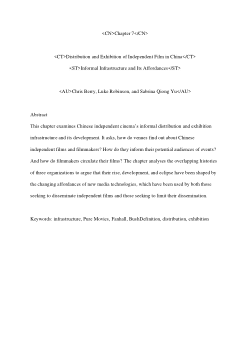
Dr. Luke Robinson is an Associate Professor in Film Studies at the University of Sussex's School of Media, Arts and Humanities, where he has been since 2014. Previously, he taught at the University of Nottingham's Department of Culture, Film and Media. He holds a BA from the University of Cambridge, an MA and PhD from SOAS (University of London), and a certificate from the Hopkins-Nanjing Center. His research focuses on Chinese independent cinema, film festivals as sites of cultural translation, and the global circulation of documentary media. Robinson is co-editor of influential volumes like Chinese Independent Cinema and Chinese Film Festivals , and his work bridges cultural studies, visual anthropology, and media policy analysis. He maintains the Chinese Independent Film Archive and has published widely on topics ranging from Taiwanese subimperialism to the cultural politics of Sundance and CNEX. His teaching spans global cinema studies, film festival curating, and East Asian media aesthetics. Education: BA, History, University of Cambridge MA, Chinese Studies, School of Oriental and African Studies (SOAS), London PhD, Film and Media Studies, SOAS Certificate in Chinese Studies, The Hopkins-Nanjing Center Research Themes: Chinese independent film ecosystems, transnational film festival circuits, documentary as public culture, and the intersection of politics with audiovisual media. Recent work examines humanitarian intervention narratives in documentaries and the evolving role of non-state cultural agents in soft power dynamics.