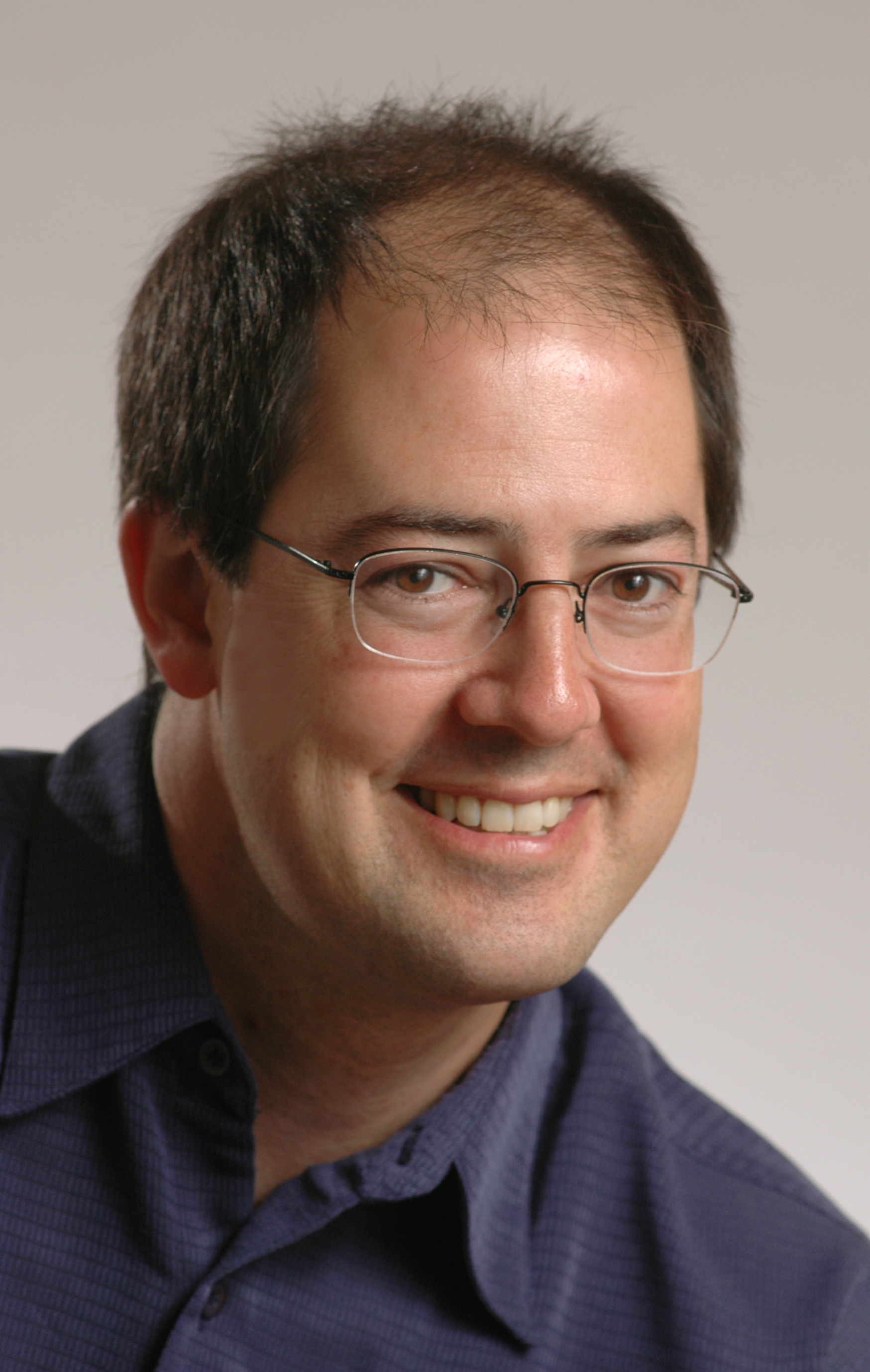
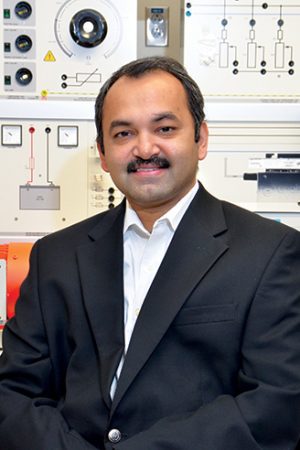
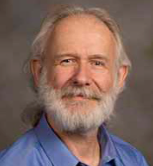
Kristofer Pister is a Professor in the Department of Electrical Engineering and Computer Sciences at the University of California, Berkeley. He co-directs the Berkeley Sensor and Actuator Center (BSAC) and the Ubiquitous Swarm Lab. His career spans groundbreaking innovations in Micro/Nano Electro Mechanical Systems (MEMS), Control Systems, and Low-Power Circuits, with a focus on Smart Dust and synthetic insects. Education: Ph.D. and M.S. in EECS from UC Berkeley (1992, 1989); B.A. in Applied Physics from UC San Diego (1986). His research areas include MEMS , Control Systems , Robotics , and Integrated Circuits , with recent work on self-powered micro-sensors, crystal-free radios, and interplanetary swarm networks. Key awards include the ISA Albert F. Sperry Founder Award (2009) , Alexander Schwarzkopf Prize (2006) , and the NSF CAREER Award (1996) . He has authored numerous influential publications in wireless sensor networks and microrobotics. His lab, Ubiquitous Swarm Lab , explores distributed robotics and swarm intelligence. Pister emphasizes open collaboration in research, ethical conduct in academia, and efficient resource utilization for graduate students.
Frede Blaabjerg is a Professor at Aalborg University (AAU Energy) , affiliated with the Faculty of Engineering and Science . Since 1998, he has pioneered power electronics research in applications such as wind turbines , photovoltaic (PV) systems , reliability engineering , and Power-2-X technologies. Education : PhD in Electrical Engineering (1995, Aalborg University) Honorary Degrees : Honoris Causa at University Politehnica Timisoara (2017) and Tallinn Technical University (2018) His research focuses on power electronics control , system optimization , and reliability for renewable energy and electric mobility . Recent work includes grid-forming converters , virtual synchronous generators , and smart EV charging systems. Key publication trends span 15+ years , with over 3,733 peer-reviewed articles and 900+ journal papers in power electronics , renewables , and energy storage . Notable book series: Control of Power Electronic Converters and Systems (4 volumes, Elsevier). Scientific Awards : 46 IEEE Prize Paper Awards 2020 IEEE Edison Medal 2019 Global Energy Prize 2014 IEEE William E. Newell Power Electronics Award Leadership Roles : Editor-in-Chief, IEEE Transactions on Power Electronics (2006–2012) Chairman, Danish Council for Research and Innovation Policy (2020–) President, IEEE Power Electronics Society (2019–2020)
Dr. Madhav Manjrekar is an Associate Professor in the Department of Electrical and Computer Engineering at the University of North Carolina at Charlotte. He earned his Ph.D. from the University of Wisconsin–Madison in 1999. His research focuses on power electronics applications in utility systems, renewable energy interfaces, and cybersecurity of electricity infrastructure. Key areas include power quality improvement in microgrids, high-voltage direct current (HVDC) transmission, and advanced electrical machine design for electric vehicles and wind energy systems. His work emphasizes innovative solutions for energy storage integration, grid resiliency, and fault-tolerant power systems. Recent publications highlight advancements in DSTATCOM for microgrids, solid-state circuit breakers, and doubly salient electrical machines. He has contributed to projects like the US-Caribbean Super Grid and HVDC interconnectors for offshore renewable energy. Dr. Manjrekar’s research also addresses cybersecurity vulnerabilities in power infrastructure and explores next-gen semiconductor technologies like SiC MOSFETs. His interdisciplinary approach bridges power electronics, machine design, and grid stability, with applications in both academic and industry settings.
Professor Grahame Holmes is an Honorary Professor in the School of Engineering at RMIT University, Australia. His expertise spans electrical energy conversion, smart energy systems, renewable energy integration, power electronics, and grid infrastructure. He focuses on advancing technologies for sustainable energy storage, grid stability, and high-efficiency power conversion. Research Interests : Electrical and Electronic Engineering, Communications Technologies, Power Electronics, Renewable Energy Systems, and Grid Integration Solutions. His work emphasizes practical applications such as hydrogen energy storage systems, grid-interactive inverters, and modular multilevel converters. Recent Contributions : Prof. Holmes has published extensively on topics like advanced PWM techniques, resonant current controllers, and DC transformer designs. His research bridges theoretical advancements with real-world implementations, addressing challenges in smart grid stability and high-frequency power conversion. Advising & Grants : Supervised projects include 'Hydrogen Energy Storage System for Nanogrid' (2015) and 'Synchronised Control of Grid-Interactive Inverters' (2015). While specific grant details are not listed, his work aligns with major themes in sustainable energy research. Labs & Collaborations : Engages in collaborative research through RMIT's facilities, focusing on hardware-software co-simulation frameworks and FPGA-based real-time systems.
Gabriel Alfonso Rincon-Mora is the Motorola Solutions Foundation Professor at the Georgia Institute of Technology's School of Electrical and Computer Engineering. A Fellow of the National Academy of Inventors, IEEE, and IET, he specializes in analog/power integrated circuits, energy-harvesting systems, and microelectronics. With over 200 articles, 44 patents, and 12 books, his work has produced 26 commercial power-chip products. His research spans: Analog and power-management ICs for efficient energy conversion Self-sustaining microsystems powered by thermal, mechanical, and environmental sources Nano-scale circuit designs for biomedical and wireless sensor applications Recent publications focus on piezoelectric energy harvesting, battery charging optimization, and low-power CMOS designs, demonstrating consistent innovation in power efficiency and miniaturization. Awards include the IEEE Charles A. Desoer Technical Achievement Award, National Hispanic in Technology Award, and recognition as one of "The 100 Most Influential Hispanics." He directs research in power IC design and mentors students through the Georgia Tech Analog Consortium. His laboratory develops integrated solutions for energy-constrained applications, including collaborations with industry partners like Texas Instruments.
Dr. King Man Siu is an Assistant Professor in the Department of Electrical Engineering at the University of North Texas, College of Engineering. He established the Power Electronics and Renewable Energy (PERE) Lab in February 2022, focusing on power electronics technologies for renewable energy, smart grids, and electric vehicle applications. University: University of North Texas School: College of Engineering Department: Electrical Engineering Research Interests: Dr. Siu specializes in power electronics, renewable energy systems, and smart grid technologies. His work addresses challenges in: Efficient energy conversion for solar and battery systems Grid integration of electric vehicles and renewable sources Advanced inverter design for residential and industrial applications Reduction of magnetic components in power converters Reactive power management and circuit breaker development Modular solutions for DC distribution and rural electrification Publication Trends: His research emphasizes optimizing power electronics through innovative topologies (e.g., Manitoba inverters, interleaved totem-pole converters) and materials (e.g., SiC MOSFETs). Key areas include energy efficiency in photovoltaic systems, smart grid stability, and DC microgrid interconnection strategies. Contact: Email: Kingman.Siu@unt.edu Office: Discovery Park B233
Marta Molinas is a Professor at the Department of Engineering Cybernetics within the Faculty of Information Technology and Electrical Engineering at the Norwegian University of Science and Technology (NTNU). Her research spans multiple interdisciplinary domains with a focus on EEG technology and brain-computer interfaces. She actively supervises numerous Master's projects and maintains extensive international collaborations with institutions including Kavli Institute for Systems Neuroscience, RIKEN Center for Brain Science, University of Tsukuba, Juntendo University, and several European universities. Professor Molinas' research interests center on developing innovative EEG technologies, particularly her FlexEEG concept for reduced-channel EEG systems with brain imaging capabilities. Her work integrates signal processing, artificial intelligence, and neuroscience to create practical applications in mental health, sleep research, neurorehabilitation, and human-computer interaction. She specializes in EEG source imaging, machine learning for brain signal analysis, and the development of brain-computer interfaces for various applications including locked-in syndrome communication, ADHD treatment, and driver monitoring systems. Her publication portfolio demonstrates strong trends in interdisciplinary research combining neuroscience with electrical engineering and artificial intelligence. The work shows particular emphasis on developing practical EEG-based systems that minimize invasiveness while maintaining analytical power, with applications spanning healthcare, rehabilitation, and human augmentation. Her research bridges theoretical signal processing with real-world implementations through numerous student projects and international collaborations. Professor Molinas actively supervises a large team of Master's and PhD students across multiple projects, with each project typically requiring two students working collaboratively. Her research is supported through numerous international collaborations with institutions in Japan, India, and Europe, indicating substantial research funding and project leadership. She has developed a pipeline of student projects that build upon previous work, creating a cumulative knowledge base within her research group. She leads the EEG ITK research team at NTNU, which focuses on developing the FlexEEG headset prototype featuring flexible, wireless, dry electrodes designed to move across the scalp. This team works at the intersection of neuroscience, electrical engineering, and computer science, developing applications for sleep research, mental health monitoring, neurorehabilitation, and brain-computer interfaces. The team collaborates extensively with international partners including the Kavli Institute for Systems Neuroscience, the International Institute of Integrative Sleep Medicine at University of Tsukuba, and several engineering departments across Europe and Asia.
Thiago Batista Soeiro serves as a Full Professor with exceptional scholarly impact, evidenced by over 200 research publications and an h-index of 27. His work fundamentally advances power electronics applications in transportation and energy systems, particularly through innovations in electric vehicle infrastructure and sustainable power conversion technologies. Despite the absence of explicit institutional affiliation in source materials, his research permeates critical IEEE journals and conferences. Professor Soeiro's research portfolio centers on: Power converter design for electric vehicle charging systems AI-driven battery health estimation using electrochemical impedance spectroscopy Wireless power transfer optimization for automotive applications High-efficiency topologies for more electric aircraft Hydrogen energy system integration Advanced semiconductor utilization in grid-connected systems Analysis of his 2023-2025 publications reveals accelerating innovation in wide-voltage-range converters, predictive battery management, and fault-tolerant power systems. His work increasingly bridges machine learning with power electronics, notably through computation-light AI models for battery diagnostics, while maintaining strong focus on practical implementation challenges in EV charging and aircraft electrification. No scientific awards or honors were documented in the available materials. Similarly, information regarding student supervision, research grants, laboratory facilities, or collaborative teams was not provided in the source texts.
Antonello Monti is a Professor and Director of the Institute for Automation of Complex Power Systems at RWTH Aachen University. His research focuses on modern power systems, including smart grid technologies, hybrid AC-DC grids, and quantum computing applications in energy systems. Recent publications demonstrate innovations in grid resilience, EV charging optimization, quantum-assisted power system planning, and advanced simulation techniques. His team develops open-source tools like JuliaGrid for power system analysis and validates concepts through real-time testing platforms. Research addresses energy transition challenges including renewable integration, grid modernization, cyber-physical security, and next-generation optimization methods combining quantum computing with traditional power engineering approaches.
Xiongfei Wang is a Visiting Professor at KTH Royal Institute of Technology in Stockholm, Sweden, and a Digital Futures Fellow. He holds academic leadership roles, including Editor-in-Chief of IEEE Transactions on Power Electronics and chairs in IEEE committees. His research focuses on power electronics systems, stability analysis, and data-driven approaches for energy systems. Previously, he served as a Professor at Aalborg University (2009–2022). His work addresses challenges in power system stability, converter dynamics, and renewable integration. He leads projects like 'Machine Learning for Dynamics Analysis of Power Electronic Systems,' aiming to enhance grid resilience through AI-driven methods. Notable awards include IEEE Fellow (2023), Isao Takahashi Award (2022), and multiple best paper awards. Wang collaborates extensively, organizing conferences and editing journals. His research spans power electronics, grid stability, and smart grid technologies, with a focus on practical applications in energy transition.
Associate Professor Fengling Han is affiliated with RMIT University's School of Computing Technologies in Melbourne, Australia. He holds the rank of Associate Professor since January 2022. His research focuses on complex networks, industrial electronics, AI/machine learning, and network security. Notable contributions include steganography frameworks for healthcare data, sliding mode control for energy systems, and blockchain applications in surveillance and voting systems. His work spans interdisciplinary areas such as renewable energy integration, battery management systems, and privacy-preserving recommendation systems. He has supervised numerous projects, including AI-driven chatbots, medical imaging watermarking, and peer-to-peer energy trading systems. Han's service roles include conference reviewing and committee memberships in international conferences like IEEE and ISMST. Research Interests: His expertise spans electrical engineering, control systems, and AI applications. Key areas include battery management, cybersecurity, and smart manufacturing. Recent projects emphasize Industry 5.0 technologies, blockchain for data integrity, and deep learning for steganalysis. Teaching and Supervision: Teaches network security, data communication, and IT infrastructure. Current supervision includes AI-powered business modeling, medical imaging tampering detection, and renewable energy sharing systems. Over 14 research projects are documented, reflecting his interdisciplinary impact. Awards and Recognition: While specific awards are not listed, his extensive publications (over 150 outputs) and high citation counts (e.g., 119 citations for the Industry 5.0 survey) highlight his scholarly contributions.
Dushan Boroyevich is a University Distinguished Professor at Virginia Tech's Bradley Department of Electrical and Computer Engineering and serves as Deputy Director of the Center for Power Electronics Systems (CPES). He holds adjunct roles at Tsinghua, Xi'an Jiaotong, Zhejiang, and National Cheng-Kung Universities. His research focuses on power electronics systems, including multi-phase power conversion, electronic power distribution, and modular multilevel converters. He pioneered the geometric modeling approach for high-frequency converters and has led over 200 students in generating 1000+ publications and 20 patents. Education: Dipl. Ing. (University of Belgrade, 1976), M.S. (University of Novi Sad, 1982), Ph.D. (Virginia Tech, 1986). Awards include IEEE Fellow, IEEE William E. Newell Award, and election to the U.S. National Academy of Engineering (2014). His CPES leadership has driven global advancements in power electronics integration and modularization. Research emphasizes high-power density, EMI mitigation, and next-gen SiC-based converters. Recent work includes medium-voltage PEBB designs, common-mode noise reduction, and grid-interface systems. He collaborates closely with industry through CPES's 80+ member consortium. Awards: IEEE Fellowships, Owen Distinguished Service Award, European Power Electronics Association Awards Labs/Teams: CPES, Virginia Tech Power Electronics Research Group Grants/Projects: NSF National Engineering Research Center funding, Industry Consortium projects
Dr. Mohammadreza Arani is an Assistant Professor and Canada Research Chair (CRC) in Smart Grid Cyber-Physical Security at Toronto Metropolitan University's Department of Electrical, Computer, and Biomedical Engineering. He joined the university in 2019, bringing expertise in renewable energy, microgrids, and cybersecurity. His research focuses on enhancing smart grid stability, renewable integration, and cyber-physical security. Education: BSc: Sharif University of Technology (2009) MASc: University of Waterloo (2012) PhD: University of Alberta (2017) Research Interests: Arani specializes in cyber-physical security of smart grids, microgrid dynamics, renewable energy systems, and power system stability. His work bridges urban infrastructure needs and advanced energy technologies, emphasizing practical solutions for modern grid challenges. Awards: NSERC Postdoctoral Fellowship (2017–2019) Alberta Innovates Technology Future Student Scholarship (2014–2017) Advising & Collaboration: Arani views graduate students as future colleagues, fostering independent research and collaboration. He emphasizes interdisciplinary approaches and industry-academia partnerships, leveraging Toronto's urban environment for applied research. Labs & Teams: While no specific lab is named, his research benefits from Toronto Metropolitan's facilities and collaboration networks in power systems and cybersecurity.
Daniel C. Ludois is a Professor of Electrical and Computer Engineering at the University of Wisconsin–Madison, College of Engineering, where he also serves as the Research & Innovation Director for the Wisconsin Electric Machines and Power Electronics Consortium (WEMPEC). He holds the distinguished title of Jim and Anne Sorden Professor and is an H.I. Romnes Faculty Fellow, reflecting his leadership in research and education. Dr. Ludois earned his Ph.D. in Electrical Engineering from UW–Madison in 2012 and a B.S. in Physics from Bradley University in 2006. His research focuses on advancing power conversion technologies, particularly through electrostatic machines, capacitive wireless power transfer, wound field synchronous machines, and integrated power electronics. He teaches core courses such as ECE 411 (Introduction to Electric Drives), ECE 711 (Dynamics and Control of AC Drives), and ECE 713 (Electromagnetic Design of AC Machines). Power Electronics Wireless Power Transfer (Capacitive Coupling) Electrostatic Machines (Copper-Free, Steel-Free Motors) Sustainable Electric Machine Design High-Frequency and High-Voltage Power Conversion Brushless Excitation Systems Integration of Inductors and Capacitors His recent publications emphasize high-torque electrostatic machines using dielectric liquids, capacitive power transfer for aerial platforms and rotating machinery, and innovative inverter topologies. These works reflect a strong trend toward sustainable, high-performance electric machines that reduce reliance on rare-earth materials and traditional conductive components. Dr. Ludois has received numerous honors, including: NSF CAREER Award (2015) Moore Inventor Fellowship (2017) DOE InDEEP Competition Phase I & II Awards (2024) H.I. Romnes Faculty Fellow (2023) Vilas Faculty Early Career Investigator Award (2022) Wisconsin Alumni Research Foundation (WARF) Innovation Award (2012) He has mentored a highly entrepreneurial group of students, several of whom have founded startups such as H3X (Forbes 30 Under 30) and C-Motive Technologies, which he co-founded to commercialize electrostatic power conversion devices. His team has secured significant recognition, including multiple Grainger Power Engineering Fellowships and IEEE best paper awards. Dr. Ludois leads a vibrant research lab focused on next-generation power systems, with funding from federal agencies and industry partners, driving innovation in electric transportation, renewable energy, and industrial automation.
Dr. Ahmed Badawy is a Lecturer in Electrical Engineering at Lancaster University's School of Engineering, where he has been serving since 2017. His academic journey includes advanced degrees in electrical engineering and significant research experience in power electronics and renewable energy systems. Dr. Badawy's educational background includes: B.Sc. in Electrical Engineering from the Faculty of Engineering, Alexandria University, Egypt (2008) M.Sc. in Electrical Engineering from the Faculty of Engineering, Alexandria University, Egypt (2012) Ph.D. in Electrical Engineering from the Electric and Electronic Engineering Department at the University of Strathclyde, Glasgow, U.K. (2016) Dr. Badawy's research focuses on power electronics and energy conversion systems, with particular expertise in DC-DC converters, multi-level converters, and electric machines. His work emphasizes digital control of power electronic systems for applications in renewable energy integration, electric vehicles, and power quality improvement. His research has significant implications for sustainable energy systems and transportation electrification. His recent publication record demonstrates a strong focus on electric vehicle power systems, particularly modular converter topologies for on-board charging applications. There's a clear trend toward integrated solutions for EV charging that combine renewable energy sources with grid connectivity. His work also shows significant contributions to control methodologies, including model predictive control and hierarchical control systems for power electronic converters. Dr. Badawy mentors several PhD students working on cutting-edge research in power electronics and renewable energy systems. His research group is actively involved in projects related to sustainable energy conversion and electric transportation. Dr. Badawy is affiliated with Energy Lancaster and the TALOS research group at Lancaster University, where he contributes to interdisciplinary research on sustainable energy systems and power electronics applications.