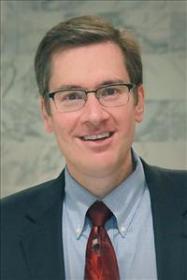
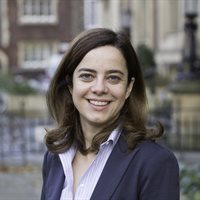
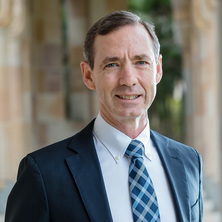
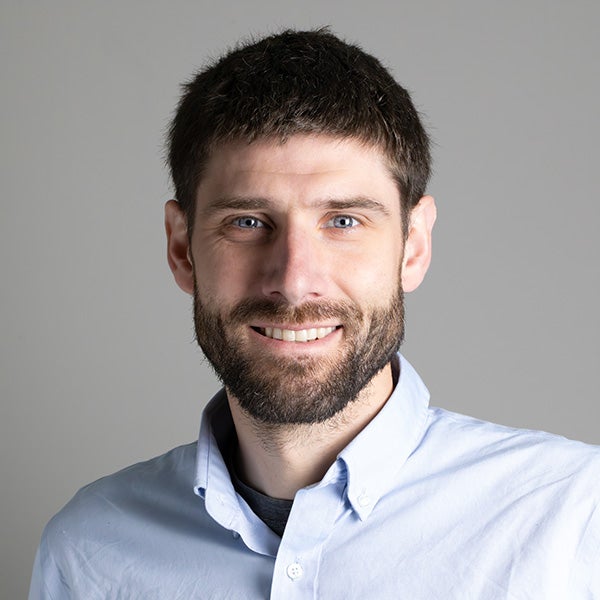
Professor John W. O'Neill is a Professor of Hospitality Management at Pennsylvania State University's School of Hospitality Management. He serves as Director of the Hospitality Real Estate Strategy Group, focusing on real estate, asset management, and strategic management in the hotel industry. His research bridges financial analysis with operational strategies in hospitality. Education : B.S. in Hotel Administration from Cornell University M.S. in Real Estate from New York University Ph.D. in Business Administration from University of Rhode Island O'Neill's research explores hotel financial performance, debt servicing, brand affiliation, work-family dynamics, and market disruption from platforms like Airbnb. His work combines empirical analysis with strategic frameworks to address industry challenges. Leadership and Research Groups : Director, Hospitality Real Estate Strategy Group Active researcher in hotel valuation and operational risk
Ira Joseph is a Researcher at the Center on Global Energy Policy at Columbia University, where he focuses on global energy markets with particular expertise in natural gas and LNG sectors. With over 30 years of experience in the energy industry, his work bridges academic research and practical market analysis. Joseph's research interests span across Energy Markets , Natural Gas , LNG , Energy Policy , Fossil Fuels , and Global Energy Markets . His expertise particularly focuses on pricing mechanisms, market structure, and geopolitical influences on energy commodities. His research combines quantitative market analysis with geopolitical insights to understand how global events impact energy flows and pricing dynamics. His recent publications demonstrate a strong focus on the evolving dynamics of global gas markets, with particular attention to Qatar's LNG strategy, EU's potential role as a gas market regulator, and the implications of arbitration cases on LNG contracts. These works reflect current critical issues in energy transition, market volatility, and the tension between fossil fuel production and climate targets. Before joining Columbia, Joseph held significant leadership positions in the energy analytics industry. Until 2022, he served as global head of global generating fuels and electric power pricing at S&P Global Platts. Prior to that role, he was global head of Gas and Power Analytics at Platts. He joined S&P Global Platts during the acquisition of PIRA Energy Group in 2016, where he had founded the firm's European Gas and Power and Global LNG services in 1999. Earlier in his career, he worked at Energy Intelligence Group as editor in chief of World Gas Intelligence and authored key industry handbooks.
Philipp Otto is a Professor of Statistics and Data Science at the University of Glasgow. Previously, he was a Reader in Statistics and Data Analytics (2023–2024) and held a Junior Professorship in Big Geospatial Data at Leibniz University Hannover (2018–2023). He earned his PhD in Statistics (summa cum laude) from European University Viadrina in 2016 and a B.Sc. in International Economics, with study visits to Saint Petersburg State University. His research focuses on spatial and spatiotemporal statistics, environmetrics, network modeling, and machine learning applications. Education: PhD in Statistics (2016), European University Viadrina, Frankfurt (Oder) B.Sc. in International Economics (with study visits to Saint Petersburg) Research Interests: Philipp’s work centers on spatial statistics, spatiotemporal volatility modeling, environmental data analysis, and network processes. He develops statistical methods for geo-referenced and network data, with applications in climatology, finance, and environmental risk assessment. His contributions include advancements in GARCH models, spatiotemporal clustering detection, and statistical process monitoring for AI systems. Grants & Projects: He has secured €1,038,847 in research grants, leading projects on historical map time series analysis, agricultural air quality impacts, and high-dimensional spatial dependence structures. Industry collaborations include survival analysis for building information models. Awards: 2017 Fellowship to attend the Lindau Nobel Laureate Meeting (Economic Sciences) 2017 Best Presentation Award (Data Science, Statistics, and Visualisation) Teaching: He teaches statistics and data science across disciplines, including economics, engineering, and mathematics, at both undergraduate and postgraduate levels. Professional Activities: Editorial Boards: Environmetrics (2021), AStA Advances in Statistical Analysis (2020) Member of German Statistical Society (Treasurer, 2013)
Prof. Zoltán Károly Lakner is a Professor at the Hungarian University of Agriculture and Life Sciences, affiliated with the Department of Agricultural and Food Economics. His research focuses on applying dynamic systems theory, econometrics, and artificial intelligence to analyze food supply networks, agricultural policy, and socio-economic systems in Africa and Central Asia. Key areas include big-data modeling of complex systems, game-theory applications, and open-source intelligence tools in innovation policy. He leads the SafeConsume H2020 project, developing strategies to mitigate foodborne illness risks through consumer education and prototype tools. His work spans food policy analysis, climate change impacts on agriculture, and ethical food consumption behaviors. Education details not explicitly provided in text. Research interests emphasize quantitative methods in agricultural economics, econometrics-driven policy analysis, and interdisciplinary approaches to global food challenges. Recent publications explore bioenergy expansion effects, water tax policy implications, and post-Paris Agreement green finance trends. No scientific awards explicitly stated in the text. Grants include the Horizon 2020 SafeConsume project. Active in advising and mentoring, though specific student names are not listed. Affiliated with the Szént István Campus in Gödöllő, contributing to institutional research and policy initiatives.
Maria Correia is a faculty member in the Department of Accounting at the London School of Economics and Political Science, where she teaches AC416 Topics in Financial Reporting and maintains office hours by appointment. Her research focuses on credit markets, default prediction, business groups, and corporate governance, with publications in leading accounting and finance journals. Her research examines: Credit risk assessment methodologies and bankruptcy prediction models Corporate governance structures within business groups Impact of accounting standards on corporate investment decisions Regulatory effects on disclosure credibility in emerging financial platforms Dr. Correia's recent publications demonstrate a consistent focus on financial distress prediction, corporate governance mechanisms, and regulatory impacts in accounting. Her work combines empirical finance with accounting theory to address practical challenges in credit markets and corporate reporting. She has received numerous honors including: 2022 Excellence in Refereeing Award (Journal of Accounting Research) 2020 Best Referee Award (Review of Accounting Studies) LSE Excellence in Education Awards (2018, 2019) Best Paper Award at Review of Accounting Studies Conference (2011) Multiple doctoral fellowships at Stanford Graduate School of Business Her research has been supported by grants from London Business School (RAMD Awards 2009-2013, 2013-2015) and the Portuguese Foundation for Science and Technology (2013). She serves on editorial boards of Accounting Review, Journal of Business Finance & Accounting, and Review of Accounting Studies, while acting as Associate Editor for Accounting and Business Research and European Accounting Review.
Professor Shaun Bond is the Frank Finn Professor of Finance at the UQ Business School, University of Queensland. He has held prior positions as the West Shell Professor of Real Estate at the University of Cincinnati (Director of the UC Real Estate Center) and as a lecturer at the University of Cambridge’s Department of Land Economy. He has also served as a visiting professor at Pennsylvania State University and George Washington University. Education: PhD and MPhil in Economics from the University of Cambridge; Bachelor of Economics (First Class Honours) from the University of Queensland. Research Interests: Real estate finance, financial economics, investment and risk management, and financial econometrics. Publications: Over 33 works including 28 journal articles, 2 book chapters, and 2 conference publications, focusing on real estate markets, financial forecasting, and ESG integration. Funding: Current Macoun Research Scholar Program (2021–2025); recent grants from Queensland Government and QIC Limited for short-term rental regulation and investment management research. Supervision: Available for PhD supervision in real estate asset pricing and financial market sentiment.
Milica Luković is an Associate Professor at the Faculty of Hotel Management and Tourism (University of Kragujevac). Her career spans roles in Natural Resource Management , Ecotourism , and Food and Beverage Management , with a focus on sustainable practices. Education: BSc in Biology, University of Belgrade (2008) MSc in Agriculture, University of Belgrade (2011) PhD in Agriculture, University of Belgrade (2019) Research interests center on sustainable tourism , nature conservation , ethnobotany , and ethnogastronomy , particularly in the context of rural development and biocultural heritage. Her work integrates ecological studies with tourism frameworks for environmental stewardship. Recent publications (2022–2025) explore topics like halophytic vegetation , regenerative tourism in biosphere reserves, and traditional food products in pandemic-era tourism. These span disciplines including Food Science , Ecosystem Services , and Environmental Management . Projects include collaborations with The Rufford Foundation on coastal and saline ecosystem conservation and UNESCO-MaB initiatives related to climate change and biosphere reserves.
Brandon Schmandt is a Professor in the Department of Earth, Environmental and Planetary Sciences at Rice University, where he leads research using seismology to investigate Earth systems. His work integrates interdisciplinary approaches, data science, and numerical modeling to study tectonic processes, magmatic systems, and environmental interactions. His educational background includes a PhD in Geological Sciences from the University of Oregon (2011) and a BA in Environmental Studies from Warren Wilson College (2006). Dr. Schmandt's research focuses on seismology, tectonics, volcanology, and surface processes , with emphasis on seismic imaging of subsurface structures. His group employs innovative time-series analysis and field projects to resolve geologic history and contemporary Earth dynamics, particularly examining fault zones, magmatic reservoirs, and deep convective processes. Key methodologies include dense seismic arrays and machine learning applications. Analysis of his recent publications (2023-2025) reveals dominant trends in seismic event discrimination (earthquakes vs. explosions), magmatic system imaging (Yellowstone, Cascades), and global mantle structure studies. There is strong emphasis on induced seismicity, machine learning applications, and high-resolution imaging of Earth's discontinuities using dense arrays. His distinguished honors include: Aki Award of the AGU Seismology Section GSA Donath Medal AGU Macelwane Medal Body Dr. Schmandt directs an active research group conducting field projects across diverse settings including the Raton Basin, Yellowstone, Antarctica, and the Caribbean. While specific student advisees and grant details aren't provided in available materials, his group's work involves collaborative data collection, advanced computational modeling, and development of novel seismic analysis techniques applicable to both natural and anthropogenic seismic sources. The research program maintains focus on magmatic systems beneath volcanic regions, induced seismicity mechanisms, and global mantle structure using dense node arrays and interdisciplinary approaches to address fundamental questions in Earth dynamics.
Dr. Kaiqun Fu is an Assistant Professor in the McComish Department of Electrical Engineering and Computer Science at South Dakota State University (SDSU). He holds a Ph.D. and M.S. in Computer Science from Virginia Tech (2021 and 2016). His research focuses on spatial data mining, spatiotemporal event analysis, graph neural networks, and urban computing applications such as traffic impact prediction and social media-driven insights. He also explores physics-informed machine learning for power systems and interdisciplinary topics like 'deaths of despair' in rural areas. Education: Ph.D. in Computer Science, Virginia Tech, 2021 M.S. in Computer Science, Virginia Tech, 2016 Research Interests: His work emphasizes machine learning and deep learning applications in spatial-temporal domains, including: Graph neural networks for traffic incident prediction Social media analysis for urban challenges Physics-informed models for power grid stability Citation forecasting in scientific publications Grants & Projects: NSF CRII ($174,734): Spatiotemporal impacts of traffic events via graph neural networks (2024–2026) NSF EAGER ($300,000): Socio-economic impacts of emerging technologies (2024–2026) SDSU RSCA ($10,118): Graph transformer-based location learning (2023–2024) Professional Involvement: He chairs ACM SIGSPATIAL's SRC committee, serves on SDSU's Computer Science curriculum committees, and is an IEEE member. He co-edits Frontiers in Big Data and advises on interdisciplinary projects like climate-impacted grid security (NSF RII Track-2, $750,000). Labs/Teams: Collaborates with interdisciplinary groups focusing on smart cities, data-driven infrastructure resilience, and GeoAI applications.
Lindsey Gallo is the Coopers and Lybrand, Norman E. Auerbach Assistant Professor of Accounting at the Ross School of Business, University of Michigan. Her research focuses on the intersection of firm-level information with macroeconomic trends, corporate governance, and financial reporting practices. She holds a Ph.D. from the University of Maryland's Smith School of Business and dual degrees (BBA and MAcc) from the University of Michigan’s Ross School of Business. A former NCAA champion in track and field, her academic excellence is complemented by teaching awards. Education: Ph.D. in Accounting, University of Maryland (2014) MAcc, University of Michigan (2005) BBA, University of Michigan (2004) Her research explores how corporate disclosures and governance structures influence macroeconomic uncertainty, with publications in top journals like Journal of Accounting Research and Review of Accounting Studies . She serves on the editorial board of The Accounting Review and is recognized for teaching excellence, receiving the Neary Teaching Excellence Award in 2021 and 2023. Her recent work addresses topics such as government-appointed corporate monitors, inflation news processing, and supply chain transparency, reflecting her expertise in bridging accounting practices with broader economic and governance frameworks. She actively contributes to academic discourse through editorial roles and peer reviews. Awards: Neary Teaching Excellence Award (2021, 2023) Gallo advises on curriculum development for the MBA and Master of Accounting programs at Ross, emphasizing practical applications of accounting principles. Her research frequently intersects with real-world policy implications, particularly in regulatory oversight and investor behavior analysis.
Michel Leseure serves as a Senior Lecturer in Mechanical Engineering within the School of Electrical and Mechanical Engineering at the University of Portsmouth, where he is affiliated with the Centre for Operational Research and Logistics and Centre of Operational Research and Decision Analysis. As an active PhD Supervisor accepting new doctoral candidates, he contributes to both academic instruction and research supervision in technology-focused programs. His research centers on evolutionary analysis of technical systems, notably applying cladistics (a biological classification method) to manufacturing systems. Additional expertise spans engineering economy, real options theory, and scenario analysis, with recent expansion into sustainable operations management, microgrid optimization, and renewable energy integration. His work bridges industrial engineering with environmental sustainability through lean methodologies and strategic decision frameworks. Analysis of his 2023-2025 publications reveals dominant themes in collaborative microgrid systems, where he pioneers approaches to mitigate renewable energy volatility using lean-heijunka strategies and precontracted order mechanisms. His research consistently addresses supply chain resilience, policy impacts on manufacturing investment, and sustainability-performance trade-offs across energy and industrial sectors. Leseure actively mentors doctoral researchers through the Centre for Operational Research and Logistics, focusing on operational decision-making in energy systems and sustainable manufacturing. His collaborative projects frequently involve international researchers, particularly with H. Feleafel and J. Radulovic, examining microgrid economics and supply chain adaptability under turbulent conditions.
Eli Bartov is a Professor of Accounting at the Leonard N. Stern School of Business, New York University, where he has been a faculty member since 1992. He holds a Ph.D. in Accounting from the University of California, Berkeley, and a B.A. in Accounting and Economics from Tel Aviv University, along with a CPA designation. Ph.D., Accounting, University of California, Berkeley, 1989 B.A., Accounting and Economics, Tel Aviv University, 1977 CPA, 1979 His research focuses on financial reporting, executive compensation, forensic accounting, earnings management, equity valuation, and the role of social media in capital markets. He has published extensively in top-tier journals, exploring topics such as the predictive power of Twitter on earnings, post-earnings announcement drift, and the economic implications of executive stock options. His work bridges theoretical and empirical perspectives in accounting and finance. His recent publications show a strong trend in leveraging alternative data sources like social media to understand investor behavior and market efficiency, while maintaining a deep engagement with core accounting issues such as disclosure quality, fraud detection, and valuation. His interdisciplinary approach combines accounting, finance, and information systems. AAA/AICPA Notable Contributions to Accounting Literature Award (2022) Stern's Executive MBA Great Professor Award (2014–2019) Stern's Executive MBA Excellence in Teaching Award (2010) Professor Bartov has served as the coordinator of the Accounting Ph.D. Program (2001–2010) and teaches courses at the MBA, EMBA, and Ph.D. levels, including financial statement analysis and empirical research in financial accounting. He has advised doctoral students and contributed to academic leadership. He has also been an expert witness in high-profile legal cases, including the New York civil fraud trial against Donald Trump, where he testified on accounting standards and the absence of fraud. His research has practical implications for regulatory bodies (SEC, FASB, PCAOB) and corporate governance. He has collaborated with researchers across institutions and has contributed to both academic literature and public discourse on accounting integrity and market efficiency.
David Hartzell is the Steven D. Bell and Leonard W. Wood Distinguished Professor of Finance at the Kenan-Flagler Business School, University of North Carolina at Chapel Hill. He specializes in real estate finance, private equity, and institutional investment strategies. As director of the Leonard W. Wood Center for Real Estate Studies, he oversees academic and practical initiatives in real estate education and research. He advises the UNC Real Estate Investment Fund, a student-managed private equity fund, and holds board roles at Highwoods Properties and multiple academic and corporate entities. Educational Background: PhD from UNC-Chapel Hill; MA and BS from University of Delaware His research focuses on global real estate investment strategies, portfolio construction, and the performance of real estate private equity. He co-authored Global Property Investment: Strategies, Structures, Decisions , widely adopted in academic curricula. His work bridges academic research and industry practices, with extensive consulting experience for firms like Heitman Capital Management and Salomon Brothers Inc. Key contributions include analyzing real estate volatility in global markets (e.g., Hong Kong), financial flexibility in REITs, and the role of mezzanine finance in commercial real estate. His articles span topics from beta asymmetries to land-use regulations in metropolitan areas. Professional Roles: Board member at Highwoods Properties, AREUEA president (2000), former associate dean for MBA Programs He leads the Real Estate Program at Kenan-Flagler, emphasizing hands-on learning through student funds and industry collaborations.
Klaus Abberger is a Researcher at the KOF Business Tendency Surveys unit of the KOF Swiss Economic Institute , affiliated with ETH Zurich . His work focuses on business cycle analysis , composite economic indicators , and policy uncertainty impacts on investment and inflation expectations. He has developed methodologies for partial least squares modeling and real-time economic simulations , including the Global Economic Barometers for tracking worldwide output growth. His research frequently incorporates economic tendency survey data from multiple countries, with applications in Swiss business cycles and data-scarce regions like Abu Dhabi. Collaborations with scholars such as Jan-Egbert Sturm and Michael Graff highlight his expertise in composite indicator design and economic forecasting during crises like the Covid-19 pandemic and energy shortages . Abberger's publications span journals including Review of World Economics and European Economic Review , alongside contributions to KOF Studies and KOF Analysen . His work addresses policy uncertainty effects , inflation expectation pass-through , and compositional data analysis in economic contexts.
Dr. Diana Tunaru is a Lecturer in Finance at Kent Business School , University of Kent, with expertise in empirical finance and quantitative methods. Her research focuses on dynamic financial modeling and forecasting, particularly in interest rate structures and volatility spillover effects. Education: Diploma in Mathematics (University of Craiova), Master in Banking and Finance (Middlesex University), PhD in Finance (University of Westminster) Research Interests include multi-factor continuous-time models, Gaussian estimation techniques, and the analysis of financial variables like interest rates, equities, and derivatives during economic distress. She applies her industry experience in investment banking to bridge theoretical and practical finance. In publications , Diana has explored topics ranging from agricultural commodity forecasting to green finance, with recent work emphasizing sustainability-driven portfolio performance and market interconnectedness. Her methodological focus on statistical accuracy tests and spillover effects reflects her commitment to advancing financial modeling. Teaching: Quantitative Methods for Finance, Introduction to Econometrics, Financial Investments, Economics of Financial Markets Diana serves as Senior Tutor at Kent Business School (Medway campus) and contributes to postgraduate education through her supervision of undergraduate dissertations on empirical finance and financial time series analysis.