Andrew R. Gibson is a Professor and Head of the Biomedical Applied Plasma Technology research group at Ruhr-Universität Bochum , Germany. His work bridges plasma physics with biomedical applications, using surface dielectric barrier discharges for environmental remediation and water treatment. He is affiliated with the Faculty of Electrical Engineering and Information Technology. Department: Biomedical Applied Plasma Technology Email: gibson@aept.rub.de Research interests focus on plasma chemistry, biomedical plasma technology, and environmental engineering. His team investigates reactive oxygen/nitrogen species (ROS/RNS) generation, gas-liquid interactions, and plasma-based pollution control systems. Recent publications (2025-2023) analyze flow field dynamics in DBDs, radical transport mechanisms in plasma-treated water, and advanced diagnostics for low-pressure inductively coupled plasmas. These studies often integrate experimental and computational approaches. Laboratory : Leads the Biomedical Applied Plasma Technology group, developing scalable plasma systems for VOC conversion and microbial inactivation (e.g., B. subtilis spores).
Peter Irga is a Senior Lecturer and ARC DECRA Fellow at the University of Technology Sydney's School of Civil and Environmental Engineering, Faculty of Engineering and Information Technology. He is globally recognized as a leader in nature-based biological air treatment technologies, particularly green wall systems (Phytosystems), with current worldwide ranking #1 in his research topic (SciVal Topic T.37087). Dr Irga's research focuses on innovative nature-based solutions for urban air pollution challenges, including phytoremediation technologies, biosolar green roofs, and agrivoltaics. His work bridges environmental engineering with practical urban applications, examining the performance of nature-based systems in real-world settings to quantify their value and identify development opportunities. His research demonstrates how living infrastructure provides cities with natural beauty while improving human health and wellbeing, addressing UN Sustainable Development Goals 11 (Sustainable Cities), 13 (Climate Action), 15 (Life on Land), and 3 (Good Health). His research portfolio includes 80+ publications with an H-index of 30 and $5.21M in research income, including ARC funding. Industry recognition includes $4.54M in high-level consultancies. His work spans multiple disciplines including atmospheric science, environmental engineering, and sustainable materials development, with particular emphasis on practical implementation of green infrastructure solutions in urban settings. Tall Poppy Science Award (2022) from the Australian Institute of Policy and Science ARC DECRA Fellow (2021-2024) Chancellor's Postdoctoral Research Fellow (2018-2021) Dr Irga actively supervises Masters and PhD students and coordinates Postgraduate Environmental Engineering and Water Engineering programs. His funded research includes Sustainable High-Performance Transitory Structures using Biobased Materials (2025-2026), Bradfield Green and Bio-Solar Roof Monitoring (2025), and Plantabox for Targeting the Urban Heat Island Challenge (2024-2025). He collaborates with industry partners including Junglefy, Ambius, Bradfield Development Authority, and City of Sydney.
Samo Smrke is a Researcher at the ZHAW School of Life Sciences and Facility Management, specializing in the Coffee Competence Centre and Analytical Technologies. His work focuses on advancing coffee science through projects like the SCA Coffee Expertise Program and collaborations with industry leaders such as Nespresso and Julius Meinl. He has led multiple research initiatives including studies on coffee freshness, roasting effects, aroma release mechanisms, and packaging technologies. Smrke's research interests span coffee chemistry, analytical techniques, and sensory analysis. He has published extensively on topics such as degassing kinetics of roasted coffee, antioxidant generation during roasting, and aroma modulation in instant coffee products. His work often employs advanced methods like proton transfer reaction mass spectrometry (PTR-MS) and gravimetric analysis. He is a co-author of influential books including The Coffee Freshness Handbook and The SCA Water Quality Handbook , which provide foundational knowledge for industry professionals. Smrke’s projects frequently bridge academic research with practical applications, addressing challenges in coffee production, storage, and quality assurance.
Professor Andrew Johnson at the University of Bath is a leading researcher in materials chemistry for energy applications , specializing in precursor design for advanced thin film growth techniques including Chemical Vapour Deposition (CVD) and Atomic Layer Deposition (ALD) . His work spans sustainable technologies, graphene science, and nanoparticle synthesis, with a focus on enabling next-generation electronics and climate solutions. Department of Chemistry, University of Bath Centre for Sustainable Chemical Technologies (CSCT) Institute of Sustainability and Climate Change Collaborations with University of Leeds, University of California Davis, and industry partners like Pragmatic Printing Research Interests: Development of volatile, non-toxic molecular precursors for metals/oxides ALD/CVD of metastable materials (e.g., SnO, α-Fe2O3) Carborane chemistry for early transition metals and lanthanides Surface engineering for automotive lubricant alternatives Photoanodes for solar water splitting Flexible electronics with sustainable materials Collaborations & Grants: Funded by EPSRC and Innovate UK , with projects on low-power flexible electronics and complementary semiconductor systems. Collaborates with physics, chemical engineering, and industry partners for mechanical property testing and device fabrication.
Carol Pollock is a Professor at the University of Sydney's Northern Clinical School , affiliated with the Kolling Institute of Medical Research . Her research focuses on diabetic kidney disease, chronic kidney disease (CKD) management, and maternal-fetal programming of renal health. Thematic areas: Obesity, Diabetes, Cardiovascular Disease , Healthy Ageing , and Lifespan Methodological approaches: Animal models , Cellular/molecular studies , and Translational research Clinical specialty: Nephrology Her work explores epigenetic mechanisms in maternal obesity-related kidney disease, SGLT2 inhibitors for cardiorenal protection, and novel biomarkers like urinary exosomes and volatile organic compounds. Recent studies emphasize intergenerational metabolic programming and renoprotective drug development . Key publication trends (2023-2025) include: Diabetic nephropathy (2025: SGLT2 inhibitors, YAP1 pathways) CKD progression (2024: DISCOVER cohort, hyperkalemia management) Maternal environmental impacts (2025: PM2.5 exposure, fetal kidney health) Renal fibrosis (2023: i-body AD-214, CXCR4 blockade) Translational nephrology (2024: urinary cell imaging, exosome therapy) Global CKD guidelines (2024: Asia-specific management frameworks) Her team mentors PhD students Daisy Chen, Wenyang Shi, and Chi Tran, investigating stem cell therapies and renal regeneration in diabetic and acute kidney injury models.
Timo Hytönen is a Professor in the Department of Agricultural Sciences at the University of Helsinki's Faculty of Agriculture and Forestry. He holds a Docentship in the same department and is an integral member of the Viikki Plant Science Centre (ViPS). His academic leadership extends to supervising doctoral students across three major programs: Sustainable Use of Renewable Natural Resources, Integrative Life Science, and Plant Sciences. Additionally, he maintains an external position as Principal Research Scientist at NIAB EMR in Genetic Genomics & Breeding since November 2018. Professor Hytönen's research interests span plant genetics, molecular biology, and crop production sciences with a specialized focus on berry crops, particularly strawberries. His work investigates fundamental plant processes including flowering time regulation, environmental adaptation mechanisms, fruit development, and disease resistance. His research integrates genomic, transcriptomic, and epigenetic approaches to understand how plants respond and adapt to environmental challenges. His extensive publication record (88 publications) reveals a strong focus on woodland strawberry (Fragaria vesca) as a model system for studying economically important traits in berry crops. Recent work demonstrates expertise in QTL mapping, genome-wide association studies, circadian rhythm adaptation, and the genetic basis of climate adaptation. His research shows consistent emphasis on translating basic science into practical applications for crop improvement. Professor Hytönen leads significant research projects including 'Mansikan vihreä vallankumous' (Strawberry Green Revolution) funded by the Academy of Finland and 'ASTROS: How meristems guide plant reproductive development' supported by the Jane and Aatos Erkko Foundation. He is also a Principal Investigator in the Viikki Plant Science Centre (ViPS), a major collaborative research infrastructure. His academic service includes extensive peer review activities (37 manuscript reviews), hosting academic visitors (32 instances), and participation in numerous conferences and seminars. He has provided guidance to graduate students and supervised doctoral candidates, contributing significantly to the training of next-generation plant scientists.
Erik Hjalmarsson is a Professor of Banking and Financial Economics at the Department of Economics, University of Gothenburg. He holds the Felix Neubergh Chair and previously served as Director of the Centre for Finance. His research focuses on empirical asset pricing, financial econometrics, and long-run stock returns. Hjalmarsson earned his PhD from Yale University and has held roles at the Federal Reserve Board and Winton Capital Management. Education: PhD (Yale University, 2005), M.Sc. in Econometrics (London School of Economics, 2000), B.Sc. in Mathematical Statistics (University of Gothenburg, 1999). Research interests include stock return predictability, high-frequency trading, and econometric methods. His work has been published in top journals like the Journal of Finance and Journal of Financial Economics . Key grants include funding from the Swedish Research Council and Marianne and Marcus Wallenberg Foundation. Awards include the Carl Anderson Prize (2004) and multiple stipends for doctoral education. He supervises PhD students and advises on central bank policies. His recent studies explore long-horizon returns, inflation expectations, and portfolio strategies. Teaching includes PhD courses in econometrics and financial economics. He serves on editorial boards and as a referee for leading journals.
Professor Chen Xiaodong is a Distinguished University Professor at Nanyang Technological University (NTU), Singapore, holding primary appointment in the School of Materials Science & Engineering with courtesy appointments in the Lee Kong Chian School of Medicine and School of Chemistry, Chemical Engineering and Biotechnology. He serves as Deputy Director of the Institute for Digital Molecular Analytics and Science (IDMxS) and Director of both the Innovative Centre for Flexible Devices (iFlex) and Max Planck-NTU Joint Lab for Artificial Senses. His research spans mechanomaterials science and engineering, flexible electronics, sense digitalization, cyber-human interfaces and systems, and carbon-negative technology. Professor Chen's work focuses on developing methods for controlling materials architecture at 1-100 nm scale to solve fundamental and applied problems in energy, environment, and healthcare. His group integrates expertise from materials science, chemistry, biology, physics, and engineering to create innovative solutions. His scientific contributions have been recognized through numerous prestigious awards including the Singapore President's Science Award, National Research Foundation Investigatorship and Fellowship, Friedrich Wilhelm Bessel Research Award, Dan Maydan Prize in Nanoscience and Nanotechnology, and election to multiple national academies including Singapore National Academy of Science, Academy of Engineering Singapore, and German National Academy of Sciences Leopoldina. Professor Chen serves as Editor-in-Chief of ACS Nano and sits on editorial boards of numerous prestigious journals including Advanced Materials, Chemical Reviews, and Matter. He has mentored numerous PhD students and research fellows who have gone on to faculty positions at institutions worldwide. His laboratory develops cutting-edge technologies in flexible electronics, bio-inspired materials, and nano-bio interfaces, with strong industry collaborations and translational research focus.
Tom Wenseleers is a Professor at KU Leuven's Department of Biology within the Faculty of Science, where he leads the Laboratory of Socioecology and Social Evolution. His research spans theoretical and experimental approaches to evolutionary biology, with particular focus on social insect systems. Research spans social insects (ants, bees, wasps), microbes, viruses, and human systems Primary model organisms: social insects studying major evolutionary transitions Current projects examine caste determination, chemical communication, and evolutionary conflicts His research integrates theoretical modeling with experimental, behavioral, and comparative studies. Recent work combines genomic techniques and high-throughput GC/MS analysis to decipher chemical communication systems. Current trends show increasing interdisciplinary work spanning virology (SARS-CoV-2 variants), microbial ecology (antibiotic resistance), and robotics (pollinator behavior monitoring). The research demonstrates consistent application of evolutionary theory to diverse biological systems while maintaining social insects as the core model. Wenseleers actively mentors PhD students and postdocs, with recent graduates including Kamiel Debeuckelaere and Viviana Di Pietro. His lab receives substantial funding through multiple concurrent research projects, including Promotor roles on grants examining caste development in bee societies and microbial metabolite screening. The laboratory maintains strong international collaborations across Europe and South America. The lab operates within the Ecology, Evolution and Biodiversity Conservation unit at KU Leuven, with physical location at Naamsestraat 59, box 2466, 3000 Leuven. The research group maintains active outreach programs including science workshops for schools and public engagement events focused on insect conservation.
Kyria Boundy-Mills is a Professional Research Microbiologist at the University of California, Davis in the Department of Food Science and Technology , where she has curated the Phaff Yeast Culture Collection since 2001. She maintains this global resource of 9,000 yeast strains for academic, industrial, and governmental researchers. Current research focuses on yeast/insect ecology Screening yeasts for protein, lipid, and carotenoid production Microbial interactions in food fermentations Applications in biofuels and biotechnology Her publications highlight collaborations across entomology, biotechnology, and food microbiology, with applications in wine fermentation, fruit pests, and biofuel production. Awards include the UC Davis Academic Federation Award for Excellence in Research (2015) and the American Society for Microbiology USFCC/J. Roger Porter Award (2016). She advises undergraduate researchers in her lab and contributes to culture collection management standards through the United States Culture Collection Network. Her work intersects microbial diversity, ecological interactions, and industrial innovation.
Dr. Angelika Niemz is the Finnigan Professor of Applied Life Sciences and Dean of the Riggs School of Applied Life Sciences at Keck Graduate Institute. She holds a PhD in Chemistry from the University of Massachusetts Amherst (1999) and a bachelor's degree from the University of Konstanz, Germany (1992). Her expertise spans medical diagnostics, nucleic acid testing, and infectious disease research. Dr. Niemz has held progressive roles including Assistant Professor (2002), Associate Professor (2008), Director of Research (post-sabbatical 2009), Department Chair (2021), and Associate Dean (2022). Her research focuses on developing point-of-care diagnostic systems for infectious diseases like tuberculosis, Chlamydia, and Dengue fever, integrating isothermal amplification and lateral flow detection technologies. She has secured funding from NIH, NSF, and DoD, and organized a summer undergraduate research program at KGI. Research Interests: Dr. Niemz specializes in translating molecular diagnostics into practical tools for global health challenges. Her work emphasizes low-cost, rapid nucleic acid testing systems for resource-limited settings, including innovations in sample preparation, isothermal amplification methods, and Raman-based sensor technologies for volatile biomarkers. Her team has developed integrated sample-to-answer platforms for tuberculosis diagnosis and mechanical bacterial lysis devices for robust pathogen detection. Advising & Grants: Dr. Niemz has directed externally funded research projects totaling over $X million, managed multidisciplinary teams, and mentored numerous graduate students in bioengineering and applied life sciences. Her administrative leadership includes overseeing faculty development as Associate Dean and advancing interdisciplinary programs at KGI. Current initiatives focus on expanding point-of-care technologies and fostering industry partnerships in diagnostic innovation. Labs & Teams: Her laboratory at the Riggs School develops integrated diagnostic systems combining microfluidics, molecular biology, and sensor engineering. Collaborations include partnerships with Roche Molecular Diagnostics and global health organizations to deploy field-ready diagnostic tools.
Dr. Jianbei Huang is a Group Leader at the Max Planck Institute for Biogeochemistry in Jena, Germany, within the Department of Biogeochemical Processes (BGP). His research focuses on understanding mechanisms driving plant-soil carbon cycling, particularly in dryland ecosystems and plant allocation strategies. Key areas include how environmental stresses like drought affect carbon partitioning, tree defense mechanisms, and ecosystem resilience. His work integrates field experiments, isotopic labeling (e.g., 13C, 14C), and advanced analytical techniques (e.g., LC/GC-MS, PTR-MS) to study carbon dynamics, secondary metabolites, and BVOC emissions. Collaborations with Prof. Susan Trumbore and Prof. Sönke Zaehle highlight interdisciplinary approaches to model ecosystem responses under climate change. Research themes emphasize trade-offs between growth, carbon storage, and defense in trees, as well as the impact of extreme climate events on vegetation and soil carbon. Current opportunities include postdoc and PhD positions on dryland forest ecology and carbon-water relations in changing climates. Affiliations: Max Planck Institute for Biogeochemistry (Jena, Germany) Labs/Teams: Dryland Ecosystem Processes Group, Plant Allocation Research Notable projects include investigating Mediterranean forest responses to drought, carbon storage prioritization in spruce trees, and modeling tree defense against bark beetles in drying environments.
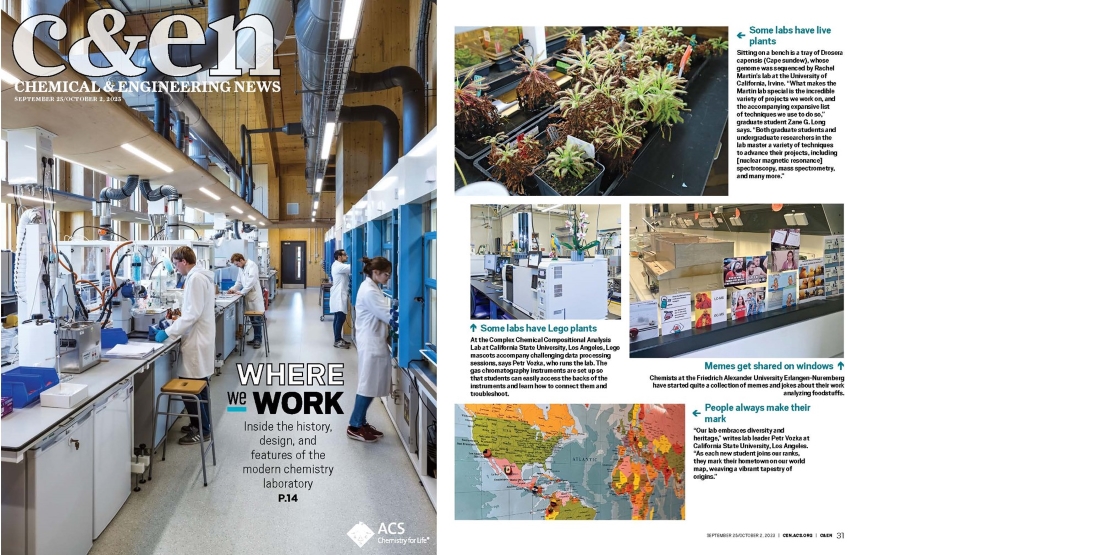
Dr. Petr Vozka is an Assistant Professor in the Department of Chemistry and Biochemistry at California State University, Los Angeles, where he leads the Complex Chemical Composition Analysis Lab (C³AL). His research focuses on the characterization of complex chemical mixtures using state-of-the-art techniques, including two-dimensional gas chromatography and high-resolution mass spectrometry, with applications in environmental science, plastic waste conversion, and forensic analysis. Dr. Vozka's research interests span multiple critical areas including the analysis of complex chemical mixtures, microplastics in the environment, conversion of plastic waste into alternative fuels, environmental impact of oil spills, and forensic fingerprint analysis. His work on microplastics has gained significant attention, with media coverage highlighting his findings that microplastics can penetrate blood vessels and have been found in the brain. His research on the Huntington Beach oil spill investigated the long-term effects of oil contamination on beaches used for recreation. Dr. Vozka has organized significant academic events including the Multidimensional GC: From Petroleum to Beyond symposium at ACS Fall 2025 and serves on the organizing committee for the Multidimensional Chromatography Workshop (MDCW). His laboratory, C³AL, is equipped with advanced instrumentation including GC-TOFMS, GC×GC-FID, and GC×GC-TOFMS systems, supported by partnerships with LECO Corporation and Anton Paar. Recipient of LECO Corporation's Pegasus® BT GC-MS instrument through a competitive selection process Principal Investigator for research funded by Naval Air Warfare Center Aircraft Division Collaborator with researchers from Purdue University, UCT Prague, Delft University of Technology, and California State Polytechnic University Dr. Vozka actively mentors undergraduate and graduate students, with numerous students receiving research awards including CSU COAST Undergraduate Student Research Grants, NSF REU placements, and Dean's List honors. His students regularly present research at national conferences including ACS meetings and the Multidimensional Chromatography Workshop. The C³AL lab provides hands-on experience with cutting-edge analytical instrumentation, preparing students for careers in analytical chemistry and related fields. As part of the LECO-C³AL Facility partnership, Dr. Vozka's lab serves as a training ground for students in comprehensive two-dimensional gas chromatography and mass spectrometry techniques. The facility aims to enhance knowledge and expand opportunities for students while equipping them with skills necessary to excel in graduate programs and analytical positions in industry and the military.
Jesús del Alamo serves as the Donner Professor of Science within MIT’s Department of Electrical Engineering and Computer Science, leading cutting-edge research in semiconductor device physics with applications spanning logic, high-frequency, and power electronics. His work bridges fundamental materials science with practical device engineering to address next-generation computing challenges. Academic Credentials: PhD, Stanford University MS, Stanford University Research Focus: Professor del Alamo’s expertise centers on transistor physics and semiconductor device innovation, particularly III-V compound semiconductors (InGaAs, GaN) and diamond MOSFETs. Current investigations target reliability mechanisms in GaN transistors for RF/power applications, novel analog computing architectures, and electrochemical ionic synapses for neuromorphic hardware. His group pioneers atomic-scale fabrication techniques like thermal atomic layer etching for sub-5nm devices while exploring quantum confinement effects in vertical nanowires. Publication Evolution: Recent work (2023-2025) demonstrates a strategic shift toward neuromorphic computing, with 60% of publications focusing on electrochemical synapses and ferroelectric memories for AI acceleration. This builds upon decades of transistor scaling research, now converging with materials innovations in HfZrO 2 ferroelectrics and protonic conductors to enable energy-efficient analog deep learning hardware. Award Recognition: Louis D. Smullin Award for Excellence in Teaching Amar Bose Award for Excellence in Teaching Intel Outstanding Researcher Award Semiconductor Research Corporation Technical Excellence Award Semiconductor Industry Association-Semiconductor Research Corporation University Researcher Award Collaborative Leadership: He directs research within MIT’s Microsystems Technology Laboratories (MTL), collaborating with faculty including Bilge Yildiz (electrochemical systems) and Ju Li (computational materials). Current projects integrate device physics with neuromorphic algorithms, supported by semiconductor industry partnerships focused on translating fundamental discoveries into practical AI hardware solutions. Research Infrastructure: His group operates within MIT’s MTL cleanroom facilities, utilizing advanced characterization tools for in-situ device analysis and leveraging partnerships with industry leaders in semiconductor manufacturing to prototype novel transistor architectures.
Emilie Carretier is a Professor at Aix-Marseille University (AMU) , affiliated with the Procédés Membranaires research team. Her work focuses on membrane separation technologies, particularly for industrial applications in pharmaceuticals, water treatment, and nuclear waste management. Research Interests : Membrane processes (pervaporation, reverse osmosis), solvent regeneration, radioactive effluent treatment, catalyst recovery, and industrial sustainability. Publications highlight advancements in ceramic membranes, VOC removal, and membrane aging studies, with applications in pharmaceuticals, microelectronics, and nuclear industries. Laboratory : Active within the M2P2 research center, specializing in membrane process innovation for complex industrial matrices.