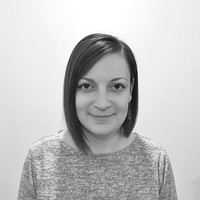
Petra Báder is an Assistant Professor at the Department of Spanish Language and Literature , Eötvös Loránd University, specializing in postmodern and contemporary Spanish-American literature, body representation, and posthumanist discourse. Her work bridges interdisciplinary frameworks with cultural and aesthetic analysis. Academic affiliations: Eötvös Loránd University (Faculty Member), Universidad de Guanajuato (collaborator), Universidad Complutense de Madrid (academic event participant) Research interests focus on body-text relations, posthumanism, metafiction, and intermediality in Latin American literature. She explores how corporeal themes challenge traditional narrative structures and interrogate human/non-human boundaries. Notable publications include edited volumes on fantastic literature and edited collections analyzing authors like Mario Bellatin, Salvador Elizondo, and Mercè Rodoreda. Her recent articles examine posthumanist trends and autofiction in Hispanic short narratives. Báder has presented at international conferences (Universidad Autónoma Metropolitana, Universidad de Valladolid) and co-edited publications with Gabriella Menczel and José Miguel Sardiñas.
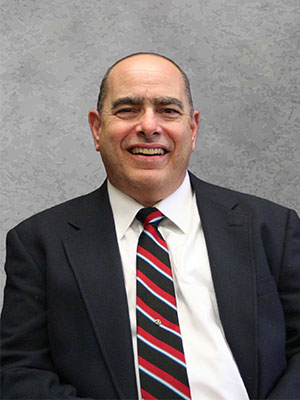
Ayşegül Durukan Arslan is an Associate Professor in the Department of Interior Design at Akdeniz University, Faculty of Architecture. Previously, she served as Head of Department at Nişantaşı University and Düzce University. With a career spanning both academia and private sector design, she specializes in cultural heritage, sustainable adaptive reuse, and religious architecture. Her international experience includes projects in the Middle East, Turkic Republics, Africa, the US, and England. Bilkent University - BA in Archaeology Mimar Sinan Fine Arts University - MA & PhD in Interior Design Her research focuses on biophilic design , experiential learning , and cultural heritage preservation . Recent work explores spirituality in religious architecture and inclusive design for individuals with Down syndrome . Articles highlight her expertise in adaptive reuse of historic buildings and spatial storytelling in retail environments. Key themes from her 36+ publications include: Religious and cultural architecture Biophilic and sustainable design Experiential marketing in spatial contexts Heritage conservation methodologies In the private sector, she collaborated with renowned firms like Zaha Hadid Architects and Tabanlıoğlu Mimarlık on major projects including the Haydar Aliyev Cultural Center and Zorlu Shopping Center. Her academic career began at Yeni Yüzyıl University, with subsequent roles at Nişantaşı University, Düzce University, and current position at Akdeniz University since 2019.
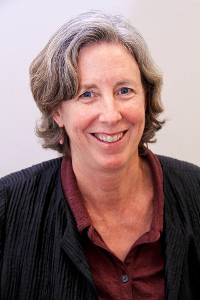
Dr Beth George serves as an Honorary Senior Lecturer in Architecture within the School of Architecture and Built Environment at the University of Newcastle, Australia, where she has been affiliated since 2019 after 15 years teaching at the University of Western Australia and Curtin University. A registered architect and award-winning researcher, her work bridges academic scholarship, architectural practice, and creative exhibition, with a focus on urban transformation, historical contexts, and honoring the built environment through innovative design processes. Her academic credentials include: Doctor of Philosophy, RMIT University Bachelor of Environmental Design, University of Western Australia Bachelor of Architecture (Honours), University of Western Australia George's research interrogates architecture's role in the Anthropocene, emphasizing cartographic processes for generating place-specific urban propositions and the power of architectural communication through drawing, writing, and dialogue. She investigates how architects can address climate challenges and housing crises through lateral thinking rather than problem-solving, with particular focus on collaborative drawing practices, urban distinctiveness, and the ethical obligations of architecture toward ecological systems. Her work consistently explores the beauty in architectural process—from conceptual sketches to spatial realizations—and the potential for drawing to cultivate empathy and shared understanding in design. Analysis of her recent publications reveals dominant trends in ecological empathy through drawing practices, historical analysis of architectural representation (particularly axonometry and paraline projection), and critical examinations of architectural movements like Brutalism. Her scholarship consistently connects theoretical frameworks with practical applications, examining how spatial interventions—from residential renovations to urban voids—can foster community resilience and address contemporary challenges like pandemic-era habitat reconfiguration. Her scientific recognition includes: Peter Overman Award for Residential Architecture – Houses (Alterations and Additions) in the 2020 WA Architecture Awards for the Reed House project, which balanced historical dignity with modern materiality George actively supervises doctoral research as co-supervisor for two current PhD candidates exploring ritual cartographies and perceptual worlds, building on her supervision of two completed PhD projects on Aboriginal living environments and locative technology. Her research is supported by grants including the $45,000 Wonnarua Place Project (2021-2022) with Maitland City Council, focusing on place-making in post-industrial contexts. As a sole practitioner, she transforms disused urban infrastructure and historic buildings, exemplified by her business matching empty spaces with creative tenants to revitalize ailing urban realms. She collaborates extensively with researchers like Michael Chapman on drawing-based projects, community groups on urban revitalization initiatives, and councils on resilience planning. Her current work investigates voided territories in Newcastle and global post-industrial city resilience, often materializing through exhibitions like Commonplace and Projective Cast that demonstrate how collaborative drawing practices can generate shared spatial understanding and attunement.
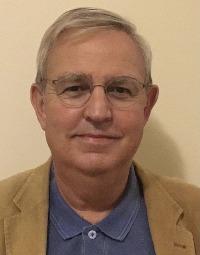
Amanda C. North, MD, is a Professor of Urology and Chief of Pediatric Urology at Montefiore Medical Center. She specializes in the care and treatment of children with complex voiding problems and congenital urinary tract anomalies, serving as an Attending Physician across multiple locations including Bronx, NY, and White Plains, NY. Medical Education: Albert Einstein College of Medicine (Alpha Omega Alpha) Residency: Montefiore Medical Center (General Surgery and Urology) Fellowship: Johns Hopkins Medical Center (Pediatric Urology) Dr. North is a member of the American Urological Association and Society for Pediatric Urology, fluent in Spanish. She joined Montefiore's faculty in 2007. Scientific Awards: Montefiore Staff and Alumni Association Award
Jim E. Morel is a Professor and the Nancy & Ron Stinson Chair in Nuclear Engineering at Texas A&M University. He serves as Director of the Center for Large-Scale Scientific Simulations (CLASS) and holds a joint faculty appointment at Los Alamos National Laboratory. Educational Background: Ph.D., Nuclear Engineering, University of New Mexico (1979) M.S., Nuclear Engineering, Louisiana State University (1974) B.S., Mathematics, Louisiana State University (1972) His research focuses on Discretization and Multilevel Solution Techniques for Deterministic Particle Transport , Hybrid Deterministic/Monte Carlo Methods , and Radiation-Hydrodynamics . He has developed advanced methods for neutron transport, radiation diffusion, and multiphysics simulations. Recent publications explore topics in deterministic transport discretization, Monte Carlo integration, and radiation-hydrodynamics, with applications to reactor physics, radiative shocks, and inverse radiation problems. His work emphasizes numerical accuracy, parallel computing, and physics-based reduced-order modeling. Scientific Awards: Nancy & Ron Stinson Professorship in Nuclear Engineering For contact, email morel@tamu.edu or call 979-845-6072 at his office (AIEN M306).
Karel Matouš is a Professor in the Department of Aerospace and Mechanical Engineering at the University of Notre Dame , where he also serves as the Director of the Center for Shock-Wave Processing of Advanced Reactive Materials (C-SWARM) . His research is centered on computational mechanics and engineering, with a focus on multiscale and multiphysics modeling of heterogeneous materials. Education: Ph.D. in Theoretical and Applied Mechanics, Czech Technical University in Prague (2000) M.S. in Theoretical and Applied Mechanics, Czech Technical University in Prague Research Interests: Matouš’s work spans computational science and engineering , data-driven modeling , high-performance computing , and statistical micromechanics . He develops advanced numerical methods for modeling complex systems such as solid propellants, reactive materials, and particulate composites, often integrating microtomography data for realistic material reconstruction. Publication Trends: His recent publications emphasize reduced-order modeling , image-based simulations , and uncertainty quantification in multiscale systems. Many studies combine experimental data with computational frameworks to predict macroscopic behavior from microstructural features, particularly in reactive and heterogeneous materials. Scientific Awards: Fellow of ASME (2013) Visiting Professor at Eindhoven University of Technology with 10,000 EUR research grant (2016) Rector's Award, Czech Technical University (1999) Academician Z. Bazant's Prize (1996, 1997) Multiple recognitions for high-impact publications (ScienceDirect Top 25 Hottest Articles) Student awards including the Robert J. Melosh Medal and USNCCM9 presentation prize Advising and Grants: He has advised numerous Ph.D. and M.S. students in computational mechanics and materials science. His research is supported by major grants from the Department of Energy (e.g., C-SWARM: $11.6M), NSF , DoD (STTR/SBIR programs), and industry partners like 3M and ATK . These projects focus on adaptive modeling, shock-wave processing, and microstructural characterization of advanced materials. Labs and Teams: He leads the Computational Physics Group and the C-SWARM center, which involves collaboration with institutions including Purdue University, Indiana University, and the University of Illinois. The group utilizes high-performance computing and experimental validation to advance predictive modeling of extreme material behaviors.
Alessandro Sabato is an Associate Professor in the Department of Mechanical and Industrial Engineering at the University of Massachusetts Lowell's Francis College of Engineering. He leads the Structural Dynamics & Acoustic Systems Laboratory (SDASL) and the Sports Collaborative for Open Research and Education (SCORE), focusing on innovative sensing and data analytics for structural evaluation. Ph.D. in Mechanical Engineering from University of Calabria, Italy (with joint appointment at Columbia University) M.S. in Civil and Environmental Engineering from University of Calabria B.S. in Civil and Environmental Engineering from University of Calabria Dr. Sabato's research spans structural health monitoring, non-destructive evaluation, and structural dynamics, with emphasis on computer vision techniques, unmanned aerial vehicles, and MEMS devices. His work addresses resilience, sustainability, and safety issues of engineering structures and infrastructure through advanced sensing technologies. He combines UAVs, MEMS-based systems, and wireless sensor networks with non-contact measurement techniques to solve real-world engineering problems. His 15 most recent publications demonstrate strong focus on structural health monitoring applications using digital image correlation, UAV-based inspection systems, and wireless sensor networks for bridges, wind turbine blades, and railroad infrastructure. The research shows consistent advancement in non-contact measurement techniques for structural assessment. Exceeding Excellence in Teaching award presented by the Student Government Association (SGA) Dr. Sabato has secured over $1.5 million in research funding from the National Science Foundation (NSF), Office of Naval Research (ONR), Federal Highway Administration and Department of Transportation (FHWA/DOT), and numerous private companies. He mentors multiple Ph.D. and M.S. students who work on various aspects of structural health monitoring, including railroad track assessment, bridge inspection using UAVs, and wind turbine blade monitoring. His research group has developed innovative systems like the wireless calibration system for 3D-DIC measurements and novel approaches for detecting subsurface voids in roadways. His laboratory, the Structural Dynamics & Acoustic Systems Laboratory, conducts research in acoustics, environmental and workplace noise, non-destructive evaluation, sensors development, structural dynamics, and structural health monitoring. Current projects include thermal loss detection using UAV and Structure from Motion approaches, wireless MEMS-based accelerometer development, and 3D-DIC system design for bridges inspection using UAVs.
Professor Stas Shabala is a faculty member at the School of Natural Sciences, University of Tasmania , where he serves as Associate Head Research and Professor of Physics . His academic career spans theoretical and observational astrophysics, with a focus on supermassive black holes and galaxy evolution, as well as geodesy and data science. PhD in Astrophysics and Cosmology, University of Cambridge (2008) BSc (1st Class Hons) in Physics, University of Tasmania (2003) Shabala's research expertise lies in extragalactic astrophysics , particularly the formation and evolution of galaxies and the physics of Active Galactic Nuclei (AGN) . His group develops analytical and computational models for black hole jets and their interactions with galactic environments, contributing to understanding galaxy evolution and AGN feedback. In geodesy , his work improves Very Long Baseline Interferometry (VLBI) techniques for Earth orientation measurements. He also integrates data science methodologies for Bayesian inference and large dataset analysis. His recent publications align with cosmological simulations of AGN jets, studies of radio galaxy morphology , and analysis of high-redshift protoclusters . Projects often leverage data from next-generation telescopes like SKA pathfinders , MeerKAT , and ASKAP . Endeavour Research Fellowship (2018) ARC Super Science Fellowship (2011-2013) ARC Discovery Early Career Researcher Award (2013-2016) Shabala supervises PhD students in astrophysics and geodesy, with completed projects on topics including AGN jet dynamics , interstellar lifecycle , and radio source polarization . He also coordinates physics teaching units at UTAS, emphasizing problem-solving and real-world applications. His international collaborations span institutions in the UK, Netherlands, Austria, and Australia, with active roles in science policy and academic leadership as President of the Astronomical Society of Australia .
Sarah Kruse is a Professor at the University of South Florida's School of Geosciences. Her research focuses on near-surface geophysics, including the development of instrumentation for undergraduate field experiences, lunar analog studies using terrestrial lava tubes, and geophysical methods for resource exploration. She leads initiatives to integrate geophysics into STEM education with societally relevant modules and develops tools for subsurface characterization. Her work spans seismic and GPR modeling for void detection, InSAR analysis of land subsidence in Tampa Bay, and ecohydrological studies in mangrove ecosystems. She envisions convergent science centers to advance near-surface geophysics and collaborates on planetary exploration projects.
Andreas Karageorghis is a Professor in the Department of Mathematics and Statistics at the University of Cyprus, affiliated with the School of Natural and Applied Sciences. His research focuses on numerical analysis, scientific computations, and boundary element methods, particularly employing the Method of Fundamental Solutions (MFS). He holds a DPhil from Oxford University, preceded by a BA and MA. His work emphasizes solving complex elliptic boundary value problems, inverse scattering, and geometric reconstruction. Notable contributions include advancements in MFS algorithms for biharmonic equations, axisymmetric systems, and polyharmonic problems. He has also explored hybrid meshless methods and RBF neural networks for nonlinear problems. Key applications span fluid mechanics (e.g., Brinkman equations), elasticity, and acoustic scattering. His research addresses challenges like void detection, shape identification, and steady-state heat conduction. Karageorghis has published extensively in top journals like SIAM and IMA Numerical Analysis, with over 40 years of continuous academic contribution. His methodological innovations include matrix decomposition algorithms, efficient Kansa-type MFS formulations, and non-iterative approaches for inverse problems. Ongoing work includes optimal parameter selection for RBF methods and extending MFS to higher-order PDE systems.
Dr. Tzvetalin Vassilev is a Full-time Professor in the Department of Computer Science and Mathematics at Nipissing University, Faculty of Arts and Science. He holds a PhD from the University of Saskatchewan and completed his BSc and MSc at the Technical University in Sofia. His research focuses on Computational Geometry, Algorithmic Graph Theory, and Optimization . Current projects include studies on longest paths in graphs, optimal triangulations, and optimization problems on graphs supported by an NSERC Discovery Grant (2011-2016). Recent work spans inequalities, polynomial solutions, geometric problems, and interdisciplinary collaborations in materials science. Publications highlight problem-solving in geometry, algebra, and calculus, with contributions to combinatorial optimization and educational outreach initiatives like the Math Circles program in North Bay. Collaborations include international academic teams and industrial partners such as Sigma Space Inc. Grants: NSERC Discovery Grant (2011-2016) Advising: No formal advisees listed in available texts.
Jim Ji is a Professor in the Department of Electrical and Computer Engineering at Texas A&M University, part of the College of Engineering. His research focuses on advanced MRI and biomedical image processing, including constrained imaging, reconstruction algorithms, cardiac and cancer imaging, and image analysis techniques. He leads the Magnetic Resonance Systems Lab, developing 3D real-time imaging capabilities and automated analysis methods. Education: PhD from University of Illinois at Urbana-Champaign (2003), M.S. and B.S. from Tsinghua University (1997/1993). Active in teaching courses like Signals and Systems, Medical Imaging, and Digital Signal Processing. Supervised over 12 graduate students, including notable alumni like Jong Bum Son and Yuttapong Jiraraksopakun. Developed open-source tools: PULSAR (parallel imaging toolbox) and SID-MRI (dynamic MRI simulation) Received NSF CAREER Award (2008) and Texas A&M travel grants Organized sessions at IEEE EMBS conferences (2003-2005) Recent publications emphasize numerical methods for radiation transport, including diffusion asymptotics, model reduction, and parallel computing solutions. His work bridges computational physics with medical imaging, addressing challenges in dynamic biological imaging and radiation-hydrodynamics coupling.
Jonas Dagys serves as an Associate Professor in the Department of History of Philosophy and Analytical Philosophy at Vilnius University, where his research centers on contemporary analytic philosophy, logic, and the historical development of analytic thought. His scholarly profile reflects deep engagement with methodological implications of psychophysical reductionism and antireductionism, as well as critical examinations of temporal metaphysics through comparative studies of philosophers like McTaggart and Mellor. His research trajectory demonstrates evolving specialization: early work (2006-2012) established foundations in consciousness studies and mind-body problems, while recent publications (2019-2022) reveal intensified focus on medieval logic—particularly Buridan's modal propositions—and intersections between analytic philosophy and early Christian thought. Additional interests include Fregean semantics, university management during crises, and Wittgensteinian philosophy, indicating both historical depth and contemporary relevance in his analytical approach. Analysis of his 15 most recent publications shows a clear methodological pattern: rigorous logical formalization of historical philosophical concepts combined with empirical considerations in identity studies. The 2020-2022 output particularly highlights adaptation to contemporary academic challenges, including pandemic-era educational management alongside sustained exploration of foundational philosophical questions through medieval and modern lenses. No scientific awards were documented in the provided sources. Information regarding student supervision, research grants, laboratory affiliations, or collaborative research teams was not present in the available materials, suggesting either omission in the source texts or primary focus on independent scholarly publication rather than team-based research activities.
Carolyn M. Hendriks is a Professor and Australian Research Council (ARC) Future Fellow at the Crawford School of Public Policy within the Australian National University . Her research focuses on democratic governance, citizen engagement, and political representation. She holds a B.E. (Environmental) from UNSW and a PhD in Political Science from ANU. Key research areas include democratic repair, deliberative democracy, and community-led problem-solving. Her recent work examines how citizens address governance challenges through innovative collective actions. In 2024, she secured a $1M+ ARC Fellowship to strengthen political representation. She has authored four books including Democracy in Action (2025), Mending Democracy (2020), and Environmental Decision Making (2009). Her projects include Strengthening Political Representation (2024–2029), Governing Green Transitions (2022–2026), and Governing Rupture (2022–2024). Her research emphasizes participatory governance, democratic innovation, and the intersection of theory with practice. Awards: ARC Future Fellowship (2024) Key Themes: Democratic reform, citizen engagement, political representation, environmental governance Her work bridges academic theory with real-world governance challenges, emphasizing actionable solutions to democratic disconnects and institutional dysfunction.
Stefano Riva is a Researcher at NRGroup , with an R&D period spanning from 2022 to today. His work focuses on multi-scale and multi-physics analysis , generation IV reactors , computational fluid dynamics , and model order reduction . PhD Thesis : Development of data-driven Reduced Order Modelling with application to MultiPhysics systems MSc Thesis : Reduced Basis Methods for Data Assimilation with application to real thermal-hydraulics systems (2021) Research Trends : Stefano's publications from 2021–2024 emphasize data assimilation , reduced-order models , and multi-physics systems in nuclear and fluid dynamics contexts. He explores hybrid techniques (e.g., GEIM and PBDW), noise stabilization in data assimilation, and finite element implementations for fluid simulation. His work bridges nuclear reactor analysis and thermal-hydraulics with advanced computational methods. Key Collaborations : Stefano has contributed to projects involving FEniCSx-OpenMC coupling for temperature feedback in neutronic calculations and sensor positioning optimization for Circulating Fuel Reactors .