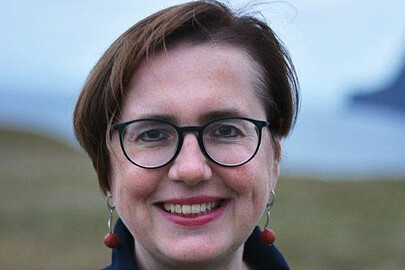
Torsten Steinhoff is a Professor of Didactics of the German Language at the Department of Germanic Studies, University of Siegen, Faculty of Arts and Humanities. His research and teaching focus on theoretical, methodological, and empirical aspects of language acquisition and instruction from elementary to university levels. His primary research interests include: Writing didactics (Schreibdidaktik) Vocabulary didactics (Wortschatzdidaktik) Language-specific and disciplinary learning (Sprache im Fach) Digital communication and AI in education Development of complex learning arrangements (Lernarrangements) Steinhoff investigates how digital tools like ChatGPT can be integrated into writing instruction, promoting argumentative writing through structured learning tasks. His recent work (2023–2025) analyzes human-AI collaboration in writing, proposing models such as GPT as Ghost, Partner, or Tutor. He emphasizes a post-digital didactic approach, balancing traditional literacy with digital competencies. His publications reflect a strong trend in digital transformation of writing, multilingual education, and empirical interventions in secondary classrooms. He leads research projects funded by BMBF and MKW NRW, including the "AI Writing Arrangements" project tested in 8th-grade classes. Scientific contributions and collaborations: Co-editor of research handbooks on empirical writing didactics Collaborator with scholars like Nicole Marx, Katrin Lehnen, and Joachim Grabowski Active contributor to journals such as Didaktik Deutsch , BiSS-Journal , and Waxmann publications Hosts a research team at lernarrangements.de He advises on academic language development, text procedures, and vocabulary transfer across modalities and subjects. His lab develops open educational resources (OER) for digital writing and communication, contributing to platforms like Twillo.
Professor Alfred Riedl is a distinguished faculty member at the Technical University of Munich (TUM), specifically within the School of Education, where he focuses on Vocational Education. His academic career spans decades of dedicated research and teaching in vocational pedagogy, teacher training, and educational innovation. Riedl has established himself as a leading expert in vocational education research, particularly in developing integrated teacher training programs that bridge theory and practice. His research interests encompass vocational education research, teacher training methodologies, language promotion in vocational settings, educational language for vocational schools, and action-oriented instructional approaches. Riedl has pioneered innovative programs such as the "Berufliche Bildung Integriert" (BBI@TUM), which connects the first and second phases of vocational teacher education with a strong emphasis on theory-practice integration. His work on language support for immigrants in vocational schools and career perspectives for asylum seekers and refugees demonstrates his commitment to addressing contemporary educational challenges. Professor Riedl's recent publications reveal a strong focus on competency-oriented and evidence-based approaches to teacher education, with particular attention to migration contexts and language diversity. His work spans from theoretical foundations of vocational pedagogy to practical implementation of innovative teaching methods in vocational settings. The recurring themes across his publications include teacher professionalization, integration of theory and practice, and addressing the challenges of diverse student populations in vocational education. As an active supervisor, Riedl has guided numerous doctoral candidates and master's students through their academic journeys, with recent theses focusing on topics such as inclusive education, digital learning environments, action-oriented instruction, and sustainable development education in vocational contexts. His teaching portfolio includes foundational courses in vocational pedagogy and didactics, as well as specialized seminars on action-oriented learning and sustainable development education. Riedl's collaborative projects demonstrate his commitment to practical relevance in teacher training, including international master's programs for vocational education and language support initiatives for immigrants in vocational schools. While he has announced his imminent retirement, his extensive contributions to vocational education research and teacher training continue to shape the field at TUM and beyond.
Julia Heideklang is a Scientific Researcher at the Philologisches Seminar of Eberhard-Karls-Universität Tübingen since 2022, specializing in early modern translation cultures and paratextual strategies in scientific literature. Her work bridges Neo-Latin studies with the history of botany, examining how marginal textual elements shaped scientific knowledge formation. PhD in Classics at Humboldt-Universität zu Berlin (2017-2024) Doctoral candidate at DFG Graduate School 2190 (2017-2021) LBI Fellow at Ludwig Boltzmann Institute for Neo-Latin Studies (2022) Her research focuses on paratexts in early modern prints and their role in constructing botanical knowledge. She investigates how title pages, dedicatory letters, and marginal annotations in works like the Herbarius Latinus (1484) functioned as epistemic catalysts during science's institutionalization. Current publications analyze translation functions in Machiavelli's Il Principe adaptations, Campanella's spatial concepts in Latin translations, and database methodologies for tracking early modern translation processes. Her work reveals critical insights into knowledge transmission through textual framing devices. 2025: Paul-Oskar-Kristeller Fellowship, Renaissance Society of America 2022: LBI Fellow, Ludwig Boltzmann Institute for Neo-Latin Studies Active in academic events, she presented on topics ranging from gender diversity in translation cultures to Machiavellian thought recreation in Latin. As blog contributor to Übersetzungsgeschichte(n) , she promotes public engagement with translation research.
Dr. Matteo Macciò is a researcher at Humboldt-Universität zu Berlin's Department of German Language and Linguistics, specializing in Indo-European linguistics, Greek dialectology, and Vedic studies. His research focuses on etymology, morphology, and the interplay between ancient languages and cultures. Education: Doctorate in Classics and Indo-European Linguistics Dissertation: Etimologia e morfologia indoeuropea dei nomi a raddoppiamento in Omero (2024) Research Interests: His work bridges historical linguistics and cultural studies, exploring topics like Homeric nominal reduplication, Sicilian Doric dialects, and Vedic lexical semantics. He actively participates in projects such as B07 (Evidentiality in Medical Discourse) and the MGK Integrated Graduate School. Publications: Recent work emphasizes reconstructing PIE roots (e.g., *terku̯- for basketry terms) and analyzing ancient epithets (e.g., Aphrodite's Εὐδωσώ in Syracusan dialect). He also advocates for glottological libraries, co-authoring appeals to preserve specialized humanities collections. Grants & Collaboration: Engaged in interdisciplinary projects, including the 9th Indo-European Research Colloquium (2025) and the Atharvaveda lexical study (2025). Collaborates with institutions like Universität Würzburg and the University of Genoa's Glottology Library. Labs/Teams: Part of the Humboldt-Universität's linguistics research group and the Genoa Glottology Library initiative, promoting accessible scholarly resources.
Jochen Baier is a Professor at the Pedagogical University of Schwäbisch Gmünd , serving as deputy head of the Institute for Language & Literature and head of the English Department . His academic work focuses on language and literature didactics , media education , interactive drama , and body language in virtual language learning . He has led research projects on dramatic methods in digital contexts, new media integration, and cross-cultural coaching, emphasizing bilingual teaching and intercultural communication. Current research includes Body Language in Virtual Language Learning Scenarios and practical implementation of EBU Unteaching Prejudices through student projects. He explores subfields like Neural Language Processing , Interactive Learning , and Cultural Awareness in digital environments. Baier’s publications span books on nonverbal communication, teaching literature with digital tools, and bilingual curricula (e.g., Abitur NRW preparation materials). His work also addresses Shakespeare pedagogy , digital edutainment , and intercultural studies .
Markus Kötter is a Professor at the University of Siegen within Faculty I , specializing in Teaching English as a Foreign Language (TEFL) . His research focuses on vocabulary acquisition, inclusive education, formative assessment, and educational standards in early foreign language learning. Research Areas: Vocabulary integration, private speech analysis, formulaic language patterns, and inclusive pedagogical frameworks. Projects: Currently working on the Diagnose Englisch initiative with Klett publishers during his research semester in winter 2024/25. Publications span topics including: Vocabulary instruction in primary/secondary education Assessment methodologies and error analysis Technology-enhanced language learning (MOOs, CALL) Teacher education reforms (Praxissemester) Inclusive teaching practices and institutional challenges For courses, see his unisono.uni-siegen.de profile. Contact via koetter@anglistik.uni-siegen.de as he will be off-campus during the winter 2024/25 research semester.
Prof. Dr. Matthew Königsberg is an Associate Professor at the East Asian Seminar, Japanese Studies department of Freie Universität Berlin, with a focus on premodern and modern Japanese literature, structuralist and comparative literary studies, and language didactics. He holds a doctorate from the University of Tübingen (1988) and a habilitation from the University of Hamburg (2001), supported by a DFG scholarship (1998). Doctorate Thesis: Kobayashi Hideo's 'Watakushi shōsetsu ron' (1988) Habilitation Thesis: Realism in Japan, the Ken'yūsha School, and the Testing of New Novel Techniques (1998) His research spans structuralist analysis of Japanese prose, intertextuality in Konjaku monogatari, Meiji period stylistic reforms, and queer themes in Ihara Saikaku's work. He has published extensively on topics including Korean minority literature in Japan, Buddhist themes in Japanese fiction, and the evolution of the Bildungsroman in Japan-Europe comparisons. Scientific awards include renaturalization as a German citizen under Article 116, No. 2 of the Basic Law (1986) and a DFG habilitation scholarship (1998). He has served as a visiting associate professor at Washington University in St. Louis (2002/2003), a lecturer at Freie Universität Berlin (2004), and provided intercultural training for managers at Bremen University of Applied Sciences (1991). Notable Editorial Roles: Consultant for Kindler's Literature Lexicon (2009), Convenor at EAJS Conference literature section (2008) Professional Affiliations: Gesellschaft für Natur- und Völkerkunde Ostasiens, European Association for Japanese Studies, Association of Asian Studies, Deutsche Japan-Gesellschaft
Catholic University of Eichstätt-IngolstadtGermany
Heiner Böttger is a Full Professor of English Didactics and EFL (English as a Foreign Language) at the Catholic University of Eichstätt-Ingolstadt, Germany, where he has served since 2007. He holds the Professorship for Didactics of English Language and Literature within the Faculty of Languages and Literature. His academic journey includes positions at the University of Erlangen-Nuremberg and visiting professorships at institutions including Akdeniz University in Turkey, Aristotle University in Greece, and Long Island University in New York. Professor Böttger's research focuses on the intersection of language education and neuroscience, with particular expertise in foreign language anxiety (xenoglossophobia), sensitive phases of language development, multilingual didactics, and evidence-based foreign language teaching. His work bridges theoretical knowledge with practical classroom applications, emphasizing how insights from neuroscience can transform language teaching methodologies. He has pioneered approaches to early foreign language learning, corporate language instruction, and the psychological aspects of language acquisition including memory, resilience, and mindfulness. His extensive publication record demonstrates a clear trajectory toward integrating neuroscientific findings with language education. Recent works focus on language educational neurosciences (LEN), outdoor language learning, storytelling techniques, and the neuromotor foundations of speaking skills. Böttger's research shows increasing sophistication in connecting brain-based learning principles with practical language teaching strategies across diverse contexts from primary education to corporate settings. As an active academic, Böttger serves as Chairman of the Early language learning advisory board BIG (foundation Lernen, Munich) and as an External Academic Reviewer to the Greek state. His professional activities demonstrate a commitment to advancing evidence-based language education through both theoretical contributions and practical implementation.
Christoph Bürgel is a Professor for Didactics of French and Spanish at the Institute of Romance Studies within the Faculty of Cultural Studies at the University of Paderborn since October 2015. He has previously held academic positions at the Universities of Osnabrück (as Junior Professor), Regensburg, and Hamburg. His research primarily focuses on foreign language didactics, particularly lexico-grammar and the development of dialogic speaking competence in French and Spanish language learning. His educational background includes studies in French, Politics, Sociology, and Pedagogy at the University of Hannover, where he completed his first state examination for teaching French and Politics at Gymnasium level. He also pursued studies at the University Charles-de-Gaulle–Lille III in France and earned his PhD on "Generalizations in Language and Texts. Generalization, Globalization, Conceptualization in French" from the University of Hannover. Bürgel's research interests center around the didactics of French and Spanish, with a particular emphasis on lexico-grammar (the interface between vocabulary and grammar), phrasemes (fixed expressions), and construction-based language learning. His work explores how these linguistic elements can be effectively taught to develop learners' communicative competence, particularly in dialogic speaking situations. He has developed approaches for teaching time expressions in appointment dialogues and strategies for promoting natural language use through phrasemes. His recent publications focus on comprehensive grammars of spoken and written French, the acquisition of socio-cultural knowledge through texts (particularly related to Belgium), and methods for developing dialogic speaking competence. These works reflect his consistent interest in bridging theoretical linguistics with practical language teaching applications. Award from University of Hannover for outstanding scientific achievements (1995) Bürgel is actively involved in teacher training, regularly conducting workshops for French and Spanish teachers across Germany on topics such as lexico-grammar and the use of phrasemes for natural language production. He has organized numerous scientific symposia connecting linguistics with foreign language didactics, including the ongoing "Lexikalische Kompetenz" (Lexical Competence) network symposia. He serves as a member of several professional organizations including the German Romanist Association, the General Association for Modern Foreign Languages, and various subject-specific teacher associations. At the University of Paderborn, he teaches courses related to the observation and analysis of French lessons, research-based learning in practical semesters for French and Spanish, and the didactics of lexico-grammar, emphasizing practical application of linguistic theory to language teaching methodology.
Prof. Dr. Andrea Rössler is a leading academic at Leibniz University Hannover, serving in the Romanesque Seminar under the Faculty of Philosophy . With a focus on Spanish and Latin American youth literature , her work spans vocabulary didactics , intercultural competence , and language mediation in foreign language education. She has contributed extensively to audiovisual media and foreign language policy , emphasizing the professionalization of foreign language teachers . Her research projects include the development of intercultural competence standards for teachers, exploration of language mediation as an innovative skill , and leadership in the Leibniz Principle initiative to enhance practical teaching phases. She co-edits the series Romance Foreign Language Research and Teaching Development and has published widely in journals like Der fremdsprachliche Unterricht Spanisch and FLuL . Recent publications highlight trends in digital vocabulary learning , audiovisual text comprehension , and social media-based literary genres . Her editorial work includes anthologies on contemporary women's literature and multimedia teaching resources . She actively participates in academic networks, including the German Society for Foreign Language Research and the Hispanists Association .
Markus Rieger-Ladich is a professor of General Educational Science at the Eberhard Karls University of Tübingen, focusing on privilege critique, educational equity, and identity politics. He co-directs the DFG project 'On the Failure of Pedagogical Ambitions as Reflected on Literary Texts' and is a member of the graduate school 'Doing Transitions' and the DFG network 'Theoretical Research in Educational Science.' Born 1967, studied at Marburg and Bonn Teaching assignments in Basel, Zurich, and Tokyo Author of 'Privilege: A Vocabulary of Struggle and Instrument of Knowledge' (2022) Active in public discourse via journalistic articles and radio/podcast interviews His research bridges educational theory, cultural studies, and critical sociology. Key themes include: Educational privilege and structural inequality Whiteness and heteronormativity Diskurse der Bildungsforschung Autosociobiographical texts as research tools Academic debate culture and activism Far-right extremism analysis Recent publications analyze privilege as both epistemic instrument and ideological battleground. He explores intersections of class, gender, and race in educational systems, advocating for universalist approaches to justice. His lectures span topics from 'Cancel Culture' to 'Far-Right Authoritarianism' at institutions like Goethe University Frankfurt and National Chung Cheng University.
Dr. Sybille Werner is a Lecturer for Special Tasks at the German Institute (Modern German Literature / Reading and Literature Didactics) at Johannes Gutenberg University Mainz since August 2021. Her academic career includes roles as a pedagogical assistant at Goethe University Frankfurt (2015–2021), a research assistant at Weingarten University of Education (2005–2009), and a senior teacher (2015). She holds a doctorate in Philosophy from Weingarten University (2014) focusing on vocabulary and text production in secondary education. Her research focuses on reading promotion in all-day schools, literacy development, pedagogical practices in literature teaching, and teacher training. She co-led the BMBF-funded LegelitE project (2021–2023) on adult reading fluency and the LeseOasen initiative with Save the Children (2018–2020) to enhance reading skills in disadvantaged students. Key publications include a monograph on writing skills (2014), co-edited volumes on reading promotion (2022), and peer-reviewed articles in journals like Grundschule Deutsch and Zeitschrift für Didaktik der Philosophie und Ethik . Her work bridges theory and practice, emphasizing practical pedagogical strategies for educators. Teaching focuses include reading and literature didactics, with specializations in literary learning, aesthetic practices, and curriculum development. She also contributes to teacher training programs on reading didactics and has developed materials for after-school reading programs.
Claudia Baark is an Academic Assistant for Teaching in German Language and Literature Didactics at the University of Hamburg's Faculty of Education. She specializes in primary school language education with focus areas including literacy acquisition, text writing, and spelling instruction. Education: 1995: First State Examination, University of Hamburg 1998: Second State Examination Her research examines effective methodologies for German language instruction in primary education, particularly collaborative learning approaches, feedback mechanisms for children's writing, and literary learning. Publications address instructional strategies for vocabulary development, poetry education, and writing assessment. With extensive school teaching experience (1998-2016) and leadership roles in teacher training at Hamburg's State Institute, she contributes to curriculum development for Hamburg's educational authorities, including recent work on German language curricula for primary schools.
Laurenz Volkmann is a Professor and Chair of English Didactics at the Faculty of Philosophy, Friedrich Schiller University Jena, since 2004/2005. He is a leading academic in English language teaching methodology, intercultural learning, and globalization trends in pedagogy. Doctorate from the University of Erlangen (1989) Habilitation at the University of Würzburg (2002) His research focuses on English literature didactics , new media in education, and pragmatics in language teaching . He has led major projects like PILOTS (2022-2023) and IDEAS (2019-2024), funded by DAAD, and co-directed the doctoral program at the Center for Teacher Education and Educational Research (ZLB) from 2007-2018. His recent publications emphasize technology integration , gender studies , and cultural studies in English teaching. Scientific awards include a DAAD scholarship at Miami University, Ohio (1982-1983). Contact: l.volk@uni-jena.de | Office: Room 618, Ernst-Abbe-Platz 8, 07743 Jena
Nadine Tramowsky is a Junior Professor for Biology and its Didactics at the Pädagogische Hochschule Freiburg (University of Education Freiburg), where she also serves as Head of the BioLab and is affiliated with the Research Center for Climate Change Education and Education for Sustainable Development (ReCCE). She has held this position since January 2020 and is actively engaged in research and teaching in the fields of biology education, climate change education, and sustainable development education. Currently, she is on parental leave but remains committed to her academic work. Dr. Tramowsky completed her PhD in Science Education at the University of Bamberg in November 2018. Her academic journey began with teacher training for middle schools at the University of Bamberg, where she also earned her first state examination in 2013. Prior to her academic career, she trained as a state-certified educator and childcare worker, giving her a strong foundation in practical educational settings. Dr. Tramowsky's research focuses on four main interconnected areas: empirical research on students' conceptions, climate change education and education for sustainable development (BNE), digital education, and diversity in science education. Her work particularly emphasizes the development of evaluation competencies, moral reasoning in biology education, and innovative teaching methods that integrate digital tools. She has made significant contributions to understanding how students form moral conceptions about human-animal relationships, meat consumption, and sustainable practices. Her research has led to the development of innovative teaching approaches such as 'MuxBooks' - multimedia learning tools that allow students to create digital stories about scientific phenomena. Dr. Tramowsky's recent scholarly output demonstrates a strong focus on systemic thinking related to sustainability issues, digital educational resources, and moral reasoning in science education. Her work bridges theoretical frameworks with practical classroom applications, particularly in elementary and secondary science education contexts. She has developed several educational apps and digital tools, including the Global Change App for climate change education, and has conducted extensive research on how students develop understanding of complex ecological systems. Megafon – Preis für Sprachbildung und Sprachförderung von Jugendlichen und jungen Erwachsenen, Joachim Herz Stiftung (JHS), 2023 Ideas Competition - Innovative Ideas for More Climate Protection at the Pädagogische Hochschule Freiburg, 2023 Teaching Award of the Pädagogische Hochschule Freiburg, 2021 Fellowship in the Didaktik:digital College, Joachim Herz Stiftung (JHS), 2020 Dr. Tramowsky has supervised numerous master's theses, bachelor's theses, and qualification papers across various aspects of biology education. Her current research projects include 'Lerntagebuch Schreiben Fördern durch KI-gestütztes Feedback' (Di.ge.LL 2-TP7), 'Sprache fördern im Schulgarten - Digitales Storytelling' (DiStory), and 'Adaptive Unterstützung in MINT-Lernumgebungen zur Förderung experimenteller Kompetenz und Selbstwirksamkeit' (AdUmint). These projects are funded by the Ministry of Science, Research and Art of Baden-Württemberg (MWK BW) and the Federal Ministry of Education and Research (BMBF), reflecting the significance of her work in educational research. As Head of the Freiburger BioLab DIGITAL at the Pädagogische Hochschule Freiburg, Dr. Tramowsky leads an innovative interdisciplinary team focused on developing and implementing cutting-edge teaching methods in biology education. She is also a founding member of the Research Center for Climate Change Education and Education for Sustainable Development (ReCCE), where she collaborates with researchers across disciplines to address pressing educational challenges related to sustainability and climate change. Her work on the 'Lehr- und Lerngarten' project demonstrates her commitment to creating practical learning environments that connect theoretical knowledge with real-world sustainability challenges.