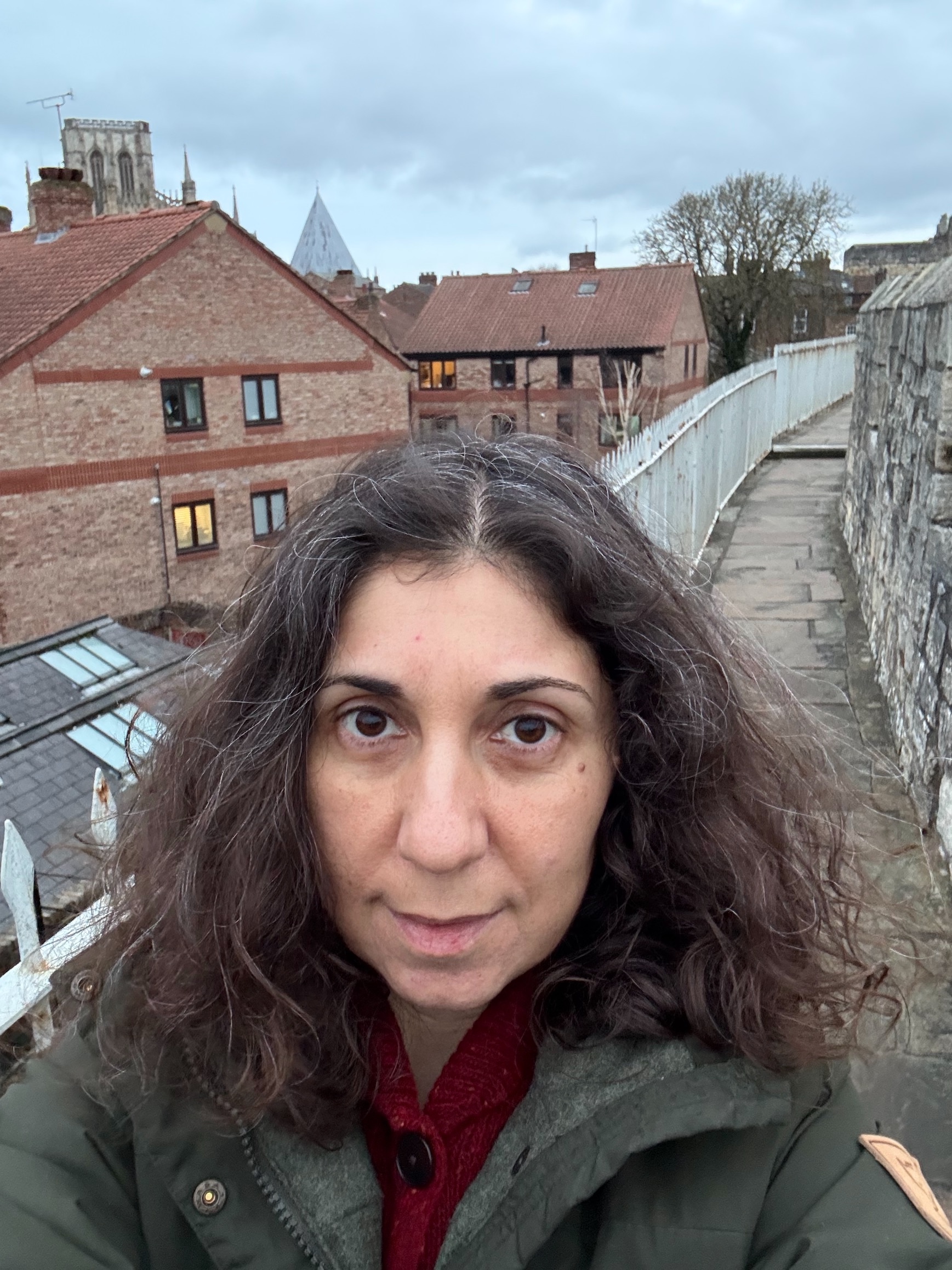
Prof. Dr. Gülşen Eryiğit is a Professor at Istanbul Technical University within the Faculty of Computer and Informatics , Department of Artificial Intelligence and Data Engineering . She founded and directs the ITU Natural Language Processing Group , Turkey's leading team in Turkish-language NLP, and serves as Senior Action Editor for ACL RR , Director of ITU TÖMER (Turkish Language Teaching Center), and Co-Chair of the EU UniDive Cost Action WG3. Education: PhD in Computer Engineering from ITU (2007), MSc and BSc from ITU and Marmara University Research: Focuses on Natural Language Processing for Turkish, including dependency parsing , coreference resolution , multiword expressions , and language education technology Her recent work involves multilingual transfer learning , LLM applications for Turkish text simplification, and gamification for morphology education. She has received prestigious awards like the Siemens Excellence Award and TÜBİTAK's Above Threshold Award . Her research has produced 65+ publications and 29+ projects funded by EU, TÜBİTAK, and industry partners. Scientific Awards: Siemens Excellence Award (2007) Above Threshold Award (TÜBİTAK, 2015) Certificate of Appreciation (EU 7th Framework, 2012) Thank You Plaque (ITU, 2017) The ITU NLP Group under her leadership has developed Turkey's first licensed NLP software exported internationally. She collaborates with European institutions through COST actions and participates in ACL, CoNLL, and LREC conferences. Her lab focuses on language technology for Turkish , including sign language processing and social media normalization.
Prof. April Wang is an Assistant Professor in the Department of Computer Science at ETH Zurich. Her work focuses on Educational Technology, Human-Computer Interaction, and AI-driven tools for programming education. She is affiliated with the Professur Educational Technology group and teaches courses such as Human Computer Interaction and Ethics in Computing. Her research explores interactive learning environments, collaborative data science workflows, and AI-augmented educational systems. Her research interests span computational notebooks, live coding interfaces, and human-AI collaboration in software development. Notable contributions include frameworks like DBox for algorithm learning and EDBooks for interactive programming narratives. She also investigates challenges in real-time collaboration tools and automated documentation systems for data scientists. Recent work emphasizes understanding user needs in automated copilot systems and resolving conflicts in collaborative notebook environments. Her projects often bridge theoretical HCI principles with practical educational tools, aiming to enhance both instructor efficacy and student engagement. Prof. Wang’s teaching portfolio includes courses on user-centered interface design and ethical scientific practices. She actively contributes to advancing interdisciplinary computational literacy through initiatives like datAR, which uses everyday objects to teach data concepts.
Dr. Changyou Chen is an Associate Professor in the Department of Computer Science and Engineering at the University at Buffalo, State University of New York. His research focuses on Multi-Modal Learning Foundation Models Deep Generative Models Large-scale Bayesian Sampling with applications in document understanding, music-AI integration, and molecular representation learning. Research Trends revealed through his recent publications include Optimizing Multimodal Large Language Models Developing Novel Retrieval-Augmented Generation Frameworks Creating Benchmark Datasets for Visual Text Understanding Advancing Diffusion Models with Domain-Specific Constraints across domains from music sheets to biomedical documents. Scientific Contributions : UB Young Investigator Award (2020) Architect of LoCAL Framework for Long Document Understanding Co-developer of MusiXQA Benchmark Pioneering Work in Probability Contrastive Learning Academic Leadership includes mentoring 10+ graduate students and serving as Area Chair for major AI conferences (ICML, NeurIPS, AAAI, IJCAI). His Labs develop scalable solutions for multimodal reasoning, with recent work demonstrating practical GPU memory optimization through LoRA adapter sharing.
Yihao Ding is a Research Fellow at the School of Physics, Mathematics and Computing at The University of Western Australia. He holds a Ph.D. in Computer Science from the University of Sydney, awarded on November 11, 2024. Dr. Ding's educational background includes: Doctor of Philosophy in Computer Science, Visually Rich Document Understanding and Intelligence, University of Sydney (March 1, 2021 - November 11, 2024) His research focuses on multimodal large language models, deep learning-based document analysis, information retrieval, question answering, and interdisciplinary applications of deep learning. Dr. Ding has published extensively in leading conferences and journals, including ACL, CVPR, AAAI, IJCAI, SIGIR, ECML-PKDD, COLING, and CIKM. His current work spans visual document understanding, multimodal learning, natural language processing, and interdisciplinary applications including geographic information systems. Dr. Ding's recent publications demonstrate a strong focus on visually-rich document understanding, multimodal learning, and interdisciplinary applications. His work ranges from developing novel multimodal models for form document understanding to creating comprehensive datasets for visual question answering and applying machine learning to environmental challenges like lithium recovery from water sources. His research shows a consistent pattern of addressing complex multimodal problems with innovative deep learning approaches. Dr. Ding is an active member of the AI community, having organized workshops, tutorials, and competitions at top-tier venues such as AAAI, IJCAI, and CIKM. He has also served as a Chair or Reviewer for major conferences including IJCAI, ARR Rolling, ICLR, ACMMM, CVPR, ICCV, WACV and IJCNN.
Alex Munt is an Associate Professor at the University of Technology Sydney (UTS), affiliated with the Faculty of Design and Society. He serves as a key member of the Creative Practice Research Group and previously held the position of Acting Dean for Strategic Higher Degree Research Development at the UTS Graduate Research School from January to December 2021. With a background spanning both creative industries and academia, Munt brings extensive practical experience to his academic role, having worked for a decade in design, architecture, and 3D digital media before transitioning to film and academic work. Munt's educational background includes a PhD in Communications from Macquarie University (2010), a Graduate Certificate in Media Arts and Production (Film & Video) from the University of Technology Sydney (2004), and a Bachelor of Architecture (Hons) from the University of Adelaide (1996). His academic journey reflects a deliberate movement from architecture to film and media studies, creating a unique interdisciplinary perspective that informs his research and teaching. Munt's research expertise focuses on microbudget screen development and production in Australian and international contexts, with particular interest in expanded screenwriting practices, innovative screen aesthetics, and alternative models of film production. He examines granular aspects of film style, particularly diverse approaches to mise-en-scène, and explores how non-industrial filmmaking environments produce distinctive cinematic results. His work extends to expanded modes of moving image production, including video art, artist's moving image installations, and Cinematic Virtual Reality (CVR). Munt's research has been incorporated into Screen Australia's Story Development documents to support Australian low-budget screenwriters and directors. An analysis of Munt's recent publications reveals a clear trajectory toward immersive media and virtual reality storytelling. His work increasingly focuses on the theoretical and practical challenges of screenwriting for virtual reality environments, exploring spatial narrative structures, user embodiment, and the relationship between traditional filmmaking techniques and emerging immersive technologies. The research demonstrates how cinematic virtual reality requires rethinking fundamental elements of screen storytelling, particularly in relation to spatiality, narrative emphasis, and structural elements that differ significantly from conventional film. Four feature films as writer/director: LBF (2010), Poor Little Rich Girls (2013), Collectors (2021), and Isaac's Dream (2023) International recognition with award-nominated films screened and distributed worldwide Contributions to Screen Australia's Story Development documents Editor of the significant anthology 'Screenwriting for Virtual Reality: Story, Space and Experience' (2024) Munt supervises Higher Degree Research students with a particular emphasis on working with industry-based creatives who seek to rethink, reshape, and sustain their creative screen practices. His teaching philosophy draws on the lineage and evolution of indie, alternative, DIY, and microbudget approaches to film conception, development, and production. He views these approaches as creatively sustainable methods that both stand apart from and inform industrial modes of screen production. His research, teaching, and engagement all focus on creativity, creative practice research, and professional practice in film and creative screen media. As a practicing filmmaker and academic, Munt bridges theory and practice through the Creative Practice Research Group at UTS. His work demonstrates how academic research can directly inform and enhance creative practice while simultaneously advancing scholarly understanding of emerging media forms. His current focus on cinematic virtual reality represents a natural evolution of his longstanding interest in innovative screen aesthetics and alternative production models.
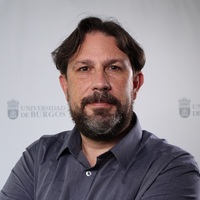
Daniel Carlos Narvaez Torregrosa (born 1968 in Las Palmas) is a Professor of Audiovisual Narrative in the Audiovisual Communication Degree program at the University of Burgos, Spain. He belongs to the Department of History, Geography and Communication within the Faculty of Humanities and Communication. His academic focus centers on cinema history and aesthetics, with particular expertise in Spanish and European film history. Dr. Narvaez Torregrosa earned his PhD in Art History from the University of Murcia with a dissertation on 'History of Cinema in Alicante (1896-1931)'. His scholarly work demonstrates a deep engagement with the historical development of cinema across multiple geographical contexts, including Spain, Mexico, Central Europe, and Finland. His research consistently bridges historical analysis with cinematic aesthetics. His publications reveal a researcher deeply invested in how cinema reflects and shapes historical consciousness. The articles span from early cinema exhibitions in Spanish and Mexican cities to analyses of WWII representations in Central European cinema, and from studies of German expressionism to examinations of women's representation in historical film narratives. His work shows particular attention to how local contexts interact with broader cinematic movements. Dr. Narvaez Torregrosa has authored several significant books including 'Marin y Vaillard: Pioneers of the Film Industry and Their Era', 'Alicante se rueda (1902-2014)', 'The Beginnings of Cinematography in Alicante 1896-1931', 'The Defeat of the Third Reich Through Cinema', and 'The Beginnings of Cinema'. These works establish him as a leading scholar in Spanish film history. His research methodology consistently combines archival work with theoretical film analysis, creating rich historical narratives grounded in primary documentation. His work on early film exhibitions in Spanish cities demonstrates particular rigor in using local archives to reconstruct cinematic history. Dr. Narvaez Torregrosa's academic contributions extend beyond his publications to include curating exhibitions and contributing to public understanding of cinema history through accessible scholarly work that bridges academic and public audiences.
Dr. Dana Healy is a Senior Lecturer in Vietnamese at SOAS University of London, where she is affiliated with the School of Languages, Cultures and Linguistics and serves as an Associate Member of the Centre for Media and Film Studies. Her academic work focuses on Vietnamese language, literature, and culture, with particular expertise in modern Vietnamese literary and cultural studies. Dr. Healy earned her PhD from Charles University in Prague, specializing in Vietnamese studies. Her academic background combines linguistic expertise with deep cultural knowledge of Vietnam, enabling her to bridge language instruction with sophisticated cultural analysis. Dr. Healy's research spans multiple dimensions of Vietnamese cultural production, with particular focus on modern Vietnamese literature and its relationship to social and political contexts. Her work examines how literature and film reflect and shape Vietnamese identity, especially regarding gender, war memory, and the process of renovation (Doi Moi). She has made significant contributions to understanding the Vietnamese diaspora experience and the evolution of contemporary Vietnamese literary culture in both Vietnam and abroad. Analysis of Dr. Healy's publications reveals a consistent engagement with themes of war, gender, and cultural identity in Vietnamese artistic production. Her work demonstrates an evolving focus from historical analysis of war representation to more contemporary explorations of gender and sexuality in Vietnamese literature. The interdisciplinary nature of her scholarship connects literary studies with film studies, gender studies, and cultural sociology, creating a rich tapestry of Vietnamese cultural analysis. Dr. Healy has supervised PhD students including Joshua James Croft Black, whose 2017 dissertation focused on "Queer male identities in modern Vietnamese literature." Her mentorship extends to guiding students through Vietnamese language acquisition and cultural understanding, supporting both academic research and practical language skills development.
Paolo Garza is an Associate Professor in the Department of Control and Computer Science (DAUIN) at the Polytechnic University of Turin, where he also serves as Coordinator of the College of Computer, Film and Mechatronics Engineering. He is a member of the DBDM research group and the SmartData@PoliTO laboratory, and actively contributes to academic governance through roles in teaching coordination and PhD program committees. Education: Bachelor’s in Computer Engineering, Polytechnic University of Turin (2001) PhD in Computer and Systems Engineering, Polytechnic University of Turin (2005) His research centers on data science, big data analytics, data mining, and machine learning , with applications in emergency management, real-time communications, Earth observation, and cybersecurity. He has led and participated in numerous national and commercial research projects, including AI4CTI and NODES (PNRR), and has collaborated with industry partners like Cisco Systems. His work bridges theoretical algorithm development and practical deployment in critical systems. The recent publications reflect a strong trend toward multimodal AI, crisis informatics, and intelligent networking . Articles span computer vision for environmental monitoring (e.g., burned area detection, canopy estimation), ML for real-time communication quality, multimodal document understanding, and crisis response systems. His team leverages deep learning, transformers, and vision-language models across diverse domains. Scientific Service: Associate Editor, Knowledge and Information Systems (2024–) Associate Editor, Expert Systems with Applications (2022–) General Co-Chair, IEEE AICT Conferences (2022, 2023) He mentors several PhD students and leads funded research initiatives focused on AI for sustainable industry and cyber threat intelligence. His teaching includes graduate courses on big data processing, distributed architectures, and data science lab methods. He has also directed commercial training programs and research contracts in machine learning and cybersecurity. Research Labs & Teams: DBDM - Database and Data Mining Group (DAUIN) SmartData@PoliTO - Big Data and Data Science Laboratory LAB 5 - Research Laboratory (DAUIN)
Nirmalie Wiratunga is a Professor in Intelligent Systems at the School of Computing , Robert Gordon University, and serves as the Associate Dean for Research . She is also an Adjunct Professor at the Norwegian University of Science and Technology (IDUN program). Her academic excellence spans over two decades in Artificial Intelligence and Machine Learning , with a focus on Explainable AI (XAI) , Case-Based Reasoning (CBR) , and Natural Language Processing (NLP) . Her research explores innovative methodologies for knowledge-rich representations to automate decision-making through CBR for Retrieval-Augmented Q&A systems and human-centered AI platforms . She co-founded Attendr.app , a spinout for student and conference attendance tracking, and leads the Artificial Intelligence & Reasoning Research Group at RGU. Recent publications (2024–2025) highlight her work on LLM hallucination detection , counterfactual explanations in finance , cross-lingual biomedical review automation , and multi-query resolution in legal domains . Themes span AI explainability , NLP , CBR , and domain-specific knowledge integration across healthcare, law, and education. Her leadership extends to organizing international workshops on XAI , digital health , and Deep Learning , and co-chairing the ICCBR 2021 and 2022 conferences. She actively contributes to program committees for ECCBR , ECML/PKDD , and IJCAI .
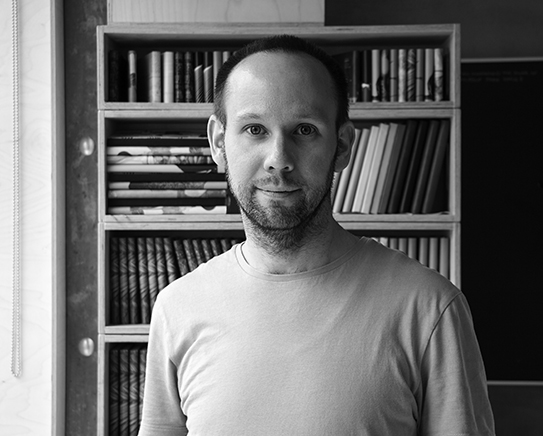
Karol Prudil is a Slovak graphic designer and typographer serving as a Lecturer in the Department of Visual Communication at the Academy of Fine Arts and Design in Bratislava. His professional practice spans publication design, packaging design, typeface creation, and visual identity development, balancing academic responsibilities with an extensive portfolio of commissioned work for publishers, cultural institutions, and commercial clients across Europe. Prudil's educational foundation includes: Master of Fine Arts from Academy of Fine Arts in Bratislava, Department of Visual Communication (2003-2009) under Doc. Pavel Choma Academy of Arts, Architecture and Design in Prague – Font and Typography studio (2008) with František Štorm SOU Polygraphics in Bratislava diploma (1997-2001) His creative research explores materiality in typography, innovative book structures, and the relationship between form and function in visual communication. Prudil has developed several notable typefaces including Klin and its variants, recognized for blending geometric precision with organic, tactile characteristics. His design philosophy emphasizes thoughtful material choices, structural innovation, and creating meaningful user experiences through interactive elements in books and packaging. The recurring themes in his portfolio include spatial relationships in two-dimensional design, material experimentation, and systems that invite user participation across physical and digital media. Analysis of Prudil's publication history reveals consistent exploration of book form boundaries and sophisticated understanding of typography across media. His work bridges historical design traditions with contemporary needs, resulting in conceptually rich yet functionally elegant solutions. The evolution from his early award-winning lie-stand book (2007) to current remini notebook brand demonstrates maturation from experimental forms to sustainable commercial applications while maintaining design integrity. Prudil's professional recognition includes: National Design Award 2009 – Klin Font recognition National Design Award 2007 – interactive book lie-stand recognition As an educator, Prudil conducts workshops on book binding and paper work since 2011, alongside lectures on books, paper, and business development. His teaching emphasizes hands-on material experience while developing conceptual depth. His professional practice operates through the registered brand 'remini' (established 2012), focusing on notebooks and diaries, and through collaborations with publishing houses and cultural institutions including participation in international projects like the SIDEWAYS exhibition at the Venice Architecture Biennale.
Cynthia Lucia is Professor of Media Arts and Director of the Film and Media Studies Program at Rider University, with cross-appointments in American Studies, Gender and Sexuality Studies, and Law and Justice faculties. Her work bridges film criticism, historical analysis, and interdisciplinary cultural studies. Education: B.S., Indiana University of Pennsylvania M.A. in English, New York University M.A. in Cinema Studies, New York University Ph.D. in Cinema Studies, New York University Dr. Lucia's research centers on gender representation in film (particularly female lawyers), American cinema history, and intersections of law/justice with visual media. Her scholarship critically examines power structures through feminist and interdisciplinary lenses, with significant contributions to understanding Hollywood narratives and independent film. Recent work explores film preservation, auteur studies, and evolving media landscapes. Her publication trajectory reveals deepening engagement with American film historiography, director studies (Kubrick, Allen), and contemporary issues in media criticism. Key thematic threads include gender politics in courtroom dramas, adaptation theory, and the cultural impact of independent cinema across decades. Scientific Awards: None documented in source materials. Dr. Lucia maintains extensive editorial commitments including Cineaste (over 30 years on editorial board) and Quarterly Review of Film and Video. She co-chairs Columbia University's Seminar on Cinema and Interdisciplinary Interpretation since 2015. While student advising details aren't specified, her pedagogical work includes curriculum development for media-rich classrooms. Her leadership extends to interdisciplinary academic communities through editorial boards and seminar direction, fostering dialogue between film studies, gender theory, and legal scholarship.
Anne Condamines is a Research Director at CNRS, affiliated with the CLLE (Cognition, Languages, Language, Ergonomics) laboratory at University Toulouse - Jean Jaurès. Her work bridges corpus linguistics, terminology, and cognitive ergonomics, focusing on specialized communication and controlled language applications. Key affiliations: CNRS, CLLE, EDF R&D, CERN collaborations Research themes: Terminology construction, linguistic variation in specialized contexts, cognitive aspects of term usage Research Highlights : 2024: Analyzed controlled language effectiveness in technical communication 2022: Explored knowledge-rich contexts and exobiology terminology 2021: Investigated terminological anomalies and conceptual relations Academic Contributions : Co-developed textual terminology frameworks Founded MAR-REL (Conceptual Relation Markers Database) Pioneered ergonomic linguistics for language engineering
Selma Tekir is an Associate Professor in the Computer Engineering Department at Izmir Institute of Technology. She completed her undergraduate studies in Computer Engineering at Ege University in 2001, followed by a master's degree from Izmir Institute of Technology in 2004, and earned her PhD from Ege University in 2010. In 2009, she worked as a visiting researcher at the University of Konstanz, Germany. Her educational background includes: B.Sc.: Computer Engineering, Ege University (2001) M.Sc.: Computer Engineering, Izmir Institute of Technology (2004) Ph.D.: Computer Engineering, Ege University (2010) Dr. Tekir's research spans multiple areas of natural language processing and computational linguistics, with a particular focus on Turkish language processing. Her work explores text mining, news analysis, information warfare, and the application of deep learning techniques to linguistic problems. She has made significant contributions to counterfactual detection in Turkish, multi-modal language models, and the integration of symbolic reasoning with neural approaches. Her research often bridges theoretical advances with practical applications, particularly in the Turkish language context which presents unique challenges as a morphologically rich agglutinative language. Analysis of her recent publications reveals a strong trend toward advancing natural language understanding systems for Turkish, developing methods for counterfactual detection, enhancing question answering systems with knowledge graphs, and applying graph neural networks to biological sequence analysis. Her work demonstrates growing interest in combining symbolic reasoning with neural approaches and exploring self-reflection capabilities in language agents. Dr. Tekir has received research funding for projects including: Consistency and Reliability Assessment in News Chains (TÜBİTAK ARDEB 3501) Application of Data Analysis and Visualization Techniques on Historical Sources (BAP) She teaches courses including CENG 381 - Stochastic Processes, CENG 613 - Scientific Research Methods in Computer Science, and SEDS 501 - Introduction to Data Science.
John Chilver is a Senior Lecturer in Fine Art at Goldsmiths, University of London, where he teaches within the Department of Art. As an artist and writer, he works primarily with painting, film and text, exploring painting as a site of inquiry that renders complexity through additive and subtractive processes. His research interests span a wide range of topics in contemporary art theory and practice: Contemporary painting and its theoretical frameworks Theorizations of agency, the new, and subject-formation The political and affective economies of painting Conceptual and postconceptual art practices Colour theory and its limitations Art theory, criticism, and their historical development Display and exhibition-making practices Oscillations between anthropological and normative understandings of art Theorizations of space and place in artistic contexts Chilver's scholarly output demonstrates a consistent engagement with contemporary painting theory, with recent work focusing on 'minor painting' as a critical framework. His publications span art theory, criticism, and historical analysis, with particular attention to the intersections of painting with conceptual practices, spatial theory, and political discourse. His writing appears in prominent journals including the Journal of Contemporary Painting, Art Papers, Afterall, and Frieze. Notable scholarly contributions include: 2022: 'Minor Matters of Major Importance: On the Vicissitudes of Minor Painting' (Journal of Contemporary Painting) 2018: 'The discursive array: Towards a politics of painting as time–space production' (Journal of Contemporary Painting) 2016: Review of Bridget Riley's work (Journal of Contemporary Painting) 2014: 'Number intersecting with art: three studies' (Distinktion: Journal of Social Theory) Chilver has also edited the 2022 special issue of the Journal of Contemporary Painting on 'Minor Painting' and has contributed to numerous exhibition catalogs and anthologies. His academic work is deeply intertwined with his practice as an exhibiting artist, creating a rich dialogue between theoretical inquiry and artistic production.
Gail Murphy is a Professor in the Department of Computer Science and Vice-President Research & Innovation at the University of British Columbia (UBC). A co-founder of Tasktop Technologies Incorporated, she leads the Software Practices Lab and is affiliated with CAIDA (Centre for Artificial Intelligence Decision-making and Action) and ICICS (UBC Institute for Computing, Information and Cognitive Systems). B.Sc. (Honours), University of Alberta (1987) M.Sc., University of Washington (1994) Ph.D., University of Washington (1996) Her research focuses on software engineering , particularly improving knowledge worker productivity and tools for evolving large-scale systems. She combines lightweight design approaches with industrial evaluations, addressing structural degradation in software systems through: Techniques for understanding/imposing structure in existing systems Design approaches for component reuse and flexible architectures Her recent work includes developer discussion analysis for design recovery (2022), semantic-based task relevance detection (2022), and automated resource-task association (2023). Awards include SIGSOFT Outstanding Research Award (2023), ACM Fellow (2023), and Royal Society of Canada Fellow (2023). She has taught courses like Introduction to Software Engineering (CPSC 310) and Software Construction (CPSC 210).