Mikael Johansson is a Professor at Kungliga Tekniska Högskolan (KTH), specializing in Control Technology . He teaches and coordinates courses such as Distributed Optimization (FEL3311) and various advanced-level degree projects in computer science, electrical engineering, and systems engineering. His research spans Control Systems , Machine Learning , and Optimization , with a focus on asynchronous algorithms, federated learning, and applications in energy systems and construction. His work includes 15 recent publications on topics like neural networks, distributed optimization, and battery technology. Notable areas of contribution are in asynchronous learning, federated learning with privacy constraints, and quasi-Newton methods for optimization. His research bridges theoretical advancements with practical applications in urban design, healthcare, and autonomous systems.
Dr. Lucie Kruse is a researcher at the Department of Informatics, University of Hamburg, specializing in Human-Computer Interaction (HCI) and Virtual Reality (VR). Her work focuses on immersive user interfaces for cognitive and physical training, particularly for older adults and those with dementia. She has been an active member of the University of Hamburg's HCI group since 2018 and served on the Ethics Commission since 2023. Her research interests include: Virtual Reality Exergames Serious Games Assistive Technologies Accessibility in VR Mental Health Applications Her publications from 2021-2025 demonstrate expertise in designing VR systems for healthcare, analyzing age-related interaction patterns, and developing inclusive interfaces. She has received multiple awards including the 2024 Honorable Mention for Best Poster at ACM SUI and the 2023 Honorable Mention at ACM CHI. Scientific Awards: Honorable Mention for Best Poster Award at ACM SUI (2024) Runner-Up Prize at Metaverse for the Good (2024) Honorable Mention at ACM CHI'23 Interactive Demo (2023) Honorable Mention at ACM VRST (2021) She has supervised multiple theses on topics like AI agents for mental health, accessibility of chatbots for seniors, and VR exergame design. Her work spans collaborations with institutions like HITLab NZ and Western Sydney University's MARCS Institute.
Professor Leif Isaksen is a leading scholar in Digital Humanities and Ancient History at the University of Exeter, holding a chair in the Department of Classics, Ancient History, Religion and Theology. He also serves as Theme Lead for Humanities, Heritage and the Creative Industries at the Institute for Data Science and Artificial Intelligence (IDSAI). With a background in archaeology and a focus on Spatial-temporal representation in humanities Intelligent systems for historical data Digital skills development in arts and humanities , his work bridges classical scholarship and computational innovation. His research includes Pelagios Network projects like Recogito and Peripleo , which revolutionized semantic annotation and geospatial analysis of ancient texts. He directed the Cluny Hill Dig and co-founded initiatives like Hot Source! and DISKAH to democratize digital humanities skills. Key professional roles include: Executive Board Chair of ADHO (2019-2021) Co-Director of Web Science CDT at Southampton Active leadership in CAA, EADH, and ISHMap Scientific honors include fellowships at the Society of Antiquaries of Scotland and former affiliations with the Alan Turing Institute and Society of Antiquaries of London . His work aligns with UN Sustainable Development Goals 9: Industry, Innovation and Infrastructure and 4: Quality Education .
Maarten Sap is an Assistant Professor at Carnegie Mellon University's Language Technologies Institute with a courtesy appointment in the Human-Computer Interaction Institute. He also holds a part-time research scientist position at the Allen Institute for AI (AI2) as an AI safety lead. Current affiliations: CMU (2022–present), AI2 (2022–present) Prior: Postdoctoral Researcher at AI2 (2021–2022), Research Intern at AI2 (2018–2019) and Microsoft (2019) His research focuses on enhancing AI systems with social intelligence and addressing social biases in language technology. Key themes include: Ethical AI and Human-Centric Design Narrative Dynamics and Social Context Analysis AI Agents and Social Intelligence Toxic Language Detection and Cultural Bias Mitigation Recent publications examine: AI safety frameworks like HAICOSYSTEM Clinical reasoning alignment (ALFA) Multilingual moderation (PolyGuard) Cultural sensitivity in non-verbal AI (Mind the Gesture) Personality shaping in LLMs (BIG5-CHAT) Scientific Recognition: 2025 Okawa Research Grant Best Paper Runner Up - NAACL 2025 Outstanding Paper - EMNLP 2023 Best Paper - FAccT 2023 Best Paper - WeCNLP 2020 He advises a diverse group of PhD students across CMU and MIT, and has served on multiple program committees including ACL, EMNLP, and FAccT. His work appears in top venues like Nature Machine Intelligence, PNAS, and ACL.
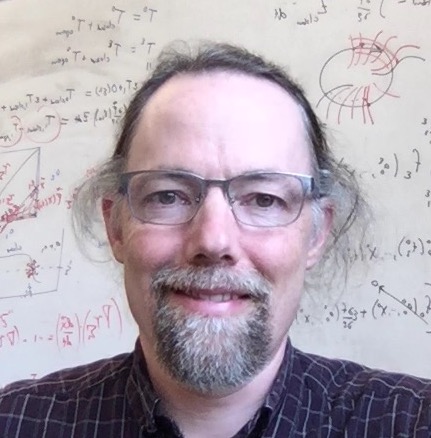
Christopher Rycroft is a Professor and Associate Chair in the Department of Mathematics at the University of Wisconsin–Madison. He leads the Rycroft Group, which focuses on mathematical modeling and scientific computation for interdisciplinary applications in science and engineering. Prior to joining UW-Madison in summer 2022, he was a professor at Harvard University's School of Engineering and Applied Sciences from 2014-2022, and before that a Morrey Assistant Professor at UC Berkeley from 2010-2013. Professor Rycroft's research spans three main areas: numerical methods for material mechanics, data-driven discovery, and computational geometry. His group develops new computational methods while working directly with domain scientists. Key achievements include the development of the reference map technique for fluid-structure interaction, Voro++ software library for Voronoi tessellation, and novel approaches to understanding crumpling physics. His work combines traditional analysis and modeling with machine learning methods to extract scientific insights from complex data. The Rycroft Group's publication record demonstrates a strong trajectory of interdisciplinary research bridging mathematics, physics, materials science, and biology. Recent work has focused on fluid-structure interaction, computational geometry applications, mechanical metamaterials, and biological fluid dynamics. The group develops both theoretical frameworks and practical software tools that have found applications across diverse scientific domains from materials science to virology. Everett Mendelsohn Award for Excellence in Mentorship (2021) Professor Rycroft has advised numerous PhD and master's students who have gone on to postdoctoral positions at institutions including MIT, EPFL, and Cornell. His teaching includes advanced scientific computing courses that have quadrupled in enrollment during his tenure. He has secured research funding supporting his group's work on computational methods and interdisciplinary applications. The Rycroft Group consists of graduate students, postdocs, and collaborators with diverse backgrounds in applied mathematics, physics, engineering, and computer science. The group maintains active collaborations with researchers across multiple institutions and participates in centers such as the Harvard Quantitative Biology Initiative.
Bernhard von Stengel is a Professor of Mathematics at the Department of Mathematics, London School of Economics and Political Science . His work bridges game theory, computational complexity , and mathematical economics , with a focus on equilibrium computation and algorithmic aspects. Developed Game Theory Explorer , open-source software for analyzing strategic and extensive-form games. Organized major workshops like What is Strategic Information? (2024) and Game Theory and Machine Learning (2023). Authored the textbook Game Theory Basics (Cambridge University Press, 2021). His research spans zero-sum games , correlated equilibrium , inspection games , and communication over noisy channels . Recent work includes characterizing the Condorcet dimension of metric spaces (2024) and stable-set bounds for Nash equilibria in bimatrix games. He has collaborated with institutions like the Game Theory Society and contributed to public discourse via talks on algorithms' societal impact (2021) and game theory in politics (2020).
Prof. Dr. Ulrich Rosar has held the Chair of Sociology II at the Institute of Social Sciences, Heinrich Heine University Düsseldorf , since 2010. He served as Dean of the Faculty of Philosophy at HHU Düsseldorf (2015–2019) and was re-elected as Deputy Spokesperson of the Düsseldorf Institute for Internet and Democracy (DIID) in December 2023. His academic work bridges political sociology , sociological inequality analysis , and empirical social research methods . Research Focus: Political sociology (candidate attractiveness, voting behavior, media influence); inequality analysis (implicit biases in electoral outcomes, structural disparities); empirical methods (ALLBUS data, longitudinal studies). Publications: Recent work examines physical attractiveness in elections (2005–2021 German federal elections), digital campaigning trends , and social media’s impact on electoral success (2023–2025). Earlier studies include ALLBUS data analysis (2020) and historical political discourse (2018).
Koray Tahiroglu is a University Lecturer at Aalto University's School of Arts, Design and Architecture, specializing in Sound and Music Computing. His work bridges artificial intelligence, digital musical instruments, and embodied interaction, with a focus on deep learning applications in audio synthesis and human-AI creative collaboration. His research explores New Interfaces for Musical Expression (NIME), sonic interaction, and physical computing. He collaborates with SOPI Research Group and Google Brain Team (Magenta) on AI-driven artistic innovation. Recent Publications : 2024 studies on dance-sound cross-correlation and intra-action frameworks; 2023 work on AI-terity and deep learning syllabi; 2022 explorations of GAN synthesis, musical expectations, and lifeworld sonification. Scientific Awards : Co-Creative Artificial Intelligence of Music (2022) 2010 grant for scientific publications and artistic activities 2017 Honorable Mention for mobile cultural heritage research Tahiroglu contributes to digital art education and leads projects at Media Lab Helsinki, advancing sonic interaction and generative audio systems.
Katie Headrick Taylor is an Associate Professor at the University of Washington College of Education , Department of Learning Sciences & Human Development . Her work focuses on reimagining public education through digitally mediated, intergenerational learning initiatives that prioritize equity and collaboration across diverse communities. Research Interests: Digital Literacies Equity Studies Learning Sciences & Human Development Qualitative Research Methods Technology in Teaching and Learning Her recent publications explore themes such as locative literacies , community technology mapping , and equity-driven STEM collaboration , emphasizing mobile and geospatial technologies. Theoretical frameworks center race, class, culture, gender, and place in learning processes.
Siew, Shu Qin Cynthia is an Assistant Professor at the National University of Singapore, specializing in psycholinguistics and cognitive science. She holds a Ph.D. and M.A. from Kansas University (KU) and a B.Soc.Sci. (Hons.) from NUS. Her research focuses on applying network analysis to study cognitive structures like the mental lexicon and semantic memory. Education: Ph.D. in Psychology, KU M.A. in Psychology, KU B.Soc.Sci. (Hons.) in Linguistics, NUS Her work integrates cognitive psychology experiments, computational modeling, and linguistic corpora to explore two core themes: (1) How lexicon structure influences processing (e.g., phonological/orthographic similarity affecting word recognition), and (2) How lexicon structure evolves over time (e.g., language acquisition across monolinguals and bilinguals). Recent publications highlight her innovative use of network science to model phonological and semantic networks and software tools like spreadr for simulating spreading activation. This work bridges computational methods with empirical studies on lexical retrieval and memory organization.
Rachel Midura is an Assistant Professor of Digital and Early Modern European History in the Department of History at Virginia Tech's College of Liberal Arts and Human Sciences. Her research focuses on the intersection of digital methodologies and early modern European history, particularly examining how communication networks shaped political power and intelligence gathering during the sixteenth and seventeenth centuries. Education: PhD in History from Stanford University (2014-2020) Rachel Midura specializes in digital history approaches to early modern Europe, with particular expertise in the history of information systems. Her work examines how the development of postal networks, print technology, and state intelligence operations created an 'information age' in the early modern period, long before the digital revolution of our own time. She integrates twenty-first century understanding of media and social networks with traditional historical approaches to develop new models for understanding historical communication. Her research often draws on extensive digitization projects to synthesize innovative historical perspectives on how information moved, was controlled, and shaped political power in early modern Europe. Midura's scholarly output demonstrates a consistent focus on the connections between physical travel routes, communication networks, and intelligence gathering in early modern Europe. Her work bridges traditional historical research with digital humanities methodologies, creating new pathways for understanding how information circulated in pre-modern societies. Through data-driven approaches to historical travel itineraries and postal networks, she reveals how early modern states developed sophisticated surveillance and intelligence systems that anticipated modern practices. Scientific Awards: Early Career Scholarly Impact Award (2025) Honorable Mention: Article Prize for Early Modern and Medieval History (2024) As an educator, Midura has developed innovative courses that integrate digital methodologies with historical content, including specialized offerings on espionage and surveillance in early modern Europe. Her teaching philosophy emphasizes the importance of making historical knowledge accessible through digital curation and annotation. She actively participates in professional development activities focused on inclusive teaching practices and has received funding for curriculum innovation in digital history education. Midura leads the Early Modern Digital Itineraries (EMDigIt) project, which transforms early printed itinerary books to support new data-driven approaches to the history of travel. This NEH-funded initiative represents a significant contribution to digital humanities methodology while advancing our understanding of historical mobility patterns and information networks.
Peter J. Thomas is a Professor in the Department of Mathematics, Applied Mathematics, and Statistics at Case Western Reserve University's College of Arts and Sciences, with secondary appointments in Electrical Engineering and Computer Science, Cognitive Science, and Biology. He serves as Co-Editor-in-Chief of Biological Cybernetics and leads the Computational Biomathematics Laboratory. Primary Affiliation: Department of Mathematics, Applied Mathematics, and Statistics Secondary Affiliations: Department of Electrical Engineering and Computer Science, Department of Cognitive Science, Department of Biology Leadership: Co-Editor-in-Chief of Biological Cybernetics Thomas earned his B.A. in Physics and Philosophy from Yale University (1990), M.S. in Mathematics from the University of Chicago (1994), and both M.A. in Conceptual Foundations of Science and Ph.D. in Mathematics from the University of Chicago (2000). His research spans mathematical neuroscience, theoretical biophysics, and information theory applications to biological systems. Thomas specializes in understanding how noise and stochasticity affect neural coding, developing mathematical frameworks for gradient sensing in cells, and applying graph theory to biological networks. His work on stochastic shielding has provided novel approaches to simplifying complex stochastic models while preserving essential dynamics. His research bridges theoretical mathematics with experimental neuroscience through collaborations with the Chiel laboratory and others. Thomas's recent publications demonstrate a strong focus on stochastic oscillators, sensory feedback mechanisms, and information theory applications to biological systems. His work consistently develops novel mathematical frameworks to address specific biological questions, with significant contributions to understanding phase dynamics in neural oscillators and information processing in biochemical signaling. Core Fulbright Scholar Program (2013) Simons Fellow in Mathematics Program (2014) Multiple NSF grants as Principal Investigator Co-Editor-in-Chief of Biological Cybernetics Thomas has mentored numerous students at all levels, from undergraduates to postdoctoral researchers. His laboratory has produced successful scholars who have gone on to faculty positions at institutions like New Jersey Institute of Technology and the University of Nevada, Reno. He has actively organized workshops at the Banff International Research Station and served on editorial boards for leading journals in computational neuroscience. The Computational Biomathematics Laboratory focuses on developing mathematical frameworks to understand neural dynamics, cellular signaling, and pattern formation. The lab maintains strong collaborations with experimental neuroscience groups and has made significant contributions to understanding rhythmic neural systems, respiratory control mechanisms, and information processing in biological systems.
Thad Starner is a Professor in the College of Computing at Georgia Institute of Technology and Technical Lead/Manager on Google's Glass. He directs the Contextual Computing Group (CCG), co-founded the Animal Computer Interaction Lab, and contributes to Georgia Tech's Ubicomp Group and Brainlab. A wearable computing pioneer since 1993, he has over 500 publications and 80 issued U.S. patents. Coined 'augmented reality' in 1990 Developed CopyCat for ASL learning in deaf children Invented Passive Haptic Learning for skill acquisition His research spans wearable interfaces for Deaf-hearing communication, dolphin interaction systems (CHAT), dog-handler communication (FIDO), and brain-computer interfaces for ALS patients. Current projects focus on optical aging simulation, XR input methods, and animal behavior telemetry. Recent publications (2023-2025) explore AR display ergonomics, AI-augmented reasoning, sign language recognition, and animal-computer interaction. His work has been featured in 60 Minutes, BBC, National Geographic, and Time Magazine. CHI Academy (2017) Lemelson-MIT Prize finalist White House Champions of Change finalist He advises graduate students in wearable systems and teaches AI and prototyping courses. His lab developed the Perceptive Workbench for gesture tracking and created early Eigenfaces research for face recognition.
Prof. Dr. Axel Mecklinger is a leading cognitive neuroscientist at Saarland University , specializing in the neurocognition of memory and language through spatiotemporal brain imaging (EEG/MEG/fMRI). His career spans over three decades, with significant contributions to understanding visual working memory , associative recognition , and memory development . Key research areas: Memory binding, ERP subsequent memory effects, novelty detection, and cognitive aging Major grants: DFG Research Groups, Collaborative Research Centers, and international collaborations with the Chinese Academy of Sciences Scientific leadership: Organized conferences, edited journals, and served as speaker for research training groups His recent work explores unitization in memory formation , cross-cultural differences in memory processing , and theta neurofeedback interventions . Awards include the Early Career Award of the German Psychophysiology Society (1992) and the European Federation of Psychophysiology Societies' Federation Prize (1994). Current projects investigate the neural mechanisms of semantic surprisal and memory plasticity in aging populations.
Neda Haj Hosseini is a Senior Lecturer and Associate Professor in Biomedical Engineering at Linköping University's Department of Biomedical Engineering (IMT) . She contributes to teaching courses like TBMT56 - Medical Technology and TBME08 - Biomedical Modeling and Simulation , while leading research initiatives in AI-driven cancer diagnostics and biomedical optics. Research Focus: Development of AI methods for cancer diagnostics, optical coherence tomography (OCT) applications, and fluorescence spectroscopy in surgical guidance Affiliations: Center for Medical Image Science and Visualization (CMIV) , Analytic Imaging Diagnostic Arena (AIDA) , Swedish Medical Technology Association Recent Research Trends demonstrate expertise in applying deep learning to: Pediatric brain tumor classification using multimodal imaging Optical biopsy techniques for intraoperative decision support Automated biomarker quantification in histopathology Medical imaging data integrity and algorithm validation Scientific Awards include grants from: Joanna Cocozza Foundation (2022) Swedish Childhood Cancer Foundation (2024) Academic Leadership involves mentoring students in projects such as: "Multiple Instance Attention-based Learning for Brain Tumor Classification" "Vision Transformers for Multiclass Brain Tumor Tissue Classification" "Reaction-diffusion Models for Image-driven Tumor Simulation"