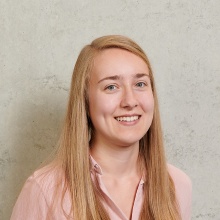
Verena Biener is a Research Associate at the Visualization Institute (VISUS) of the University of Stuttgart, affiliated with the Schmalstieg Working Group. Her work focuses on Mixed Reality, Augmented Reality, and Human-Computer Interaction, with contributions to 3D scene generation, VR input methods, and educational visualization. Current research explores task-aware mixed reality collaboration spaces and immersive language learning interfaces Recent publications address productivity in public mixed reality environments and physical keyboard input in virtual reality Focus on practical applications of visualization technologies across domains
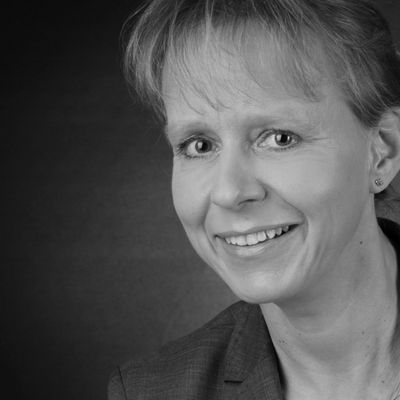
Katarina Planer is a Professor for Nursing/Nursing Management at Esslingen University of Applied Sciences since 2017, following prior roles at the Bern University of Applied Sciences (2015–2017) and a return to HS-Esslingen (2014–2015). Her expertise spans care quality management , systemic nursing , and staff deployment planning . Education : Diploma in Nursing Management (Catholic University of Applied Sciences, Osnabrück, 1999–2003) Master's in Nursing Science (PTHV, 2006–2008) Doctorate (PTHV, 2008–2014) Systemic Therapist Training (2003–2007) Research Focus : Her work bridges standardized nursing research methods with ethically grounded practice , emphasizing staffing ratios , quality indicators , and digital transformation in care systems. Key themes include workforce shortages , policy reform , and patient autonomy . Publications highlight trends in care process planning , fee structures , and regional demand analysis across Germany and Luxembourg. She advocates for systemic approaches to address care crises and workload challenges .
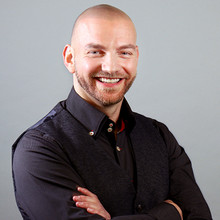
Dr. Christian Büning is a researcher at the Institute for Dance and Movement Culture at the German Sport University Cologne (DSHS). He is actively involved in research on digitalization in sports education, movement pedagogy, and the integration of technology in physical education. His work spans multiple interdisciplinary projects, particularly focusing on avatar-based visualization, AI in teaching, and blended learning in dance and sports contexts. Education: Diploma in Sports Science, German Sport University Cologne (2007–2012) B.Sc. in Psychology, FernUniversität in Hagen (2013–2016) His research interests include creativity assessment, cognitive inhibition, digital tools in education, and embodied learning. He explores how motion visualization and artificial intelligence can enhance teaching and learning in school and university sports settings. His work often involves collaborative, practice-oriented projects with educational and technological dimensions. The recent publications highlight a strong trend toward digital innovation in sports pedagogy, with a focus on avatar-supported systems, markerless motion capture, and AI-driven annotation tools. These works reflect a commitment to transforming traditional teaching methods through technology, especially in dance and physical education. Scientific Awards: 1. Platz für herausragende Hochschullehre 2019/20 (DSHS Teaching Prize, 2020) Fellowship für Innovationen in der digitalen Hochschullehre (2022) Nachwuchspreis der DSHS Köln für beste Dissertation (2025) Dr. Büning has been involved in multiple funded and self-initiated projects such as ComeSport, #vortanz, and Listen to Gym, often in collaboration with colleagues like Claudia Steinberg and Marco Grawunder. These projects emphasize innovation in teaching, digital competence, and interdisciplinary research. He also advises on educational design and participates in academic and artistic events, including guest lectures and performance curation. While no formal advisees are listed, his leadership in collaborative research suggests a mentoring role. He is associated with the Institute for Dance and Movement Culture and has previously worked in the Institute for Movement Therapy and Movement-Oriented Prevention and Rehabilitation. His projects often involve cross-institutional teams and digital learning environments, functioning as dynamic research and development labs focused on the future of sports education.
Kerstin Schneider is a full-time Professor for Databases at Harz University of Applied Sciences since 2007. She operates within the Faculty of Automation and Informatics , focusing on database theory, data engineering, and AI-driven educational technology solutions. Current research emphasizes adaptive e-learning platforms (ALEA system) Interdisciplinary projects in AI Engineering (AiEng 2021-2025) Custom database applications for SMEs (TEA project) Her research interests span: Reliable workflow execution in distributed systems Multimedia information systems Semantic data recommendations Temporal XML database models Recent publications (2021–2017) highlight trends in: Academic database foundations Intelligent e-learning architectures Life science data analytics Historical data visualization Scientific Awards : 2004 Research and Innovation Award of the Rhine-Neckar Triangle Foundation She contributes to academic governance through roles in: Steering Committee for Fundamentals of Databases Examination Board AI Engineering Senate Deputy at Harz University Equal Opportunities Officer for AI Department Key collaborative projects include: APRICOTS (CORBA-based workflow systems) GEIST (Intelligent History Information Systems) Team projects with international universities Open Educational Resources (OER) development
Dr. Yevheniia Shyshkina serves as a Research Fellow at the Leibniz Institute for Jewish History and Culture – Simon Dubnow (Dubnow Institute) since September 2024. Her academic foundation includes a PhD in History from V.Karasin Kharkiv National University (2008), specializing in historiography and source studies with a dissertation on Ukrainian emergency paper money (1914–1925) as historical evidence. Her educational background: PhD in History (2008), V.Karasin Kharkiv National University, Ukraine. Thesis: "Emergency Paper Money of Ukraine in 1914–1925 as a Historical Sources" Studies in History and Archival Science (1999–2004), V.Karasin Kharkiv National University, Ukraine Dr. Shyshkina's research centers on critical source analysis across three interconnected domains: historical monetary systems (emergency money in post-imperial Europe), Holocaust studies (anti-Semitic propaganda on interwar German/Austrian notgelds), and contemporary disinformation (Russian-Ukrainian information warfare and "Russkiy Mir" ideology). Her methodology bridges economic history, visual symbolism analysis, and digital source criticism, revealing how propaganda evolves from physical currency to modern hybrid warfare tactics. Analysis of her 2021–2025 publications shows a decisive shift toward examining Russian imperialist strategies, particularly through educational frameworks and memory politics. While maintaining her foundational work on emergency money as historical evidence, she now applies source-critical techniques to digital warfare, demonstrating how historical propaganda mechanisms inform current disinformation campaigns during the Ukraine invasion. No scientific awards are documented in the available information. Dr. Shyshkina has secured competitive research funding including a VolkswagenStiftung grant for her 2022–2023 project at Moldova-Institut Leipzig and participated in the 2024 Leibniz ScienceCampus "Eastern Europe – Global Area". She co-edited the 2024 volume "Unsagbar: Erlebensgeschichten ukrainischer Frauen über die russische Invasion" documenting Ukrainian refugee women's testimonies. Her current Dubnow Institute fellowship focuses on visual-symbolic representations of the Jewish Question preceding the Holocaust. She collaborates with the Babyn Yar Holocaust Memorial Center (Kyiv, 2021) and contributes to the Dubnow Institute's research on Eastern European Jewish history, particularly examining how wartime experiences reshape collective memory and cultural identity in conflict zones.
Margret Plank is a Researcher at the German National Library of Science and Technology (TIB) , where she leads the Lab for Non-Textual Materials . Her work focuses on developing user-centered services for scientific videos, 3D models, and research data, with a strong emphasis on discoverability and reuse.
Prof. Dr.-Ing. Frank Schwarzbach is a Professor of Geoinformatics at the Faculty of Spatial Information , HTW Dresden. He teaches core modules like Geographic Information Systems I/II , Geodatabase Systems , and GIS Applications across Geomatics, Environmental Engineering, and Archaeology programs. His role includes being Studiendekan for the Master's in Geoinformatics/Management and a member of the university Senate. Current research focuses on GIS applications, historical map georeferencing, and multimedia spatiotemporal visualization. Projects include the Bohemian-Saxonian Literature Landscape interactive map and collaborations with museums, archaeological institutes, and government agencies. He has led GIS software testing initiatives and developed educational materials for geospatial standards. His publications and workshops since 2002 emphasize GIS interoperability, WebGIS, and vector graphics. He is also involved in laboratory operations for geoinformatics and data processing.
Annie Kurz is a researcher and artist at HfG Offenbach (Hochschule für Gestaltung Offenbach am Main), where she is conducting PhD research in the Department of Art under the supervision of Prof. Dr. Marc Ries and Prof. Kerstin Cmelka. She also teaches at the University of Applied Sciences, Mannheim. Her work bridges art, philosophy of technology, and postphenomenology, focusing on human-technology relations during states of disconnection. Her research interests center on postphenomenology , digital detox , and disconnection studies , with a speculative-artistic methodology. She investigates how being offline, unplugged, or disconnected shapes identity and lifeworlds, introducing the concept of absence relations . Her work draws on Don Ihde’s theories, emphasizing the multistability and non-neutrality of technology. The thematic trends in her recent publications and presentations reflect a deep engagement with the aesthetics of technological suspicion , non-use , and philosophical art practices . Her work spans from theoretical inquiry to performative interventions, such as Frauenbewegungen and SkypeLab , exploring care, identity, and digital mediation across transcontinental collaborations. Lecture Prize of the Federal State of Baden-Württemberg (2013) - awarded to SkypeLab Annie Kurz actively involves students in her seminars and artistic projects, fostering interdisciplinary dialogue. Her research is supported through academic collaborations and exhibitions, including her upcoming show Technocreep: Aesthetics of Suspicion at the Ludwigsburg Art Association (2024). She has presented at major international conferences such as EASST/4S, SPT, and PHTR. She is a core member of the SkypeLab research-art collective, which explores digital interfaces, perception, and identity through long-term transdisciplinary collaborations. The project has evolved into exhibitions, publications, and global networking across universities in Germany, Australia, and beyond. Another key initiative is OFF LABOR , a speculative laboratory exploring what it means to be 'off' digital networks, contributing to emerging disconnection studies.
Prof. Dr. Alina Huldtgren is a Professor of Digital Health and Intelligent User Interfaces at the Faculty of Media, Hochschule Düsseldorf, where she has been employed since November 1, 2020. She leads the research group CoDe for Health and serves as a project lead for the BMBF-funded CoCre-HIT initiative. Her work integrates human-centered design with digital health applications in care, well-being, and public health. University: Hochschule Düsseldorf School: Faculty of Media Department: Department of Media Academic Rank: Professor Research Group: CoDe for Health Key Projects: CoCre-HIT (BMBF) Her educational background includes a Diploma in Media Informatics from Westfälische Hochschule, a Master of Science in Interactive Systems from KTH Stockholm, and a PhD from Delft University of Technology (2012). She previously held academic positions at TU Eindhoven (Junior Professor) and Hochschule Rhein-Waal, where she was promoted to Professor in 2019. Her research focuses on user-centered, participatory, and value-sensitive design of digital technologies for health and care. Key areas include UX methodologies in healthcare, persuasive design (e.g., gamification, nudging), accessibility, ethical implications of digital health, and intelligent systems using AI and data science. She emphasizes responsible innovation and stakeholder inclusion in sociotechnical systems. She teaches a range of courses, including Usability Engineering and User Experience , Scientific Work , Design Thinking , and a full suite of modules in the Digital Health professional focus, covering technical, ethical, legal, and social aspects. Her teaching integrates agile project methods, design fiction, and real-world collaboration with healthcare stakeholders. Prof. Huldtgren has practical industry experience as a UI/UX designer at HMM Deutschland GmbH, a leading eHealth company, and as an IT consultant. Her international research experience includes work at the University of Wollongong (Australia), Mobile Life Center (Sweden), and the Value Sensitive Design Lab at the University of Washington (USA). Scientific Awards: No awards mentioned in the provided text. She advises on final theses and supervises project-based learning but no specific students are listed. She is actively involved in academic governance, serving on the faculty council, examination board, and the joint DAISY committee. Labs and Research Groups: CoDe for Health (research group leader) Former affiliation: Laboratory for Mixed Reality and Visualization (mirevi.de), HSD (2013–2018)
Gabi Schillig is a Professor at the Peter Behrens School of Arts, Hochschule Düsseldorf, within the Faculty of Architecture and Design. She is actively engaged in teaching and research, contributing significantly to design theory and experimental spatial practices. She holds key roles including member of the examination board, faculty council, and deputy chair of the Institute for Research in Applied Arts (IRAA). Additionally, she serves as a trusted academic advisor for the Studienstiftung des Deutschen Volkes. Her research focuses on conceptual design , spatial communication , and multisensory environments , with a strong emphasis on experimental exhibition formats and the interplay between digital and analog methods. Her work bridges artistic practice, spatial theory, and sensory engagement, fostering innovative approaches in applied arts. Gabi Schillig has no listed publications in the provided text, so no article trends can be analyzed. Member, Examination Board (Prüfungsausschuss) Member, Faculty Council (Fachbereichsrat) Deputy Chair, Institute for Research in Applied Arts (IRAA) Trusted Academic Advisor, Studienstiftung des Deutschen Volkes She is involved in academic governance and mentorship, supporting students and research initiatives within applied arts. No grant information is available in the provided content. She is associated with the Institute for Research in Applied Arts (IRAA), where she plays a leadership role as deputy chair, contributing to research strategy and interdisciplinary projects in the field of applied arts.
Britta Wandaogo is a Professor at the Peter Behrens School of Arts, Hochschule Düsseldorf – University of Applied Sciences, where she contributes to the Department of Design. She serves as the Equal Opportunities Officer for the Design department and is a member of the Digital Commission, reflecting her engagement in institutional development and inclusive practices. Her academic work centers on audiovisual media , encompassing media arts, digital communication, and visual culture. Her role in the Digital Commission highlights her interest in the integration of digital technologies within design education and practice. Britta Wandaogo is actively involved in advancing equity and digital innovation in academic settings. Her work bridges creative media practice with institutional leadership in higher education. She has contributed to initiatives promoting diversity and digital transformation, though specific grants or research projects are not detailed in the available text. Her office is located in room 06.2.083 at Münsterstraße 156, 40476 Düsseldorf, Germany.
Prof. Dr.-Ing. Sina Mostafawy is a full-time professor at the Faculty of Media, Düsseldorf University of Applied Sciences, teaching courses in computer graphics and computer animation since 2004. He studied Electrical Engineering at the University of Siegen with a focus on medical technology and earned his doctorate with distinction in 1997 for research on visualizing eye diseases and laser surgery simulations. Education : Degree in Electrical Engineering at University of Siegen PhD (with distinction) in scientific visualization His research interests span computer graphics, virtual reality, 3D modeling, and animation technologies. He has led innovative projects such as the first European CAVE presentation at CeBIT 1997 and co-founded rmh-media GmbH in 1997, specializing in real-time visualization and 3D computer animation for entertainment and edutainment applications. Key Projects : School of Animation (real-time workflow integration) Virtual Campus (interactive architecture model with weather simulation) Birds (polygon-based rendering pipeline exploration) The Art of Building (3D animation for architectural visualization) He teaches foundational and advanced modules including Basics of Computer Graphics , Advanced Computer Graphics , Computer Animation , and 3D Modeling with tools like Maya. His courses emphasize practical skills in graphics pipeline operations, realistic rendering methods, and interdisciplinary team collaboration.
Prof. Dr.-Ing. Thomas Bonse is a Professor in the field of Bildtechnik (Image Technology) at the Hochschule Düsseldorf (University of Applied Sciences Düsseldorf), Faculty of Media since 2000. His career includes roles as project leader at ITK Telekommunikation AG , group leader at the Forschungsinstitut für Telekommunikation , and R&D engineer at Grass Valley and Panasonic in the domain of advanced TV systems. Education: Diplom-Ingenieur (Dipl.-Ing.) and Doctorate (Dr.-Ing.) in Electrical Engineering from the University of Dortmund. Current Role: Teaching and research in image technology, supervising 15+ theses annually, and leading projects in HDR, broadcast workflows, and real-time video systems. His research focuses on media engineering , particularly in high dynamic range (HDR) imaging , video signal processing , and real-time broadcast systems . Key areas include: Quantisierung von Videoformaten ACES color workflow optimization Wireless video transmission AI-driven object detection IP-based broadcast infrastructures Photovoltaic soiling measurement via drones Recent research trends show emphasis on IP-based video transmission (2016-2023), HDR/SDR workflows (2021-2023), and automated studio systems (2018-2023). He has collaborated with institutions like the Institut für Rundfunktechnik (IRT) , Sportcast GmbH , and Ericsson . As a supervisor, he has guided students in: Automated camera control (Scheunert, 2020) Photovoltaic soiling detection (Mikulaschek/Scheunert, 2020) Sports broadcasting analytics (Mikulaschek, 2022) LED studio lighting systems (2023) Contact: thomas.bonse@hs-duesseldorf.de | Room 04.2.006, HSD Campus
Prof. Dr. Wolfgang Hagen is a Professor at Leuphana University of Lüneburg specializing in digital media, media and communication studies, cultural studies, and transdisciplinary studies. His academic work spans over two decades with significant contributions to media theory, digital culture, and historical media analysis. Hagen has published extensively on topics ranging from smartphone photography to the theoretical foundations of media systems. Specializes in digital culture, media theory, and transdisciplinary approaches to media studies Focuses on the intersection of technology, culture, and communication Active researcher with publications from 2003-2021 Editor of significant works on Niklas Luhmann's systems theory Wolfgang Hagen's research interests center on the theoretical and practical dimensions of digital media. His work explores how media technologies shape cultural practices and social structures, with particular attention to historical contexts and theoretical frameworks. He investigates the philosophical underpinnings of media phenomena, examining concepts like presence, mediation, and sensory experience in digital environments. His transdisciplinary approach connects media studies with philosophy, history, and cultural theory to provide nuanced analyses of contemporary media landscapes. Hagen's publications reveal a consistent focus on media archaeology and the historical development of communication technologies. His recent work has increasingly addressed digital culture phenomena including smartphone photography, battery technology as media, and digital presentation formats. The articles demonstrate a strong theoretical foundation with practical applications, often connecting historical media developments with contemporary digital issues. His research shows particular strength in analyzing the intersection of media technology with social and cultural phenomena, revealing how technical developments shape and are shaped by human practices. Hagen has been involved in media coverage related to his research, including discussions on "War Games. Computer Simulation, Sovereignty and the Military" and commentary on media formats. His work demonstrates engagement with both academic and public discourse on media issues. Professor Hagen has contributed to significant research projects including "Assistive Media" and its subproject, indicating his involvement in applied media research. His editorial work on conversations with Niklas Luhmann shows his engagement with foundational media theory. While specific advising relationships aren't detailed in the available information, his extensive publication record suggests mentorship of junior researchers through collaborative projects.
Prof. Dr. Marco C. Meier holds the Chair of Business Information Systems and Management Support at the Faculty of Business and Economics, University of Augsburg. His work bridges business, computer science, psychology, and engineering, focusing on digital transformation and human-centered management systems. Research Areas: Business Intelligence & Analytics, Persuasive Technology, Design Thinking, and Theme-Centered Interaction (Ruth Cohn). His team explores technologies like business analytics and information visualization, methods including design science research, and collaborative frameworks for meaningful decision-making. Recent Publications highlight gamification in information security education (HICCS 2023), educational game design (AMCIS 2025), and long-term contributions to ERP systems and SAP integration. Articles emphasize cross-disciplinary approaches to data overload and adaptive management support. Scientific Recognition: Nominated for Gesellschaft für Informatik Dissertation Prize (2000) Best Paper Award at International Conference Wirtschaftsinformatik (2001) Multiple "Best Teacher" and "Lecturer of the Year" awards (2009-2020) Academic Leadership: Former Managing Director of Bavarian Business Informatics Research Network (FORWIN), Deputy Director of Finance & Information Management Competence Center (FIM), and Head of Business Intelligence Department at Fraunhofer Project Group. Supervises PhD students and research assistants like Ramona Reinelt and Raphaela Stöckl. Teaching Philosophy: Advocates active learning through inverted classroom models and blended learning approaches. Requires prior research module completion for thesis supervision. Emphasizes methodological rigor and practical relevance in exams and research projects.