Claus Brabrand is a Professor of Software Engineering and Head of the Center for Computing Education Research at the IT University of Copenhagen. His research focuses on computing education, gender diversity in STEM, and software product line analysis. He has led projects like DIREC (Digital Research Centre Denmark) and ATTiKA (Adaptive Tools for Technical Knowledge Acquisition), funded by the Innovation Fund Denmark and Villum Foundation. PhD in Computer Science Over 45 publications in computing education and software engineering Active in curriculum development and educational policy Research interests include improving teaching quality through learning technologies, gender representation in IT materials, and cognitive competencies in programming education. His work bridges software engineering principles with pedagogical innovations, addressing issues like novice programmer performance and curriculum design.
Frederic Friscourt is an Associate Professor in Chemical Biology at the University of Bordeaux, France, with co-affiliations at the European Institute of Chemistry and Biology (IECB) and the Institute of Molecular Sciences (ISM, CNRS UMR 5255). He leads the Friscourt Lab within the "Molecular Photonics, Chemical Biology and Imaging" (PMCI) division at ISM. His educational background includes: M.Sc. in Chemistry & Chemical Engineering Diploma (2004), University of Clermont-Ferrand PhD in Chemistry, University of Glasgow (supervised by Prof. Pavel Kočovský) Postdoctoral Fellowship (2009-2014), Complex Carbohydrate Research Center (GA, USA) under Prof. Geert-Jan Boons Friscourt's research focuses on unravelling functional roles of mammalian complex glycans through innovative chemical tool development. His lab integrates organic chemistry, enzymatic synthesis, biochemical assays, and cell imaging to advance glycomics technologies, with emphasis on bioorthogonal chemistry for selective glycan labeling in living systems. Key methodologies include strain-promoted cycloadditions and sydnone-based probes enabling real-time visualization of dynamic glycan functions. Analysis of his 15 most recent publications (2018-2023) reveals a dominant trend in developing bioorthogonal reaction platforms (particularly sydnone-cyclooctyne systems) for glycan imaging, spanning fundamental organic chemistry to biological applications in DNA labeling, sialome tagging, and neural injury studies. This work bridges chemical innovation with critical biological questions in reproductive biology, neurobiology, and host-pathogen interactions. Notable awards include: CNRS ATIP-Avenir Award for outstanding young principal investigator (2017) IdEx Bordeaux Junior Chair of Excellence in Chemical Biology Award (2014) ACS Outstanding Postdoctoral Research Chemist Award (2012) Friscourt actively mentors a growing research group, evidenced by onboarding of new members (Aïnhoa Lafourcade, Lucile Jeanneret, Audrey Baeyens, Ludovic Hirsoux in 2024-2025), and has secured competitive funding from multiple agencies. His leadership extends to organizing major scientific events including the 58th International Conference on Medicinal Chemistry (RICT 2024) and the 4th Scientific Days of the GDR ChemBio at IECB. The Friscourt Lab operates at the chemical biology frontier within ISM's PMCI division, maintaining strong collaborations and contributing to Bordeaux's prominence in glycan research through its unique integration of synthetic chemistry and live-cell imaging technologies.
Thomas Läbe is a Researcher in the Department of Photogrammetry at the University of Bonn's Institute of Geodesy and Geoinformation. His roles include technical associate and software developer, with a focus on advancing robotics, computer vision, and agricultural automation. He holds a diploma in computer science (Dipl.-Inform. (FH)) from Cologne University of Applied Sciences (1994). His research spans image processing, bundle adjustment, visual odometry, and camera calibration, with notable contributions to SLAM (Simultaneous Localization and Mapping) for autonomous systems. Education: 1994: Dipl.-Inform. (FH) in Computer Science, Cologne University of Applied Sciences Research Interests: Focuses on integrating vision-based technologies into robotics for precision agriculture, 3D reconstruction, and robust localization in dynamic environments. His work addresses challenges in sensor calibration, panoptic segmentation, and semantic mapping for autonomous systems operating in agricultural and urban settings. Publications Trends: Recent work emphasizes agricultural robotics, including fruit completion, plant phenotyping, and robust localization under changing conditions. Key themes include LiDAR-based localization, semantic occupancy prediction, and end-to-end learning for 3D representations. Awards: 2001 Hansa Luftbild Price (Best PFG paper award, shared) Technical Contributions: Developed software frameworks for bundle adjustment, multi-camera systems, and obstacle detection. Collaborated on projects like the Phenoliner field phenotyping platform and UAV-based environmental monitoring systems. Labs/Teams: Active in the Photogrammetry professorship group, contributing to the PRBonn (Perception, Robotics & Bonn) robotics initiatives, with open-source tools like OverlapNet and PAg-NeRF for 3D perception.
Miguel Sales Dias is affiliated with ISCTE - Instituto Universitário de Lisboa, specifically the Iscte Business School. His research spans multiple domains, including Machine Learning , Immersive Technologies , and Urban Mobility . His work focuses on: Developing AI-driven systems for energy consumption optimization in public buildings Creating co-design interfaces for housing customization Exploring mHealth applications for cardiac diagnostics Advancing virtual reality for education and visitor experiences Recent publications demonstrate expertise in smart city solutions , bioinformatics , and human-computer interaction . While specific awards or educational background weren't explicitly mentioned, his extensive publication record indicates significant contributions to interdisciplinary research.
Christopher Jouannet is an Associate Professor and Docent at Linköping University's Department of Management and Engineering (IEI), affiliated with the Fluid and Mechatronic Systems (FLUMES) group. His work focuses on aircraft design, sustainable aviation, and system-of-systems engineering. He holds a position in the Fluid and Mechatronic Systems department, contributing to interdisciplinary research at the intersection of aerospace and systems engineering. Research interests include sustainable aviation technologies, unmanned aerial systems, agent-based simulation frameworks, and ontology-driven system design. His recent work addresses economic viability of regional aircraft concepts, zero-emission transportation strategies in Scandinavia, and technology assessments for defense-related airborne platforms. Publications emphasize innovative approaches to aircraft actuation systems, multi-fidelity modeling integration, and systems-of-systems architectures. His contributions span both academic journals and conference proceedings, with a strong emphasis on applied research impacting aviation sustainability and defense capabilities. Labs/Teams: Active member of the FLUMES research group, collaborating on projects involving conceptual aircraft design, system integration, and advanced simulation methodologies.
Cyrus Omar is an Assistant Professor of Computer Science at the University of Michigan, affiliated with the Department of Computer Science and Engineering and the College of Engineering. He leads the Future of Programming Lab, which focuses on creating live programming environments and collaborative tools like Hazel and Grove. His research bridges programming languages, human-computer interaction, and education. Education and Mentorship: Omar redesigned EECS 490 (Programming Languages) and mentors over 150 undergraduates annually, many of whom co-author top-tier conference papers. He emphasizes structured onboarding for students and has trained researchers now in academia and industry. Research Interests: Develops live programming environments (e.g., Hazel) for working with incomplete code, collaborative editing systems (Grove), and AI-enhanced tools. His work emphasizes usability, creativity, and accessibility in coding. Recent projects include bidirectional typing, typed holes, and integrating large language models into IDEs. Awards: NSF CAREER Award (2023), 1938E Award (2025), and multiple Distinguished Paper Awards at OOPSLA, POPL, and SPLASH. His grants include NSF funding for live program sketching environments. Lab & Teams: The Future of Programming Lab explores programming experience design, with projects like Rustviz and structured editing frameworks. Collaborates on tools for test-driven scientific model validation and neural interface design.
Kevin Oh serves as Professor and Department Chair at the University of San Francisco, where he maintains a full-time faculty position focused on innovative educational practices. His work bridges special education, teacher training, and emerging technologies to create inclusive learning environments that address diverse student needs through evidence-based methodologies. Dr. Oh earned his PhD in Special Education from the University of Virginia, Charlottesville, establishing the foundation for his research in disability-inclusive pedagogy and teacher preparation. His academic journey reflects a commitment to advancing educational equity through technological innovation and cross-cultural collaboration. His research program centers on collaborative teaching frameworks, assistive technology integration, and virtual reality applications in teacher training. Notably, he pioneers the use of three-dimensional immersive environments like Second Life to develop culturally responsive teaching practices and global classroom experiences, with particular emphasis on special education contexts and co-teaching models. Analysis of his publication trajectory reveals a sustained focus on virtual worlds in education since 2007, evolving from foundational technology adoption studies to sophisticated investigations of synchronous discussion facilitation and international collaboration. His work consistently addresses the intersection of teacher preparation, special education needs, and digital innovation. Dr. Oh's scientific recognition includes: Fulbright Specialist Project Award (2020) for Internationalization, Culturally Responsive, and Digitalization initiatives at the University of Applied Sciences Northwestern Switzerland USF Faculty Team Innovation Award (2013) for Creating a global classroom using virtual environments While specific details about his graduate student advising and research grants were not provided in available materials, his leadership as Department Chair and extensive publication record suggest active mentorship within his academic unit. His work with international institutions through the Fulbright program indicates significant collaborative research networks. No dedicated laboratories or specialized research teams were mentioned in the source materials, though his virtual environment research implies collaboration with educational technology specialists and international partner institutions.
Andreia Sousa is an active researcher at Universidade Lusófona's Faculty of Communication, Architecture, Arts and Information Technologies (FCAATI), where she contributes to the Human Environment Interaction Lab (HEI-LAB). With an ORCID ID (0000-0001-8070-8970), she maintains a robust research profile spanning from 2013 to the present, with multiple ongoing projects extending through 2026. Her academic work bridges design, technology, and human factors with particular emphasis on vulnerable populations including dementia patients, cancer patients, and older adults. Dr. Sousa's research interests center around human-computer interaction , user experience design , and digital health applications . Her work consistently applies user-centered methodologies to address real-world challenges in healthcare, rehabilitation, and social inclusion. She demonstrates particular expertise in interface design for medical contexts, virtual reality rehabilitation systems, and digital platforms promoting healthy behaviors. Her research fingerprint reveals strong connections to centered approaches, interface design, cancer patient care, user experience, information architecture, and journalism. Analysis of her 15 most recent publications reveals a clear trajectory toward increasingly impactful applications of design principles in healthcare contexts. Starting with foundational work on e-health trust and credibility in 2016, her research evolved toward specialized applications including cancer patient onboarding (2020), virtual rehabilitation (2022-2024), and dementia caregiver support systems (2025). A notable trend is her growing focus on algorithm experience and digital platform design, culminating in her 2025 work on YouTube advertising performance. Best Practices of research and teaching (2022) Dr. Sousa actively contributes to multiple research projects including SiX (focusing on social re-connectivity for patients with Locked-In Syndrome), MARTageCARE (developing toolkits for older adults), and FEMglocal (studying feminist movements). Her role as a researcher on these projects demonstrates her collaborative approach and ability to secure external funding. She regularly participates in academic activities including invited talks, conference organization, and peer review services, indicating her growing recognition within her fields of expertise. As a member of HEI-LAB, Dr. Sousa contributes to an interdisciplinary research environment focused on human-environment interactions through digital technologies. Her work connects design principles with practical healthcare applications, creating meaningful impact in both academic and real-world settings.
Eduard Gröller is a Full Professor of Visualization at the Vienna University of Technology (TU Wien), leading the Research Unit of Computer Graphics and the Visualization Group within the Institute of Visual Computing & Human-Centered Technology (VC&HCT). He holds adjunct professorships at the University of Bergen, Norway, and chairs several academic committees. His academic journey began with a PhD in 1993 from TU Wien, followed by extensive contributions to visualization research. His research focuses on visual computing, scientific visualization, and medical imaging, with applications in energy modeling, climate analysis, and molecular biology. Gröller has pioneered methods like BEMTrace for BIM-based energy models and HORA 3D for flood risk visualization. He co-authored over 300 publications, including foundational work in IEEE Transactions on Visualization and Computer Graphics and Computer Graphics Forum . Gröller's awards include the IEEE VGTC Technical Achievement Award (2019), Eurographics 2015 Outstanding Technical Contributions Award, and Fellow of the Eurographics Association (2009). He actively contributes to conferences like EuroVis and IEEE Visualization as program chair and reviewer. His educational efforts span courses in visual computing, graphics, and data analysis, with a focus on immersive tools like ImNDT for material data exploration. Current projects include Climate-Sensitive Adaptive Planning for Resilient Cities, Visual Analytics in Radiation Therapy, and scalable web-based visualization techniques. He leads teams in VRVis, a research center for applied visualization, and collaborates internationally on medical imaging and environmental data challenges.
Dr. Ian Church is an Associate Professor in the Department of Geodesy and Geomatics Engineering within the Faculty of Engineering at the University of New Brunswick. He specializes in ocean mapping using acoustics, with primary research interests in integrating hydrodynamic numerical modeling with ocean mapping, marine habitat mapping, acoustic water column interpretation, and evaluating autonomous mapping platforms. His research aims to better understand the marine environment using acoustics and minimize uncertainty in ocean mapping products. Dr. Church received all his degrees (B.Sc.Eng, M.Sc.Eng, Ph.D.) from UNB while working with the Ocean Mapping Group. His professional experience includes operating and managing multibeam sonar systems onboard the coast guard ship Amundsen in the Canadian Arctic (2005-2013), and positions at the University of Southern Mississippi before returning to UNB in 2016. His publications demonstrate consistent focus on hydrographic surveying, ocean mapping technologies, and marine data processing. Recent trends show increased emphasis on AI applications in seabed mapping, advanced sensor technologies, collaborative training programs, and hydrodynamic modeling for coastal management. Dr. Church also contributes to educational initiatives like the COMREN International School on Hydrographic Surveying.
Sven Bittenbinder is a Researcher at the University of Siegen , affiliated with the Faculty III (Information Systems and New Media). He contributes to the Department of Information Systems and is a core member of the IT for Ageing Society research group. Education: Diploma in Business Informatics (Wirtschaftsinformatik) from the University of Siegen (2003–2009), with specializations in Data Warehousing, IT Project Management, and System Integration. Research Focus: Bittenbinder specializes in Digital Accessibility , Inclusive Design , and Socio-Technical Systems . His work bridges Human-Computer Interaction and Disability Studies , addressing barriers in workplace accessibility, social service access, and international research collaboration. Recent projects include WERTE.IT (establishing inclusive IT practices) and iDESkmu (accessibility in SMEs). Article Trends: His publications since 2025 emphasize language barriers in citizen science , accessible recruitment/onboarding , and safe spaces for inclusion . Collaborative themes include socio-technical workplace adaptations , community-based participatory methods , and policy-driven accessibility . Projects & Labs: He works in PRAXLABS and Fab Lab Siegen , contributing to initiatives like FUSION , Mittelstand-Digital Zentrum Ländliche Regionen , and WERTE.IT . His focus is on creating inclusive digital infrastructures through participatory research.
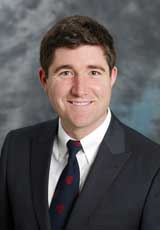
David Mullich is an Adjunct Professor in the Entertainment Design department at ArtCenter College of Design, where he teaches foundational and advanced game design courses. He is also a seasoned video game designer and producer with extensive industry experience at Activision, Disney, Cyberdreams, EduWare, 3DO, and Spin Master. Mullich currently serves as Development Director at Say Games and is a co-creator of the Boy Scouts of America Game Design Merit Badge. He is a board member of the International Game Developers Association (IGDA) Los Angeles chapter and a recognized expert in gamification. Adjunct Professor, ArtCenter College of Design Development Director, Say Games Co-Creator, Game Design Merit Badge (Boy Scouts of America) Board Member, IGDA Los Angeles David Mullich's research and professional interests center on game design, gamification, game education, and the societal impact of games. He explores how games foster resilience, productivity, and social connection, particularly in challenging contexts such as war and labor struggles. His work emphasizes ethical game development, inclusive design, and the educational potential of interactive media. He is deeply engaged in understanding the cultural narratives embedded in games and how they reflect and shape human experiences. The recent articles reflect a strong thematic focus on the intersection of games with culture, history, and social issues. Mullich analyzes games as tools for emotional resilience, cultural preservation, and social commentary. His writings delve into labor practices in the industry, diversity in game content, and the psychological benefits of play. He also shares practical insights on game pitch design and virtual world creation, demonstrating a blend of theoretical and applied expertise. Rated 14th 'Gamification Guru' at 2014 Gamification World Congress Winner of Electronic Games Magazine’s Best Science-Fiction/Fantasy Game of the Year award David Mullich mentors emerging game developers through his teaching, public speaking, and involvement with IGDA. He has advised students through workshops and career panels at institutions like CSULA and GDC. His professional work includes consulting and production roles across major studios, contributing to both commercial success and educational outreach. While specific grant details are not mentioned, his initiatives like the Game Design Merit Badge and public advocacy suggest funded or institutionally supported outreach programs. Mullich collaborates with international organizations and conferences such as Slitherine Games, the University of Gdansk, and the Game Access Conference. He is actively involved in the global game development community, participating in events across Europe and North America. His work with Say Games and ArtCenter indicates affiliations with both industry and academic labs focused on game innovation and education.
Dr. Jim O'Hehir is a Researcher affiliated with the University of South Australia under the UniSA STEM school and the Sustainable Infrastructure and Resource Management (SIRM) department. He also serves as the General Manager of the Forestry Centre of Excellence at the university. His work spans interdisciplinary applications in remote sensing, geospatial analysis, and virtual reality for forestry. He collaborates with institutions like the University of Tasmania, OneFortyOne Plantations, and the National Institute for Forest Products Innovation (NIFPI), with recent grants from the Australian Government Research Training Program Scholarship , Gottstein Trust , and industry partners. Dr. O'Hehir’s research focuses on overcoming technical limitations in forest inventory systems through LiDAR data fusion , UAV-based hyperspectral imaging , and VR visualization techniques . His 2024 publications highlight innovations in 3D point cloud generation, multispectral residue assessment, and AI-driven fire suppression frameworks. He contributes to policy discussions on carbon storage optimization in timber plantations under Australia’s Emissions Reduction Fund (ERF). 2024: 3D Point Cloud Fusion Using Aerial and Terrestrial Laser Scanning 2024: Multispectral Assessment of Clean-Row Treatments 2024: Immersive VR for Forest Point Clouds 2024: AI in Fire Smoke Detection 2023: Sub-Metre Geospatial Feasibility His grants and collaborations emphasize operational efficiency in forestry, with teams like the Forestry Centre of Excellence and partnerships with Geoscience Australia and Swinburne University of Technology . Future work includes scaling onboard AI for satellite missions and refining standards for data fusion in sub-canopy environments.
Florian Grassinger is a Junior Researcher at the Institute of Creative Media/Technologies, Department of Media and Digital Technologies at Fachhochschule St. Pölten (University of Applied Sciences St. Pölten). He has been working in the Media Computing Research Group since July 2016, focusing on data visualization, visual analytics, and interactive systems. His educational background includes: Bachelor's degree in Industrial Simulation (2010-2014) from FH St. Pölten Master's degree in Digital Healthcare (2014-2016) from FH St. Pölten Grassinger's research focuses on making data more accessible and understandable through innovative visualization techniques. His work spans data visualization, visual analytics, and visualization onboarding, with particular emphasis on multimodal data representation (making data visible, audible, and tangible). He explores how to effectively guide users in understanding complex visualizations through educational theories and interactive systems design. His research has applications in diverse domains including healthcare (particularly dementia care), facility management, and data journalism. His publication record shows a strong focus on visualization onboarding techniques, data physicalization, and multimodal data representation. Over the past several years, his work has increasingly addressed practical applications of visualization in real-world contexts such as dementia care counseling and facility management systems. He frequently collaborates with researchers like Wolfgang Aigner and Christina Stoiber on advancing visualization literacy and developing more intuitive visualization interfaces. Grassinger is actively involved in numerous research projects including the Josef Ressel Center Industrial Data Lab, IoT4LAC, Dataskop, and SEVA (Self-Explanatory Visual Analytics). These projects focus on applying visualization techniques to solve practical problems in domains ranging from community IoT applications to data-driven journalism.
Dr. Joey van Angeren is an Associate Professor at the KIN Center for Digital Innovation within the School of Business and Economics at Vrije Universiteit Amsterdam. He holds a PhD in Innovation Management from Eindhoven University of Technology, an MSc (cum laude) in Business Informatics from Utrecht University, and a BSc in Information Science from Utrecht University. His research focuses on the intersection of strategy and technology, particularly digital platforms, with publications in journals like Strategic Management Journal and Organization Science. He has been recognized with multiple Best Reviewer Awards from the Academy of Management's TIM Division (2018, 2019, 2024) and his dissertation was a finalist for the Best Dissertation Award. Research interests include platform ecosystems, competitive strategy, and optimal distinctiveness in digital markets. He teaches courses on digital innovation, information systems, and research methods, including 'Introduction to Digital Innovation' and 'Analyzing Digital Data in Business Research'. Education: PhD in Innovation Management, Eindhoven University of Technology MSc (cum laude) in Business Informatics, Utrecht University BSc in Information Science, Utrecht University Projects: Active in the EDIH NWNL project focusing on SME digitalization, AI transformation, and High Performance Computing. Awards: 3 Best Reviewer Awards (TIM Division, Academy of Management), Dissertation Finalist (2020), and Student Paper Award (2016). Grants: Multiple grants including Best Reviewer recognitions and project funding. His research explores platform governance, venture capital impacts, and complementor dynamics. Recent articles analyze M&A activity in platform ecosystems, moral motives in governance, and optimal revenue model strategies. He actively participates in workshops and lectures on AI and digital innovation.