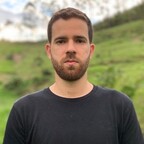
Kerstin Bunte is a Professor of Machine Learning for interdisciplinary data analysis at the University of Groningen, affiliated with the Faculty of Science and Engineering and the Bernoulli Institute's Intelligent Systems Group. She holds an Honorary Fellowship at the University of Birmingham and leads the Intelligent Systems Group. Her research focuses on interpretable machine learning, interdisciplinary applications (e.g., astrophysics and biomedical data), and visualization techniques. Research Interests: - Machine Learning - Artificial Intelligence - Explainable AI (XAI) - Interpretable Models - Dimensionality Reduction - Data Visualization - Astrophysical Data Analysis - Medical Imaging Awards & Grants: - DSSC XS funding (2023) - NWO VIDI grant (2020) - Rosalind Franklin Fellowship (2016–present) Advising & Students: Supervised PhD students include Elisa Oostwal, Janis Norden, Matteo Marcantoni, and Petra Awad. Research spans topics like tumor segmentation in medical imaging, astrophysical structure detection, and autonomous navigation systems. Labs & Collaborations: Leads the Intelligent Systems Group, collaborating with institutions like the University of Birmingham and the University of Warwick. Work involves interdisciplinary projects combining machine learning with astronomy, biomedical sciences, and robotics.
Shwetha Mariadassou serves as Assistant Professor in the Department of Marketing Management at Rotterdam School of Management, where her research bridges artificial intelligence, consumer psychology, and marketing strategy. Her work examines human interactions with algorithmic systems in commercial contexts. Her primary research domains include: Consumer reactions to AI-driven recommendations Psychological mechanisms behind algorithmic aversion Design principles for ethical recommendation systems Impact of multimodal (auditory/visual) interfaces on decision-making Human-AI collaboration frameworks in marketing Recent publications (2023-2024) demonstrate consistent focus on optimizing algorithmic transparency and user experience. Key findings reveal consumers' paradoxical acceptance of algorithmic outputs despite distrusting their labels, and how preference-aligned algorithms enhance consumer welfare. Her experimental approach integrates computer science methodologies with psychological theory to advance responsible AI deployment in marketing. No information is available regarding her academic advisees or research funding sources in the provided materials.
Prof. Dr. Martin Vinck is a Professor at the Donders Centre for Neuroscience in the Department of Neurophysics , Radboud University. He is also a Research Group Leader at the Ernst Strüngmann Institute for Neuroscience and a faculty member at the International Max Planck Research School for Neural Circuits . Current affiliations: Radboud University, ESI Frankfurt, Max Planck Research School Positions: Professor, Research Group Leader, Review Editor for eLife Research Interests span computational and systems neuroscience, focusing on predictive processing in biological and artificial neural networks. His lab investigates: How distinct excitatory/inhibitory neurons regulate plasticity and flexible information processing Neural ensemble coding via spatio-temporal patterns and spike sequences Self-supervised learning mechanisms using spatial/temporal predictions Gamma oscillations, synchronization, and their role in visual encoding Scientific Contributions include developing algorithms for high-dimensional neural data analysis, co-supervising key studies on interneuron dynamics, and pioneering work on predictive coding in V1. His grants include the ERC Starting Grant (2019) and VIDI Grant (2024) . Lab Members include PhD students Jinke Liu, Jahan Esfandiarii, Athanasia Tzanou and alumni Irene Onorato, Marius Schneider, Ana Clara Silveira Broggini . He actively promotes open science , develops the Spike Toolbox , and reviews for journals like Neuron, eLife, PLoS Computational Biology .
Hans-Martin Schwab is an Assistant Professor at the Biomedical Engineering Department of Eindhoven University of Technology (TU/e), affiliated with the Eindhoven MedTech Innovation Center and the Photoacoustics and Ultrasound Laboratory. His research focuses on advanced ultrasound and photoacoustic imaging techniques, including multi-perspective imaging, model-based artifact reduction, and deep learning-assisted signal processing. He contributes to UN Sustainable Development Goals through innovations in medical imaging technologies. His expertise spans transducer engineering, circumferential strain imaging, and ultrasound reconstruction methods. Recent collaborations involve international teams working on applications like vascular strain analysis and tissue regeneration using ultrasound phased arrays. Over 28 publications since 2020 highlight contributions to photoacoustic imaging systems, numerical simulations, and clinical ultrasound advancements. Prof. Schwab teaches courses on ultrasound imaging, clinical measurements, and blood oxygenation imaging. He has supervised numerous projects, including DBL initiatives on light/sound integration for medical imaging. His work emphasizes translating theoretical models into practical clinical tools, with a focus on improving diagnostic accuracy and patient outcomes.
Patrick J.F. Groenen is a full Professor of Statistics at the Erasmus School of Economics (ESE), Erasmus University Rotterdam , and currently serves as its Dean. His academic career spans leadership roles, including Director of the Econometric Institute (2014-2020) and President of the International Association for Statistical Computing (2015-2017). He has held visiting positions at Stanford University and contributed extensively to multidimensional scaling (MDS), data science , and statistical genetics . His research focuses on numerical algorithms for MDS, support vector machines , and optimization techniques applied to diverse fields. He is a founding editor of the open-access journal Journal of Data Science, Statistics, and Visualisation and has authored major textbooks including Modern Multidimensional Scaling and Applied Multidimensional Scaling and Unfolding . His work appears in top journals like Nature Genetics , Psychometrika , and Journal of Machine Learning Research . Recent publications highlight advancements in convex clustering , genomic prediction , and robust statistical methods . He has developed influential R packages such as GenSVM , SVMMaj , and smacof for multiclass classification and MDS software. His supervisory record includes 14 PhD students across economic psychology, genetics, and data science. Academic activities include editorial roles at Advances in Data Analysis and Classification and Psychometrika , alongside organizing international conferences like CARME 2007 on correspondence analysis. His contributions to nonlinear biplots and response style modeling have advanced visual data interpretation in social sciences.
Francesca Manni is a University Researcher at the Department of Electrical Engineering , Eindhoven University of Technology. She is affiliated with the Eindhoven MedTech Innovation Center and contributes to projects integrating artificial intelligence with medical imaging technologies. Current external position: Scientist at Philips Research output: 25 publications (as of 2025) Research Interests: Dr. Manni's work focuses on Hyperspectral Imaging and its applications in Neurosurgery , particularly for brain tumor detection and delineation . Her research spans image analysis algorithms , optical sensing , and AI-driven surgical tools . Recent Publications: 2025 EMBC paper on wavelength-optimized glioblastoma detection , 2024 STRATUM Project paper on 3D neurosurgical decision support , and 2024 Healthcare Technology Letters editorial on AI in healthcare . Collaborations: Active in international research networks with focus on responsive patient-care technologies and smart optical imaging . Key collaborators include Prof. Peter de With and Dr. Sabine Zinger.
Bram C.M. Cappers is a University Lecturer in the Department of Mathematics and Computer Science at Eindhoven University of Technology. His work focuses on visual analytics, cybersecurity, and predictive analytics applied to dynamic heterogeneous networks. He holds a Master’s (2014) and PhD (2018) in Computer Science from TU/e, with doctoral research on security visual analytics for cyber threat analysis. Education: Bachelor in Software, Algorithms, Control Systems (Eindhoven University of Technology, 2012) Master in Software, Algorithms, Control Systems (Eindhoven University of Technology, 2014) PhD in Computer Graphics (Interactive Visualization of Event Logs for Cybersecurity, 2018) Research Interests: Developing predictive models for energy networks, visual analytics tools for cybersecurity incident response, and anomaly detection in complex systems. His work extends to applying these techniques in healthcare, finance, and energy sectors through startups like CodeNext21 and TIBO Energy. Key Contributions: Eventpad: Award-winning visual analytics framework for malware analysis and network intrusion detection Predictive analytics for VoIP fraud prevention (KPN partnership) Co-founder of two ventures commercializing academic research Awards: ICT.Open Award (2018) for traffic data anomaly detection Elsevier’s 30 onder de 30 (2020) for innovation leadership European Venture Program Best Executive Summary (2018) Grants & Activities: Received €150K Demonstrator grant (2018) Contributed to SECREDAS EU project (2018-2021) Speaker at Blackhat USA 2018 and multiple invited talks on cybersecurity
Ronald Aarts is a Full Professor (part-time) at Eindhoven University of Technology (TU/e) in the Department of Signal Processing Systems, affiliated with the EAISI institute. His research focuses on ambulatory and unobtrusive monitoring systems, integrating engineering with medicine and biology. He holds dual roles as a part-time professor and a long-term researcher at Philips Research since 1977. His expertise spans electromagnetism, acoustics, signal processing, and sensor technology. Education: BSc and PhD in Electrical Engineering and Physics from Delft University of Technology. Research Interests: Sensors for biomedical applications, sleep and cardiology monitoring, epilepsy detection, and wearable health technologies. Awards: Gilles Holst Award (1999), Philips Gold Invention Award (2012), IEEE Fellowship (2007), AES Silver Medal (2010). He has supervised over 19 PhD students and holds >250 patents. Key contributions include advancements in EEG-fMRI artifact suppression, non-invasive circulatory monitoring, and sleep state classification in preterm infants.
Laura Poggio serves as a Research Associate at ISRIC - World Soil Information, which operates under Wageningen University & Research. Her work focuses on advancing digital soil mapping methodologies and global soil information systems through interdisciplinary research combining remote sensing, machine learning, and soil science. Her primary research interests include: Digital Soil Mapping at multiple scales (local to global) Soil Organic Carbon monitoring using satellite imagery Machine learning applications for soil property prediction Global soil information systems development (notably SoilGrids) Integration of remote sensing data with soil databases Analysis of her 15 most recent publications reveals strong emphasis on continental-scale soil monitoring systems, particularly using Sentinel-2 satellite data for soil organic carbon assessment across Europe. Her work consistently addresses methodological challenges in handling spatial uncertainty, integrating multi-source data, and developing scalable models applicable from local to global contexts. Key technological approaches include machine learning algorithms (particularly Random Forest), survival probability models for censored data, and multi-sensor remote sensing integration. Her research output demonstrates significant collaboration across European institutions through projects like EJP SOIL and contributions to the Global Soil Partnership. While no specific awards are documented in the available materials, her work shows substantial scholarly impact through high citation counts and dataset adoption. Dr. Poggio actively contributes to soil science through conference presentations and supervised research work, particularly focusing on operational implementation of digital soil mapping for environmental monitoring and policy support.
Prof. Theo Araujo is a Full Professor of Media, Organisations and Society at the University of Amsterdam's Department of Communication Science, and Scientific Director of the Amsterdam School of Communication Research (ASCoR). He leads the Digital Data Donation Infrastructure (D3I) consortium, co-directs the Trust in the Digital Society research priority area, and is a senior researcher in the Public Values in the Algorithmic Society (AlgoSoc) program. His research focuses on AI's societal impacts, computational social science methodologies, and data donation frameworks. Key roles include coordinating multi-university initiatives and advising on digital ethics. Research interests emphasize automated decision-making, conversational agents, and digital inequality. He has pioneered tools like the Conversational Agent Research Toolkit and OSD2F framework. His work bridges communication science with computational methods, addressing challenges in data collection, algorithmic transparency, and human-AI interaction. Recent studies explore chatbot persuasion mechanisms, public trust in AI systems, and cross-cultural consumer behavior. He has published extensively on brand engagement, media analytics, and the ethical implications of automated systems. Current projects include smart speaker data donation studies and hybrid methods for health communication research. Grants and collaborations involve EU-funded initiatives and partnerships with Dutch universities. His lab work focuses on developing ethical AI applications and improving digital trace data methodologies. Future directions include advancing participatory data donation practices and mitigating algorithmic biases in automated decision-making systems.
Dr. Andreas Alfons is an Associate Professor in the Department of Econometrics at Erasmus School of Economics, Erasmus University Rotterdam. His research focuses on robust statistical methods, machine learning, psychometrics, and software development for high-dimensional data. He leads the NWO Vidi project on robust analysis of rating-scale data and contributes to the interdisciplinary project on digital decision support. He is an editor for the Journal of Statistical Software and Journal of Data Science, Statistics, and Visualization. His research interests include robust statistical learning, high-dimensional data analysis, and open science practices. Key contributions include R packages like robmed , robustHD , and simFrame . Recent work addresses careless responding in surveys and robust mediation analysis. Publications span journals such as Computational Statistics & Data Analysis , Econometrics and Statistics , and Journal of Statistical Software . His work emphasizes reproducibility and software tools for statistical analysis.
Dr. Scott Eldridge II is a Professor affiliated with the Faculty of Arts at the University of Groningen, holding a position at the Research Centre for Media and Journalism Studies (CMJS). His work focuses on digital journalism, online populism, media representation of marginalized groups, and Chinese media dynamics. He has contributed over 73 peer-reviewed publications, including the 2025 book *Journalism in a Fractured World*, which explores the evolving landscape of journalism in the digital age. Research Interests: Digital journalism studies, populism in social media, media ethics, and global media innovation. Recent Activities: Peer-reviewed journals like *Journal of Information Technology & Politics* and *Ethnic And Racial Studies*, and media commentary on issues like pandemic journalism and press freedom. His research bridges theoretical frameworks with practical analysis, particularly in examining how digital platforms reshape media practices and public discourse. Notable projects include studies on internet memes in Chinese political campaigns and the representation of migrant women in European newspapers during the pandemic. He has also engaged in editorial roles for major academic publishers like Columbia University Press and Bloomsbury. Dr. Eldridge’s work addresses pressing questions about media’s role in democracy, including the ethics of photojournalism in the digital age and the challenges of maintaining journalistic integrity amid technological disruption.
Gabriel Pereira is Assistant Professor in AI & Digital Culture at the University of Amsterdam (UvA), based at the Media Studies department and the Institute for Logic, Language and Computation (ILLC). His primary affiliation is with the Natural Language Processing & Digital Humanities (NLP&DH) group. Pereira's research focuses on the critical study of data and algorithms, particularly as they intersect with vision, images, and surveillance systems. He brings an interdisciplinary approach that combines Science and Technology Studies (STS), critical algorithm studies, platform studies, and artistic interventions to examine how computational systems shape social relations and power structures. Pereira's research interests center on critical perspectives of computer vision and algorithmic governance, with particular attention to how these technologies operate in contexts of surveillance, platform labor, and digital culture. His work critically examines hegemonic computer vision systems that reinforce surveillance capitalism while exploring alternative ways of seeing and engaging with technology. He has conducted extensive research on Automated License Plate Recognition systems, WhatsApp disruptions in Brazil, and the political economy of smart surveillance projects like Curitiba's 'Digital Wall.' His methodology combines qualitative research with practice-based inquiry, including arts-based and interventionist approaches that challenge dominant technological narratives. His publication trends reveal a consistent focus on critical examinations of algorithmic systems, with growing attention to resistance practices, decolonial perspectives, and situated knowledge from the Global South. The articles show a trajectory from analyzing specific surveillance technologies toward broader theoretical frameworks for understanding algorithmic antagonisms and developing critical technical practices. His work consistently bridges theory and practice, often collaborating with artists and activists to create interventions that make visible the hidden operations of algorithmic systems. Independent Research Fund Denmark International Postdoc grant Deviant Practice Grant (Van Abbemuseum) Pereira actively organizes academic and artistic events, serving as Secretary of the Association of Internet Researchers and participating in the Tierra Común network. He co-organized the Con/Crit/Tec residency in São Paulo that brought together over 80 transdisciplinary researchers to explore alternative geographies of digital consciousness. His collaborative approach extends to numerous grant-funded projects examining platform labor, algorithmic surveillance, and critical data literacy. Pereira emphasizes organizing as an essential element of research work, facilitating knowledge exchange between academic, artistic, and activist communities. He is affiliated with multiple research collectives including the Center for Arts, Design and Social Research (CAD+SR), where he serves as a Researcher in Residence. His practice-based projects like 'Future Movement Future – REJECTED,' 'Algorithmic Sea,' and 'History of _rt' demonstrate his commitment to using artistic interventions as critical research methods. These projects often involve collaborations with artists, technologists, and activists to create alternative ways of engaging with and understanding algorithmic systems.
Dr. Ioanna Lykourentzou is an Associate Professor in the Software Technology for Learning and Teaching department at Utrecht University's Faculty of Science. She leads the Collaborative Technologies Lab and coordinates the Computing Science Master's and Information Sciences Honors Bachelor's programs. Additionally, she serves as a Fair Data and Software fellow within the Open Science Team of the Faculty of Science and as a member of the Ethics Review Board for the Faculties of Science and Geosciences. Her research focuses on collaborative and crowd systems, developing methods that help people work together, coordinate efforts, and innovate at scale, both online and in physical spaces. Her interdisciplinary approach combines computational science (machine learning, agent-based modeling, mathematical optimization) with social sciences (personality testing, team building). Her expertise spans Human-Computer Interaction, Algorithms, Agent-Based Modelling, Telecollaboration, Creativity, and Innovation. Her recent publications (2021-2025) demonstrate a strong focus on human-AI interaction, generative models, and applications in cultural heritage and education. She examines how technology can facilitate collaboration, with particular attention to team formation, personality factors, and digital nudging techniques. Her work bridges theoretical research with practical applications in digital humanities, cultural heritage, and computing education. Dr. Lykourentzou has received significant recognition for her research, with multiple publications garnering substantial citations and reader attention across platforms like Mendeley and social media. Her work on personality-based team formation (2016) has been particularly influential with over 90 citations. Prior to joining Utrecht University, she worked as a Senior Researcher at the Luxembourg Institute of Science and Technology (LIST), where she coordinated the European H2020 project CROSSCULT. She has also collaborated with the Human-Computer Interaction Institute of Carnegie Mellon University as a visiting researcher and with INRIA Nancy-Grand Est and the Public Research Center Henri Tudor as a postdoctoral fellow.
Hugo Ledoux is an academic affiliated with the Faculty of Architecture and the Built Environment at Delft University of Technology, specializing in Urban Data Science. His research focuses on 3D geospatial modeling, including CityGML standards, terrain analysis, and automated reconstruction of urban structures. He has contributed to projects like the DeltaDTM coastal terrain model and the cjdb database solution for CityGML. Education: Not explicitly detailed in text, but inferred through academic roles and publications. Research interests emphasize 3D geoinformation systems, remote sensing applications, and urban data science. His work addresses challenges in 3D city models, building reconstruction, and geospatial validation tools like Val3dity. Recent efforts include improving global terrain models using ICESat-2 and GEDI lidar data. Publications span automated building reconstruction workflows, terrain accuracy assessments, and semantic-guided facade modeling. Awards include the Best Presentation at 3DGeoInfo 2020 and the U.V. Helava Award for Best Paper in 2011. Ledoux has supervised 4 academic works and actively participates in conferences, editorial activities, and open-source software development for geospatial applications. Labs/Teams: Involved in TU Delft’s 3D geoinformation research, contributing to tools like 3dfier and CityJSON for 3D data interoperability.