Professor William (Bill) Bloss is an atmospheric scientist at the University of Birmingham, serving as Head of the College of Life & Environmental Sciences. His research integrates laboratory studies, field measurements, and numerical models to address air pollution sources, transformations, and policy implications. PhD in Atmospheric Chemistry, University of Cambridge BA in Natural Sciences (Chemistry), University of Cambridge Research focuses on: Urban air pollutant sources and transformations (e.g., Delhi, Birmingham) Atmospheric oxidant dynamics and reactive nitrogen cycles Policy-driven air quality improvement via projects like WM-Air and ASAP-Delhi Recent publications emphasize: Street-scale pollution modelling Particulate matter source apportionment Climate risk mapping methodologies Scientific recognition includes: Fellow of the Royal Society of Chemistry (FRSC) Chair of RSC Environmental Chemistry Group (2012–2015) Advisory roles span: Clean Air Advisory Panel for Wales Strategic Advisory Board, RESAS Scotland
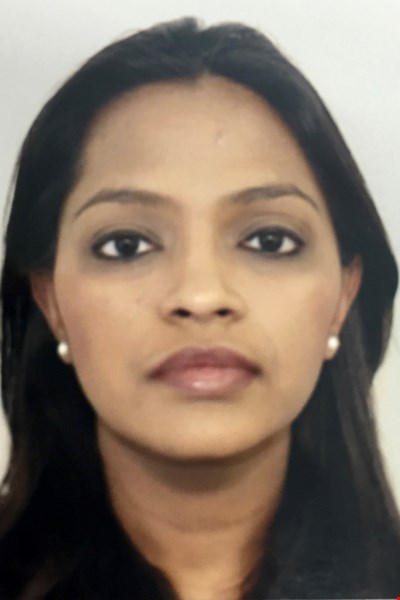
Dr Arthi Manohar is a Senior Lecturer in Design at Brunel University London and serves as Programme Director for the BSc Product Design degree within Brunel Design School, College of Engineering, Design and Physical Sciences. Since joining Brunel in 2018 she has led multiple undergraduate and master-level modules, championed Equality, Diversity & Inclusion, and secured significant EPSRC research funding. Education PhD Digital Product Design, University of Dundee (2017) MA Architecture and Digital Media, University of Westminster (2009) BArch Architecture, National Institute of Technology, India (2007) FHEA (Fellow of the Higher Education Academy), 2021 Research Interests Arthi’s research lies at the intersection of social design and emerging technology . She investigates participatory, inclusive and co-design approaches to Human–Computer Interaction, privacy and trust in the Internet of Things, and the application of AI to accessibility and health technologies. Her work emphasises human values, cross-cultural perspectives and ethical considerations in technology design. Recent funded projects include Trust in Home: Rethinking Interface Design in IoT (EPSRC HDI Network Plus) and From Understanding Privacy and Trust to Re-visualising TAPESTRY (EPSRC Sandpit). She collaborates across disciplines with partners such as the University of Nottingham, University of Kent, Royal Holloway and industry partners like LoomiAssist Ltd. Publications & Scholarly Service Arthi has published extensively in top-tier venues such as DRS, DIS, British HCI, Multimedia Tools & Applications, IEEE Transactions on Services Computing and CHI Workshops. Since 2020 she has served as Equality, Diversity & Inclusion Champion for the Department of Design and has held programme-committee roles for British HCI 2021, DIS 2019 and IndiaHCI 2019. PhD Supervision & Teaching She currently supervises four doctoral researchers exploring antimicrobial resistance design, stigma in assistive technology, virtual production and user engagement. At undergraduate and masters levels she leads modules on Interaction & UX Design, Digital Design Prototyping, Professional Practice and Design Communication, and has mentored over a dozen master dissertations on inclusive design, AI/AR retail experiences and speculative futures.
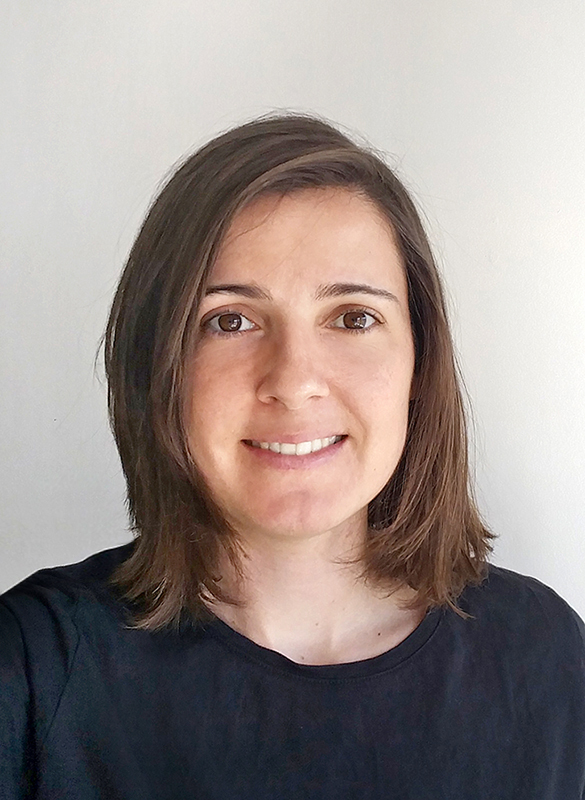
Marta Ferreira is a communication designer and design researcher at the Interactive Technologies Institute (ITI), affiliated with Instituto Superior Técnico, University of Lisbon. Her work bridges human-computer interaction, sustainable design, and climate change communication through innovative data-driven approaches for natural heritage engagement and posthuman concepts. Her academic background includes: Bachelor’s degree in Communication Design MA in Typographic and Editorial Practices from Faculty of Fine Arts, University of Lisbon (FBAUL) PhD in Digital Media from Instituto Superior Técnico at ITI-Larsys Her research explores the intersection of media and communication potential , particularly in sustainability and climate change data interactions . She investigates how human-computer interaction (HCI) and design can engage audiences with natural heritage and posthuman concepts , creating action-focused environmental experiences through transmedia storytelling and natureculture probes. Current projects examine embodied pedagogy for nature walks and data humanism to foster ecological consciousness. Analysis of her 15 most recent publications (2022-2025) reveals a cohesive focus on climate change communication and natural heritage interpretation , with recurring themes of more-than-human perspectives and sustainable interaction design . She pioneers methods like natureculture probes and data drawings to transform abstract environmental data into relatable, actionable experiences while addressing tensions in hyperobject engagement. No scientific awards were documented in the provided sources. Information regarding student advising and research grants was not specified in the available materials, though her leadership in projects like LoGaCulture (collaborating with European cultural institutions on digital locative games) indicates active research coordination. She leads studio -m, a multidisciplinary design practice focused on positive-impact projects, and collaborates with the Interactive Technologies Institute on initiatives such as CMU Portugal. Her work integrates branding, digital design, and print media to advance sustainability narratives through cultural institutions.
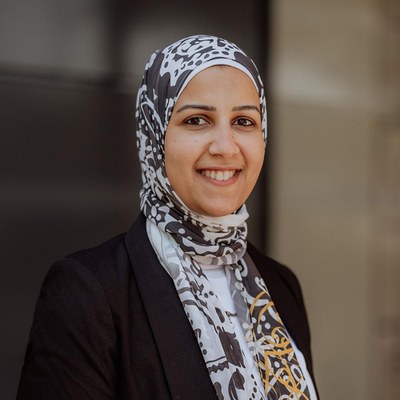
Dr. Yomna Abdelrahman is a Professor of Usable Security and Privacy at the Bundeswehr University Munich . Her research focuses on thermal imaging for security and privacy , virtual reality usability, eye tracking , and biometric authentication . She collaborates with researchers like Florian Alt and Albrecht Schmidt on projects exploring how thermal sensing can enhance user identification and privacy awareness . Key Research Areas : Thermal Imaging, Human-Computer Interaction, Virtual Reality, Password Security, Biometric Authentication, Eye Tracking, Privacy Her recent publications address VR emotion detection , password usability , and privacy implications of thermal imaging . She has contributed to conferences like CHI, MUM, and INTERACT, often examining security-privacy trade-offs and non-invasive biometric systems . Notably, her work on thermal attacks reveals vulnerabilities in mobile authentication through thermal residue. She holds a PhD in Computer Science from the University of Stuttgart (2018), where her thesis, "Thermal Imaging for Amplifying Human Perception," laid the foundation for her later work on thermal-based interaction and cognitive load estimation . Her collaborations span diverse domains, from smart home notifications to industrial worker assistance , reflecting her interdisciplinary approach to usable security and interactive systems .
Beatrice Dedinger is a Research Engineer at the Centre for History (CHSP) of Sciences Po in Paris. An economist by training, she turned to economic history and has become the scientific director of two flagship projects: RICardo (Research on International Commerce, 1800-1938) and GeoPolHist (a geopolitical entities database from 1816 to the present). Her work focuses on building open-access historical databases that enable quantitative and visual exploration of long-run trade globalization and the political trajectories of world entities. After completing a PhD thesis on German trade history , Dedinger taught economics, economic history and European economy. For more than a decade she has led the creation and exploitation of an exhaustive bilateral trade dataset covering all the world’s countries, and more recently a companion dataset that codifies every geopolitical entity’s political status on an annual basis. Both resources are freely available through interactive web platforms. Research interests include: History of trade statistics and historical statistics of geopolitical entities Long-run patterns of trade globalization German commercial and monetary history (19th–20th centuries) Quantitative and digital methods in economic history Design of open-access historical databases and data-visualisation tools Grants & funding have been provided by the French National Research Agency (ANR), Sciences Po’s SAB programme, and the Del Duca Foundation (2019-2022), among others. Public engagement includes frequent conference presentations (World Economic History Congress, Digital Humanities, etc.) and leadership of interdisciplinary seminars that bring together historians, economists and data scientists.
Martin Pusch is a Research Group Leader and Programme Area Speaker at the Leibniz Institute of Freshwater Ecology and Inland Fisheries (IGB) in Berlin, Germany, where he leads the research group on Functional Ecology and Management of Rivers and Lake Shores within Department 2 (Community and Ecosystem Ecology). His research spans multiple dimensions of aquatic ecology with particular focus on: Structure and functioning of aquatic ecosystems River hydrodynamics and sediment processes Nutrient cycling and self-purification capacity of rivers EU Water Framework Directive implementation Ecosystem services of rivers and floodplains Hydropower impacts and environmental flows Integrative management of aquatic ecosystems Dr. Pusch's recent publications (2022-2025) demonstrate a strong emphasis on river ecosystem services, hydropower impacts, and responses to environmental disasters, particularly the Oder River catastrophe. His work frequently involves large-scale European collaborative projects examining human impacts on river systems and developing integrative management approaches. He has been instrumental in developing the River Ecosystem Service Index (RESI) methodology and has contributed significantly to policy recommendations following environmental disasters. He teaches courses at the University of Potsdam (Fundamentals of Stream Ecology since 2002, Applied Stream Ecology since 2003, and Ecology of Floodplains since 2018) and Humboldt University Berlin (Limnology I, focusing on running waters since 1996). Dr. Pusch leads a research team comprising Dr. Gabriela Costea, Bianca Dörgeloh, Helena Huđek, Magnus Keller, Dr. Antje Kerkow, Tim Königsberger, Jürgen Schreiber, and Dea Zyruku, focusing on freshwater ecosystem research, management, and policy implementation.
Dr. Daniel Richards is a Lecturer in Data Prototyping and Visualisation at the Lancaster Institute for the Contemporary Arts (LICA), part of the Faculty of Arts and Social Sciences (FASS) at Lancaster University. His research focuses on speculative design, digital ethics, sustainable technologies, and innovation ecosystems. He explores provocative concepts such as 'Good Digital Identities' and 'Disruptive Innovation Ecosystems,' emphasizing co-creation and ethical technology integration. Key projects include the Digital Good Network (2022–2027), investigating equity and sustainability in digital relationships, and Qualified Selves (2019–2020), examining post-big data meaning-making. He also leads the Chatty Factories initiative (2018–2021), reimagining IoT-driven manufacturing. Richards has received the FASS Staff Award for Early Career Researcher of the Year and engages in public outreach through exhibitions like the Festival of Futures and workshops such as Speculative Woolgathering . His work bridges art, design, and technology, addressing societal challenges through speculative and participatory methods. He collaborates with interdisciplinary research groups including DSI - Society , Imagination Lancaster , and the Worldbuilding collective, fostering cross-disciplinary innovation. His activities span invited talks on AI in design, business engagement with Stratasys , and academic committee roles.
Patrick J.F. Groenen is a full Professor of Statistics at the Erasmus School of Economics (ESE), Erasmus University Rotterdam , and currently serves as its Dean. His academic career spans leadership roles, including Director of the Econometric Institute (2014-2020) and President of the International Association for Statistical Computing (2015-2017). He has held visiting positions at Stanford University and contributed extensively to multidimensional scaling (MDS), data science , and statistical genetics . His research focuses on numerical algorithms for MDS, support vector machines , and optimization techniques applied to diverse fields. He is a founding editor of the open-access journal Journal of Data Science, Statistics, and Visualisation and has authored major textbooks including Modern Multidimensional Scaling and Applied Multidimensional Scaling and Unfolding . His work appears in top journals like Nature Genetics , Psychometrika , and Journal of Machine Learning Research . Recent publications highlight advancements in convex clustering , genomic prediction , and robust statistical methods . He has developed influential R packages such as GenSVM , SVMMaj , and smacof for multiclass classification and MDS software. His supervisory record includes 14 PhD students across economic psychology, genetics, and data science. Academic activities include editorial roles at Advances in Data Analysis and Classification and Psychometrika , alongside organizing international conferences like CARME 2007 on correspondence analysis. His contributions to nonlinear biplots and response style modeling have advanced visual data interpretation in social sciences.
Dr. Julie Farguson is a College Lecturer in Early Modern History at St Hilda's College, University of Oxford. Her research focuses on the cultural, political, and social histories of early modern Britain (1660-c.1730), with a specialization in visual and material culture, processes of seeing and looking, and the intersection of art, ceremony, and politics. She is the author of Visualising Protestant Monarchy: Ceremony, Art and Politics after the Glorious Revolution (1689-1714) (2021), which examines the visual culture of monarchy under William and Mary and Queen Anne. Current projects include studies on royal progresses, the queenship of Mary II, Prince George of Denmark, and the cultural dimensions of the early modern navy. Her teaching encompasses courses such as 'History of the British Isles 4: c.1500-1700' and 'English Architecture, 1660-1720'. She collaborates with institutions like the Oxford Centre for Maritime Archaeology and the National Trust on projects like Making Maritime Memories: The British Country House and the Sea (2018/19). Her research interests also extend to global and imperial history, gender history, and the history of art and visual culture.
Thomas Chandler is an Associate Professor in the Department of Human Centred Computing at Monash University's Faculty of Information Technology. He specializes in 3D modelling, virtual environments, and digital heritage, with notable projects like the Visualising Angkor and Monash Country Lines Archive collaborations. His work bridges research and teaching, developing immersive curricula for humanities students. Education: PhD in IT (Monash, 2011), Graduate Certificate in Urban & Environmental Management (RMIT, 2013), and a BA(Hons) in Fine Arts & Archaeology (Melbourne, 1995). Research focuses on digital archaeology, virtual reality applications, and interdisciplinary projects in ecology and zoology. Key interests include 3D reconstruction, historical visualization, and interactive narratives. Recent articles explore ecosystem modelling in VR, archaeological visualization tools, and dragon lizard signalling simulations. Awards include the FIT Teaching Excellence Award (2020) and the Roy Rosenzweig Prize (2018). Leadership roles include Deputy Head of Department (2021–2022) and Director of Education for Human-Centred Computing. Active in over 18 research projects, including the ARC Centre for Indigenous and Environmental Histories. Collaborates with CSIRO, La Trobe University, and international partners.
Louise Marshall is an Honorary Senior Lecturer in the Discipline of Art History at the University of Sydney. Her research focuses on Italian Renaissance plague imagery, particularly the role of images in coping with bubonic plague, and the cults of plague saints such as Sebastian, Roch, and the Virgin Mary. She holds degrees including a PhD from the University of Pennsylvania and MA/BA (Hons) from the University of Melbourne. Her work examines how artistic representations shaped cultural responses to epidemics, including the emotional dynamics of plague imagery and the interplay between religion and disaster. She has published extensively on topics like Tintoretto’s plague-related art, the iconography of St. Roch, and the visualisation of purgatory in medieval and Renaissance art. Recent research includes analyses of plague victims’ depictions in early modern Europe and the role of angels in plague saint narratives. Current projects involve the study of confraternal art and the impact of epidemics on religious practices. Her work bridges art history with medical humanities and cultural studies. Grants include ARC funding for studies on emotions and plague in Renaissance Italy. She advises Mitchell Kelly on a project about Trecento frescoes in Avignon. Her research often intersects with interdisciplinary themes like disaster studies and historical epidemiology.
Associate Professor Dirk H.R. Spennemann is a leading cultural-heritage scholar at Charles Sturt University , Australia, holding an appointment within the School of Agricultural, Environmental and Veterinary Sciences . He lectures and supervises in Cultural Heritage Management and Historic Ecology at the Albury-Wodonga campus. Education: Doctor of Philosophy (Prehistory), Australian National University, 1990 Master of Arts (Prehistory), Johann Wolfgang Goethe-Universität Frankfurt, 1982 Research Interests: Dirk’s work straddles two major domains. First, as a foremost authority on Micronesian history and heritage , he has conducted extensive fieldwork across the Indo-Pacific, producing over 400 peer-reviewed outputs. Second, he spearheads the emerging field of heritage futures , applying strategic foresight to anticipate how contemporary and emergent heritages—ranging from modernist architecture to space exploration and generative AI—will be valued and managed by future societies. Complementary strands include digital heritage, technological and space heritage, heritage policy, rural vernacular architecture, and the interplay between heritage and community mental health. His recent publications reveal a methodological expansion into sensory ethnography of tourism sites, citizen-science approaches to ecological monitoring, and digital-forensic techniques for born-digital heritage, reflecting a commitment to innovative, cross-disciplinary inquiry. Awards & Recognition: Partnership Stewardship Award for Cultural Resources, US National Park Service (2001) Governor’s Humanities Award for Excellence in Research and Publication, CNMI (2004) CSU Vice-Chancellor’s Award for Teaching Excellence (1995) CSU Vice-Chancellor’s Award for Research Excellence (1996) Supervision & Grants: Dirk is a registered principal supervisor for higher-degree research candidates in cultural heritage and environmental history. While specific grant amounts are not disclosed, his sustained productivity (334+ research outputs and 18 datasets since 2020) indicates robust ongoing funding and institutional support. Laboratories & Teams: He is affiliated with the Gulbali Research Institute and participates in cross-faculty research groups focusing on heritage futures and sustainable environments. Editorial roles include Associate Editor for Campus-wide Information Systems and Editorial Board member for Disaster Advances .
Jo Stockham serves as Head of Printmaking at the Royal College of Art's School of Arts & Humanities. With a distinguished career spanning studio practice, academic leadership, and international exhibitions, she bridges theoretical exploration with practical art-making. Her position at the RCA represents the culmination of decades of engagement with contemporary art institutions. Stockham's research interests focus on the intersection of art and technology, material culture, and critical practice. She leads the Radical Matter Research proto-Centre, which investigates 'twenty-first-century material culture at the intersection of poetics, contemporary art and wild science, with emphasis on the sensuous, often malicious, generative-AI/human-interspecies-machine co-evolution.' Her work frequently explores site histories, the construction of the natural world, and the relationship between physical and digital realms. Her recent publications reveal a consistent engagement with printmaking as an expanded field, the evolving relationship between photography and print, and the implications of digital technologies on artistic practice. These works demonstrate her theoretical depth while remaining grounded in material exploration and studio practice. Ampersand Fellow at the British School at Rome (2022) Henry Moore Fellowship at Kettle's Yard Yaddo Fellowship in New York Artist in Residence at Warwick University Stockham has supervised multiple research students including Liz K Miller and Cole Robertson (completed) and Marina Stavrou (current). Her teaching and research are deeply connected to her studio practice, which has been supported by workshops at major institutions including Tate, Whitechapel Gallery, and Camden Arts Centre before her full-time appointment at the RCA in 2008. Her work with the RCA Robotics Laboratory and Rapidform RCA demonstrates her commitment to exploring the human implications of technological advancement through direct engagement with emerging tools and processes. This hands-on approach informs both her artistic production and academic leadership.
Maysson Ibrahim is a Senior Lecturer in Computing at the School of Computing, University of Buckingham, where she joined in 2020 as a part-time Lecturer in Computer Science while continuing her research role at the University of Oxford. She holds a PhD in Bioinformatics from the Buckingham Institute for Translational Medicine (2013) and a BEng in Software Engineering and Information Systems. PhD in Bioinformatics, University of Buckingham (2013) BEng in Software Engineering and Information Systems Her research focuses on bioinformatics, genetic data analysis, and machine learning applications in big data. She has developed computational tools for pathway enrichment analysis and biomarkers identification using gene expression data. At Oxford, she leads bioinformatics work on large-scale biobanks (e.g., UK Biobank) and clinical trials like REVEAL, SHARP, and THRIVE to decode genetic determinants of complex diseases, particularly cardiovascular conditions. Her recent publications emphasize pathway-based algorithms, disease classification, and the integration of gene network analysis with machine learning techniques. Despite no explicit scientific awards listed, her contributions span academic roles in teaching statistics and data science modules at Buckingham and leading analytical pipelines for major clinical studies. She teaches modules such as Data Exploration and Visualisation and Systems and Tools for Data Science in the MSc Applied Data Science programme.
Dr. Seongsook Choi is a Senior Lecturer in Interdisciplinary Studies at the Moray House School of Education and Sport, University of Edinburgh. Their work focuses on interdisciplinary learning, teaching, and discourse analysis. They lead the Interactional Discourse Lab (IDLab), developing tools for mapping spoken interaction patterns in interdisciplinary contexts. Current research includes a forthcoming book, Interdisciplinary Discourse: Communicating across Disciplines (Palgrave Macmillan), and computational analysis of academic collaboration dynamics. Education & Affiliations : Affiliated with the Institute for Education, Community & Society (IECS) and the Centre for Research in Digital Education. Office SJL4.01 at Holyrood Campus, Edinburgh (EH8 8AQ). Research Interests : Interdisciplinary pedagogy, spoken discourse analysis, disciplinary identity dynamics, and collaborative knowledge construction. Specializes in analyzing interactional discourse in higher education through tools like the IDLab, which visualizes communication patterns in interdisciplinary teams. Student Supervision : Currently guiding 5 PhD students exploring topics like hedging devices in language education, interdisciplinary ethics, and automated feedback systems. Past student Ana Isabel Hibert researched automated writing evaluation tools for ESL learners. Labs & Projects : Founder of the Interactional Discourse Lab (GitHub-hosted), focusing on open-source tools for mapping academic collaboration. Active in developing visualisation frameworks for interdisciplinary dialogue analysis.