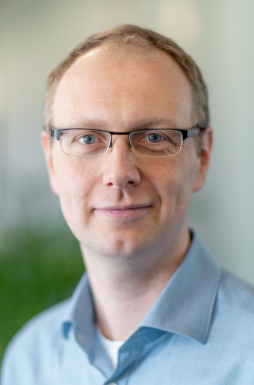
Andreas Bulling is a Professor at the Institute for Visualisation and Interactive Systems , University of Stuttgart, Germany. His research focuses on Human-Computer Interaction , Eye Tracking , and Computer Vision , with applications in Machine Learning , Virtual Reality , and Information Visualization . 2025 Publications: HOIGaze (Extended Reality), ChartQC (Data Visualization), HAIFAI (Human-AI Interaction), SummAct (Behavioral Summarization), Chartist (Chart Reading). 2024 Contributions: HumanEYEze (Multimodal AI), HOIMotion (3D Object Detection), MultiMediate'24 (Engagement Estimation), Unified Model of Saliency (Scanpath Prediction). His recent work explores gaze estimation , interactive behavior modeling , and privacy-preserving eye-tracking systems . Key subfields include Extended Reality , Neural Networks , and Behavioral Biometrics . While no explicit scientific awards are mentioned, his research has been widely cited (8,003 total citations) and downloaded (132,740 times). Andreas leads projects in Interactive Systems and collaborates with institutions such as Aalto University , KU Leuven , and National University of Singapore . His lab focuses on eye movement analysis , human motion forecasting , and task-driven input modeling .
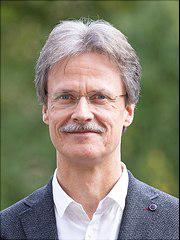
Andreas Bulling is a Full Professor (W3) of Computer Science at the University of Stuttgart and leads the Collaborative Artificial Intelligence research group at the Institute for Visualisation and Interactive Systems. He is also an ELLIS Fellow and Founding Director of the Stuttgart ELLIS unit, a Member of the Executive Board of the International Max Planck Research School for Intelligent Systems (IMPRS-IS), and a member of the Cluster of Excellence SimTech and the IRIS Forum. His research focuses on AI, computer vision, and human-computer interaction, particularly leveraging eye tracking and wearable systems. His work spans gaze interaction, ubiquitous computing, and multimodal interfaces, with publications in top venues like NeurIPS, CVPR, ICCV, SIGCHI, and UIST. He has received numerous accolades including an ERC Starting Grant and recognition as a top 2% HCI scientist globally. He serves on editorial boards for the IEEE Transactions on Visualisation and Computer Graphics, ACM Transactions on Interactive Intelligent Systems, and the Journal of Eye Movement Research. He has chaired major conferences such as ACM ETRA and ACM UbiComp, and organized workshops on privacy in eye tracking and multimodal group behavior analysis. Education : MSc in Computer Science from Karlsruhe Institute of Technology (KIT); PhD from ETH Zurich. Awards : ERC Starting Grant (2018), Henriette Herz Scout (2024), multiple best paper awards at ACM ETRA, UIST, CHI, and others. Leadership : General Chair for ETRA 2020/2021, Technical Program Co-Chair for ACM UbiComp 2016, IEEE PerCom 2015, and others.
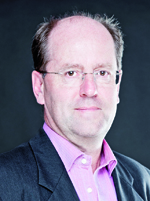
Jonathan Roberts is a researcher at Bangor University, UK, with a focus on data visualization, visual analytics, and educational technology. His work bridges computer science and creative design, particularly in data art exhibitions and authentic learning. Key research areas: Data Visualization, Visual Analytics, Educational Technology, Digital Art Recent publications explore generative AI in visualization design, multiple-view patterns for time series data, and frameworks for creative learning. His collaborations span institutions like QUT, University of Manchester, and University of Cambridge. Notable awards include VAST 2012 Honorable Mention and VAST 2010 Analytic Process Recognition. He contributes to visualization pedagogy and has co-authored works on haptic interfaces, immersive analytics, and coastal data modeling.
Philipp Otto is a Professor of Statistics and Data Science at the University of Glasgow. Previously, he was a Reader in Statistics and Data Analytics (2023–2024) and held a Junior Professorship in Big Geospatial Data at Leibniz University Hannover (2018–2023). He earned his PhD in Statistics (summa cum laude) from European University Viadrina in 2016 and a B.Sc. in International Economics, with study visits to Saint Petersburg State University. His research focuses on spatial and spatiotemporal statistics, environmetrics, network modeling, and machine learning applications. Education: PhD in Statistics (2016), European University Viadrina, Frankfurt (Oder) B.Sc. in International Economics (with study visits to Saint Petersburg) Research Interests: Philipp’s work centers on spatial statistics, spatiotemporal volatility modeling, environmental data analysis, and network processes. He develops statistical methods for geo-referenced and network data, with applications in climatology, finance, and environmental risk assessment. His contributions include advancements in GARCH models, spatiotemporal clustering detection, and statistical process monitoring for AI systems. Grants & Projects: He has secured €1,038,847 in research grants, leading projects on historical map time series analysis, agricultural air quality impacts, and high-dimensional spatial dependence structures. Industry collaborations include survival analysis for building information models. Awards: 2017 Fellowship to attend the Lindau Nobel Laureate Meeting (Economic Sciences) 2017 Best Presentation Award (Data Science, Statistics, and Visualisation) Teaching: He teaches statistics and data science across disciplines, including economics, engineering, and mathematics, at both undergraduate and postgraduate levels. Professional Activities: Editorial Boards: Environmetrics (2021), AStA Advances in Statistical Analysis (2020) Member of German Statistical Society (Treasurer, 2013)
Sarah Goodwin is an academic affiliated with Monash University in Australia, specializing in data visualization, immersive analytics, and human-computer interaction. She holds a PhD in Visualisation for Household Energy Analysis from City University London (2015). Her research focuses on developing innovative visualization techniques for complex data, particularly in energy systems, healthcare, and geographic information. Key contributions include the Australian Cancer Atlas project (2024), which addressed geostatistical uncertainty visualization, and work on mixed-reality technologies embedding human values (2025). She collaborates extensively with researchers like Tim Dwyer and leads the Data Visualisation and Immersive Analytics Research Lab at Monash. Her publications span journals like IEEE Transactions on Visualization and Computer Graphics and conferences such as CHI and IEEE VAST. Research highlights include gaze analytics tools (VETA), tangible immersive systems (Uplift), and energy consumption visualization frameworks.
Leibniz Institute for Research on Society and SpaceGermany
Christoph Bernhardt is a Senior Researcher and former director of the research focus “Contemporary History and Archives” at the Leibniz Institute for Research on Society and Space (IRS) in Erkner. He is also an adjunct professor of modern and contemporary history at the Institute of History within the Faculty of Philosophy at Humboldt University of Berlin. His academic affiliations reflect a strong commitment to interdisciplinary urban and environmental history, particularly focusing on the built environment in the German Democratic Republic (DDR) and broader European contexts. Leibniz Institute for Research on Society and Space (IRS), Erkner: Senior Researcher, former Director (until April 2023), Deputy Director (2019–2022) Humboldt University of Berlin: Adjunct Professor, Institute of History, Faculty of Philosophy Member of the Sustainability Steering Group of the Leibniz Association and the Sustainable University Commission of Humboldt University Christoph Bernhardt’s research centers on European urban and environmental history, with a particular emphasis on Berlin, socialist urban planning in the DDR, Cold War architecture, and transnational urban development. His work critically examines the interplay between political power, spatial governance, and environmental change. He has explored topics such as the “autogerechte Stadt” (car-friendly city), polycentric governance along the Upper Rhine, and the role of urban spaces in totalitarian regimes. His methodological approach often bridges historical analysis with digital humanities, as seen in his work on 3D reconstructions of Nazi-era forced housing and digital archiving of architectural collections. An analysis of his most recent publications reveals a consistent focus on the political dimensions of urban space across different historical periods—from imperial Berlin and Nazi Germany to the DDR and Cold War transnational networks. His work increasingly engages with transnational and comparative frameworks, especially in environmental governance and socialist architecture, highlighting entanglements between East and West, Europe and Asia. He frequently collaborates on edited volumes and special journal issues, demonstrating a leadership role in shaping scholarly discourse in urban history. Christoph Bernhardt is actively involved in academic service and sustainability initiatives. He has served as co-editor of the journal Moderne Stadtgeschichte and the book series Beiträge zur Stadtgeschichte und Urbanisierungsforschung . He was a co-applicant for the DFG Research Training Group “Cultural and Technical Values of Historic Buildings” and a principal investigator in the Leibniz Research Network “Value of the Past”. He has also contributed to numerous third-party funded projects on urban transformation, Cold War planning, and historical governance. His leadership roles in academic commissions and editorial boards underscore his influence in the field. Co-editor, Moderne Stadtgeschichte Co-editor, Beiträge zur Stadtgeschichte und Urbanisierungsforschung (Franz Steiner Verlag) Full member, Historical Commission of Berlin Former board member, Society for Urban History and Urbanization Research (GSU, 2000–2022) Former member, International Committee of the European Association for Urban History (EAUH, 2018–2024) Bernhardt leads and participates in several major research projects, including “Crafting Entanglements: Afro-Asian Pasts of the Global Cold War” (2023–2026), “Urban Authenticity: Creating, Contesting, and Visualising the Built Heritage in European Cities Since the 1970s (UrbAuth)”, and studies on urban planning in Nazi Germany and the DDR. His work often involves interdisciplinary collaboration, especially in digital reconstruction, cartographic analysis, and transnational historical networks.
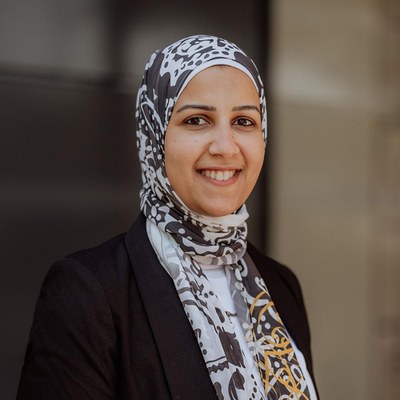
Dr. Yomna Abdelrahman is a Professor of Usable Security and Privacy at the Bundeswehr University Munich . Her research focuses on thermal imaging for security and privacy , virtual reality usability, eye tracking , and biometric authentication . She collaborates with researchers like Florian Alt and Albrecht Schmidt on projects exploring how thermal sensing can enhance user identification and privacy awareness . Key Research Areas : Thermal Imaging, Human-Computer Interaction, Virtual Reality, Password Security, Biometric Authentication, Eye Tracking, Privacy Her recent publications address VR emotion detection , password usability , and privacy implications of thermal imaging . She has contributed to conferences like CHI, MUM, and INTERACT, often examining security-privacy trade-offs and non-invasive biometric systems . Notably, her work on thermal attacks reveals vulnerabilities in mobile authentication through thermal residue. She holds a PhD in Computer Science from the University of Stuttgart (2018), where her thesis, "Thermal Imaging for Amplifying Human Perception," laid the foundation for her later work on thermal-based interaction and cognitive load estimation . Her collaborations span diverse domains, from smart home notifications to industrial worker assistance , reflecting her interdisciplinary approach to usable security and interactive systems .
Leibniz Institute of Freshwater Ecology and Inland FisheriesGermany
Martin Pusch is a Research Group Leader and Programme Area Speaker at the Leibniz Institute of Freshwater Ecology and Inland Fisheries (IGB) in Berlin, Germany, where he leads the research group on Functional Ecology and Management of Rivers and Lake Shores within Department 2 (Community and Ecosystem Ecology). His research spans multiple dimensions of aquatic ecology with particular focus on: Structure and functioning of aquatic ecosystems River hydrodynamics and sediment processes Nutrient cycling and self-purification capacity of rivers EU Water Framework Directive implementation Ecosystem services of rivers and floodplains Hydropower impacts and environmental flows Integrative management of aquatic ecosystems Dr. Pusch's recent publications (2022-2025) demonstrate a strong emphasis on river ecosystem services, hydropower impacts, and responses to environmental disasters, particularly the Oder River catastrophe. His work frequently involves large-scale European collaborative projects examining human impacts on river systems and developing integrative management approaches. He has been instrumental in developing the River Ecosystem Service Index (RESI) methodology and has contributed significantly to policy recommendations following environmental disasters. He teaches courses at the University of Potsdam (Fundamentals of Stream Ecology since 2002, Applied Stream Ecology since 2003, and Ecology of Floodplains since 2018) and Humboldt University Berlin (Limnology I, focusing on running waters since 1996). Dr. Pusch leads a research team comprising Dr. Gabriela Costea, Bianca Dörgeloh, Helena Huđek, Magnus Keller, Dr. Antje Kerkow, Tim Königsberger, Jürgen Schreiber, and Dea Zyruku, focusing on freshwater ecosystem research, management, and policy implementation.
Catia Trubiani is a faculty member at the Gran Sasso Science Institute in L'Aquila, Italy, specializing in software performance engineering, architectural analysis, and cyber-physical systems. Her work bridges theoretical modeling with practical applications, focusing on performance antipatterns, uncertainty quantification, and DevOps practices. In research , she explores performance modeling of microservices, federated learning systems, and cyber-physical systems, with a strong emphasis on architectural decision-making under uncertainty. Her recent articles analyze performance regression testing, aging detection in networks, and anti-pattern correlation in distributed systems, reflecting her interest in robust, scalable software solutions. She collaborates extensively with researchers like Raffaela Mirandola , Alberto Avritzer , and Riccardo Pinciroli , contributing to tools and frameworks such as PLUS (Performance Learning for Uncertainty of Software) and VisArch (Visualisation of Performance-Based Architectural Refactorings). Her work has been published in journals including IEEE Transactions on Software Engineering and Future Generation Computer Systems , as well as conferences like ICSE, ECSA, and ICPE.
Dr. Mateusz Jakub Fafinski is a Research Fellow at the Max Weber Centre for Advanced Cultural and Social Studies at the University of Erfurt. His work bridges historical analysis, digital humanities, and narratological frameworks to explore post-Roman urban transformations shaped by religious institutions. Research Focus : Urban adaptation (6th-11th centuries), monastic influence on cityscapes, church organization's role in creating para-urban landscapes, and digital methodologies for historical analysis. Publications : Authored/co-authored critical works on monasticism's urban impact, digital reproduction in historical scholarship, and spatial uncertainty in medieval texts. His 2021 book Roman Infrastructure in Early Medieval Britain remains a key reference. Digital Humanities Leadership : Pioneered fuzzy ontologies for mapping geographical uncertainty in historical manuscripts (2020) and contributed to computational methodologies in the INFORMATIK 2020 workshop. Current projects include Adapted Landscapes , redefining urban decline narratives through the lens of institutionalised religious life. His interdisciplinary approach integrates textuality, social interaction, and material culture to trace the foundations of High Medieval urban expansion.
Prof. Dr. Judith Miggelbrink is the Director of the Leibniz Institute for Regional Geography and a Professor of Regional Geography at the University of Leipzig. Her career includes roles as a Professor of Human Geography at TU Dresden (2018–2024) and coordinator of the 'Raumproduktionen im Verhältnis von Staat und Gesellschaft' research group at the Institute (2010–2018). She holds a PhD from the University of Münster, where she studied Geography, Mathematics, Sociology, Administrative Science, and History (1985–1992). Her research focuses on Human Geography, Geographies of the Regional, Social Nature Relations, Visual Geographies, and Geographies of Health. Key projects include the Leibniz-Lab 'Umbrüche und Transformationen' and collaborative networks like TerraR (DFG-funded) and Visualising Qualitative Geographies. She has published extensively on topics ranging from organ transplantation systems to border security and sustainability in the textile industry. Miggelbrink is a member of the Saxon Academy of Sciences, the DFG-SFB 1199 steering committee, and the Akademie für Geographische Regionalforschung. Her work emphasizes interdisciplinary approaches, addressing global challenges through spatial analysis and critical methodologies.
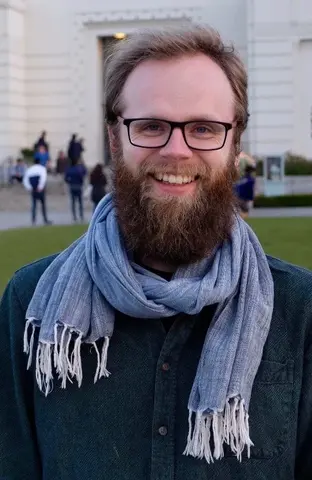
Xiliu Yang is a Research Associate at the Institute of Computational Design and Construction (ICD) , University of Stuttgart. Bachelor of Arts in Architecture, University of Hong Kong Master of Science (Distinction), ITECH programme, University of Stuttgart Her research explores the intersection of human–robot collaboration (HRC) , augmented reality (AR) systems , and timber prefabrication . She investigates how AR interfaces can enhance multi-user workflows with industrial robots, focusing on safety protocols, task allocation, and user agency in automated environments. Recent publications highlight her work on large-scale multi-human-robot systems , error-handling in AR-assisted construction , and asymmetric AR instruction methods . Her studies often involve industry partnerships and real-world fabrication demonstrators, such as the livMatS biomimetic shell and Spatial Lacing composite systems. Scientific Awards: IntCDC Thesis Grant Research Residency at Autodesk Technology Centre She previously co-founded 3DNA , a startup developing cloud-based platforms for eyewear manufacturing, and contributed to distributed robotic platforms for fibrous material fabrication.
Dr. Stefan Thiemann is a faculty-level researcher at the University of Hamburg, serving since 2017 as head of the Center for Sustainable Research Data Management and since 2016 as the university’s Open-Access officer. He represents Hamburg in the National Research-Data Infrastructure (NFDI) and is a principal investigator in the Cluster of Excellence "Understanding Written Artefacts" (Research Field F: Data Linking). Education: Diplom in Meteorology & Computer Science, University of Hamburg (1990) Dr. rer. nat. in Geosciences, University of Hamburg (1996, dissertation on Arctic boundary-layer convection) Research interests: Thiemann’s work sits at the intersection of digital infrastructure and the humanities. He designs sustainable research-data repositories, federated information systems and on-demand transformer models that allow scholars to re-use humanities data at scale. Current themes include FAIR data implementation, AI-assisted transcription & annotation of manuscripts, and open-science policy development. His recent articles (2023-2025) cluster around two trajectories: building reusable, AI-ready data infrastructures (federated repositories, sustainable viewers, chatbots fine-tuned for humanities queries) and fostering humanities-centred AI workflows (automatic linking of manuscript metadata, large-scale text mining, and user-friendly annotation tools such as the TAMAR platform). Service & awards: Member, University of Hamburg Research Infrastructure Council (2020-) Member, Steering Group on Digitalisation in Research (2020-) Open-Access Officer, University of Hamburg (2016-) Former Faculty Information Officer, Faculty of Humanities (2012-2017) Teaching & grants: He regularly teaches Bachelor seminars on digital research-data management and Internet competence. He leads or co-leads major third-party projects including the DFG-funded SFB 950 “Manuscript Cultures”, the Hamburg Open Science initiative, and infrastructure grants that established the university’s research-data repository and DOI services. Labs & teams: Thiemann heads the Center for Sustainable Research Data Management and is a core member of the Data Linking Research Unit within the UWA Cluster of Excellence. He coordinates interdisciplinary teams developing the UHH research-data repository, FUNDus! collection portal, and manuscript-culture databases hosted at the CSMC.
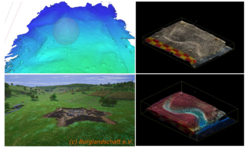
Dr. Angela Tintrup gen. Suntrup is a permanent scientific staff member (Wissenschaftliche Mitarbeiterin) at the Chair of Geomorphology, Institute of Geography and Geology, University of Würzburg since 2002. She holds a Diplom (equivalent to M.Sc.) in Applied Physical Geography from the University of Trier (2001) and has since specialized in geomorphological and remote-sensing analyses of landscape change. Education 1994–2001: Studies in Applied Physical Geography (major), Remote Sensing & Soil Science (minors), University of Trier 2001: Diplomarbeit on current and sub-recent morphodynamics on the southern slope of Sierra del Gigante, SE Spain Research Interests Her research integrates geomorphology , remote sensing and GIS to quantify landscape change driven by natural processes and human activities. A major strand focuses on land-use/land-cover change and its geomorphological consequences in semi-arid Spain, especially around the Conde de Guadalhorce reservoir. She couples field-based sedimentology, soil surveys and detailed GIS analyses with multi-decadal satellite data to reconstruct sedimentation histories and model future landscape scenarios. Another innovative axis involves extended-reality (VR/AR) visualisation of slow geomorphic processes (river-terrace formation, marshland desiccation) for both research and university teaching within the “WUEDIVE – Digital Innovation in Teaching” initiative. Scientific Awards & Grants No specific awards or grants are listed in the provided text. Advising & Teaching Dr. Suntrup advises final theses within the M.Sc. “Applied Physical Geography” and offers an academic advisory service on Wednesdays 10:00–12:00 (by appointment). She has previously served as a tutor for GIS courses at the University of Trier and leads interdisciplinary field practicals linking physical geography and remote sensing. Labs & Teams She is an integral member of the Geomorphology working group led by Univ.-Prof. Dr. Roland Baumhauer at the University of Würzburg, participating in several collaborative projects including the SFB 1211 – C02 “Transport and Deposition” and the GEO-XR project for immersive geographical spatial analyses.
Oliver Tepner is Professor of Chemistry Education at the University of Regensburg and head of the chemistry education research group. His work focuses on empirical research into chemistry teachers’ professional knowledge (CK & PCK), the effectiveness of tasks and experiments, the promotion of explanatory competence, and the use of digital media and low-cost sensors in teacher education. Education & Career: Doctorate and habilitation in chemistry education; since 2015 Professor at University of Regensburg. Previously senior researcher and project coordinator in the federal ProwiN project at University of Duisburg-Essen. Research Interests: Modelling and measuring chemistry teachers’ content and pedagogical content knowledge (PCK/CK). Development of explanatory competence and adaptive explanation skills among pre-service teachers. Design and validation of experiments, micro-scale activities and low-cost digital sensors. Role of language, models and students’ misconceptions in chemistry instruction. Video-based reflection and flipped-classroom approaches in teacher education. Recent Publication Trends: Between 2019-2025 Tepner’s articles concentrate on three strands: (1) large-scale assessment of teacher knowledge within PISA-Ceco and FALKE projects, (2) fostering adaptive explanatory competence through video reflection, and (3) practical laboratory innovations such as self-built microcontroller pH-sensors and micro-scale climate-related experiments. Scientific Awards & Distinctions: No specific prizes are listed in the supplied text; he serves as reviewer and keynote speaker (e.g., plusLucis 2025 plenary). Grants & Projects: Co-spokesperson of the German chemistry component of PISA-Ceco 2022 (federal BMBF/PISA consortium). Project leader FALKE-C chemistry module (federal quality initiative teacher education). Former deputy coordinator ProwiN (Professionswissen in den Naturwissenschaften), BMBF 2008-2017. Labs & Teams: Tepner heads the chemistry education research group at Regensburg and supervises numerous doctoral and post-doctoral researchers (e.g., SHKs and TAs listed on the group homepage). The group maintains a teaching laboratory with open access times for pupils and pre-service teachers and collaborates closely with the FALKE and PISA-Ceco consortia across Germany.