Dr. Leigh McLoughlin is a Professor in Creative Technology at Bournemouth University, leading academic initiatives in interactive media and digital innovation. Their work focuses on virtual sculpting, 3D printing accessibility, serious games, and interdisciplinary education. They hold a PhD in Computer Animation (2013) and a BA in Computer Visualisation (2005) from Bournemouth University. Research interests include assistive technology for disabled users, game engine architecture, educational software design, and mass customization systems. Their team developed the SHIVA platform for inclusive 3D sculpting and contributed to influential studies on cultural heritage serious games. Key publications span 2004-2024, emphasizing accessibility, educational technology, and creative industry innovation. Notable awards include the 2015 Times Higher Education Award for Digital Innovation and a 2009 Best Animation Education Paper at SIGGRAPH Asia. They serve as an external examiner for Coventry University's research programs and contribute to the International Journal of Interactive Worlds editorial board. Their software projects include the 'C-Sheep' programming tool and the 'Reverse Skew-T' cloud modeling system.
Eike Anderson is a Principal Academic at the National Centre for Computer Animation (NCCA), Bournemouth University. He holds a PhD in Computer Animation (2009) and has been affiliated with the university since 2001. His roles include Programme Leader for the BSc Software Development for Animation, Games, and Effects (until 2020) and Associate Editor for the ACM Journal on Computing and Cultural Heritage. He is a Fellow of the Higher Education Academy and a member of Eurographics and ACM SIGGRAPH. Education: BA (Hons) in Computer Animation & Visualisation, Bournemouth University (2001) PhD in Computer Animation, Bournemouth University (2009) Postgraduate Certificate in Higher Education Professional Practice, Coventry University (2009) Research Interests: Interactive virtual environments (games, serious games) Cultural heritage applications via real-time graphics Computer science education (procedural literacy, pedagogical tools) Procedural content generation, AI in games, and educational technology Awards & Recognition: Best Animation Education Paper (ACM SIGGRAPH 2009) Multiple 'You’re Brilliant' awards from students (2015-2016) Recipient of grants from Heritage Lottery Fund and Arts Council England Labs & Collaborations: Co-led the 'Once Upon a Time in Animation' exhibition at Poole Museum (2021) Co-Editor-in-Chief of CGEMS (Eurographics/ACM SIGGRAPH resources) Contributed to projects like FLUX Live: New Heritage and the Poole Museum visualisation
Neil Hall is a Senior Lecturer in Computer Games, Animation, and Visual Effects at the Department of Computing & Games, Teesside University. He has been in this role since 2013 and serves as Course Leader for the BA (Hons) Computer Animation program since 2019. He is affiliated with the Centre for Digital Innovation. Education: BA (Hons) Creative Visualisation, Teesside University (1996–2000) Post-Grad Cert in Learning & Teaching in Higher Education (2013–2015) MA in Animation and Visual Effects, Teesside University (2016–2019) Research & Teaching Interests: Neil focuses on photography (vehicle, long exposure, light-painting), cinematography, virtual production, real-time environments, gaming, character animation, and visual effects. He actively explores the intersection of traditional and digital media in creative industries. Publications: No listed publications or articles in the provided text. Awards: None explicitly mentioned. Advising & Grants: While no advisement or grants are specified, Neil's role as Course Leader indicates leadership in educational program development. Labs/Teams: Associated with the Centre for Digital Innovation, focusing on digital innovation research and applications.
Alexandros Fabio Kilias is a Researcher affiliated with the Department of Cultural Technology and Communication at the University of the Aegean (i-Lab). He holds a PhD from this institution and is listed as an alumni. His professional background includes work as a 3D Artist specializing in hard surface modeling, texturing, lighting, rendering, and animation, emphasizing experience in meeting tight deadlines. Education: PhD: University of the Aegean, Department of Cultural Technology and Communication (2022) MSc: University of Kent, Architectural Visualisation (2014) BSc: Ionian University, Dept. of Audio and Visual Arts (2012) His research interests span cutting-edge digital visualization techniques, including: - Three-dimensional computer graphics - Virtual reality applications - Architectural photorealism - Environmental art in virtual spaces - Advanced 3D modeling and rendering methodologies No academic awards or grants are explicitly mentioned in the provided information. He has no current advisees listed, though his alumni status suggests past involvement with academic programs. His primary research environment is the i-Lab at the University of the Aegean.
Karsten Rink is a researcher at the Helmholtz Centre for Environmental Research - UFZ in Leipzig, Germany. He leads the "Data Integration and Visualisation" project group within the Department of Environmental Informatics . His work focuses on environmental data visualization , geospatial data management , and software development for OpenGeoSys - a simulation framework for environmental processes. Key projects: OpenGeoSys Data Explorer , TESSIN VISLab , MEVA (Meteorological Data Visualization) Major collaborations: Mont Terri Underground Research Laboratory , Poyang Lake Basin , Dead Sea Water Resources Research Highlights include developing Virtual Geographic Environments for analyzing: Hydro-Meteorological Extremes in urban systems Multi-Compartment Water/Solute Dynamics in large catchments Energy-Water Nexus challenges Groundwater Balance in arid regions Technical Innovations feature Unity-based 3D visualization workflows, multi-device meteorological data validation , and cross-platform data conversion tools between OpenGeoSys, ParaView, and VTK. Publications (2023-2014) demonstrate expertise in: Environmental software frameworks Scientific visualization Hydrogeological modeling Climate-urban interactions Subsurface energy systems Water management digitization Collaborative Projects span from German Unity Anniversary visualization to Dead Sea groundwater studies , integrating with initiatives like MOSES (Modular Observation Solutions for Earth Systems) and Digital Earth .
Dr Indae Hwang is a lecturer in the Department of Design at Monash University, where he contributes to research, teaching, and creative practice in interactive design and emerging digital technologies. His work spans academic research, public exhibitions, and interdisciplinary collaborations with industry and healthcare sectors. PhD in Digital Art and Multimedia Design, Monash University (2014) Research focuses on critical engagement with digital technologies through interactive art and design Teaches User Experience and Interactive Design His research interests center on the critical reflection of human relationships with emerging technologies, particularly through the lens of interactive arts. He explores how augmented reality, virtual reality, physical computing, and mixed reality can provoke deeper societal engagement with technology. His work emphasizes behavior change, interface design, and data visualization, often addressing ethical and philosophical dimensions of digital integration in everyday life. The recent body of work shows a strong trend toward public-facing interactive systems, such as self-service airport security and emergency department wait time visualization. These projects reflect a move toward human-centered, socially responsible design that bridges technology, healthcare, and urban environments. His publications and creative outputs demonstrate a blend of artistic and technical rigor, often published in human-computer interaction and design research venues. Dr Hwang has received several prestigious awards for his design work: Good Design Award, Architectural Design - Winner: 'EVERYDAY Australian Design' (2022) Good Design Awards, Design Research Category - Winner: 'Victorian Premier's Design Awards Showcase' (2022) Australian Graphic Design Association Award - Award of Merit (2022) Smarter Hobart Challenge - Finalist (2021) He has been involved in multiple research grants as a Chief or Associate Investigator, including projects funded by industry and health partners. Notable projects include the self-service airport security checkpoint and the digital adverse drug event reporting platform. He actively participates in public design events such as Melbourne Design Week and has exhibited internationally. He leads and collaborates on interdisciplinary teams involving engineers, healthcare professionals, and designers. Dr Hwang is a key contributor to the 'Consenting Cities' project, an interactive urban installation exploring digital consent in public spaces. This work exemplifies his commitment to using design as a medium for social inquiry and public engagement.
John Hindmarch is a Researcher at the University of Bamberg's Chair of Digital Heritage Technologies, specializing in 3D digitization for cultural heritage. He holds an Engineering Doctorate (EngD) from UCL Centre for Virtual Environments, Interaction and Visualisation (2016), an MRes in Virtual Environments (2011), and a philosophical foundation from Cambridge (1995). Formerly a lecturer at University College London (2011-2017), he has contributed to digital documentation projects at institutions like the Science Museum and Courtauld Institute. PhD: 3D Digitization for Cultural Heritage (UCL, 2016) MRes: Virtual Environments, Imaging and Visualisation (UCL, 2011) MA: Electronic Communication and Publishing (UCL, 2010) BA: Philosophy (Cambridge, 1995) His research focuses on multimodal 3D imaging workflows, photogrammetry accuracy, and digital documentation of baroque architecture. Recent work explores digital auras of heritage objects and open data ontologies for cultural institutions. Hindmarch has led projects like VirScan3D and Corpus der barocken Deckenmalerei in Deutschland , integrating 3D technologies into educational frameworks. Key publications span 3D ceiling painting analysis, sensing tool selection for monuments, and digital pedagogy in Germany's unique M.Sc. program in Digital Heritage Technologies. He collaborates with Mona Hess and Matteo Burioni on spatial documentation systems and historical reconstruction.
E. Eisemann is a Professor at the Computer Graphics and Visualisation department within the Faculty of Electrical Engineering, Mathematics and Computer Science at Delft University of Technology (TU Delft). Their research focuses on computer graphics, virtual reality, and 3D modeling, with recent publications addressing ray-box intersections, neural scene representations, and interactive modeling systems. Current research trends include Advancements in real-time rendering algorithms Applications of neural networks for 3D scene reconstruction Innovative approaches to human-computer interaction in VR environments Optimization techniques for large-scale environment rendering Research output spans 164 publications, with recent work appearing in venues like Computer Graphics Forum and ACM SIGGRAPH conferences. Supervised work includes 18 formal advisees.
Bettina Gärtner is a researcher and educator specializing in digital innovations in art education . Affiliated with the State Academy of Fine Arts Stuttgart and previously the Ludwigsburg University of Education, she focuses on integrating digital tools , makerspaces , and Open Educational Resources (OER) into teacher training and school practices. Current Role : Project Manager for KuMuS-ProNeD (BMBF-funded digital teacher training initiative) Past Roles : Lecturer for Art Didactics (2019–2023), Pedagogy Academic Staff Member (2022–2023) Her research emphasizes creative technology integration , interdisciplinary collaboration , and digital-physical hybrid learning environments . Key projects include makEd_digital (didactic makerspaces) and digital.macht.schule (partner school networks for digital skill transfer). Recent publications highlight her work at the intersection of art, technology, and education , including VR applications in conservation studies and pandemic-era pedagogy. She actively organizes conferences like Fab:UNIverse and contributes to platforms such as the ABK FabLab . Scientific Awards : Erasmus Scholarship (1999) Gärtner's projects bridge art education, media literacy , and teacher development through initiatives like KOALA (teacher training cooperation) and Visualised Teachpod (innovative teaching methods).
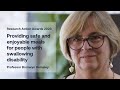
Professor Bronwyn Hemsley is Head of Speech Pathology at the University of Technology Sydney (UTS) and co-lead of the UTS Disability Research Network. As a Certified Practicing Speech Pathologist with over 15 years of postdoctoral experience, she has established herself as a leading expert in communication disability research, particularly focusing on Augmentative and Alternative Communication (AAC), dysphagia, and assistive technologies. Her educational background includes a Bachelor of Applied Science in Speech Pathology from the University of Sydney (1985-1988) and a PhD in Communication Sciences and Disorders from the University of Sydney (2008). She has held significant research positions including NHMRC PhD Scholarship (2005-2007) and NHMRC Postdoctoral Fellowship at the University of Queensland (2009-2012). Professor Hemsley's research program explores innovative applications of technology to enhance communication and quality of life for people with disabilities. Her current work spans virtual reality, augmented reality, social media, 3D food printing for dysphagia management, and telesupervision in speech pathology education. She leads the ARC Discovery project 'An Appetite for the Future: 3D Printed Food for People with Swallowing Disability' (2020-2024) and has secured over $4 million in research funding throughout her career. Her publication record shows a clear trajectory toward increasingly sophisticated applications of emerging technologies in disability support, with recent work focusing on AI, immersive technologies, and novel assessment methodologies. The research demonstrates strong interdisciplinary collaboration across health, technology, and design fields. Fellow of Speech Pathology Australia Fellow of the International Society for Augmentative and Alternative Communication Dean's Award for Research Excellence for a Mid Career Researcher at the University of Newcastle (2016) Faculty Dean's Award for Research Excellence at UTS (2021) NHMRC and ARC-funded research projects Professor Hemsley has successfully supervised multiple PhD students to completion, including Dr. Melissa Brunner (now lecturer at USYD) and Dr. Rebecca Smith (now lecturer at UTS). She currently supervises five PhD candidates across diverse topics including health literacy, 3D food printing, telesupervision, and hospital falls prevention. Her grant portfolio demonstrates sustained success in securing competitive funding from NHMRC, ARC, and industry partners, with a particular focus on translating research into practical applications that improve patient safety and quality of life. She serves as an active member of the UTS Ageing Research Collaborative and the Visualisation Institute, collaborating across disciplines to address complex challenges in disability support and healthcare communication.
Professor Gianluca Memoli is an Associate Professor in Sound-Based Interactions within the Department of Informatics at the University of Sussex's School of Engineering and Informatics. He also serves as Impact Leader for Informatics since June 2023. His academic profile bridges fundamental acoustics research with practical applications and commercialization. Memoli's research focuses on acoustic metamaterials and sound-based interactions, exploring how techniques previously used only for light can be applied to sound. His work spans from fundamental physics of bubbles and cavitation to advanced applications in healthcare, environmental monitoring, and human-computer interaction. He approaches acoustics through an interdisciplinary lens, connecting physics, engineering, materials science, and perception studies. His recent publications (2022-2025) demonstrate consistent output in high-impact acoustics journals, with a clear trajectory toward practical applications of acoustic metamaterials. Key themes include acoustic lens design, sound field manipulation, and the development of tools for virtual acoustic assessment. His work shows increasing emphasis on addressing real-world challenges in environmental noise and healthcare applications. Memoli has secured significant research funding from diverse sources including EPSRC, NERC, Royal Society, and European Union programs. His current major project 'Visualising the Perception of Aircraft Noise for Communities Surrounding Airports' (2023-2027) exemplifies his focus on applying advanced acoustic research to societal challenges. As an educator, Memoli teaches 'Professional Skills' and 'Entrepreneurship' courses, reflecting his dual expertise in technical acoustics and commercialization. His role as CEO of Metasonixx since 2019 demonstrates his commitment to translating academic research into real-world applications, creating a unique bridge between his academic and entrepreneurial pursuits.
Dr. Paula Vickerton serves as Director of Anatomy and Deputy Head of Year 1 for the MBBS programme at Queen Mary University of London's Faculty of Medicine and Dentistry. She oversees anatomy instruction across MBBS, Physician's Associate, Biomedical Sciences, and Prehospital Care programmes, while leading curriculum development and teaching innovation initiatives since joining in 2016. Her academic foundation includes: BSc in Human Anatomy (First Class Honours) from University of Liverpool PhD in Musculoskeletal Biology from University of Liverpool Vickerton's research centers on clinically applied anatomy and anatomical education, investigating how educational theory enhances online teaching effectiveness and developing innovative methods for anatomy instruction. Her work bridges clinical practice with pedagogical advancement, particularly in virtual learning environments. Publication analysis reveals dual thematic trajectories: adaptation of anatomy education during the pandemic (virtual laboratories, online engagement strategies) and fundamental anatomical research (vascular morphology, musculoskeletal adaptation, imaging techniques). This reflects her commitment to both educational innovation and foundational anatomical science. Her scientific recognition includes: Medical School Teacher of the Year 2020/21 Faculty Teaching Innovation Award 2022 (team) Senior Fellowship of the Higher Education Academy In academic leadership, Vickerton serves as Senior Tutor for Year 3 students, Senior Internal Examiner for Paper C, and external examiner at St George's and Liverpool medical schools. She holds module leadership for Locomotor 1, Movement and Posture GEP, and Biomedical Sciences 'Human Anatomy' courses while mentoring through the Teaching Recognition Programme. As Director of Anatomy, she leads the anatomy teaching team within the Institute of Health Sciences Education, driving collaborative curriculum development and maintaining Queen Mary's reputation for excellence in medical education through evidence-based pedagogical approaches.