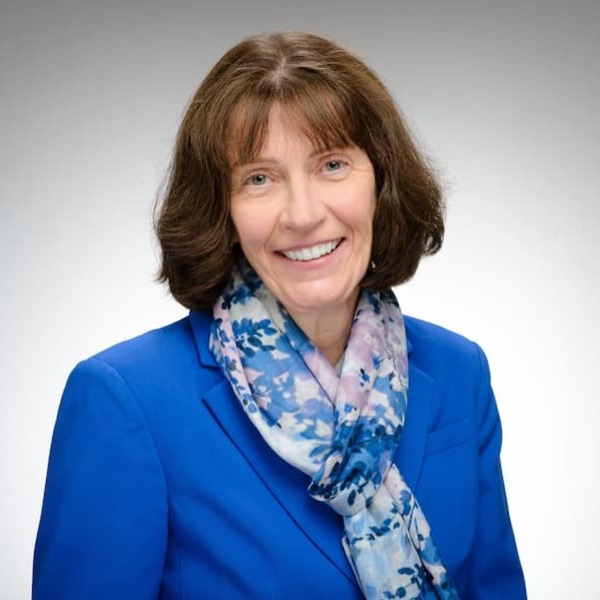
Adrienne Brown is an Associate Professor in the Department of English at the University of Chicago, specializing in Race, Diaspora and Indigeneity. Teaching since 2011, she also serves as Faculty Director of Arts + Public Life, a South Side Chicago initiative fostering neighborhood vibrancy through arts and community engagement. Her educational background includes: Ph.D., Princeton University, 2011 Professor Brown's research centers on Critical Race Studies, African American Literature, and Urban Studies, with a focus on the twentieth century. She examines how architecture and spatial environments shape racial perception, drawing on Harlem and Chicago Renaissances, Modernism, and Post-45 literature. Her interdisciplinary approach integrates cultural studies, visual culture, sound studies, and the history of property to analyze the racial sensorium in American cultural production. Her publications reveal a trajectory from skyscrapers ( The Black Skyscraper , 2017) to mass homeownership ( The Residential is Racial , 2024), investigating how built environments mediate race. Articles like "Appraisal Narratives" and "The Architecture of Racial Phenomena" dissect midcentury racial dynamics in urban spaces. She employs literary and bureaucratic archives to trace race's evolving definition, value, and perception, contributing to fields of American Studies, Critical Race Theory, and Architectural History. Awards: Modernist Studies Association’s 2018 First Book Prize for The Black Skyscraper While specific graduate students are unlisted, Brown has mentored through her courses and co-edited volumes. Her leadership in Arts + Public Life suggests significant community grants, though detailed funding sources are not specified in the provided text. As Faculty Director of Arts + Public Life, she spearheads a dynamic hub on Chicago's South Side that cultivates neighborhood vibrancy through arts programming, community partnerships, and public space activation.
Vinay Lal is Professor of History and Asian American Studies at the University of California, Los Angeles (UCLA), where he has been teaching since Fall 1993. He holds a joint appointment in the Department of History and the Asian American Studies Department. Born in Delhi and raised across multiple countries including India, Indonesia, Japan, and the United States, Lal brings a global perspective to his scholarship and teaching. His educational journey began at Johns Hopkins University, where he earned both his B.A. (1982) and M.A. (1982) from the Humanities Center with concentrations in literature, history, and philosophy. He then studied film in Australia and India on a Thomas J. Watson Fellowship before pursuing his Ph.D. at the University of Chicago's Department of South Asian Languages and Civilizations, which he completed with Distinction in 1992. His dissertation, 'Committees of Inquiry and Discourses of 'Law and Order' in Twentieth-Century British India', received the Marc Galler Award for the best dissertation in the Division of the Humanities at the University of Chicago. Lal's research spans an extraordinary breadth of intellectual interests, with primary focus on Indian history, historiography, public and popular culture in India, the Indian diaspora, colonialism, human rights, American politics, the architecture of nonviolence, Gandhi studies, and the global politics of knowledge systems. His work consistently challenges conventional disciplinary boundaries, engaging with topics ranging from the politics of religion and ethnicity in South Asia to the moral and political thought of Mohandas Gandhi, from the partition of India to the intersection of history and popular cinema. His scholarship reflects a deep commitment to decolonizing knowledge systems and exploring alternative epistemologies from the Global South. His publications reveal a scholar deeply engaged with both historical analysis and contemporary political issues. The 15 most recent articles demonstrate his consistent focus on South Asian politics, historical memory, nonviolence, and the politics of knowledge. His writing spans academic journals, major newspapers, and public intellectual platforms, with a distinctive voice that bridges scholarly rigor and public accessibility. His work on Gandhi, colonialism, and contemporary Indian politics forms a particularly strong thread throughout his recent publications. Fellow of the World Academy of Art and Science (elected February 2000) William R. Kenan Fellow, Society of Fellows in the Humanities, Columbia University (1992-93) Senior Fellowship from the American Institute of Indian Studies National Endowment for the Humanities Fellowship for University Teachers Fellowship from the Society for the Promotion of Science/Japan Area Studies Center Listed among the '101 Most Dangerous Professors in America' in David Horowitz's book Fulbright-Nehru Fellowship for Academic and Professional Excellence Fellow at the Stellenbosch Institute for Advanced Study (STIAS), South Africa (2024) Oxford University Press India Academic (Humanities) Delegate (2022-2028) As a dedicated mentor, Lal has supervised numerous PhD students who have gone on to prominent academic careers at institutions including CSU-Sacramento, UNC-Charlotte, O.P. Jindal University, UC Irvine, and the University of Pittsburgh. His teaching portfolio at UCLA is exceptionally broad, encompassing undergraduate courses on Indian Civilization, British India, contemporary South Asia, and world history, along with graduate seminars on Indian politics and religion, historiography of modern India, nationalism and colonialism, Indian cinema, and postcolonial theory. His lecture courses are available in their entirety on his academic YouTube channel, which has garnered over 3 million views and 36,000 subscribers. Lal has also served as University of California's Director of the Education Abroad Program in India and as Professor of History at the University of Delhi during 2010-11. Lal is a founding member of the Backwaters Collective on Metaphysics and Politics (2010-2020), which met annually in Kerala, and was associated with Multiversity, a group of scholars focused on decolonizing Western knowledge systems. His current work includes a four-book project titled 'The Genocide and Hope Quartet: Studies in the Architecture of Oppression and the Redemptive Possibilities of Nonviolence', examining Dandi, Auschwitz, Hiroshima, and Robben Island. He maintains an active public intellectual presence through his blog 'LAL SALAAM' and his academic YouTube channel, making scholarly content accessible to wider audiences.
Meredith A. Martin is a Professor of English at Princeton University and serves as the Faculty Director of the Center for Digital Humanities (CDH), established under her leadership in 2014. She specializes in anglophone poetry, historical prosody, and the intersection of digital humanities with literary studies. Her work bridges traditional literary analysis with computational methodologies, as seen in projects like the Princeton Prosody Archive (1570–1923) and her forthcoming book Poetry’s Data (2025), which explores critical data studies in humanities contexts. Her research interests extend to Victorian literature, modernism, and interdisciplinary approaches to poetry. She holds leadership roles in multiple initiatives, including co-editing the Journal of Cultural Analytics and serving on committees for the Princeton AI Lab and Language and Intelligence Center. Martin is also affiliated with the Center for Statistics and Machine Learning and the Program in Media and Modernity. Recognized for her mentorship, she has received the Princeton University Graduate Mentoring Award (2021) and the Clio Award (2023). She advises graduate students on digital humanities, critical data studies, and comparative poetics, while overseeing collaborative projects like the Nineteenth-Century Data Collective and the Historical Poetics Reading Group. Her publications include The Rise and Fall of Meter (2012), which won multiple awards, and recent contributions to PMLA , Victorian Studies , and Paideuma . She actively promotes interdisciplinary dialogue through teaching courses on digital culture, poetry, and literature’s relationship with other disciplines.
Professor Oscar Odena is a leading academic in music education and social inclusion at the University of Glasgow, holding dual appointments in the School of Interdisciplinary Studies Administration and the Department of Educational Leadership & Policy. He joined Glasgow in 2013 after roles at institutions including the University of Hertfordshire (Reader), University of Brighton (Senior Lecturer), and Queen’s University Belfast (Postdoc). His research focuses on leveraging music and creativity for social inclusion, particularly in post-conflict regions like Northern Ireland and Colombia. Notable grants include funding from the UK ESRC and AHRC. He leads The Arts of Inclusion (TAI) network, promoting global social arts initiatives. Educations: PhD in Education (UCL), postdoc at Queen’s University Belfast, extensive international collaborations. Research: Explores music’s role in social cohesion, qualitative methodologies, and arts-based policy. Key themes include cross-community education, refugee integration, and post-conflict reconstruction. His 2023 book Music and Social Inclusion synthesizes global case studies. Recent work includes studies on China’s music education reforms and Malawi’s school performance reviews. He serves on editorial boards of five leading journals and reviews grants for the UK AHRC and Irish Research Council. Grants & Impact: Over £2M secured from international funders; TAI network’s research has influenced UK and Scottish policy. His 2025 study in China demonstrates Orff-based methods’ inclusionary potential. He directs postgraduate research in Glasgow’s School of Education and advises doctoral candidates globally. Active in international development via Atlantic Philanthropies and British Council projects.
Scott Moffat is a Professor of Psychology at Georgia Institute of Technology, affiliated with the School of Psychology. He holds a Ph.D. in Psychobiology & Clinical Neuropsychology from the University of Western Ontario (1998). His research focuses on the cognitive neuroscience of aging, particularly the interplay between hormonal systems (e.g., cortisol, testosterone, insulin) and spatial cognition, navigation, and brain aging. He employs neuroimaging (fMRI/PET), behavioral assessments, and biochemical assays to study these topics. A key innovation is his use of virtual reality environments to evaluate spatial memory in older adults. Research interests emphasize stress physiology, including cortisol’s role in hippocampal atrophy and Alzheimer’s risk, testosterone’s impact on cognitive aging, and insulin’s effects on neural function. His work highlights individual differences in cognitive aging and the biological mechanisms underlying such variability. He has published extensively on spatial navigation strategies, age-related neural changes, and the application of virtual technologies for cognitive assessment. Labs/Teams: Director of the Cognitive Neuroscience of Aging Lab at Georgia Tech’s Center for Advanced Brain Imaging. His lab investigates brain-behavior relationships in aging using multimodal neuroimaging and endocrine measures.
Professor Adrian Hilton is a distinguished faculty member at the University of Surrey, serving as Director of the Centre for Vision, Speech and Signal Processing (CVSSP) and Director of the Surrey Institute for People-Centred AI. He is affiliated with the School of Computer Science and Electronic Engineering and leads the Visual Media Research Lab (V-Lab). His research focuses on pioneering next-generation 4D computer vision technologies that enable machines to understand and model dynamic real-world scenes. Key areas include 3D/4D shape capture, computer vision, machine learning, graphics, and animation for applications in sports analysis, film/TV production, virtual reality, and medical imaging. His work bridges the gap between real and computer-generated imagery, with notable contributions in volumetric capture, motion capture, and free-viewpoint video. Hilton's recent publications demonstrate a strong trend toward multimodal integration, particularly combining audio and visual processing for spatial audio applications, while advancing 4D reconstruction techniques for human performance capture. His work increasingly incorporates transformer architectures and neural rendering techniques for improved illumination estimation, shadow modeling, and multi-view consistency. Scientific Awards and Recognition Two EU IST Innovation Prizes Manufacturing Industry Achievement Award Royal Society Industry Fellowship (2008-2011) Royal Society Wolfson Research Merit Award in 4D Vision (2013-2018) Fellow of the Royal Academy of Engineering (FREng) Fellow of the International Association for Pattern Recognition (FIAPR) Fellow of the Institution of Engineering and Technology (FIET) Hilton actively mentors PhD and post-doctoral researchers through his leadership of CVSSP, which has a grant portfolio exceeding £31M and comprises 170 researchers. He has successfully commercialized several technologies, including systems used by the BBC for sports commentary visualization. His research collaborations span major industry partners including BBC, BT, Sony, Framestore, and The Foundry. He co-founded the G3 Games forum and the CVMP Conference on Visual Media Production, demonstrating strong engagement with the creative industries. Current research projects include the S3A Programme Grant in Future Spatial Audio and InnovateUK's ALIVE project for 360 video reconstruction.
Associate Professor Daniel Fried holds the Chair position in the Department of East Asian Studies at the University of Alberta's Faculty of Arts. His research focuses on comparative approaches to classical Chinese literature, intellectual history, and Daoist semiotics, with particular attention to Northern Song Dynasty print culture and European literary theory intersections. Current projects include a literary non-fiction work linking Daoist philosophy to social activism. Key academic roles include Co-Editor of the Routledge Studies in Comparative Chinese Literature and Culture series (2020–present), Founding Chair of the MLA Forum on pre-14th century Chinese Literature (2018), and President of the Association of Chinese and Comparative Literature (2017–2019). Teaching responsibilities include advanced readings in modern Chinese literature and graduate research methods courses. Research interests span ancient Chinese textuality, medieval print culture transformations, and cross-cultural philosophical dialogues. Recent publications (2020–2023) emphasize Song Dynasty print modernity and Daoist semiotic frameworks. Earlier works address pre-Qin philosophical discourse and 20th century comparative literature methodologies. No scientific awards explicitly listed. Advising focuses exclusively on graduate students researching Chinese literature/philosophy from Warring States to Southern Song periods. Active in developing interdisciplinary research programs bridging Anglophone and Sinophone scholarship. Led development of East Asia Research Methods (EASIA 550), an online graduate course covering regional and disciplinary methodologies. Current research projects maintain focus on pre-modern Chinese cultural production and its global comparative dimensions.
Johan Schimanski is a Professor of Comparative Literature at the University of Oslo, affiliated with the Faculty of Humanities and the Department of Literature, Area Studies and European Languages. He holds a Ph.D. from the University of Oslo (1997) and has held academic positions at institutions including the University of Tromsø and the University of Eastern Finland as a visiting professor. His research focuses on borders in literature, postcolonialism, Arctic discourses, and migration narratives, with notable contributions to border aesthetics and cultural encounters. Education: Magister in Comparative Literature (University of Oslo, 1990), Ph.D. (1997). Key professional milestones include leadership roles such as Head of Research at ILOS (2017–2020) and co-leadership of the TRAUM project on author museums (2016–2019). He has authored or edited over 20 books and numerous articles, exploring themes like migration literature, Arctic studies, and the political aesthetics of borders. Research interests span borders and national identity, postcolonialism, science fiction, and literary museums. He co-leads initiatives like the Temporalities and Subjectivities workshop series (2019–2021) and serves on editorial boards for journals such as Journal of Borderlands Studies . His work bridges literary analysis with interdisciplinary approaches to contemporary global issues, emphasizing the role of aesthetics in understanding border dynamics.
Susana Morris is an Associate Professor at the School of Literature, Media, and Communication within the Ivan Allen College of Liberal Arts at Georgia Institute of Technology. She holds a Ph.D. in English with a Certificate in Women's Studies from Emory University and a B.A. in English from Mount Holyoke College. Her research focuses on Black Feminism, Afrofuturism, and African American literature. She explores the intersections of race, gender, and technology in contemporary cultural production, with particular emphasis on digital media's role in feminist discourse. Morris's publications demonstrate consistent engagement with Afrofuturism, feminist theory, and cultural studies. Recent work shows increased focus on musicology and Southern cultural studies, particularly examining hip-hop's cultural significance. Her scholarship maintains strong connections between literary analysis and social justice frameworks. Awards and honors include: PULSE Community Building Award from Harvard Black Law Student Association (2017) DILAC Fellowship at Georgia Tech (2017) Dream Defender recognition from Planned Parenthood Action Fund (2015) Outstanding Teaching & Research Award from Auburn University (2011) Morris co-founded the Crunk Feminist Collective, a platform for feminist discourse, and serves as series editor for New Suns: Race, Gender, and Sexuality in the Speculative at Ohio State University Press.
Laura Knoppers is the George N. Shuster Professor of English Literature and Department Chair at the University of Notre Dame’s College of Arts and Letters. She specializes in seventeenth-century British literature, with a focus on John Milton, early modern women writers (e.g., Margaret Cavendish), and the intersections of gender, politics, and religion. Her research bridges literary criticism, cultural history, and book history. Education: PhD and M.A. in English Literature from Harvard University; B.A. in English Literature from Calvin College. Research Interests: Milton’s works and context, early modern women’s authorship, the English Revolution, luxury culture, and political iconography. Her notable works include Politicizing Domesticity (2011), Constructing Cromwell (2000), and the award-winning Complete Works of John Milton (2008 edition). Publications: Over 20 authored/edited books and 40+ journal articles/chapters. Recent work includes the Oxford History of Poetry in English (2024) and studies on Margaret Cavendish’s medical writings. Awards: Milton Society’s John T. Shawcross Award (2008), NEH grants, and the 2016 Honored Scholar distinction. She edited Milton Studies (2009–2018) and currently chairs the English Department at Notre Dame. Grants & Service: Secured $500K NEH Challenge Grant for Penn State’s Institute for the Arts and Humanities. Active in professional organizations like the Milton Society of America and Renaissance Society of America. Labs/Teams: Leads interdisciplinary projects on early modern literature and culture. Collaborates with institutions like the Folger Shakespeare Library and international scholars on luxury studies and Cromwellian representation.
Victoria J. Gallagher is a Distinguished University Professor of Communication at North Carolina State University (NC State), affiliated with the Department of Communication within the College of Humanities and Social Sciences. She has been a faculty member since 1990 and previously served as Associate Dean of Graduate Studies and Academic Affairs (2008–2015). Her research focuses on rhetorical theory and criticism, communication ethics, civil rights discourse, and digital humanities. Notably, she leads the Virtual Martin Luther King Project, a major digital humanities initiative supported by the National Endowment for the Humanities. She has also contributed to projects on gender and communication in engineering teams and authored/co-edited works such as Communicative Cities in the 21st Century . Education: Ph.D. and M.A. in Communication Studies from Northwestern University (1990 and 1989), B.A. in Communication from Michigan State University (1983). Her research interests emphasize the intersection of rhetoric, materiality, and public spaces, particularly museums, memorials, and urban parks. She explores how these sites mediate public memory and civic engagement, blending rhetorical analysis with technology and community collaboration. Her work on public art and urban communication aims to enhance public life through communicative spaces and ethical discourse. Dr. Gallagher’s funded research exceeds $450,000, including grants from the NEH and Engineering Information Foundation. Her recent articles highlight themes like virtual reality in education, sonic rhetoric in digital projects, and the role of visual imagery in social movements. She is a sought-after speaker, delivering lectures at institutions like DePaul University and the University of Wisconsin, Milwaukee, and has been featured in media outlets such as the Washington Post and WUNC/NPR’s The State of Things . Awards: Alexander Quarles Holladay Medal of Excellence (NC State’s highest honor), Robert M. Entman award, Graduate Mentorship Award, and others. As a mentor, she has advised over 70 graduate students and received multiple teaching accolades. Her leadership roles include serving as president of the Southern States Communication Association (2017–2018) and on the Rhetoric Society of America’s Career Development Taskforce. She actively engages with community organizations, including the North Carolina Freedom Park Advisory Board and the former Exploris Children’s Museum. Her projects integrate digital technologies to recover historical narratives and foster civic engagement, such as the Virtual MLK Project and analyses of urban parks as communicative spaces. She also advocates for ethical communication practices in academia and urban development.
Myria Georgiou is a Professor of Media and Communications and Head of the Department of Media and Communications at the London School of Economics and Political Science (LSE). Her work bridges critical media studies, urban sociology, and migration studies, focusing on mediated identities, digital cities, and transnational communities. She has authored/co-authored seven books and over sixty peer-reviewed publications, including the recent Being Human in Digital Cities (2023), which explores how digital technologies reshape urban social orders. Her expertise includes migration and media, urban communication, identity politics, and everyday media practices. Georgiou has advised international organizations like the Council of Europe and contributed to media debates through interviews and op-eds. Prior to academia, she worked as a journalist for BBC World Service and Greek media outlets. Georgiou’s research emphasizes the intersection of digitization, urban life, and human rights, advocating for socially just digital urban policies. Her work spans theoretical contributions on digital humanism to empirical studies on refugee crises and pandemic responses, consistently centering marginalized voices in media and technology discourse.
Abidin Kusno is a Professor at the Faculty of Environmental and Urban Change, York University, where he has been a faculty member since 2015. He previously held the Canada Research Chair in Asian Urbanism and Culture at the University of British Columbia and taught at New York University and Binghamton University. His academic training includes a PhD and MA in Art History from Binghamton University and a BA in Architecture from Petra University, Indonesia. Education: PhD in Art History, Binghamton University MA in Art History, Binghamton University BA in Architecture, Petra University, Surabaya, Indonesia His research lies at the intersection of urban studies, cultural studies, history, and political theory, with a regional focus on Indonesia—especially Jakarta. He investigates how urban space, architecture, and infrastructure shape political consciousness, cultural memory, and social identities in postcolonial contexts. His work critically engages with themes such as informality, environmental crisis, urban nostalgia, religious spatial practices, and the politics of planning. The 15 most recent publications reflect a consistent engagement with Southeast Asian urbanism, particularly Jakarta’s transformation. The research spans topics from kampung studies and flood governance to Islamist spatial performances and transnational real estate developments. Collectively, the works demonstrate a deep interdisciplinary approach that combines architectural analysis, historical inquiry, and critical theory. Scientific Awards and Recognitions: Canada Research Chair Tier II Senior Visiting Research Fellow, Asian Research Institute, National University of Singapore Research Fellow, Swedish Collegium for Advanced Studies, Uppsala, Sweden Early Career Senior Scholar, Peter Wall Institute for Advanced Studies, University of British Columbia As a supervisor and mentor, while no students are listed in the provided text, he has led major research projects such as the SSHRC-funded Inundation and Environmental Politics in Southeast Asia (2016–2021), which examined socio-political responses to environmental degradation in Jakarta. He has also contributed significantly to academic discourse through editorial roles, including guest editing volumes on modernism and postcolonial traditionality in the built environment. While no formal lab or research center is mentioned, his work is closely affiliated with the York Centre for Asian Research (YCAR), where his research project was hosted. His ongoing scholarly contributions indicate active engagement with global urban theory, particularly in recentering knowledge from the Global South.
Dr Kirstin Mills is Senior Lecturer and Director of the Master of Research and Graduate Diploma of Research in the Faculty of Arts at Macquarie University. She holds a PhD and a BA (Hons, First Class) in Literature from Macquarie University, with her doctoral thesis entitled "Imagined Worlds: the Role of Dreams, Space, and the Supernatural in the Evolution of Victorian Fantasy" (2014). She has led the design and implementation of innovative graduate research programs including the Graduate Diploma of Research which launched in 2025. Dr Mills earned her PhD in English Literature from Macquarie University with a thesis examining dreams, space, and the supernatural in Victorian fantasy literature. Her undergraduate honors work focused on psychology and epic fantasy in Beowulf and Tolkien. She maintains active involvement in academic leadership through positions on the University's Graduate Research Management Committee and as Deputy Chair of the Faculty of Arts Research Training Committee. Dr Mills' research specializes in Gothic and fantastic literature with particular focus on the long nineteenth century and its twenty-first century adaptations. Her work explores intersections between Gothic literature and historical, cultural, and technological contexts, examining representations of space, the supernatural, and the sciences of the mind. This includes studies of nineteenth-century theories of dreams and consciousness, Victorian mathematical concepts of the fourth dimension, digital adaptations of Gothic literature, Gothic animal studies, and gender in Gothic narratives. She has published on authors ranging from Samuel Taylor Coleridge and Mary Shelley to contemporary digital vampire texts. Analysis of Dr Mills' recent publications reveals a strong interdisciplinary approach connecting Gothic studies with science, psychology, and digital media. Her work spans Victorian Gothic and the occult, Frankenstein and undead sciences, and theories of dreaming in Romantic literature. She consistently examines how literature engages with scientific concepts of life, death, and consciousness, demonstrating expertise in both historical context and contemporary adaptations. Editor of "Advances in Nineteenth-Century Research" (Routledge/Taylor and Francis) Series Editor for the "International Nineteenth-Century Studies Association Book Series" with Clemson University Press Board Member of the Australasian Horror Studies Network Board Member of the International Nineteenth-Century Studies Association Dr Mills supervises PhD and Master of Research students in Gothic and fantastic literature and their adaptations. She has developed curriculum for advanced research training units including FOAR8010 Research Writing, FOAR8020 Research Theory, and FOAR8030 Research Methods. Her teaching philosophy emphasizes interdisciplinary connection, creative thinking, and building supportive academic communities. She has presented on research supervision at conferences and contributes to professional development for researchers. Dr Mills maintains active engagement with both academic and public communities. She contributes regularly to Macquarie's "The Lighthouse" magazine with articles on Dracula, Wednesday, Beetlejuice, Jane Eyre, Frankenstein, and Victorian-era TV shows. She provides commentary for newspapers, has been interviewed on ABC and 2SER Radio about ghost stories and adaptations, and speaks at public events including at the State Library of New South Wales. She appears regularly on the "From the Lighthouse" podcast and serves as an accredited Mental Health First Aider and member of Macquarie's Ally Network.
Professor Elena Giovannoni is a full-time faculty member at the University of Birmingham , where she holds the position of Professor of Accounting and serves as Head of the Department of Accounting within the Birmingham Business School . She is an active researcher and academic leader with a strong international presence. Research Interests: Elena Giovannoni's research bridges critical and historical perspectives in accounting and organization studies. She investigates performance measurement and management control systems across diverse sectors—including the space industry, food industry, knowledge-intensive organizations, and the arts—with a focus on organizational change and sustainable development. Her work explores how calculative practices shape responses to climate change, often through a temporal lens. Methodologically, she employs case studies , archival research , and multimodal approaches . Recent Publications Trends: Her recent scholarly output (2018–2025) reveals a consistent focus on the interplay between accounting, history, and visuality. She examines accountability in cultural contexts (e.g., music, art), the materiality of organizational objects, and the future of sustainability reporting. Her editorial work on the Handbook of Historical Methods for Management underscores her leadership in advancing historical methodologies in management research. Scientific Recognition: Higher Education Academy Fellowship (2017) Editorial Board Member, Accounting Forum Editorial Board Member, Accounting, Auditing & Accountability Journal Editorial Board Member, Accounting History Editorial Board Member, Family Business Review Editorial Board Member, Organization Studies Advising and Grants: She has led multiple projects funded by international bodies, resulting in publications in top-tier journals. While no specific advisees are listed, her role as department head and PhD supervisor implies significant mentoring responsibilities. She contributes to academic knowledge dissemination through editorial leadership and collaborative research. Labs and Research Groups: While no formal lab is mentioned, her research is closely tied to the Department of Accounting and its research clusters, particularly those focused on critical accounting, sustainability, and historical methods. Her collaborative work with scholars across Europe indicates strong international research networks.