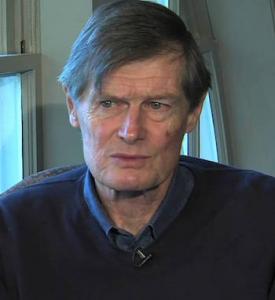
George AlvarezView profile
Professor
George Alvarez is a Professor of Psychology in the Faculty of Arts and Sciences at Harvard University, where he leads the Vision Sciences Laboratory. His research lies at the intersection of cognitive science, neuroscience, and computational modeling, focusing on how the human visual system efficiently encodes and processes information through mechanisms such as attention, memory, and statistical learning. His research interests center on the cognitive and computational foundations of visual intelligence. Specifically, he investigates attentional selection , visual and working memory storage , fluid resource allocation , and ensemble coding . A key focus is understanding how the brain extracts regularities from visual input to form efficient representations. He explores whether detailed visual memory recall involves reactivation in the primary visual cortex, how learning statistical covariances alters object representations in the ventral visual stream, and where in the visual hierarchy ensemble statistics first emerge. His lab combines behavioral studies , fMRI , neurostimulation , and deep neural network models to probe these questions and bridge human and machine vision. Alvarez is affiliated with Harvard’s Mind, Brain, and Behavior (MBB) consortium and actively contributes to interdisciplinary research. He mentors students and researchers in the Vision Sciences Laboratory, fostering innovation in cognitive and computational neuroscience. While no specific awards or grants are listed in the provided text, his work is supported through institutional and research funding mechanisms at Harvard. His lab collaborates across disciplines, leveraging AI advances to refine models of human visual cognition. The lab maintains active participation in public science through platforms like TestMyBrain.org and MechanicalTurk.com, enabling large-scale behavioral data collection. Future work aims to deepen the integration between artificial and biological vision systems, uncovering fundamental principles of perception and cognition.