Yujia Zhang is a Tenure Track Assistant Professor at the School of Engineering , École Polytechnique Fédérale de Lausanne (EPFL), leading the Laboratory for Bio-Iontronics (BION) since January 2025. His work focuses on developing iontronic biointerfaces and hybrid intelligent systems for biomedical applications. Academic Affiliations: EPFL School of Engineering, STI-SMT SMT-ENS PhD program committee Research Themes: Droplet-based iontronics, synthetic tissues, advanced manufacturing Research Trends from his publications emphasize microscale droplet iontronics , soft energy systems , and biohybrid interfaces , with applications in neurostimulation , tumor modeling , and biomedical devices . Scientific Awards : 2023: Early-career Research Scientist Representative, UK Parliamentary & Scientific Committee 2022: Excellent Doctoral Dissertation, Chinese Academy of Sciences 2021: Outstanding Doctoral Thesis, Chinese Institute of Electronics 2020: Special Prize for President Scholarship, Chinese Academy of Sciences Academic Contributions include mentoring PhD students and teaching microfabrication technologies. His lab develops 3D-printed synthetic tissues and droplet networks for interactive biological communication.
Dr. William M Holmes is a Senior Research Fellow and Senior MRI Physicist at the University of Glasgow's School of Psychology & Neuroscience, affiliated with the Glasgow Experimental MRI Centre. He holds a PhD in Physical Chemistry from the University of Nottingham and specializes in advancing MRI techniques for biomedical and physical sciences. His work bridges physics, neuroscience, and clinical applications, with a focus on cerebral blood flow imaging, glymphatic system dynamics, and disease modeling in rodents. Key roles: MRI method development, neuroimaging biomarkers, porous media analysis Leadership: Glasgow Experimental MRI Centre Research interests emphasize novel MRI applications in stroke, neurological disorders, and material science. Over 80 peer-reviewed publications demonstrate contributions to perfusion imaging, biofilm dynamics, and translational MRI techniques. Recent projects include: Quantitative arterial spin labeling methods Glymphatic system's role in multiple sclerosis Non-invasive rodent disease modeling
Gabriel Kahn is a Professor of Professional Practice of Journalism at the University of Southern California’s Annenberg School for Communication and Journalism. He co-directs the M{2e} program (Media, Economics and Entrepreneurship) and serves as Innovations Manager for the Annenberg Innovation Lab. His work focuses on the disruption and evolution of the news industry, emphasizing data-driven journalism and innovation in media economics. Kahn has extensive experience as a journalist, having held roles at The Wall Street Journal , Roll Call , and The Forward , with global reporting across three continents. Academic Affiliations: Journalism (BA, MS, MA Specialized Journalism) Co-Director, M{2e} Program Member, Annenberg Innovation Lab Research Council Research Interests: Economic models of news industries Data-driven journalism platforms (e.g., Crosstown) Media entrepreneurship and innovation Technology’s role in local and global news Teaching: Courses include Money, Markets and Media (JOUR 469) and Directed Research (JOUR 490x/590) Developed economics/business reporting track in USC’s specialized journalism program Professional Ventures: Founded Italy Daily (1998), a joint venture between International Herald Tribune and Corriere della Sera Launched Crosstown (2018), a data-driven hyper-local news initiative Advisory board member for Worldcrunch , a global news startup Grants & Consulting: Advises news startups and established companies on strategic innovation in media ecosystems. Labs/Teams: Active in the Annenberg Innovation Lab, exploring intersections of technology and communication.
Prof. Rineke Verbrugge is a Professor in Artificial Intelligence at the University of Groningen's Faculty of Science and Engineering, affiliated with the Bernoulli Institute. Her research focuses on computational theory of mind, multi-agent systems, hybrid intelligence, and logical frameworks applied to social networks and legal reasoning. She holds additional roles on the Institute Advisory Board of CWI (Dutch National Research Institute for Mathematics and Computer Science) and several ERC/NWO selection committees. Her work bridges cognitive science and AI, emphasizing human-agent collaboration, belief formation in groups, and ethical AI design. Recent projects include developing computational models for theory of mind in negotiations and scenario-based Bayesian networks for legal evidence analysis. She has authored over 220 publications and supervised multiple PhD candidates in AI and logic. Key research themes include higher-order theory of mind applications, zero-one laws in provability logic, and agent-based policy evaluation for sustainable technologies. Her contributions span conferences like AAMAS, ICAIL, and HHAI, addressing topics from lie detection mechanisms to privacy conflicts in multi-user systems.
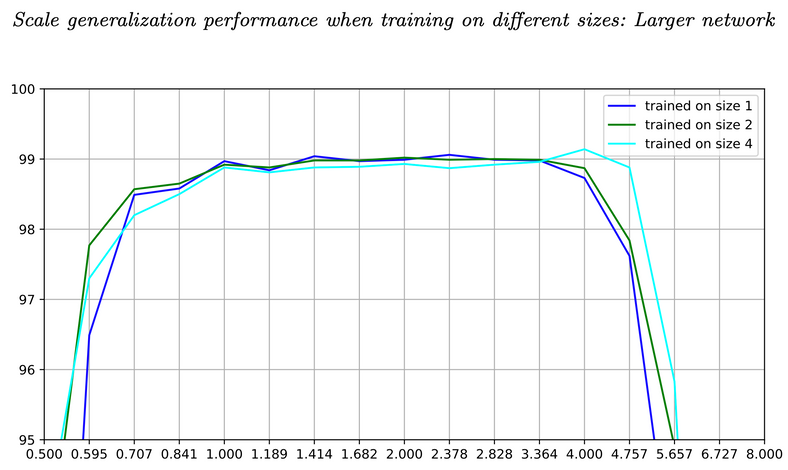
Tony Lindeberg is a Professor of Computer Science—Computational Vision at KTH Royal Institute of Technology, affiliated with the Division of Computational Science and Technology. He teaches the course Image Analysis and Computer Vision (DD2423). His research focuses on scale-space theory, early vision, and computational modeling of biological and auditory vision systems. Key contributions include theories on receptive fields, time-causal spatio-temporal models, and feature detection algorithms. Research interests span computational neuroscience, medical image analysis, and spatio-temporal recognition. Lindeberg has pioneered work on scale-invariant image features, affine transformations, and Galilean diagonalization for motion analysis. He is the author of the foundational book Scale-Space Theory in Computer Vision (1993). His work bridges computer vision and biological vision systems, with applications in gesture recognition, dynamic texture analysis, and neural networks. He leads the Vision Lab and Computational Brain Science Lab at KTH, emphasizing theoretical rigor and practical algorithms for visual perception tasks.
Tino Weinkauf is a Professor of Visualization and Head of the Division of Computational Science and Technology at KTH Royal Institute of Technology in Stockholm. His work bridges computer science and applied mathematics, with a focus on visualization and topological data analysis. He leads research in visualizing complex data from fields like fluid dynamics, neurobiology, and human-computer interaction. Education: Ph.D. in Computer Science (not explicitly stated in provided texts, but inferred from career trajectory). Research interests include flow visualization, topological methods for data analysis, and interactive visualization techniques. He develops tools like the TopoInVis Toolkit (TTK) and contributes to infrastructure such as the Swedish Research Infrastructure for Visualization Support (InfraVis). His work emphasizes applications in turbulence modeling, biomedical imaging, and user-centered design. Teaching: Responsible for courses such as Advanced Topics in Visualization and Computer Graphics , Information Visualization , and Introduction to Visualization and Computer Graphics . Supervises degree projects in Computer Science and Engineering across specializations like Machine Learning and Interactive Media Technology. Publications focus on topological data analysis, flow segmentation, and algorithm optimization. Notable projects include binary segmentation of turbulent flows and interactive reward tuning systems for preference elicitation. Labs/Teams: Leads the Division of Computational Science and Technology at KTH, fostering interdisciplinary research in computational methods and visualization technologies.
Dr. Sabin Tabirca is a Senior Lecturer at the School of Computer Science and Information Technology, University College Cork (UCC). He holds a BSc from Bucharest University and a PhD from Brunel University. His research focuses on Artificial Intelligence, Data Analytics, Algorithmics, Interactive Media, and HCI, with applications in computational cancer modeling, mobile health (mHealth), and parallel computing. He coordinates MPT Activities and is affiliated with the CRR Group and BCRI Centre. Notable awards include UCC's President Award for Innovation in Teaching (2007), IT@Cork Leader Award (2008), and UCC Staff Recognition Award (2013). His teaching includes modules like Parallel and Grid Computing, Mobile Application Design, and Graphics for Interactive Media. Dr. Tabirca has supervised over 70 MSc students and numerous PhD candidates, many of whom now hold academic and industry roles globally. His research includes developing mHealth apps for cystic fibrosis patients, 3D cancer visualization tools, and frameworks for mobile parallel computing. Publications span mHealth design pipelines, cancer prediction models, and mobile gaming for health education. He actively engages in interdisciplinary projects, blending computer science with medical and biological applications.
Dr. Tania Mendo is a Lecturer at the University of St Andrews, School of Geography and Sustainable Development. She specializes in interdisciplinary approaches to small-scale coastal fisheries management, focusing on policy-informed research, socio-economic indicators, and marine spatial planning. Her work emphasizes equitable representation of fishers in the blue economy and employs statistical methods paired with user-friendly data visualization tools for stakeholder engagement. Current research interests include machine learning applications for decision-making, blue justice frameworks, climate change adaptation in hyper-arid regions, and El Niño impacts on food systems. Dr. Mendo leads projects such as the Digital Transition of Catch Monitoring in European Fisheries and Conserving Atlantic Biodiversity through Co-management. She collaborates internationally with organizations like Cefas and engages with communities in Peru and Scotland. Her research integrates quantitative methods with participatory approaches to address fisheries governance challenges and environmental sustainability. Grants include funding from UKRI, BBSRC, and EPSRC for initiatives like improving stock assessment technologies and assessing fishing communities' resilience during crises. Her publications highlight innovations in vessel tracking analysis, spatial distribution modeling, and socio-economic frameworks for fisheries. She advises PhD students Miguel Delos Santos and Tamsin Rigold. Mendo is affiliated with the Bell-Edwards Geographic Data Institute and contributes to UN SDGs related to life below water and sustainable communities.
Stephen H. Lane is a Teaching Professor at the University of Pennsylvania's School of Engineering and Applied Science, Department of Computer and Information Science. He serves as Director of the Computer Graphics and Game Technology (CGGT) Master's Program and teaches courses such as Computer Animation (CIS462/562), Advanced Topics in Computer Graphics and Animation (CIS660), and Game Design and Development (CIS564). He also supervises the Game Design Practicum (CIS568) capstone course. Education: B.S. in Mechanical and Aerospace Engineering from Cornell University (1980) M.S. in Systems Engineering from UCLA (1982) Ph.D. in Mechanical and Aerospace Engineering from Princeton University (1988) Dr. Lane's research focuses on the intersection of robotics, physically-based character animation, embodied intelligent agents, and virtual reality user interfaces. His work integrates control theory, artificial intelligence, and computer animation techniques to develop advanced simulation and training systems. His publications since 1987 cover topics such as inverse kinematics, neural networks for motion control, B-spline receptive fields, robotic skill acquisition, and gesture recognition systems. His recent work (2010-2011) emphasizes sensor fusion for gesture recognition and immersive training interfaces. Scientific Awards: Co-inventor of four US patents related to robotic animation and motion control systems Contributions to hybrid controller hierarchies and neural network training methods As founder of soVoz, Inc., Dr. Lane commercializes behavioral animation technology for virtual environments. His academic-industry collaboration includes contracts with Microsoft, Disney, and the US Army. He has developed tools like ProScena™ to integrate interactive 3D simulation capabilities into gaming and training applications.
Petar Popovski is a Professor at the Department of Electronic Systems within the Technical Faculty of IT and Design at Aalborg University, Denmark. His research focuses on next-generation wireless communication systems, with a strong emphasis on ultra-reliable low-latency communication (URLLC), Internet of Things (IoT), multiple access, and 6G technologies. He leads several high-impact research projects, including the Classique - Center for Classical Communication in the Quantum Era funded by the Danish National Research Foundation and WATER (Wireless Architectures for intelligent and Trusted connectivity in the posT-5G ERa) supported by Villum Fonden. His research interests span key areas in modern communication theory and systems, including random access , non-terrestrial networks , satellite communication , and machine learning for reliable communication . He is actively involved in advancing the integration of sensing and communication, digital twin technologies, and quantum-era classical communication frameworks. The recent publications highlight a strong trend toward deterministic and reliable access in wireless networks, integration of sensing and communication for industrial automation, and novel physical-layer techniques using reconfigurable intelligent surfaces. These works are published in top IEEE journals such as IEEE Transactions on Communications , IEEE Transactions on Haptics , and IEEE Transactions on Vehicular Technology . Award highlights include the Best Student Paper Award (2021) , recognizing his mentorship and collaborative research excellence. Prof. Popovski serves as a principal investigator (PI) and supervisor in multiple research projects, securing significant funding from national and international bodies such as the Danish National Research Foundation and the European Space Agency (ESA). He hosts visiting researchers regularly and contributes to scientific leadership through editorial roles and conference participation. He is a key figure in the Connectivity section at Aalborg University and leads cutting-edge research in future wireless systems, contributing to both theoretical foundations and practical implementations in smart infrastructure, space communication, and dependable 6G networks.
Dr Lounis Chermak is a Lecturer in Computer Vision and Autonomous Systems at the Centre for Electronic Warfare, Information and Cyber, part of Cranfield Defence and Security at Cranfield University, UK. He leads the Joint Autonomy Lab and is actively involved in research and education in autonomous systems with applications in defence and space. Research Interests: His work focuses on situational awareness in autonomous platforms, with core expertise in computer vision, sensor fusion, artificial intelligence, robotics, and navigation. He investigates perception, decision-making, and mobility across aerial, ground, maritime, and space systems, developing robust solutions for challenging environments including low visibility and extreme illumination. The recent publications reflect a strong trend in autonomous navigation, particularly for space and defence applications, using advanced computer vision techniques such as thermal stereo odometry, HDR imaging, stixel-based scene understanding, and lightweight 3D descriptors. Research also extends to cybersecurity of autonomous systems, including impersonation attack detection and optical countermeasures. Scientific Awards: No scientific awards mentioned in the provided text. Advising and Grants: Dr Chermak leads research activities supported by postdoctoral researchers, PhD, and MSc students. His work is funded and applied in collaboration with major clients including aerospace organizations (ESA, UK Space Agency, Thales Alenia Space), defence agencies (MoD, DSTL, BAE Systems, MBDA), and technology companies (Samsung, Astroscale). He supervises research students in robotics and autonomous systems across civilian and defence domains. Labs and Teams: He leads the Joint Autonomy Laboratory, a 200 m² indoor facility equipped with drone netting, motion capture systems, virtual reality test benches, UAV and ground robot fleets, electric vehicles, and multiple sensors for vision, ranging, and motion. This lab supports both educational and cutting-edge research in autonomous systems.
Jennifer Steeves is a Full Professor in the Department of Psychology, Faculty of Health at York University, where she also serves as Associate Vice President Research. She holds the York Research Chair in Non-invasive Visual Brain Stimulation and leads the Perceptual Neuroscience Laboratory. She is an active supervisor in the Biology Graduate Program and affiliated with multiple research institutes, including the Centre for Vision Research, Vision: Science to Applications (VISTA), and the SickKids Research Institute. She also holds adjunct professorships at the University of Toronto and the University of Waterloo. Her research focuses on how the brain adapts to sensory loss, particularly in individuals who have lost one eye early in life. She investigates neural plasticity using fMRI, TMS, psychophysics, and eye-tracking. Her work reveals structural and functional reorganization in the visual and auditory cortices, enhanced auditory localization, and reduced susceptibility to audiovisual illusions like the McGurk effect in monocular individuals. Her recent publications highlight the use of rTMS for treating visual hallucinations, cortical reorganization after sensory deprivation, and multisensory integration. These studies span clinical applications and fundamental neuroscience, showing trends in brain stimulation, neurochemical changes (GABA/glutamate), and cross-modal plasticity. York Research Chair in Non-invasive Visual Brain Stimulation Dr. Steeves has supervised numerous PhD, Master’s, and undergraduate students, many of whom have continued in neuroscience research. Her lab receives funding for studies on visual snow, Charles Bonnet Syndrome, and brain stimulation. She collaborates across disciplines and institutions, contributing to national networks like CAPnet. She actively mentors the next generation of scientists and leads major research initiatives at York University. The Perceptual Neuroscience Laboratory, located in the Sherman Health Science Research Centre at York University, brings together psychologists, neuroscientists, and clinicians. The lab utilizes fMRI, TMS, MR spectroscopy, and psychophysics to study both healthy and clinical populations, including those with retinoblastoma, prosopagnosia, and post-stroke visual impairments.
Barbara Pavlek Löbl Barbara Pavlek Löbl is a Research Fellow and postdoctoral researcher at the Chair of Public History within the Faculty of Historical and Cultural Studies at the University of Vienna. Her work focuses on interdisciplinary approaches combining digital historical data with computational models to study cultural history. She holds a PhD from Friedrich Schiller University Jena and the Max Planck Institute for the Science of Human History, where her dissertation explored coinage as an informational system through archaeology, cognitive science, and economic history. Her current research investigates interactions between people, monuments, landscapes, and narratives in cultural memory formation. She previously served as Deputy Chief Content Officer (Deputy CCO) at Public History Weekly (2022–23). Pavlek Löbl teaches courses on public archaeology and memory landscapes, actively contributing to academic discourse through her research projects and publications. Key areas of expertise include digital humanities, cultural evolution, and the application of computational methods to historical data analysis. Her work bridges archaeology, economics, and cognitive science to understand how cultural systems evolve over time.
François Brémond is a Research Director (DR1) at INRIA Sophia Antipolis, where he leads the STARS research team, which he founded on January 1, 2012. He was previously head of the PULSAR team starting September 2009. He is also a co-founder of the CoBTeK team at Nice University in collaboration with Nice Hospital, focusing on behavioral disorders in elderly patients with dementia. His research is centered on dynamic scene interpretation using video and sensor data, with applications in surveillance, healthcare, transportation, and ambient intelligence. Research Interests: Computer Vision: video processing, object detection and tracking, motion analysis, pattern recognition Cognitive Vision: video understanding, scene understanding, event recognition, behavior analysis, multi-sensor fusion, multimedia interpretation Machine Learning: deep learning architectures, self-attention, knowledge distillation, contrastive learning, self-learning, lifelong learning, knowledge-based systems, spatio-temporal reasoning Autonomous Systems: real-time systems, system evaluation, parameter tuning, system design, 3D visualization His work bridges low-level pixel data with high-level semantic behavior modeling, enabling systems to detect and interpret complex human and vehicle activities in real-world environments. Applications include crowd monitoring, fraud detection, airport operations, homecare for the elderly, and biological monitoring. He has authored or co-authored over 200 scientific papers and has (co-)supervised 18 PhD theses. He has participated in 12 European projects (e.g., FP6, FP7), 12 French national projects (ANR, DGE), and numerous industrial collaborations with companies such as Thales, SNCF, RATP, STMicroelectronics, and Alstom. He also serves as an expert reviewer for ANR and the European Commission. Scientific Leadership and Technology Transfer: Co-founder of Keeneo (acquired by Digital Barriers), Ekinnox, and Neosensys — startups in intelligent video monitoring and business intelligence Reviewer for top-tier journals (PAMI, CVIU, AIJ) and conferences (CVPR, ICCV, AVSS) Contributor to the ARDA workshops on video event ontology He has taught numerical classification at Nice University and video understanding at a Master’s level engineering school. His research program emphasizes generic, scalable systems for behavior modeling and long-term activity mining. Research Projects: Stress ID dataset (ECG and video for stress detection) Toyota Smarthome (Activities of Daily Living) SafEE2 (Homecare for elderly with autonomy loss) Praxis dataset (RGB-D upper-body gestures) GER'HOME, CARETAKER, RATP Project, ETISEO, AVITRACK, CASSIOPEE, ADVISOR, PASSWORDS
Dr. Malcolm Heywood is a Professor in the Faculty of Computer Science at Dalhousie University, Halifax, Canada. He leads the Network Information Management and Security (NIMS) Lab and is actively involved in research on genetic programming, coevolution, reinforcement learning, and big data analytics. His research interests span: Genetic Programming and Evolutionary Computation Coevolution and Competitive Learning Problem Decomposition and Hierarchical Models Streaming Data Analysis and Anomaly Detection Network Security and Insider Threat Detection Reinforcement Learning in Games (Atari, ViZDoom, Dota 2) Dr. Heywood's recent publications focus on emergent behaviors in reinforcement learning using Tangled Program Graphs (TPG), benchmarking genetic programming for streaming data, and applications in cybersecurity and computational finance. His work demonstrates a strong trend toward scalable, efficient evolutionary models for complex, real-world problems. His scientific awards include: Silver placed at Human-Competitive (Humies) Competition (2018) Best Paper at EuroGP (2017) Best Paper at DETA track, ACM GECCO (2017) Best Paper at RWA track, ACM GECCO (2018) Nomination for Best Paper at DETA track, ACM GECCO (2019) He has supervised numerous graduate students, including PhD and Master's candidates, many of whom have continued research in evolutionary computation. His lab has developed open-source code distributions for Tangled Program Graphs and Symbiotic Bid-Based GP. Dr. Heywood teaches courses in Computer Organization, Introduction to AI with Gaming Applications, and Genetic Algorithms and Programming.