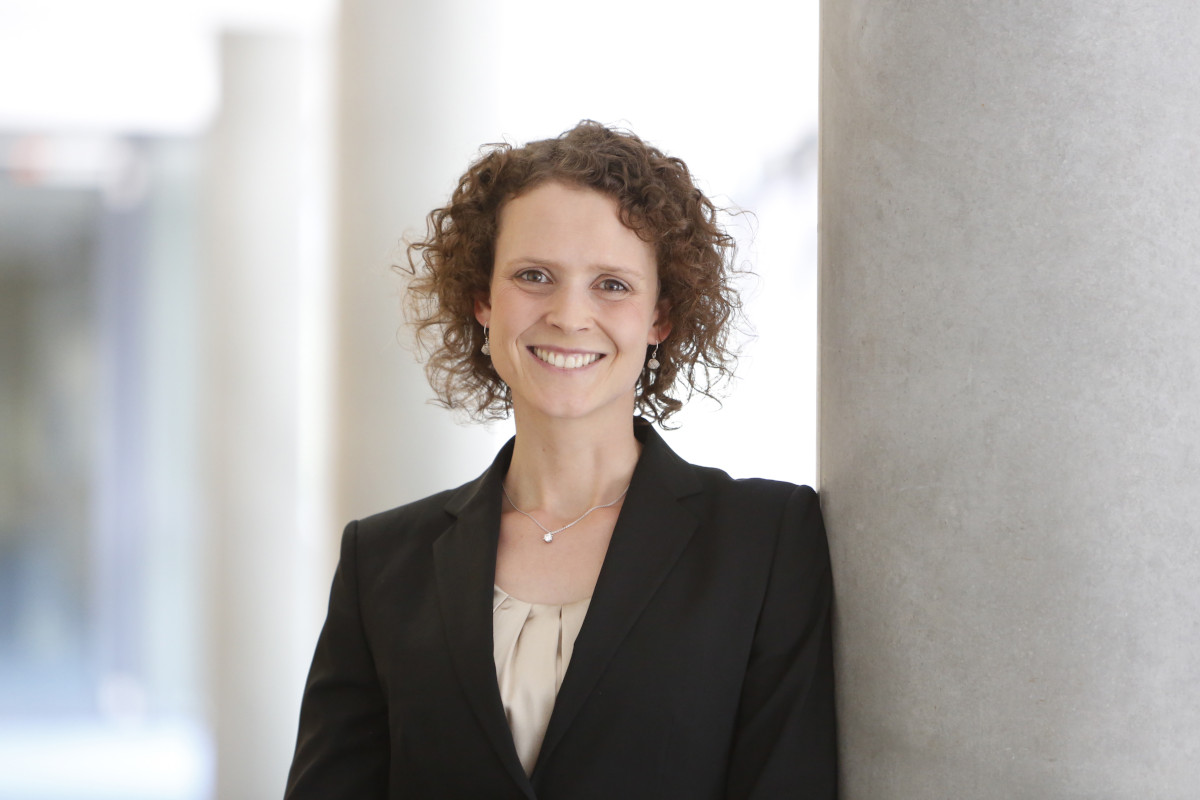
Verena Tiefenbeck is a Professor and Chair of Digital Transformation at Friedrich-Alexander-Universität Erlangen-Nürnberg (FAU), leading a Bavarian Ministry-funded junior research group since 2019. Her work bridges digital transformation with behavioral science, focusing on high-resolution behavioral data to drive sustainability in energy, mobility, health, and human-AI collaboration. Education: MSc in Mechanical Engineering & Management (TU Munich, Ecole Centrale Paris) Doctorate: ETH Zurich (2014) Research explores how digital technologies shape human behavior through real-time feedback, algorithmic transparency, and nudges. Key areas include energy conservation, sustainable mobility, and AI adoption in organizational contexts. Her recent publications examine peer-to-peer energy markets, digital food labeling, and algorithmic fairness in HR. Core research themes across 2024-2025 publications include: Digital feedback mechanisms for energy/water conservation Algorithmic transparency in AI-driven recruitment Behavioral economics of renewable energy communities Digital nudges in health decisions and sustainable consumption Methodological transparency in design science research
Carlos Cifuentes is an Associate Professor in Human-Robot Interaction at the Bristol Robotics Laboratory (BRL) , part of the University of the West of England (UWE Bristol) . He also serves as the Deputy Director of the VIVO Hub , a £13.4M UK-funded research initiative (2024-2030) focused on robotics for rehabilitation and healthcare. His research spans Human-Robot Interaction , Rehabilitation Robotics , Healthcare Robotics , and Socially Assistive Robotics , with applications for conditions such as cardiac diseases , post-stroke recovery , spinal cord injuries , cerebral palsy , Parkinson's disease , musculoskeletal disorders , and autism spectrum disorder (ASD) . Carlos has over 15 years of experience and 200+ publications in robotics for rehabilitation and assistive technologies. His recent work explores smart walkers with multimodal feedback, soft prosthetics using polymeric optical fiber sensors , and machine learning models for fatigue and stress estimation. He also investigates inclusive design for social robots in global contexts , including a CASTOR Robot for ASD therapy and collaborative design processes with Colombian communities. Carlos serves as an Associate Editor for IEEE Robotics and Automation Magazine (since 2021), ICRA , and IROS (since 2023). He leads projects integrating wearable sensors , deep learning , and haptic feedback to enhance mobility, autonomy, and quality of life for individuals with disabilities. As Deputy Director of the VIVO Hub, he focuses on long-term deployment of robotic systems in real-world healthcare settings, emphasizing collaboration with clinicians , caregivers , and neurodiverse communities . His work bridges robotics , biomedical engineering , and human-centered design .
Chris Danforth is a Professor in the Department of Mathematics & Statistics at the University of Vermont and serves as Director of the Vermont Advanced Computing Center. Co-founder of the Computational Story Lab with Peter Dodds, he applies mathematical principles to analyze complex systems across social media, behavioral health, and cultural dynamics. Education: Not explicitly stated in text Affiliation: University of Vermont His research spans Computational Social Science , Machine Learning , and Behavioral Health Analytics , focusing on quantifying human behavior through social media analysis, wearable device data, and literary structures. Key projects include the Hedonometer (Twitter happiness measurement), Storywrangler (cultural timeline analysis), and LEMURS (longitudinal study on student well-being). Recent publications demonstrate expertise in Nonlinear Dynamics , Data Privacy , and Urban Demographics . Articles explore topics ranging from pandemic attention dynamics to computational paremiology (proverb analysis), with applications in mental health prediction, market efficiency, and social justice metrics. 2022 Kroepsch-Maurice Excellence in Teaching Award NSF, AMD, and MassMutual funding Co-developer of Storywrangler and Hedonometer tools As director of the Vermont Advanced Computing Center, Danforth leads high-performance computing initiatives while maintaining an active research agenda with interdisciplinary collaborations across medicine, computer science, and social sciences.
Heather Miller is a tenure-track Assistant Professor in the Software and Societal Systems Department within Carnegie Mellon University's School of Computer Science. Her academic journey includes prior roles as an Assistant Clinical Professor at Northeastern University's College of Computer and Information Science and as Executive Director of the Scala Center at EPFL. Miller's research centers on distributed and concurrent computation through the lens of programming languages, with particular emphasis on data-centric systems, big data processing, and edge computing. A defining theme throughout her work is composability - enabling construction of complex distributed systems through composition of components that are correct by construction. Her projects span distributable closures, flexible serialization techniques, futures and promises for asynchronous programming, and deterministic concurrent dataflow models. Her recent publications demonstrate strong trends in applying programming language theory to practical distributed systems challenges, with increasing focus on WebAssembly instrumentation, microservice resilience, and language model pipelines. This evolution reflects her commitment to bridging theoretical foundations with real-world system requirements. Dahl-Nygaard Junior Prize (2023) Mentorship forms a significant component of Miller's academic work. She actively supervises multiple PhD, MS, and undergraduate researchers at CMU, including Christopher Meiklejohn, Matthew Weidner, Huairui Qui, Ria Pradeep, and Luke Dramko. Her service contributions span numerous top-tier conferences including PLDI, SPLASH, ECOOP, and ICSE where she has served as committee member, chair, and keynote speaker. Miller co-founded the Curry On conference to foster industry-academia dialogue, hosting successful editions in Prague, Rome, Barcelona, Amsterdam, and London. She leads research groups focused on distributed programming models and maintains strong industry connections through Two Sigma, where she holds an affiliation. Her work consistently emphasizes practical open-source implementations, primarily within the Scala ecosystem where she's been a core contributor since 2011.
Nina Franz is a Researcher at the Institute of Media Studies, Braunschweig University of Fine Arts, specializing in the Theory and History of Technology. She holds a doctorate in Cultural Studies from Humboldt University of Berlin and has held research positions at Bauhaus University Weimar and Humboldt University Berlin. Her research spans military imaging technologies from early modern period to computer age, climate catastrophe narratives in humanities and contemporary art, history of automation, and critical analysis of technological destruction narratives. She examines how imaging systems mediate power relations in warfare, medicine, and colonial contexts, with particular focus on ultrasound, drone warfare, and military surveillance systems. Her recent publications reveal strong interdisciplinary trends across Media Studies, Cultural History, and Critical Military Studies, with recurring themes of visual epistemology, technological mediation, and the weaponization of perception. Key subfields include drone warfare protocols, medical imaging interfaces, algorithmic control systems, and climate catastrophe representations. Doctoral Scholarship, Gerda Henkel Foundation (2015-2018) As a curator and educator, Franz has organized international conferences including 'Remote Control. Scales of Mediated Intervention' (2017) and co-curated exhibitions like 'A Better Version of You' (2016-2018) with Goethe-Institut Seoul. Her current teaching includes courses on military imaging and rearmament discourses, with mandatory participation in the 'Fascism and Mediality' workshop (2025). She regularly presents at academic conferences on military imaging technologies, including upcoming lectures at Staatliche Hochschule für Gestaltung Karlsruhe and Johannes Gutenberg-Universität Mainz. Her work bridges academic research with contemporary art curation, examining how military technologies permeate civilian perception through screen media and imaging systems.
Saptarashmi Bandyopadhyay is a Tenure-Track Assistant Professor of Computer Science at the City College of New York and the Graduate Center at the City University of New York (CUNY). Her research focuses on Artificial Intelligence Agents and Autonomous Decision Making, with special emphasis on Multi-Agent Reinforcement Learning, Multi-Agent Imitation Learning, and related paradigms. She has established significant collaborations with leading institutions including Google DeepMind, Carnegie Mellon University, Oxford University, and MIT. Dr. Bandyopadhyay received her PhD from the University of Maryland, College Park, where she was advised by Professor John Dickerson and Professor Tom Goldstein. Prior to that, she graduated from Penn State in 2020 with a thesis on Multimodal Computer Vision in Medical Domain advised by Prof. William Evan Higgins. Her research expertise spans multiple domains of AI including Multi-Agent Systems, Reinforcement Learning, Imitation Learning, and Multimodal Perception. She specializes in developing AI agents for applications in climate conservation, economic systems, and AI safety. Her work integrates techniques from computer vision, natural language processing, and robotics to create more robust and explainable AI systems that can operate effectively in complex, real-world scenarios. Current work includes improving explainable AI, developing Multimodal LLM/VLM/Robotic Agents, and creating libraries to speed up Multi-Agent evolutionary training with JAXMARL. Analysis of Dr. Bandyopadhyay's publication record reveals a clear progression from foundational work in medical imaging and natural language processing toward increasingly sophisticated multi-agent AI systems. Her recent publications demonstrate a strong focus on Multi-Agent Reinforcement Learning frameworks like JAXMARL, with applications spanning from supply chain orchestration to climate conservation. The interdisciplinary nature of her work is evident in publications spanning computer vision, NLP, and multi-agent systems conferences including AAAI, NeurIPS, AAMAS, EMNLP, and ACL. DoGood Fellow (2022) UMD Dean's Summer Fellow (2021) Dr. Bandyopadhyay has been actively involved in securing research funding from major agencies including NSF, NIH, DoD, and ARL. She served as the lead PhD student RA in a DoD project for Multi-Agent Explainable AI to improve AI trustworthiness. Her service to the academic community includes membership on program committees for major conferences including IJCAI 2024, KDD 2024, ACL 2024, and AAMAS 2023-2024. She has also created the AI Agents Seminar Series at UMD in 2022 with over 1,000 participants from six continents. Currently, Dr. Bandyopadhyay leads research on improving explainable AI, developing Multimodal LLM/VLM/Robotic Agents, and creating libraries to speed up Multi-Agent evolutionary training with JAXMARL. Her lab collaborates prominently with researchers from Google DeepMind, Carnegie Mellon University, Oxford University, University of Sheffield, Waymo, Meta AI, and MIT, with special focus on Dr. Jakob Foerster's and Dr. Robert Loftin's groups.
Prof. Joris Pascal is a Lecturer in Life Science Technologies at the University of Applied Sciences and Arts Northwestern Switzerland (FHNW), affiliated with the School of Life Sciences and the Institute for Medical Engineering and Medical Informatics in Muttenz, Switzerland. He holds a Ph.D. in Microelectronics from the University of Strasbourg (2008), an M.S. in Electrical Engineering from Supélec (2005), and a B.S. in Electrical Engineering from the University of Strasbourg (2003). His professional experience includes roles as Senior Scientist and Scientist at ABB Switzerland Ltd. (2009–2015), and Research Assistant at the iCube laboratory (2005–2009). His research focuses on advanced biosignal processing, medical sensor systems, magnetic field sensing, and miniaturized diagnostic/therapeutic tools. Key projects include electromagnetic tracking systems for neurosurgery, magnetic safety assessment for MRI workers, and wearable sensor integration. He has 9 patents (5 granted, 4 pending) and extensive IEEE review involvement. Recent publications emphasize magnetic field cameras, MRI safety protocols, and nanoscale sensor technologies. His work bridges electrical engineering and biomedical applications, with contributions to medical robotics, portable NMR devices, and cardiac implant safety. Active in PhD committee roles and industry-academia collaborations, he leads projects at the intersection of sensor innovation and clinical needs.
Professor Dorothy Monekosso holds a PhD in Spacecraft Engineering from the University of Surrey and is currently a Professor of Computer Science at Durham University. She also serves as Chief Technical Officer (CTO) at More Life UK Ltd, a health-focused company contracted with NHS England. Her research focuses on applying AI and machine learning to healthcare technologies, including assistive and rehabilitation systems. Notable projects include the Virtual Physiotherapist for stroke recovery and the Digital Health Hub. Education: PhD (2000) in Spacecraft Engineering (University of Surrey), Master’s in Satellite Engineering, Bachelor in Electronic Engineering. Research Interests: Behavior Analytics, Digital Twin Computing, Anomaly detection, Medical Image Analysis, Smart Environments, and Wearables. Her work bridges robotics, AI, and healthcare to improve independent living and clinical decision support. Awards: Royal Academy of Engineering Foresight Award (2000), Honorary Fellowship of the British Computer Society (2020). Grants/Projects: Innovate UK-funded weight management programs, MRC-funded Virtual Physiotherapist studies, collaborations with NHS and Assisted Living Leeds. Labs/Teams: Leads development of assistive technologies through Durham’s Computer Science department and industry partnerships. Current supervision includes Strahinja Klem.
Fajar Juang Ekaputra is a Tenure Track Assistant Professor at the Institute of Data, Process, and Knowledge Management (DPKM), WU Vienna and a part-time Postdoctoral Researcher at the Data Science research unit, TU Wien . With a focus on Semantic Web , Knowledge Graphs , and their integration with Machine Learning in Neurosymbolic AI systems, his work spans domains like Cyber-Physical Systems and Materials Engineering . Education: Dr.techn. (2018), TU Wien M.T. (2010) and S.T. (2008), Institute Teknologi Bandung (ITB) Research Interests center on hybrid AI systems combining Semantic Web and Machine Learning , with applications in Cyber-Physical Systems (e.g., smart grids, smart buildings), data privacy in smart cities, and materials engineering . His 102+ publications include frameworks like SWeMLS-KG and SHACL4Protege . Recent Articles (2024) address explainable AI in cyber-physical systems, privacy trust in data infrastructures, and neurosymbolic frameworks . Earlier works (2023–2022) explore ontology-based data management , auditable AI , and hybrid system architectures . Scientific Awards: Best Paper Awards (ICoDSE 2023, ICoDSE 2016) Best Poster Nomination (SEMANTiCS 2019) PhD Scholarship (Austria’s Agency for Education and Internationalisation, 2012) Advising includes supervising PhD students (e.g., Majlinda Llugiqi, Katrin Schreiberhuber) and master’s theses on topics like knowledge graph characteristics and data quality assessment . He leads projects such as FAIR-AI (FFG-funded, 2024–2026) and SENSE (Horizon Europe, 2023–2025).
Russell Detwiler is an Associate Professor in the Department of Civil and Environmental Engineering at the Samueli School of Engineering, University of California, Irvine. He holds a Ph.D. and B.S. in Civil Engineering from the University of Colorado and University of Vermont, respectively. As Associate Director of the UCI WEX Center, his work combines laboratory experimentation with computational modeling to study subsurface fluid dynamics. Education: Ph.D., Civil Engineering, University of Colorado B.S., Civil Engineering, University of Vermont Research Focus: Detwiler's research examines fluid flow processes in porous and fractured media, with emphasis on multiphase flow, subsurface property alteration, and environmental applications. Key areas include contaminant remediation, CO2 sequestration, geothermal energy, and nuclear waste management. Publication Trends: His recent work (2022-2024) emphasizes subsurface PFAS behavior, coastal aquifer modeling, and fracture clogging dynamics. Earlier research (2019-2021) focused on mineral precipitation effects and kinetic modeling for contaminant removal. Common sub-fields span fracture sealing mechanisms, particle retention, and reactive transport modeling. Laboratory: Leads the Subsurface Processes Visualization Lab, developing parallel computational models to scale laboratory observations to field applications. Research integrates high-resolution imaging with numerical simulation for subsurface system analysis.
Martin Lohse is a Professor for Pharmacology and Toxicology at the University of Würzburg since 1993. He currently serves as Vice President for Research (since 2009) and Executive Director for Graduate Schools (since 2003). His career includes leadership roles at the Rudolf-Virchow-Center for Experimental Biomedicine and foundational research at institutions like Duke University and the Max-Planck-Institute for Biochemistry. Research Focus: Lohse's work centers on receptor physiology and pharmacology, particularly the molecular biology of G-protein-coupled receptors (GPCRs), intracellular signaling, desensitization, and advanced fluorescence microscopy techniques. His studies explore receptor dynamics in cardiac systems and signaling persistence through internalized receptors. Scientific Awards: Gottfried Wilhelm Leibniz-Prize (1999) Ernst-Jung-Prize for Medicine (2000) ERC Advanced Investigator Grant (2008) Bavarian Order of Merit (2006) German Federal Cross of Merit (2002) Leadership & Grants: He initiated the Collaborative Research Center 478 on Regulatory Membrane Proteins and chairs the Rudolf-Virchow-Center funded by the German Research Foundation. His work has secured significant grants, including the 2008 ERC Advanced Investigator Grant.
Associate Professor Steven Wiederman holds the position of Associate Dean Research in the Faculty of Health and Medical Sciences at the University of Adelaide. He leads the Visual Physiology & Neurobotics Laboratory within the School of Biomedicine. His research focuses on understanding visual processing in insects, particularly dragonflies, and translating these insights into applications for autonomous robotics and neuro-inspired systems. Key areas include target detection, optic flow processing, and selective attention mechanisms in biological systems. His interdisciplinary work combines electrophysiological techniques, computational modeling, and robotics engineering. Current projects explore how dragonfly neurons enable precise tracking of moving targets amidst clutter, with applications in developing advanced vision systems for drones and robots. He has secured significant funding through ARC fellowships and industry partnerships, including projects on neuro-inspired deep learning for defense applications. Academic achievements include an ARC DECRA Fellowship (2011–2015) and an ARC Future Fellowship (2016–2020). He is a member of the ARC College of Experts and actively supervises PhD and Master’s students in neuroscience, robotics, and computational biology. His lab collaborates with engineers and computer scientists to bridge biological insights with technological innovation. Publications highlight breakthroughs in understanding neuronal mechanisms underlying predictive vision, selective attention, and adaptive processing in dragonfly visual systems. Media coverage includes features in Wall Street Journal , New York Times , and Science Daily , emphasizing the potential of insect-inspired solutions for future technologies.
Prof. Dirk Junker is a Professor at the Osnabrück University of Applied Sciences , Faculty of Agricultural Sciences and Landscape Architecture. He serves as Academic Coordinator for International Study Projects and Head of the Eye-Tracking Laboratory. Urban & Open Space Planning European City Morphology Perception-Based Design Research Focus: His work explores the intersection of urban design and public space through the lenses of European city patterns, modernist ideals, and sensory perception. Key themes include: City-body human spatial behavior Phenomenology of streets Intuitive planning methods Domestication of urban spaces Publications address topics like urban light rituals, post-war city transformations, and experimental housing models. He investigates the dual relationship between landscape and city, emphasizing the courtyard as a foundational urban element. Engagements: Co-founder of the Council for European Urbanism (Germany), Vice-Chair of the Friends of the Dominikanerkirche Art Hall, and advocate for alternative housing models through DAKSBAU cooperative in Dessau.
Prof. Dr.-Ing. Philipp Lensing serves as a Professor in the Faculty of Engineering and Computer Science at Osnabrück University of Applied Sciences. His academic work focuses on cutting-edge developments in virtual and augmented reality systems, computer graphics, and game programming. His research interests span Virtual Reality , Augmented Reality , Mixed Reality , Game Programming , Computer Graphics , and Natural User Interfaces . Prof. Lensing has pioneered work in real-time global illumination techniques, avatar calibration systems, and the integration of virtual content with real environments. His research has been applied across diverse domains including landscape planning, physics education, medical rehabilitation, and industrial engineering. Prof. Lensing's recent publications reveal a strong trend toward practical applications of VR/AR technologies in scientific, educational, and industrial contexts. His work increasingly focuses on multimodal interaction, haptic feedback systems, and the integration of VR with complex scientific instrumentation like scanning probe microscopy. He has supervised numerous student projects focused on VR/AR applications, game development, and 3D modeling. His teaching includes courses on Computer Graphics, 3D Game Programming, Virtual and Augmented Realities, and 3D Modeling and Animation. Prof. Lensing leads several research projects including GROWTH (funded by BMBF), VRnano (BMBF), VRFlow Suite, VR-Physio-BOX, and MoDal-MR, all exploring innovative applications of immersive technologies in various practical contexts.
Engin Erzin is a Professor at Koç University's College of Engineering, leading the KUIS AI Lab and Multimedia, Vision and Graphics Lab . His research focuses on AI-driven human-centric systems, affective computing, and multimodal interaction analysis. He has contributed extensively to robotics, speech processing, and human-robot interaction through over 70 peer-reviewed publications since 2008. Research interests include: Affective computing and emotion recognition from speech/gestures Human-robot interaction and socially engaging agents Speech-driven animation and gesture synthesis Multimodal data fusion for interaction analysis Deep learning applications in robotics and biomedical engineering Recent work emphasizes: Developing adaptive pHRI controllers for manufacturing tasks Creating engagement measurement frameworks for human-machine interfaces Advancing Turkish speech recognition through self-supervised learning Designing multimodal databases for interaction studies Labs: KUIS AI Lab : Focuses on AI applications in robotics and human-computer interaction Multimedia Lab : Specializes in vision, graphics, and audiovisual analysis