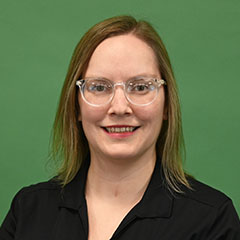
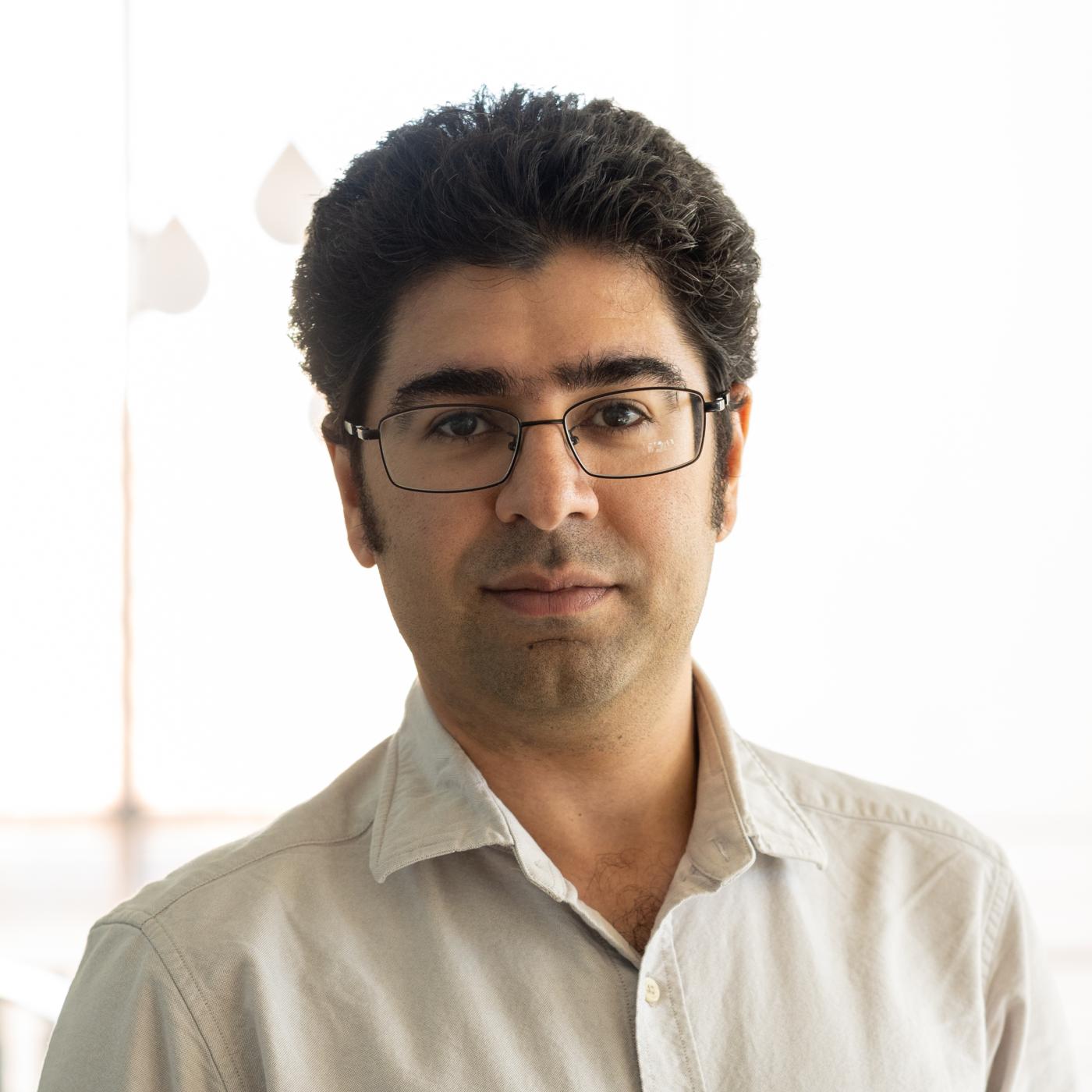
Dr David Jaud is a Senior Lecturer in Marketing and Wine Business at the University of Adelaide's Adelaide Business School, part of the Faculty of Arts, Business, Law and Economics. He serves as the Wine Business Program Director and has significant industry experience in the French wine sector. His research focuses on consumer behavior in wine and food contexts, particularly label design impacts, consumer wellbeing, and responsible consumption patterns. He has published in journals like European Journal of Marketing and Journal of Consumer Behaviour . Dr Jaud actively supervises postgraduate research as a co-supervisor, currently guiding Miss Cassidy Lia Shaw's PhD on 'Vice or Virtue: Examining the Factors Influencing the Adoption of NOLO Wines and Plant-Based Meats'. Professional Activities: Board Member of the Academy of Wine Business Research (AWBR) Steering Committee since 2024 Teaching: Courses include Marketing for Wine Business and Research Project in Marketing and Wine Business Key Research Themes: Label design psychology, cross-modal sensory effects, youth consumption patterns, and authenticity in marketing His 2025 publications explore topics like embossed label effects, rosé wine color perception, and authenticity's role in curbing risky drinking behaviors, reflecting a focus on both theoretical and applied marketing insights.
Prof Alice Eldridge is Professor of Sonic Systems (Music) at the University of Sussex, School of Media, Arts and Humanities. She holds leadership roles including Director of the Sussex Humanities Lab and Co-director roles in interdisciplinary research centers. Her academic journey includes a BSc Psychology (University of Leeds), MSc Evolutionary and Adaptive Systems, and PhD in Computer Science and AI (University of Sussex). Research focuses on ecoacoustics, soundscapes, and music-technology intersections with ecology. Key areas include acoustic complexity analysis, participatory conservation projects (e.g., WILDSENS projects), and feedback musicianship. Fieldwork spans tropical, temperate, and Arctic regions including Indonesia, Ecuador, and Swedish Lapland. Collaborates with indigenous communities and organizations like Peck Labs and Emute Lab. Music performance includes free jazz, chamber compositions, and pop bassistry with groups like Collectress and Feedback Cell. Grants include AHRC/NERC/EU funding for projects like WILDSENS Arctic mapping and environmental wellbeing studies. Over 70 publications span ecoacoustic methodologies, digital humanities, and sound-based conservation. Labs affiliated with: Sussex Humanities Lab, Peck Labs (ecology), Emute Lab (music tech). Teaching includes BA Music Technology and MA Sonic Media programs.
William L. Kath is the Margaret B. Fuller Boos Professor of Engineering Sciences and Applied Mathematics at Northwestern University's McCormick School of Engineering. He holds affiliations as Deputy Director of the National Institute for Theory and Mathematics in Biology, courtesy faculty in Neurobiology, and member of the Northwestern Institute on Complex Systems. His research bridges quantitative biology, neuroscience, and optics, focusing on dynamical models of biological systems and high-speed optical communication systems. Key projects include the EMBEDR algorithm for single-cell omics analysis and computational models of temperature sensing in Drosophila. Research interests emphasize quantitative and computational biology, particularly circadian rhythms, neuronal circuit modeling, and single-cell genomics. Collaborations include the Gallio lab (Drosophila thermosensation), Daniel Dombeck's lab (hippocampal neuron behavior), and Nelson Spruston's group (hippocampal microcircuits). His work on optics includes nonlinear pulse propagation and rare event analysis in fiber optics. Scientific awards include Fellowships from the Society for Industrial and Applied Mathematics and the Optical Society of America. He advises over 20 graduate students and has developed courses like ESAM 472 (RNA sequencing analysis) and ESAM 370 (Computational Neuroscience). Current students include Richard Suhendra and Nan Ding (jointly advised). Labs/teams: Leads the National Institute for Theory and Mathematics in Biology, co-leads the Gallio lab collaboration on thermosensory circuits, and maintains active projects in computational neuroscience and optics at Northwestern.
Jane-Ling Wang is a Distinguished Professor in the Department of Statistics at the University of California, Davis. Her research focuses on advancing statistical methodologies for functional and longitudinal data analysis, deep learning applications, and survival analysis. She holds a Ph.D. from UC Berkeley and has contributed extensively to interdisciplinary fields including neuroscience, biostatistics, and machine learning. Wang has received numerous accolades, including being elected an Academician at Academia Sinica (2022), recipient of the Humboldt Research Award (2020), and the ICSA Distinguished Achievement Award (2018). Her work bridges theory and practice, addressing challenges in data sparsity, dynamic systems modeling, and high-dimensional statistical inference. Her recent publications emphasize innovative techniques such as SAND (Transformer-based data imputation) and adaptive basis layers for functional data analysis. These contributions underscore her expertise in integrating modern computational tools with classical statistical frameworks.
Professor Herbert Ho Ching Iu is a distinguished academic at The University of Western Australia, serving in the School of Engineering within the Department of Electrical, Electronic and Computer Engineering. With an impressive research portfolio of over 500 publications and an h-index of 61, Prof. Iu has established himself as a leading authority in power electronics and nonlinear systems research. Prof. Iu received his BEng(Hons) in Electrical and Electronic Engineering from The University of Hong Kong in 1997, followed by a PhD in Electronic and Information Engineering from The Hong Kong Polytechnic University in 2000. After a brief research fellowship at HKPU, he joined The University of Western Australia in 2002 as a Lecturer and has since risen to the rank of full Professor. His primary research focuses on power electronics , renewable energy systems , nonlinear dynamics and chaos , current sensing techniques , and memristive systems . Prof. Iu's work uniquely bridges theoretical exploration with practical implementations, particularly in energy conversion, secure communications, and neuromorphic computing. His research has significant implications for DC microgrids, advanced encryption techniques, and next-generation computing paradigms. Analysis of Prof. Iu's recent publications reveals a strong interdisciplinary trajectory combining memristive systems with chaotic dynamics for applications in image encryption and secure communications . There's a notable emphasis on machine learning techniques applied to power electronics and energy systems , particularly for DC microgrids and battery management. His work demonstrates consistent progression from fundamental research in nonlinear systems to practical engineering solutions with real-world impact. Prof. Iu's significant contributions have been recognized with several prestigious awards: Vice-Chancellor's Award for HDR Supervision (2024) School of Engineering Award for Research Mentorship (2023) Vice Chancellor's Award in Research Mentorship (2023) With 18 supervised research students and leadership on 16 research grants, Prof. Iu has built a robust research program at the forefront of power systems innovation. His grant portfolio includes major projects like 'Mine Electrification' and 'Microgrid Battery Deployment' through the CRC for Future Battery Industry, as well as collaborations with Western Power on 'Project Symphony.' These initiatives demonstrate his ability to secure substantial funding and translate theoretical concepts into practical engineering solutions for industry. Prof. Iu leads a dynamic research team that specializes in hardware implementation of advanced theoretical concepts, particularly in memristive systems and chaotic circuits. The laboratory maintains strong industry connections, especially with energy and mining sectors, ensuring research has tangible real-world applications. Current work emphasizes DC microgrid technologies, advanced battery systems for electrified transportation, and novel applications of chaotic systems in security contexts, positioning the team at the cutting edge of power electronics research.
Dr. Freek van Ede is an Associate Professor at the Faculty of Behavioural and Movement Sciences, Vrije Universiteit Amsterdam, specializing in Cognitive Psychology. He leads the Proactive Brain Lab, focusing on how the brain prepares for upcoming behavior through attention and working memory. His research employs EEG, eye-tracking, and virtual reality to study dynamic cognitive processes. Education: PhD in Cognitive Neuroscience (Cum Laude), Radboud Universiteit Nijmegen (2014) MSc in Cognitive Neuroscience (Cum Laude), Radboud Universiteit Nijmegen (2009) BSc in Psychology, University of Utrecht (2007) Research Interests: His work investigates how attention and working memory interact with anticipation, timing, and action. Key methodologies include EEG, eye-tracking, and virtual reality. Recent projects explore stimulus-driven selective attention and how visual working memories are prepared for action. Grants & Awards: NWO Vidi Grant (2023–2028, €800,000) ERC Starting Grant (2020–2025, €1.5 million) Young Investigator Award, CNS (2023) Early Career Awards from BACN and NVP (2023, 2022) Lab & Teams: He directs the Proactive Brain Lab, emphasizing innovative experimental designs and interdisciplinary approaches. The lab welcomes motivated students at all levels.
Antonios Pantazis is an Associate Professor and Docent at Linköping University, affiliated with the Department of Biomedical and Clinical Sciences (BKV) within the Faculty of Medicine and Health Sciences. He leads the Pantazis Laboratory of Cellular Excitability (PaLaCE), focusing on ion channel biophysics and their role in health and disease. His work integrates electrophysiological, optical, and computational methods to study ion channel structure-function relationships, particularly in cardiac and neuronal systems. Research interests include voltage-gated ion channels, cellular excitability, and the molecular mechanisms underlying arrhythmias and neurological disorders. Key contributions involve understanding mutations in genes like SCN5A and KCNA2, which are linked to epilepsy and cardiac arrhythmias. He has been awarded the Swedish Fernström Prize (2021) for his work on ion channels. Publications span topics such as ion channel regulation, molecular transitions in voltage-dependent processes, and drug targets for arrhythmia suppression. His laboratory also explores cutting-edge techniques like voltage-clamp fluorometry and optical methods to visualize protein dynamics. Collaborations include institutions like the Wallenberg Centre for Molecular Medicine (WCMM) at Linköping University, emphasizing translational research in medical technology and bioengineering.
Zhong-Lin Lu is a Distinguished Professor of Psychology and Social and Behavioral Science at The Ohio State University, holding concurrent appointments in Optometry and the Translational Data Analytics Institute. He directs the Center for Cognitive and Brain Sciences and the Center for Cognitive and Behavioral Brain Imaging. Previously, he held the William M. Keck Chair in Cognitive Neuroscience at the University of Southern California. He earned his Ph.D. in Physics from New York University (1992), following an M.S. (1991) and B.S. in Theoretical Physics from the University of Science and Technology of China (1989). His research bridges computational neuroscience, vision science, and cognitive psychology, focusing on visual perception, attention, perceptual learning, and functional brain imaging. Key methods include fMRI, EEG, and hierarchical Bayesian modeling. His work addresses clinical applications in amblyopia, myopia, and glaucoma, alongside foundational studies on decision-making and neural plasticity. He has developed novel techniques like the quantitative Contrast Sensitivity Function (qCSF) and quasiconformal mapping for retinotopic brain mapping. His labs emphasize translational research linking computational models to real-world applications. Awards: APS Fellow (2007), Society of Experimental Psychologists Early Investigator Award (2003) Leadership: Directed USC's Dornsife Cognitive Neuroscience Imaging Center (2004–2011) Interdisciplinary roles: Co-Director of OSU's Humanities/Cognitive Sciences Summer Institute Current research explores visual processing across lifespan, neural mechanisms of perceptual learning, and optimizing fMRI data through advanced computational methods. His work integrates basic science with clinical and applied domains, influencing driver safety, vision correction, and neurotechnology development.
Matan Mazor is a Research Fellow at All Souls College, University of Oxford, specializing in cognitive neuroscience with a focus on self simulation and self-modelling. His work bridges experimental psychology, computational modeling, and philosophical inquiry into the nature of human cognition. His educational background includes a PhD supervised by Steve Fleming and Karl Friston at the Wellcome Centre for Human Neuroimaging, University College London, where he investigated the neural and computational basis of inference about absence. Prior to this, he completed a post-doctoral position with Clare Press at Birkbeck University studying motivation and metacognition's effects on perceptual processing. He earned his MSc at Tel Aviv University as part of the Adi Lautman Interdisciplinary Programme for Outstanding Students, where his Master's thesis under Roy Mukamel used model-free fMRI analysis to investigate the internal forward model in the human brain. Dr. Mazor's research explores how humans use mental self-models—simplified descriptions of one's cognition and perception—to control and monitor mental states, enabling efficient representation, learning, and behavioral adaptation. His work addresses fundamental questions about the cognitive benefits of self-representation, what happens when this representation is disturbed or biased, how self-representation interacts with memories of actions, and to what extent people represent their own minds beyond generic mind representations. His interdisciplinary approach combines behavioral testing, human neuroimaging, and computational modeling. His recent publications reveal a strong focus on metacognition, confidence judgments, and the relationship between perception and self-monitoring. The research shows consistent interest in how humans distinguish reality from imagination, how confidence ratings function in different cognitive tasks, and the neural mechanisms underlying obsessive-compulsive behaviors. His work demonstrates a progression from foundational theoretical questions about self-modeling toward more clinically relevant applications in disorders affecting self-monitoring. Dr. Mazor actively participates in the academic community through platforms like Bluesky, where he engages with colleagues on topics ranging from consciousness research to methodological issues in cognitive science. His professional network includes prominent researchers in cognitive neuroscience, psychology, and philosophy.
Guillaume A SARTORETTI is an Assistant Professor in the Mechanical Engineering Department at the National University of Singapore (NUS), part of the College of Design and Engineering. He specializes in distributed/decentralized coordination of multi-agent systems, with a focus on robotics, stochastic modeling, and reinforcement learning. His work spans applications in multi-robot systems, articulated robots, and swarm intelligence. Joined NUS in 2019 after a postdoctoral fellowship at Carnegie Mellon University (CMU) and a PhD from EPFL. Education: PhD in Robotics (EPFL, 2016); MSc and BSc in Mathematics/Computer Science (University of Geneva). Research interests include: Multi-agent pathfinding Decentralized control policies Swarm intelligence Reinforcement learning applications in robotics Recent publications emphasize scalable solutions for multi-agent systems, traffic signal control, and safe robotic exploration. His 2018 MFI postdoctoral fellowship recognized work on distributed reinforcement learning for pathfinding. Current projects involve bio-inspired locomotion and collaborative learning frameworks for heterogeneous robots.
Bruce Wiggins is an Associate Professor in Audio Engineering at the College of Science and Engineering. His research focuses on spatial audio technologies, including Ambisonics, binaural auralization, and 3D audio systems. Notable projects include the GASP guitar system and WHAM webcam-based head-tracked audio solutions. He has contributed to advancements in microphone array calibration, speaker array modeling, and virtual reality audio integration. His work bridges theory with practical applications in music technology and acoustic engineering. Education: PhD in Audio Engineering (2004). Research Interests: Ambisonics, spatial audio capture and reproduction, 3D audio for virtual reality, binaural rendering, and innovative musical instrument design. His work emphasizes practical implementations such as the GASP guitar system and calibration tools for low-cost microphone arrays. Article Trends: Recent publications address virtual stereo microphone techniques (2024), dynamic electrical systems (2024), and browser-based 3D audio (2023). Earlier work explores head-tracking algorithms (2016–2020) and acoustic modeling for domestic environments (2017). Grants/Advising: No explicit grants listed. Advising details unavailable but has collaborated with numerous researchers on projects like WHAM and GASP. Labs/Teams: Active in interdisciplinary teams developing spatial audio tools and instruments, including collaborations on virtual reality auralization and ambisonic guitar systems.
Dr. Paul Ruvolo is a Professor of Computer Science at Olin College in Needham, MA. His research focuses on developing assistive technologies for people with sensory and motor impairments, leveraging machine learning, robotics, and computer vision. He holds a Ph.D. and M.S. in Computer Science and Engineering from the University of California San Diego, and a B.S. in Computer Science from Harvey Mudd College. Key research areas include creating systems that learn through imitation and experience, such as navigation aids for the visually impaired and educational tools for orientation and mobility. He leads projects like Co-Designing Assistive Apps with Students Who Are Blind, emphasizing participatory design. His work integrates Bayesian statistics, numerical optimization, and linear algebra to solve complex sensorimotor tasks. Education: Ph.D., Computer Science and Engineering, UC San Diego M.S., Computer Science and Engineering, UC San Diego B.S., Computer Science, Harvey Mudd College Awards: NSF IGERT Fellowship for 'Learning and Vision in Humans and Machines' Recent publications highlight innovations in AR navigation systems, smartphone-based SLAM for indoor environments, and educational tools for blind users. His work bridges computational methods with real-world accessibility challenges, emphasizing interdisciplinary collaboration and user-centric design. Dr. Ruvolo’s lab, linked at occam.olin.edu , focuses on assistive technologies. He actively contributes to Teach Access and other initiatives promoting inclusive technology education. His research has applications in robotics, healthcare, and educational technology.
Colleen Bailey is an Assistant Professor in the Department of Electrical Engineering at the University of North Texas. Her research focuses on the intersection of machine learning, signal processing, and energy systems, with applications spanning biomedical imaging, environmental monitoring, and edge computing. Research Interests: Machine learning optimization for edge devices Entropy-based image compression techniques Attention mechanisms in vision transformers Urban air pollution prediction models Land surface temperature super-resolution Publication Trends: Recent works emphasize compact AI architectures (e.g., MHATT network, entropy bottleneck models) for efficient processing in resource-constrained scenarios. Applications include medical imaging (Chest X-ray analysis), environmental monitoring (air quality, Martian dust storms), and energy systems (household prediction, power quality classification). Contact: Email: Colleen.Bailey@unt.edu Office: Discovery Park B252 Phone: 940-891-6874
Arya Farahi is an Assistant Professor of Statistics and Data Sciences at the University of Texas at Austin since 2021. His research bridges astroinformatics, urban informatics, and AI ethics, focusing on mitigating algorithmic bias and uncertainty quantification in real-world applications. He holds PhDs in Physics and Scientific Computing from the University of Michigan, where he was a Data Science Fellow at the Michigan Institute for Data Science. Farahi's work includes collaborations with international projects such as the Dark Energy Survey (DES), COsmostatistics Initiative (COIN), and XMM-XXL Consortium. He leads the D3 Lab, which develops AI tools for scientific discovery and societal challenges, emphasizing interdisciplinary collaboration. His open-source contributions include TATTER, KLLR, and PoPE for statistical analysis and visualization. Key awards include the Best Student Paper Award at KDD’18 and a $400k+ grant. He is a volunteer with Statistics Without Borders and actively involved in projects like the Fire and Smoke Digital Twin for urban resilience. His research spans cosmology, healthcare AI, and urban economics, with a focus on trustworthy models and equitable AI systems.
Ceyhun Burak Akgül is a Part-Time Lecturer specializing in Computer Vision, Machine Learning, and Statistical Data Analysis. His research focuses on interdisciplinary applications of visual data processing, including medical imaging and 3D object recognition. He maintains a personal website at cba-research.com and can be contacted at cb.akgul@gmail.com . His work spans topics such as image captioning, visual dictionaries, and symbolic feature detection. Key contributions include developing algorithms for action recognition using depth cameras and frameworks for leaf and object recognition. His research also integrates medical applications, such as analyzing Alzheimer’s patient movements and automated diagnosis using imaging data. Akgül’s publications frequently address challenges in 3D shape descriptors, feature selection, and interdisciplinary methodologies. His recent work includes exploring visual dictionaries and improving image processing techniques through model-driven approaches. His academic contributions are evident in journals like the Journal of Visual Communication and Image Representation, and he has participated in competitions like SHREC. Despite his extensive publication record, no formal awards or grants are explicitly mentioned in the provided data.