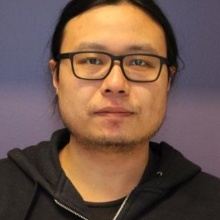
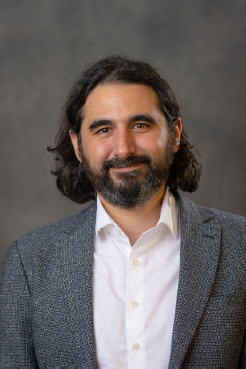
Lei Shi is a Researcher at the Institute for Visualization and Interactive Systems (VIS) within the Collaborative Artificial Intelligence department at the University of Stuttgart, Germany . Their work focuses on integrating machine learning, human-robot interaction, and safety control systems. Research Areas: Human-Robot Interaction, Bayesian Deep Learning, Visual Servoing, Eye Tracking Key Techniques: Graph Convolutional Networks, Predictive Modeling, Feature Descriptors Recent publications highlight their contributions to gaze-based interaction safety, dropout placement in neural networks, and predictive tuning methodologies. They operate from Room 01.029, Pfaffenwaldring 5a, 70569 Stuttgart.
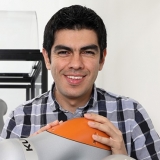
Guilherme A. S. Pereira is Professor in the Department of Mechanical, Materials and Aerospace Engineering and Adjunct Associate Professor in the Lane Department of Computer Science and Electrical Engineering at West Virginia University's Benjamin M. Statler College of Engineering and Mineral Resources. He directs the Field and Aerial Robotics (FARO) Laboratory and teaches courses including Mechatronics, Robotic Manipulators, and Robot Motion Planning. Education: Ph.D., Computer Science, Federal University of Minas Gerais, Brazil, 2003 M.S., Electrical Engineering, Federal University of Minas Gerais, Brazil, 2000 B.E. (Hons), Electrical Engineering, Federal University of Minas Gerais, Brazil, 1998 Research Focus: Dr. Pereira pioneers motion planning and state estimation for autonomous ground/aerial vehicles. His work spans field robotics for agriculture/forestry, aerial robotics for infrastructure inspection, cooperative robotics for multi-vehicle systems, and space exploration for Venus atmosphere aerobots. Recent innovations include tether-powered drones for 24/7 operations and vector field methods for precise landing in dynamic environments. Publication Trends: His 2023-2025 publications reveal a strategic shift toward energy-aware path planning, multi-resolution UAV mapping for dam/tailings inspection, and genetic algorithms for extreme-environment navigation. Key themes include tension-aware motion planning for tethered systems and behavior tree frameworks for battery-conscious drone operations. Awards: Gold Medal Award from UFMG Engineering School (1998) Advanced Robotics Best Paper Award (2013) Advising & Grants: Dr. Pereira mentors graduate students in robotics research, evidenced by extensive student co-authorship in publications. His work is funded by NASA (Space Robotics Challenge), NSF, and industry partners for applications in lunar resource utilization, mine safety, and agricultural automation. Current projects include Venus aerobot navigation and Oxpecker tethered UAV systems for stone-mine inspection. Research Infrastructure: He leads the FARO Laboratory, which integrates CUDA parallel computing, AWS cloud mapping, and custom drone platforms for real-world testing in mines, forests, and simulated planetary environments.
Dr. Dorian Tsai is a Research Fellow and Associate Investigator at the Queensland University of Technology (QUT) Centre for Robotics, affiliated with the School of Electrical Engineering & Robotics. His research focuses on environmental robotics, robotic vision, and deep learning applications for large-scale environmental challenges. He currently leads the Technology Development stream in the Reef Restoration and Adaptation Project (RRAP), developing robotic technologies for coral monitoring and endangered species tracking. Education: Bachelors in Engineering Science (University of Toronto), Masters in Space Science & Technology (Lulea Technical University), Robotics & Automation (Aalto University), and a PhD in Robotics from QUT. His doctoral work involved light field features for camera motion control, completed under supervisors Prof. Peter Corke, Dr. Donald Dansereau, and Dr. Thierry Peynot. Research emphasizes robotic solutions for marine conservation (e.g., Great Barrier Reef preservation), precision agriculture, and autonomous systems. His work combines machine learning, computer vision, and robotics engineering to address real-world environmental and industrial challenges. Prior to QUT, he worked at the Canadian Space Agency and completed thesis research at NASA's Jet Propulsion Lab on rover docking systems.
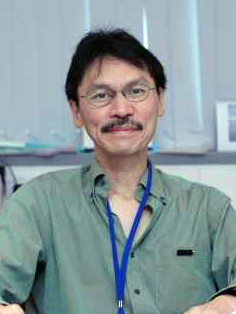
Vincent Hugel is a Professor at the University of Toulon, affiliated with the Mechanical and Robotic Systems Design Laboratory. He previously served as a lecturer at the University of Versailles-Saint-Quentin-en-Yvelines from 2000 to 2014. His research is centered on robotics, particularly humanoid and bio-inspired systems, compliant mechanisms, and advanced robotic manufacturing. Research Interests: Dr. Hugel's work spans humanoid robotics , bio-inspired locomotion (especially avian and bipedal movement), compliant spine design , tactile sensing , underwater robotics , and multi-axis additive manufacturing . His studies often integrate biomechanical analysis with robotic implementation, as seen in projects like ROBOCOQ for bird leg modeling. Publication Trends: His recent work (2021–2023) focuses on additive manufacturing (WAAM, medical orthotics) and underwater gesture recognition using deep learning. Earlier publications (2005–2017) emphasize kinematic modeling , visual servoing , and humanoid design (e.g., NAO robot). The interdisciplinary nature of his research bridges mechanical engineering, control theory, and artificial intelligence. Scientific Awards: No specific awards or fellowships were mentioned in the provided text. Advising and Grants: Dr. Hugel has supervised doctoral research, including Mouna Souissi’s thesis on humanoid spine design (2012) and served as jury president for Gamal Elghazaly’s thesis (2017). He has collaborated on multiple projects involving robotic manufacturing and underwater systems. While specific grants are not listed, his sustained publication record suggests active research funding. Labs and Teams: He is a key member of the Mechanical and Robotic Systems Design Laboratory at the University of Toulon. He has contributed to the L3M-SIM and L3M SPL RoboCup teams, focusing on humanoid robotics and simulation. His collaborations extend to researchers in biomechanics, control systems, and additive manufacturing, indicating a strong interdisciplinary network.
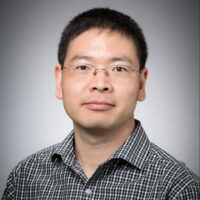
Felix Pancheri is an employee at the Chair of Microtechnology and Medical Device Technology (MiMed) at the Technical University of Munich (TUM) since February 2021. Holding an M.Sc. in Mechatronics and Information Technology, he actively contributes to research and teaching within the MiMed group, supervising courses including Mechatronic Device Technology (MGT), Development of mechatronic devices (SMG), and Mathematical Tools (MTT). His research spans interdisciplinary domains with core focus areas: Robotics : Specializing in bio-inspired quadruped locomotion, soft robotics, and medical robotics applications Mechatronic Systems : Integration of mechanical, electronic, and software components for medical devices Advanced Manufacturing : Leveraging topology optimization and additive manufacturing for rapid prototyping Computational Design : Developing automated systems for custom mechanical structures Analysis of his 2021-2024 publications reveals consistent innovation in topology-optimized robotic mechanisms, particularly for legged locomotion and gripper systems. His work demonstrates strong bio-inspiration trends, translating natural movement principles into compliant mechanical designs fabricated through 3D printing. Medical applications form a significant thread, including surgical instrument development and 3D digitization techniques for surgical planning, reflecting the MiMed group's translational research focus. No scientific awards are documented for Felix Pancheri in available records. As an academic contributor, he supervises key courses: Mechatronic Device Technology (MGT) exercises Development of mechatronic devices (SMG) seminars Mathematical Tools (MTT) instruction While no individual grants are specified, he participates in MiMed's funded projects including IndiPrint, Arburg Automated Design, and CarrierBot, which advance automated design methodologies and robotic applications. The MiMed research environment provides state-of-the-art facilities for robotics prototyping, medical device development, and additive manufacturing, supporting his work on bio-inspired mechanisms and surgical robotics systems with strong industry-academia collaboration.
Yik Lung Pang is a researcher at the School of Electronic Engineering and Computer Science, Queen Mary University of London, based in the Peter Landin building (Room CS 440). His work bridges robotics, computer vision, and machine learning to advance human-robot collaboration in real-world environments. His research specializes in human-robot interaction with a focus on handover behaviors, 3D scene reconstruction, and object pose estimation. Key contributions include: Developing LaVA-Man for visual action representation learning in robot manipulation Creating stereo-based hand-object reconstruction systems for safe human-to-robot handovers Pioneering incremental 6D pose estimation techniques for dynamic object tracking Integrating audio-visual modalities to enhance object classification in collaborative tasks His methodology consistently emphasizes safety, adaptability to unseen environments, and real-time performance. From 2021-2025, Pang's publication trajectory reveals an escalating focus on multimodal perception (combining vision, audio, and depth data) and robustness in unstructured settings. His work addresses critical gaps in human-robot teaming, particularly for domestic and industrial applications involving unknown containers and complex handovers. No scientific awards, student supervision, or laboratory affiliations were documented in the provided sources.
Luis Mejias Alvarez is an Associate Professor and Researcher in the School of Electrical Engineering & Robotics at Queensland University of Technology (QUT). He specializes in Unmanned Aerial Systems (UAS), focusing on vision-based guidance, collision avoidance, and autonomous navigation technologies. His work integrates computer vision, sensor fusion, and control systems to advance UAV applications in aerospace and robotics. Education: Electronic Engineer (UNEXPO, Venezuela, 1999) MSc in Networks and Telecommunication Systems (Universidad Politécnica de Madrid, 2001) PhD in Robotics and Automation (Universidad Politécnica de Madrid) Research Interests: His research spans Unmanned Aerial Systems (UAS), including autonomous helicopters, vision-based navigation, collision avoidance, and forced landing technologies. He develops algorithms for computer vision, sensor fusion, and control systems, with applications in aerospace engineering and artificial intelligence. His work aims to enhance UAV safety and autonomy in complex environments. Awards & Fellowships: 2017 Endeavour Executive Fellowship Visiting Professorships at Université de Bretagne Occidentale (2017) and UTIS (2017) Editor of Springer Tracts in Advanced Robotics (2016) Keynote Speaker at CIIMA 2014 Program Chair for UAS Conferences (2013) DECRA Fellowship (2012–2015) IRSES Grant (2009) Advising & Grants: Supervised PhD/Masters students in areas like vision-based collision avoidance and UAV navigation. Key grants include ARC DECRA and international IRSES collaboration with European institutions. Labs & Collaborations: Active in QUT’s Centre for Robotics and the Australian Research Centre for Aerospace Automation. Collaborates globally on projects like drone ship landing under adverse conditions and beyond-line-of-sight navigation.
Yanjie Chen is a Visiting Professor in the Department of Computer Science at Aberystwyth University. Their research focuses on robotics, computer vision, control systems, and artificial intelligence, with notable contributions in aerial manipulators, neural architecture search, and fuzzy logic systems. Chen holds the prestigious Newton International Fellowship since 2022. In robotics, Chen explores advanced control strategies for unmanned aerial vehicles and manipulators, addressing challenges like dynamic tracking, impedance control, and environmental disturbances. Their work in AI emphasizes optimization techniques for neural networks, including pruning and architecture search, enhancing computational efficiency. In computer vision, Chen develops attention-based mechanisms for super-resolution tasks. Key Achievements: Recipient of the Newton International Fellowship (2022) High-impact publications in IEEE Transactions and Springer venues Collaborations with institutions like Fuzhou University and Hunan University Chen’s research bridges theory and application, with practical solutions for robotics, autonomous systems, and AI-driven image processing.
Jason Ford is a Professor of Electrical Engineering at Queensland University of Technology (QUT), leading research in trustworthy autonomous systems and decision-making under uncertainty. He holds positions in QUT's Centre for Robotics and Centre for Data Science. Ford earned his PhD from the Australian National University (ANU) and has over 20 years of experience in aerospace, energy, and defense sectors. His research focuses on model-based filtering, estimation, and decision systems for dynamic environments, with applications in aerial autonomy, infrastructure inspection, and low-signal-to-noise detection. Education: B.Sc. and B.E. (1995), PhD (1998), all from ANU. Professional Experience: Research Scientist at DSTG (1998-2004), Research Fellow at UNSW (2004-2005), QUT faculty since 2005, promoted to Professor in 2019. Research Interests: Robust autonomous systems, vision-based sense-and-avoid, model-driven decision systems, and resilient robotic technologies. His work on ROAMES asset management systems has saved Queensland $40M/year and won international awards. Awards: 2019 Academic of the Year (Australian Defence Industry), multiple best paper awards, and industry recognition for collision avoidance and UAV technologies. Grants: Over $10M in competitive research funds since 2009. Supervision: 8 completed HDR students since 2008, teaching control systems and autonomous systems to 1000+ undergraduates. Labs/Teams: Program Lead for Decision and Control in QUT's Robotics Centre, collaborator with industry partners like Insitu Pacific and Caterpillar.
Claude PEGARD is a University Professor of Perception and Robotics at Université de Picardie Jules Verne (UPJV) , France, affiliated with research unit UR 4290. His office is located in PR-305 and he can be reached via internal phone extension 5922. His research lies at the intersection of computer vision, robotics, and intelligent control . Over three decades he has advanced autonomous navigation of aerial vehicles , sensor fusion between infrared and visible cameras , robust human detection , and fuzzy-logic-based flight control . Recent work explores AI applications in healthcare , highlighting both opportunities and ethical limits. Vision-based UAV navigation and path planning Photometric visual servoing for micro-air vehicles Multi-spectral human detection for search-and-rescue Nonlinear and fuzzy control of quadrotor platforms His publication trajectory from 1990-2024 shows a clear evolution from foundational work on omnidirectional vision and mobile-robot localization to cutting-edge neural-network-driven control and AI ethics. The 2020-2024 articles emphasize AI integration in safety-critical systems , robust control under uncertainty , and real-time vision algorithms . Laboratory & Teams: While the specific laboratory name is not stated, Prof. PEGARD leads activities within the Perception and Robotics group at UR 4290, mentoring graduate students and collaborating on UAV platform development and vision-based control systems.
Antonio Franchi is a Full Professor at the Robotics and Mechatronics Department, affiliated with the Digital Society Institute. His research focuses on advanced robotics, particularly in aerial robotics, control systems, and autonomous systems. Key interests include motion control, energy-efficient design, sensor networks, and interaction control. He has contributed to projects like Aerial-Core for power infrastructure inspection and the development of novel aerial manipulators. Research Interests: Robotics, Control Systems, Aerial Robotics, Motion Control, Energy Efficiency, Sensor Networks, Autonomous Systems. His work addresses challenges in multi-agent coordination, cable manipulation, and resilient robotic systems. Collaborations include international teams working on UAV-based inspection, energy-efficient designs, and human-robot interaction. He has supervised 2 doctoral works and contributed to datasets on cable-suspended load manipulation and impact-aware robotics. Publications span trajectory planning, optimal control, and experimental validation, reflecting a strong emphasis on both theoretical and applied robotics research.
Camilo Perez Quintero is a Research Fellow at the University of British Columbia's CARIS laboratory, specializing in Human-Robot Interaction systems. His current work includes developing augmented reality multimodal interfaces for aerospace manufacturing in collaboration with the German DLR and creating sidewalk navigation solutions for delivery robots through a Mitacs industry partnership. Education: Ph.D. in Computing Science, University of Alberta, Canada (2017) His research centers on communication mechanisms for human-robot collaboration, with expertise in augmented reality interfaces, haptic feedback systems, and gesture-based control. He excels at translating theoretical concepts into functional prototypes through multidisciplinary teamwork, focusing on mission-critical applications in manufacturing and urban environments where safety and intuitive interaction are paramount. Analysis of his 15 most recent publications (2017-2022) reveals consistent innovation in robot trajectory programming through multimodal interfaces, with significant contributions to safe human-robot collaboration in manufacturing via virtual barriers and pedestrian-aware navigation for sidewalk robots. His work bridges computer vision, robotics, and human-centered design, demonstrating particular strength in integrating tactile feedback with AR/VR systems for industrial applications. Grants and Programs: Mitacs Accelerate program developing HRI systems for sidewalk mobile robots with industrial partner German DLR collaboration on aerospace manufacturing interfaces He operates within UBC's CARIS laboratory, collaborating with mechanical engineering researchers and international partners to advance practical robotics solutions for real-world deployment in constrained environments.
Marcelo H. Ang Jr. is a Professor in the Department of Mechanical Engineering at the National University of Singapore (NUS), Faculty of Engineering. He serves as Director of the Advanced Robotics Centre at NUS and has been actively contributing to robotics research since joining NUS in 1989. Education: Ph.D. in Electrical Engineering, University of Rochester, NY (1988) M.Sc. in Electrical Engineering, University of Rochester, NY (1986) M.Sc. in Mechanical Engineering, University of Hawaii (1985) B.Sc. in Mechanical Engineering and Industrial Management Engineering, De La Salle University, Philippines (1981) Professor Ang's research spans robotics, mechatronics, and intelligent systems with particular expertise in mobile robotics, robot control systems, and intelligent control methodologies. His work consistently bridges theoretical foundations with practical industrial applications, especially in manufacturing automation. His research interests evolved from fundamental control theory to complex integrated systems involving multiple robots and sensor networks. His publication record shows a strong emphasis on solving practical robotics challenges, with increasing focus on vision-based systems, mobile manipulation, and multi-robot coordination in recent years. The research demonstrates progression from single robot systems to complex networked robotic systems. Scientific Awards: Awards for Excellence 2000, for Most Outstanding Paper in 1999 Volume (for "A Walk-Through Programmed Robot for Welding in Shipyards") Professor Ang has supervised numerous graduate students including PhD candidates like Zheng Liu who worked on multi-robot surveillance systems. His research has been supported by significant grants including "Integration of Solid Modeling Systems and Robot Controller Architectures Towards Intelligent Robotic Systems" ($267,150), "Management of Manufacturing Technologies" ($33,000), and "Research and Development of a Ship-Welding Robot" ($1,651,200 plus $60,000). He leads the robotics group at NUS involved in the Robust Mobile Manipulation project with SIMTech, focusing on developing advanced robotic systems for unstructured environments. Professor Ang is also the founding chairman of the Singapore Robotic Games, demonstrating his commitment to robotics education and outreach.
Dr. Zhen Gao is an Associate Professor of Automation Engineering Technology at the W Booth School of Engineering Practice and Technology, McMaster University. He holds associate membership roles in the School of Computational Science & Engineering, Department of Civil Engineering, and McMaster School of Biomedical Engineering. His expertise spans Automation Engineering Technology, Industry 4.0, Health Technology, and Robotics. Research focuses on advanced manufacturing systems, smart systems, and biomedical engineering applications. Dr. Gao’s work integrates robotics, AI, and sensor technologies for practical applications like wound analysis, autonomous systems, and healthcare automation. His recent publications emphasize 3D object detection algorithms, machine learning for medical diagnostics, and robotics control systems. He advises students in emerging technologies, including Shiyu (Shannon) Chen, a Master of Engineering Systems and Technology student. His academic contributions include innovations in parallel robotic mechanisms, smart grid systems, and project-based learning methodologies. He actively collaborates with institutions like St. Joseph’s Healthcare Hamilton to advance healthcare technologies.
Berk Calli is an Associate Professor in the Department of Robotics Engineering at Worcester Polytechnic Institute (WPI), where he leads the Manipulation and Environmental Robotics Laboratory (MER Lab). He holds a PhD from Delft University of Technology and completed postdoctoral research at Yale University. His research focuses on advancing robotic capabilities for unstructured environments through innovations in manipulation, computer vision, and machine learning. Calli's research spans robotic manipulation, robot vision, machine learning, dexterous manipulation, and environmental robotics. His MER Lab develops multi-modal manipulation strategies using advanced control methods, active vision frameworks, and intelligent mechanical design to address uncertainties in real-world applications like recycling and industrial automation. His publication trends demonstrate consistent contributions to robotic grasping, vision-based control, and industrial applications, with recent work emphasizing benchmark development and sustainable technologies. The articles explore themes of adaptive control systems, recycling automation, and performance evaluation frameworks. Scientific Awards: Prestigious NSF CAREER Award ($599,559) for enhancing robotic object manipulation capabilities Early-Career Faculty Research Award recognizing innovative contributions to environmental robotics Calli leads multiple NSF-funded projects, including initiatives to establish environmental robotics tracks for undergraduates. He advises graduate researchers in the MER Lab and founded the Yale-CMU-Berkeley Object and Model Set project, a globally used benchmarking resource. As head of MER Lab, he directs research on fundamental manipulation problems and environmental sustainability projects including waste sorting and metal scrap recovery. His patented robotic technology is being developed for industrial applications like ship dismantling and metal cutting.