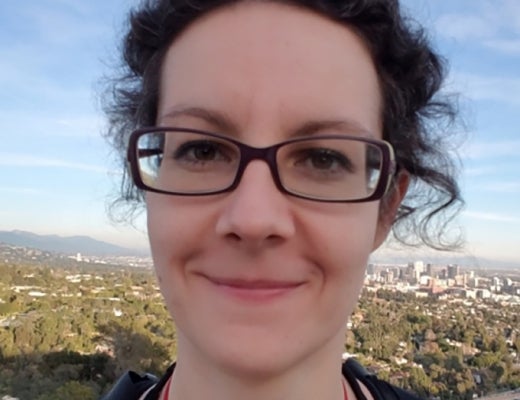
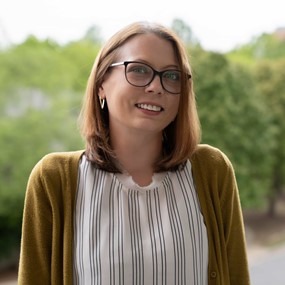
Dr. Sumin Zhao is a Reader (Associate Professor) in Discourse Analysis at the University of Edinburgh's School of Philosophy, Psychology & Language Sciences. She holds a PhD in text linguistics from the University of Sydney and has held prestigious fellowships at the University of Southern Denmark and the University of Technology Sydney. Her research focuses on multimodal discourse analysis, social semiotics, and digital literacies, with particular attention to social media practices, immigrant families, and children's digital engagement. Education: PhD in Text Linguistics (Hallidayan tradition), University of Sydney Postdoctoral Fellowships at University of Southern Denmark (2016-2018) and University of Technology Sydney (2013-2016) Research Interests: Analysis of social media genres (e.g., selfies, shelfies, video-sharing platforms) Multimodal communication in transnational families Children's digital literacy practices and translanguaging Semiotic technologies in education and cultural studies Projects & Grants: Lead investigator for the PPLS Small Project Grant on emoji analysis (2021-2022) Pilot study on transnational family storytelling via social media (2020-2021) Awards: Carlsberg Distinguished Postdoctoral Fellowship (2016-2018) Chancellor's Postdoctoral Fellowship (2013-2016) Supervision & Labs: Supervises PhD students researching social media influencers, digital parenting, and transnational literacy practices Member of the International Collective of Research and Design in Children's Digital Books (www.childrensdigitalbooks.com)
Adriana I. Kovashka is an Associate Professor in the Department of Computer Science at the University of Pittsburgh's School of Computing and Information. She serves as Chair of the Department of Computer Science. Her research focuses on computer vision, machine learning, and their intersections with human-machine communication and visual rhetoric analysis. Kovashka earned her BA in Computer Science and Media Studies from Pomona College (2008) and her PhD in Computer Science from the University of Texas at Austin (2014). She joined Pitt in 2015. Her work emphasizes improving image retrieval systems through semantic attributes, human-in-the-loop feedback, and crowd-sourced data. Notable projects include analyzing advertisements' persuasive strategies, developing object detection models resilient to domain shifts, and exploring multimodal learning with linguistic and visual inputs. She has secured significant grants, including NSF awards for geographic diversity in object detection (2023), CAREER funding for weak supervision methods (2021), and multiple Google Faculty Research Awards. Kovashka advises PhD students on topics ranging from multimodal intent modeling to domain generalization. She has organized workshops on advertising understanding and subjective attributes in vision conferences. Her lab's datasets, such as the 64,832-image ad repository and video ad collections, are widely used in vision research. Recent efforts include quantifying perceptual diversity in multilingual systems and mitigating bias in CNNs through shape regularization. Awards and recognitions include the NSF CAREER Award, Pitt's CRDF grants, and leadership roles in CVPR and WACV conferences. Her research bridges technical innovation with societal impact, addressing challenges in visual communication, ethical AI, and educational robotics.
Dr. Jean Goodwin is the SAS Institute Distinguished Professor of Rhetoric & Technical Communication at NC State University's Department of Communication, part of the College of Humanities and Social Sciences. She specializes in science communication ethics, civil argumentation, and the rhetoric of controversial scientific topics such as climate change and GMOs. Her work bridges theory and practice, including NSF-funded initiatives like Teaching Responsible Communication of Science, which develops case studies for STEM graduate students. She also leads the Leadership in Public Science cluster through NC State's Chancellor’s Faculty Excellence Program. Education: B.A. in Mathematics (University of Chicago, 1979), J.D. (University of Chicago, 1984), and Ph.D. in Communication/Rhetoric (University of Wisconsin-Madison, 1996). Her career includes over 25 years of teaching rhetoric and mentoring students across communication subfields. Research focuses on how scientists communicate effectively with non-experts, leveraging discourse analysis and conceptual frameworks like speech act theory. Key themes include trust-building in contentious contexts, ethical advocacy roles for scientists, and historical rhetorical strategies from Cicero to modern policy debates. Her work often intersects with civic engagement and interdisciplinary collaboration, such as organizing conferences for science communication scholars and advising organizations like the AAAS. Major publications explore ethical dimensions of science communication, including climate change advocacy, disinformation detection, and pandemic messaging. Awards include the EB Knight Journal Award (2007) and her distinguished professorship. Current initiatives emphasize translating scholarly insights into practical tools for scientists and fostering dialogue between scientific and public communities through funded research partnerships.
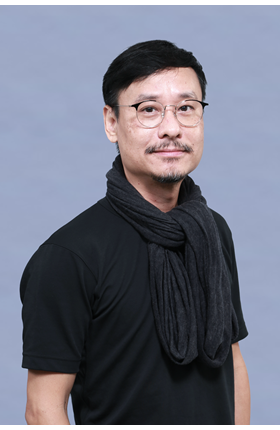
Brian Kwok is an Associate Professor at The Hong Kong Polytechnic University's School of Design, where he serves as Programme Leader of BA Communication Design and heads the Information Design Lab. His academic foundation includes an MA in Design from PolyU, complemented by an MA in Visual Culture Studies and MPhil in Communication from the Chinese University of Hong Kong. With over a decade of tenure at PolyU, Kwok co-founded the Information Design Lab in 2011 to advance research in practical design applications. Kwok's research explores the intersection of visual communication, cultural heritage, and urban environments. Primary domains include: Neon Signage Studies : Documentation and semiotic analysis of Hong Kong's vanishing neon landscapes Healthcare Communication : Typographic legibility for medication labeling targeting senior citizens Urban Ethnography : Spatial practices of street vendors and visual narratives in public spaces Cultural Preservation : Archival projects on Hong Kong's typographic heritage and vernacular design His publication corpus (2015-2023) demonstrates consistent focus on Hong Kong's visual culture evolution, with recurring themes: cultural identity in urban signage, typographic accessibility for vulnerable populations, and cinematic representations of urban change. Methodologically, he blends empirical studies (e.g., user testing of medicine labels) with visual semiotics and historical documentation. Awards recognize both scholarly and practical impact: GRF-funded research on neon sign preservation (2023) Arts Go Digital grant for cultural documentation (2021) HKDA Global Design Excellence Award (2017) Outstanding Paper Award for neon signage research (2017) As Lab Leader, Kwok oversees projects including medicine label optimization, wayfinding systems, and the Fading of HK Neon Visual Culture Project. He actively engages with public institutions through roles on the Public Libraries Advisory Committee and as external examiner for academic programs.
Morna O'Neill is a Professor and Department Chair at Wake Forest University, specializing in Eighteenth- and Nineteenth-Century European Art, with a focus on the intersection of art, design, and politics in Britain. Her research redefines traditional hierarchies between fine and decorative arts through a political lens. Research Interests: Art History, British Art, Arts and Crafts Movement, Political Art, Colonial Art, Domestic Interiors, Museum Studies. Key Publications include monographs on Walter Crane and Hugh Lane, and articles exploring topics such as socialist symbolism in decorative arts, imperial narratives in Victorian print culture, and the role of domestic spaces in art history. Her work has been recognized with the Historians of British Art Book Prize. Projects: Co-founder of the digital humanities initiative Home Subjects , which investigates the domestic display of art in Britain (1715–1914), supported by a National Endowment for the Humanities grant. She co-chaired the 2015 College Art Association conference session on private art display. Scientific Awards: Historians of British Art Book Prize for Best Book before 1900 (2011).
Tiffany Lewis is an Associate Professor at the Marxe School of Public and International Affairs, Baruch College, CUNY. Her work bridges rhetoric, social movements, and public affairs to explore gendered political advocacy. Education: Ph.D., Communication, University of Maryland, College Park M.A., Communication, University of Montana, Missoula B.A., Speech Communication, University of Washington, Seattle Research Interests: Historical analysis of women's activism in the progressive-era U.S. Embodied and performative advocacy tactics (mountain ascents, hikes, road trips) Visual rhetoric and cartography in social movements Decolonizing assessment methods in communication pedagogy Publications Trends: Her work primarily examines the intersection of gender, regional identity, and rhetorical strategy in early 20th-century advocacy, with a focus on Western U.S. suffrage movements. She employs archival research, discourse analysis, and geospatial methods. Committee Service: Executive Committee, Marxe School Assessment Committee, Marxe School Strategic Planning Committee, Marxe School Editorial Board, Recovering Democracy Archive: Speech Recovery Project Teaching: She instructs courses on public communication, equity-focused advocacy, social movement activism, and women in U.S. politics.
Martha Easton is an Associate Professor of Art History and Program Director of Museum Studies at Saint Joseph's University. She specializes in medieval art and architecture, with a focus on illuminated manuscripts, gender and hagiography, feminist theory, and medieval collecting practices. Easton is a founding member of the Material Collective, a collaborative dedicated to innovative approaches to visual culture, and has lectured extensively at institutions like the Met Cloisters. Education : PhD in Fine Arts (Institute of Fine Arts, New York University) with major fields in Early Christian and Medieval Art; minor in Japanese Art Certificate of Curatorial Studies (Institute of Fine Arts/The Metropolitan Museum of Art) MA in Fine Arts (Institute of Fine Arts, New York University) BA in History (Carleton College) Her research explores intersections of gender, medievalism, and the afterlife of medieval art in modern collections. She is currently writing a book on John Hays Hammond Jr., a scientist-collector who built Hammond Castle, and has published widely on feminist art history, medieval eroticism, and the Material Collective’s collaborative scholarship. Scientific Awards : Michael J. Morris Grant for Scholarly Research (2020-21) Teaching Innovation Grant (2020) Senior Research Fellowship, Center for the History of Collecting (The Frick Collection, 2015) Samuel H. Kress Foundation Travel Grant (1998) Andrew W. Mellon Foundation Fellowship (1996-97) Easton has taught at institutions including Seton Hall University, Bryn Mawr College, and New York University, and her work bridges medieval scholarship with modern curatorial practices and feminist reinterpretation of historical narratives.
Deen Freelon is the Allan Randall Freelon Sr. Presidential Professor at the University of Pennsylvania's Annenberg School for Communication, where he leads research in digital politics and computational methods. His work centers on identity dimensions in social media, misinformation ecosystems, and political communication. Previously, he held tenured positions at American University and the University of North Carolina at Chapel Hill. Freelon earned a B.A. with honors from Stanford University (2002), followed by an M.A. (2008) and Ph.D. (2012) from the University of Washington. His endowed chair honors his great-grandfather, Allan Randall Freelon Sr., a Penn alumnus and prominent Philadelphia artist. Freelon's research explores intersections of technology and society with emphases on: Computational analysis of social media discourse Race, gender, and ideological asymmetry in online spaces Misinformation propagation and mitigation strategies Impact of personalized information environments on democracy His publications consistently address how digital platforms reshape political engagement and identity expression. Freelon has secured over $6 million in research funding from organizations including the Knight Foundation, Hewlett Foundation, Spencer Foundation, and US Institute for Peace. As a founding member of UNC Chapel Hill's Center for Information, Technology, and Public Life, he contributes to interdisciplinary efforts examining technology's societal impacts.
Crytal Lee is an Assistant Professor in Computational Media and Design at MIT, with a joint appointment in the Schwarzman College of Computing and Comparative Media Studies/Writing. She is also a Faculty Associate at Harvard's Berkman Klein Center for Internet & Society, co-leading the Ethical Tech Working Group, and a Senior Fellow at Mozilla's Responsible Computing Challenge. Her research focuses on data visualization, disability studies, and ethical technology, emphasizing the 'life-cycle of data representations.' Education: PhD in History, Anthropology, Science, Technology, and Society from MIT (2022); MA and BA (High Honors) in History of Science from Stanford University (2016 and 2015). Research Interests : Crystal examines how data is curated, visualized, and contested, with a particular lens on disability justice and accessible design. Her work bridges STS, HCI, and critical data studies, addressing issues like misinformation, algorithmic bias, and inclusive technology. Awards & Grants : Honorable Mentions at EuroVis 2022 and CHI 2021; NSF Dissertation Improvement Grant; SSRC Social Data Fellowship. Advising & Mentorship : Advised projects on accessible visualization, participatory AI, and disability inclusion. Current book project: Crip Computation . Labs & Teams : Co-leads Ethical Tech Working Group at Berkman Klein; involved in MIT's Data + Feminism Lab and Accessible Interactions projects.
Warren Buckland is a Reader in Film Studies at Oxford Brookes University's School of Arts. He holds a PhD in Film Studies from the University of East Anglia (1993) and previously studied photography at Derby (1987). Research: Film semiotics, cognitive film theory, narrative theory (puzzle films), digital humanities, independent American cinema Professional Roles: Editor of New Review of Film and Television Studies (2003-2016), editorial board member for Signata and book series Thinking Cinema and Hollywood Studio System His article trends analyze: Impossible storyworlds in Hollywood blockbusters Stylometric approaches to independent cinema Semiotic structures in music videos Epistemological foundations of film criticism Cognitive dimensions of cinematic rhetoric Contemporary auteur theory applications Awards: British Academy Post-Doctoral Fellowship (1994) Senior Research Fellow at Freie Universität Berlin (2016) As an educator, he supervises: PhD theses on film style, philosophy, puzzle films MA dissertations on Hollywood, digital humanities BA/MA film theory and research methods
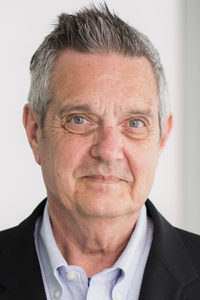
William B Gartner serves as the Bertarelli Foundation Distinguished Professor of Family Entrepreneurship at Babson College's F.W. Olin Graduate School of Business, where he also directs research at the Bertarelli Institute for Family Entrepreneurship. Having joined Babson's faculty in 2017, Gartner brings over 40 years of experience studying entrepreneurial phenomena, with particular expertise in family entrepreneurship dynamics. He previously held distinguished chairs at the University of Southern California and Clemson University, establishing himself as a leading scholar in the field. Gartner earned his PhD, MBA, and BBA from the University of Washington, forming the foundation for his extensive research career. His academic journey began during entrepreneurship's early days in the late 1970s when he took one of the first entrepreneurship courses as an MBA student at the University of Washington, when only six students initially enrolled in the class. Gartner's research primarily explores how families act entrepreneurially, examining topics including entrepreneurial legacy, intergenerational knowledge transfer, and the transformation of family businesses across generations. His work bridges entrepreneurship theory with practical applications, particularly focusing on how entrepreneurial legacies can drive innovation in family businesses. He is particularly interested in the linguistic innovations entrepreneurs employ and how storytelling shapes entrepreneurial identity and practice. His scholarship has evolved to incorporate humanities perspectives, recognizing that literature, philosophy, and history provide valuable insights into entrepreneurial thinking and behavior. Analysis of Gartner's recent publications reveals a strong emphasis on family entrepreneurship as an ongoing process rather than a static state, with increasing attention to methodological innovation in entrepreneurship research. His work demonstrates growing interest in the role of narrative, visual methods, and qualitative approaches to understand complex entrepreneurial phenomena. The research shows consistent focus on family business succession as transformation rather than simple transfer, with increasing attention to adolescent entrepreneurial development and the influence of parenting styles. 2025 — Top 1% of Scholars in all subjects, Stanford/Elsevier's Top 2% Scientist Rankings 2024 — The FamCap25 – The Top FamilyEnterprise Academics, FAMILY CAPITAL MAGAZINE 2022 — Justin G. Longnecker Fellow, United States Association of Small Business and Entrepreneurship 2016 — Dedication to Entrepreneurship Award, Entrepreneurship Division, Academy of Management 2013 — Foundational Paper Award, Entrepreneurship Division, Academy of Management 2005 — International Award for Entrepreneurship and Small Business Research Gartner actively mentors doctoral students and early-career researchers, frequently collaborating on publications addressing complex family business dynamics. His editorial roles as Special Issue Editor for Entrepreneurship and Regional Development and Academy of Management Perspectives demonstrate his influence in shaping research agendas. He has secured significant research funding supporting studies on entrepreneurial legacy, family business succession, and adolescent entrepreneurial development, though specific grant amounts aren't detailed in the available materials. As Director of Research at the Bertarelli Institute for Family Entrepreneurship, Gartner leads initiatives connecting academic research with practical applications for family businesses. His work emphasizes the transformative potential of entrepreneurship within family contexts, challenging traditional notions of family business succession as mere transfer of ownership. Through workshops and seminars, he helps families explore how entrepreneurial legacies can lead to new innovations while preserving core values across generations.
Katrin Bromber is a German Researcher at the Centre for Modern Oriental Studies in Berlin, where she has led the research group "Progress and its Discontents: Ideas, Practices, Materiality" since 2014. Her career spans senior research roles at ZMO and academic teaching positions at the University of Vienna. Nationality: German. Language skills: Native German, fluent English/Swahili, moderate Amharic, good reading knowledge in French/Russian, basic Tigrinya. Habilitation (2009–): African Studies, University of Vienna PhD (1993): African Linguistics, University of Leipzig MA (1988): Swahili Studies, University of Leipzig Katrin Bromber's research interrogates intersections of body politics , sports history , Swahili linguistics , and Ethiopian modernity . Her work traces how physical culture, media representation, and colonial/imperial narratives shape national identities across Africa and Asia. Current focus: "Progress" as contested concept in Ethiopian and Gulf urbanism. Key article trends reflect her translocal methodology: 2017 studies on Ethiopian stadiums and fitness culture ; 2014-2013 publications analyzing East African military press , sports branding in the Gulf , and Swahili poetry ; 2007-2000 works on colonial linguistic politics , Indian Ocean slavery , and German colonial Swahili promotion . Recurring sub-fields: body as political text, translocal modernity, media historiography. Scientific Awards: Research Grant of the Berlin City Council (1999-2000): Gendered Slavery study Service to the Scientific Community: Chairwoman, Academic Association for Horn of Africa Studies (2012–) Editorial Advisory Board - Stichproben. Vienna Journal of African Studies (2015–) Editorial Advisory Board - Studies of Department of African Languages and Cultures (2015–) Teaching Experience: Textlinguistics, Mediacommunication, African Linguistics, Swahili (elementary/advanced), Swahili Literature, Swahili in Arabic Script at Leipzig, Humboldt-Berlin, Free Berlin, and Vienna universities Anthropology of the Body at Mekelle University Summer School Field Research: Tanzania (1993-2003): Swahili Poetry, Intellectual History Kenya (2005): Indian Ocean WW2 UAE/Bahrain (2009): Sports and Body Cultures Ethiopia (2009-2015): Sports, Body Politics
Leigh Gruwell is an Associate Professor in the Department of English at Auburn University's College of Liberal Arts. She specializes in composition and rhetoric, with a focus on digital and multimodal rhetorics, feminist methodologies, and composition pedagogy. Her research explores intersections between feminist theory, material rhetorics, and digital spaces. Education: PhD in Composition and Rhetoric, Miami University (2015) MA in English, Florida State University BA in English, Florida State University Research Focus: Gruwell's work interrogates how digital technologies shape feminist rhetorical practices, particularly in contexts of harassment and ethical access. Her recent studies emphasize materialist approaches to digital rhetoric and methodological innovations in feminist research. Article Trends: Her publications span digital humanities, feminist rhetorical methodologies, and critical analyses of online spaces. Recent work (2022-2024) prioritizes trauma-informed research practices and interdisciplinary bridging of rhetorical theory. Awards/Grants: No specific awards listed, though her research demonstrates sustained innovation in feminist digital studies. Advising & Labs: Advises graduate students in composition studies and rhetoric. No dedicated lab mentioned, but collaborates on digital humanities projects and feminist pedagogy initiatives.
Lara C. W. Blanchard is the Luce Professor of East Asian Art and Lloyd Wright Professor in Conservative Studies at Hobart and William Smith Colleges, where she has been a faculty member since 2001. She holds a Ph.D. in Art History from the University of Michigan and specializes in Chinese pictorial arts from the Song dynasty to the present. Her interdisciplinary research integrates art history, gender studies, and literary analysis. Her education includes: Ph.D., Art History, University of Michigan (2001) M.A., Art History, University of Michigan (1992) B.A., Art History and Mathematics, College of William & Mary (1988) Her research focuses on gender in Chinese art, particularly women as artists and patrons, text-image relationships, and the construction of gendered subjectivity in painting and poetry. She examines how visual culture reflects and constructs ideals of femininity and masculinity, especially during the Song dynasty. Her work often bridges art historical analysis with literary and philosophical contexts, emphasizing interdisciplinary approaches. Her recent publications and lectures reveal a strong trend in analyzing emotional interiority, political allegory, and gendered representation in East Asian visual culture. She frequently explores how poetic themes are visualized in painting and how female subjectivity is constructed across historical periods. Her scientific awards include: 2020 Joseph Levenson Pre-1900 Book Prize (China) 2016 Franklin R. Buchanan Prize for Asia Curriculum Materials 2020 Faculty Prize for Scholarship, HWS Lloyd Wright Professorship in Conservative Studies (2018–) Lara Blanchard has been actively involved in mentoring through curriculum development, textbook authorship, and graduate advising. She has received multiple research grants from Hobart and William Smith Colleges and external foundations such as the Freeman Foundation. Her collaborative projects, such as the textbook Asian Art , demonstrate her commitment to pedagogy and accessible scholarship. She is affiliated with several academic organizations, including the Association for Asian Studies, College Art Association, and Cornell University’s East Asia Program as an Associate in Research. She has delivered lectures at institutions like Stanford, Princeton, and the University of Kansas, and has participated in panels and symposia on gender, Buddhism, and visual culture in Asia.
Kerri Kotta is a Professor of Music Theory and Head of Musicology at the Estonian Academy of Music and Theatre. She holds a PhD in Musicology (2004) and an MA in Composition (1997) from the same institution. Her research focuses on music theory, tonal analysis, Estonian music history, and contemporary composition, with special expertise in the works of Eduard Tubin and Dmitri Shostakovich. She coordinates the International Eduard Tubin Society and edits the composer's complete works. Her research interests span music theory , compositional techniques , Estonian cultural heritage , and interdisciplinary performance studies . Recent publications explore modernism in Estonian art music, Beethoven's structural rhetoric, and socio-psychological dimensions of contemporary opera. Kotta received the Reet Neimar Criticism Award (2023) for her contributions to music scholarship. She leads the project How to share the ardor? Conveying complex musical structures through animated scores (2024-2025), funded by the Estonian Ministry of Culture. Administratively, she chairs the Estonian Musicological Society (2013–present) and the International Eduard Tubin Society (2015–present), while serving on the board of the Estonian Composers Union (2022–present).