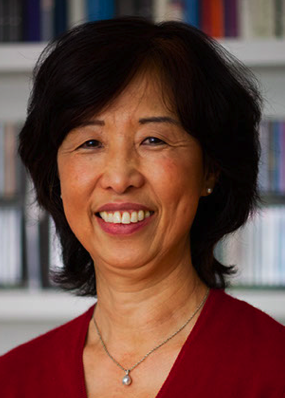
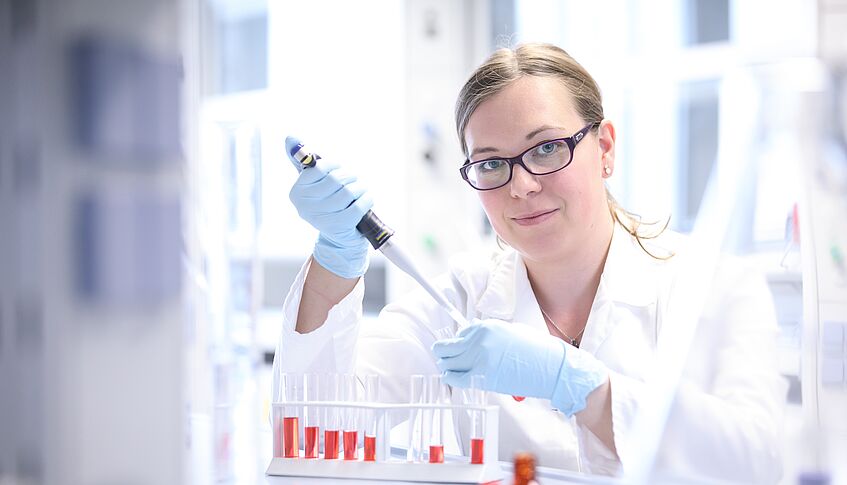
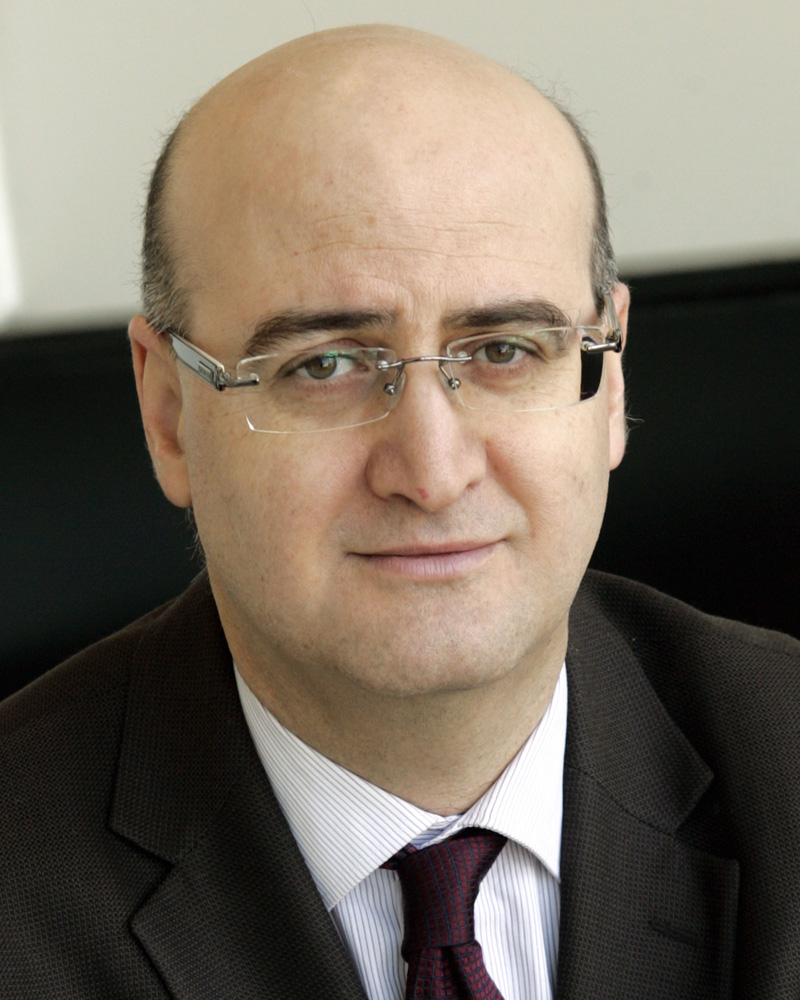
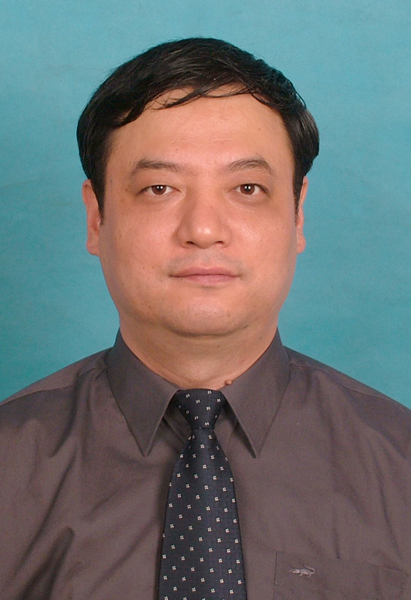
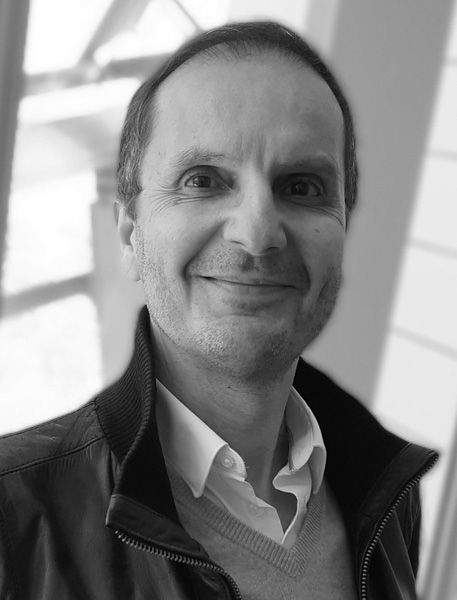
Dr. Soonja Choi is a Research Professor in the Comparative Psycholinguistics Group at the University of Vienna and Director of the Korean Studies Program at San Diego State University (SDSU), where she holds the title of Professor Emerita of Linguistics. She earned her Ph.D. in Linguistics from the University of Buffalo (1986) and holds advanced degrees from institutions in France and South Korea. Her research focuses on language and thought, semantics, spatial language, and Korean linguistics, with a particular emphasis on cross-linguistic studies of spatial categorization and its cognitive implications. Research Contributions: Her work has explored how language influences spatial perception and cognition, notably through long-term collaborations with the Max Planck Institute for Psycholinguistics and the National Science Foundation. Key contributions include studies on spatial term development in Korean/English children and cross-linguistic comparisons of spatial semantics between German, Korean, and English. Grants & Awards: Secured over $1.4M in grants including a EUR 600,000 Vienna Science Fund grant (2016-2020) and multiple NSF awards. Elected to the Academy of Europe (2019) as an Ordinary Member. Professional Roles: Served as Chair of SDSU's Department of Linguistics and Oriental Languages (1997-2000, 2001-2002), Graduate Advisor (multiple terms), and editorial board member for Language, Interaction, and Acquisition . Active in academic governance and international linguistic organizations.
Huamin Qu is a Chair Professor in the Department of Computer Science and Engineering at the Hong Kong University of Science and Technology (HKUST). He serves as the Founding Dean of the Academy of Interdisciplinary Studies (AIS), Founding Head of the Division of Emerging Interdisciplinary Areas (EMIA), and was the Founding Acting Head of Computational Media and Arts (CMA) at HKUST(GZ). Qu directs the VisLab and coordinates the Human-Computer Interaction (HCI) group. He obtained his BS in Mathematics from Xi'an Jiaotong University and MS/PhD in Computer Science from Stony Brook University. Qu's research integrates Data Visualization , Human-Computer Interaction , and Human-Centered AI , with applications in urban informatics, social networks, and explainable AI. His work focuses on developing interactive systems for big data analytics, visual storytelling, and AI-driven decision support. Research extends to multimodal communication, fintech, and augmented reality applications. His publications emphasize visual analytics for complex datasets (mobility, social media, financial), interaction techniques for immersive environments, and AI-enhanced visualization tools. Recent works explore explainable AI interfaces and large-scale data communication frameworks. IEEE Visualization Academy (2020) IEEE VGTC Technical Achievement Award AI 2000 Most Influential Scholar (2019, 2023, 2024) 21 Best Paper/Honorable Mention awards IBM Faculty Award (2009) APICTA Merit Award (2015) Yelp Dataset Grand Prize (2018) Qu has advised 48 PhD graduates (21 now faculty at institutions like UC Davis, University of Minnesota, Texas A&M) and 30 MPhil students. He secured major grants including RGC theme-based projects (digital citizenship, air pollution), UGC AoE (slope safety), and China's 973 Program. As VisLab director, he leads 20+ researchers in visualization/HCI projects adopted by Microsoft, IBM, Huawei, and Tencent.
Claus Lamm is a Full Professor of Biological Psychology at the University of Vienna , where he leads the Social, Cognitive and Affective Neuroscience Unit (SCAN-Unit) . He serves as Vice Dean for Research and Advancement of Early Career Researchers at the Faculty of Psychology and holds affiliations with the Vienna Cognitive Science Hub , Environment & Climate Change Hub , and Austrian Academy of Sciences . His academic career spans international collaborations and formative research experience abroad. Scientific Focus: Lamm investigates the neural underpinnings of empathy and prosocial behavior , employing multi-modal approaches combining neuroimaging, psychopharmacology, and psychoneuroendocrinology . His work extends to comparative studies with ravens and dogs, and explores environmental social neuroscience through climate change decision-making research. Recent publications show trends in cross-cultural psychology , machine learning applications , and neurobiological pathways related to social behavior. Awards & Grants: Recipient of the APS Mentor Award for his support of early career researchers. Funded by European Research Council , Austrian Science Fund , Vienna Science and Technology Fund , and intramural grants exceeding €10 million. Key projects include "Unravelling the opioid system in empathy" and "Comparative dog-human fMRI" . Media Engagement: A prominent public science communicator, Lamm has appeared in Nature , Science Magazine , and Austrian media outlets like Ö1 Mittagsjournal and ORF2 , discussing topics from pandemic psychology to social media effects . He maintains active outreach through Science TV and educational programs .
Jürgen König is a full professor at the Department of Nutritional Sciences , University of Vienna, leading the Research Professorship Specialized Human Nutrition . His work bridges psychological and physiological dimensions of eating behavior, with additional focus on population-level nutritional assessment in Austria. Academic Rank: Professor Department: Nutritional Sciences Research Focus: Hunger/satiety mechanisms, Public health nutrition, Food safety Key research themes include: Psychological drivers of eating behaviors (stress, food craving, sensory cues) Physiological regulation of nutrient homeostasis National nutrition surveys assessing dietary patterns Caloric restriction and metabolic adaptation Child and adolescent hydration/nutrition policies Recent publications highlight: Mechanistic studies on caloric restriction effects (2025) Pandemic impacts on school nutrition (2024) Global obesity/diabetes trends analysis (2024) Behavioral nudging in food selection (2024) Microbiota's role in dietary interventions (2023) Contact: juergen.koenig@univie.ac.at | Sekretariat: sekretariat.ew@univie.ac.at
Angelo Peccerillo is a distinguished Full Professor of Petrology at the University of Perugia, Italy, with an extensive academic career spanning multiple Italian universities. He previously served as Full Professor of Petrology at the Universities of Calabria (1993-1997) and Messina (1985-1993), and as Associate Professor of Volcanology (1982-1985) and Assistant Professor (1971-1982) at the University of Florence. He earned his Laurea Degree in Geology from the University of Florence in 1970 and has been a member of Academia Europaea since his election. Peccerillo's research focuses on the petrology and geochemistry of magmatic processes, with particular expertise in igneous petrology, geochemistry, volcanology, orogenic volcanism, and continental rift magmatism. His scholarly work has established him as a leading expert in understanding the complex relationships between mantle processes, crustal interactions, and volcanic activity in the Mediterranean region and beyond. His research methodology integrates petrological, geochemical, and geophysical approaches to develop comprehensive models of magmatic systems. Analysis of Peccerillo's recent publications reveals a consistent focus on magmatic processes across diverse geological settings. His work spans from detailed studies of specific volcanic systems like the Aeolian Islands and Ethiopian Rift to broader investigations of mantle structure and geodynamic processes in the Mediterranean region. A recurring theme is the integration of multiple analytical approaches to model magma plumbing systems, understand mantle composition, and elucidate the geodynamic evolution of volcanic regions, particularly examining the relationships between deep and shallow mantle processes. Antonio Feltrinelli Price 2006 for Earth Sciences, awarded by the National Academy of Lincei, Italy Professor Peccerillo has supervised numerous MSc and PhD students both at his home institution and abroad. His editorial leadership includes serving as Chief Editor of the "European Journal of Mineralogy" from 2006 to 2008 and membership on the editorial boards of several prestigious journals including "Lithos," "Journal of Volcanology and Geothermal Research," "Geological Society of Italy Bulletin," and "Open Mineralogy Journal." He has been actively involved in research evaluation, serving on national and international panels for organizations such as NSF, ESF, CNR, MIUR, and NATO. Peccerillo maintains strong international scientific connections through visiting positions at institutions like the Australian National University, University of Gottingen, and University of Paris XI at Orsay. His leadership extends to professional organizations, having served as President of the Italian Petrology Group and currently as a Member of Academia Europaea. His administrative experience includes serving as Department Head and Coordinator of PhD programs at the Universities of Messina, Cosenza, and Perugia.
Oliver Grau is a Chair Professor for Image Science and a leading figure in Media Art research, affiliated with Hong Kong Baptist University (Academy of Visual Arts, Distinguished Fellow since 2023) and Danube University Krems (Chair Professor for Image Science from 2005–2022). He founded the Archive for Digital Art (ADA) and the international MediaArtHistories Conference Series , with key roles at institutions across Germany, Austria, and Australia. His work bridges art, science, and technology, focusing on immersive images, digital heritage, and emotion research. Key Positions: Director of ADA (since 2000), Founding Director of MediaArtHistories Conference Series (since 2005), PI for high-resolution digitization of the Goettweig Graphic Print Collection (2005–2017). Research Grants: Funded by DFG, Austrian Science Fund, Australian Research Council, VW Foundation (total 8.3 Mio EUR), and Erasmus+ Joint Master program (5.4 Mio EUR). Research Interests: Grau’s scholarship spans the history of media art, telepresence, artificial life, emotion research, and digital humanities. His work emphasizes the evolution of immersive visual experiences from historical art forms to digital media, integrating theoretical and practical approaches. Article Trends: His recent publications focus on digital art’s sociopolitical dimensions, archiving challenges in the digital era, and cross-disciplinary methodologies. Themes include media art conservation, web-based tools for digital humanities, and the intersection of artistic expression with contemporary global issues like climate change and surveillance. Scientific Awards: Distinguished Fellow at Hong Kong Baptist University (2023) Science Award of Lower Austria (2019) Honorary Doctorate from University of Oradea (2014) Invitations to G-20 summit, Olympic Games, and international symposia Labs & Teams: He leads the Archive for Digital Art, managing a global team of 28 staff, and co-founded the Erasmus+ Joint Master in Media Arts Cultures. His projects emphasize collaborative archiving tools (e.g., Web 2.0/3.0 archives) and large-scale digitization initiatives.
Edward Muir is the Clarence L. Ver Steeg Professor in the Arts and Sciences and Charles Deering McCormick Professor of Teaching Excellence at Northwestern University, with joint appointments in the Department of History and Italian Studies at Weinberg College of Arts and Sciences. His academic journey includes a B.A. from the University of Utah (1969), an M.A. (1970), and Ph.D. (1975) in Modern European History from Rutgers University, including a Semester in Italy Program at Syracuse University (1967). Muir's research explores the intersection of ritual, violence, and power in Renaissance Europe, with emphases on Italian history, microhistory, and cultural anthropology. His work examines civic ceremonies, gender exclusion, and the sociopolitical underpinnings of early opera. Key themes include the anthropology of Venice, religious processions, and community formation in pre-modern societies. His scholarly publications reveal a consistent focus on Renaissance cultural practices, Venetian society, and methodological innovations in microhistory. Recent works analyze opera's emergence in 17th-century Venice, anti-war movements, and gendered public spaces, blending archival rigor with interdisciplinary theory. Awards and Honors: Herbert Baxter Adams Prize (1982) Two-time Howard R. Marraro Prize winner (1982, 1993) Andrew W. Mellon Foundation Distinguished Achievement Award (2010, $1.5 million) Fellow, American Academy of Arts and Sciences (2014) Charles Deering McCormick Professorship for Teaching Excellence (2006) Muir has held major administrative roles including Department Chair at Northwestern and LSU, co-directed the Graduate Program in Italian Studies, and served on editorial boards for journals like the American Historical Review . He mentors through graduate programs but no specific student advisees are listed.
Professor Moncef Gabbouj is a distinguished academic and researcher currently serving as Professor of Signal Processing at the Department of Computing Sciences, Faculty of Information Technology and Communication Sciences, Tampere University, Finland. Previously, he held the same position at Tampere University of Technology before the merger in 2019. He has also held visiting professorships at prestigious institutions including Hong Kong University of Technology and Science, University of Southern California, and Purdue University. Ph.D. and MSc. in Electrical Engineering from Purdue University, USA (1989 and 1986) B.Sc. in Electrical Engineering from Oklahoma State University, USA (1985) Prof. Gabbouj's research spans multiple domains within signal and image processing, with a strong focus on machine learning applications. His primary research interests include artificial intelligence, machine learning, Big Data analytics, multimedia content-based analysis, indexing and retrieval, nonlinear signal and image processing, voice conversion, and video processing and coding. His work bridges theoretical advancements with practical applications across various industries, particularly in multimedia communications and biomedical applications. His extensive publication record demonstrates a clear evolution from traditional signal processing techniques toward more sophisticated machine learning and deep learning approaches. Recent work shows increasing focus on convolutional neural networks for various applications including ECG classification, video processing, financial time-series analysis, and image recognition tasks, reflecting the broader trend in the field toward deep learning methodologies while maintaining strong foundations in signal processing theory. IEEE Fellow (2011) Member, Finnish Academy of Science and Letters (2014) Knight, First Class, of the Order of the White Rose of Finland (2006) Nokia Foundation Recognition Award (2005) Nokia Foundation Visiting Professor Award (2012) Finnish Cultural Foundation for Art and Science Award (2017) TUT Foundation Grand Award (2015) Prof. Gabbouj has supervised 64 doctoral and 72 Master's theses, demonstrating his significant contribution to academic mentoring. His research has been supported by substantial funding, including research grants totaling 8.5 million Euro (2001-2015). He has served as Academy of Finland Professor during 2011-2015 and has been involved in numerous EU research projects including Horizon, ESPRIT, HCM, IST, COST, Tempus and Erasmus programs. As Editor, Guest Editor or member of the Editorial Board of 6 international scientific journals, he has significantly influenced the academic discourse in his field. He leads the Signal Analysis and Machine Intelligence (SAMI) research group at Tampere University and serves as the Finland Site Director of the NSF IUCRC funded Center for Visual and Decision Informatics. His research unit focuses on applying advanced machine learning techniques to solve complex problems in signal processing, computer vision, and multimedia analytics, with applications ranging from healthcare to multimedia communications and financial analysis.
Markus Vincze is an Associate Professor at the Institute of Automation and Control Engineering (ACIN) at Vienna University of Technology (TU Wien). He founded the Vision for Robotics (V4R) group in 1996 to advance robotic perception, particularly in real-world environments and homes. His work focuses on cognitive computer vision techniques for robotics. Education: Diplom in Mechanical Engineering (1988) and PhD (1993) from TU Wien; M.Sc. (1990) from Rensselaer Polytechnic Institute. V4R coordinates EU projects like ActIPret, robots@home, HOBBIT, and national initiatives like vision@home. Markus has edited a book on Robust Vision with Gregory Hager and authored 62 peer-reviewed journal articles and over 400 reviewed publications. His recent research explores zero-shot 6D pose estimation, sim-to-real transfer, and transparent object detection. Markus has served as program chair for ICRA 2013 and organized HRI 2017 in Vienna. He has advised numerous students and secured grants from the Austrian Academy of Sciences for work at HelpMate Robotics and Yale's Vision Laboratory. The V4R group leads innovations in robotic vision, including frameworks for synthetic data generation (Unrealgensyn), depth completion (CAGT), and educational robotics applications for sustainability. Their work spans household robotics (RH3), agricultural robotics (EdgeSoil), and human-robot collaboration.
Prof. Maosong Sun is a Professor at the Department of Computer Science and Technology, Tsinghua University, China. He holds additional leadership roles including Executive Vice Dean of the Institute for Artificial Intelligence and Deputy Director of the National Engineering Laboratory for Cyberlearning and Intelligent Technology. His research focuses on natural language processing (NLP), artificial intelligence, machine learning, and computational education. He leads interdisciplinary projects in computational humanities, knowledge graphs, and MOOC platforms like XuetangX, which has over 58.8 million registered learners. Key contributions include pioneering work in Chinese NLP tools, poetry generation systems like Jiuge, and large-scale research initiatives funded by Chinese and Singaporean programs. Awards include the Tsinghua University Education Award (2019) and the National Outstanding Practitioner Award (2007). Established NLP and Computational Humanities & Social Sciences Lab (2008) Co-director of the Joint Research Center for Extreme Search (2011-present) Over 200 publications with 11,000+ citations (h-index 47)
Hilda Tellioglu is an Associate Professor and Dean of Academic Affairs for Informatics at TU Wien, leading the Artifact-based Computing and User Research department. She holds a dual role as Head of Research Unit and oversees the Office of the Dean. Her work focuses on Human-Computer Interaction (HCI), Design Thinking, and Digital Transformation, with a strong emphasis on socio-technical systems and participatory design methodologies. Research interests span software engineering, CSCW, ambient assisted living (AAL), and digital co-creation practices in urban planning. She has spearheaded projects like aspern.mobil LAB, EnviSense, and StreetForum, exploring smart mobility, environmental sensing, and citizen participation in urban development. Her work frequently integrates tangible interfaces and model-based design approaches. Key contributions include frameworks for digital transformation evaluation (EEFCET 2020), user-centered design for informal caregivers (TOPIC platform), and crisis management systems using crowdsourcing (RE-ACTA). She has led over 20+ research projects funded by FFG, EU, and national agencies, focusing on mobility innovation, healthcare technology, and sustainable urban systems. Teaching responsibilities include courses on Design Thinking, Digital Transformation, and Research Methods across bachelor's, master's, and PhD programs. She actively promotes interdisciplinary collaboration through initiatives like the Center for Technology & Society (CTS) and Living Lab methodologies.
Emanuel Sallinger is a Full Professor at TU Wien's Databases and Artificial Intelligence Group and Vice Dean of Academic Affairs for Business Informatics and Data Science. He leads the Knowledge Graph Lab, focusing on scalable knowledge-based systems, reasoning in knowledge graphs, and AI integration. His research spans computational logic, database theory, and blockchain applications. Education: PhD in Computer Science (awarded 'sub auspiciis praesidentis rei publicae'), Master's degrees in Computational Intelligence and Informatics Management, and a Bachelor's in Software and Information Engineering. Research Interests: Knowledge graphs (construction, reasoning, scalability), logic-based systems, AI/ML integration with databases, enterprise architecture modeling, and financial knowledge systems. His work emphasizes practical applications like enterprise modeling, sustainable waste management, and regulatory compliance. Grants & Projects: Lead Vienna Science and Technology Fund (WWTF)-funded Knowledge Graph Lab. Involved in projects like 'Knowledge Graph-driven Tour Management' (sustainability), 'SustainGraph' (waste processing), and 'Enterprise Architecture Knowledge Graphs'. Teaching: Offers courses on Knowledge Graphs, Generative AI, Database Systems, and research methodology. Supervises doctoral and master's students in AI, databases, and knowledge representation. Labs/Teams: Knowledge Graph Lab at TU Wien, collaborating with industry on blockchain-based systems, financial AI, and enterprise architecture frameworks.
Stefan Woltran is a Full Professor in the Databases and Artificial Intelligence department at TU Wien. He serves as Vice Dean of Academic Affairs for the Informatics Master program and leads the Research Unit for Databases and Artificial Intelligence. His research focuses on logic-based AI, including Propositional Logic, Nonmonotonic Reasoning, Argumentation frameworks, Knowledge Representation, and Logic Programming. He coordinates the Double-Degree Program Logic and Computation. His research projects include analyzing formal properties of logic-based AI approaches, complexity analysis, and developing algorithms via logic and dynamic programming. Notable projects include the HYPAR and REVEAL-AI initiatives exploring abstract argumentation and AI problem-solving. He has contributed to over 150 publications since 2001, focusing on argumentation frameworks, computational complexity, and formal methods. Woltran teaches courses such as Abstract Argumentation, Formal Methods in Computer Science, and Theoretical Computer Science. His work integrates theoretical advancements with practical solver development, such as the ASPARTIX system for argumentation tasks. He actively participates in international conferences and competitions in computational argumentation, emphasizing the application of formal methods to real-world problems.
Hervé Lacombe is a Professor of Musicology at the University of Rennes 2, where he has held a faculty position since 2002. He serves as Director of the Music Department (2009-2011, 2022-2023) and previously as Head of the Master's degree in Music and Musicology (2016-2019, 2020-2022). Recognized for his scholarly contributions, he became a Senior Member of the University Institute of France (IUF) in 2023 and is a member of the Academia Europaea. His academic leadership extends to the History and Criticism of Arts Research Unit (UR 1279) and editorial roles including Head of the 'Studies' series for the French Musicology Society publications. Lacombe's research centers on French music from the 19th to 21st centuries, with particular focus on opera history, lyrical dramaturgy, and the globalization of opera. His work explores interdisciplinary connections between music and other arts, cultural contexts of musical production, and historiographical approaches to musicology. He is internationally recognized as a leading authority on composers Bizet and Poulenc, having authored definitive biographies on both. His most significant scholarly achievement is the three-volume 'Histoire de l'opéra français' (2020-2022), a comprehensive history involving nearly 200 international collaborators. This monumental work has received multiple prestigious awards including the René Dumesnil Prize (2020) and the France Musique Claude Samuel Grand Prix du Livre (2021). His earlier works 'Les Voies de l'opéra français au XIXe siècle' (1997) and 'Bizet' (2000) also garnered significant recognition from the Academy of Fine Arts and French Academy. Bernier Prize from the Academy of Fine Arts (1997) Eugène Carrière History Prize from the French Academy (1998) Bordin Prize from the Academy of Fine Arts (2001) Grand Prix des Muses (2014) France Musique Claude Samuel Grand Prix du Livre (2021) Lacombe has directed eight doctoral theses to completion and currently supervises two more. His international influence extends through keynote addresses at institutions worldwide including Keele University, the University of Montreal, and the Kyiv Music Academy. He regularly contributes to opera programs for major international opera houses and has participated in numerous radio broadcasts and documentaries on French musical heritage.
Sylvain Lefebvre is a permanent researcher at INRIA (Institut National de Recherche en Informatique et en Automatique) in France, where he leads the MFX research team since 2018. Previously, he was part of the ALICE group at INRIA Nancy (2009-2018) and the REVES team in Sophia Antipolis (2006-2009). His career includes a postdoctoral position at Microsoft Research Seattle (2005) following his PhD at INRIA Rhones-Alpes under Fabrice Neyret. His educational background includes a PhD in Computer Graphics from Université Joseph Fourier (Grenoble) in 2005, preceded by a Master in Computer Graphics from INP Grenoble in 2001. His habilitation thesis focused on Runtime Texture Synthesis. Lefebvre's research centers on simplifying content creation for highly detailed patterns, structures, and shapes with applications spanning Computer Graphics to additive manufacturing. He develops fast, controllable by-example synthesis approaches that generate content while enforcing user-specified constraints. His work addresses computational challenges through novel data structures and algorithms optimized for GPUs and FPGAs, including his Silice programming language. The ERC-funded ShapeForge project (2012-2017) advanced shape generation for 3D printing, leading to the IceSL software for digital modeling and fabrication. Analysis of his 15 most recent publications reveals a strong focus on additive manufacturing optimization, with recurring themes in structural integrity, material efficiency, and geometric algorithms. His work bridges computer graphics theory with practical fabrication constraints, particularly in microstructure design, slicing techniques, and mechanical metamaterials. The interdisciplinary nature spans computer science, materials engineering, and robotics. EUROGRAPHICS Young Researcher Award (2010) ERC Starting Grant for ShapeForge project (2012) Lefebvre has advised over 25 PhD students and interns including Marco Freire, Thibault Tricard, and Jimmy Etienne. His ShapeForge project received significant ERC funding, supporting research in computational fabrication. He serves on numerous program committees including SIGGRAPH, Eurographics, and SIGGRAPH Asia, reflecting his leadership in the computer graphics community. As leader of the MFX team since 2018, Lefebvre directs research in computational fabrication, focusing on IceSL software development for 3D printing workflows. The team integrates computer graphics techniques with manufacturing constraints, developing tools that simplify complex object design and fabrication while addressing real-world challenges in material usage and structural integrity.