Matthias Bertsch is a faculty member with expertise spanning musical acoustics, medical acoustics, and ethnomusicology. His work bridges musicology, biomedical engineering, and clinical applications. Academic leadership in structured doctoral programs Research on brass instrument mechanics and NICU sound environments Interdisciplinary focus on music-physiology and psychoacoustics Research Interests: Specializing in the acoustic properties of musical instruments, therapeutic sound applications for premature infants, and physiological analysis of brass players. His work combines empirical measurement with clinical and cultural implications. Article Trends: Publications emphasize brass instrument biomechanics , incubator sound optimization , and music's physiological effects , with recurring themes in virtual acoustics and interdisciplinary methodologies.
Josef Strobl is an Associate Professor at the Department of Geoinformatics , Paris Lodron University of Salzburg. With over 40 years of research activity (since 1982), he has produced 168 publications and participated in 51 projects. His work focuses on GIScience, spatial data infrastructure, remote sensing, and environmental engineering applications. Education : Not explicitly detailed in the text Research Interests : Geospatial technologies, data sharing frameworks, climate action support, hydrological modeling, and interdisciplinary applications in Central Asia Recent Publications (2021-2025) demonstrate expertise in geospatial ecosystems, water resource analysis, disease monitoring, and educational frameworks using GIS technologies across multiple domains including climate science, health geography, and regional development. Scientific Awards Christian-Doppler Preis (1989) Ehrenzeichen des Landes Salzburg (2018) Erasmus+ Botschafter (2022) Kulturfonds Salzburg Kinder- und Jugendprojektpreis (2020) Lifetime Achievement Award (2023) Leadership Roles include membership in the European Academy of Sciences and Arts (since 2021), full membership in the Austrian Academy of Sciences (since 2010), and organizing major conferences like GISCA 2024-2025. He contributes to editorial activities and peer review processes.
Dr. Rosario Arias Doblas is a full-time Professor of English Literature at the University of Málaga, Spain , with national eligibility to Full Professor. She has held leadership roles including Head of the Department of English, French and German Philology (2013–2021), Coordinator of the PhD Program in Linguistics, Literature, and Translation (2016–2023), and Deputy Director of the Doctoral School (2022–2024). As President of the Spanish Association of Anglo-North American Studies (AEDEAN) and founder of the Victorian and Neo-Victorian Society in Spain (VINS), she leads interdisciplinary research networks and projects like RELY: Reorienting Assemblage Theory in Anglophone Literature (2023–2026) and Gender and Spiritism in Andalusia (2019–2022). Her research spans Neo-Victorian literature , trauma and memory studies , gender theory , and interdisciplinary approaches to contemporary British fiction. She has co-edited volumes such as Haunting and Spectrality in Neo-Victorian Fiction (Palgrave, 2010) and Spiritualism, Science and Technology (Routledge, 2014), while her monograph Madres e hijas en la teoría feminista (2002) established her expertise in feminist psychoanalysis. Recent publications focus on sensory neo-Victorian narratives , material memory , and disorienting cultural identities in contemporary literature. Key Awards: Extraordinary Doctorate Award (University of Málaga, 2001) Second National Prize for Philology (Ministry of Education and Science, 1995) Extraordinary Bachelor's Degree Award (University of Málaga, 1995) Leadership: Principal Investigator of the Andalusian-funded Contemporary Literature in Europe research group (HUM-858) since 2007 Research Leader of the VINS Network (2015–2017), funded by Spain’s Ministry of Economy Organizer of conferences like Material Traces of the Past (2015) and Dis/Orientations in Contemporary Literature (2022)
Wolfgang Sandberger (b. 1961) is a Professor of Musicology and Director of the Brahms-Institut at Musikhochschule Lübeck. Specializing in German music history from the 17th to 19th centuries, he focuses on composers like Brahms, Bach, and Handel, as well as music philology and reception history. He has secured over €1 million in grants from DFG and Schleswig-Holstein for digitization projects, advancing musicological research accessibility. Education: Master's in Musicology, Philosophy, and History (Münster/Hamburg); PhD in Musicology His research integrates interdisciplinary approaches, including iconography, performance practice, and editorial methodologies. He leads major editorial projects such as the Brahms-Briefwechsel-Verzeichnis and Göttinger Händel-Beiträge. Sandberger holds leadership roles in organizations including the Göttinger Händelgesellschaft and the International Dieterich Buxtehude Society, fostering collaborative scholarly initiatives. Awarded the Joachim Jungius Society of Sciences Award (1996), he emphasizes outreach through radio collaborations and public engagement with Brahms' legacy. His work bridges academic rigor with public dissemination, making complex musicological research accessible to broader audiences.
Ahmet Tekalp is a Professor in the Department of Electrical and Computer Engineering at Koc University's College of Engineering since 2001. He holds dual citizenship in Turkey and the USA, with prior academic roles at the University of Rochester (1986-2005) and research positions at Eastman Kodak (1984-1987) and Rensselaer Polytechnic Institute (1981-1984). He chairs the Electronics and Informatics Group at TUBITAK since 2004 as a part-time position. B.S. (1980) in Electrical Engineering & Mathematics, Bogaziçi University M.S. (1982) and Ph.D. (1984) in Electrical, Computer, and Systems Engineering, Rensselaer Polytechnic Institute His research focuses on digital image and video processing, including video compression, motion-compensated filtering for high-resolution applications, video segmentation, object tracking, content-based video analysis, multi-camera surveillance processing, and digital content protection. He has led numerous European and U.S. grants, including FP7 STREP projects and NSF awards, emphasizing applications in sensor networks, visual databases, and medical imaging. His scholarly work spans diverse areas such as superresolution reconstruction, head gesture animation, 3DTV streaming, and reversible data hiding. He has played pivotal roles in editorial boards, including serving as Editor-in-Chief of Signal Processing: Image Communication, and has contributed to major standards bodies like ISO MPEG and ANSI NCITS. Member, Turkish Academy of Sciences (TUBA) Fellow, IEEE Fulbright Senior Scholarship (1999) TUBITAK Science Award (2004) IEEE Signal Processing Society Distinguished Lecturer (1998) He has led multiple international research collaborations and projects, including European FP6/FP7 networks and NATO programs, with substantial grant funding from NSF, NYSTAR, and industry partners like Eastman Kodak, Xerox, and Siemens.
Paul Zanker is a renowned Professor of Storia dell’Arte Antica at the Scuola Normale Superiore di Pisa since 2001. Previously, he held prestigious roles such as Director of the German Archaeological Institute (DAI) in Rome (1996–2002), Sather Professor at UC Berkeley (1991), and Professor of Classical Archaeology at the University of Munich (1976–1996). His career spans over four decades of leadership in academic and archaeological institutions across Europe and North America. His scholarly focus lies in Hellenistic and Roman art, with a particular emphasis on Augustan-era imagery, Roman urbanism, and the socio-political dimensions of ancient art. Notable contributions include groundbreaking studies on Pompeii’s urban structure, Augustus’ visual propaganda, and the symbolic language of Roman sarcophagi. Zanker holds esteemed memberships in multiple academies: the Bavarian Academy of Sciences, British Academy, Academia Europaea, and the Danish Royal Academy of Sciences. These honors reflect his transformative impact on classical archaeology and art history. His research integrates archaeological evidence with historical context, exploring how art shaped and reflected ancient societies. While no specific grants or advising roles are documented, his prolific publication record (over 15 major works) underscores his dedication to advancing scholarly discourse on classical antiquity.
Michal Piovarci is a Researcher (Postdoc) at ETH Zurich's Computational Design Lab led by Bernd Bickel. He holds a Ph.D. from USI Lugano (2020) under Piotr Didyk, receiving the Eurographics PhD Award for his thesis on Perception-Aware Computational Fabrication. His research focuses on computer graphics, computational fabrication, and haptic/appearance reproduction, emphasizing perception-driven solutions. Education: Ph.D., USI Lugano (2020) Previous postdoc at ISTA's Visual Computing Group Research interests include 3D Printing Innovations Haptic Feedback Systems Material Perception Modeling Directional Surface Design Professional Activities: Area chair at ACM Symposium on Computational Fabrication (2024), program committee roles at SIGGRAPH, SAP, and Eurographics. Organized Computational Fabrication Seminars (2021-2022). Grants: SNSF Project Funding (CHF 1M, 2025-2029) and FWF Lise Meitner Grant (2022-2023). Teaching: Taught Scientific Machine Learning for Design (ETH Zurich, 2024) Computational Fabrication (TU Wien, 2022)
Morgane Chevalier is an Associate Professor at Vaud Teacher Training College (HEP Vaud) working within the Media, Digital Uses and Computer Science Teaching unit (UER MI). She specializes in multimedia pedagogical engineering, combining project management with e-learning scripting. Her work bridges educational theory and practical implementation of digital technologies in classroom settings, with particular focus on primary education. With prior experience teaching in primary schools in Seine-Saint-Denis (France), working in human resources in Montreal (Canada), and teaching in the Canton of Vaud, Chevalier brings diverse perspectives to her academic work. She holds a Master's degree in e-learning from IPM, Lille 1 and is currently pursuing a MAS in 'Theories, practices and training devices for teachers' to refine her understanding of institutional and social contexts of teacher training in French-speaking Switzerland. Her research interests focus on three complementary areas: online homework implementation in blended learning environments and fostering teacher communities of practice; how e-learning supports teacher professionalization; and robotics as a medium for knowledge, specifically examining how classroom robot integration impacts student learning and teaching practices. She is particularly interested in emerging communities of practice around educational technology. Analysis of her recent publications reveals a strong emphasis on educational robotics as a vehicle for developing computational thinking in primary education. Her work consistently explores scaffolded learning approaches, intervention methods, and teacher perspectives on implementing robotics in classrooms. A recurring theme is the development of models to help teachers identify relevant computational thinking concepts during different phases of educational robotics activities. Chevalier serves in several organizational roles including as an Associate HEP Professor, delegate of the intermediate body to the HEP Council, delegate of the Specialized Pedagogy Study Commission, and scientific collaborator at EPFL's LSRO. She is also a member of the educanet2 Community. Her teaching spans Bachelor primary programs, MASPE education, and continuing education courses covering image creation and processing, media education, Thymio II robotics, and flipped classroom methodologies. She collaborates extensively with EPFL researchers, particularly on projects involving the Thymio educational robot, and has developed frameworks for creative computational problem solving through robotics. Her work demonstrates a commitment to translating research into practical classroom applications while supporting teacher development in the digital age.
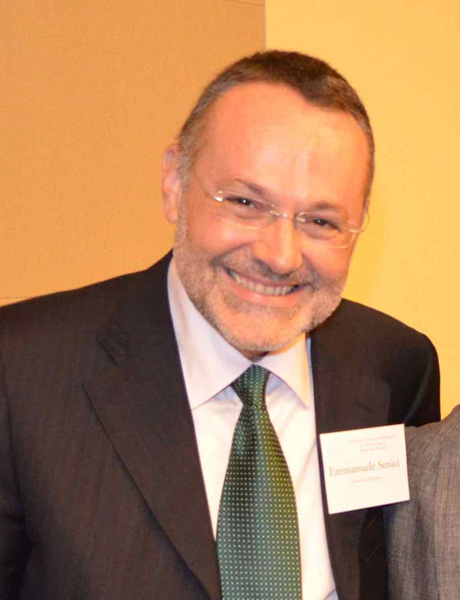
Emanuele Senici is a Full Professor of Music History at Sapienza University of Rome, where he has been teaching since January 2008. Prior to this, he held significant academic positions at the University of Oxford as Reader in Musicology (2006-2007) and University Lecturer in Music (2000-2006), with additional appointments as Tutorial Fellow at St. Hugh's College. His academic career also includes a Junior Research Fellowship at Christ Church, Oxford (1998-2000) and prestigious visiting appointments at King's College London (2009-2023) and Cambridge University (2023). Senici earned his Laurea in Musicology from the University of Pavia (1993), participated in an Erasmus program at King's College London (1992), and completed his MA (1996) and PhD (1998) at Cornell University. His doctoral research focused on Mozart's 'La clemenza di Tito' and its reception in the first thirty years after its premiere. His scholarly work centers on Italian opera of the long nineteenth century, with particular attention to issues of genre, gender, and the historiography of opera. Senici's research explores the intersection of music with broader cultural, political, and technological contexts, examining how opera functions both as historical document and living performance tradition. A significant portion of his recent scholarship investigates opera on screen and in digital media, analyzing how film and television adaptations transform operatic works and their reception. Senici's most recent publications (2023-2025) demonstrate a continued focus on nineteenth-century Italian opera while expanding into new areas of media studies and cultural geography. His work consistently bridges historical musicology with contemporary theoretical frameworks, particularly in gender studies and media studies, showing how historical operatic works remain relevant through modern reinterpretations and adaptations. Leverhulme Visiting Professor (2023) Visiting Professor of Music, King's College London (2009-2023) Edward T. Cone Member, Institute for Advanced Study, Princeton (2006) Jerome Roche Prize, Royal Musical Association (2002) Donald J. Grout Memorial Prize, Cornell University (1997) As an educator, Senici has supervised numerous graduate students and served as Director of Graduate Studies at Oxford. His current teaching at Sapienza includes undergraduate courses on music history and graduate seminars on the medial history of musical theater. He has made significant contributions to academic service through editorial board memberships for major journals including Acta Musicologica, Opera Quarterly, and Il Saggiatore Musicale, and previously served as co-editor of the Cambridge Opera Journal (2003-2008).
Jan Ziolkowski (b. 1956) is Arthur Kingsley Porter Professor of Medieval Latin at Harvard University and served from 2007 to 2020 as Director of the Dumbarton Oaks Research Library and Collection , Harvard’s leading institute for Byzantine, Pre-Columbian, and Garden & Landscape studies. Education A.B. summa cum laude , Princeton University (1977) Ph.D. Medieval Latin, University of Cambridge (1982) – Marshall Scholar Fellow, American Academy in Rome (1980–1981) Research Interests His scholarship centers on Medieval Latin literature and Comparative Literature , with particular attention to folklore and fairy-tale traditions , beast poetry , grammar and sexuality , memory studies , and the classical tradition in the Middle Ages . He has produced critical editions, translations, and wide-ranging monographs that illuminate the intellectual and cultural life of medieval Europe. Across nearly four decades his publications have ranged from Alan of Lille’s Grammar of Sex (1985) to the six-volume Juggler of Notre Dame and the Medievalizing of Modernity (2018), exploring how medieval texts were read, adapted, and remembered. His editorial leadership of the Dumbarton Oaks Medieval Library has further expanded the availability of medieval Latin, Greek, and Old English texts with facing-page translations. Honours & Awards Fellow, American Academy of Arts and Sciences (2010) Fellow, Medieval Academy of America (2008) Member, American Philosophical Society (2017) Corresponding Member, Austrian Academy of Sciences (2006) Member, Academia Europaea (2015) Austrian Cross of Honor for Science and Art, First Class (2015) John Simon Guggenheim Fellowship (1987–1988) Multiple Hoopes Prizes for outstanding thesis direction Advising & Grants At Harvard he has chaired the Department of Comparative Literature , the Committee on Medieval Studies , and the Department of Classics . He has directed numerous senior honors theses recognized by the Hoopes Prize and has held residential fellowships at the Netherlands Institute for Advanced Study (2005–2006) and Villa I Tatti (1992–1993, 1997–1998). Laboratories & Teams As Director of Dumbarton Oaks he oversaw an international community of scholars, librarians, and curators, expanded public programming, and forged partnerships with institutions throughout Washington, D.C. He founded and continues to guide the Dumbarton Oaks Medieval Library , a major series published by Harvard University Press.
Radu Grosu is a Professor at Technische Universität Wien (TU Wien), leading the Forschungsbereich Cyber-Physical Systems . His research focuses on Cyber-Physical Systems (CPS), Machine Learning, and autonomous robotics, with notable contributions to neural network architectures like Liquid Time-Constant Networks (LTC) and their applications in robotics and medical imaging. He is affiliated with the Network Lab and has supervised numerous PhD and Master's students, including Sebastian Michael Bittner, Daniel Scheuchenstuhl, and Sophie Neubauer. His work spans topics such as reinforcement learning, autonomous driving, and IoT ecosystems. Recent projects include developing robust AI systems for healthcare and robotics, such as tumor delineation using PET imaging and neuromorphic IoT architectures for smart villages. Grosu has published extensively on CPS, with over 146 contributions across peer-reviewed journals and conferences. His research emphasizes bridging theory and practice, addressing challenges in safety, scalability, and real-time control in autonomous systems. Key research interests include robotic perception, neural network robustness, and CPS/IoT integration. He has pioneered methods like DeepSTL for translating temporal logic requirements into neural network training objectives and developed frameworks like NimbleAI for neuromorphic sensing-processing systems. His team also explores distributed control algorithms for multi-agent systems, such as flocking drones and formation control using relative distance measurements. Recent work examines the generalization properties of deep filters in CNNs and quantum-classical reinforcement learning models for game AI. Grosu has advised over 20 students on topics ranging from deep learning in wafer defect analysis to bio-inspired neural circuits for auditable autonomy. His lab collaborates on interdisciplinary projects, such as applying AI to battery health estimation and prostate cancer diagnostics. He actively contributes to academic communities, editing special issues on AI in healthcare and CPS resilience, and has organized summer schools on CPS and IoT systems.
Leonhard Summerer is an Associate Professor at the Faculty of Mathematics, Department of Mathematics . His research primarily focuses on Diophantine Approximation , Geometry of Numbers , and Parametric Approximation . His work explores the Approximation Property in parametric settings, Lattice Theory , and Linear Dependence in number theory. Recent publications include studies on Jarník’s identity, simultaneous approximation to multiple reals, and geometric interpretations of number-theoretic problems. He has authored numerous peer-reviewed articles and contributed chapters to educational books such as 77-mal Mathematik für Zwischendurch , emphasizing mathematical outreach and pedagogical innovation . Active in academic discourse, he has delivered talks on topics like Packings and Tilings in Z and Simultane Approximation m reeller Zahlen since 2006.
Cezary Kaliszyk is a Professor in Theoretical Computer Science at the University of Melbourne. His research focuses on automated reasoning, formal methods, and learning for reasoning, particularly in the context of interactive theorem proving and formalized mathematics. He leads the ERC project 'FormalWeb3' and has been involved in several other significant research initiatives. Theoretical Computer Science Automated Reasoning Formal Methods Interactive Theorem Proving Machine Learning for Theorem Proving Formalized Mathematics Proof Guidance Learning for Reasoning His research explores the integration of machine learning techniques with formal reasoning systems to enhance automation in theorem proving. This includes developing systems like CoqHammer and Tactician, advancing premise selection, proof guidance, and learning-based proof search strategies. His work bridges logical foundations with practical AI-driven tools for formal verification. The recent publications demonstrate a consistent focus on advancing automated and interactive theorem proving through learning techniques, formalization of mathematical concepts (like surreal numbers), and improving reasoning systems (e.g., Prover9, tableaux methods). There is a strong emphasis on practical system development, formalization projects, and learning-based enhancements to reasoning. ERC project 'FormalWeb3' - Principal Investigator Cost Action EuroProofNet - WG5 Leader until 2024 FWF project P26201 - developing HOL(y)Hammer Other projects: JSPS P10044, NWO MathWiki, SURF WebDed, ProofWeb He has advised several PhD students to completion, including Michael Färber, Thibault Gauthier, Yutaka Nagashima, Stanisław Purgał, and Liao Zhang, and is currently supervising Daniel Ranalter and Neil Vyas. He has not received any explicitly mentioned scientific awards in the provided text. His work involves leadership in collaborative systems such as ProofWeb and HOL Import, and participation in major formalization efforts including the Mizar library integration with Isabelle. He is actively involved in the development of tool ecosystems for formal mathematics and automated reasoning.
Christina Seeger is a Professor at the Institute of Media and Communication Studies, Alpen-Adria-Universität Klagenfurt. She serves as Deputy Head of Institute and Deputy spokesperson of the HSCM doctoral program, while also contributing to equality initiatives as a Member of the Working Group for Equal Treatment Issues. Research Focus: Political communication, digital conflict analysis, public opinion dynamics, social media effects, and experimental methodology. Key Contributions: Development of frameworks for media effects, disclaimers in digital content, and value-based environmental communication. Recent Trends: Her 2022-2023 work explores misinformation counter-strategies, psychological impacts of social media content, and methodological advancements in media research. Articles analyze Russian-Ukrainian conflict narratives, #MeToo framing effects, and influencer-driven political engagement. Scientific Roles: Active in academic leadership, she contributed to research data guidelines (2020) and international publishing strategies (2015). Her experimental research manuals (2018) are widely referenced.
Harald Wimmer is a Professor at St. Pölten University of Applied Sciences, where he serves as Academic Director of Digital Marketing and Communication (MA), Academic Director of Digital Media Management (MA), and Deputy Academic Director of Marketing and Communication (BA). He leads multiple academic programs within the Department of Digital Business and Innovation, including Digital Marketing (academic), Digital Marketing (MA), and Digital Marketing (MBA). Professor Wimmer's research spans digital marketing, media management, and strategic communication. His work explores consumer behavior in digital environments, advertising effectiveness, PR strategies, and generational marketing approaches. He has developed expertise in both traditional marketing research methods and newer digital analytics approaches. His research bridges theoretical frameworks with practical applications for businesses navigating digital transformation. His publication record shows a clear progression from early work on consumer acceptance of hybrid vehicles and digital camera branding toward contemporary research on digital marketing, social media, and strategic communication. Recent publications focus on Gen Z marketing, gender representation in media, semiotic analysis of advertising, and creative methodologies in communication. Professor Wimmer actively contributes to academic discourse through editorial roles, particularly with the PRaktivium publication series which examines evolving PR practices and the relationship between journalism and public relations. His work demonstrates strong industry connections and practical relevance to current marketing challenges. He has been instrumental in developing academic programs that address the rapidly changing digital marketing landscape, ensuring curriculum relevance through close industry partnerships and practical project work. His leadership extends to student competitions like the Mobile Marketing Rookie Award and Dialog Marketing Rookie initiatives that connect classroom learning with real-world marketing challenges.