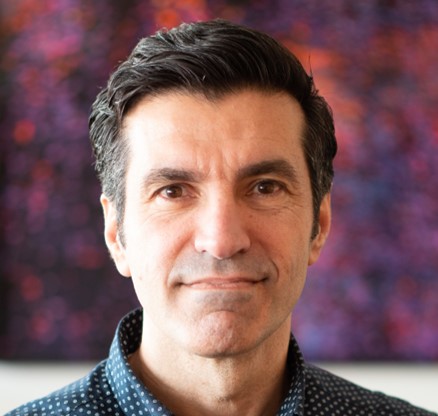
Thomas Elovsson serves as an Adjunct Professor at Konstfack , specifically within the Department of Fine Art . His role focuses on artistic practice and education in the field of visual arts. An email address for direct contact is available as Thomas.Elovsson@konstfack.se. Research Interests Fine Art methodologies Visual culture Contemporary artistic processes Creative experimentation Art education pedagogy
Rolf Lundén serves as Professor at Uppsala University's Department of English, specializing in Modern American literature and interdisciplinary cultural studies. His academic career spans over five decades with significant contributions to short story theory, film adaptation studies, and transatlantic cultural exchange. Lundén maintains active international collaborations through visiting positions at University of Pennsylvania, University of Virginia, UC Berkeley, and Dartmouth American Studies Institute. Education: PhD, Uppsala University (1973) Docent, Uppsala University (1975) Professor Lundén's research centers on narrative structures across literary and cinematic forms, particularly short story composites and episodic films. His scholarly work explores intertextuality in American literature, cultural transmission between America and Scandinavia, and biographical studies of marginalized transnational artists. Current projects include Episodic Fiction and Film: Affinities and Adaptations examining structural parallels between short story cycles and episode films, and Choosing Oblivion: The Divided Life of David Edstrom - a biography of the Swedish-American sculptor who achieved European fame but faded into obscurity after returning to America. His methodology combines close textual analysis with cultural history and reception theory. Lundén's publication record demonstrates consistent scholarly output across multiple formats including monographs, edited collections, and journal articles in venues like American Literature , Modernism/Modernity , and Adaptation . His recent articles (2017-2020) reveal increasing focus on Gertrude Stein's transnational influence, cinematic adaptation processes, and narrative strategies in short fiction. The thematic continuity across his career shows sustained engagement with American cultural production and its global reception patterns, particularly within Scandinavian contexts. Academic Service: Dean of Language Faculty (1999-2002) Visiting Research Scholar at multiple US institutions Contributor to American National Biography Professor Lundén's scholarly impact extends through his editorial work on significant collections including Networks of Americanization and Authority Matters: Rethinking the Theory and Practice of Authorship . His textbook Short Fictions: Stories from the English-Speaking World has shaped English language pedagogy in Sweden. Current research trajectories indicate continued exploration of narrative fragmentation, transnational artistic careers, and American cultural influence in Sweden through ongoing projects and planned publications.
Johan Wikström is a Professor in Neuroradiology at the Department of Surgical Sciences, Uppsala University and Akademiska sjukhuset (Uppsala University Hospital). His research spans multiple domains of medical imaging with a focus on magnetic resonance techniques applied to clinical problems in obstetrics, neurology, and women's health. Wikström's research interests center on advanced MRI applications, particularly in fetal imaging, brain disorders, and vascular conditions. He has made significant contributions to understanding preeclampsia through neuroimaging approaches, examining cerebral changes in this pregnancy complication. His work also extends to premenstrual dysphoric disorder, where he investigates structural and functional brain changes related to hormonal fluctuations. Additionally, he has pioneered techniques in fetal MRI, establishing protocols for second-trimester imaging and developing methods for placental perfusion assessment. The analysis of his recent publications reveals a strong focus on the intersection of artificial intelligence and medical imaging, particularly in neuro-oncology applications. His work demonstrates a clear trajectory toward integrating advanced computational methods with traditional radiological techniques to improve diagnostic accuracy and treatment monitoring. There's also a consistent theme of applying sophisticated MRI techniques to address specific clinical challenges in women's health and neurovascular disorders. Wikström actively collaborates with researchers across multiple disciplines including obstetrics, neurosurgery, psychiatry, and biomedical engineering. His recent work shows increasing integration of AI methodologies with traditional imaging approaches, reflecting broader trends in medical imaging research.
Freddie Lymeus serves as a Researcher at the Institute for Housing and Urban Research and a Visiting Teacher in the Department of Psychology (Clinical Psychology) at Uppsala University. His work bridges environmental and health psychology with a focus on integrating skill-based approaches like mindfulness training with environmental strategies for stress management and human-nature relations. Dr. Lymeus coordinates the Linnaean Collaboration in Studies of Nature, Health and Sustainability, a research initiative applying social and behavioral science within Uppsala's botanic gardens. His research program centers on Restoration Skills Training (ReST), which combines mindfulness practices with intentional engagement in natural environments. He teaches courses in environmental psychology, health psychology, and professional development at the Department of Psychology. Analysis of his publication record reveals a consistent trajectory from theoretical foundations to practical applications of nature-based interventions. His work demonstrates that natural settings significantly enhance compliance with mindfulness training and produce sustained psychological benefits, with particular effectiveness for individuals with attention challenges. The research shows increasing sophistication in understanding individual differences in treatment response. Dr. Lymeus has established the Linnaean Collaboration as a significant research hub connecting academic inquiry with practical applications for public health. His work has generated substantial impact with coverage by multiple news outlets, references in policy documents, mentions in Wikipedia pages, and widespread academic readership across platforms like Mendeley.
Kristina Andersson is a Researcher at the Center for Gender Studies, Uppsala University. Her work focuses on the intersection of gender studies and education, particularly in science education contexts. She is actively involved in research examining gendering processes in preschool and teacher education settings. Her research interests include: Gendering processes in science education Feminist pedagogy in teacher training Preschool science education and documentation practices Borderland theory in interdisciplinary education Gender awareness in science teaching and learning Andersson's publication record from 2014-2024 demonstrates a consistent focus on how gender operates in educational spaces, particularly in science contexts from preschool through teacher education. Her work frequently examines the tensions between disciplinary knowledge and gender perspectives, highlighting what she terms 'chafing borderlands' where these perspectives meet. Recent publications show increasing attention to visual documentation practices in preschools and the representation of children in educational materials. Her collaborative research with colleagues like Anita Hussenius, Annica Gullberg, and Anna Danielsson has formed a significant body of work on gender and science education, appearing in respected journals across multiple disciplines including Gender and Education, Research in Science Education, and Cultural Studies of Science Education. As an educator and researcher, Andersson works at the intersection of theory and practice, developing approaches to integrate gender perspectives into science teaching while addressing implementation challenges faced by educators.
Marco Adelfio is an Associate Professor in Applied Urbanism at Chalmers University of Technology, specifically within the Department of Urban Design and Planning under the School of Architecture and Civil Engineering. His academic work focuses on the intersection of urban planning, social sustainability, and participatory processes in diverse urban contexts. Dr. Adelfio's research centers on multi-stakeholder processes and knowledge co-production that contribute to socially sustainable development across urban, suburban and rural areas. He has developed expertise in collaborative pedagogy within urban design and community architecture, participatory GIS methodologies, and examining how humans and non-humans mediate the local translation of circulating knowledge. His work often addresses the practical implementation of compact city models while considering social equity dimensions and context-specific adaptations of planning ideals. Analysis of his recent publications reveals consistent engagement with digital tools for participatory planning, compact city development, and sustainable urban transformation. His research demonstrates a strong interdisciplinary approach, connecting urban planning with environmental considerations, social inclusion, and technological innovation. Key thematic areas include stakeholder engagement in brownfield redevelopment, the integration of cultural values in digital planning tools, and examining the social dimensions of mobility transitions including connected and autonomous vehicles. Dr. Adelfio leads and participates in multiple research projects funded primarily by Formas, Sweden's research council for sustainable development. His collaborative work extends across disciplines and institutions, particularly with the University of Gothenburg and other Swedish universities. His projects often involve multi-stakeholder approaches to address complex urban challenges through co-creation frameworks.
Alexandros Sopasakis serves as an Associate Professor in the Department of Mathematics within the Faculty of Engineering at Lund University. Additionally, he holds dual roles as Application Expert for national research infrastructures CIPA (Correlative Image Processing and Analysis) and InfraVis (National Research Infrastructure for Data Visualization). His research expertise spans Mathematical Computer Vision and Machine Learning, with specialized focus on Machine Learning-based segmentation and annotation tool development. Current projects include segmenting glomeruli from synchrotron X-ray microtomography datasets and investigating diabetes through rat models with specific genetic mutations, revealing consistent organ enlargement regardless of gender or blood sugar levels. His work bridges theoretical mathematics with practical medical imaging applications in biological research. No scientific awards were documented in the source material. Similarly, graduate student mentorship details and research grant information remain unspecified. Dr. Sopasakis actively contributes to national research ecosystems through CIPA and InfraVis, providing critical expertise in image processing pipelines and data visualization solutions for complex scientific datasets.
Kalle Åström is a Professor at Lund University and serves as an application expert for the InfraVis project, focusing on infrastructure visualization applications. His research spans Artificial Intelligence with specialized expertise in Computer Vision , Machine Learning , and Image Processing . He applies these disciplines to infrastructure analysis, demonstrating extensive experience in developing and implementing AI-driven visualization tools for complex infrastructure systems. As an InfraVis application expert, he bridges theoretical AI research with practical infrastructure management solutions, emphasizing tool development for real-world engineering challenges.
Helene Dahlström serves as Senior Lecturer at Mid Sweden University's Department of Education in Sundsvall, holding a PhD with active research in literacy development, digital multimodality, and multilingual education. Her work spans preschool through higher education contexts with significant contributions to teacher training frameworks. Her research focuses on literacy acquisition in digital environments , examining how students utilize multimodal resources in text creation and how digital tools impact writing processes. Key interests include multilingual student agency, diversity awareness in educational settings, and social-emotional learning integration. Recent projects like HAND in HAND develop strategies for inclusive classrooms across European contexts. Analysis of her 15 most recent publications reveals consistent exploration of multimodal literacy across age groups, with growing emphasis on AI integration challenges for multilingual students and diversity-aware pedagogical frameworks . Her work bridges theoretical research with practical classroom applications, particularly in Swedish educational settings. Dahlström actively contributes to teacher development through projects fostering social-emotional competencies and critical consciousness. Her editorial work includes co-editing the 2021 special issue Didaktiska reflektioner - reflektioner om didaktik and developing the HAND:ET Programme for European teacher training. Her research methodology emphasizes student perspectives, examining agency in digital tool usage and meaning-making processes in multimodal compositions. Current work investigates AI's role in academic literacy development for second-language learners, reflecting evolving technological challenges in contemporary education.
Janina Neufeld is a Principal Researcher and Docent at Karolinska Institutet, where she is affiliated with the Department of Women's and Children's Health and the Center of Neurodevelopmental Disorders (KIND). She leads her own research team focusing on synesthesia, autism, and perception, and is also part of Sven Bölte's research group on autism, ADHD, and other neurodevelopmental conditions. Dr. Neufeld earned her PhD in Human Neuroscience from Hannover Medical School (2012), followed by postdoctoral training at the Center of Neurodevelopmental Disorders at Karolinska Institutet (2014-2018) and the University of Reading (2012-2014). Her research focuses on neural correlates and behavioral markers of Autism Spectrum Condition (ASC) and ASC-related symptoms, with particular interest in biomarkers of symptom severity, social cognition deficits, altered reward functioning, and sensory processing in ASC. Since 2019, she has led a project investigating the link between ASC and synesthesia using twin studies. As a Pro Futura Scientia fellow, she is also studying associations between synesthesia and various mental health conditions including obsessive-compulsive disorder. Her methodological expertise includes Magnetic Resonance Imaging, Eye-Tracking, Electromyography, and Psychophysics. Her research frequently employs twin study designs to disentangle genetic and environmental influences on neurodevelopmental conditions. Analysis of her recent publications reveals strong emphasis on co-twin control methodologies to address familial confounding, with research spanning brain connectivity in autism, sensory processing differences, and the relationship between synesthesia and neurodevelopmental conditions. Principal Researcher, Department of Women's and Children's Health, Karolinska Institutet (2022-present) Docent, Karolinska Institutet (2024) Treasurer for Junior Faculty, Karolinska Institutet (2022-present) Research team leader, Team Neufeld, Karolinska Institutet (2022-present) Member, Junior Faculty Steering Group, Karolinska Institutet (2022-present) Guest editor, Scientific Reports (2022) Dr. Neufeld has secured multiple competitive grants from the Swedish Research Council and the Bank of Sweden Tercentenary Foundation. Her work has significant clinical implications for identifying new biomarkers and interventions for autism while advancing fundamental understanding of human perception and neurodevelopment. She mentors PhD students Yating Huang and Hjalmar Nobel Norrman in her research team.
Charlotta Kvarnemo is a Professor in the Department of Biology and Environmental Sciences at the University of Gothenburg. Her research focuses on evolutionary biology and behavioral ecology, particularly in fish species. She leads the Kvarnemo Lab, which investigates various aspects of reproductive behavior, sexual selection, and parental care in marine environments. Professor Kvarnemo's research spans evolutionary biology, behavioral ecology, and marine science with emphasis on sexual selection mechanisms, reproductive strategies, and environmental influences on mating behaviors. Her work primarily examines how factors like salinity gradients, anthropogenic noise, and sex ratios affect reproductive success in fish, particularly gobies and pipefish. She investigates both male and female competition, mate choice processes, and the physiological basis of reproductive traits. Her research combines field observations with controlled experiments to understand evolutionary adaptations in reproductive systems. Analysis of Professor Kvarnemo's recent publications reveals a consistent focus on sexual selection theory, particularly examining how environmental constraints shape mating behaviors and reproductive outcomes. Her work challenges traditional assumptions about sex roles, demonstrating complex female competition and signaling behaviors. A significant portion of her research investigates the interplay between natural and sexual selection in determining reproductive strategies, with particular attention to nest-building behavior, parental care systems, and sperm competition. She has made important contributions to understanding how environmental stressors like noise pollution and salinity changes impact reproductive success in marine organisms. Professor Kvarnemo actively collaborates with researchers internationally and contributes to large-scale initiatives in marine evolutionary biology. Her work has practical implications for understanding invasive species dynamics, conservation biology, and the impacts of environmental change on marine ecosystems. She is also involved in science communication efforts, advocating for biologists to contribute to Wikipedia to improve public access to scientific knowledge. Professor Kvarnemo leads the Kvarnemo Lab at the University of Gothenburg, which maintains a multidisciplinary research approach combining behavioral observations, physiological measurements, and molecular techniques. The lab focuses on evolutionary ecology questions related to reproductive behavior in marine environments, with particular expertise in goby and pipefish species that exhibit diverse mating systems including sex role reversal. The research group investigates how environmental factors influence reproductive decisions and success, contributing to fundamental understanding of evolutionary processes while addressing contemporary ecological challenges.