Paolo Medini is an Associate Professor at Umeå University, affiliated with the Department of Medical and Translational Biology and the Center for Transdisciplinary AI. His research focuses on cortical microcircuits, sensory processing, and brain recovery mechanisms. Neuroscience Neurophysiology Cortical Plasticity Optogenetics His lab investigates how sensory information is processed by distinct cell types in cortical circuits and how these circuits adapt after brain lesions or sensory deprivations. Research spans both adaptive and maladaptive plasticity, aiming to differentiate molecular mechanisms for targeted interventions. Recent publications highlight applications of all-optical interrogation strategies and multisensory integration in the neocortex. Paolo Medini's group employs advanced techniques such as in vivo patch clamp recordings, two-photon calcium imaging, and optogenetics. They use genetically modified strains to study cell-type-specific responses and circuit reorganization post-lesion. Their work is critical for developing therapies in neurodegenerative diseases and cortical repair. Environmental enrichment for brain recovery (Nature Neuroscience) Cortical microcircuit organization (Neuron) Post-stroke plasticity (Journal of Physiology)
Karin Edberg is an Assistant University Lecturer at Theme Technology and Social Change (THEME) within the Department of Theme (TEMA) at Linköping University since 2020. Her work focuses on the intersection of social practices, energy systems, and urban planning, with particular expertise in nuclear heritage and sustainable mobility transitions. Dr. Edberg received her PhD in Sociology from Södertörn University, where her dissertation examined how global energy dilemmas become place-bound through physical infrastructure locations. Her academic journey includes previous positions at Uppsala University (Department of Geosciences, Wind Energy Section) and Örebro University (Department of Humanities, Educational and Social Sciences, Environmental Sociology). Her research explores how everyday practices arise, change, and are maintained in relation to energy transition and mobility. She investigates the relationship between practice and policy with focus on class and power dimensions, examining both static and dynamic understandings of practices. Current projects include studying mobility beyond the car with emphasis on municipal planning's role in transition, and cultural heritage processes related to nuclear power decommissioning. Her work spans multiple dimensions of societal transformation, particularly in how climate and sustainability discourses interact with infrastructure development. Her recent publications reveal consistent themes across sociology, environmental studies, and urban planning, with increasing focus on nuclear heritage and micromobility. The trajectory shows movement from broader energy landscape studies toward more specific investigations of children's engagement with decommissioned sites and the infrastructural components of emerging mobility practices like e-biking. Dr. Edberg actively contributes to interdisciplinary research through projects including STRIPE (Sociotechnical Research on Infrastructures, Politics and Environment), NuSPACES (Nuclear Spaces), and research on governance of urban micromobility in Swedish municipalities. Her work connects environmental sociology with practical urban planning challenges. As an educator, she teaches across the Urban Planning Bachelor's Program and the Master's Program in Strategic Urban and Regional Planning. She serves as course coordinator for Project Work, Internship, and Individual In-depth Study in Strategic Urban Planning, and contributes to career portfolio development for master's students. Her teaching directly connects with her research interests in sustainable urban development and societal transformation. She works within several research environments including the Profile Area Social Transformations, which addresses societal challenges through holistic approaches considering multiple dimensions. Her research group STRIPE brings together scholars interested in infrastructure's political and ecological dimensions, conducting interdisciplinary research on how climate discourses interact with infrastructure emergence.
Frida Heskebeck is a Doctoral student at the Department of Automatic Control , Lund Institute of Technology , Lund University , and a member of the LTH Profile Area: AI and Digitalization . She actively contributes to the research group on EEG-based Brain-Computer Interfaces (BCI) led by Prof. Bo Bernhardsson . Research Focus: Optimization of next-generation BCI using cloud computing and individualization of real-time systems. Teaching: Delivers lectures, webinars, and lab sessions for courses like Process Control and Systems Engineering (2024), Physiological Models and Computations (2023), and Automatic Control (2021, 2020). Awards: Recipient of the Pedagogical Prize for best teaching assistant in 2021 (M-guild and W-guild) and Best Master's Thesis in 2020. Research Trends: Her recent articles focus on BCI calibration, real-time control, and cloud integration. Broad keywords include Control Engineering , Machine Learning , and Neuroscience , with sub-fields like Domain Adaptation , Signal Processing , and Online Teaching . Scientific Distinctions: Teaching assistant of the year (awarded by the M-guild) 2021 Teaching assistant of the year (awarded by the W-guild) 2021 Best Master's Thesis 2020 Advising and Collaborations: Supervision of master's theses for Tom Andersen (2021) and Johanna Wilroth (2020), where the latter received a scholarship. She also held roles in the department's board and organized seminars like the AI Lund lunch seminar in 2024.
Shafiullah Soomro serves as Associate Professor in the Department of Artificial Intelligence at Quaid-e-Awam University of Engineering Science and Technology, Pakistan. He completed his Ph.D. in Application Software from Chung-Ang University, South Korea (2018), where he was honored as Best PhD Graduate. Ph.D., Application Software, Chung-Ang University (2018) His research spans medical image segmentation, computer vision, and AI applications in environmental monitoring. Specializing in automatic segmentation techniques using machine learning, he combines theoretical frameworks with practical biomedical implementations. Recent work integrates Swedish National Forest Inventory data with airborne laser scanning for forest attribute prediction. Current research projects include ForestMap (global forest cartography), AI-driven tree volume measurement (Sweden-Brazil collaboration), and machine learning models for predicting mechanical properties of oxynitride glasses. Best PhD Graduate, Chung-Ang University Dr. Soomro has mentored multiple MS students across Korea and Pakistan while supervising 2 Master's and 1 PhD students currently. His teaching portfolio includes 11 undergraduate, 2 MS, and 1 PhD courses such as Artificial Intelligence, Digital Image Processing, and Advanced Image Processing/Computer Vision. He actively contributes to academic curriculum design and research community development within the Computer Science and Artificial Intelligence department.
Jon Viklund is a Senior Lecturer in Rhetoric and an Associate Professor in Literary Studies at Uppsala University's Department of Literary Studies and Rhetoric. He currently serves as Head of the Department of Literary Studies, overseeing academic operations while maintaining an active research profile. His work bridges literary studies and rhetoric with a focus on Swedish and Nordic contexts. Dr. Viklund's research interests encompass political rhetoric, history of rhetoric, romantic literature, edition philology, genetic criticism, and studies of major Swedish literary figures including Gunnar Ekelöf, August Strindberg, and CJL Almqvist. His scholarly approach often connects literary creation processes with rhetorical structures, demonstrating an interdisciplinary methodology that spans traditional humanities fields. His recent publications reveal a strong emphasis on contemporary political rhetoric in Sweden, with particular attention to populist styles, ritualization in politics, and historical development of rhetorical concepts. The 2023-2024 articles show his engagement with current political discourse while maintaining his foundational work in literary studies. His research demonstrates a clear trajectory from traditional literary scholarship toward contemporary political applications. As Head of Department, Viklund has been instrumental in developing rhetoric education through the "Norden og verden" project, which aims to strengthen rhetoric skills in upper secondary schools across Sweden and the Nordic countries, organize speech festivals, and build a comprehensive Swedish speech database. His work with digital methods for literary research shows his commitment to advancing methodological approaches in the humanities.
Ann Lantz is a Professor and Head of School at KTH Royal Institute of Technology, working within the School of Electrical Engineering and Computer Science. She specializes in Human-Computer Interaction with a focus on behavioral science. Research areas: email systems, digital meeting systems, procurement processes, accessibility design, challenge-driven education Affiliation: KTH Royal Institute of Technology, School of Electrical Engineering and Computer Science Contact: alz@kth.se Her scholarly work examines: Accessibility for cognitively disabled users in digital communication Challenge-driven education models in global contexts Procurement processes in interaction design Remote collaboration tools and digital work environments Publications show strong trends in: Usability and accessibility research International education collaborations Workplace technology evaluation Design for cognitive disabilities
Hans Samuelsson is a Lecturer in the Department of Psychology at the University of Gothenburg, with a research focus on clinical neuropsychology. Born in 1955, he received his Ph.D. in Psychology in 1997 and has been a university lecturer since 1999. He also maintains research connections with Sahlgrenska University Hospital's Department of Clinical Neuroscience. His research interests center on the relationship between brain injury and cognitive/behavioral changes, with particular emphasis on conditions following right-sided strokes including visuospatial neglect, altered visual attention, anosognosia, and visual scanning patterns. His work spans from acute to long-term (7+ years) post-stroke outcomes. Dr. Samuelsson's recent publication record through 2025 shows consistent research output in stroke recovery, cognitive outcomes, and neuropsychological assessment. His work frequently appears in journals like Acta Neurologica Scandinavica, European Journal of Neurology, and Stroke, with a growing emphasis on long-term trajectories and biomarkers of recovery. His research methodology combines clinical assessment with longitudinal study designs, often collaborating with multidisciplinary teams across institutions. Current projects include the FIND Stroke Recovery Study examining recovery trajectories and biomarkers post-stroke. Dr. Samuelsson has maintained an active research program for over 25 years since completing his doctorate, with publications spanning from 1988 to the present. His work has evolved from focused studies on specific neuropsychological phenomena to broader investigations of long-term stroke recovery and quality of life outcomes.
Andreas Stenling serves as Associate Professor in the Department of Psychology at Umeå University, Sweden. His academic profile spans work and organizational psychology, health psychology, and sports psychology. He actively contributes to multiple research ecosystems through affiliations with Umeå University's CoLeadR Research Group, AI and society Group, Sport physical activity and health psychology Group, and Work organisation and society Group. Professor Stenling's research program centers on four interconnected domains: leadership-work environment-health relationships; physical activity-health connections; sport psychology (including injury prevention and mental health); and motivational processes across life contexts. His interdisciplinary approach bridges organizational behavior, public health, and sports science, employing longitudinal designs, randomized controlled trials, and innovative real-time assessment methods to generate actionable insights for improving workplace well-being and athletic performance. Recent publications (2024-2025) reveal strong emphasis on applied research with societal impact, particularly in occupational health interventions, cancer rehabilitation, and youth sports development. His work consistently examines psychological mechanisms underlying health behaviors, using advanced methodologies like ecological momentary assessment and latent profile analysis to capture dynamic processes in natural settings. Professor Stenling maintains robust research funding through multiple active projects spanning 2019-2029, including investigations into remote work dynamics, leadership development, sport injury prevention, and mental health interventions. His collaborative approach involves partnerships across disciplines and institutions, ensuring comprehensive resources for student training and research infrastructure development. Through Umeå University's research groups, he fosters an environment where students explore intersections of technology, human behavior, and health. Current initiatives like the WAYA-2 wilderness program for young cancer patients and youth sports interventions provide practical training grounds for emerging researchers, emphasizing real-world problem solving and societal contribution.
Håkan Jonsson is a Senior Lecturer at Luleå University of Technology, working within the Department of Computer Science, Electrical and Space Engineering. His academic appointment is specifically in the Computer Science division, where he focuses on Dependable Communication and Computation Systems as his primary research subject. Dr. Jonsson's research spans two complementary domains: educational methodologies in computer science education and technical computer science research. His educational work explores innovative teaching approaches including flipped classrooms, peer discussion techniques, and just-in-time teaching methods, particularly in programming education. His technical research encompasses image analysis, morphological filtering, and data structuring techniques with applications in materials science and personal data management. His publication record shows consistent output across multiple venues, with recent work appearing in IEEE Frontiers in Education Conference proceedings and Pattern Recognition journal. His research demonstrates both theoretical rigor and practical application, particularly in bridging educational theory with classroom implementation. As a Senior Lecturer, Dr. Jonsson likely plays a significant role in curriculum development and teaching within the computer science program, with particular expertise in programming education and dependable systems.
Jasmina Toromanovic is an Assistant University Lecturer in the Department of Civil Engineering and Natural Resources at Luleå University of Technology. Her primary research focuses on geotechnical engineering, specifically the monitoring and modeling of embankment dams. She investigates seepage patterns, internal erosion mechanisms, and strain behavior using advanced techniques like electrical resistivity tomography and physical modeling with transparent materials. Her key research interests include: Geotechnical monitoring and instrumentation Seepage modeling in earth structures Internal erosion processes in dams Physical modeling of geotechnical systems Dam safety and risk assessment Recent publications (2024-2025) demonstrate her focus on integrating field monitoring data with computational models to improve dam safety. Her doctoral thesis centered on comprehensive monitoring approaches for embankment dams, while subsequent work has explored novel erosion visualization techniques and multi-sensor data integration. She collaborates with Lund University and industry partners like Vattenfall AB on applied research projects.
Dennis Augustsson is a Lecturer at Malmö University's Faculty of Culture and Society, Department of Arts, Culture and Communication. His primary affiliation is with the Literacy and Inclusive Teaching (LIT) Research Center, where he conducts interdisciplinary research on educational media. Augustsson's work bridges design, pedagogy, and media production, with media literacy as a central research pillar. His research examines how media production serves as pedagogical tools in diverse educational settings. Key focus areas include: Film production as experiential learning Activity theory in educational contexts Boundary-crossing between theory and practice Collaborative academic writing processes Visual communication pedagogy Recent publications (2024-2025) demonstrate consistent themes in media literacy innovation, particularly exploring film production's role in social studies education and theoretical frameworks for media-enhanced learning. His scholarly output reflects strong engagement with contemporary pedagogical challenges at primary, secondary, and tertiary education levels.
Jonas Ahnmé serves as Senior Lecturer and Head of the Bachelor Education in Industrial Design at Konstfack University of Arts, Crafts and Design. He also coordinates the Master of European Design (MEDes) program within the Department of Design, Interior Architecture and Visual Communication. With an MFA degree, Ahnmé brings extensive professional experience to his academic role, having worked at Björn Dahlström Design after graduating in 2000 and later establishing his own design practice, Ahnmé Design, in 2003. His research interests focus on artistically driven inclusive design and collaborative design processes that actively engage diverse contexts and communities. Ahnmé's work integrates practical design knowledge with pedagogical expertise, emphasizing collaborations that range from student-driven projects with municipalities to workshops with refugees and co-creation initiatives with elementary school children. His recent work includes software development applications like the Kolormondo app, which visualizes color space as an interactive globe. As an educator, Ahnmé has led significant collaborative projects including a 2018 initiative where Industrial Design and Interior Architecture students explored migration themes through fieldwork in Lesbos and Athens. His teaching philosophy emphasizes engaging with real-world contexts throughout the design process.
Farhad Nassirov is a faculty member in the Teacher Education Program in Visual Arts at Konstfack University of Arts, Crafts and Design, Stockholm. His research focuses on the intersection of identity and society through popular culture studies, examining factors affecting identity construction and formation processes. His project Identities vs. Society analyzes societal influences on individual and collective identity development within contemporary cultural contexts. Nassirov's work bridges visual arts pedagogy with critical sociological inquiry, emphasizing how artistic expression mediates identity negotiation in modern society.
Imre Szilard Gango is a Lecturer in the Teacher Education Programme in Visual Arts at Konstfack, University College of Arts, Crafts and Design in Stockholm, Sweden. Born in Sweden in 1976, he specializes in art education with emphasis on digital media and remote teaching methodologies. His research focuses on the challenges of delivering quality art education through distance learning platforms, particularly examining assessment methods for visual arts in remote settings. Gango's work bridges traditional art education with contemporary digital practices, maintaining his professional motto that 'the bigger the better' when working with high-resolution images. His recent degree project 'In the Path of Distance Education' analyzes difficulties in observing, understanding and fairly evaluating students' artistic work in remote learning environments. This research combines photographic documentation with audio installations to create multi-sensory educational experiences that address pandemic-era teaching challenges. Gango maintains an active artistic practice with recent exhibition running from May 21-27, showcasing his photographic work. His professional digital presence includes gangofoto.se and Instagram (@szilardgango), where he shares his artistic process and educational insights.
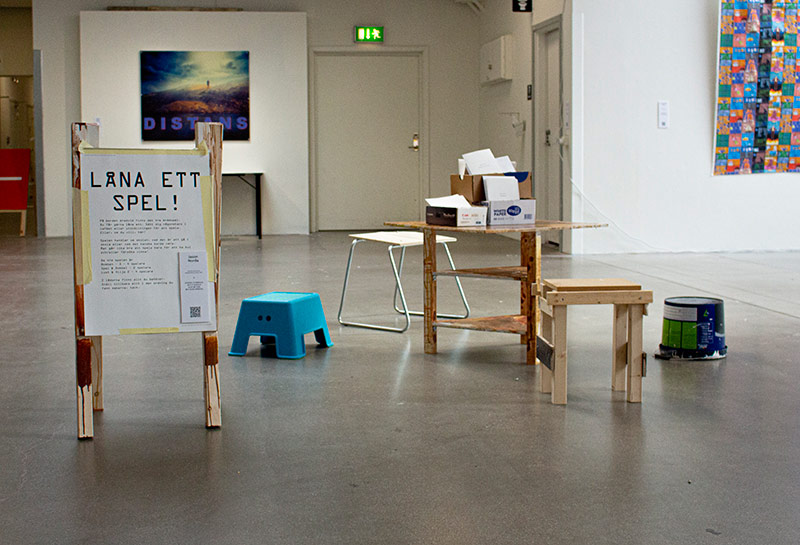
Jason Norda is a Lecturer in the Teacher Education Programme in Visual Arts at Konstfack University of Arts, Crafts and Design, Sweden. Born in 1986, he specializes in reimagining pedagogical frameworks for art education through experimental collaborations with upper-secondary school students. His research investigates the philosophical dimensions of becoming , knowing , trust , and risk within educational processes. Norda develops methodologies to visualize knowledge creation and assessment while revitalizing virtual learning environments, challenging conventional boundaries between seriousness and playfulness in academic settings. Current work focuses on student-driven inquiry into collective learning objectives and implementation strategies. Norda maintains an active artistic practice alongside his academic work, recently exhibiting from May 21-27 as reflected in institutional communications. His professional website (www.jasonnorda.se) documents the intersection of his pedagogical experiments and visual arts practice.