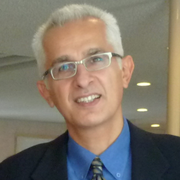
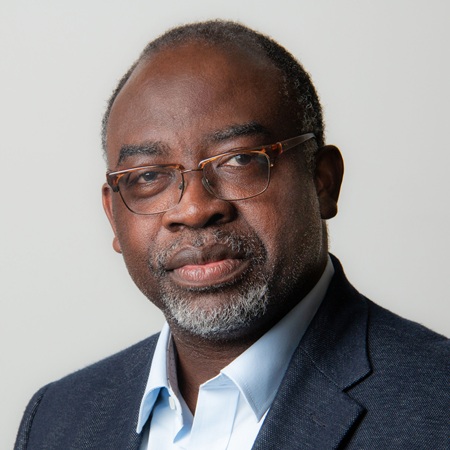
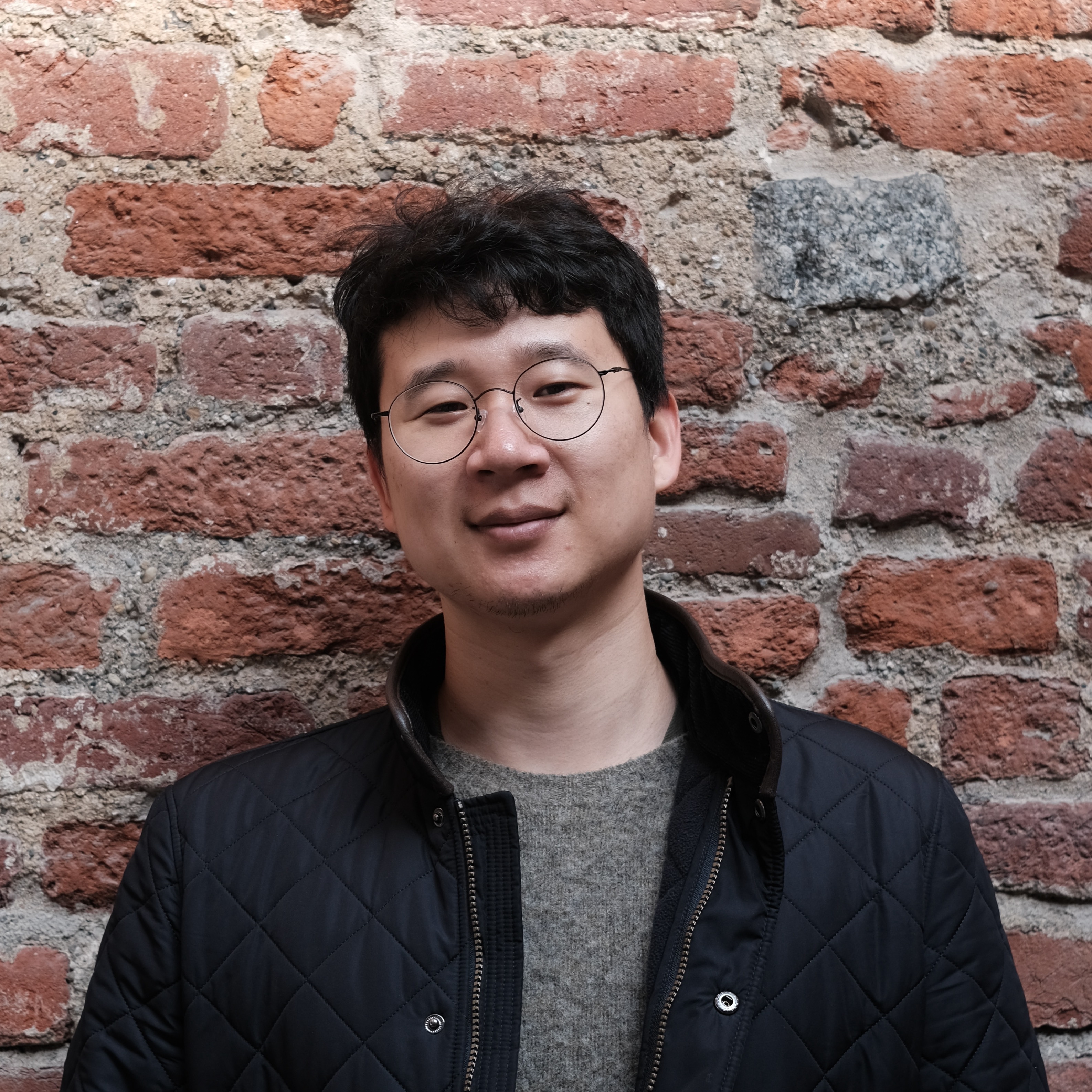
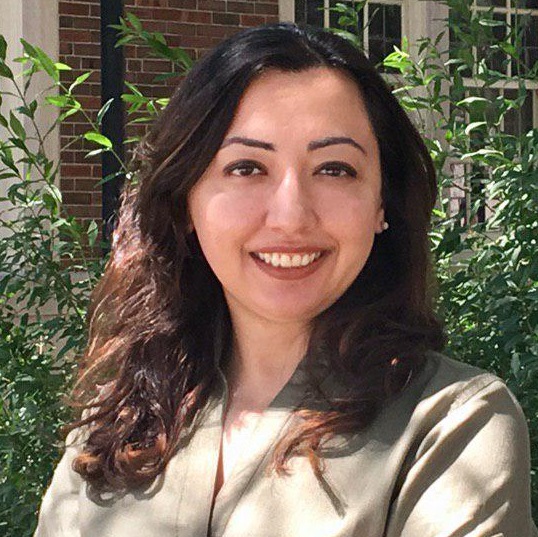
Professor Thomas Lukasiewicz is a Full Professor and Head of the Artificial Intelligence Techniques research group at the Faculty of Informatics, Vienna University of Technology (TU Wien). His research focuses on enabling machines to mimic human-like intelligence through techniques spanning deep learning, symbolic reasoning, and predictive coding. Key areas include explainable AI, hybrid neurosymbolic systems, and applications in healthcare and law. He teaches courses such as Deep Learning for Natural Language Processing, Scientific Research and Writing, and multiple seminars in artificial intelligence and knowledge representation. His research projects include Explainable AI in Healthcare (2023–2027) and foundational work on predictive coding networks. His publications (15+ recent articles) address medical image segmentation, neurosymbolic frameworks, and language model evaluation in mathematics. Notable work includes neurosymbolic hybrid models (CCN⁺), reinforcement learning for medical report generation, and theoretical foundations of predictive coding networks.
Dr. Kamran Sedig serves as a Professor in the Department of Computer Science and the Faculty of Information and Media Studies at Western University, where he directs the Insight Lab. His research focuses on designing interactive technologies to enhance human cognitive activities involving data and information, including decision making, problem solving, and learning across domains like healthcare, finance, and scientific discovery. His academic credentials include: Ph.D. in Computer Science (Human-Computer Interaction) from The University of British Columbia under Prof. Maria Klawe, with dissertation nominated for the Governor General’s Gold Medal M.Sc. in Computer Science (Artificial Intelligence) from McGill University under Prof. Renato De Mori B.Sc. in Computer Engineering and Science from Concordia University as Valedictorian with The Most Great Distinction Sedig’s research synthesizes computer science, information science, cognition theory, and game studies to develop frameworks for interactive visual tools (IVTs). He investigates human-data interaction, visual reasoning, and interactivity design to support complex cognitive tasks like medical diagnosis, financial analysis, and scientific exploration. His human-centered approach emphasizes how computational tools and humans form coordinated cognitive systems for optimal task execution. Analysis of his recent publications reveals dominant trends in health informatics applications (drug safety analytics, electronic health records) and foundational work on human-information interaction frameworks. His visual analytics systems consistently bridge theoretical models with practical tools for ontology exploration, document triage, and explainable AI, demonstrating strong interdisciplinary collaboration across medical and computational domains. Key recognitions include: Governor General’s Gold Medal nomination for doctoral research Valedictorian honors at Concordia University As Insight Lab director, Sedig mentors graduate students through courses like Human-Computer Interaction, Information Visualization, and Design of Digital Cognitive Games. His teaching philosophy emphasizes how cognitive technologies mediate human thinking processes in professional and private contexts. While specific grant details aren’t provided, his lab’s sustained output in health analytics and visual interfaces indicates robust research funding. The Insight Lab operates as a collaborative hub for developing and evaluating IVTs, with current projects including VICTORIOUS for document scoping reviews and VISEMURE for multimorbidity analysis. Sedig’s team prioritizes empirical validation of how interaction design affects cognitive load and task efficiency in real-world data-intensive environments.
Zsolt Kira serves as an Assistant Professor in the School of Interactive Computing at Georgia Institute of Technology's College of Computing, with additional affiliations at the Georgia Tech Research Institute and as Associate Director of ML@GT. He leads the Robotics Perception and Learning (RIPL) Lab, driving research at the intersection of machine learning and robotics. Dr. Kira earned his Ph.D. in 2010 under Professor Ron Arkin, establishing foundational expertise in robotics and AI before transitioning to his current academic role after industry experience at SRI International Sarnoff. His research pioneers beyond supervised learning through unsupervised, semi-supervised, self-supervised, and continual/lifelong learning frameworks, while advancing distributed perception via multi-modal fusion and cross-robot information integration. This dual focus addresses core challenges in robotic autonomy and sensor processing. Analysis of his 15 most recent publications reveals dominant trends in embodied AI systems, robust foundation model adaptation, and multimodal learning architectures. Key themes include neural radiance field applications, reinforcement learning for locomotion, and novel benchmarks for memory evaluation in agents. While specific advisees and grants aren't documented in the source material, his RIPL Lab leadership implies active graduate mentorship and research funding acquisition. The lab's work directly enables next-generation robotic systems through algorithmic innovation in perception and learning. The RIPL Lab operates as a hub for developing machine learning techniques that solve difficult perception problems in robotics, with particular emphasis on unsupervised learning paradigms and distributed multi-robot systems that push the boundaries of autonomous operation.
Juergen Schmidhuber is Associate Professor at the Faculty of Informatics of Università della Svizzera italiana and a leading researcher at the Dalle Molle Institute for Artificial Intelligence (IDSIA USI-SUPSI). He is also Chief Scientist at NNAISENSE, a company dedicated to building practical general-purpose AI. His work has profoundly influenced modern artificial intelligence, particularly through the development of Long Short-Term Memory (LSTM) networks in 1991, now deployed across billions of devices for speech recognition, machine translation, and virtual assistants. His research interests span Artificial Intelligence, Deep Learning, Recurrent Neural Networks, Universal AI, Meta-Learning, Algorithmic Information Theory, Artificial Curiosity, Robotics , and Low-Complexity Art . He has pioneered mathematically rigorous frameworks for self-improving AI systems and formal theories of creativity and beauty. His work bridges theoretical foundations with real-world applications in computer vision, natural language processing, and autonomous robotics. The recent articles reflect a consistent trajectory of innovation, combining deep theoretical insights with scalable machine learning architectures. His publications emphasize sequence modeling, universal learning, intrinsic motivation, and computational creativity , demonstrating both foundational contributions and industrial impact. From LSTM to Goedel machines, his work consistently targets the long-term goal of self-improving general AI. Scientific Awards: Numerous awards in AI and machine learning (specific names not listed) Schmidhuber leads a research group at IDSIA, where he mentors students and researchers in advancing the frontiers of AI. His lab has secured significant recognition and industrial collaboration, though specific grants are not detailed. He promotes the 'New AI'—general, sound, and relevant to physics—and continues to explore the convergence of intelligence, computation, and the universe. Labs and Teams: Dalle Molle Institute for Artificial Intelligence (IDSIA USI-SUPSI) NNAISENSE (as Chief Scientist)
Dr. Adegboyega Ojo is a Professor at the School of Public Policy and Administration (SPPA), Carleton University , holding the prestigious Canada Research Chair (Tier 1) in Governance and Artificial Intelligence since 2014. His work bridges digital government , AI governance , and smart city development , with a focus on public sector innovation and policy analytics . Research Interests Smart Cities and Urban Digital Infrastructure Open Government Data and Transparency Blockchain Applications in Public Administration AI Ethics and Algorithmic Governance Electronic Participation and Citizen Engagement Publication Trends : His research emphasizes interdisciplinary approaches to digital governance, often involving data-driven policy analysis , smart city frameworks , and open data platform design . Collaborations span institutions in Ireland, Poland, and the U.S., with citations exceeding 5,200. Scientific Awards : Canada Research Chair in Governance and AI (Tier 1) Labs & Teams : Collaborates with the Insight Centre for Data Analytics (Ireland), Delft University of Technology , and United Nations University on projects like OpenGovIntelligence and BOLD (Big and Open Linked Data).
Dr. Tan Viet Tuyen Nguyen is a New Frontiers Fellow (Lecturer) in AI at the University of Southampton, specializing in Human-Centered Artificial Intelligence and Social Human-Robot Interaction. His research focuses on multimodal learning for robots to adapt their behavior to human social needs, with applications in healthcare, education, and service environments. Prior to this role, he was a Research Associate at King’s College London and a Research Assistant on the EU-funded CARESSES project, developing culturally-aware assistive robots for elderly support. Education: PhD in Information Science (Robotics) from Japan Advanced Institute of Science and Technology. He has organized conferences such as the IEEE RO-MAN 2022 special session on nonverbal communication and served as a reviewer for top-tier robotics and AI conferences. Research Interests include: Human-Robot Collaboration, Multimodal Perception, Generative AI for Social Interaction, and Context-Aware Robot Behavior Generation. His work has been recognized with awards including the Best Paper Award at ROMAN 2022 and the Prospective Research Award at ICServ 2023. Teaching Responsibilities include courses on Biologically Inspired Robotics, High-Level Programming, and MSc/Undergraduate project supervision. He currently oversees two PhD students and collaborates on projects like 'Exploring the impact of AI-driven writing of engagement in climate change' and 'Bridging Generations and Cultures through Generative AI.' Labs/Teams: Member of the Agents, Interaction and Complexity Centre and the Centre for Robotics Research at Southampton.
Dr. Christopher T. Trigani is a Professor of Psychology at Georgian Court University (GCU), affiliated with the School of Arts, Sciences, and Education and the Department of Psychology and Counseling. He holds a B.A. (1985) from GCU, M.S. (1987) and Ph.D. (1991) in Educational Psychology from Fordham University, and postdoctoral coursework for a School Supervision Certificate (2015). Research Focus: Creativity, problem-solving, ADHD in youth, autism spectrum disorders, and educational psychology. Professional Experience: 35+ years teaching at undergraduate, master’s, and doctoral levels (School Psychology/Psy.D); 33 years as a school psychologist in NJ public schools; 25+ years in private practice; and Medical Staff membership at Hackensack Meridian Health. Leadership & Service: Associate Chair of Psychology (2015–2018), former Chair of Faculty Assembly (1997), and ethics committee member for NJASP. He has provided expert testimony in special education litigation and led evaluations for the NJ Commission for the Blind and Visually Impaired. Awards: Recipient of the GCU McCallion Award (2011). Certifications: NJ School Psychologist (1987), Licensed Psychologist (1995), School Supervisor (2015), and Autism Diagnostic Observation Schedule (ADOS) Certification (2003).
Yves Wautelet serves as an Associate Professor at the Faculty of Economics and Business at KU Leuven, where he conducts research in conceptual modeling, business process management, and digital transformation. His work addresses critical challenges at the intersection of information systems engineering and business strategy, with particular focus on sustainability-driven modeling approaches and IT governance frameworks. His primary research interests include: Conceptual modeling methodologies and frameworks Business process management and information systems design Digital transformation strategies and implementation IT governance and business-IT alignment Sustainability-driven modeling for circular economy Agile software development practices and methods Requirements engineering with user stories Wautelet's recent publication record demonstrates significant scholarly productivity with numerous 2024-2025 publications spanning conceptual modeling frameworks for sustainability (Circulise), tools for identifying ambiguity in user stories (AmbiTRUS), and approaches to align strategic and operational agility. His work bridges theoretical foundations with practical applications across diverse domains including healthcare, circular economy, software development, and organizational transformation. His research consistently applies model-driven approaches to solve complex real-world problems, often integrating sustainability considerations into information systems engineering. As a promotor and co-promotor, Wautelet currently supervises multiple doctoral research projects including: Automatic generation of conceptual models from textual descriptions (2024-2028) Sustainability-Driven Modeling Assistant for Twin Transition in Vietnam (2024-2028) Home Care Business Process Management using Distributed Ledger Technologies (2024-2028) Teaching Modeling Skills in BPMN formalism (2021-2025) His research is conducted through the Information Systems Engineering Research Group (LIRIS) at KU Leuven's Brussels campus, where he contributes to advancing model-driven approaches for addressing contemporary business and technological challenges.
Jeong Joon (JJ) Park is an Assistant Professor in the Department of Computer Science and Engineering at the University of Michigan. His research focuses on computer vision, graphics, and artificial intelligence with applications in 3D/4D reconstruction, generative modeling, robotics, and medical imaging. He holds a position in the College of Engineering and actively seeks PhD students and postdoctoral researchers aligned with his research interests. Dr. Park’s work emphasizes interdisciplinary approaches, combining geometric deep learning with generative models to address challenges in scene understanding, novel view synthesis, and multi-modal perception. His lab explores both foundational techniques and applied systems, often collaborating with industry and academia on real-world problems. Key research directions include diffusion models for sparse data restoration, trajectory-conditioned 4D generation, and uncertainty-aware sensor fusion for autonomous systems. His publications span top-tier conferences like CVPR, ICCV, and NeurIPS, reflecting a strong publication record in computer vision and graphics. He teaches courses in computer vision and advises students on advanced projects requiring significant weekly commitments. Prospective applicants are encouraged to apply through the U-M CSE PhD program and contact him directly for collaboration opportunities.
Richard Garner is a lecturer at Macquarie University's School of Mathematical and Physical Sciences, Faculty of Science and Engineering. He specializes in teaching mathematics to engineering and computing students in units like MATH2055 and MATH1007, focusing on problem-solving and real-world applications. His teaching philosophy emphasizes authentic mathematical experiences, blending abstract concepts with practical examples, such as connecting multivariable calculus to AI technologies. School: School of Mathematical and Physical Sciences University: Macquarie University Teaching Areas: Mathematics for engineering and computing, convolution, multivariable calculus Richard won a Student Nominated Award in the 2023 Vice Chancellor’s Learning and Teaching Awards, reflecting his commitment to student-centered education. He prioritizes clarity in course design, using visual tools and accessible materials to enhance learning, and fosters a supportive environment where students feel comfortable asking questions. Key Teaching Strategies Organized iLearn layouts following Macquarie University's standards Multiple formats for lecture materials (diagrams, color-coded slides) Weekly task clarity and real-world problem framing Live worked examples and transparent success criteria His research spans category theory, computational effects, and homotopy theory, with publications on topics like comodels, monoidal bicategories, and enriched categories. Richard's work bridges abstract mathematics with applications in computer science and logic. Scientific Awards 2023 Vice Chancellor’s Learning and Teaching Award (Student Nominated) Students praise his ability to make complex concepts intuitive, his enthusiasm for mathematics, and his dedication to explaining the 'why' behind the subject. His teaching design, including time-sensitive banners and structured weekly content, has been highlighted as exemplary.
Zohreh Sharafi is an Assistant Professor of Software Engineering in the Department of Computer and Software Engineering (GIGL) at Polytechnique Montréal. Previously, she served as a Senior Research Fellow in the Department of Electrical and Computer Engineering at the University of Michigan, Ann Arbor, where she worked with Dr. Westley Weimer and was awarded the prestigious NSERC Postdoctoral Fellowship. Prior to her academic career, she worked as a software engineer at Morgan Stanley, contributing to the firm's electronic trading platform and serving as principal architect of SURF, a market data simulator. Her educational background includes a Ph.D. in Computer Engineering from École polytechnique de Montréal under the supervision of Dr. Giuliano Antoniol and Dr. Yann-Gaël Guéhéneuc, a Master of Applied Science in Software Engineering from Concordia University, and a Bachelor of Computer Engineering from the University of Tehran. Dr. Sharafi leads the SENSE Lab, a multidisciplinary software engineering research laboratory focused on understanding problem-solving strategies developers use during software development, with particular attention to human factors such as gender and native language. Her research combines human-centric design with experimental methodologies, investigating cognitive processes involved in software development using biometric measures including eye tracking and neuroimaging. Current active projects include evaluating trustworthiness perceptions of software artifacts and studying the role of creativity in software engineering tasks. She has made significant contributions to understanding how gender influences program comprehension and code review processes. Her publication record demonstrates a strong focus on empirical methods in software engineering, particularly eye tracking and neuroimaging techniques to study developer cognition. Her work spans program comprehension, code review, requirements engineering, and the impact of human factors on software development processes. She has developed methodological frameworks for conducting eye tracking studies in software engineering and has made notable contributions to understanding how visualization techniques affect software development tasks. NSERC Postdoctoral Fellowship NSERC Discovery Grant Program and Launch Supplements (Sep 2024-Sep 2029) IVADO Startup & Operation Fund (Jan 2022-Jan 2023) Scholarship for Doctoral Studies from Fonds de Recherche du Quebec Distinguished Reviewer Awards from IEEE ICPC 2020 and ACM FSE 2024 Dr. Sharafi actively mentors students including Mahta Amini (PhD Candidate, IVADO Scientifique en résidence 2024 Laureate), Cameron Cherif (PhD Candidate), Sara Yabesi (Master's Student), and Anthonia Njoku (Graduate research intern). She serves on numerous conference organizing committees including as Local Arrangement Chair for SANER 2025, Program Co-chair for SEMLA 2024, and as a reviewer for top-tier journals including IEEE Transactions on Software Engineering and ACM Computing Surveys. Her research is supported by multiple grants focused on understanding human factors in software engineering through empirical methods. At Polytechnique Montréal, Dr. Sharafi directs the SENSE Lab which brings together computer scientists, cognitive scientists, and software engineering researchers to investigate the cognitive aspects of software development. The lab employs advanced methodologies including eye tracking, functional near-infrared spectroscopy (fNIRS), and functional magnetic resonance imaging (fMRI) to study how developers comprehend, navigate, and modify software systems. Current projects examine trustworthiness perceptions in code review, the role of creativity in software engineering tasks, and gender differences in software development processes.
Ellen Zegura is the Stephen Fleming Chair and Professor in the School of Computer Science at Georgia Tech's College of Computing. She holds multiple degrees from Washington University in St. Louis: BS in Computer Science, BS in Electrical Engineering, MS in Computer Science, and DSc in Computer Science. Her research focuses on computer networking, social responsibility in STEM education, and computing for development. She co-founded the Computing for Good initiative, emphasizing project-based learning to address societal challenges. Zegura is an IEEE and ACM Fellow, and serves on the Computing Research Association (CRA) Executive Board. Her education spans interdisciplinary fields at Washington University, combining computer science and electrical engineering. She has held leadership roles at NSF and CRA, advocating for equitable technology policies. Notable contributions include advancing QoE metrics for video conferencing, analyzing mobile broadband infrastructure disparities, and developing ethics education frameworks for computing curricula. Research interests include network measurement, community-empowered data practices, and bridging technical innovation with social impact. Recent work examines tribal mobility during pandemics, sensor co-design with Indigenous communities, and ethical pedagogy for teaching assistants. Her labs and collaborations, such as CERCS, emphasize interdisciplinary problem-solving. Zegura’s awards reflect her dual impact in technical innovation and societal engagement.
Mihye Won is an Associate Professor at Monash University’s Faculty of Education, specializing in innovative science education strategies. Her research integrates dialogic teaching, student-generated diagrams, immersive Virtual Reality (VR), and generative AI to enhance scientific understanding and creativity. She has secured Australian Research Council (ARC) funding for projects like Using Immersive Virtual Reality to Enhance Science Visualisation (2019–2025) and Drawing Science Diagrams to Enhance Scientific Creativity (2018–2025). Her work supports students, teachers, and early-career researchers, aligning with the UN Sustainable Development Goal for Education. PhD, University of Illinois at Urbana-Champaign: Inquiry-based science education via Dewey’s theory of inquiry Her research focuses on: Dialogic teaching to foster student reasoning Student-generated diagrams for conceptual understanding VR for visualizing complex science topics Generative AI in science learning Creative and critical thinking in science education Recent articles span VR applications, AI in physics education, collaborative drawing techniques, and curriculum-aligned creative pedagogy. Awards include the Most Valuable Paper Award 2024 for her work on enzyme-substrate interactions in VR. She serves on the advisory board for Chemistry Education Research and Practice and the editorial board of the International Journal of Science Education .
Eleanor O'Rourke is an Associate Professor at Northwestern University with joint appointments in the Department of Computer Science and the Learning Sciences, part of the McCormick School of Engineering. She co-directs the Delta Lab, focusing on interdisciplinary research in Human-Computer Interaction, Artificial Intelligence, and Learning Sciences. Her work examines how learning environments can foster motivation and effective practices in computer science education, supported by grants from NSF and Google. Educated at the University of Washington (PhD, MS in Computer Science & Engineering) and Colby College (BS in Computer Science and Spanish), her research employs mixed methods, including design-based research and grounded theory, to study student motivation, affective responses during programming, and AI-driven interventions. Notable contributions include tools like Ply and Isopleth , which support novice web developers, and studies on student self-assessment biases and growth mindset incentives. Her work has been recognized with multiple Best Paper Awards at ACM conferences, including ICER 2024 and SIGCSE 2022. She teaches courses such as Transformative AI and the Learning Sciences and Design of Learning Environments , and advises a diverse cohort of PhD students and undergraduates. The Delta Lab’s collaborative approach emphasizes innovation in educational technology and human-centered design.
Miguel Nacenta is a Professor in the Department of Computer Science at the University of Victoria (UVic), Canada, and a founding member of the Victoria Interactive eXperiences with Information (VIXI) research group. Previously affiliated with the University of St Andrews (UK), his work bridges Human-Computer Interaction (HCI), Information Visualization, and Cognitive Science. He specializes in designing interactive systems that enhance human cognition, with a focus on Infotypography (using typography to encode data), collaborative problem-solving tools, and perceptual input/output devices. Research Interests: His key areas include cognitive augmentation, visualization techniques for complex tasks, multi-display environments, and tools for constraint problem-solving. Notable projects include the WriteReason tool for essay writing, InfoTypography studies on perceptual typographic parameters, and Solvi for visual constraint modeling. Grants & Collaborations: He collaborates internationally, including with the University of St Andrews on PhD scholarship programs. His work is supported by grants focusing on HCI innovations and accessibility. He actively mentors students (e.g., Adam Binks, Johannes Lang) and supervises postdoctoral researchers. Affiliations: Member of the VIXI group,他曾是St Andrews计算机科学学院的教授, 并参与多个学术服务活动, including conference program committees and journal reviews. Labs & Teams: Leads the VIXI lab at UVic, focusing on interactive technologies for cognitive tasks. Collaborates with industry partners on projects like TypoCartographer for infoTypographic maps and HaptiQ for accessible graph exploration.