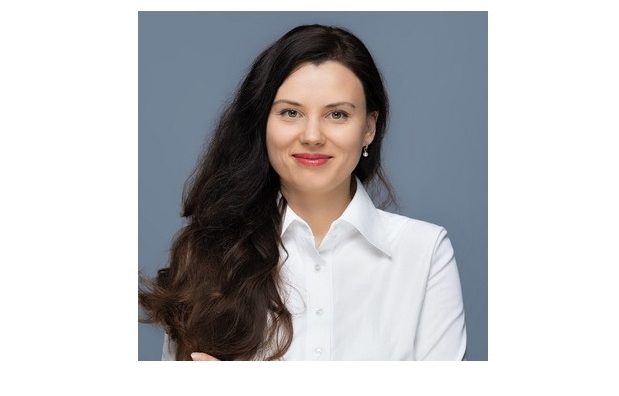
Katažyna Bogdzevič is a Professor at Mykolas Romeris University (MRU) Law School, specializing in Private International Law , European Law , Human Rights , and Environmental Law . She leads the MRU Human Rights LAB and contributes to the Environmental Management Research LAB, focusing on legal frameworks for ecosystem services, climate change mitigation, and stakeholder engagement. Key Research Themes: Integration of Private International Law with Environmental Law , analysis of legal conflicts in nature-based solutions, and name rights under international human rights conventions. Policy Engagement: Serves as advisor to Lithuania's Minister of Justice Ewelina Dobrowolska , emphasizing knowledge transfer to legislative and judicial practices. Email: roffice@mruni.eu
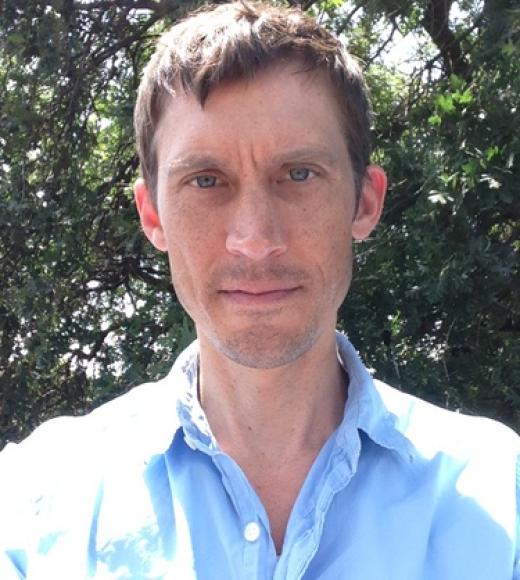
Professor Jyh-Hone Wang holds a faculty position in the Department of Mechanical, Industrial and Systems Engineering at the University of Rhode Island (URI). His research focuses on transportation human factors, driving safety, and intelligent transportation systems, with particular emphasis on variable message sign (VMS) design, driver behavior analysis, and automation technology acceptance in elderly drivers. He has conducted studies on dynamic message sign efficacy, traffic flow management, and roadway safety improvement strategies. Education: Ph.D. and M.S. in Industrial Engineering from the University of Iowa (1989 and 1986), and B.S. in Industrial Engineering from Tunghai University, Taiwan (1980). Recent grants include a 2020 National Institute for Undersea Vehicle Technology grant (Co-PI) on stress monitoring via wearable devices, and a 2017 Rhode Island Department of Transportation grant (PI) assessing sidewalk quality compliance. His work bridges engineering principles with human factors to enhance traffic safety and transportation efficiency. Key research contributions include optimizing VMS message design for clarity, analyzing driver responses to automation levels, and addressing tailgating issues through behavioral interventions. He has advised multiple graduate students and collaborated on interdisciplinary projects involving traffic data analysis and manufacturing process optimization.
Dr. João Henriques is a Research Fellow of the Royal Academy of Engineering (RAEng) at the Visual Geometry Group (VGG), University of Oxford. His research focuses on advancing computer vision, deep learning, and robotics, particularly in areas like 3D scene understanding, reinforcement learning, and multi-agent systems. He is renowned for developing the KCF and SiameseFC visual trackers, which won the VOT Challenge and are deployed in consumer hardware. His work spans 3D geometry, self-supervised learning, causal inference, and neuro-symbolic systems. Key contributions include methods for egocentric video analysis, unsupervised reconstruction, and robot navigation. He leads the VGG's research on neural feature fields, hierarchical scene understanding, and real-time 3D perception. Recent publications emphasize 3D-aware segmentation, universal place recognition, and neuro-symbolic world modeling for robotics. His research often bridges theoretical guarantees with practical applications, such as medical imaging and autonomous systems. Dr. Henriques collaborates with industry and academia on AI ethics, friendly AI, and interpretable learning. His lab hosts DPhil students advancing creative AI applications, such as generative models for gameplay design and LLM evaluations in real-world editorial workflows.
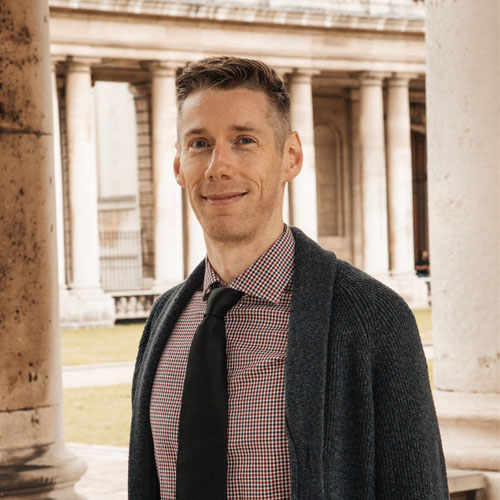
Dr Mark J. Hill is a Lecturer in Cultural Computation at King's College London's Department of Digital Humanities within the Faculty of Arts & Humanities. He holds a DPhil from the University of Oxford, an M.Sc. in Political Theory from the London School of Economics, and a B.A. in Political Science from Concordia University. His interdisciplinary work bridges digital humanities, computational social science, and intellectual history. Research Focus: Social network analysis, public discourse analysis via large datasets, quantitative text analysis, and critical evaluation of digital methods. Current Projects: Investigating discourse patterns across historical and contemporary contexts, including Early Modern Nonconformist networks and digital discourse around football fandom. He collaborates with institutions like the University of Helsinki and engages with public sectors on digital research projects. Teaching includes digital research methods and critical thinking in the digital age. His affiliations include the Computational Humanities Research Group and the Centre for Digital Culture at King's College London.
Laura U. Marks is the Grant Strate University Professor in the School for the Contemporary Arts at Simon Fraser University (SFU), located on unceded Coast Salish territory. Her work bridges media art, philosophy, and environmental sustainability, with a focus on small-footprint media and intercultural studies. She is a Fellow of the Royal Society of Canada and has held visiting roles at institutions like Harvard University and Zurich University for the Arts. Education: PhD (1996) and MA (1994) in Visual and Cultural Studies from the University of Rochester; BA (1987) in Art History and Sociology from Swarthmore College. Research interests include experimental media, film theory, Islamicate visual traditions, and the environmental impact of digital media. Her recent projects, funded by a Guggenheim Fellowship, explore mitigating streaming media’s carbon footprint through small-file workflows. Key publications include The Fold: From Your Body to the Cosmos (2024) and Hanan al-Cinema: Affections for the Moving Image (2015). Recent talks include keynote addresses at the Eco Media Footprints workshop (Jönköping University, 2025) and the Saudi Film Festival (2025). She co-founded the Substantial Motion Research Network (2018) and the Small File Media Festival, advocating for low-carbon media practices. Awards include the College Art Association’s Mather Award (2017) and the SFU Leadership Award (2021). She actively participates in SFU’s Faculty for Palestine and Council on Islamophobia.
Lee M. Miller is a Professor and Vice Chair of Academic Affairs in the Department of Neurobiology, Physiology and Behavior at the University of California, Davis, affiliated with the Center for Mind and Brain. His research focuses on neuroengineering, computational neuroscience, and neural mechanisms underlying attention, speech processing, and multisensory integration. Research interests include the development of neural prosthetics, decoding of neuromuscular signals for prosthetic control, and understanding how auditory and visual systems interact during speech perception and attentional processes. His work bridges clinical applications (e.g., cochlear implants) with fundamental neuroscience, leveraging tools like electrophysiological recordings, EEG/MEG, and advanced signal processing techniques. Recent publications highlight innovations in electromyographic speech neuroprosthetics, the topology of neuromuscular signals, and the neural basis of speech-in-noise processing. Miller’s studies emphasize translational potential, such as improving speech synthesis from brain signals and designing haptic feedback systems for motor coordination. His contributions have advanced understanding of neural mechanisms in sensory integration, auditory attention, and the impact of cognitive factors on perception. Miller maintains a lab dedicated to these interdisciplinary efforts, with a focus on both basic science and clinical applications.
Michael Doolan is a Senior Lecturer at Sydney College of the Arts, University of Sydney. He holds a PhD from Monash University (2013), a Master of Arts (2001), and a Bachelor of Arts (1981). His work explores the intersection of memory, narrative, and objects, using ceramics and mixed media to create sculptures that interrogate childhood narratives and their influence on adult identity. Doolan’s installations often feature disorienting optical effects and fairy tale motifs, reinterpreting classic stories through a contemporary lens. Education: PhD, Faculty of Art Design & Architecture, Monash University (2013) Master of Arts, Monash University (2001) Bachelor of Arts, Monash University (1981) Research Interests: Doolan’s practice focuses on the legacy of fairy tales and their unresolved narratives. By combining handcrafted techniques with digital fabrication, his sculptures critique cultural narratives and materiality. His work often features uncanny, monochromatic ceramic forms that evoke childhood memories while questioning adult perceptions of selfhood. Exhibitions & Awards: Recent highlights include the Deakin University Small Sculpture Award 2024 , participation in the Korean International Ceramics Biennale 2019 , and solo exhibitions such as Stories with Endings Changed (2018) and World without World (2017). His work is featured in major public and private collections internationally. Associations: Member, Australian Network for Art & Technology (ANAT) Member, International Society for the Arts, Sciences and Technology (Leonardo) Current Projects: Researching new sculptural works that blend handcrafting with digital fabrication to reflect contemporary entanglements between human and machine processes.
Ilse Helbrecht is a full Professor of Cultural and Social Geography at the Geographical Institute of Humboldt University of Berlin within the Faculty of Mathematics and Natural Sciences. She has served as Director of the Geographical Institute (2015-2017) and Director of the Georg Simmel Centre for Metropolitan Research (2014-2019). With academic appointments spanning multiple institutions including the University of Bremen where she served as Vice Rector (2005-2008), her career demonstrates significant leadership in geographical academia. 1990: Dipl.-Geogr. from University of Münster 1993: Promotion (Dr. phil.) from Technical University of Munich 1999: Habilitation from Technical University of Munich 2002: Professor of Human Geography at University of Bremen 2009: Professor of Cultural and Social Geography at Humboldt University Professor Helbrecht's research centers on urban transformations, particularly examining gentrification, housing markets, and the intersection of demographic change with spatial organization. Her work increasingly explores ontological security as a framework for understanding how people relate to changing urban and rural environments. She has pioneered research connecting psychoanalytic theory with geographical analysis, particularly regarding how spatial experiences shape fundamental security needs. Her fieldwork spans multiple continents, with significant projects in Germany, Canada, Ghana, and Singapore. Analysis of her recent publications reveals a clear trajectory toward examining ontological dimensions of spatial experience, with particular emphasis on how security and insecurity manifest in both urban and rural contexts. Her work bridges theoretical sophistication with empirical depth, often employing innovative qualitative methodologies including image-based interviews to access participants' spatial imaginations. 2019: Thomas Mann Fellowship, Federal Republic of Germany 2018: Caroline von Humboldt Professorship (€80,000) 2014: Nominated for National Urban Design Award (UK) 1999: Award of the city of Munich for urban studies research 1993: Dissertation award, Technical University Munich Professor Helbrecht leads multiple significant research projects including the VolkswagenStiftung-funded 'Transformations in Housing and Intergenerational Contracts in Europe' (2024-2028) and subprojects within the Collaborative Research Center 'Re-Figuration of Spaces.' She has secured funding from major organizations including DFG, ERC, EU, and VolkswagenStiftung. Her supervisory approach emphasizes interdisciplinary collaboration and methodological innovation, particularly in visual and psychoanalytically-informed research techniques. She actively participates in academic governance and public discourse through media appearances and policy engagement. As principal investigator of the CRC 1265 subprojects 'Geographical Imaginations,' Professor Helbrecht leads research teams examining security and insecurity across rural and generational contexts. Her work connects with several research groups including the International Research Training Group 'The World in the City' and the Humboldt University's Georg Simmel Centre for Metropolitan Research. She maintains strong international collaborations with institutions in Canada, Ghana, and the Netherlands.
Simon Hayhoe is a Reader in Education at the University of Exeter's School of Education and an Associate of the Scottish Sensory Centre, University of Edinburgh. His work focuses on sensory impairment, ageing, inclusive technologies, and participatory research methodologies. He has held roles at the University of Bath (2016-2023), Canterbury Christ Church University, and Sharjah Women’s College, UAE. His research has been supported by a Horizon 2020 grant and a Fulbright Fellowship, among others. Education: PhD in Education (University of Birmingham, 2006), PGCE in Secondary Technology (University of Bath, 1997), MEd (University of Leicester, 1995), BA in Technical Communication (Coventry Polytechnic, 1993). His research interests include sensory impairment philosophies, accessible museum technologies, and inclusive education policies. Notable projects include the ARCHES initiative on cultural heritage accessibility and the Sound Pad Project, which co-created inclusive technologies with marginalized communities. He has delivered keynotes at institutions like MIT, Harvard, and the Metropolitan Museum of Art, and serves on editorial boards for journals such as British Journal of Visual Impairment and Discover Global Issues . His awards include the Fulbright Scholarship and fellowships from the British Computer Society and Metropolitan Museum of Art.
Dr. Michael Fiddler is an Associate Professor of Criminology at the University of Greenwich, affiliated with the School of Law and Criminology within the Faculty of Liberal Arts & Sciences. He serves as Lead of the Centre for Transformative and Global Justice. Fiddler joined the University in 2006 following his PhD in Criminology at Keele University, where his thesis explored prison spaces’ production. His research focuses on the interplay of space, architecture, and visual arts in criminological understandings, particularly through the lens of 'Ghost Criminology' informed by Derrida’s hauntology. His research interests span penal systems, spatial theory, and the representation of crime in cinema and media. Notable works include analyses of haunted architecture, Nazisploitation films, and gendered viewing strategies in Holocaust-related media. Fiddler engages in interdisciplinary critiques of incarceration’s spatial dimensions and the uncanny in cinematic narratives. Publications highlight themes like 'spectral criminology,' hauntology, and the Gothic underpinnings of penal spaces. His work bridges criminological theory with cultural studies, emphasizing how spatial and visual elements shape perceptions of crime and punishment. Collaborations include co-authorship with Stacy Banwell on gendered representations in film and historical prison studies. Award-winning achievements are not explicitly noted in the provided texts, though contributions to special journal editions and editorial roles reflect academic recognition. Fiddler’s leadership in the Centre for Transformative and Global Justice underscores his commitment to advancing interdisciplinary criminological discourse.
Dr. Dave Murray-Rust is an Associate Professor in Human-Algorithm Interaction Design at TU Delft's Faculty of Industrial Design Engineering. He explores the intersection of humans, data, and AI through design research, focusing on ethical AI systems and sociotechnical interactions. His work bridges computer science, design theory, and digital sociology, addressing challenges like algorithmic fairness and human-AI collaboration. He leads initiatives such as the AI Futures Lab and Data-Centric Design Lab, advancing methods for leveraging behavioral data in design processes. His research emphasizes experiential AI frameworks, metaphors for designers, and the legibility of AI systems. He has been honored with awards including Best alt.HRI 2024 and a CHI 2023 Best Paper Award for contributions to fairness perceptions in algorithmic decision-making. Murray-Rust teaches courses like the Speculative Design Studio and collaborates on projects like DCODE (Designing the Future of AI) and the BrightSky Project. His work extends to public engagement through installations like GeoPact and explorations of blockchain's societal impact. He holds an Honorary Fellowship at the University of Edinburgh.
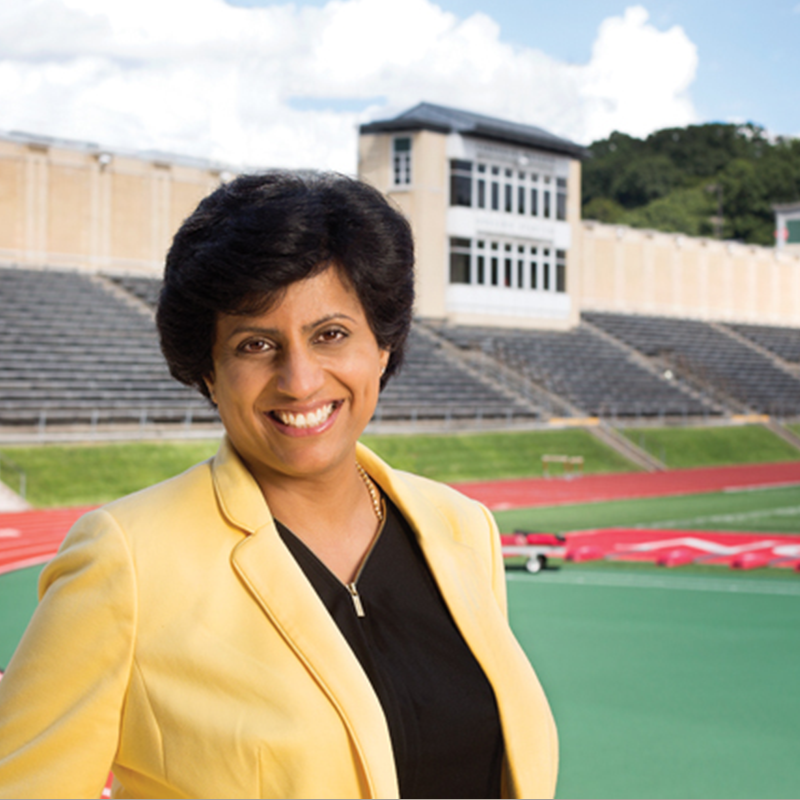
Priya Narasimhan is a Professor of Electrical & Computer Engineering at Carnegie Mellon University (CMU), affiliated with the College of Engineering. Her research focuses on dependable distributed systems, fault-tolerance, embedded systems, mobile systems, and sports technology. She leads the Intel Science and Technology Center in Embedded Computing (ISTC-EC) and founded YinzCam, a CMU spin-off providing mobile live streaming to sports venues. She holds multiple awards, including the Sloan Fellowship and NSF CAREER Award. Education: Ph.D. and M.S. in Electrical & Computer Engineering from UC Santa Barbara. Notable roles include former CTO of Eternal Systems, Director of Intel Labs Pittsburgh, and Director of CMU's CyLab Mobility Research Center. Research spans failure diagnosis in distributed systems, live upgrades, mobile cloud computing, football technology, assistive tech for the blind (Trinetra), and civic tech (iBurgh). Over 30+ students advised across Ph.D., M.S., and undergraduate programs. Active in entrepreneurship, teaching (courses like 18-349 Embedded Systems), and industry collaborations.
Rina Bliss is an Associate Professor of Sociology at Rutgers University, specializing in sociogenomics, race and genetics, and social justice. She holds a PhD from the New School for Social Research and has held postdoctoral fellowships at Brown University’s BioMed and Cogut Center for the Humanities and Social Sciences. Her research critically examines genetic determinism, racial classifications, and the societal implications of genomic science. Bliss is the award-winning author of books including Rethinking Intelligence (2023), Race Decoded (2012), and the forthcoming What’s Real About Race? (2025). Her work challenges assumptions about genetic influences on intelligence, race, and health disparities. She serves as a consultant to institutions like the National Academies of Science and the Robert Wood Johnson Foundation, advocating for socially responsible science. Her research has been featured in The New York Times , NPR, and global media. Bliss’s scholarly contributions span sociological theory, biopolitics, and interdisciplinary science. She actively addresses audiences worldwide on topics like health equity, education, and technology ethics. Affiliations: Human Genome Synthesis Project, UCSF Affiliate, UC Berkeley Center for Social Medicine Grants: Andrew Mellon Foundation, National Science Foundation Awards: Oliver Cromwell Cox Book Award for Race Decoded Bliss’s work bridges academia and public policy, emphasizing the need to counteract harmful stereotypes and promote equity in science and society.
Dr. Merve Fritsch is a Specialist in Psychiatry and Psychotherapy and a Senior Physician in ward 152A at Charité - Universitätsmedizin Berlin. Her affiliation is with the Department of Psychiatry and Neurosciences, part of the Neurology, Neurosurgery and Psychiatry division at Campus Charité Mitte. Dr. Fritsch's research focuses on neurological and psychiatric conditions, particularly thalamic aphasia, fronto-thalamic networks, and the role of the inferior frontal cortex in conscious perception. Her work integrates clinical neurology with cognitive neuroscience, addressing topics such as stroke recovery, perceptual decision-making, and NMDA receptor dysfunction. Her studies investigate ischemic lesions' effects on visual and language functions, stroke outcomes, and the mechanisms underlying consciousness. She employs advanced techniques like TMS-EEG to explore neural connectivity in conditions like autism spectrum disorder. Dr. Fritsch’s research also addresses clinical applications, such as cerebral embolism during cardiac interventions and the localization of aphasia in stroke patients. While no formal awards are listed, her contributions span peer-reviewed publications in high-impact journals, reflecting her expertise in neurology, psychiatry, and translational neuroscience. She actively engages in clinical practice and academic research, bridging theoretical insights with patient care.
Prof. Anna Franklin is a Professor of Visual Perception and Cognition at the University of Sussex's School of Psychology. She leads the Sussex Colour Group and Sussex Baby Lab , focusing on human color perception, development, and neural representation. Her research combines cognitive psychology, developmental science, and neuroscience to explore how color perception develops, influences aesthetics, and relates to conditions like autism. Key projects include ERC-funded initiatives studying environmental impact on color perception and developing the ColourSpot diagnostic app for childhood color vision deficiency. She also serves as Deputy Director of Research and Knowledge Exchange for the School of Psychology. Education includes a BA from the University of Nottingham and a PhD from the University of Surrey, followed by a postdoctoral fellowship. Her work spans 107+ publications, emphasizing interdisciplinary methods like hyperspectral imaging and fMRI. Collaborations include industry partnerships with ETTA LOVES and COSATTO to apply infant visual preference research in product design. Research grants include European Research Council awards (Starting Grant 2012-2017, Consolidator Grant 2018-2025) and a Proof of Concept grant for ColourSpot . Her labs investigate cross-cultural color categorization, infant aesthetics, and neural correlates of color processing. Future work focuses on calibrating visual systems to environmental statistics and improving early childhood color vision screening.