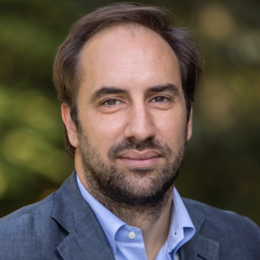
Dag Hanstorp is a Professor at the Department of Physics, University of Gothenburg. His office is located at Fysikgränd 3, Göteborg (Room F8032), and he can be contacted via email or telephone. His research focuses on experimental atomic/molecular physics and laser applications, including: Quantum phenomena in levitated droplets Ultraprecise spectroscopy of radioactive molecules (e.g., radium monofluoride) Laser-induced dynamics in fuels and aerosols Electron affinity measurements of alkali metals Vacuum laser particle acceleration techniques Spin Hall nano-oscillator characterization Recent publications (2023-2025) demonstrate interdisciplinary work combining atomic physics, fluid dynamics, quantum optics, and nanotechnology. Common themes include advanced laser spectroscopy, quantum system control, and novel imaging techniques applied to fundamental physical processes.
Ulrich Vogt is a Professor in Applied Physics at Kungliga Tekniska Högskolan (KTH) and leads the X-ray Optics and Nanoimaging group within the Bio-Opto-Nano unit. He serves as Vice-head of the Applied Physics department for undergraduate education. His research focuses on developing advanced X-ray microscopy techniques, particularly at synchrotron facilities like MAX IV’s NanoMAX beamline. He specializes in X-ray optics, nanoimaging, and diffractive optical elements for applications in materials science, biology, and medicine. Key contributions include the design of the NanoMAX beamline, optimization of X-ray zone plates via metal-assisted chemical etching, and advancements in multi-beam ptychography. Vogt has pioneered compact X-ray microscopy systems using laser-plasma sources and liquid-jet targets. His work integrates nanofabrication, computational imaging, and synchrotron instrumentation to achieve sub-100 nm resolution in hard and soft X-ray regimes. Teaching responsibilities include courses on experimental physics, photonics, and X-ray applications. His lab collaborates internationally on projects like the European XFEL, emphasizing high-brightness sources and radiation-resistant optics. Recent innovations include adaptive multi-beam ptychography and stereo X-ray imaging for 3D nanoscale visualization. Research highlights span over 100 peer-reviewed articles, with a focus on coherence characterization, beamline instrumentation, and nanostructured materials. Vogt’s grants include a Röntgen-Ångström Cluster award supporting multi-beam ptychography and cryo-microscopy advancements.
Neda Haj Hosseini is a Senior Lecturer and Associate Professor in Biomedical Engineering at Linköping University's Department of Biomedical Engineering (IMT) . She contributes to teaching courses like TBMT56 - Medical Technology and TBME08 - Biomedical Modeling and Simulation , while leading research initiatives in AI-driven cancer diagnostics and biomedical optics. Research Focus: Development of AI methods for cancer diagnostics, optical coherence tomography (OCT) applications, and fluorescence spectroscopy in surgical guidance Affiliations: Center for Medical Image Science and Visualization (CMIV) , Analytic Imaging Diagnostic Arena (AIDA) , Swedish Medical Technology Association Recent Research Trends demonstrate expertise in applying deep learning to: Pediatric brain tumor classification using multimodal imaging Optical biopsy techniques for intraoperative decision support Automated biomarker quantification in histopathology Medical imaging data integrity and algorithm validation Scientific Awards include grants from: Joanna Cocozza Foundation (2022) Swedish Childhood Cancer Foundation (2024) Academic Leadership involves mentoring students in projects such as: "Multiple Instance Attention-based Learning for Brain Tumor Classification" "Vision Transformers for Multiclass Brain Tumor Tissue Classification" "Reaction-diffusion Models for Image-driven Tumor Simulation"
Stefano Bonetti is an Associate Professor in the Department of Physics at Stockholm University , leading the Ultrafast Condensed Matter Dynamics Group . His research focuses on manipulating quantum materials using terahertz (THz) and near-infrared laser fields to study spin dynamics and ultrafast phenomena at nanoscale and femtosecond timescales. PhD in Materials Physics (KTH Royal Institute of Technology, Sweden) MSc in Engineering Physics (KTH) BSc in Technical Physics (Politecnico di Milano, Italy) Recent research efforts involve time-resolved X-ray microscopy to visualize spin currents and magnetization dynamics, leveraging facilities like free-electron lasers. His work bridges experimental physics and applied materials science, aiming to enhance energy efficiency in data storage technologies by understanding ultrafast spin-lattice interactions . Key scientific awards and grants: ERC Starting Grant (2017-2021) Wallenberg Academy Fellow (2018-2023) VR's free grant (2019-2023) International Career Grant (COFUND) (2015-2019) He has contributed to developing THz-based techniques for magnetic control and authored foundational work on spin-wave solitons and nonlinear magnetoelastic coupling . His group collaborates internationally, utilizing advanced synchrotron and free-electron laser facilities.
Antonios Pantazis is an Associate Professor and Docent at Linköping University, affiliated with the Department of Biomedical and Clinical Sciences (BKV) within the Faculty of Medicine and Health Sciences. He leads the Pantazis Laboratory of Cellular Excitability (PaLaCE), focusing on ion channel biophysics and their role in health and disease. His work integrates electrophysiological, optical, and computational methods to study ion channel structure-function relationships, particularly in cardiac and neuronal systems. Research interests include voltage-gated ion channels, cellular excitability, and the molecular mechanisms underlying arrhythmias and neurological disorders. Key contributions involve understanding mutations in genes like SCN5A and KCNA2, which are linked to epilepsy and cardiac arrhythmias. He has been awarded the Swedish Fernström Prize (2021) for his work on ion channels. Publications span topics such as ion channel regulation, molecular transitions in voltage-dependent processes, and drug targets for arrhythmia suppression. His laboratory also explores cutting-edge techniques like voltage-clamp fluorometry and optical methods to visualize protein dynamics. Collaborations include institutions like the Wallenberg Centre for Molecular Medicine (WCMM) at Linköping University, emphasizing translational research in medical technology and bioengineering.
Kjell Brunnström serves as an Adjunct Professor in the Department of Computer and Electrical Engineering (DET) at Mid Sweden University, based in Sundsvall. He maintains active affiliation with the STC Research Centre, contributing to cutting-edge research in multimedia quality assessment and immersive technologies through extensive international collaborations. His research centers on Quality of Experience (QoE) with specialized focus on 3D video systems , virtual reality environments , and augmented teleoperation interfaces . He pioneers methodologies for subjective and objective video quality evaluation, particularly examining human factors in sports broadcasting (Video Assistant Referee systems), mining applications, and automotive displays. His work bridges theoretical psychophysical models with industrial implementations through standards development like ITU-T Rec. P.919. Analysis of his 15 most recent publications reveals consistent investigation into latency effects, distortion impacts, and viewing condition variables across emerging media formats. Key application domains include sports video refereeing, 360-degree video systems, VR simulators for remote machinery control, and adaptive streaming protocols, demonstrating strong industry-academia translation. Scientific Awards: No awards documented in source material. Advising and Grants: Student supervision and grant funding details were not disclosed in available documentation. Labs and Teams: Brunnström operates within Mid Sweden University's STC Research Centre framework, collaborating with global institutions including Royal Institute of Technology (Sweden), University of Surrey (UK), and multiple European research consortia. His work directly informs ITU standardization efforts and industrial implementations in broadcast and automotive sectors.
Emily Baird is a Professor at the Department of Zoology, Stockholm University , leading interdisciplinary research at the intersection of sensory ecology , neuroethology , and comparative morphology . Her work focuses on how insects like dung beetles and bumblebees process visual information to guide behavior in diverse environments. Key Collaborations : Dlife Project with University of Southern Denmark and University of Kiel (Human Frontiers Science Project) INVISMO Project with Lund University (Swedish Research Council) Research Themes : 3D micro-CT analysis of insect eyes Neural mechanisms for straight-line orientation Flight control in cluttered environments Mechanical principles of dung beetle ball rolling Techniques : Behavioral experiments, X-ray microtomography, computational modeling, ray-tracing simulations.
Saghi Hajisharif is a Researcher at Linköping University's Department of Science and Technology (ITN), affiliated with the Media and Information Technology (MIT) group. She holds a PhD in Visualization and Media Technology from Linköping University (2020), an MSc in Advanced Computer Graphics (2013), and a BSc in Computer Science from Amirkabir University (2009). Her work focuses on computational imaging, visual machine learning, HDR imaging, and light field technologies. She is a core member of the Computer Graphics and Image Processing research group. Research interests include sparse representation learning for computational imaging, synthetic data ethics, BRDF material modeling, and algorithmic fairness in AI. Her contributions span interdisciplinary projects recognized in IVA’s 100 List (2024), highlighting societal impact potential. She has co-authored influential studies on topics such as FROST-BRDF sampling techniques and metadata standards for GenAI synthetic data. Her articles reflect expertise in computer vision, graphics, and AI ethics, with key contributions to light field imaging, GAN fairness, and material modeling surveys. The IVA’s 100 List recognition underscores her innovative work’s societal relevance. She collaborates across disciplines to advance imaging technologies and ethical AI practices.
Pererik Andreasson is a Lecturer at the Academy of Information Technology , Halmstad University. His research focuses on 3D printing, materials science, electromagnetic compatibility testing, and wireless communication. Key contributions include optimizing 3D-printed radar lenses, advancing phase-change material characterization via femtosecond x-ray diffraction, pioneering augmented reality methods for electromagnetic field visualization, and developing substrate integrated waveguide antennas for IoT devices. 3D printing of optical components Dynamic processes in phase-change materials Augmented reality for electromagnetic testing IoT antenna design His recent work on frequency-adjustable SIW antennas (2024) and AR-based EMC visualization (2021) demonstrates cross-disciplinary innovation. While no scientific awards are documented, his 15+ publications since 2007 highlight sustained expertise in material science and wireless technologies.
Linda Lundström is a Professor at KTH Royal Institute of Technology, leading the Bio-Opto-Nano Physics (BON) division. Her research focuses on visual and physiological optics, including myopia control mechanisms, peripheral vision optimization, and optical instrumentation. She holds academic roles in the Department of Molecular Biosciences, contributing to interdisciplinary research at the intersection of physics, biology, and health sciences. Teaching responsibilities include courses such as Waves (SK1120), Photography for Media (SK1140), and supervision of degree projects in applied physics and technology education. Her work emphasizes practical applications of optics in healthcare, particularly in improving vision correction technologies. Research highlights include the Stockholm Myopia Study, investigating peripheral refraction dynamics in children, and developing novel methods for evaluating intraocular lens (IOL) designs and peripheral optical quality. She has pioneered instruments like the dual-angle open-field wavefront sensor for simultaneous central and peripheral eye measurements. Her contributions span over 100 peer-reviewed articles, emphasizing advancements in optical correction techniques, contrast sensitivity analysis, and the role of peripheral vision in clinical settings. Lundström’s work bridges fundamental optics research with practical medical applications, aiming to enhance vision quality and reduce myopia progression.
David O'Carroll is a Professor in Sensory Biology at the Department of Biology, Lund University, Faculty of Science. His research centers on visual processing in insect brains, using electrophysiological methods and computational modeling to understand motion detection and attention mechanisms. He is particularly known for his work on dragonflies and hoverflies, revealing complex neural functions once thought unique to mammals. University: Lund University School: Faculty of Science Department: Department of Biology Position: Professor Email: david.ocarroll@biol.lu.se His research explores how insect brains efficiently process visual information despite their small size. Using nanoelectrodes, he investigates neural circuits in the optic lobe, focusing on target detection, motion tracking, and sensory adaptation. His interdisciplinary work bridges neuroscience and engineering, contributing to bio-inspired technologies such as collision avoidance systems and artificial vision chips. Collaborations extend to neural stem cell research for developing bionic interfaces. The most recent articles show a strong focus on temperature-dependent neural tuning, long-term adaptation in visual neurons, photoreceptor sensitivity in wasps, and the neurotoxic effects of pesticides like imidacloprid on pollinators. These studies reflect a dual interest in fundamental neurobiology and ecological implications. David O'Carroll actively supervises graduate students and leads multiple research projects, including dissertations on electrophysiology, optical mapping, and pesticide effects. He has recently participated in the International Conference on Invertebrate Vision and hosted visiting researchers such as Andrew D. Straw. His work contributes to UN Sustainable Development Goals related to life on land and responsible innovation. Modulation of motion-detecting neurons by odors and pesticide exposure (supervision of master’s student) Hosting and collaboration with international researchers Active supervision of PhD candidates on visual physiology and neurotoxicology He is involved in interdisciplinary research teams focusing on sensory biology, neural computation, and pollinator health, with ongoing projects exploring electrophysiological responses, optical mapping across species, and the impact of sublethal pesticide exposure on insect behavior and ecosystem function.
Oskar Johansson serves as a university lecturer and program manager at Linnaeus University's Department of Medicine and Optometry within the Faculty of Health and Life Sciences at the Kalmar campus. He is affiliated with the Research in Eyes Vision and Optometry (REVO) knowledge environment. His primary research interests focus on Visual Ergonomics and Contact Lenses , with particular attention to clinical applications and prescribing practices. Johansson emphasizes the importance of patient education and understanding in optometric practice, which has shaped his teaching philosophy. The available publication demonstrates his active engagement in contemporary optometry research, specifically examining trends in contact lens prescribing within Sweden. His work contributes to the understanding of clinical practices in vision correction. Johansson has a strong commitment to teaching excellence, stating: "If the patient has not understood what I have tried to convey, I have not done a good examination." He applies this same principle to his educational approach, striving to ensure students understand and feel safe during their education. His ultimate teaching goal is achieved when "the student knows more than me."
Lars Bååth is a Senior Professor at Halmstad University's School of Business, Innovation and Sustainability. His research focuses on optical measurement systems, surface metrology, microwave technology, and wind turbine acoustics. He has contributed to advancements in functional surfaces, turbine noise reduction, and industrial process control through 50+ peer-reviewed publications and patents. His work bridges engineering and environmental science, addressing challenges in manufacturing, energy systems, and material characterization. Key research areas include interferometric techniques for surface analysis, robotic polishing automation, and microwave-based measurement systems for industrial applications. Bååth has pioneered technologies for wind turbine noise propagation modeling and material defect detection, with applications in automotive, forestry, and metallurgical industries. His patents include innovations in contactless level detection and substance analysis in containers, reflecting his commitment to solving practical industrial challenges. Bååth collaborates extensively with industry partners, emphasizing technology transfer and real-world implementation of academic research.
Daniel Aili is a Professor and Head of Unit at Linköping University, affiliated with the Department of Physics, Chemistry and Biology within the Faculty of Science and Engineering. His research focuses on the design and development of functional nanoscale materials for biomedical applications, particularly through molecular self-assembly processes. PhD in Molecular Physics, Linköping University (2008) MSc in Engineering Biology, Linköping University (2003) Postdoctoral training at Nanyang Technological University, Singapore (2010–2011) Postdoc in Prof. Molly Stevens' lab, Imperial College London, UK (2009–2010) His research interests lie at the intersection of soft materials, nanotechnology, and biomedicine. He specializes in creating bioresponsive and biointeractive materials using self-assembly techniques. His work spans biosensors, drug delivery systems, regenerative medicine, and wound healing technologies. A key focus is on hydrogels and bioinks that mimic the extracellular matrix, enabling 3D and 4D bioprinting of tissue-like structures. Recent publications highlight advancements in nanocellulose-based wound dressings with infection-sensing capabilities, controlled antimicrobial release, and high-density biofabrication for skin regeneration. These studies reflect a strong trend toward translational biomaterials that bridge fundamental science with clinical applications, particularly in diagnostics and regenerative therapies. Daniel Aili has received numerous scientific honors, including: ERC Consolidator Grant Wallenberg Academy Fellow (with prolongation) Future Research Leader by the Swedish Foundation for Strategic Research AkzoNobel Nordic Prize for Surface and Colloid Chemistry (2012) Ingvar Carlsson Award (2012) Arnbergska Prize from the Royal Swedish Academy of Sciences (2013) He leads the Laboratory of Molecular Materials and has secured major grants from the Knut and Alice Wallenberg Foundation, the Swedish Foundation for Strategic Research (SSF), and the European Commission (Horizon 2020). He mentors several PhD students and contributes to large collaborative projects such as the SSF MED-X initiative HEALiX. His lab develops innovative materials that can grow artificial tissues, test cancer drugs, and create smart wound dressings that detect infection—contributing significantly to reducing animal testing and advancing personalized medicine. Daniel Aili’s research group operates within the interdisciplinary research environment Advanced Functional Materials (AFM) at Linköping University. The team combines expertise in biophysics, bioengineering, polymer chemistry, and materials science to push the boundaries of biomimetic material design. Their work on dynamic hydrogels and modular bioinks enables real-time control over cell behavior and tissue formation, positioning them at the forefront of next-generation regenerative therapies.
Björn Johansson is a Professor at Chalmers University of Technology, specializing in Production Systems. His research focuses on sustainability aspects of manufacturing through virtual tools, aiming to minimize environmental, social, and economic impacts. Key methodologies include flow simulation, dynamic environmental assessments, 3D visualization, and layout optimization. Primary research areas: Sustainable Manufacturing, Digital Twins, Environmental Impact Assessment Collaborations: Mélanie Despeisse, Henrik Söderlund, and others in automotive, battery production, and maritime industries His work emphasizes integrating digital technologies (e.g., VR, IoT) with sustainable practices, addressing challenges in supply chain resilience, human-robot collaboration, and circular economy models. Recent studies explore VR training environments, 5G-enabled manufacturing, and extended reality (XR) frameworks. Current projects involve 44 initiatives across battery systems, servitization, and digitalization for sustainability. Publications span 179 articles, including topics like digital twin implementation, ergonomic VR assessments, and hybrid simulation models for environmental analysis.