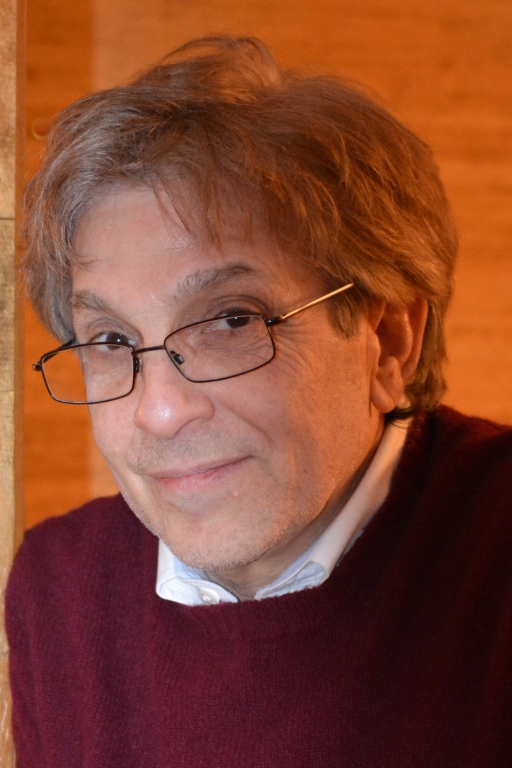
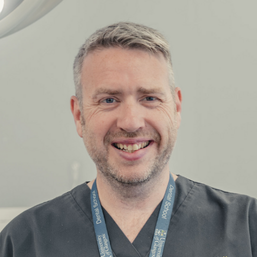
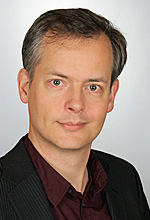
Richard H. Granger, Jr. is a Professor at Dartmouth College , affiliated with the Thayer School of Engineering and the Psychological and Brain Sciences department. His work spans computational and cognitive neuroscience, focusing on brain circuit analysis, neuroimaging, robotics, and brain engineering. B.S., Massachusetts Institute of Technology Ph.D., Yale University His research integrates artificial intelligence, neurobiology, and mathematical modeling to understand fundamental mechanisms of learning, memory, and brain evolution. He develops algorithms inspired by cortical-subcortical loops and explores brain-inspired hardware architectures for efficient computing. Recent publications highlight his innovations in neural network design (Hamiltonian bitwise architecture), neuroimaging analyses, and cognitive modeling. His work bridges theoretical neuroscience with practical applications in medical diagnostics and robotic systems. Invited talk at UC San Diego (2018) Keynote speaker at Artificial General Intelligence Conference (2014) TEDx talk at Dartmouth (2010) Contact: Richard.Granger@dartmouth.edu , Moore Hall, Dartmouth College.
Professor Kwon Oh-jin is affiliated with Sejong University , where he serves in the Department of Electronic Engineering . His academic career spans over three decades, including a PhD in Electrical and Computer Engineering from University of Maryland (1994) and MS in Signal/Image Processing from University of Southern California (1991). His research focuses on image/video analysis , compression algorithms , watermarking systems , and steganography . Recent work explores machine learning-driven compression , 360-degree imaging , and JPEG standards implementation . His 15 most recent articles address topics like cybersecurity using CNNs , dynamic gesture recognition , and novel multimedia platforms for emerging standards. Professor Kwon leads the Visual Communication Research Lab (Chung923), supervising numerous PhD and MS students working on point cloud coding , JPEG privacy , and AI-based image coding . He has received multiple government and industry grants from organizations including the Agency for Defense Development and Ministry of National Defense .
Saleh Hadi Mohammed is an Associate Professor at the Faculty of Computer Science , National Research University Higher School of Economics (HSE), where he has worked since 2015. With over 10 years of academic experience, his expertise spans software engineering, blockchain systems, and intelligent transport technologies. Candidate of Technical Sciences (2013) Engineer in 'Computers, Complexes, Systems and Networks' (2008) Professional training in Moodle-based distance learning Research interests include: Intelligent transport systems and location-based services Software/hardware navigation integration and blockchain applications Cloud services, mobile app development, and MLOps platforms His recent publications analyze MLOps scalability, blockchain donation tracking, and AI-driven navigation for visually impaired users. Notable collaborations involve Springer, IEEE, and CEUR Workshop Proceedings. Scientific awards : Gratitude from HSE Faculty of Computer Science (2024) As a thesis supervisor , he has guided 15+ students in projects ranging from fraud detection to mobile education apps. He also leads SmartMLOps , HSE’s AI service deployment platform (2024), and participated in the Administrative Personnel Reserve Program (2024-2025).
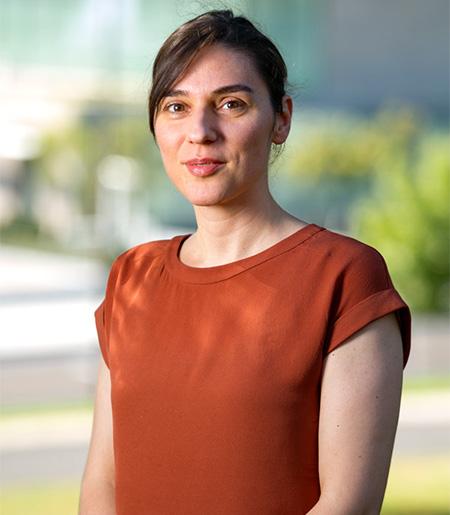
Marianthi Papalexandri-Alexandri is an Associate Professor of Music Composition and Sound Art at Cornell University , where she joined in 2016. Her work explores the intersection of composition , sound art , and kinetic sculpture , creating instruments that require collaborative performance. Academic Affiliation: Cornell University Department of Music Research Focus: Acoustic Instrument Innovation, Kinetic Sound Art Collaborations: Longtime partnership with kinetic artist Pe Lang International Exhibitions: Kunstmuseum Basel, Venice Biennale of Architecture, Tokyo Art Fair Her awards include the Aurelie Nemours Award (first composer/sound artist to receive it), Dan David Prize , and IMPULS Composition Award . She has received grants from ProHelvetia, Ernst Von Siemens Foundation, and Swedish Arts Council. Scientific contributions include 15 recent works like Modular | n°2 (2017) with motor-activated membranes, and Speaking of Membranes (2014) exploring friction dynamics. These works span subfields: kinetic sound sculpture, unconventional instrument design, and acoustic spatialization. Scientific Recognition Aurelie Nemours Award Werkbeiträge des Kantons Zürich Dan David Prize IMPULS Composition Award Berlin Senate Grants Cornell Biennial Award Her research challenges traditional performer-instrument relationships, with commissions from Klangforum Wien , Ensemble Mosaik , and Neue Vocalsolisten . She creates immersive sound environments using self-constructed devices that emphasize material behavior over digital processing.
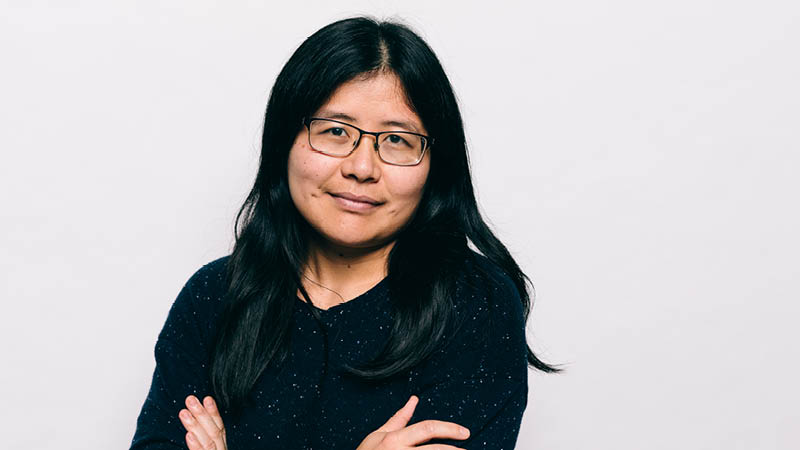
Chunyi Peng is an Associate Professor in the Department of Computer Science at Purdue University's College of Science, where she leads the Mobile System, Security and Networking (MSSN) lab. She joined Purdue in Fall 2017 after serving as an Assistant Professor at the Ohio State University. Dr. Peng earned her Ph.D. in Computer Science from UCLA in 2013, with additional M.Eng and B.Eng degrees in Automation from Tsinghua University, both with highest honors. Prior to her academic career, she worked as an Associate/Assistant Researcher at Microsoft Research Asia. Her research focuses on mobile networking, systems, and security, with recent emphasis on innovating 5G/6G mobile network architecture, mobile network analytics, network verification, and security. She also explores efficient visual sensing and computing for IoTs, particularly through computer vision techniques for autonomous drones, vehicles, and robots. Her work bridges theoretical networking concepts with practical implementations, often developing tools like MobileInsight for cellular network analysis. Her recent publications reveal a clear research trajectory toward securing and optimizing next-generation mobile networks, particularly focusing on 5G/6G security vulnerabilities, emergency service reliability, drone-based network applications, and performance optimization. The work shows increasing integration of AI techniques with networking protocols and a growing emphasis on practical, real-world network measurement and validation. ACM Distinguished Member (2024) Best Community Paper Award at MobiCom'16 Best Demo Award at MobiCom'18 Best Community Paper Runner-up at MobiCom'22 Dr. Peng actively mentors numerous graduate students through the MSSN lab, with current research projects including AI for Networks, Mobile Network Security, AirLab for autonomous drones, and MI-LAB for network data analysis. She has secured significant research funding including NSF AI Institute for Future Edge Networks and Distributed Intelligence (AI-EDGE, CNS-2112471), Evolving Mobile Network Security (Cellular-911 Security: CNS-2246051), and Diagnostic Testing of Next-Generation Radio Access Network (CNS-2403048). The MSSN lab maintains an active research agenda with multiple ongoing projects that bridge academic research with practical applications, evidenced by numerous student successes including PhD defenses, conference awards, and industry placements at companies like Bytedance, Meta, and Amazon.
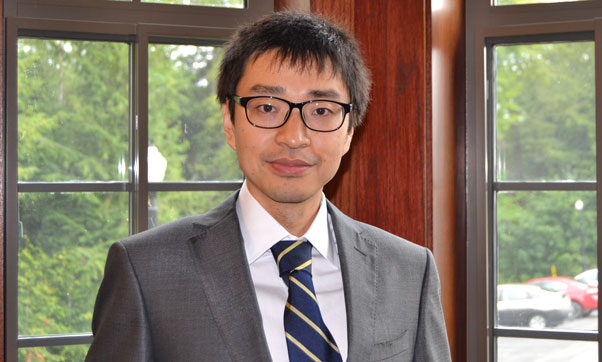
He David Zhang is an Assistant Professor of Computer Science at Governors State University and a Postdoctoral Associate at Virginia Commonwealth University (VCU) Robotics Lab. His research focuses on computer vision, robotics, and assistive technologies for visually impaired individuals. Ph.D. in Electrical & Computer Engineering, University of Arkansas at Little Rock (2018) B.S. in Computer Science & Technology, Chinese University of Mining and Technology at Beijing (2009) Study Certificate in Computer Architecture, University of Chinese Academy of Sciences (2010) Dr. Zhang's research integrates vision-based algorithms with inertial sensors to create robust systems for indoor localization, 3D mapping, and human-robot interaction. Key projects include Smart Cane, CoRobotic Cane (CRC), Wearable Robotic Object Manipulation Aid (W-ROMA), and Quadrupedal Human-Assistive Robotic Platform (Q-HARP), which aim to enhance mobility for the visually impaired and elderly populations. His recent publications emphasize improving Visual-Inertial Odometry (VIO) accuracy through depth uncertainty modeling and hybrid perspective-n-point methods. He has contributed to benchmark datasets like VCU-RVI and explored SLAM applications in real-time assistive robotics. Awards include Best Conference Paper honors and competitive recognitions in IROS and 3MT competitions. Best Conference Paper Award, IEEE HSI 2019 2nd Place, IROS 2020 UZH-FPV VIO Competition System Engineering Award for Excellent Ph.D. Student, UA Little Rock (2018)
Professor Ronen Basri is affiliated with the Weizmann Institute of Science as a member of the Faculty of Mathematics and Computer Science . His research focuses on foundational aspects of computer vision, including lighting analysis, image segmentation, and object recognition. Key Research Areas: Computer Vision Lighting and Reflectance Models Image Segmentation Edge Detection Human Vision Analysis His work bridges algorithmic design and cognitive studies, with implications for autonomous navigation, biomedical applications, and computer graphics. Contact details include his office in the Jacob Ziskind Building, Room 227, and phone number +972-8-9342809.
Jonathan Kahana is a Researcher in the Computer Science department at the Hebrew University of Jerusalem . His research spans Machine Learning and Computer Vision , focusing on Weight Space Learning , Representation Learning , and Zero-Shot Model Search . He develops methods for probing neural network weights to extract information, including ProbeGen and Spectral DeTuning . His recent work includes mapping model weights into shared embedding spaces (ProbeX), recovering pre-fine-tuning weights of generative models, and improving zero-shot labeling with distribution priors. He contributes to open-source implementations, such as the ProbeGen GitHub repository. Research trends from his publications emphasize: Weight space analysis (ProbeGen, DSiRe) Model retrieval and classification (ProbeLog, Model Atlas) Disentanglement and invariance (Contrastive Objective, Red PANDA) Efficiency in probing (30-1,000x FLOPs reduction in ProbeGen) His work has been accepted at top-tier conferences including ICML , ICLR , and ECCV , with arXiv preprints covering topics like dataset size recovery and model tree analysis.
Sallai Géza is a Professor at the Hungarian University of Fine Arts, where he has served in the Department of Sculpture since 1997. His academic career spans multiple institutions including the Hungarian University of Applied Arts and Nyíregyháza College, where he taught subjects related to sculpture, visual communication, and spatial construction. His educational background includes: 2009: Doctoral degree (DLA) from Moholy-Nagy University of Art and Design 2000-03: DLA training at Hungarian University of Applied Arts 1995-97: Master's degree from Hungarian College of Fine Arts 1990-95: Studies in sculpture at Hungarian College of Fine Arts 1986-90: Teacher training in geography-drawing at György Bessenyei Teacher Training College Sallai's research focuses on the intersection of sculpture and design, particularly examining how patina functions as color in sculpture and exploring analogies between sculptural objects and design principles. His theoretical work investigates the transitional zone between external form (natural or artificial) and sculptural form, emphasizing how artistic form can be purified of conceptual meaning to create new expressive possibilities. He examines how sculptural language connects design, architecture, and fine arts, with particular attention to vital perspectives in contemporary sculpture. His artistic practice demonstrates a shift from organic form systems to more abstract, object-centered creations that maintain silhouette recognition while exploring formal relationships between sculpture and design. His work often challenges the boundaries between representational and non-representational forms. Sallai has received several prestigious awards: 2001: The Art of Progress – AUDI and Várfok Gallery competition, 1st place 2001: Erasmus scholarship to Politecnico di Milano 1996: Barcsay Memorial Medal 1995: XIV. Small Sculpture Biennial Lecturer's Award in Pécs As an educator, Sallai has developed a teaching philosophy that balances respecting students' talents with inspiring them to engage with sculptural language. His pedagogical approach focuses on helping students develop their individual sculptural character, particularly through exploring the transitional zone between external form and sculptural form. He has guided students through stages from realistic representation to form deconstruction and ultimately to creating personal artistic forms. Sallai maintains active membership in several professional organizations including the National Association of Hungarian Artists (since 1995), the Association of Hungarian Fine and Applied Artists (since 2000), and the Hungarian Sculptors Society (since 2001). His work is represented in public collections including the Jósa András Museum in Nyíregyháza and the City Gallery of Nyíregyháza.
Tom Franken, MD, PhD serves as Assistant Professor of Neuroscience at Washington University School of Medicine in St. Louis. His research focuses on how the primate brain constructs visual representations of the external world through neural computations in visual cortex. Department of Neuroscience, School of Medicine Franken Laboratory leader Specializes in visual perception mechanisms Dr. Franken investigates perceptual organization processes where the brain resolves visual ambiguity to create structured object representations. His work centers on border ownership computation - how visual borders are assigned to foreground surfaces. Using high-channel electrophysiology (Neuropixels) , behavioral paradigms, causal perturbations, and computational modeling in non-human primates, his lab discovered columnar organization of border ownership signals with deep-layer neurons initiating these computations. Recent work shows brain-like border ownership signals emerge in predictive artificial neural networks trained on natural videos. His publication analysis reveals consistent focus on visual cortex organization (68% of recent work), with growing emphasis on computational approaches (2023-2025). Key trends include cross-species validation of neural mechanisms and clinical connections to perceptual disorders. BBRF Young Investigator Grant (2025-2027) K99/R00 Pathway To Independence Award (2020-2025) NARSAD Young Investigator Grant (2018-2020) Kavli Institute Innovative Research Grant (2017-2018) Dr. Franken's research program is supported by multiple NIH and foundation grants totaling over $2.3M, with particular focus on understanding perceptual failures in schizophrenia and agnosia. His lab actively collaborates with computational neuroscience groups including Ralf Wessel's team. The Franken Laboratory employs Neuropixels technology for high-resolution neural recording during visual tasks, maintaining primate models for translational research connecting basic mechanisms to clinical conditions.
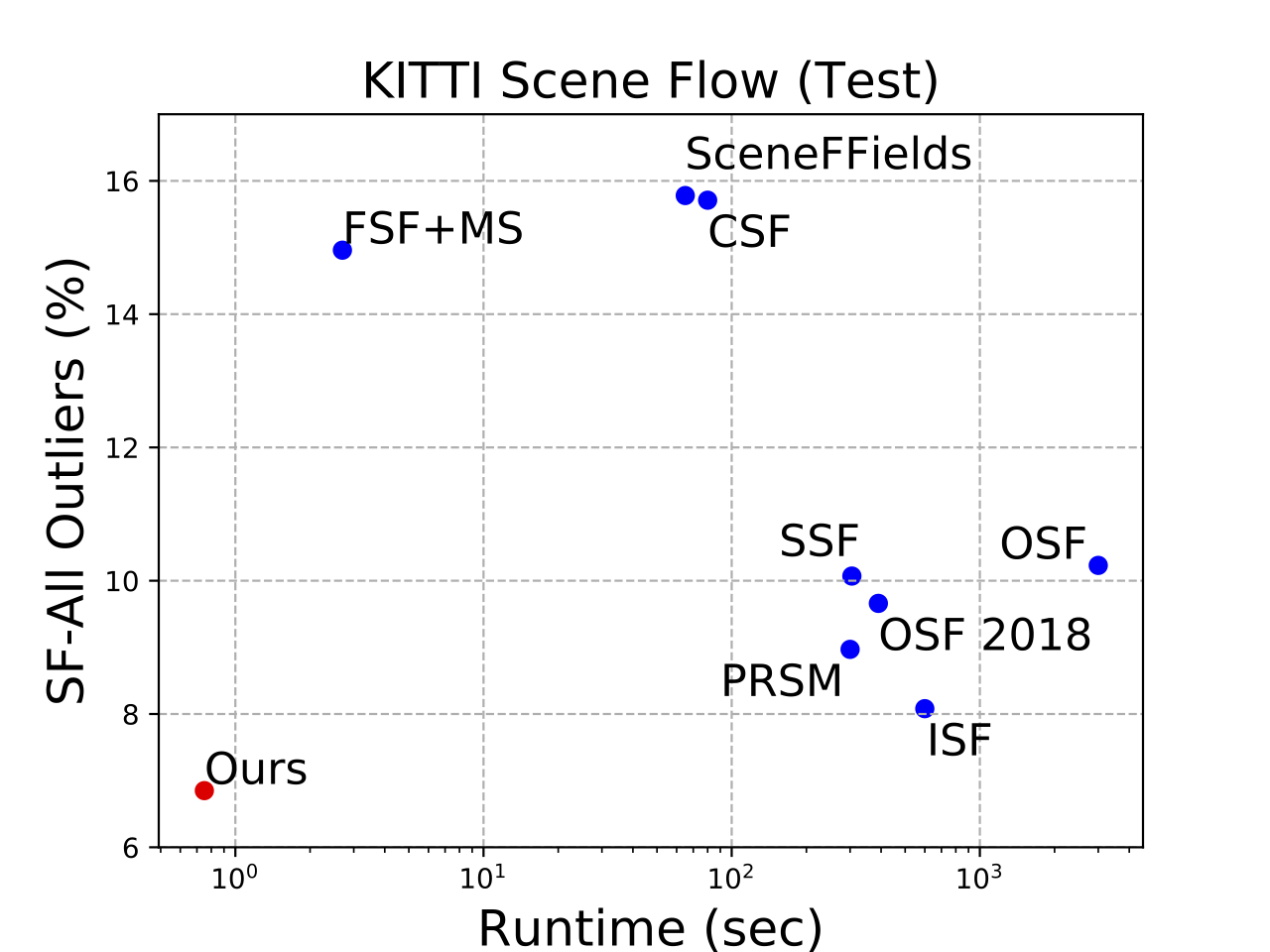
Wei-Chiu Ma is an Assistant Professor of Computer Science at Cornell University, where he leads research at the intersection of 3D/4D computer vision and robotics. His work focuses on building AI systems that can understand, reconstruct, and re-simulate our dynamic world to enable more robust autonomous systems and advance entertainment applications. Prior to joining Cornell, Dr. Ma was a Young Investigator/Postdoc at AI2 / University of Washington. He received his Ph.D. from MIT, working with Antonio Torralba and Raquel Urtasun. Before his Ph.D., he was a Senior Research Scientist at Uber ATG R&D and Waabi working on self-driving vehicles, and completed his M.S. in Robotics at Carnegie Mellon University under the advisement of Kris M. Kitani. Dr. Ma's research interests span several interconnected areas in computer vision and robotics: 3D/4D Computer Vision: Focused on scene reconstruction, modeling, and understanding from visual inputs Neural Radiance Fields (NeRF): Developing techniques for novel view synthesis and scene representation Robotics and Simulation: Creating realistic sensor simulation for autonomous systems Digital Twins: Building interactive, game-engine compatible virtual environments Self-Driving Technology: Working on scene flow estimation, sensor simulation, and vehicle localization His recent publications demonstrate a strong focus on pushing the boundaries of 3D scene understanding, with particular emphasis on extreme-view geometry, neural rendering techniques, and creating realistic simulations for autonomous systems. His work often bridges theoretical computer vision with practical applications in robotics and autonomous vehicles. Dr. Ma has received several notable recognitions including being selected as a Cyber-Physical Systems (CPS) rising star and a Siebel Scholar. He has also earned the Best Application Award for his work on TDTOS: T-Shirt Design and Try On System. As an educator and mentor, Dr. Ma is actively involved in guiding the next generation of researchers. He hosts pro bono office hours for students from underrepresented groups and is committed to fostering diversity in the field. He is currently building his research group at Cornell and plans to hire 1-2 graduate students during the 2024-25 cycle. Dr. Ma has organized several influential workshops including the "Synthetic Data for Computer Vision" workshop at CVPR 2025, the "Agent in Interaction, from Humans to Robots" workshop at CVPR 2025, and the "3D Modeling, Reconstruction, and Generation in the Wild" workshop at ECCV 2024, demonstrating his leadership in the computer vision community.
Rebecca Morris (born 1969 in Honolulu, Hawaii) is a distinguished American painter based in Los Angeles who has spent over three decades exploring abstraction. Currently on the faculty at UCLA's School of the Arts and Architecture, Department of Art, Morris is celebrated for her large-scale paintings and innovative approach to composition, color, and gesture. Her work has been featured in major institutions including the Museum of Contemporary Art Chicago, Institute of Contemporary Art Los Angeles, Whitney Biennial, Hammer Museum, and Bonnefanten Museum in the Netherlands. Morris is dedicated to the exploration of abstraction, working with thin, matte washes of color juxtaposed with shimmering metallic impasto. Her practice involves recurring motifs like fragmented patterns, distorted grids, and her signature 'lobster claw' motif. She often thins oil paint to resemble watercolor, creating patterns that evoke soil samples, bacterial cultures, and aerial landscapes. Morris positions her large canvases face up on the floor and uses custom-built scaffolding to work on pieces significantly larger than her own body. She is particularly known for her reverence of red, having set a personal goal to paint 'the ultimate red painting.' Critical analysis of Morris's work consistently examines her relationship to historical movements like Pattern and Decoration and Supports/Surfaces, while noting her refusal to be categorized within a single movement. Her paintings generate formal tensions between flat surfaces and discrete objects, exploring color theory through both subtle earth tones and vibrant metallics. The 2023-2024 survey exhibition at MCA Chicago highlighted her progression through 27 paintings spanning 21 years, showcasing her evolving visual language. Her significant recognition includes: John Simon Guggenheim Memorial Foundation Fellowship Louis Comfort Tiffany Foundation Award California Community Foundation Fellowship for Visual Art Art Matters Foundation Award Morris's 2023 monograph 'Rebecca Morris: 2001-2022' published by DelMonico Books features essays by Jamillah James, Anthony Elms, Alex Jen, Camila McHugh, and Hamza Walker. Her studio practice involves techniques including erasure, dripping, and spray painting, with the visibility of the artist's hand evident in every gesture. As she stated in her widely circulated 2005 manifesto: 'Abstraction never left, motherfuckers.'
Zuzanna Karczewska serves as Associate Professor at Montana State University's School of Architecture within the College of Arts and Architecture. She teaches core architecture curriculum including Architectural Graphics, Design Studios, and Research Methods across undergraduate and graduate programs. Her academic credentials include: Master of Arts from Cornell University (2003) Bachelor of Arts from New Jersey Institute of Technology (1998) Research focuses on architectural representation theory with emphasis on embodied spatial cognition, design communication methodologies, and object-oriented approaches to place-making. Her work bridges philosophical frameworks like object-oriented ontology with practical design pedagogy, examining how invisible elements and material entanglements shape architectural experience. Recent investigations explore hybrid design spaces where digital and physical realms intersect. Publication trends (2014-2024) reveal evolving focus from foundational representation techniques toward complex hybrid spatial systems, with consistent exploration of materiality and perception. Conference presentations at Design Communication Association events demonstrate sustained contribution to architectural education discourse. Professional recognition includes: Chamber of Commerce Awards for Excellence as mentor (2015) Nomination for Montana State University President's Excellence in Teaching Award (2013) Academic service features significant leadership roles: Design Communication Association Committee Chair (2024) Design Communication Association Chairperson (2016-2018) Conference Officer and Treasurer roles (2015-2020) Creative practice integrates with research through solo exhibitions like 'Sheep, Sage, Stone' (2019) and 'Objects and Things' (2018), demonstrating material exploration beyond traditional architectural boundaries.
Craig Mather serves as Clinical Senior Lecturer and Honorary Consultant in Oral Surgery at the University of Glasgow Dental School, with his clinical base at Glasgow Dental Hospital. He holds significant leadership roles including Deputy Director of Dental Education (appointed 2024), Dental School Quality Assurance Lead, and Deputy Admissions Officer for Dentistry. His research spans oral surgery techniques, dental education innovation, and maxillofacial pathology. Mather pioneered virtual clinical assessment methods during the pandemic, publishing extensively on remote teaching adaptations. His clinical research focuses on sedation protocols, salivary gland disorders, and rare oral pathologies including lymphoma cases and odontogenic tumors. Publications reveal consistent output since 2007 with recent emphasis on educational methodology (2022-2023). His work demonstrates strong collaboration within Glasgow's dental academic community, particularly with Binnie, Bell, and Donn on pandemic-related educational adaptations. Scientific recognition includes: Teaching Excellence Award (2021, team award for Dental Online Clinic Assessment) Diploma of Fellowship of the Faculty of Dental Surgery (FDS) from Royal College of Surgeons of Edinburgh (2019) Postgraduate Diploma in Healthcare Professions Education with merit (2014) Mather actively supervises trainees as Educational Supervisor for Dental Core Trainees and Clinical Supervisor for Specialist Trainees. His leadership extends to NHS Greater Glasgow and Clyde where he serves as Clinical Lead for Oral Surgery, and to professional bodies including Royal College of Physicians and Surgeons of Glasgow (Interim Vice Dean for Dental Faculty). He maintains active roles in academic governance as University of Glasgow representative on Scottish Oral Surgery Specialist Training Committee (2017-2020) and examiner for postgraduate dental examinations (ISFE, MOral Surgery, MFDS).
Dr. Kai Drewes serves as Head of the Infrastructure Group and leads the Digital History / Scientific Collections division at the Leibniz Institute for Research on Society and Space (IRS) in Erkner, Germany. With a doctorate in modern history completed in 2011, he specializes in contemporary history with emphasis on DDR architectural and planning history, archival science, and digital heritage preservation. His research interests focus on DDR history , particularly urban planning, architectural documentation, and the socio-spatial transformation of East Germany. He examines architectural history through material culture including prefabricated housing systems (WBS 70), CAD development in socialist states, and architectural drawings. His digital history work explores cartographic analysis, migration patterns, and the digitization of physical collections. Additional expertise includes cultural heritage preservation of endangered archives and institutional collection building strategies. Analysis of his 15 most recent publications reveals consistent focus on material evidence of socialist-era planning, with increasing attention to digital methodologies since 2020. His work bridges architectural history, archival science, and spatial social research, demonstrating interdisciplinary approaches to understanding DDR's built environment through primary sources ranging from architectural models to migration cartograms. Research Prize of the Foundation for Personal History (2014) for dissertation on Jewish nobility granting in 19th-century Europe As division head since 2013 (Digital History / Scientific Collections since 2022), Drewes directs IRS's archival infrastructure while serving as deputy spokesperson for the Federation of German-speaking Architectural Collections (since 2019) and previously leading the Leibniz Association's Archives Working Group (2020-2024). His projects include 'Geschichte und Rezeption der Bauakademie der DDR' examining institutional history through interviews, and ongoing curation of the IRS's scientific collections containing unique DDR planning documents rescued from destruction.