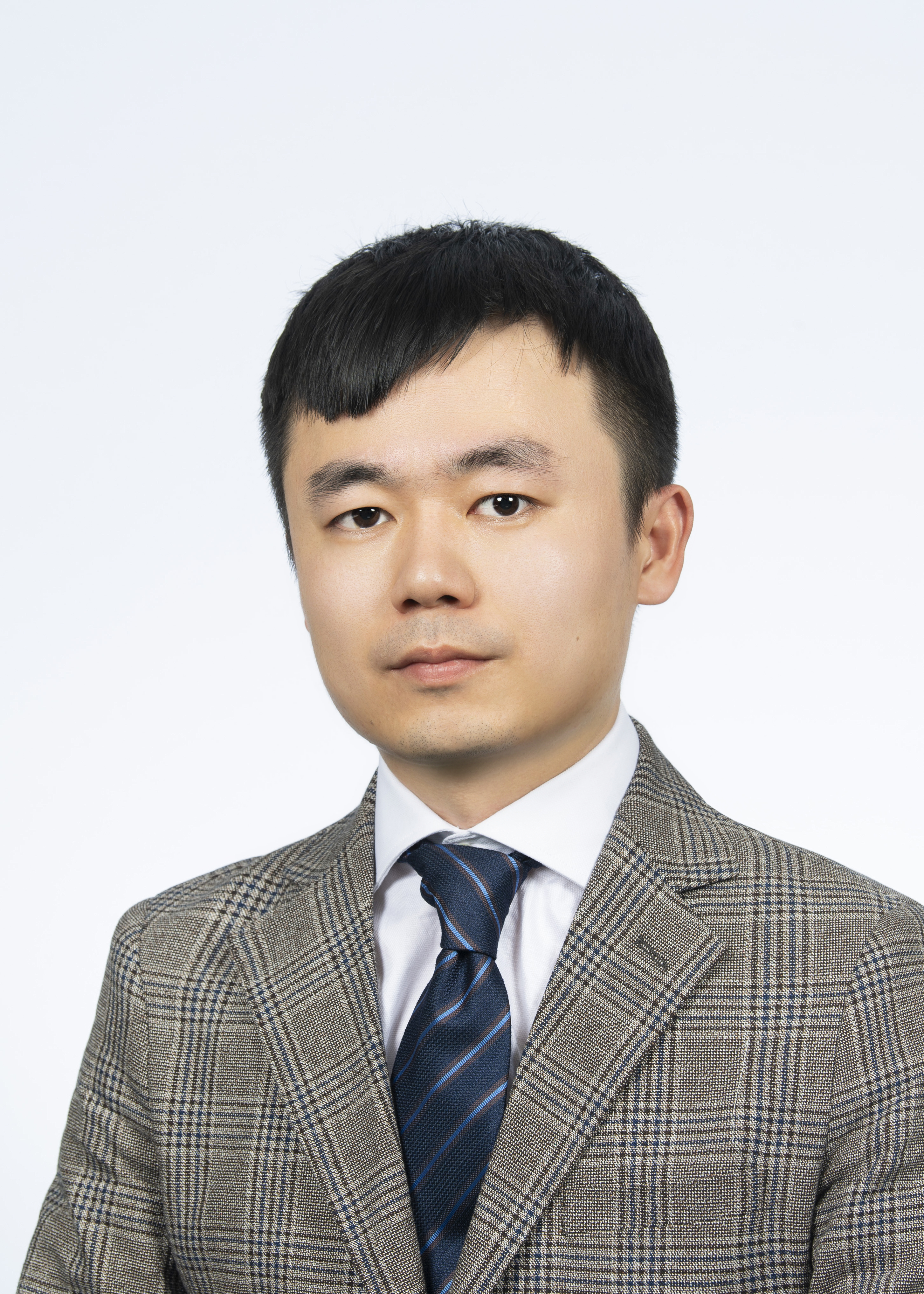
Adrien Gaidon is an Adjunct Professor with a focus on Human-Centered Action Recognition and advanced visual representation learning. His current projects include collaborations with MIT on Physical and Functional Inductive Biases for visual systems, while completed works span Robust Machine Learning and Interaction-Aware Control for autonomous vehicles. Research Trends : His 2025 publications emphasize 3D Scene Understanding , Depth Estimation , and Neural Radiance Fields , alongside innovations in Uncertainty-Aware Perception and Self-Supervised Learning . Key subfields include Autonomous Driving , Robotics , and Geometric Learning for dynamic environments. Advising and Grants : No explicit details about students, teams, or grants were found in the provided text.
James Bagrow is an Associate Professor of Mathematics & Statistics at the University of Vermont, affiliated with the Vermont Complex Systems Center. His research focuses on complex systems, network science, and data science, combining mathematical models with large-scale data analysis to understand physical and social systems. He has pioneered methods in network data analysis, including the development of the textbook Working with Network Data (Cambridge University Press, 2024). Bagrow's work spans diverse applications, from human mobility patterns to open-source software dynamics and emergency response modeling. He teaches courses in applied mathematics and data science, including Data Science I/II and Advanced Engineering Mathematics . His interdisciplinary contributions have led to collaborations across computer science, physics, and social sciences, with over 70 peer-reviewed publications. Notable achievements include the FOSS Impact paper award (2021) and a Nature Human Behaviour cover article (2022) on sleep patterns during travel. Bagrow's research emphasizes predictive capabilities in social systems, information flow dynamics, and network visualization. His lab explores computational tools for analyzing complex networks, with applications to urban dynamics, crowd behavior, and disaster response. His recent work bridges symbolic regression and neural networks, aiming to enhance model interpretability and accuracy. Awards: FOSS Impact paper award (2021), Nature Human Behaviour cover article (2022) Grants & Funding: Active in securing NSF and interdisciplinary grants for complex systems research Lab/Team: Vermont Complex Systems Center, fostering collaborations in data-driven science and network analysis
António Pinheiro is an Associate Professor in the Department of Physics at Universidade da Beira Interior and researcher at Instituto de Telecomunicações. He specializes in image processing, multimedia quality evaluation, emerging 3D imaging technologies, and medical image analysis. Research interests span: Multimedia quality assessment methodologies Point cloud compression and processing Medical image analysis for diagnostic applications JPEG standardization and emerging imaging formats 5G multimedia streaming technologies He has received multiple scientific awards including: 2022 Best Paper at 3D Imaging and Applications 2020 Award-winning ETRI Journal Papers 2014 Top 10% Paper Award at IEEE MMSP As director of the 'Eletrónica Digital: Circuitos e Sistemas' program, he teaches courses on digital systems, microprocessors, and signal/image processing. He actively contributes to ISO/IEC JPEG standardization as Communication Subgroup chair.
Jong-Hwan Kim is a Professor at KAIST's College of Engineering, specialized in robotics and artificial intelligence. His research focuses on neural networks, autonomous systems, computer vision, and human-robot interaction. He has published extensively in top-tier conferences like CVPR, ICRA, and IEEE Transactions. Key contributions include work on developmental learning networks, episodic memory models, and AI applications in robotics and healthcare. He co-chaired the RiTA conference series and has collaborated with institutions globally. His research bridges theoretical advancements with practical applications in robotics, medical diagnostics, and multimodal AI. Affiliations: KAIST (main), Seoul National University (PhD 1987) Research Highlights: Visual odometry, gesture recognition, emotion modeling, and robotics task intelligence Recent projects include text recognition via finger movement, Alzheimer's disease classification using EEG-FNIRS fusion, and multimodal emotion recognition systems. His work emphasizes interdisciplinary approaches, integrating robotics, computer vision, and cognitive science.
Raza Hasan is a Senior Lecturer in Computing (AI & Data Science) at Solent University, part of the Science and Engineering Research Group. He has been actively involved in research since 2011, with a focus on AI-driven solutions for environmental monitoring, healthcare informatics, robotics, and cybersecurity. His recent work includes the SEAGUARD project (2024–2027), funded by the European Commission and UKRI, which develops unmanned AI robotics for marine environmental awareness. His research interests span machine learning applications in medical diagnostics, swarm robotics optimization, cybersecurity, and data-driven decision-making systems. He has published 91+ peer-reviewed articles across journals like IEEE Access and Information (Switzerland), with a strong emphasis on practical implementations such as UAV flock coordination, fraud detection systems, and explainable AI in healthcare. Key themes in his work include: Developing intelligent systems for environmental and health monitoring Optimizing multi-agent robotic coordination through transfer learning Enhancing data interpretability in medical prediction models Addressing cybersecurity challenges in cloud and IoT environments His publications demonstrate a trend toward interdisciplinary applications, combining AI with domain-specific problems in healthcare, agriculture, and transportation. While no formal awards are listed, his prolific output and collaborative projects reflect significant contributions to applied AI research.
Angelos Amanatiadis is Assistant Professor of Robotics at the Department of Production and Management Engineering, Democritus University of Thrace (DUTH), Greece. He received his Diploma and Ph.D. (Hons.) from the Department of Electrical and Computer Engineering at DUTH in 2004 and 2009, respectively. His research focuses on autonomous robotic systems , computer vision , machine learning , and real-time embedded systems . His publications (35+ journal papers, 50+ conference papers) cover topics like autonomous vehicle localization, 3D object detection, educational robotics, and image processing. He has received the Stavros Niarchos Award for Promising Young Scientists and IKY Postdoc Scholarship . He contributes to the field as Associate Editor of the International Journal of Advanced Robotic Systems and HardwareX Journal, and as a program committee member for 10+ international conferences. His recent work includes leading the development of Greece’s first Hellenic Autonomous Vehicle (HAV) using deep learning and AI. He teaches courses on Control Systems, Big Data Analytics, Robotics, and Computational Intelligence. His research has been featured in media outlets like BBC, Bloomberg, IEEE Spectrum, and Popular Science.
Mary Peterson is a Professor in the Department of Psychology at the University of Arizona, serving as Director of the Cognition Science Program and Chair of the Cognitive Science Graduate Interdisciplinary Program. She also holds roles in the Evelyn F. McKnight Brain Institute and the School of Mind, Brain and Behavior, leading the Visual Perception Laboratory. Her research focuses on perceptual organization, figure-ground perception, and the interplay between memory and visual processing. She investigates how semantic information, context, and prior experience influence object detection and spatial cognition. Dr. Peterson’s work spans developmental, computational, and neuroscientific perspectives, addressing topics like aging effects on perception, attentional mechanisms, and the neural underpinnings of visual segmentation. She employs methodologies such as eye tracking, EEG, and fMRI, collaborating across disciplines to bridge cognitive psychology and neuroscience. Her lab explores how humans segment objects from backgrounds, integrate sensory input with conceptual knowledge, and adapt perceptual strategies based on context and task demands. Key areas include the role of inhibition in figure-ground competition, the impact of semantic priming on visual attention, and the development of object perception in infancy. She has contributed to debates on predictive coding, hierarchical Bayesian models, and the influence of memory on perception. Her recent work examines aging-related changes in perceptual processing, linking neural mechanisms to behavioral outcomes in older adults.
Robert W. Lindeman is affiliated with the HIT Lab NZ at the University of Canterbury, New Zealand, and previously with Worcester Polytechnic Institute's Department of Computer Science in the USA. His primary research focuses on advancing Virtual Reality (VR) and Augmented Reality (AR) technologies, with an emphasis on immersive systems, user experience optimization, and application domains such as education, healthcare, and cultural preservation. Key research areas include: Immersive learning environments and firefighter training simulations Cybersickness mitigation through haptic feedback and locomotion techniques Privacy and behavioral identity risks in VR systems Cultural storytelling through cinematic VR adaptations Multi-sensory interaction techniques (e.g., floor vibration feedback) His work spans over two decades, with contributions to conferences like IEEE VR, ISMAR, and journals such as Frontiers in Virtual Reality and IEEE Transactions on Visualization and Computer Graphics. He collaborates extensively with researchers globally, focusing on practical applications of VR/AR in real-world scenarios. Notable projects include developing adaptive cinematic VR frameworks, evaluating avatar expressiveness in social VR, and exploring the intersection of Indigenous cultural preservation with immersive technologies. His research addresses both technical challenges (e.g., gesture interaction design) and human factors (e.g., presence metrics).
Dr. Tanchao Pu is a Research Fellow at the University of Southampton's Optoelectronics Research Centre (ORC), focusing on artificial intelligence applications in nanophotonics and advanced optical microscopy. He holds a BS in Electronics from Beijing JiaoTong University (2015) and a PhD in Microelectronics from the University of Chinese Academy of Sciences (2022). His research interests include imaging/microscopy, computer vision, and optical superoscillation. Pu has contributed to pioneering work in deeply subwavelength optical metrology, non-contact nanoparticle analysis, and AI-driven grating design. He has co-authored over 20 peer-reviewed articles and serves as an invited reviewer for journals like Applied Physics Letters and APL Photonics. His work bridges nanophotonics with machine learning, aiming to push optical imaging and metrology beyond traditional resolution limits.
Stefan Roth is a Professor of Computer Science at Technische Universität Darmstadt, where he leads the Visual Inference Lab. His research focuses on statistical models for visual inference problems, with expertise in computer vision, machine learning, and deep learning applications. Specific areas include semantic scene understanding, image motion estimation, and probabilistic models for low-level vision tasks. Key research areas: Semantic scene understanding and segmentation Optical flow and scene flow estimation Deep learning architectures for vision Probabilistic modeling in computer vision Video analysis and understanding Professor Roth's recent publications explore transformer-based scene graph generation, unsupervised segmentation techniques, and foundation models for depth estimation. His work demonstrates strong interdisciplinary connections between computer vision, machine learning, and autonomous systems, with applications in urban scene understanding and intelligent transportation systems.
Dr. Hang Dai is transitioning to a Full Professor position at Wuhan University after serving as Honorary Research Fellow at the University of Glasgow's School of Computing Science. His research spans computer vision, medical image analysis, and autonomous driving systems. With over 26 publications, he develops deep learning methods for 3D segmentation, object detection, and video enhancement. Research areas include: Advanced 3D semantic segmentation for LiDAR data Semi-supervised medical image analysis Multi-modal fusion for autonomous vehicles Current projects focus on certainty-guided contrastive learning for medical imaging and attention mechanisms for depth super-resolution.
Mike Burton is a Professor of Psychology at the University of York, with a career spanning institutions across the UK, including the University of Aberdeen and University of Glasgow. His research focuses on face perception, emphasizing the mechanisms enabling identification across variable visual conditions and applications in computer-based face recognition and forensic settings. Education: BSc in Joint Honors Mathematics and Psychology (1980), University of Nottingham; PhD in Psychology (1983), University of Nottingham. Mike’s research explores how perceptual systems derive stable representations from variable face images, using experimental and computational modeling. Collaborations extend to security agencies and institutions like Kent University, Durham University, and the University of New South Wales. Recent work examines neural dynamics, multimodal cues, and virtual environments in face recognition. His publications span cognitive science, neuroscience, and forensic psychology, with a focus on unfamiliar face matching, neural correlates of familiarity, and computational modeling. Key grants include an ESRC Professorial Fellowship (2012–2016), an ERC Advanced Grant (2013–2018), and ongoing ESRC projects on high-fidelity avatars (2023–2026) and individual face recognition (2023–2026). Scientific Awards: Fellow of the British Academy (2017) Fellow of the Academy of Social Sciences (2019) Fellow of the Royal Society of Edinburgh (2006) Mike has held editorial roles in journals like Quarterly Journal of Experimental Psychology and Psychological Science , and served on REF2014 and REF2021 panels. He collaborates with researchers such as Rob Jenkins, Holger Wiese, and Markus Bindemann.
Karla K. Evans is a Senior Lecturer (Associate Professor) in the Department of Psychology at the University of York. Her academic career spans prestigious institutions including Princeton University, Harvard Medical School, and Brigham and Women's Hospital before joining York in 2013. She serves on the Psychology Department Athena Swan Committee and represents Psychology on the University's Athena Swan working group. Dr. Evans earned her BSc (Hons) in Experimental Psychology from the University of Trieste (1998), followed by an MA (2004) and PhD (2007) in Cognitive Psychology from Princeton University. She completed postdoctoral training at MIT (2007-2008) and Harvard Medical School/Brigham and Women's Hospital (2008-2013). Her research centers on how sensory systems integrate information to produce coherent perception, with expertise in attention, visual cognition, memory, multimodal perception, and medical image perception. She employs diverse methodologies including psychophysics, fMRI, EEG, and eye tracking. Her work bridges cognitive psychology with practical applications in medical imaging, particularly mammography analysis. Dr. Evans' publication record shows consistent output with 46 publications through 2025, demonstrating evolving focus from fundamental visual cognition to applied medical image perception. Her recent work explores scene complexity, visual memory schemas, and the 'gist' processing in mammograms that enables early cancer detection. She collaborates extensively with radiologists, computer scientists, and cognitive psychologists. She actively mentors students, accepting PhD candidates, and contributes to academic service as an ad hoc reviewer for vision, attention, and neuroscience journals, and as an NIH grant review panel member. Her research has been supported by grants including the Individual Ruth Kirschstein-NRSA Postdoctoral grant (2009-2012). Dr. Evans is affiliated with the Perception and Action (Vision group) and Cognition and Communication (Attention, Learning & Memory group) research teams at York, where she continues to advance understanding of visual perception mechanisms and their applications in medical diagnostics.
Dr. Nicolas Pugeault is a Reader in Computing Science at the University of Glasgow's School of Computing. He holds a PhD from the University of Göttingen and has held roles including Postdoc at the University of Surrey and Assistant Professor at the University of Southern Denmark. His research focuses on cognitive vision, machine learning, and visual attention in complex control tasks. He has led projects like the EPSRC-funded DEVA grant and collaborated with institutions like the Alan Turing Institute. Education: Engineer degree from ESIEA Paris, MSc in Computational Intelligence from Plymouth, PhD from Göttingen. Research interests include human vision insights, visual attention modeling, and contextual scene understanding. Awards include the Alan Turing Institute Fellowship (2018–2020). Publications span anomaly detection in medical imaging, contextual object detection, and autonomous driving. His work integrates AI with robotics and environmental applications, such as weather forecasting and plankton analysis. He supervises a diverse cohort of PhD students across vision, robotics, and machine learning. Grants include leadership on EPSRC and InnovateUK projects. Teaching includes modules on Deep Learning and Data Science. His labs and teams contribute to advancements in cognitive vision systems and AI-driven solutions for real-world challenges.
Bin ZHU is an Assistant Professor of Computer Science at Singapore Management University's School of Computing and Information Systems. Previously worked as a Postdoctoral Researcher at University of Bristol under EPSRC Visual AI Program Grant with Prof. Dima Damen. PhD in Computer Science (2021) - City University of Hong Kong MSc and BSc from Zhejiang University and Southeast University Research focuses on Human Centered Multimedia Computing with key areas: Cross-modal retrieval and Multi-modal Large Language Models Egocentric Video Understanding and Generative AI AI for Healthcare and Wellness Informatics Digital Transformation through Multimedia Systems Active in publishing at top venues (ICCV, CVPR, AAAI, ACM MM) with specialization in Visual Instruction Fine-Tuning and Adapter Modules. Recent work includes HD-EPIC dataset development and Dual-LoRA framework for efficient multimodal adaptation. Contact: binzhu@smu.edu.sg | bin.zhu@smu.edu.sg