Didem Vardar-Ulu is a Senior Lecturer in the Chemistry Department at Boston University, specializing in chemical education and STEM curriculum innovation. She holds a BS in Physics from Bilkent University (1995) and a PhD in Biophysics from Boston University School of Medicine (2001). Her research focuses on student-centered educational strategies, including molecular case studies, competency-based assessments, and ungrading practices in STEM disciplines. She has developed multiple courses such as CH 373 (Biochemistry), CH 101/103 (General Chemistry), and laboratory coordination roles for chemistry courses. Her work emphasizes inclusivity, equity, and active learning pedagogies. Key research areas include: (1) Molecular CaseNet collaborations for visual literacy, (2) student-authored teaching materials, (3) alternative assessment strategies for laboratories, and (4) decentering grades in upper-level STEM courses. Her group’s initiatives are documented on the Vardar-Ulu Group Website. Awarded numerous fellowships including Molecular CaseNet Mentoring Network (2020-), Adobe Creative Campus Fellow (2021), and Cottrell College Science Award (2008-2011). She has pioneered blended learning approaches and curriculum redesigns addressing challenges in large-classroom environments with teaching assistants. Teaching responsibilities include lab coordination roles (CH 171/172 Principles of Chemistry) and course development emphasizing evidence-based practices. Her educational philosophy prioritizes mentorship, student autonomy, and interdisciplinary connections in learning.
Dr. Ellen Watson is an Assistant Professor in the Department of Curriculum & Pedagogy at Brandon University. She specializes in science and physics education with a focus on teacher epistemic beliefs, curriculum development, and educational equity. Ellen holds a BSc (Physics) from the University of Saskatchewan (2006), BEd (2008), MEd (Curriculum & Instruction, University of Regina, 2012), and PhD (Secondary Science Education, University of Alberta, 2021). Education: BSc Physics (2006), BEd (2008), MEd (2012), PhD (2021) Her research explores teachers' beliefs about science knowledge, nature of science education, and curriculum engagement. She has contributed to Saskatchewan's Grade 12 Physics curriculum (2012-2015) and investigates STEM education across K-12 and post-secondary levels. Key projects include studies on epistemic beliefs (funded by Manitoba Research Grant, 2022-2025) and ungrading practices in Manitoba science classrooms (co-PI with Sarkonak & Misner). Dr. Watson serves on numerous committees including: Past-President of the Science Education Research Group (2023-2024), member of the Science Teachers’ Association of Manitoba (2021-present), Brandon University Research Ethics Committee (2023-2026), and editorial roles for Alberta Science Education Journal and BU Journal of Graduate Studies in Education .
Dr. Jason Yeatman is an Associate Professor at Stanford University, holding appointments in the Graduate School of Education, Department of Psychology, and the Division of Developmental and Behavioral Pediatrics at the School of Medicine. His research focuses on understanding the neural mechanisms of reading development, dyslexia, and designing literacy interventions. He directs the Brain Development and Education Lab, employing neuroimaging techniques to study how reading instruction shapes brain circuits. He earned his PhD in Psychology at Stanford, studying the neurobiology of literacy. After a faculty position at the University of Washington, he returned to Stanford. His work bridges neuroscience, education, and technology, with a focus on scalable assessments like the Rapid Online Assessment of Reading (ROAR) tools. Research interests include brain development, learning sciences, and educational equity. He teaches courses such as 'The Science of Reading' and mentors numerous graduate and postdoctoral students. His lab develops open-source tools for neuroimaging analysis and collaborates on large-scale projects like the Human Connectome Project. Key contributions include identifying neural correlates of reading skill, studying white matter plasticity in children, and advancing adaptive testing methods for literacy screening. His work emphasizes translating neuroscience insights into practical educational strategies.
Rafael Jiménez López is a Full Professor in the Department of Psychology at the University of the Balearic Islands (UIB), specializing in Methodology of Behavioral Sciences. He has extensive teaching experience across undergraduate, master's, and doctoral programs, focusing on applied statistics, data mining, and evidence-based psychology. Previously, he served as Vice Dean and Head of Studies at the Faculty of Psychology from May 2007 to October 2016. Education: Psychology Degree from UIB (1998), awarded the extraordinary degree prize PhD in Psychology from UIB (2003) Dr. Jiménez's research centers on advanced statistical methodologies and data mining techniques applied across various fields. His work emphasizes developing and applying sophisticated statistical models to extract meaningful patterns from complex datasets. He has particular expertise in applying these methods to healthcare research, educational assessment, and behavioral science. His methodological contributions help bridge the gap between theoretical statistics and practical applications in substantive research areas. His recent publication record demonstrates a strong focus on applying data science techniques to healthcare interventions, particularly diabetes prevention (PREDIABETEXT project), as well as educational research and evidence-based practice. The work shows integration of traditional statistical methods with modern data mining approaches, often in collaborative, interdisciplinary research teams. Scientific Awards: Extraordinary degree prize for Psychology degree Dr. Jiménez actively supervises thesis work at the doctoral level and has directed numerous master's and bachelor's theses. His teaching portfolio includes advanced statistics, data mining, and evidence-based psychology courses. He has participated as a researcher in 5 national competitive research projects and several projects awarded by IdISBa (Balearic Islands Health Research Institute), demonstrating strong grant acquisition capabilities. He is a member of the Data Analysis (GRAD) research group at UIB, a consolidated R&D&I structure focused on advanced statistical methodologies and their applications across various disciplines. This group provides a collaborative environment for methodological innovation and interdisciplinary research.
Johan Lie is an Associate Professor at the Department of Mathematics , University of Bergen. His email is johan.lie@uib.no . He has contributed extensively to mathematics education through interdisciplinary projects and digital tools.
Claire Jones is a Senior Lecturer in Psychology at the University of Wolverhampton within the Faculty of Education, Health, and Wellbeing. She specializes in Educational and Developmental Psychology with a focus on cognitive processes involved in belief formation and maintenance. Jones began her career at Wolverhampton as a Demonstrator in Psychology in 2010, progressed to Lecturer in 2016, and was promoted to Senior Lecturer in 2019 where she currently serves as module leader for Advanced Research Methods in Psychology and Core Debates in Psychology. Her educational background includes: PhD in Cognitive Psychology from the University of Wolverhampton BSc (Hons) Psychology from the University of Wolverhampton Postgraduate Certificate in Higher Education (2013) Dr. Jones's research primarily focuses on cognitive mechanisms underlying belief formation, with particular emphasis on conspiracy theories and misinformation. She co-leads the 'Applied Cognition and Individual Differences' research cluster and leads the 'Conspiracy Theories and Misinformation' special interest group. Her work examines how thinking styles, reasoning abilities, and cognitive processes influence susceptibility to misinformation and conspiracy theories, particularly among adolescents and young adults. She has also conducted significant research on bereavement processes and cognitive aspects of video gaming. Her publication record demonstrates a strong trajectory in understanding belief systems, with recent systematic reviews on conspiracy theories in adolescent populations and continuing bonds following bereavement showing methodological rigor and comprehensive evidence synthesis. Her work spans cognitive, social, and clinical psychology domains with practical applications for addressing misinformation in educational settings. Her scientific recognition includes: Fellow of the Higher Education Academy (2013) Dr. Jones actively supervises multiple PhD and Professional Doctorate students across diverse topics including magical ideation, reconciliation in polarized environments, prebunking strategies against misinformation, and bereavement processes. She has secured research funding including a Lord Paul Fellowship for studying conspiracy theory beliefs and a University of Wolverhampton Doctoral College grant for research on terrorism perceptions. Her professional activities include serving on the Psychology Ethics Committee and presenting research at numerous national and international conferences. She co-leads the 'Applied Cognition and Individual Differences' research cluster and heads the 'Conspiracy Theories and Misinformation' special interest group, fostering collaborative research on cognitive processes related to belief formation and maintenance.
Jeff Allred is an Associate Professor of English at Hunter College and Associate Professor of Digital Humanities at the CUNY Graduate Center. He has taught at Hunter College since 2005 and joined the M.A. Program in Digital Humanities at the Graduate Center in 2018. He serves as Director of Undergraduate Studies for the English Department at Hunter College and teaches courses including ENGL 252 (Cli-Fi: The Novel and the Anthropocene), ENGL 306 (Introduction to Literary Theory), ENGL 784 (William Faulkner), and various Digital Humanities courses. His educational background includes: Ph.D. in English from University of Pennsylvania (2005), with distinction B.A. in American Studies from Williams College (1995), magna cum laude Professor Allred's research focuses on American literature, modernism, and American studies, with particular emphasis on visual culture and documentary forms. His work explores the intersections between literature, visual media, and social history, especially during the Depression era. He is increasingly engaged with digital humanities approaches to literary study and pedagogy, examining how computational methods can enhance traditional literary scholarship and teaching practices. His research demonstrates how documentary forms bridge literary, visual, and social concerns across historical periods. His publications reveal a consistent trajectory exploring documentary representation across media forms, from Depression-era photography to contemporary digital practices. His work bridges traditional literary scholarship with emerging digital methodologies, reflecting his dual appointment in English and Digital Humanities. The recurring themes in his scholarship include questions of representation, power dynamics in cultural production, and the evolving relationship between literature and visual media throughout American history. Professor Allred is actively involved in teaching and mentoring: Director of Undergraduate Studies for English Department at Hunter College Regularly teaches courses on literary theory, American literature, documentary forms, and digital humanities Advises MA students in both English and Digital Humanities programs Develops innovative pedagogical approaches that integrate digital tools with traditional literary study He participates in numerous academic communities, including the Digital Humanities Initiative, Digital Studies Group, and Digital Humanities Reading Group, contributing to the development of digital scholarship across CUNY.
Rolf Harald Baayen is a Professor of Quantitative Linguistics at the University of Tübingen, where he holds the Alexander von Humboldt Professorship and leads a research group on discriminative learning in language processing. He has held academic positions at Radboud University Nijmegen, the University of Alberta, and the Max Planck Institute for Psycholinguistics. Baayen has had a long-standing collaboration with the University of Tartu, where he was awarded an honorary doctorate in linguistics in 2023 for his contributions to quantitative methods in linguistics and mentorship of Estonian scholars. His research interests center on quantitative linguistics , psycholinguistics , and statistical modeling of language . He is particularly known for his work on morphological productivity , language processing , and discriminative learning models . His methodological contributions, especially through the textbook Analyzing Linguistic Data , have revolutionized how linguists apply statistical techniques using R. His recent projects, such as WIDE and SUBLIMINAL, funded by the European Research Council, explore word production and comprehension in spontaneous speech and cross-linguistic processing, especially in Asian languages. Baayen's recent publications reflect a strong focus on computational and statistical approaches to linguistic theory, integrating corpus data, cognitive modeling, and machine learning. His work consistently bridges theoretical linguistics with empirical, data-driven analysis, influencing both cognitive science and computational linguistics. His scientific awards include: Alexander von Humboldt Professorship Two ERC Advanced Grants (WIDE and SUBLIMINAL) Pionier Career Advancement Award (Netherlands Research Council) Membership in the Academia Europaea Honorary Doctorate from the University of Tartu Muller Chair from the Royal Netherlands Academy of Arts and Sciences Baayen has supervised 32 doctoral dissertations (25 completed), significantly contributing to the training of next-generation linguists in quantitative methods. He has organized numerous workshops at institutions like the University of Tartu and has been instrumental in advancing research infrastructure in quantitative linguistics. He is currently the editor-in-chief of The Mental Lexicon and continues to lead cutting-edge research in language modeling and cognitive processing. He is affiliated with research groups at the University of Tübingen and maintains active collaborations with linguists across North America, Europe, and Asia, particularly in Estonia and the Netherlands. His work with Estonian language data has helped position Estonia as a hub for innovative linguistic research.
Akito van Troyer is an Associate Professor in the Department of Electronic Production and Design (EPD) at Berklee College of Music, where he teaches sound design, audio programming, machine learning, digital musical instrument design, and multimedia performance. He holds a Ph.D. from the MIT Media Lab (2018), a master's from the MIT Media Lab (2012), and another master's from the Georgia Tech Center for Music Technology (2010), reflecting his interdisciplinary background in media arts, music technology, and interactive systems. His research lies at the intersection of music, technology, and human expression, focusing on developing new musical interfaces and systems that enhance audience participation and creative exploration. His work spans human-computer interaction, digital signal processing, tangible interfaces, machine learning, and assistive technologies. Projects such as DrumTop, FATkit, KinéPhone, and Tactiloscope demonstrate his innovative approach to redefining musical interaction through physical and digital integration. His recent publications reveal a consistent trajectory in exploring novel forms of musical engagement, from GAN-based interface design to sensory augmentation for food perception and interspecies communication. These works reflect a deep commitment to pushing the boundaries of how music is created, experienced, and shared across diverse contexts and communities. People's Choice Awards for Most Unusual Musical Instrument, Guthman Musical Instrument Competition (2017) Best Artwork Award, the ACM Creativity and Cognition Conference (2011) Dr. van Troyer’s professional experience includes roles as a senior research engineer at Sonos and founder/lead technologist at AVTLab, enriching his academic teaching with real-world industry insights. He has taught at MIT and Colorado College, and his collaborative projects emphasize teamwork, communication, and interdisciplinary innovation. He mentors students through hands-on learning and has led numerous workshops and creative projects that bridge theory and practice. His research has been supported by grants such as the Boston Foundation grant for the Digital Split-Keyboard project. He leads AVTLab, a research and development lab focused on creating new musical instruments and interactive experiences. His future work continues to explore sensory translation, inclusive design, and AI-driven creativity in music.
Jennie Carlsten is a Lecturer in Media at Ulster University's School of Communication and Media, specializing in screen emotion analysis, documentary cinema, and film history. Her work bridges cognitive theory with visual anthropology, focusing on audiences' emotional engagement with screen media and historical representation. Education: PhD from Queen's University Belfast (2008) Her teaching emphasizes critical theory and contextual analysis, connecting screen media to broader social and historical frameworks. She advocates for media literacy as a civic engagement tool, particularly in documentary and Irish/Northern Irish cinema contexts. Research trends show consistent focus on emotional reading models, feminist film practices, and community cinema initiatives like Belfast Feminist Film School. Recent articles highlight curatorial activism and ethical screen scholarship frameworks. Civic Involvement: Board member of Irish Screen Studies association Research Centers: Center for Media Research She has organized numerous academic and public-facing events, including conferences and training sessions, while maintaining part-time research work with Film Hub NI.
Ellen Peters is the Philip H. Knight Chair and Professor at the University of Oregon, with joint appointments in the School of Journalism and Communication (SOJC) and the Department of Psychology. She directs the Center for Science Communication Research and serves as an associate in the Phil and Penny Knight Campus for Accelerating Scientific Impact. Her research focuses on how numeracy and affect influence decision-making in health, financial, and environmental contexts, particularly across adult aging. Education: PhD and MS in Judgment and Decision Making (University of Oregon); Dual BS in Economics (Wharton School) and Systems Engineering (University of Pennsylvania) Her work bridges basic and translational research, examining how evidence-based communication can improve public understanding of science and technology. She has contributed to climate change health communication, cancer screening policies, and financial decision-making frameworks. Recent publications emphasize climate change health impacts, numeric self-efficacy, and pandemic-related statistical understanding. She holds interdisciplinary affiliations with UO’s Cancer Control Center, federal agencies like the National Cancer Institute, and the Lancet Countdown U.S. Brief Working Group. Scientific Honors: AAAS Fellow, NIH Merit Award (CASPHR Working Group), Jane Beattie Scientific Recognition Award, APA/APS/SESP Fellowships She leads the CAIDe Lab and has advised policy groups including the FDA’s Risk Communication Advisory Committee. Her book Innumeracy in the Wild (Oxford, 2020) explores the societal consequences of numeric misunderstanding.
Prof. Dr. Stefan Krauss is a full Professor and holds the Chair of Mathematics Education at the Faculty of Mathematics, University of Regensburg, where he has been a faculty member since 2009. He leads research in teacher professional competence, statistical reasoning, and educational assessment, notably through the COACTIV and FALKO projects. Education: Habilitation in Mathematics Education, University of Kassel, 2009 Doctorate in Education, Free University of Berlin, 2001 Studies in Mathematics and Physics, Friedrich-Alexander University Erlangen-Nuremberg, 1995 His research focuses on mathematics education , particularly teacher knowledge , Bayesian and statistical reasoning , cognitive activation , and visualization tools in probability education. He investigates how teachers’ professional competence affects classroom quality and student outcomes. His work bridges cognitive psychology, didactics, and large-scale educational research. His recent publications show a strong trend toward empirical studies on Bayesian reasoning , innovative visualizations (e.g., frequency nets), diagnostic skills , and transdisciplinary educational research . He frequently publishes in high-impact journals in education and psychology. He teaches courses in the didactics of algebra, geometry, stochastics, and number systems, and supervises academic staff and student assistants. He has no listed scientific awards in the provided text. He is actively involved in advising and research grants through major projects like COACTIV and FALKO, which examine teacher competence and transdisciplinary educational practices. He collaborates with a large team across disciplines and institutions. He leads a research group focused on teacher education and cognitive aspects of mathematical instruction, contributing to both theoretical frameworks and practical teacher training tools.
Pedro Figueiredo Santana is an Associate Professor at Iscte – University Institute of Lisbon and an Integrated Researcher at ISTAR-Iscte, the Research Center in Information Sciences, Technologies and Architecture. He is affiliated with the Department of Information Science and Technology (ISTA), where he contributes to teaching and research in software systems engineering. His academic background includes a PhD in Computer Science from the University of Lisbon (2011), a Master’s in Applied Artificial Intelligence from Universidade Nova de Lisboa (2005), and a Bachelor’s in Electrical and Computer Engineering from the same institution (2002). His research focuses on artificial intelligence, robotics, sensor networks, serious games, and human-computer interaction . His work often integrates AI and robotics for environmental monitoring and educational applications, particularly in urban air quality and children's awareness. He has led and participated in numerous national and European research projects (FCT, P2020, EU-FP7, ESA, etc.). The most recent publications (2021–2025) reflect a strong trend toward AI-driven environmental monitoring , mobile sensor networks , and interactive educational technologies , including augmented reality and gamification for public engagement. His work bridges computer science with societal challenges in health and sustainability. He serves on the editorial boards of the journals Electronics (since 2020) and International Journal of Advanced Robotic Systems (since 2013), contributing to scientific peer review and publication quality. Pedro Santana has supervised or co-authored research with numerous collaborators and has held administrative roles, including 3rd Year Coordinator for the Bachelor's in Computer Science and Business Management since 2021. While no specific students or grants are listed, his extensive publication record and project involvement suggest active mentorship and funding acquisition. He is part of a multidisciplinary research team at ISTAR-Iscte, collaborating on robotic systems, environmental data platforms, and serious games. His lab work often involves aerial-ground robotic teams, mobile sensing, and AI-based decision systems for real-world deployment.
Dr. Mandy Archibald is an Associate Professor in the College of Nursing at the University of Manitoba, where she holds cross-appointments as a Research Scientist at the Children’s Hospital Research Institute of Manitoba (CHRIM) and as an Affiliate Academic at the Caring Futures Institute, Flinders University, South Australia. She also maintains studio space in the School of Art at the University of Manitoba, reflecting her interdisciplinary identity as a nurse-researcher, methodologist, and artist. Her work bridges health sciences, arts, and technology to innovate in family-centered and applied health research. College of Nursing, University of Manitoba Children’s Hospital Research Institute of Manitoba (CHRIM) Caring Futures Institute, Flinders University School of Art, University of Manitoba Dr. Archibald holds a PhD from the University of Alberta (2016) and a Bachelor of Science in Nursing with Honours (2007). Her postdoctoral training was supported by a Canadian Institutes of Health Research (CIHR) Fellowship at Flinders University (2016–2019). Her research centers on mixed methods, arts-based methodologies, and knowledge translation, with a critical focus on child health, family mental health, youth-onset type 2 diabetes, and disability. She leads the Archibald ALIVE-LAB (Arts, Innovation and Lived Experience), a living lab platform that co-creates research with patients, families, clinicians, and artists. Her work emphasizes participatory, equitable, and creative research practices that challenge dominant medical narratives and center lived experience. The most recent publications reflect a strong trend toward integrating arts and science in health research, particularly through living labs, narrative inquiry, and interdisciplinary collaboration. Her articles span methodological innovation, patient engagement, and knowledge mobilization, with recurring themes in pediatric chronic illness, family-centered care, and critical disability studies. The research is consistently interdisciplinary, blending qualitative depth with arts-based dissemination and real-world impact. Dr. Archibald has received numerous scientific awards and recognitions, including: 2023: Terry G. Falconer Memorial RH Institute Foundation Emerging Researcher Award (Health Sciences) 2022: CIHR/SickKids New Investigator Award 2022: Research Manitoba New Investigator Award 2018: Winner, Perform Your Science Competition (South Australia) 2016: Genevieve Gray PhD Medal in Nursing (University of Alberta) Multiple national scholarships and early-career honors from CIHR, CARNA, and ARNET She actively mentors Master’s, PhD, and postdoctoral students, emphasizing scholarly writing, grant development, and interdisciplinary innovation. Her supervision is inclusive and tailored, fostering curiosity and real-world impact. She has secured funding from diverse sources including the Rady Innovation Fund, University Collaborative Research Grants, Australian Association of Gerontology, CIHR, and SickKids Foundation. Dr. Archibald serves as Associate Editor for the Journal of Mixed Methods Research and the International Journal of Multiple Research Approaches . She co-leads several research groups, including PRIME (Partnering for Research Innovation in Mental Health), DREAM (Diabetes Research Envisioned and Imagined in Manitoba), and ENRRICH (Excellence in Neurodevelopment and Rehabilitation Research in Child Health), and contributes to the Knowledge Translation Theme at Flinders University. Her lab, the Archibald ALIVE-LAB, is a creative hub for arts-informed health research that values collaboration, lived experience, and methodological innovation.
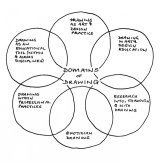
Dr Philippa Lyon is a Senior Lecturer at the School of Art and Media, University of Brighton, where she leads the drawing theme in the Centre for Arts and Wellbeing. With expertise spanning art education, visual research methods, and the intersection of drawing with health and wellbeing, she has established herself as a leading researcher in clinical drawing applications and cross-disciplinary drawing practices. Her educational background includes a PhD in "Anthologies of British Second World War Poetry: A Literary and Cultural Analysis" from the University of Sussex (awarded 2005), an MA in Twentieth Century English Literature, and a BA in English Literature, also from Sussex. She holds a Higher Education Academy Fellowship (D2) awarded in 2019. Dr Lyon's research primarily focuses on drawing practices across multiple contexts, particularly examining how drawing impacts health and wellbeing, supports education, and functions as a research methodology. She has pioneered work in clinical drawing with applications in healthcare settings, exploring concepts of 'touch' and 'presence' in drawing practices. Her research investigates the spectrum of drawing practices from highly specialized clinical applications to inclusive community-based drawing initiatives. Her publication trajectory reveals a clear evolution from literary studies toward visual research methods, with a growing emphasis on the therapeutic and communicative applications of drawing. Recent work demonstrates increasing interdisciplinary collaboration, particularly with healthcare professionals, and a commitment to translating research into practical applications that benefit both clinical practice and community wellbeing initiatives. Higher Education Academy Fellowship (D2) AHRC peer college reviewer Peer reviewer for Anatomical Sciences Education, Qualitative Research, and Visual Methodologies journals Dr Lyon has supervised 10 PhD students to completion and currently mentors several doctoral candidates across the School of Art and Media and School of Humanities and Social Science. Her supervisory expertise spans drawing in clinical settings, arts/health research, creative methodologies, and the relationship between drawing and writing. She has examined numerous PhD theses both internally and externally. As Research Mentoring Lead for the School of Art (2019-22), she contributed to developing research capacity among academic staff. As a key member of the Centre for Arts and Wellbeing, Dr Lyon has developed multi-stakeholder networks connecting clinicians, artists, academics, and service users to advance drawing research in health contexts. She founded and facilitated the Drawing Research Interest Group (2012-2017) and served as Research Leader for the Drawing Research and Enterprise Group (2017-2019). Her collaborative projects include the Year of Drawing arts/health project with Sussex Partnership NHS Foundation Trust and the Refugee Solidarity Day of Drawing public event.