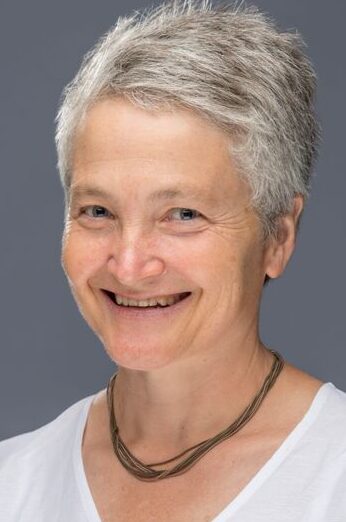
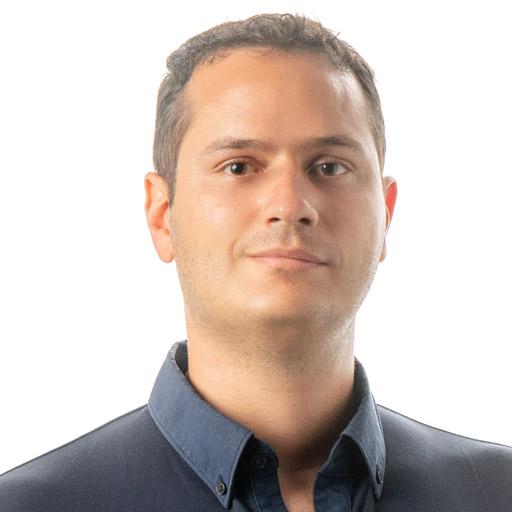
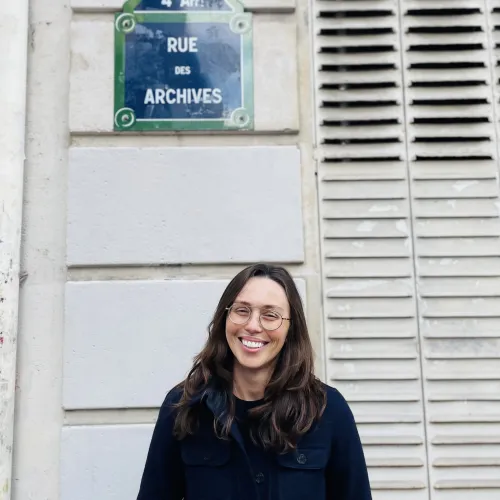
Xiaobo Li is a Professor in the Department of Bio-Medical Engineering at New Jersey Institute of Technology. Holding a Ph.D. in Computer Aided Geometric Design from the University of Birmingham and a B.S. in Automation from Nanjing University of Aeronautics, their research bridges computational methods with neuroimaging and psychiatric disorder analysis. Ph.D., University of Birmingham (Computer Aided Geometric Design, 2004) B.S., Nanjing University of Aeronautics (Automation, 1999) Dr. Li’s work focuses on applying machine learning and graph theory to understand brain network abnormalities in conditions like ADHD , schizophrenia , and traumatic brain injury . Their studies analyze structural-functional connectivity , reward processing , and gut-brain axis interactions using fMRI , fNIRS , and diffusion tensor imaging . Recent publications highlight their development of tools like the GAT-FD MATLAB toolbox for brain network analysis and their exploration of multimodal MRI in schizophrenia diagnosis. They also investigate the neurobiological effects of photobiomodulation and vision therapy interventions.
Tim Rocktaschel is a Professor of Artificial Intelligence in the Department of Computer Science at University College London (UCL), where he has been working since 2018. He was promoted to Professor in October 2023, having previously served as an Associate Professor (2021-2023) and Lecturer (2018-2021) at the same institution. His educational background includes a Doctorat from University College London (2017) and a Diplom Informatiker from Humboldt-Universitat Berlin (2012). Rocktaschel's research focuses on the cutting edge of artificial intelligence, with particular emphasis on reinforcement learning, evolutionary computation, and open-ended learning systems. His work explores how AI systems can learn more efficiently through better exploration strategies, environment design, and the integration of language models with reinforcement learning frameworks. His recent publications reveal a strong trend toward developing more efficient and generalizable AI systems. The research spans unsupervised environment design, prompt engineering for self-improving systems, exploration strategies in reinforcement learning, and the application of language models to enhance policy learning. His work often bridges theoretical AI concepts with practical implementations, as evidenced by tools like GriddlyJS for reinforcement learning development. Rocktaschel maintains an active presence in the AI research community with numerous publications in top venues including NeurIPS, ICML, and the Journal of Artificial Intelligence Research. His work on zero-shot generalization, pragmatic understanding in language models, and open-ended learning environments has garnered significant attention in the field. He is actively involved in developing tools and datasets for the AI community, such as the large-scale NetHack dataset, which provides a complex environment for testing reinforcement learning algorithms. His research continues to push the boundaries of what's possible in artificial intelligence, particularly in creating systems that can learn and adapt in complex, open-ended environments.
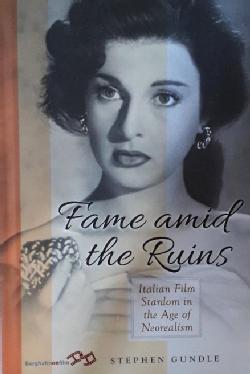
Stephen Gundle is Professor of Film & Television Studies at the University of Warwick, where he is based in the Faculty of Arts Building. His research focuses on cinema as a social practice and industry, with particular expertise in Italian film history, cultural politics, and the star system. He has led multiple AHRC-funded research projects examining Italian cinema, political leadership, and historical representation. Professor Gundle's research interests span film and media history, cultural and political history, and the interplay between cinema, politics, and consumption in Italy from the Fascist period to the present. He has made significant contributions to understanding the Italian and European star system, the concept of glamour, mass culture under Fascism, the Italian Communist Party's cultural policies, and representations of political figures like Mussolini and Berlusconi in film and television. His work bridges historical analysis with contemporary cultural theory. His recent publications reveal a consistent focus on Italian cinema's relationship with politics, consumer culture, and national identity. Gundle has extensively examined the Italian film industry's development, the role of producers, and the representation of political figures across different historical periods. His scholarship demonstrates particular strength in analyzing how cinema both reflects and shapes cultural values, political ideologies, and social transformations in Italy. Professor Gundle has supervised numerous PhD projects on Italian cinema topics including the Italian magazine industry and cinematic imaginary, Italian silent cinema, Visconti's politics and aesthetics, Italian film stardom, and ruralism and modernity in Italian cinema. He has served as principal investigator on three major AHRC research projects, most recently exploring the role of women workers in the Italian film industry between the 1940s and 1980s in partnership with the Cineteca di Bologna.
Charles L. Leavitt IV is the William Payden Associate Professor of Italian and Film at the University of Notre Dame, serving as Director of Graduate Studies in Italian. His research focuses on modern and contemporary Italian literature and film, with specialties in post-war cultural history, Fascism/Resistance studies, and minoritized cultures. He co-directs the Primo Levi Digital Commentary project and holds affiliations with the Kellogg Institute for International Studies and the Nanovic Institute for European Studies. Leavitt’s work has been honored with major awards, including the 2020 AAIS Visual Studies Book Prize for Italian Neorealism: A Cultural History and the 2022 Society for Italian Studies Essay Prize. Education: Ph.D. (Literature), M.A. (Italian Studies), and B.A. (Comparative Literature) from the University of Notre Dame and University of Oregon. His teaching spans Italian literature, cinema, and comparative studies, with a focus on post-war and contemporary contexts. He organizes the Italian Research Seminar and Modern Roads to Rome lecture series, and serves on editorial boards for Italian Studies , Italianist , and Annali d'italianistica . Key research areas include Italian Jewish culture, African American-Italian cultural intersections, and the legacy of Fascism. His current book project examines African American soldiers’ roles in Allied-Occupied Italy. Leavitt’s scholarship bridges film, literature, and history, emphasizing transnational cultural flows and Italian contributions to global culture. Award-winning educator, Leavitt has received teaching excellence awards from the University of Reading and University of Notre Dame. His work integrates interdisciplinary approaches, combining close textual analysis with broader historical and cultural frameworks to explore identity, memory, and resistance in 20th-century Italy.
Patrick Bennett is a Professor in the Department of Psychology, Neuroscience & Behaviour at McMaster University , focusing on visual perception, aging, and cognitive neuroscience. His research explores how aging affects visual processing mechanisms, face identification, and perceptual learning. Key Research Areas : Aging effects on vision, Face processing, EEG dynamics, Biological motion perception, Perceptual learning Recent Publications : Analyzed visual crowding in older adults (2025), Investigated 3D target detection mechanisms (2024), Studied face mask impacts on emotion recognition (2023) Teaching : Instructs advanced statistics and research design courses for psychology students. His work combines computational methods with behavioral experiments to understand neural processing changes across the lifespan.
Jonathan Ragan-Kelley is the Esther and Harold E. Edgerton Assistant Professor of Electrical Engineering & Computer Science at MIT and an Assistant Professor of EECS at UC Berkeley. He leads the Visual Computing group at CSAIL, focusing on high-efficiency visual computing, compilers, and architectures for image processing, machine learning, and 3D rendering. His research bridges systems, compilers, and hardware design, emphasizing scalable solutions for computational challenges. Education: PhD in Computer Science from MIT (2014), postdoc at Stanford University, and visiting researcher at Google. He co-created the Halide language and has developed multiple domain-specific languages (DSLs) and compiler systems. Research interests include compiler optimization, scheduling languages (e.g., Exo), and efficient computing frameworks. He has received awards such as the NSF CAREER Award and ACM SIGGRAPH’s Significant New Researcher Award. Awards: ACM SIGGRAPH Award, NSF CAREER, Intel Outstanding Researcher Award Key Contributions: Halide compiler framework, Exo scheduling language, machine learning acceleration techniques Labs/Teams: Visual Computing at MIT CSAIL
Hakan Karateke is the Kanuni Süleyman Professor for Ottoman and Modern Turkish Studies at the University of Chicago, affiliated with the Department of Near Eastern Languages and Civilizations. He has taught at UChicago since 2009 and serves as Admissions Chair. His research focuses on Ottoman cultural history, philology, and the evolution of Turkish language and historiography. Ph.D., University of Bamberg (1998) His methodological expertise bridges philology and historical analysis, emphasizing textual interpretation and contextual reconstruction. He is currently working on a monograph about 19th-century Ottoman historiography and a multi-year project tracing the cultural history of the Ottoman Turkish language. Recent publications include analyses of Evliya Çelebi’s travel account construction, Ottoman anti-Judaism discourse, and protocol evolution. He co-edits two major academic series: 'Ottoman and Turkish Studies' (Academic Studies Press) and 'The Ottoman Empire and its Heritage' (Brill). His courses cover Ottoman cultural history, language studies, and Near Eastern empires. Research themes span: Ottoman historiography transformation Language perception shifts Inter-ethnic relations Manuscript analysis Political rhetoric Ceremonial studies
Navtej Purewal is Professor in Anticolonial and Decolonial Politics and Praxes at the Decolonising Arts Institute, University of the Arts London (UAL), a position she joined in 2024. Prior to this, she was Professor of Political Sociology and Development Studies at SOAS, University of London (2019–2024) and Deputy Director of the SOAS South Asia Institute (2014–2019). She has also held academic positions at the University of Manchester and served as a visiting chair at the University of Sydney. Her work bridges the social sciences, humanities, and arts, with a strong focus on decolonial praxis and critical development studies. Her educational background includes a PhD in International Development from Lancaster University, an MA in South Asia Area Studies from SOAS, and a BA in Political Science from Vassar College. She is fluent in English and Punjabi, enabling deep engagement with South Asian communities and scholarship. Navtej's research centers on the intersections of coloniality, development, identity, and social justice. She critically examines how structures of power, shaped by imperialism and inequality, are reflected and challenged in society. Her work emphasizes gender, caste, religion, and bordering processes, particularly in the Punjab region and its diaspora. She advocates for the use of art and creative methods to visualize and confront systemic injustices. Her recent projects include AHRC-funded initiatives such as 'Border Crossings'—which uses virtual reality to explore Partition memory among the UK South Asian diaspora—and 'GRID Heritage,' a network that amplifies marginalized voices in cultural heritage through craft, textiles, and performance. These projects reflect a consistent trend in her scholarship: interdisciplinary, community-engaged, and committed to decolonizing knowledge production. Scientific awards and honors mentioned include: AHRC/UKRI India Fellowship Multiple AHRC grants for interdisciplinary research British Academy grant for research on sexual and gender-based violence in Indian universities She has advised postdoctoral researchers and collaborated with leading scholars such as Dr. Eleanor Newbigin, Prof. Raminder Kaur, and Prof. Parul Dave-Mukherji. Her grants reflect a sustained commitment to funding impactful, socially engaged research. Navtej is also involved in developing educational resources for critical teaching on 1947 and its legacies. She is a key member of the Decolonising Arts Institute, a research hub dedicated to challenging colonial epistemologies and fostering anticolonial practices through art and scholarship. Her leadership in projects like GRID Heritage and Border Crossings underscores her role in building collaborative, transnational research teams focused on justice, memory, and cultural transformation.
Dr. Chen Wang is an Assistant Professor in the Department of Computer Science and Engineering at the University at Buffalo. He holds a PhD from Nanyang Technological University and a B.Eng from the Beijing Institute of Technology. His research focuses on robotic perception, vision, and learning, emphasizing algorithm development for autonomous systems. He is affiliated with the Spatial AI and Robotics Lab (SAIR Lab) and serves as an Associate Editor for The International Journal of Robotics Research (IJRR) and IEEE Robotics and Automation Letters (RA-L) . His work spans neuro-symbolic AI, SLAM systems, and reinforcement learning for robotics. Dr. Wang's research interests include creating efficient algorithms with theoretical guarantees, open-source distribution, and real-world validation. He has contributed to areas like visual navigation, few-shot detection, and robot autonomy frameworks. His educational background in electrical engineering and robotics underscores his expertise in bridging theory and practical applications. Notable contributions include the iWalker framework for humanoid robots, AirSLAM for visual SLAM, and SuperPC for 3D point cloud processing. His editorial roles and conference service (e.g., CVPR Area Chair) reflect his leadership in the field. The SAIR Lab under his direction advances spatial AI, robotics, and autonomous systems through interdisciplinary collaboration.
Jennifer V. Evans is a Professor of History at Carleton University. She holds a B.A. from McGill University, an M.A. from Simon Fraser University, and a Ph.D. from SUNY Binghamton. Her research focuses on queer German history, visual culture, and the intersection of sexuality with memory and space. She leads the SSHRC-funded 'Populist Publics' project analyzing digital misinformation and has held fellowships from institutions like the Alexander von Humboldt Foundation and the Royal Society of Canada. Her major works include Queer Life After Fascism (2023) and Life Among the Ruins (2011), exploring post-war queer subcultures and photographic ethics. She co-edited Queer Cities, Queer Cultures (2013) and authored groundbreaking articles on Nazi-era sexuality and digital Holocaust memory. Evans supervises graduate students in transnational German history and collaborates internationally on projects like the 'George Mosse Lectures.' Education: B.A. McGill, M.A. Simon Fraser, Ph.D. SUNY Binghamton Awards: Konrad Adenauer Prize (2023), SSHRC Insight Grants (2019, 2013, 2003), Royal Society Membership (2016) Key Projects: 'Populist Publics' (social media analysis), 'A Short History of Drag' (2026 Mosse Lectures) Her teaching spans undergraduate courses on authoritarianism and graduate seminars on social theory. She mentors over 20 doctoral and master's students, many recognized with university awards. Evans' work bridges visual culture and queer historiography, emphasizing ethical engagement with marginalized histories.
Taymiya R. Zaman is a Professor of History at the University of San Francisco, serving as Chair of the Department of History, and Director of Asian and Middle Eastern Studies. She joined USF in 2007 and has held visiting professorships at the Institute of Business Administration and Lahore University of Management Sciences in Pakistan. Her research focuses on Mughal India, historical memory, and the intersection of autobiography and history. Education: PhD in History, University of Michigan (2007); B.A. in Philosophy, Smith College (2001) Her work explores historical memory in South Asia, the interconnectedness of life writing and history, and the transition from subjects to citizens in the Islamicate world. She has designed the History Department's 'Islamic World' emphasis and teaches courses on the Ottoman, Safavid, and Mughal Empires, alongside modern South Asia and the Middle East. Her publications span scholarly articles, narrative non-fiction, and fiction, including a Pushcart Prize-winning short story. She also engages in visual storytelling through art, illustrating Mughal-era texts to highlight marginalized historical figures like Gulbadan Begum. Awards: Distinguished Teaching Award (2022), Arthur I. Karshmer Award for Distinguished Service to Disability Issues (2023) Her research and teaching reflect a commitment to interdisciplinary approaches, blending history with literature, art, and cultural studies.
Anne Kelly Knowles is the McBride Professor of History at the University of Maine, Department of History. Previously, she taught at Middlebury College (2002–2015) and the University of Wales, Aberystwyth (1993–1997). Her research focuses on historical geography, GIS applications in history, the Holocaust, and 19th-century U.S. economic landscapes. She holds a PhD in Geography from the University of Wisconsin-Madison (1993). Her work bridges historical inquiry with digital tools, notably through projects like the Holocaust Geographies Collaborative. Key contributions include Geographies of the Holocaust (2014) and Mastering Iron: The Struggle to Modernize an American Industry, 1800–1868 (2013). She has pioneered methods in Historical GIS (HGIS), emphasizing spatial analysis for understanding historical patterns and events. Awarded the Smithsonian American Ingenuity Award (2012) and the Distinguished Historical Geographer honor (2014), Knowles has led major grants including a National Endowment for the Humanities (NEH) Digital Humanities Advancement Grant for the Holocaust Ghettos Project (2018–2022). Her TED-Ed talk on reimagining Gettysburg highlights her ability to make complex spatial history accessible. Grants: NEH Digital Humanities grants (2016, 2018–2022), Guggenheim Fellowship (2017), NSF Collaborative Research (2008–2011). Labs/Teams: Co-founder of the Holocaust Geographies Collaborative; collaborator on the Holocaust Ghettos Project.
Dr. Anil Ufuk Batmaz is an Assistant Professor in the Department of Computer Science and Software Engineering at Concordia University. His research focuses on Virtual Reality (VR), Augmented Reality (AR), and Human-Computer Interaction, with emphasis on interaction techniques, immersive analytics, and motor skill training systems. He holds a BSc in Electrical and Electronics Engineering (2007-2011), an MSc in the same field (2011-2013), and a PhD in Biomedical Engineering (2015-2018). His work bridges engineering and cognitive science, investigating how visual and haptic feedback impact user performance in immersive environments. Research interests include: 3D interaction techniques for mid-air tasks Effects of display technologies on motor coordination Hybrid UI design for mixed reality systems Training systems for precision tasks using VR Recent publications emphasize evaluation of AR/VR interfaces in healthcare, sports training, and collaborative environments. His work has appeared in venues like IEEE TVCG, ACM CHI, and ISMAR, addressing challenges in spatial navigation, error feedback, and system reliability.
Dr. Olivia Vázquez-Medina is an Associate Professor in Spanish at the University of Oxford's Faculty of Medieval and Modern Languages, and a Fellow of Wadham College. She holds a DPhil from Oxford and previously taught at Royal Holloway. Her research focuses on modern and contemporary Spanish American fiction, particularly examining how women writers address environmental, gender, and social issues through innovative narrative forms. She explores concepts like 'disquietude' in works by authors such as Cristina Rivera Garza and Samanta Schweblin, emphasizing intersections of aesthetics, gender, and politics. Her academic background includes a Licenciatura from Universidad Veracruzana (Mexico), an MSt, and DPhil from Oxford. She teaches undergraduate Spanish language and literature courses at Wadham and St Hugh’s colleges, as well as graduate supervision in topics like 'The Body in Spanish American Fiction.' Her monograph Cuerpo, historia y textualidad (2013) analyzes historical novels by Roa Bastos, del Paso, and García Márquez, while recent work addresses eco-critical and gendered themes in contemporary narratives. Dr. Vázquez-Medina’s research themes include ecocriticism, environmental humanities, gender studies, and global south literature. She has received the LS Dembo Prize for her 2022 article analyzing Samanta Schweblin’s Fever Dream . Her work bridges literary analysis with critical theory, offering fresh perspectives on how literature engages with societal crises and epistemological challenges.
Amelia Acker is an Associate Professor and Graduate Advisor/Director of Masters Studies at the University of Texas at Austin's School of Information. Her work focuses on the emergence of new information objects in wireless networks, digital preservation, and cultural memory. She holds a PhD with award-winning research on SMS standardization and mobile communication infrastructure. Prior to UT Austin, she served as an Assistant Professor at the University of Pittsburgh's iSchool and worked as an archivist/librarian in Southern California. Her research is funded by NSF and IMLS grants, and has been published in journals like JASIST and Archival Science. She teaches courses on metadata, information studies, and cultural heritage informatics. Her current projects address digital traces in mobile computing and data justice issues. She previously worked with artist John Baldessari as an arts cataloger and has extensive experience in library preservation practices. Key contributions include analyses of Venmo social payments, Palantir's surveillance systems, and API-driven social media archives. She emphasizes interdisciplinary approaches to sociotechnical systems and data ethics in emerging technologies.