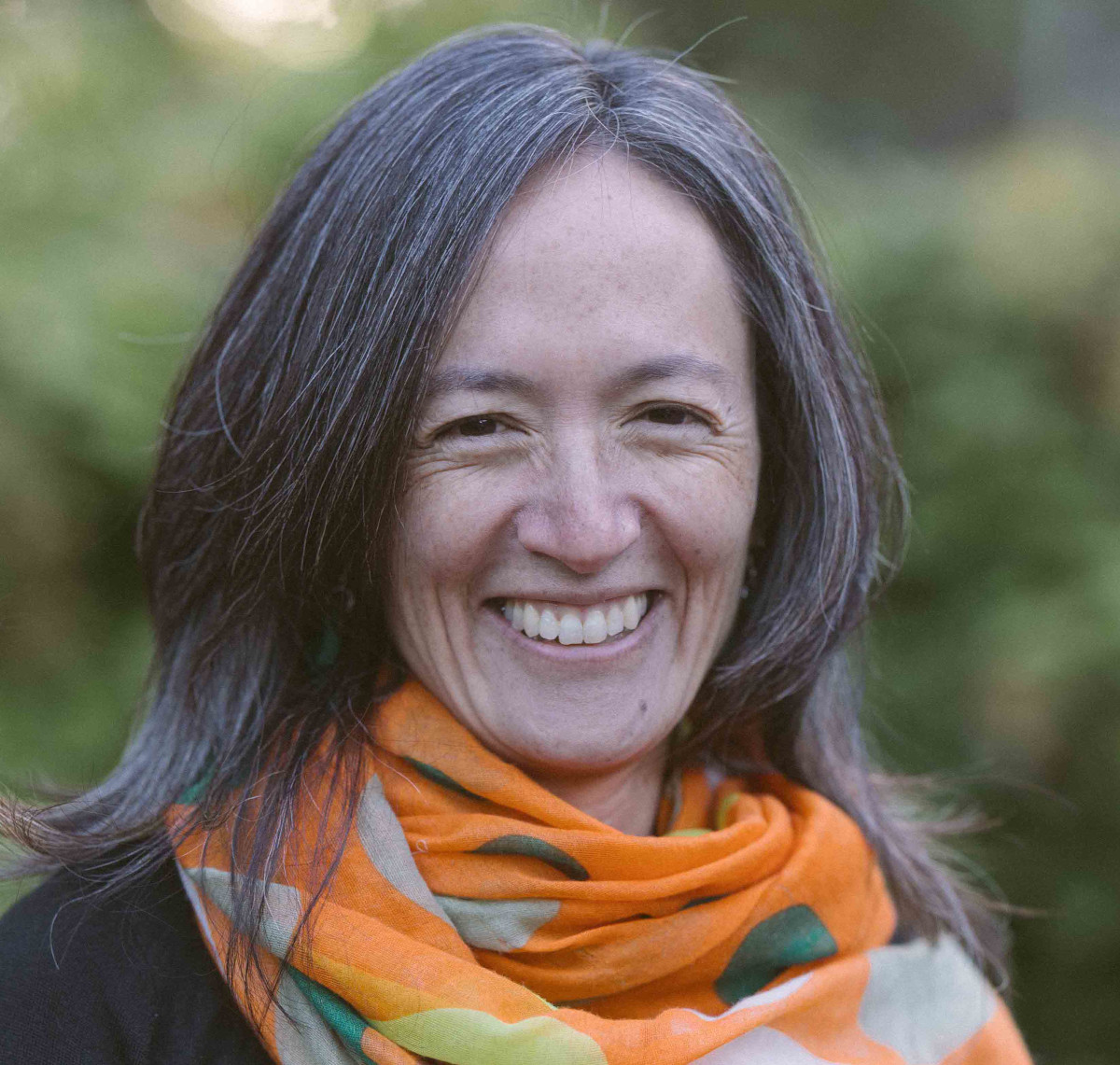
Dr. Paul Jeff is a Lecturer in Photography at the School of the Arts, York St John University. He holds a PhD from the University of Wales (2008) and has over 20 years of experience as an experimental photographer and performer. His career includes collaborations with institutions like Brith Gof and Pearson/Brookes, and his work focuses on 'performed photography' and interdisciplinary art practices. Jeff co-founded IPCRES, an artistic research unit exploring performative photography and non-decisional aesthetics. His research spans performance art, philosophy of art, and photography theory, with a emphasis on Deleuzean concepts. He has supervised 16 postgraduate students, examining topics like Fine Art, New Media, and Collaborative Practices. Jeff has been an external examiner for multiple universities and has curated exhibitions globally, including in Brazil, Australia, and Wales. Recent work includes the AHRC-funded 'The Buzzing Machine' (2017) and a keynote on 'The Art of Information' (2017). His forthcoming book, 'Six Memos for Future Photographers,' rethinks photographic communication through Blanchotian philosophy.
Juan Llamas-Rodriguez is an Assistant Professor of Communication and Associate Director at the Center for Advanced Research in Global Communication at the University of Pennsylvania's Annenberg School of Communication. His research focuses on transnational media, border studies, and Latin American cultural production. He holds a Ph.D. from the University of California, Santa Barbara (2017), an M.A. from Concordia University (2013), and a B.A. from the University of Toronto (2011). His book Border Tunnels (2023) examines media's role in shaping borderland perceptions. He co-edits [in]Transition , a peer-reviewed videographic journal, and engages in public humanities projects like The Migrant Steps Project. His work appears in journals such as Feminist Media Histories , Journal of Cinema and Media Studies , and Television & New Media . Key research interests include digital culture, global communication, and the intersection of technology with society. He teaches courses on media and migration, multimodal scholarship, and Latin American television history.
Professor Klaus McDonald-Maier is a full Professor in the School of Computer Science and Electronic Engineering (CSEE) at the University of Essex , where he leads the Embedded and Intelligent Systems (EIS) Research Laboratory and heads the Intelligent Embedded Systems and Environments Research Group . He is also Director of Impact , Visiting Professor at the University of Kent, and Visiting Research Affiliate at NASA Jet Propulsion Laboratory, California Institute of Technology. Education PhD in High-Performance Parallel Neural Network Architectures, Friedrich-Schiller-University Jena (Germany, 1999) Electronic Engineering studies, University of Ulm (Germany) Electronic Engineering studies, Cardiff University (Wales) Electronic Engineering studies, École Supérieur de Chimie Physique Électronique de Lyon (CPE-Lyon) (France) Research Interests Professor McDonald-Maier’s research integrates embedded systems , System-on-Chip (SoC) architectures , and AI-driven robotics . He pioneers visual place recognition techniques that remain robust under severe appearance and viewpoint changes, develops cybersecurity frameworks based on ICMetrics for autonomous vehicles and IoT, and designs approximate real-time computing solutions for energy-constrained multicore and FPGA platforms. His work on radiation-tolerant systems supports space and nuclear applications, while his bio-inspired algorithms enable lightweight, neuromorphic perception on resource-limited robots. Publication Trends Between 2022 and 2025 his output converges on FPGA-accelerated AI , secure edge intelligence , visual navigation for autonomous systems , and healthcare analytics . He repeatedly couples rigorous algorithmic innovation with practical hardware deployment, yielding energy-efficient, real-time systems validated in domains ranging from autonomous driving to post-stroke rehabilitation. Scientific Awards & Recognition Best Paper Award – IEEE Transactions on Sustainable Computing (2024) Best Paper Award – IEEE/ACM DATE (2024) Best Paper Award – IEEE Systems Journal (2022) Best Paper Award – IEEE Sensors Journal (2021) Best Paper Award – IEEE Access (2020) Research Grants & Industrial Collaboration He has secured major funding from EPSRC , EU Horizon 2020 , Innovate UK , and industry partners. Current projects span trustworthy autonomy, radiation-hardened edge AI, and AI-enhanced rehabilitation technologies. He is Chief Scientist of UltraSoC Technologies Ltd and CEO of Metrarc Ltd , commercialising University research in semiconductor debug and cybersecurity respectively. Laboratory & Team Leadership As Director of the Embedded and Intelligent Systems Laboratory (EIS Lab) , he oversees a multidisciplinary team of researchers and PhD students, providing state-of-the-art FPGA, robotics, and embedded-systems facilities. The lab collaborates closely with NASA JPL, UK Atomic Energy Authority, and leading semiconductor firms to translate fundamental research into high-impact industrial solutions.
Dr. Rebekka Friedman is an Associate Professor (Reader) in International Relations at King's College London's Department of War Studies, part of the Faculty of Social Science & Public Policy. Her work focuses on peacebuilding, transitional justice, gender studies, and post-conflict recovery. She holds a PhD and MA from LSE and a BA from McGill University. Research interests include gendered legacies of violence, post-conflict reconciliation, and the intersection of care and peacebuilding. Notable projects include an ERC Consolidator grant on 'Relational Harm' (2025–2030) and leadership in the UKRI GCRF Gender, Justice and Security Hub. She explores visual ethnography and participatory methods, including a documentary film on Sri Lanka's post-war recovery. Publications highlight gender dynamics in Sri Lanka and Sierra Leone, transitional justice mechanisms, and parental trauma in conflict zones. Awards include the APSA Women and Politics Best Paper prize (2022). She supervises PhD students on topics like Colombia's peace process and post-conflict education in Sri Lanka. Active in research groups like the Conflict, Security & Development Research Group and the Leverhulme Centre for Research on Slavery in War.
Rhys Jones is a Professor of Human Geography and former Head of Department in the Department of Geography and Earth Sciences at Aberystwyth University. He is a leading scholar in political geography, with a focus on Welsh nationalism, state territoriality, devolution, and behavioral insights in public policy. He is a Fellow of the Learned Society of Wales (FLSW) and the Academy of Social Sciences (FAcSS), and serves on the Board of Natural Resources Wales, demonstrating significant academic and public impact. His research interests center on the interplay between identity, place, and governance. Key themes include the spatial dimensions of Welsh nationalism, the peopled character of the state, devolution in the UK, and the ethical and practical applications of behavioral science in policymaking. His work often engages with issues of spatial justice, territorial cohesion, and regional movements within the European Union. The recent publications and projects reflect a strong trend toward interdisciplinary, policy-relevant research. His work spans books, peer-reviewed articles, commissioned reports, and digital media outputs, with a focus on heritage tourism, linguistic vitality, and cross-border dynamics between Wales and Ireland. He frequently collaborates with researchers across institutions and nations, particularly through EU-funded programs like Horizon 2020 and INTERREG. His scientific recognitions include: Fellow of the Learned Society of Wales (FLSW) Fellow of the Academy of Social Sciences (FAcSS) Gwobr Adnodd Cyfrwng Cymraeg (Welsh Language Resource Award, 2020) Rhys Jones has secured substantial research funding from the ESRC, AHRC, Leverhulme Trust, Horizon 2020, INTERREG, and the Welsh Government. He leads or contributes to multiple active projects, including those on territorial cohesion in the EU, regional movements, and heritage tourism. He also plays a key role in knowledge exchange, public engagement, and media outreach, particularly on issues related to Welsh identity, language, and governance. He is actively involved in organizing exhibitions, film launches, and public talks, often in collaboration with cultural and academic partners in Wales and Ireland. He is involved in several research networks and teams, including the WISERD Civil Society project and the Centre for Welsh Politics and Society. His work contributes to UN Sustainable Development Goals, particularly those related to reduced inequalities, sustainable cities, and strong institutions.
Klára Trencsényi is a Visiting Professor of Practice at the Undergraduate Program of Central European University (CEU), appointed since 2020. A prominent figure in documentary filmmaking, she holds a qualification in Directing Photography from the Hungarian Film Academy, Budapest, and a degree in Spanish Philology from Eötvös Loránd University. Her work focuses on social and creative documentaries, blending artistic vision with socio-cultural critique. Member of faculty at CEU’s Undergraduate Program Lecturer at Budapest’s Metropolitan University (since 2017) Her documentaries, including Train to Adulthood and Corvin Variations , have screened globally at festivals like IDFA Amsterdam, Margaret Mead Festival (NY), and Sarajevo Film Festival. She has received grants from the European Union’s Creative Media Program, Visegrad Fund, and Nipkow Fellowship Programme, as well as participation in prestigious workshops like DocsBarcelona and Berlinale Talent Campus. As an educator, she teaches documentary writing, directing, and film presentation at CEU, Budapest Technical University, and Anderson Art Lab. She co-founded the DunaDOCK Creative Documentary Development Forum to support emerging filmmakers. Awards: Recognized for Train to Adulthood (unspecified honors) Grants: European Union Creative Media Program, Visegrad Fund, Nipkow Fellowship
Prof. Julijana Gjorgjieva is a tenured W3 Professor of Computational Neuroscience at the School of Life Sciences Weihenstephan, Technical University of Munich (TUM). She leads an independent research group at the Max Planck Institute for Brain Research and is affiliated with the Bernstein Center for Computational Neuroscience. Her research focuses on the principles governing neural circuit development, balancing learning plasticity with functional stability through computational and theoretical approaches. Key interests include synaptic organization, energy-efficient neural computation, and evolutionary optimality principles. Education & Career: B.Sc. Mathematics, Harvey Mudd College (2006) M.A.St. in Applied Mathematics, University of Cambridge (2007) Ph.D. Applied Mathematics, University of Cambridge (2011) Postdoctoral Fellowships: Harvard University (2011-2014), Brandeis University (2014-2016) Max Planck Research Group Leader (2016-2022) W2/W3 Professor at TUM since 2016 Research Interests: Computational neuroscience, theoretical modeling of neural circuits, synaptic plasticity mechanisms, homeostatic regulation, and the interplay of development and evolution in shaping brain architecture. She employs mathematical frameworks to study how circuits achieve robustness while enabling adaptive learning. Awards: Heinz Maier-Leibnitz Prize (2022) Eric Kandel Young Neuroscientist Prize (2021) ERC Starting Grant (2018) Multiple postdoctoral and early-career fellowships Grants & Funding: Includes DFG Collaborative Research Center on Neural Homeostasis, HFSP grants, and EU Horizon 2020 initiatives. Active in mentoring and promoting computational neuroscience through programs like Neuromatch Academy. Labs & Collaborations: Leads a multidisciplinary lab integrating experimental and theoretical approaches. Collaborates with institutions such as the Max Planck Society and international computational neuroscience networks.
Jez Coram is a Lecturer in Digital Media Practice at the University of Leeds , School of Media and Communication. He holds a practice-led PhD in Fine Art, Film, and Digital Cultures from Newcastle University, supervised by leading figures in the field. With a background in the third sector, he has extensive experience in multimedia design, research, and community engagement. Research Focus: Expanded essay film, socio-cultural-techno perceptions, climate futures, hybrid documentary practices, and sustainability. Current Projects: Co-Investigator on the Polycrisis Research Network (Horizons Institute); leads the longitudinal study Essaying the Gare with Mick Schofield. Teaching and Professional Roles: Currently teaches on the BA Digital Media programme. Previously a Teaching Assistant at Newcastle University and a facilitator in community art projects like For the Love of People . Professional memberships include the Priestley Centre for Climate Futures and Advance HE (FHEA). Artistic Outputs: 15+ films/installations (2012–present) blending personal testimony, archive material, and speculative environments. Notable works: The Black Prince , Capteur , The Derealisation Effect , and We're All Someone's Daughter, We're All Someone's Son (Grenfell solidarity project). Grants and Collaborations: Funded by Horizons Institute, Arts Council England, Screen Yorkshire, and Freedom Studios. Collaborations span institutions like West Yorkshire Playhouse, Justice4Grenfell Campaign, and Purple Patch Arts board.
Dr. Ian Roberts is an Associate Professor and Senior Tutor at the University of Warwick , where he also serves as Director for Student Wellbeing . He completed his PhD at the University of Wales Swansea and has previously taught at the University of Mainz, Britannia Royal Naval College Dartmouth, University of Exeter, and University of Leicester (2007-2013). His research spans Weimar Republic cinema , German national identity , and media representation of the Bundeswehr . PhD, University of Wales Swansea His Weimar 100 project (funded by Warwick's WATE scheme) organizes annual centenary screenings of Weimar-era films like Madame Dubarry , Das Cabinet des Dr. Caligari , and Die Straße , with public talks analyzing their historical and cultural significance. He explores themes such as expressionist film , authoritarianism in cinema , and war's impact on cultural production . Scientific awards include the British Academy Small Research Grant (2013) and WATE award (2019) . He has co-supervised PhD students like Gerhild Krebs (2021) and Molly Harrabin (ongoing). His teaching focuses on German-language film , translation studies , and cultural history .
Dr. David Miranda-Barreiro is a Senior Lecturer in Hispanic Studies at Bangor University’s School of Language, Culture and the Arts. He serves as Undergraduate Course Director and Head of Hispanic Studies, teaching modules in Spanish language, literature, and cinema. His academic journey began with a BA in Hispanic Studies from the University of A Coruña, followed by an MA and PhD at Bangor University, where his thesis Spanish New York Narratives 1898–1936 won the 2012 AHGBI Publication Prize. Research Interests: Mobility (travel writing, migration, exile), Galician-US cultural connections, comics/graphic novels, national/transnational identities. Key Publications: Monograph on Spanish New York narratives (2014), co-editor of Galicia 21 journal, and articles on Galician migration, comics, and exile literature. Awards: AHGBI-Spanish Embassy Postgraduate Prize (2012), Santander Mobility Grant (2009-2010). Co-organizer of conferences on diaspora, comics, and Iberian mobility. Supervision: First supervisor for PhD projects on migrant literature, Galician diaspora, and transnational identities; second supervisor for completed theses on feminist TV series, translation, and women-authored narratives.
Cecilia Valenti is a Junior Professor for Film Studies at the Institute for Film, Theatre, Media and Cultural Studies, Johannes Gutenberg University Mainz. Her research spans feminist postcolonial theory, archival practices of world cinema, television history, and militant documentary traditions. She actively organizes the IMACS Master's program and participates in academic self-governance via the Georg Forster Forum. Valenti's publications focus on global film heritage, feminist media critique, and political film practices. Her work intersects with 1930s left-wing cinema, archival activism (e.g., Cinemien network), and feminist reworkings of militant film. She teaches seminars on anti-colonial film practice, including Sarah Maldoror's work. She is affiliated with the Zeughauskino Berlin's archival department and co-founded the curatorial collective 'The Canine Condition,' which organized film series in Berlin, Frankfurt, Vienna, and London (2009–2017). Her contact details: cevalent@uni-mainz.de, phone +49 (6131) 39-31750, office hours Wednesday 4-5 PM by appointment.
Prof. Dr. Elisabeth Timm holds the Chair of Cultural Anthropology at the Institute for Cultural Anthropology and European Ethnology , University of Münster. With a career spanning decades, her work bridges academic research with public engagement through projects like "Erzählen Deine Gene Dir Deine Geschichte?!" , which won the 2024 Citizen-Science-Preis der Universitätsstiftung Münster. She critiques political movements opposing gender and race theory while maintaining scientific rigor. Research Focus: Her scholarship examines genealogy as knowledge practice, single-family homes as social ontologies, and the intersections of culture, science, and politics. She leads interdisciplinary projects connecting archives, museums, and citizen science initiatives. Scientific Awards: Citizen-Science-Preis (2024) Dr. Fritz Landenberger-Preis (2009) Research Fellowship in Vienna (2009) Public Engagement: Regularly participates in exhibitions like "Familienmacher" (Österreichisches Museum für Volkskunde) and debates on topics such as genetic data ethics and urban development.
Laura Madokoro is an Associate Professor in the Department of History at Carleton University, Faculty of Arts and Social Sciences. Her research centers on migration, refugee history, and humanitarianism, with a focus on settler colonialism, race, and human rights. She leads key research initiatives including The Disaster Lab and Sites of Sanctuary , and is actively involved in public history and policy discourse. Education: PhD in History, University of British Columbia, 2012 MA in History, University of Toronto, 2000 Her research explores the intersections of migration, race, and state power, particularly in Canada and the broader Anglo settler world. She is deeply engaged with settler colonial studies, diaspora formation, and the historical role of humanitarianism. Her work often examines how archives and visual culture reveal emotional and embodied experiences of displacement. Her recent publications span topics such as Eurocentrism in refugee regimes, Japanese Canadian internment, medical exclusion of Chinese migrants, and the politics of sanctuary. Collectively, these works reflect a strong commitment to decolonizing migration history and centering marginalized voices. The articles demonstrate a consistent focus on transnational flows, state surveillance, and the moral dimensions of refuge. Scientific Awards: Association of Asian American Studies’ Best Book in the Social Sciences (2018) Chinese Canadian Historical Society’s Ed Wickberg Prize 2016 Mershon Center Furniss Book Award SSHRC Early Researcher Award (2021) Laura supervises multiple MA and PhD students on topics related to race, migration, and refugee history. She has received funding from SSHRC and the Trudeau Foundation. Her editorial roles include co-director of Histoire Sociale / Social History and membership in the ActiveHistory.ca editorial collective and the Critical Race and Migration Studies Collective . She is currently leading The Disaster Lab , which investigates diasporic disaster citizenship, and is working on a second book, Sanctuary in Pieces , to be published in 2024. Her public engagement includes contributions to The Conversation and advisory roles in community-based historical projects.
Laurier Turgeon is Professor of Ethnology and History and holds the Canada Research Chair in Ethnological Heritage at Université Laval, Quebec, Canada. He is a leading scholar in cultural and intangible heritage, with extensive international collaborations, including visiting positions at Harvard University and the MIT Media Lab. He directs the Laboratory for Ethnological and Multimedia Inquiry (LEEM) and has held leadership roles at the Institute of Cultural Heritage (2005–2012) and the interuniversity research center CELAT (1994–2000). Canada Research Chair in Ethnological Heritage Professor, Department of Ethnology and History, Université Laval Director, Laboratory for Ethnological and Multimedia Inquiry (LEEM) Editor-in-Chief, Ethnologies journal Co-director, Encyclopedia of the Cultural Heritage of French America His research focuses on the socio-political dimensions of cultural heritage, including transmedia narratives, food heritage, digital documentation, and the role of communities in heritage practices. He has pioneered innovative digital inventories of intangible heritage in partnership with Quebec’s Ministry of Culture and has led public exhibitions such as Manger Ensemble on Quebec’s food heritage. His work bridges academic research, public engagement, and policy development. The analysis of his recent articles reveals a strong thematic focus on critical heritage studies, with attention to borders, rights, ownership, and the political uses of heritage. His publications explore the tensions between formal heritage regimes and informal cultural practices, the role of art and media in heritage appropriation, and the spatial and territorial dimensions of cultural meaning-making. There is a consistent interdisciplinary approach, integrating anthropology, geography, law, and political theory. His scientific recognition includes: The Summit International Award for Creative Media—Visionnary Award (2014) Prix de l’Office de la langue française du Québec—Solutions mobiles (2014) Prix Marius Barbeau (2016) Laurier Turgeon actively mentors emerging scholars and collaborates with interdisciplinary teams. He has secured major grants for digital heritage projects and leads the development of mobile applications and online encyclopedias to democratize access to cultural knowledge. His future work continues to emphasize community-based heritage, digital innovation, and the global challenges of heritage preservation in a rapidly changing world. He leads the Laboratory for Ethnological and Multimedia Inquiry (LEEM), which specializes in multimedia documentation of intangible heritage, digital archiving, and public dissemination of research through exhibitions, mobile apps, and online platforms. The lab fosters collaboration between researchers, communities, and cultural institutions.
Jordan Theriault is an Assistant Professor at Northeastern University, affiliated with both the Biology and Psychology departments. His research focuses on understanding the brain as a self-regulating system, particularly exploring brain-based metabolic costs of information encoding and their implications for mental health and neuroimaging interpretation. He employs advanced neuroimaging technologies like 7 Tesla MRI and simultaneous PET/MR imaging to study brain metabolism and functional changes in critical regions like the brainstem and hypothalamus. Dr. Theriault’s theoretical work emphasizes the brain’s role in predicting sensory input and regulating bodily states, proposing that predictable environments enhance metabolic efficiency. This framework has implications for mental/physical health and social dynamics, such as conformity and social pressure. His lab, the Interdisciplinary Affective Sciences Laboratory, integrates neuroscience, psychology, and philosophy to address complex questions about emotion, morality, and interoceptive control. Key technical innovations include high-resolution imaging techniques and methodological critiques of brain-behavior relationships. His work bridges basic research with applied insights into human behavior, leveraging interdisciplinary approaches to advance understanding of neural systems and their societal relevance.