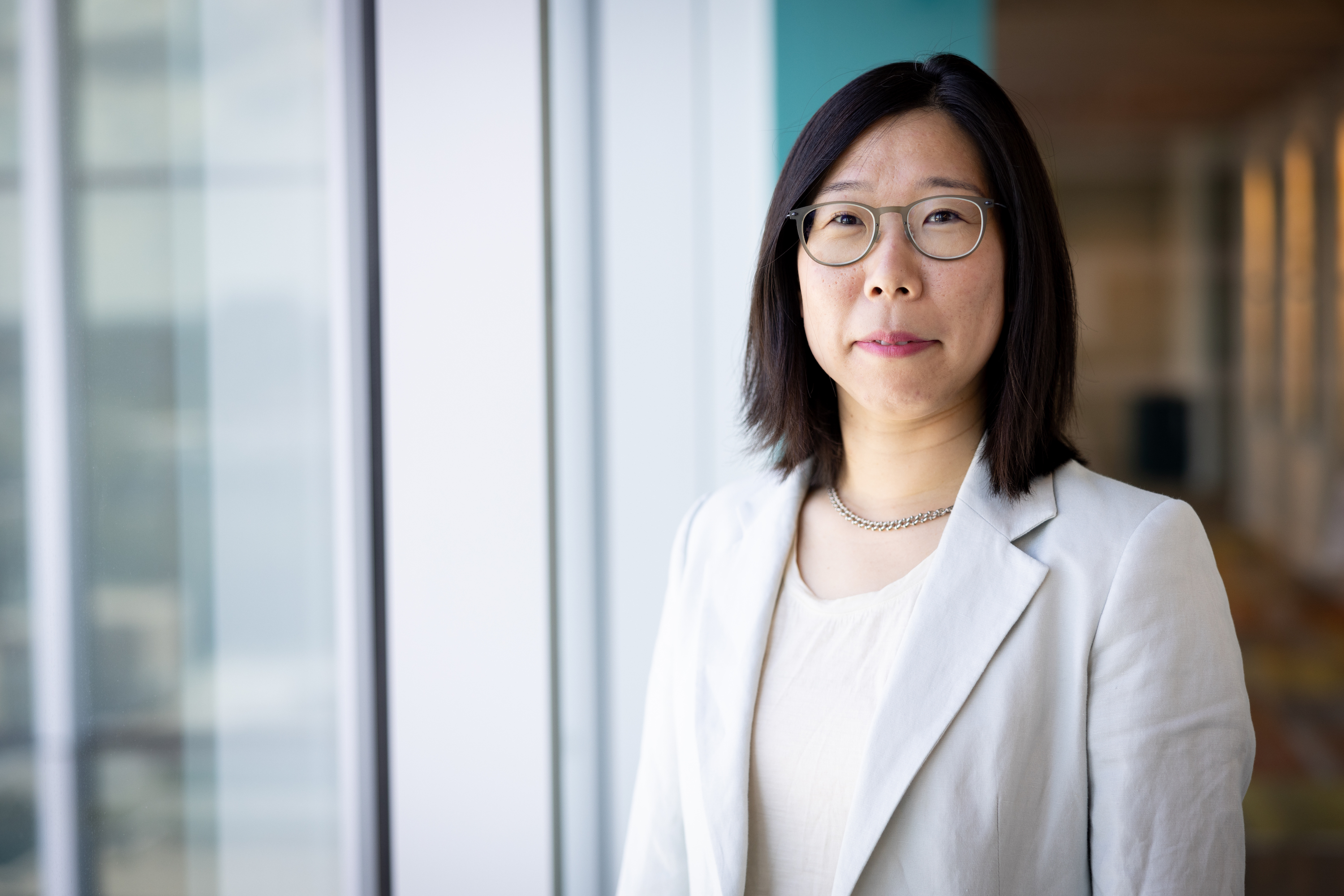
Winnie Wong is a Professor of Rhetoric at the University of California, Berkeley. Her research focuses on art history, particularly exploring themes of fakes, forgeries, and authorship through interdisciplinary approaches. She examines the global artistic networks of Hong Kong, Guangzhou, and Shenzhen, challenging Western narratives of Chinese artistic practices. Wong holds a PhD from MIT's History, Theory + Criticism program and was a Harvard Society of Fellows Junior Fellow. Her major works include Van Gogh on Demand: China and the Readymade (2014, Joseph Levenson Prize winner), Learning from Shenzhen (2017), and a forthcoming book on Canton trade portraitists. She teaches courses like Theory of the Copy and Rhetoric of the Image , mentoring undergraduates through the Undergraduate Research Apprentices program and advising PhD students in art history and visual studies. Wong's research has been supported by grants from Mellon Foundation, ACLS, SSRC, and others. Her work has been translated into multiple languages and appears in journals like Current Anthropology and Law & Literature . She frequently discusses her work on podcasts and collaborates with museums including M+ and the Asian Art Museum.
Lillie Padilla is an Assistant Professor of Spanish Linguistics at Sam Houston State University's Department of World Languages and Cultures. Holding a Ph.D. and M.A. in Spanish Linguistics from Arizona State University alongside a Bachelor of Arts from the University of Ghana, her research explores interdisciplinary connections between: Afro-Latinx representation in educational materials Discourse analysis and language ideologies Sociolinguistic studies in Equatorial Guinea Critical race theory applications in language teaching Her work focuses on Spanish subject pronoun expression patterns in multilingual contexts and curriculum development for inclusive pedagogy. Recent publications examine: Representation gaps in Spanish language textbooks Methodological challenges in Equatorial Guinea research Critical discourse analysis of Netflix's Elite series Intersectional representation of Afro-Latinx women Scientific achievements include: Finalist for American Association of Linguistics 2025 award for co-edited volume Representation, Inclusion and Social Justice in World Language Teaching Padilla's research continues to shape conversations about linguistic diversity and marginalized voices in language education through both empirical studies and theoretical frameworks.
Wei Xu is an Associate Professor at Georgia Institute of Technology's College of Computing and School of Interactive Computing, with affiliations to the Machine Learning Center. Their research bridges machine learning, natural language processing, and social media with focus areas in large language models, cultural bias mitigation, multilingual capabilities, and human-AI collaboration in text evaluation. NSF CAREER and Google Academic Research Award recipient Director of NLP X Lab PhD from New York University, BSMS from Tsinghua University Research interests span: Multilingual Multicultural LLMs addressing representational gaps and cultural adaptation in language models (NAACL 2025, ACL 2024); Robustness and Reasoning through dynamic AGI evaluations (ACL 2024, EMNLP 2024); Interdisciplinary NLP applications in security, healthcare, and law (EMNLP 2024, ACL 2024). Recent publications focus on multilingual alignment (NAACL 2025), privacy risk estimation (arXiv 2025), cultural bias analysis (ACL 2024), and medical text simplification (EMNLP 2024). Key themes include bias mitigation, multimodal processing, and practical LLM evaluation. Scientific Awards : NSF CAREER, Google/Sony/Criteo research awards, ACL'24 Best Social Impact Award, COLING'18 Best Paper Advising 15 PhD/MS/BSMS students including Yao Dou (human-centered LLM evaluation), Tarek Naous (multilingual LLMs), and alumni like Chao Jiang (Apple AI/ML) and Yang Chen (NVIDIA research scientist). Teaches graduate courses on NLP and LLMs.
Swiss Federal Institute of Technology in LausanneSwitzerland
Antoine Bosselut is a Tenure Track Assistant Professor at École Polytechnique Fédérale de Lausanne (EPFL) in the School of Computer and Communication Sciences, where he leads the EPFL NLP group. His research focuses on developing AI reasoning agents that can model, represent, and reason about human and world knowledge, with applications in health, education, and global fairness. His research interests span multiple critical areas in modern AI: LLM Representations of Knowledge: Understanding what language models know and how they represent that knowledge internally Reasoning Algorithms: Developing methods to improve LLMs' reasoning capabilities through symbolic systems, neuroscience, and cognitive science Large-scale AI Development: Creating open-source foundation models with multilingual capabilities AI Democratization: Ensuring equitable access to AI technologies across different cultural and regulatory contexts His recent publications reveal a strong focus on the intersection of language models and cognitive science, with multiple studies examining how LLMs align with human cognition. He's also deeply engaged in practical applications of NLP technology, particularly in education and multilingual settings, as evidenced by his work on evaluating AI's impact on higher education and developing culturally-aware language models. His scientific achievements have been recognized with several prestigious awards: Outstanding Paper Award at NAACL 2025 ELLIS Scholar designation in 2024 Outstanding Paper Award at ACL 2023 Inclusion in Forbes 30 Under 30 list for Science & Healthcare in 2021 Bosselut actively mentors numerous PhD students across diverse NLP research areas and has secured significant recognition for his work in both academic and media circles. His lab has been featured in major publications including Communications of the ACM, The Atlantic, and Quanta Magazine, highlighting the societal impact of his research on commonsense reasoning and AI capabilities.
Jessica Straley is an Associate Professor in the Department of English at the University of Utah, where she has served since 2005 (Visiting Assistant Professor 2005-2007, Assistant Professor 2007-2016, Associate Professor 2016-present). She holds a PhD in English from Stanford University, an MA in Literature, Culture, and Modernity from Queen Mary and Westfield College, University of London, and a BA in English from Cornell University. Education: PhD, English - Stanford University MA, Literature, Culture, and Modernity - Queen Mary and Westfield College BA, English - Cornell University Her research focuses on intersections between Victorian literature, children's literature, animal studies, disability studies, and ecocriticism. She explores how literary imagination interacts with scientific and moral discourses, particularly in 19th-century contexts. Recent publications analyze feral child narratives, zoo representations, and evolutionary theory in children's texts. Her work bridges historical literary analysis with contemporary critical frameworks like disability rights and environmental ethics. Scientific Awards: Faculty Fellowship Award (University Research Council, 2017) Ramona W. Cannon Award for Teaching Excellence (2016) Tanner Humanities Center Fellowship (2016) University Research Committee Faculty Fellowship (2011) Newberry Library Short-Term Library Research Fellowship (2008) She teaches courses in 19th-Century British Literature, Intellectual Movements, and Honors Thesis/Project supervision. Her external grant (Animal Testing URC, 2017-2018) demonstrates institutional support for her interdisciplinary work.
Prof. Ahmet Atay holds the rank of Professor of Communication Studies at the College of Wooster, serving as Program Chair of Global Media & Digital Studies and liaison to the Digital Visual Storytelling Pathway. His academic journey includes degrees from Marmara University (B.A., 1998), Ohio University (M.A., 2001), University of Northern Iowa (M.A., 2003), and Southern Illinois University (Ph.D., 2009). His research focuses on transnational communication, digital media's societal impact, cultural identity formation in global contexts, and queer diasporic experiences. He actively explores media representation of gender/sexuality, critical pedagogy, and autoethnography as research methodologies. Notable projects include editing works on millennial media ecology, intercultural communication pedagogy, and transnational queer cinema. Teaching responsibilities include courses on intercultural communication, mediated gender studies, and digital storytelling for social justice. He has held leadership roles in professional organizations like the National Communication Association and Central States Communication Association. Prof. Atay's recent publications emphasize digital ethnography, decolonizing communication studies, and queer pedagogy innovations. His work bridges theoretical frameworks with practical educational applications, addressing contemporary issues like diversity in academia and media's role in shaping cultural narratives.
Amanda Phillips is an Associate Professor at Georgetown University, affiliated with the Departments of English, Film and Media Studies, Women’s and Gender Studies, and American Studies. Their research focuses on feminist and queer theory in digital media, with a particular emphasis on critical game studies and digital humanities. Selected publications include Gamer Trouble: Feminist Confrontations in Digital Culture and co-editing the Queer/Trans/Digital book series. Their scholarship appears in journals such as ROMchip , Feminist Media Histories , and Games and Culture . Research Interests: Digital media and gender politics Queer theory in gaming contexts Decolonial and anti-racist digital humanities Critical analysis of game mechanics Digital labor and precarity Affective histories of gaming Scientific Awards: Mellon/ACLS Dissertation Completion Fellow Academic Leadership: Former chair of the American Studies Association Digital Humanities Caucus Co-founder of the #transformDH Collective Editorial work on special issues of Game Studies and Antares: Letras e Humanidades Previous Institutions: IMMERSe Postdoctoral Fellow at University of California, Davis Ph.D. recipient from University of California, Santa Barbara with emphasis in Feminist Studies
Matthew Potolsky is Professor of English at the University of Utah, specializing in nineteenth-century literature and literary theory. His career spans from 1998 Lecturer at Harvard University to current University Professorship. He earned a BA in Comparative Literature and Philosophy (1990), followed by MA and PhD in Comparative Literature (1992, 1997) from UC Irvine. Chair of English Department (2013-2016) University Professor (2014-2016) Research focuses on Decadence , Mimesis , Finance-Aesthetics intersections , and Government Secrecy . His work traces connections between financialization and decadent aesthetics, revealing how economic cycles influence artistic production. Key themes include: Decadent anti-realist literary movements Finance capital's cultural impact Decadent counterpublic formations Victorian aesthetic education debates Sublime aesthetics in national security Cosmopolitanism in literary communities Recent publications analyze: Decadent style as financialization rhetoric Reintroduction of verisimilitude theory Decadent responses to financial crises Mimetic labor in artistic production Decadent cosmopolitan counterpublics Historical parallels between financialization and literary decadence
Prof. Dr. Sakibe Nalan BÜYÜKKANTARCIOĞLU is a Professor at Çankaya University, Faculty of Arts and Sciences, Department of Translation and Interpreting Studies (English). She previously served as Professor (2007–2019), Associate Professor (2000–2007), and Assistant Professor (1997–2000) at Hacettepe University, Department of English Linguistics. PhD in English Linguistics (Hacettepe University, 1991) MA in English Language Teaching (Middle East Technical University, 1985) BA in English Teaching (Istanbul University, 1978) Her research spans Linguistics, Cognitive Linguistics, Discourse Analysis, Psycholinguistics, Sociolinguistics, Translation Studies , with a focus on figurative language, interjections, political discourse, and endangered languages. She received the European Language Award (2011) and has supervised numerous PhD and MA theses, including work on Turkish idioms, gender representation, and language awareness. A prolific editor and conference participant, she has contributed to interdisciplinary projects and publications on Turkish sociolinguistics.
Jerrica Ty Rowlett serves as an Assistant Professor of Communication and Language Studies within the College of Arts and Sciences at Bryant University, where she examines digital communication's societal implications through research and teaching in digital culture and social media dynamics. Education Ph.D., Florida State University M.A., Clemson University B.A., Georgetown College Her research program investigates identity formation, civic engagement, and digital inequity through critical analysis of social media platforms. She explores how digital environments shape interpersonal relationships, political discourse, and community building while addressing power dynamics in online spaces, with particular attention to abusive contexts, gender representation, and emotional experiences. Analysis of her publication record (2015-2024) reveals a consistent trajectory examining social media's evolving societal impact. Early work focused on educational applications and youth culture, progressing to sophisticated analyses of political meme culture, relationship dissolution in abusive contexts, and emotional contagion online. Her scholarship demonstrates increasing attention to social justice dimensions within digital communication. Scientific Awards No awards documented in current sources Advising and Grants Student advising details and research grant information are not specified in available materials, though her extensive publication record indicates active scholarly mentorship and research productivity. Labs and Teams No dedicated research laboratories or formal collaborative teams are mentioned in the provided information.
Chua Tat Seng is a Professor at the School of Computing, National University of Singapore (NUS), holding the KITHCT Chair Professorship since 2009. He serves as co-Director of the NExT++ Center, a joint research center between NUS and Tsinghua University focused on Extreme Search. His academic career spans over three decades at NUS, where he has held various leadership positions including Acting Dean of the School of Computing (1998-2000) and Acting Head of the Department of Information Systems & Computer Science (1996-1998). Professor Chua's research spans unstructured data analytics , multimedia information retrieval , recommendation and conversation systems , and emerging applications in e-commerce and fintech . He established the Lab for Media Search (LMS) at the School of Computing and has been instrumental in advancing multimodal learning and search technologies. His work bridges theoretical foundations with practical applications, particularly in developing trustable AI systems for real-world deployment. His recent publications demonstrate a strong focus on large language models for recommendation systems , multimodal learning , and generative AI applications . The research trends show increasing emphasis on LLM-based recommendation, multimodal understanding, and addressing fundamental challenges in AI reliability, fairness, and efficiency. His work spans theoretical advancements in representation learning to practical applications in e-commerce, finance, and healthcare domains. ACM SIGMM Technical Achievement Award 2015 Multiple Best Paper Awards across ACM Multimedia, IEEE Transactions, and MMM conferences (2007-2020) Professor Chua has supervised 37 PhD students since 2004, establishing himself as a dedicated mentor in the academic community. His research has been supported by substantial grants including NExT++ ($12 million), Base Metals Price Forecasting ($200,000), and Multilingual Multimodal Knowledge Graph ($500,000). He maintains active collaborations with Tsinghua University, University of Southampton, and industry partners like Four Elements Capital and Singapore Press Holdings. As co-Director of the NExT++ Center, he leads a major research initiative focused on Web Intelligence and User Empowerment. His visiting professorships at Tsinghua University (2017-present) and Zhejiang University (2021-present) reflect his international impact in the field of multimedia and AI research.
Tien Tsin Wong is a Professor in the Department of Data Science & AI at Monash University, Australia. Previously, he served as a Professor at the Chinese University of Hong Kong (1999–2024) and held a Visiting Assistant Professor position at the Hong Kong University of Science and Technology (1998–1999). His research focuses on Generative AI, Computer Graphics, Computer Vision, and Computational Manga, with significant contributions to GPU techniques, image-based rendering, and multimedia compression. Education: He earned a B.Sc. (1992), MPhil (1994), and PhD (1998) in Computer Science from the Chinese University of Hong Kong. Research Interests: His work bridges computational techniques with artistic applications, particularly in manga and animation. Notable areas include generative models, diffusion-based video synthesis, and physically plausible scene generation. His research aligns with UN Sustainable Development Goals through innovations in education and digital accessibility. Awards : He has received the 2004 Young Researcher Award, 2005 IEEE Transactions on Multimedia Prize Paper Award, and two international invention medals (Geneva 2018, Asia Hong Kong 2019). Editorial Roles : He serves as an Associate Editor for Computer Graphics Forum , IEEE Transactions on Visualization and Computer Graphics , and Computational Visual Media . His editorial work underscores his influence in advancing visualization and graphics research. Labs/Teams : While not explicitly named, his collaborations span global institutions, focusing on computational manga, generative AI, and GPU-optimized techniques. His work often involves interdisciplinary teams addressing challenges in digital media and AI.
Walid Magdy is a Professor at the School of Informatics, The University of Edinburgh, where he is a faculty member at the Institute for Language, Cognition and Computation (ILCC). He holds a PhD from Dublin City University's School of Computing and has been a faculty fellow at The Alan Turing Institute. With substantial industry experience, he has worked for Qatar Computing Research Institute (QCRI), Microsoft, and IBM, where he filed nine patents. His research spans computational social science and natural language processing. In computational social science, he focuses on social content analysis, political bias detection, polarization, and users' behavior analysis/prediction, with particular attention to understudied communities. His natural language processing work centers on social applications including sentiment analysis, sarcasm detection, and hate-speech identification, with specialized expertise in Arabic and its dialects as well as Persian. Professor Magdy's recent publications demonstrate a consistent focus on Arabic language processing and social media analysis, with growing attention to cultural factors in NLP systems. His work bridges computational methods with social science questions, particularly regarding misinformation, cultural differences in online behavior, and the impact of platform policies on diverse linguistic communities. He has expanded his research to include Persian language processing and continues to explore social dynamics across different cultural contexts. His significant contributions have been recognized with multiple awards: Best Demo Award for TwiXplorer at CSCW 2024 Outstanding Paper Award at ACL 2024 Best Paper Award Runner-up at SocInfo 2022 Best Paper Award at WANLP-EMNLP 2022 Best Paper Award at AIRS 2015 Best Dataset Award at ICWSM 2013 Professor Magdy serves as an editor for Springer's Social Network Analysis and Mining journal and has held leadership roles in major conferences including ACL 2023, ArabicNLP 2023, ICWSM 2022, and ASONAM 2022. He has co-organized numerous shared tasks focused on Arabic language processing and social media analysis, contributing significantly to community resources and benchmarks. He founded and directs the Social Media Analysis and Support for Humanity (SMASH) research group at the University of Edinburgh, which has organized the Summer School in Computational Social Science (SICSS-Edinburgh) in 2022, 2023, and 2025, training researchers in computational social science methodologies.
Adriana Kovashka is an Associate Professor at the University of Pittsburgh , affiliated with the School of Computing and Information and serving as Department Chair . Her academic journey began with BA degrees in Computer Science and Media Studies from Pomona College (2008) and a PhD in Computer Science from The University of Texas at Austin (2014). Joined Pitt’s faculty in January 2015 NSF CAREER awardee (2021) Google Faculty Research Award recipient Dr. Kovashka’s research spans Computer Vision , Machine Learning , and Natural Language Processing , focusing on visual rhetoric, weak multimodal supervision, and domain adaptation. She pioneered techniques for analyzing political imagery, developing robust object detection frameworks, and exploring the intersection of visual and textual persuasion through large-scale annotated datasets. Her recent work emphasizes geographic diversity in vision-language systems, audio-visual fusion for domain generalization, and shape-texture bias mitigation in CNNs. Key publications include groundbreaking studies on symbolic reasoning, multimodal dialogue systems, and ethical AI applications in education. Scientific honors include: NSF CRII Award (2016) NSF CAREER Award (2021) Pitt CRDF Award (2016, 2018) Best Paper at ECV Workshop (2021) Google Faculty Research Award (2016, 2018) Dr. Kovashka actively mentors students in multimodal learning projects and collaborates with interdisciplinary teams on NSF-funded initiatives. She co-organizes workshops like the first CVPR workshop on advertisement understanding and leads research groups exploring human-AI co-learning systems.
Daniel Epstein is an Associate Professor in the Department of Informatics at the University of California, Irvine (UCI), where he leads the Personal Informatics Everyday (PIE) Lab. He holds a courtesy appointment in the Department of Computer Science and is affiliated with the Connected Learning Lab, Institute for Future Health, and Accessibility Research Collective. Epstein earned his Ph.D. in Computer Science & Engineering from the University of Washington and a B.S. in Computer Science from the University of Virginia. His research focuses on how personal tracking technology can better serve diverse users' needs, emphasizing ethical design, health equity, and long-term user engagement. Notable areas include pregnancy tracking, wearable technology for children and ADHD management, and AI-driven health chatbots. Epstein has received grants from NSF, Snap Inc., and UCI programs, totaling over $650k in funding. Epstein's work bridges HCI and health informatics, with over 60 peer-reviewed publications. He advises six Ph.D. students and has mentored numerous undergraduates. Awards include the ACM Senior Member distinction (2025), CHI Best Paper (2023), and NSF CAREER Award (2023). Professional service includes program committees for CHI, CSCW, and UbiComp, plus leadership roles in workshops like the Workgroup on Interactive Systems in Healthcare (WISH). Beyond academia, Epstein enjoys hiking, collecting turtle figures, and advocating for accessible technology.