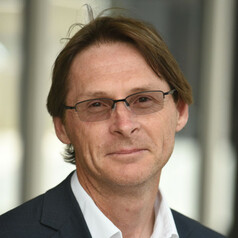
Marcus Bellamy is an Associate Professor of Operations and Technology Management at the Questrom School of Business, Boston University . His research focuses on innovation , environmental sustainability , and performance dynamics in supply networks, using empirical models to analyze spatial resource proximity and interdependence. Education : PhD in Operations & Technology Management from Georgia Tech (2015), MS in Industrial Engineering (2010), BS in Aerospace Engineering from University of New Mexico (2006). His research bridges supply chain structure with outcomes like CSR practices , resilience , and economic welfare . He employs visual analytics and computational tools to study industries ranging from automotive to electronics , addressing policy impacts and platform economies like Uber . Recent work trends include analyzing two-sided sharing platforms , environmental disclosure in supply chains, and network resilience under risks. His empirical studies often integrate spatial spillovers and collaborative ecosystems . Scientific Awards : Isabel Anderson Career Development Professorship 2019 AOM Best Paper in Supply Chains 2013 AOM Operations Management Division Best Student Paper Fulbright Scholar (Madrid, Spain) NSF STEP Fellow Bellamy has served as a founder of the PhD Project Committee under the White House Initiative on Hispanic Education and collaborated with corporations like Lockheed Martin and General Motors on supply chain risk & resilience. His methodological contributions include interactive visual analytics systems for network evaluation.
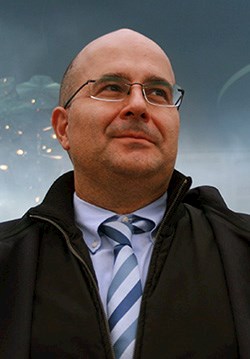
Prof. Bernd Domer is an Associate Professor at the Geneva School of Landscape, Engineering and Architecture (HES-SO) specializing in Building Information Modeling (BIM) , Geographic Information Systems (GIS) , and digital transformation of civil engineering . He leads multiple ongoing research projects including CU_OFROU_PAB (CHF278,844) focused on BIM-GIS workflows for noise barriers, and SousEtoile (CHF50,000) developing subsurface prediction models for urban planning. His work addresses critical challenges in software interoperability and point cloud processing for infrastructure digital twins. BA HES-SO in Architecture (HEPIA) BSc Civil Engineering (EPFL) BSc HES-SO in Civil Engineering (HEPIA) MSc HES-SO in Engineering (HES-SO Master) His research explores digital workflows for infrastructure projects, with over 15 recent publications examining topics like: Semantic segmentation of point clouds (2024) IFC standard optimization (2023) Underground confidence level modeling (2021) Swiss BIM implementation frameworks (2020) Construction waste management platforms (2018) He serves as Head of the MIC Group and co-directs the CAS in BIM Coordination . Active in international committees like EG-ICE and Bauen digital Schweiz , his work bridges academic research with practical implementation through collaborations with HEPIA , HEIG-VD , and institutions like the Swiss Federal Roads Office (OFROU) .
Farah Kamw is an Assistant Professor in the Department of Computer Science at Wayne State University. With a PhD in Computer Science (2019) from Kent State University, her expertise spans 18 years of software development, academic teaching, and research in information visualization and database management. Education : PhD (Kent State), MSc (University of Zakho), BSc (University of Baghdad) Her research focuses on Information Visualization and Visual Analytics of spatial-temporal data, particularly through 8 publications (2013-2021) addressing urban mobility patterns, trajectory analysis, and geospatial data integration. She has developed several open-source visual analytics tools including TrajAnalytics and SparseTrajAnalytics, applying both document and graph database techniques. Farah teaches core Computer Science courses such as Algorithm Design , Programming Languages , and Database Systems . Her technical skills include Python, C++, Java, SQL, NoSQL databases, and GIS technologies.
Mariano Cabezas is a researcher in medical imaging and computer vision, currently affiliated with Macquarie University and as an affiliate at the University of Sydney . His work focuses on automating brain MRI analysis for pathologies like multiple sclerosis, Alzheimer's disease, and tumors, with additional contributions to UAV image analysis. PhD in Computer Science (2013), University of Girona MSc in Automation, Computation, and Systems (2010), University of Girona BSc in Computer Science (2009), University of Girona Research Interests : Specializes in magnetic resonance imaging , lesion detection , deep learning , and image processing , with applications in multiple sclerosis , hearing loss , and UAV-derived ecological data . His recent work includes federated learning frameworks for cross-site MS lesion segmentation and pseudo-labeling techniques for longitudinal brain volume estimation. Publication Trends : Over the past five years, his research has emphasized federated learning (4 articles), lesion segmentation (9 articles), and UAV image analysis (3 articles), with a strong focus on clinical validation and cross-institutional collaboration. Labs & Collaborations : Contributed to the NIC-VICOROB group at the University of Girona and maintains affiliations with the Research Institute of the Hospital Vall d'Hebron (VHIR) in Barcelona and Macquarie University in Sydney. Actively develops open-source tools hosted on GitHub.
Luis Merino Cabañas is a Professor at the Universidad Pablo de Olavide , affiliated with the Deporte e Informática department and leading the SRL Service Robotics Laboratory . His research focuses on robotics, systems engineering, and automation, with a specialization in human-robot interaction and path planning. Education : PhD in Systems Engineering from the Universidad de Sevilla (2007), where his thesis explored cooperative perception techniques for multiple unmanned aerial vehicles in forest fire detection. Research Trends : Recent work (2023–2025) emphasizes 3D path planning, sensor fusion (LiDAR, radar, inertial systems), neural distance fields for safe navigation, and socially aware robotics. His studies integrate AI, genetic programming, and multi-modal perception for applications in construction, healthcare, and GNSS-denied environments. Labs & Teams : He leads the SRL Service Robotics Laboratory , contributing to projects like the Skyeye team and BIM2ROS integration for construction robotics.
François Pomerleau is a full-time Professor at the Department of Computer Science and Software Engineering at Université Laval since 2017. His research focuses on 3D environment reconstruction , autonomous navigation , search-and-rescue robotics , and scientific methodology in robotics . He has held postdoctoral fellowships at the University of Toronto and Université Laval, with technology transfer experience at Alstom Inspection Robotics and Robotiq. Ph.D. in Mechanical Engineering (2013) from ETH Zurich M.Sc. in Electrical Engineering (2009) and B.Ing. in Computer Engineering (2006) from Université de Sherbrooke His research integrates robotics , computer science , and environmental monitoring , with a focus on point cloud registration , Lidar-based SLAM , and trajectory planning for unstructured environments. Recent work includes UAV-assisted terrain awareness , exposure time emulation for vision algorithms , and multi-season datasets for autonomous navigation . François’s recent publications emphasize 3D mapping , SLAM robustness , and environmental adaptation across forestry, subarctic, and alpine domains. His team develops tools for autonomous vehicles , search-and-rescue , and industry 4.0 . Scientific awards include Best Robotic Vision Paper Awards at CRV 2016 and 2020, a Best Paper Award at the ICRA 2024 Workshop, and recognition as a Distal Fellow of the NSERC Canadian Robotics Network (NCRN). He collaborates with industry partners like Robotiq and serves as Associate Editor for IEEE Robotics and Automation Letters , Frontiers in Robotics and AI , and IROS , while contributing to international program committees for robotics conferences.
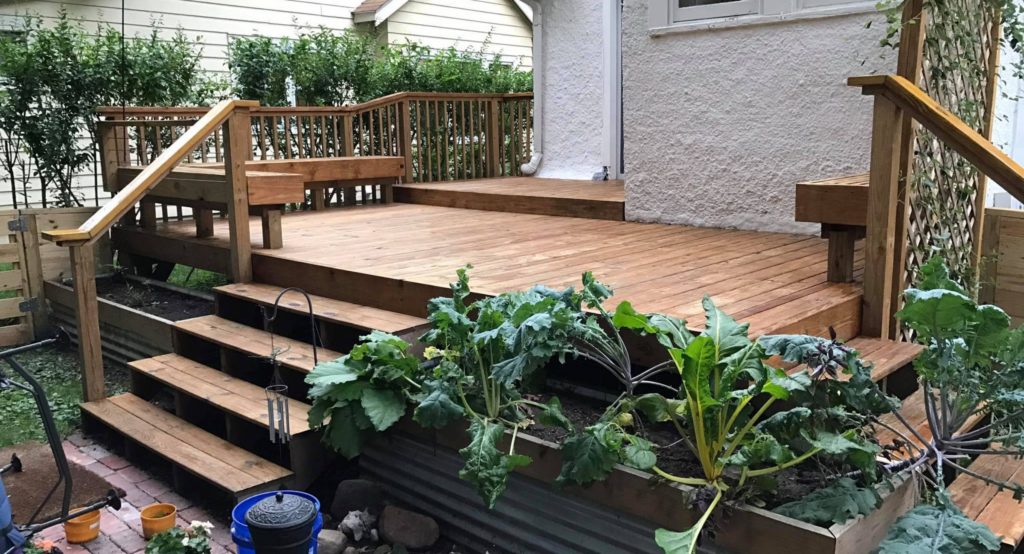
Keenan Gibbons is a Lecturer in Environment Sustainability and Development at the University of Michigan’s School of Environment, Art, and Society. A licensed landscape architect and urban design professional based in Detroit, he specializes in sustainable green infrastructure, parks, streetscapes, and innovative stormwater management strategies. With expertise in digital media, parametric modeling, and FAA-certified drone operations, he conducts research on urban heat island effects supported by the Landscape Architecture Foundation. Education Master of Landscape Architecture, Ball State University Bachelor of Science in Horticulture, Michigan State University His research interests integrate environmental sustainability with urban design , focusing on climate resilience through drone-based thermal imaging and low-impact construction . Publications highlight his work on UAV thermal disparity visualization and community-driven urban regeneration , including notable projects like Riverside Park Detroit . He received the LAF Deb Mitchell Research Grant for his heat wave visualization toolkit. Keenan’s projects include concrete-free construction for fences, decks, and planters, emphasizing reclaimed materials and DIY innovation . His work has been featured in CNN , The Weather Channel , and professional journals like MiASLA SITES . As an educator, he bridges environmental theory with hands-on design practice , often involving community stakeholders in his projects.
Lisa Grant Ludwig is a Professor in the Department of Population Health and Disease Prevention at the University of California, Irvine (UCI). She is a nationally recognized expert in earthquake science, focusing on translating geophysical research into policy for disaster risk reduction. Her work bridges seismology, public health, and policy implementation. PhD in Geology with Geophysics minor (Caltech) MS in Environmental Engineering Science (Caltech) BS in Applied Environmental Earth Science (Stanford) Dr. Ludwig's research centers on earthquake dynamics, particularly along the San Andreas Fault, advancing disaster resilience through innovative nowcasting techniques using AI and machine learning. Her publications demonstrate expertise in seismic hazard modeling, geodetic imaging, and community preparedness studies. Recent publications highlight AI-enhanced earthquake prediction (QuakeGPT), temporal-spatial nowcasting models, and applications of geodetic data for crustal deformation analysis. These works integrate machine learning with traditional seismological methods to improve hazard forecasting. President of Seismological Society of America NASA 2012 Software of the Year Medal Featured on Science magazine cover Congressional Testimony provider Active Federal Advisory Committee member Her interdisciplinary approach combines geophysics, public health policy, and computational science. Current projects focus on earthquake nowcasting, fault zone analysis, and developing accessible geospatial tools like GeoGateway for disaster response.
Shane Dawson is the Executive Dean of UniSA Education Futures and Professor of Learning Analytics at the University of South Australia. His work bridges social network analysis and learner interaction data to enhance teaching quality and educational outcomes. Affiliation : University of South Australia Research Focus : Learning Analytics, Curriculum Mapping, K-12 Decision-Making Systems, and AI in Education Recent Research Trends : Shane’s 2025 publications emphasize generative AI for curriculum analytics, ethical considerations in K-12 dashboards, and longitudinal graduate attribute monitoring. His articles often integrate psychometric models, social network tools, and open-source software like OVAL and SNAPP . Advising and Collaboration : As a co-developer of key learning analytics tools and a supervisor for research students, he collaborates globally with institutions such as Johns Hopkins University and Shahid Beheshti University of Medical Sciences. Labs and Teams : Shane leads UniSA’s Teaching Innovation Unit and is a founding member of the Society for Learning Analytics Research , driving institutional and international initiatives in educational technology.
Giuseppe Grossi is Professor of Business Administration at Kristianstad University (Sweden), Research Professor of Accounting at Nord University (Norway), and Visiting Professor at Kozminski University (Poland). He serves as a part-time Associate Professor at the University of Siena (Italy) and has held visiting/researcher positions at Stockholm University, Sydney University, Victoria University of Wellington, and Kozminski University (2015–present). Kristianstad University: Department of Business Administration, Faculty of Economics Nord University: Research Professor of Accounting Kozminski University: Visiting Professor Research Focus: His work bridges smart cities , hybrid organizations , government accounting , and public sector auditing , emphasizing intersections with sustainability, governance, and digital transformation. He explores how accounting systems shape public value creation and accountability in complex institutional settings. Recent Publications: His 15 most recent articles (2023–2025) analyze topics including: Socio-technical imaginaries in smart city sustainability Performance measurement for social sustainability in municipalities Digital transformation's impact on auditing practices Hybrid organizations' accounting tensions IPSAS implementation across European countries Leadership dynamics at the European Court of Auditors Leadership & Editorial Roles: Grossi chairs the Comparative International Governmental Accounting Research (CIGAR) network since 2023 and serves on editorial boards of 12 journals, including Accounting, Auditing and Accountability Journal and Pacific Accounting Review . He is Editor-in-Chief of Journal of Public Budgeting, Accounting and Financial Management (since 2018) and Associate Editor of Qualitative Research in Accounting & Management (since 2021). Grants & Projects: He leads/co-leads research funded by the Swedish Research Council, Polish National Science Centre, Portuguese Foundation for Science and Technology, and Nordic Council of Ministers. Current projects include 'Measuring vulnerability – Reporting on social sustainability in Swedish municipalities' and 'Reinventing Auditing: A new role of the European Court of Auditors.'
Dr. Sonia Rammer is a Professor at the University of Arts in Poznań, serving as Head of the Art Studio in an Intercultural Perspective at the Faculty of Artistic Education and Curating. She also holds significant administrative positions including Vice-Dean of the Faculty and Member of the Scientific Council. Her work uniquely bridges artistic practice with psychological insights, creating an interdisciplinary approach to art creation and education. Dr. Rammer's educational background demonstrates her dual expertise in both psychology and fine arts. She completed psychology studies at Adam Mickiewicz University (2003-2010), specializing in clinical psychology, alongside concurrent studies in painting and art education at the Academy of Fine Arts in Poznań. She earned her habilitation degree in visual arts and art conservation in 2019. Her research interests focus on the psychological dimensions of creativity, cross-cultural artistic exchange, and posthumanist perspectives. Rammer critically examines anthropocentric views through works that explore interspecies relationships and the fluid boundaries between human and non-human entities. Her art often emerges from international residencies in extreme environments like Greenland, Nepal, and Iceland, where she engages with local cultures and ecological contexts. Her recent artistic output shows a consistent exploration of Arctic themes, cultural translation, and identity transformation. The 'Woman Who Thought She Was a Dog' series (2022-2024) from her Greenland residency exemplifies her approach, using minimalist video installations to provoke reflection on species boundaries and human exceptionalism. Her work spans performance, video, photography, and installation, often incorporating cross-cultural misunderstandings as conceptual frameworks. As an educator since 2011, Rammer teaches psychology and psychology of creativity while mentoring students through her studio practice. Her leadership roles include chairing the Faculty Recruitment Committee and serving on the University Senate, demonstrating her commitment to academic development. Dr. Rammer maintains active international collaborations through prestigious residencies including Arctic Culture Lab (Greenland), Marpha Foundation (Nepal), and Baer Art Center (Iceland). She also collaborates with the Faculty of Geographical and Geological Sciences of Adam Mickiewicz University on artistic research in Spitsbergen, reflecting her commitment to interdisciplinary work.
Kavita Bala is the 17th Provost of Cornell University and a Professor of Computer Science. She previously served as the inaugural Dean of the Cornell Ann S. Bowers College of Computing and Information Science, leading its transition to a degree-granting college by 2025, and as Chair of Cornell’s Department of Computer Science. Her academic leadership includes expanding faculty, establishing research programs like the Bowers CIS Undergraduate Research Experience (BURE), and securing a new research facility for computing and information science. Education: B.Tech (IIT Bombay), M.S. and Ph.D. (MIT, Computer Science) Bala’s research focuses on computer vision, artificial intelligence, and computer graphics , with groundbreaking work in material and style recognition using deep learning. Her innovations in crowdsourced training data and differentiable rendering have advanced visual search technologies and translucent material modeling, powering her startup GrokStyle. She pioneered AI techniques applied to environmental monitoring through projects like MONITRS and AllClear , addressing Earth observation challenges. Her scientific awards include: American Academy of Arts and Sciences (2025) SIGGRAPH Computer Graphics Achievement Award (2020) IIT Bombay Distinguished Alumnus Award (2021) ACM Fellow (2019) SIGGRAPH Academy Fellow (2020) As Provost, Bala drives strategic initiatives like the Cornell AI Initiative , creating interdisciplinary minors in AI and AI in Society, and establishing the Schmidt AI in Science postdoctoral program. She co-chaired a task force for generative AI guidelines in education.
Núria Agell Jané is a Full Professor at ESADE Business School , Universitat Ramon Llull, specializing in Artificial Intelligence and Decision-Making Systems. She leads the JUICE (Judgements and Decisions in the Market Place) research group and the ESADE D3 - Institute for Data-Driven Decisions . Doctorate in Applied Mathematics (Qualitative Reasoning Modelling), UPC-BarcelonaTech Bachelor's in Mathematics, University of Barcelona Her research focuses on Artificial Intelligence , Decision-Making Systems , and Fuzzy Logic , with applications in Business, Marketing, and Sustainability. Recent publications emphasize Hesitant Fuzzy Linguistic Term Sets , Consensus Modeling , and AI in Sustainable Development . She coordinates multiple publicly and privately funded projects applying AI to Business and Marketing challenges. As PhD Programme Director (2005-2013) and current Department Director of Operations, Innovation and Data Sciences , she has shaped academic and research strategies at ESADE. Her work spans collaborations with institutions like LAAS-CNRS (France) and University of Edinburgh Business School , with over 40 journal publications and 50 conference contributions. She has directly supervised 11 PhD students in AI and Decision Sciences.
Dr. Hua Xu is the Robert T. McCluskey Professor of Biomedical Informatics and Data Science at Yale School of Medicine. He serves as Vice Chair for Research and Development in the Department of Biomedical Informatics and Data Science and as Assistant Dean for Biomedical Informatics at Yale School of Medicine. Dr. Xu leads the Clinical NLP Lab and is Chair of the NLP working group at the Observational Health Data Sciences and Informatics (OHDSI) program. Dr. Xu received his PhD in Biomedical Informatics from Columbia University, an MS in Computer Science from New Jersey Institute of Technology, and a BS in Biochemistry from Nanjing University. Dr. Xu is a renowned researcher in clinical natural language processing (NLP), having developed novel algorithms for important clinical NLP tasks such as entity recognition and relation extraction. His work has been top-ranked in over a dozen international biomedical NLP challenges. He has developed CLAMP, a comprehensive clinical NLP toolkit that has been successfully commercialized and adopted by hundreds of healthcare organizations worldwide. His research focuses on applying NLP technologies to diverse clinical and translational studies to accelerate clinical evidence generation using electronic health records data. Recently, he has been utilizing NLP to harmonize metadata of biomedical digital objects to promote FAIR principles in biomedicine, and his lab is actively working on developing large language models (LLMs) for diverse biomedical applications. Dr. Xu's recent publications demonstrate a clear trend toward leveraging large language models for biomedical applications. His work spans from benchmarking LLMs for clinical NLP tasks to developing specialized architectures like BiomedRAG (retrieval augmented LLMs for biomedicine). His research addresses critical healthcare challenges including adverse event extraction, oncology clinical trial analysis, and EHR-based association studies, showing how NLP can bridge the gap between unstructured clinical text and actionable medical insights. Dr. Xu's lab has achieved top rankings in numerous NLP challenges, including multiple #1 positions in i2b2 Temporal information extraction, SemEval Disease-modifier extraction, BioCREATIVE Chemical-induced disease extraction, and other prestigious competitions. His contributions to clinical NLP have significantly advanced the field's ability to extract meaningful information from complex medical texts. As the leader of the Clinical NLP Lab at Yale, Dr. Xu oversees research that forms a complete ecosystem: developing novel NLP methods, building robust software tools, and applying these technologies to clinical and translational research. His lab's work closes the loop between methodological innovation and practical healthcare applications, ensuring that advances in NLP directly benefit patient care and medical research.
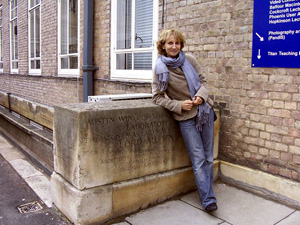
Soraya de Chadarevian serves as Professor in the Department of History and the Institute for Society and Genetics at the University of California, Los Angeles, where she bridges historical scholarship with contemporary bioscience through rigorous analysis of material practices and cultural contexts in the life sciences. Her academic trajectory spans over three decades with significant contributions to understanding molecular biology's development and human heredity's evolution from the nineteenth century to present. Her educational foundation includes a PhD in Philosophy from the University of Konstanz, Germany, and an Advanced degree (Diplom) in Biology from the University of Freiburg, Germany, providing unique interdisciplinary perspective. These qualifications enabled her dual expertise in scientific practice and philosophical inquiry that defines her scholarly approach. De Chadarevian's research centers on the intricate relationship between scientific practice and cultural context in the life sciences, with particular emphasis on visual and material dimensions of molecular biology and chromosome research. She examines how laboratory techniques, archival practices, and data systems shape biological knowledge, exploring themes like the microscope's role in heredity studies, genetic evidence in historical narratives, and pandemic responses. Her work reveals how scientific concepts like the double helix or human genome emerge through complex negotiations between technical possibilities, institutional frameworks, and societal concerns. Analysis of her recent publications shows a decisive shift toward contemporary scientific challenges including pandemic responses, data-intensive biology, and ethical dimensions of genetic research. While maintaining deep historical perspective, her scholarship increasingly engages with urgent present-day issues such as biobanking, forensic genetics, and the societal implications of genomic databases, demonstrating how historical understanding informs current scientific controversies. Her scientific recognition includes: National Science Foundation Scholar Award (2015-2021) Walther Rathenau Program Fellowship Max Planck Institute for History of Science Fellowship Fellowship at La Villette Fellowship at École des Hautes Études en Sciences Sociales Hamburg Institute for Social Research Fellowship Churchill College Cambridge Fellowship Institute for Advanced Studies in the Humanities Fellowship Research funding has been consistently secured through competitive grants, most notably the six-year NSF award supporting her chromosome history project. She actively mentors students through UCLA's graduate programs in History and the Institute for Society and Genetics, teaching specialized courses on genetics and society while supervising research on science-society intersections. Her collaborative approach extends to co-editing special journal issues and organizing international research networks. Through sustained engagement with institutions like the Max Planck Society and Cambridge University, de Chadarevian maintains active participation in global scholarly communities. Her current work involves interdisciplinary teams examining data practices in contemporary biology and historical dimensions of pandemic responses, positioning her at the forefront of science studies' engagement with pressing societal challenges.