Philip Armour is a Professor and Senior Economist at the RAND Corporation , where he also serves as Director of the Ph.D. Program and the RAND Center for Disability Research. His work integrates labor economics, public policy, and health economics to analyze intersections between government programs and workforce behavior. Research Interests: Focuses on disability policy , retirement decision-making , financial security , and military healthcare systems . Employs empirical analysis of Social Security, Workers' Compensation, and DoD/Veterans Administration programs to understand how policy incentives shape individual choices. Key Contributions: Recent publications examine Social Security appeals barriers for homeless populations, military eye examination policies, and pension crisis reform frameworks. Research funded by SSA, DoD, NIOSH, and CFPB. Education: Ph.D. in Economics, Cornell University M.Sc. in Econometrics, London School of Economics
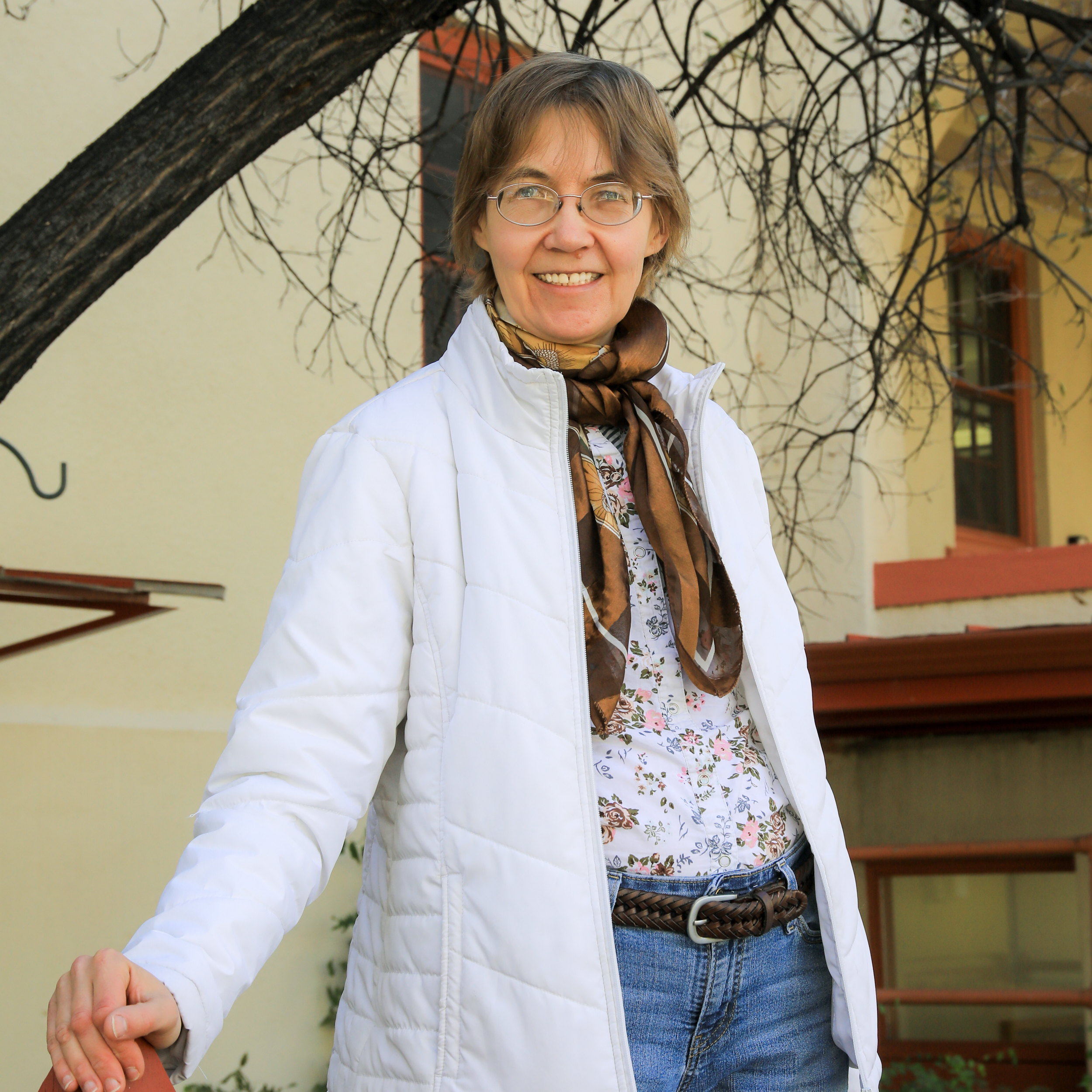
Yulia Mikhailova is an Associate Professor of History at the New Mexico Institute of Mining and Technology , specializing in Comparative History of Medieval Europe and Post-Soviet Russia . She actively promotes mental health advocacy as Chair of the ISPS-US Advocacy Committee . PhD in History (with distinction), University of New Mexico (2013) MA in Russian, Michigan State University (2002) Her research spans Medieval Europe , Early Modern Europe , Gender and Sexuality , and Inter-Ethnic Relations , with a focus on Rus-Latin Europe comparisons and modern political uses of medieval history . Recent publications examine elite women in chronicles , religious warfare , and emotion in political narratives . PhD with Distinction (University of New Mexico) She teaches courses on European history , Soviet/post-Soviet history , and history of science/technology , while collaborating with local mental health initiatives.
Katsuro Inoue is a Professor at Ritsumeikan University within the College of Information Science and Engineering. He holds a Dr. degree of Engineering from Osaka University (1984) and specializes in Software Engineering with a focus on Program Analysis , Code Clone Detection , Software Ecosystem Analysis , and Process Modeling . His work includes developing systems like CCFinder for code clone analysis and SPARS for software component significance ranking. Research Interests Program Analysis: Code Clone Analysis, Origin and Evolution Analysis, Software Ecosystems, Bug Detection, Analysis Tools and Algorithms Program Reuse: Code Search Engines, Program Archives, Searching Mechanisms Software Process: Process Modeling, Process Centered Environments, Process-Based Metrics, Quality Standards Key Publications Code Clone Analysis (2021), Library Dependency Updates (2018), Code Clone Tracking in Open Source (2012), Distributed Code Clone Detection (2007), Software Component Significance Ranking (2005), Compiler Garbage Collection (1991), Code History Tracking (2012) Professional Activities Program Committee Member in over 20 conferences (ICSE, IWPSE, PROFES) Editorial Board Member for IEEE Transactions on Software Engineering Co-Chair of multiple workshops (IWSC, IWPSE) Reviewer for SEC Journal Teaching Course: System Architect Course Developed course materials for Compiler Design and Language Processing Created exam problems and optimization examples for language processing courses
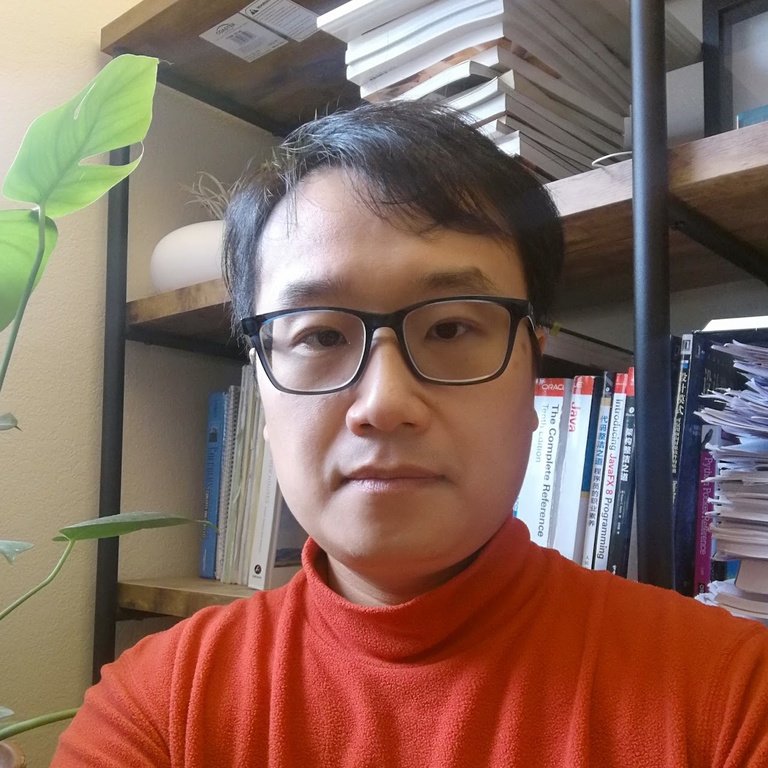
Weiran Wang is an Assistant Professor in the Department of Computer Science at the University of Iowa. Previously, he worked as a Staff Research Scientist at Google (2021-2024), Senior Research Scientist at Salesforce Research (2019-2020), and Amazon Alexa (2017-2019). He completed his PhD in 2013 at UC Merced under Miguel A. Carreira-Perpinan and postdoctoral research at Toyota Technological Institute at Chicago (2014-2017) with Karen Livescu and Nathan Srebro. PhD: EECS Department, UC Merced (2013) MS: Computer Science, Chinese Academy of Sciences (2008) BS: Computer Science, Huazhong University of Science and Technology (2005) His research focuses on machine learning algorithms for speech processing , multi-view representation learning , and optimization . Key contributions include advancements in end-to-end speech recognition, stochastic canonical correlation analysis, and deep variational methods for multi-modal data. Notable work includes improving WER metrics for telephony speech and developing GPU/TPU implementations for ASR biasing. The 15 most recent publications span 2024-2018, emphasizing speech recognition (2024 NAACL/Interspeech), multi-view learning (2022 ICLR), self-training (2020 Interspeech), and acoustic modeling (2018). Trends include deep learning, attention mechanisms, and distributed optimization techniques. No scientific awards are explicitly mentioned in the provided texts. Current teaching includes CS4980: Deep Learning (Spring 2025) and CS4420: Artificial Intelligence (Fall 2024).
Xin (Eric) Wang is an Assistant Professor in the Computer Science Department at the University of California, Santa Barbara (UCSB) , and serves as Head of Research at Simular AI. His research focuses on Multimodal and Embodied AI Agents , blending methodologies from machine learning, computer vision, natural language processing, and robotics. Education: Ph.D. in Computer Science, UC Santa Barbara B.Eng. in Computer Science, Zhejiang University Research Interests: Natural Language Processing Computer Vision Multimodal AI Embodied AI Trustworthy AI Systems His work emphasizes agents that collaborate with humans in complex environments, addressing ethical design and generalizable reasoning. Awards: Best Paper Awards at CVPR 2019 and ICLR 2025 Google Faculty Research Award, 2022 eBay & Cisco Faculty Awards (2022–2024) Amazon Alexa Prize Awards (multiple years) Advising & Grants: Supervised students Dr. Xuehai He and Dr. Jing Gu. Secured grants from Microsoft, Adobe, eBay, and Snap. Organized workshops on vision-language research and embodied AI. Labs/Teams: Leads the ERIC Lab at UCSB, focusing on multimodal agent systems and ethical AI design.
Mai Elshehaly is a Lecturer in Computer Science at City, University of London, where she is affiliated with the giCentre in the Department of Computer Science, School of Science and Technology. She focuses on designing, developing, and evaluating visualisation solutions that support data-driven decision-making, particularly for non-technical users in healthcare and public sectors. Her work involves close collaboration with healthcare practitioners, local authorities, and schools to co-design tools grounded in real-world needs. Her research interests center on information visualisation and human-computer interaction , with a strong emphasis on user-centered and co-design methodologies . She investigates how lived experiences of stakeholders can shape visual analytics systems, especially in healthcare quality improvement, population health management, and digital transformation initiatives. Her approach bridges technical innovation with social impact, promoting equitable access to data insights. Her recent publications highlight trends in narrative visualization, integration of lived experience with electronic records (e.g., CLEVER framework), and adaptable dashboards for healthcare (QualDash). These works are published in top venues such as IEEE VIS, IEEE TVCG, and Computer Graphics Forum, reflecting a consistent focus on usability, evaluation, and real-world deployment of visual analytics tools. Department-level achievement award during PhD at Virginia Tech University-level achievement award during PhD at Virginia Tech Mai has secured research funding from the Bradford Institute for Health Research (BIHR), NIHR, and internal university sources including EPSRC doctoral training funds. She has led and contributed to interdisciplinary projects such as the Digital Makers Programme and Connected Bradford, which involve partnerships across academia, healthcare, and local government. While no formal PhD students are listed, she mentors through collaborative research and advisory roles. She is actively involved in applied research through leadership positions: Co-Director of the Digital Makers Programme, Deputy Director of the Workforce Observatory for West Yorkshire, member of the advisory board at the Wolfson Centre for Applied Health Research, and cross-theme visualisation expert at the Yorkshire and Humber Patient Safety Research Centre. These roles underscore her commitment to translating research into practice within health and education systems.
Greg Wright is an Associate Professor of Economics at the University of California, Merced , affiliated with the School of Social Sciences, Humanities and Arts and Social Sciences & Management department. He also holds a Non-Resident Senior Fellow position at Brookings . His research focuses on International Trade , Immigration Economics , and Economic Growth , with particular emphasis on: Labor market responses to globalization Immigration's role in economic development ICT's impact on income distribution Trade liberalization effects Workforce planning for energy transitions Policy tools for urban economic growth Recent publications analyze the second wave of globalization's local incidence, immigrant workforce support for U.S. jobs, and workforce development programs' optimization. His work appears in journals like Journal of International Economics , European Economic Review , and American Economic Review . Wright earned his PhD in Economics (2011), MA in Economics (2006) from UC Davis, and BA in Astrophysics (1998) from UC Berkeley. He explores intersections between immigration, offshoring, and technological change through empirical studies and policy analysis.
Kalle Åström is a Professor at Lund University's Centre for Mathematical Sciences within the Faculty of Engineering. He coordinates Lund University's Natural and Artificial Cognition profile area and the AI Lund network. His affiliations include ELLIIT (Linköping-Lund IT initiative), eSSENCE (e-Science Collaboration), Stroke Imaging Research group, and Computer Vision and Machine Learning research groups. His research spans computer vision, machine learning, and mathematical modeling with applications in medical imaging, autonomous systems, and cognitive vision. Key interests include geometry of multiple views, structure from motion using heterogeneous sensors, medical image analysis, and handwriting recognition. His work contributes to UN Sustainable Development Goals through AI applications in healthcare and engineering. Recent publications (2025) demonstrate strong trends in medical AI (Alzheimer's diagnostics, breast cancer classification) and autonomous systems (safety testing, sensor fusion). His work bridges theoretical mathematics with practical applications across healthcare and robotics domains. Best Nordic Ph.D. Thesis in Pattern Recognition (1995-1996) Innovation Cup 1991 for Autonomous Guided Vehicles EU IST Grand Prize 2003 (Decuma startup) Åström supervises graduate students and leads multiple active research projects including machine learning for Parkinson's disease analysis, audiovisual drone detection (Vinnova-funded), and Alzheimer's disease modeling. He co-founded startups Decuma (1999), Cognimatics (2003), Spiideo (2012), and Neuromathics (2015), and serves on boards of the Royal Swedish Physiographic Society and Swedish AI Society (SAIS). His research integrates mathematical rigor with real-world AI applications through extensive industry-academia collaborations.
Pierre-Yves Lajoie is an Assistant Professor in the Department of Computer Engineering and Software Engineering at Polytechnique Montréal, a leading engineering school affiliated with Université de Montréal. His research focuses on robotics and artificial intelligence, with specialization in robotic perception for single and multi-agent systems. He has held research positions at prestigious institutions including the Massachusetts Institute of Technology (2019), Samsung AI Center (2023), and University of Oxford (2024). Education: Ph.D. in Computer Engineering, Polytechnique Montréal Dr. Lajoie's research interests span across robotics, computer vision, and distributed systems. He specializes in developing algorithms for robotic perception in challenging environments, with applications in aerial, underground, indoor, and space robotics. His work focuses on enabling robots to understand their surroundings through visual and sensor data, particularly in collaborative multi-robot scenarios where communication may be limited or unreliable. His primary research center of excellence is the Industry of the Future and Digital Society, with secondary centers in Modeling and Artificial Intelligence and New Frontiers in Information and Communication Technologies. His publication record demonstrates a strong focus on collaborative SLAM (Simultaneous Localization and Mapping) systems, with recent work addressing challenges in planetary exploration, swarm robotics, and pedestrian positioning. His research combines computer vision, machine learning, and distributed systems to create robust solutions for real-world robotic applications, particularly in environments with communication constraints. Scientific Awards: Vanier Canada Scholarship Best Paper Award at IEEE ICC 2024 Dr. Lajoie is actively recruiting graduate students for PhD and Master's programs, with openings for Fall 2025 and Spring 2026. He encourages students to apply for various scholarship opportunities including NSERC, FRQ, and IVADO scholarships at multiple academic levels. His research is supported by collaborations with academic and industrial partners, focusing on applications in space robotics, automated manufacturing, and service robotics. He has supervised research projects in areas such as search and rescue with sparsely connected swarms and distributed risk-aware exploration systems.
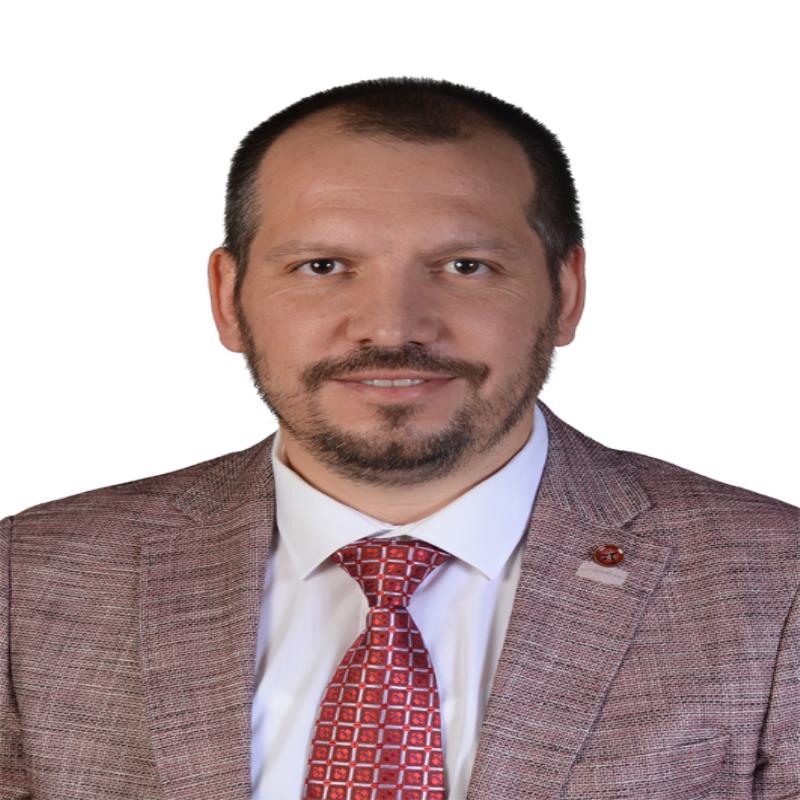
Prof. OSMAN ÇULHA is a Professor in the Department of Gastronomy and Culinary Arts at the Faculty of Tourism, Alanya Alaaddin Keykubat University. He has built a distinguished academic career spanning over 15 years in tourism and hospitality education, with expertise in tourism management and gastronomy. His academic journey began as a Research Assistant at Yaşar University, progressed through lecturer positions at Adnan Menderes University, and led to his current professorship at Alanya Alaaddin Keykubat University. His educational background includes a Doctorate in Tourism Management from Adnan Menderes University (2014), a Master's degree in Tourism Management from Dokuz Eylül University (2008), and a License in Tourism Management Education from Gazi University (2005). Prof. Çulha's research primarily focuses on the intersection of tourism management and gastronomy, with particular interest in food festivals, culinary tourism, and the relationship between local foods and tourism development. His work examines how gastronomic experiences contribute to destination branding, place attachment, and tourist satisfaction. He has extensively studied the Didim International Olive Festival as a case study for understanding how local food events can drive regional tourism development. His research also explores workforce issues in the hospitality industry, including employee motivation, organizational commitment, and the impact of training programs. Prof. Çulha has received recognition for his academic contributions, including the prestigious Academic Golden Pen Award Certificate of the Year in 2025 for his work "Collaborations of Tourism Academies in Türkiye: Topics, Stakeholders, Scope, Benefits and Obstacles." His publications span numerous high-impact journals in tourism and hospitality research, covering diverse topics from underwater diving motivation to the quality dimensions of non-formal vocational tourism education. His scholarly work demonstrates a consistent focus on practical applications of tourism theory to real-world industry challenges. He has served in various administrative capacities, including as Farabi Coordinator and Faculty Board Member at Alanya Alaaddin Keykubat University, and as Deputy Head of Department at Adnan Menderes University. His professional development includes specialized training in occupational health and safety, big data applications, and artificial intelligence in research processes. Prof. Çulha is actively involved in academic service as a referee for multiple tourism journals, including Alanya Academic View Journal, Tourism Research Journal, and International Journal of Hospitality Management. His commitment to advancing tourism education is evident through his editorial contributions to publications such as "Traces of Gastronomy from Past to Present: Research-Based Evidence" and "International Tourism Management."
Ines G. Županov is a Research Director at the Centre National de la Recherche Scientifique (CNRS) and Director of the Centre d'Etudes de l'Inde et de l'Asie du Sud (CEIAS) at the École des Hautes Études en Sciences Sociales (EHESS) in Paris. She has held academic positions at the University of California, Berkeley, Jawaharlal Nehru University in New Delhi, and regularly teaches at EHESS on mission history in the early modern world. As a Käte Hamburger Kolleg Visiting Research Fellow in 2012-13, she investigated Jesuit Missions in South Asia during the 16th-18th century. Her educational background includes a PhD in History from the University of California, Berkeley (1991), an MA in Asian Studies from the same institution (1986), and a BA in Comparative Literature and Indology from the University of Zagreb, Croatia (1979). She also held a post-doctoral fellowship at the School of Oriental and African Studies in London funded by the European Science Foundation (1996-1998). Županov's research focuses on the social and cultural history of South Asia, particularly mission history in the early modern world and the history of science in colonial contexts. Her work examines how missionaries produced, used, and disseminated scientific information across fields including medicine, botany, astronomy, philology, and ethnography. She has pioneered research on the intersection of religious conversion with knowledge production, analyzing how Jesuit missions in South Asia created complex networks of cultural exchange while simultaneously imposing European frameworks of understanding. Her extensive publication record reveals consistent themes of cultural encounter, knowledge circulation, and the politics of representation in colonial contexts. Županov's scholarship demonstrates how missionary activities served as crucial vectors for the transmission of knowledge between Europe and South Asia, while also highlighting the agency of local actors in shaping these exchanges. Her work moves beyond simplistic narratives of cultural imposition to reveal the complex negotiations that characterized early modern cross-cultural encounters. Fellow at Wissenschaftskolleg in Berlin (2003-2004) Mellon visiting scholar at PennState University (2009) Käte Hamburger Kolleg visiting fellow (2012-13) Multiple research grants from European Science Foundation Authorization to supervise research, EPHE (2010) Ecole Française de Rome research grants (1995, 1997, 2000) As Director of CEIAS, Županov leads one of Europe's premier research centers for South Asian studies, coordinating numerous international projects and workshops that bring together scholars from diverse disciplinary backgrounds. Her leadership has been instrumental in organizing significant conferences including 'The Rites Controversy in the Early Modern World' (2011) and 'L'Inde des Lumières/Indian Enlightenment' (2011-2013), fostering interdisciplinary dialogue on the complex histories of knowledge production in South Asia.
Elisabeth Navarro is a Professor at University of Paris Cité, affiliated with the CLILLAC-ARP laboratory. She specializes in interpreted communication, public service interpretation, and intercultural strategies. Created France's first diploma in Public Service Mediation and Interpretation Coordinates the Master's program in Languages, Interpretation and Intercultural Strategies (LISI) Research Focus Her research explores the intersection of: Interpreted communication frameworks Cultural and linguistic mediation dynamics Migration and otherness studies Language policy implementation Discourse analysis in institutional contexts Doctoral Supervision Has directed over 30 Master's theses since 2015 on topics ranging from: Corporate language policies in multinational companies Technological impact on interpretation Medical and legal language mediation Social media intercultural communication Academic Publications Authored a foundational book on interpreted communication (2023) and maintains active research output through the LISI program, with recent work examining: Intercultural marketing strategies Professional identity in multilingual environments Language mediation in social services Digital communication challenges
Dr. Beatriz Carbone is a Research Associate at Saarland University's Department of European Social Sciences, Political Science, specializing in postcolonial, feminist, and critical race theory applications to political discourse. Her career spans multiple German universities, including TU Kaiserslautern, University of Augsburg, and Philipps-Marburg University, where she held roles in research and teaching. Her research interests include Whiteness and gender in Brazilian policy Eurocentrism's global consequences Intersectionality in health/sexual violence Urban resilience and participatory cultures Her selected publications analyze materiality in social programs, authoritarianism in Latin America, and diaspora subjectivities in migrant cinema. She co-edited the 'Political Ethnography' series and earned a 'Magna Cum Laude' PhD in 2021. Scientific awards include Rosa Luxemburg Foundation doctoral scholarship (2012-2015) DAAD STIBET scholarship (2015-2016) She has taught interdisciplinary courses at Saarland University, TU Kaiserslautern, and University of Augsburg, covering topics like right-wing populism, feminist theory, and postcolonial approaches to conflict-related violence.
Claire Prada is a CNRS Research Director at the Institut Langevin , specializing in laser ultrasound , guided wave propagation , and time-reversal acoustics . Her work bridges fundamental wave physics and applied nondestructive testing. Research Pillars : Zero-group-velocity (ZGV) Lamb modes for material characterization Anisotropic wave propagation and negative refraction phenomena Time-reversal operator decomposition for structural monitoring Passive acoustic defect localization with ambient noise Technological Innovations : Fourier-domain reconstruction algorithms for 3D imaging Single-pixel photoacoustic microscopy Adaptive projection methods for rib-cage ultrasound focusing Wave Physics Discoveries : Documentation of power flux skewing in anisotropic plates Identification of beating resonance patterns in elastic media Experimental validation of negative reflection in chaotic waveguides Medical & Industrial Applications : Quantitative elastography for tissue stiffness measurement Jet engine blade damage detection Cortical bone femoral neck assessment Thin layer thickness measurement via ZGV resonance shifts
Mounira M. Charrad serves as Associate Professor in the College of Liberal Arts at The University of Texas at Austin, holding a courtesy appointment in the Department of Middle East Studies. She maintains active affiliations with the Center for Women’s and Gender Studies, Center for Middle East Studies, Rapoport Center for Human Rights and Justice, Center for European Studies, Center for Russian/East European/Eurasian Studies, and Plan II Honors Program. Additionally, she holds a non-resident fellowship at Rice University's Baker Institute for Public Policy. Her academic credentials include a Ph.D. from Harvard University and undergraduate studies at the Sorbonne in Paris. This foundation supports her interdisciplinary approach bridging sociological theory with regional expertise. Charrad’s research centers on gender politics within kin-based societies, examining how state formation processes interact with colonial legacies to shape women’s rights trajectories. Her work challenges religious textualism by emphasizing social solidarity structures—whether grounded in kinship, ethnicity, or associations—as decisive factors in political outcomes. Current projects investigate Tunisian women’s associations, secularism debates, and civil society development, extending her established focus on family law reforms across the Middle East and North Africa. Analysis of her recent publications reveals persistent engagement with post-Arab Spring transformations, particularly how revolutionary moments create opportunities and constraints for gender justice. Her scholarship consistently connects macro-level political economy with micro-level lived experiences, emphasizing women’s agency within religious and legal frameworks. Recurring themes include constitutional gender debates, inheritance law conflicts, and the strategic navigation of secular-religious tensions by women activists. Professor Charrad actively mentors doctoral students pursuing diverse research on U.S. and international topics while teaching core courses in political sociology, comparative historical sociology, social theory, and gender politics. Her research program has secured significant funding from the National Endowment for the Humanities, Mellon Foundation, American Association of University Women, and American Institute of Maghribi Studies, enabling extensive fieldwork and collaborative projects across the MENA region.